Affiliate disclosure: As an Amazon Associate, we may earn from qualifying purchases at no extra cost to you.
Product specifications and availability can change. Confirm the current electrical requirements, included accessories, and operating instructions before ordering.
Updated August 2026.
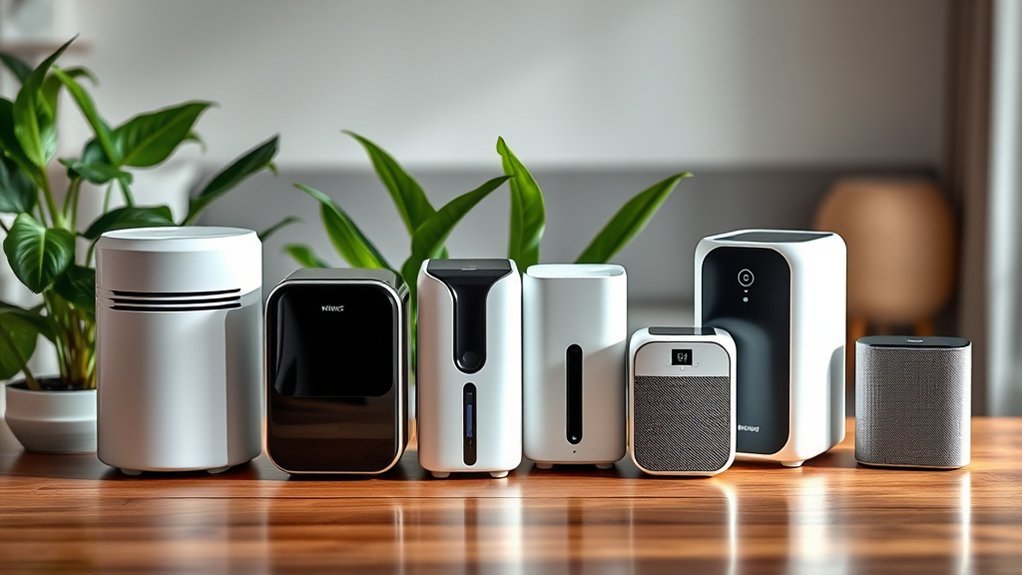
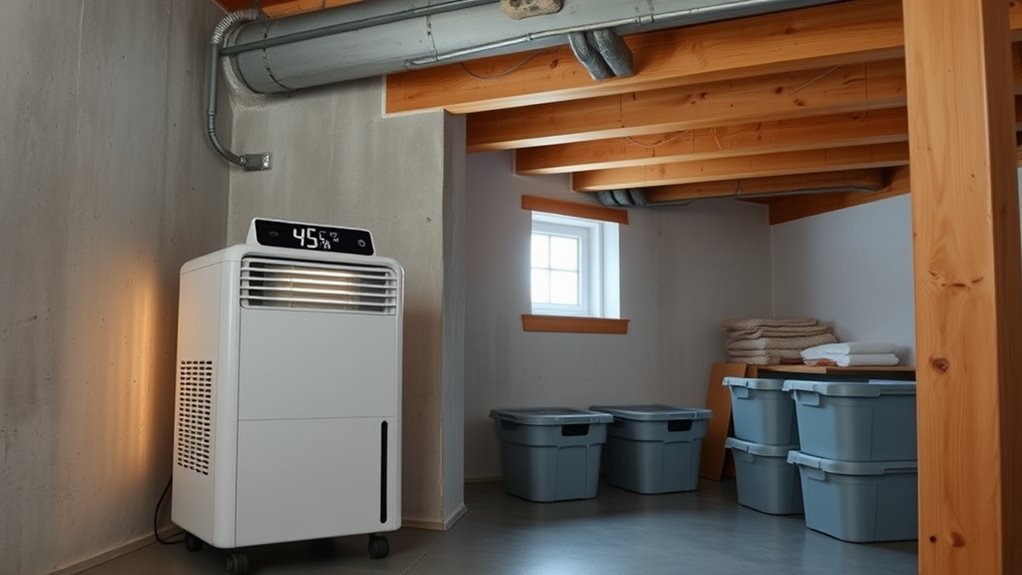
The best dehumidifier for an RV trailer depends on the amount of moisture you need to remove, your available power, and whether you want a collection tank, continuous drainage, or a non-electric absorber for storage. For regular powered use, the BREEZOME 60 OZ provides the strongest overall balance of stated moisture removal, tank size, timer control, and portability. The Litever is more convenient when you can safely route a gravity drain hose, while the TABYIK is a compact choice for sleeping areas.
For parked winter storage or unpowered compartments, the Camco and Vacplus absorbers are simpler alternatives. They work more slowly than electric models and should not be treated as replacements for an operating dehumidifier in a heavily damp or occupied trailer.
Important: Manufacturer square-foot ratings for compact thermoelectric units are not directly comparable with standardized pint-rated compressor dehumidifiers. For an RV, prioritize the stated daily moisture-removal rate, the conditions used for that claim, tank size, drainage, noise, operating temperature, wattage, and your actual humidity readings. ENERGY STAR explains that dehumidifier capacity is properly measured by the amount of water removed during 24 hours under specified test conditions.
How these options were evaluated
- Relevance to occupied RVs, campers, travel trailers, or parked storage.
- Tank size, drainage method, portability, and overflow protection.
- Manufacturer-stated moisture removal and the test conditions behind it.
- Sleep modes, timers, defrost functions, and other useful RV controls.
- Clear limitations, including products without a verified daily extraction figure.
Quick Comparison of the Best RV Dehumidifiers
| Product | Best For | Tank or Media | Type / Drainage | Key Verified or Stated Feature | Amazon |
|---|---|---|---|---|---|
| BREEZOME 60 OZ | Best Overall Compact Electric | 60 oz | Electric / tank | Up to 700 ml/day at 86°F and 80% RH; timer and defrost | View on Amazon |
| Litever | Best Continuous Drain | Compact tank | Electric / tank or hose | Up to 360 ml/day at 86°F and 80% RH; four-foot hose | View on Amazon |
| TABYIK 35 OZ | Best Quiet Compact Pick | 35 oz | Electric / tank | Up to 450 ml/day at 86°F and 80% RH; claimed 28 dB | View on Amazon |
| TENKER 77 OZ | Best High-Output Claim | 77 oz | Electric / tank | Up to 35 oz/day at 86°F and 80% RH | View on Amazon |
| BEDRED 95 OZ | Best Simple Large Tank | 95 oz | Electric / tank | Sleep mode and auto shutoff; no verified daily rate here | View on Amazon |
| Deyagoo 1500ML | Best Mid-Size Compact Pick | 50 oz | Electric / tank | Up to 300 ml/day at 86°F and 80% RH; claimed 30 dB | View on Amazon |
| NeedDuck 44 OZ | Best Controls | 44 oz | Electric / tank | Three modes, four timer options, defrost, and auto shutoff | View on Amazon |
| BeOkay 58 OZ | Best Timer and Safety Controls | 58 oz | Electric / tank | Five timers, three modes, defrost, and tilt shutoff | View on Amazon |
| Camco Refillable | Best Refillable Storage Absorber | Refillable media | Passive absorber | No electricity; media claimed to absorb up to three times its weight | View on Amazon |
| Vacplus 6 Pack | Best for Multiple Storage Zones | 10.5 oz each | Passive absorber | Six fragrance-free calcium-chloride containers | View on Amazon |
BREEZOME 60 OZ Portable Dehumidifier with Timer
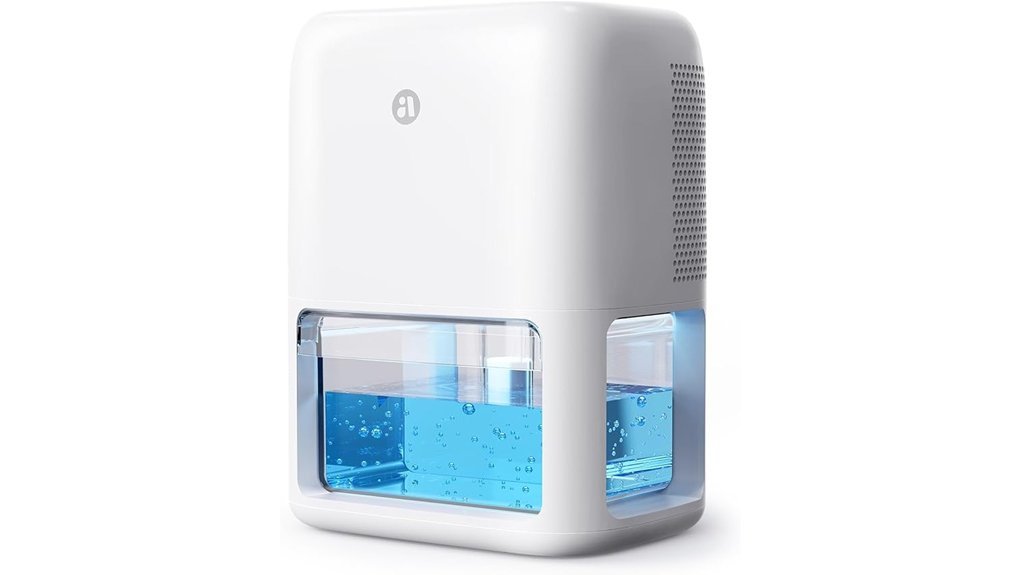
Best Overall Compact Electric
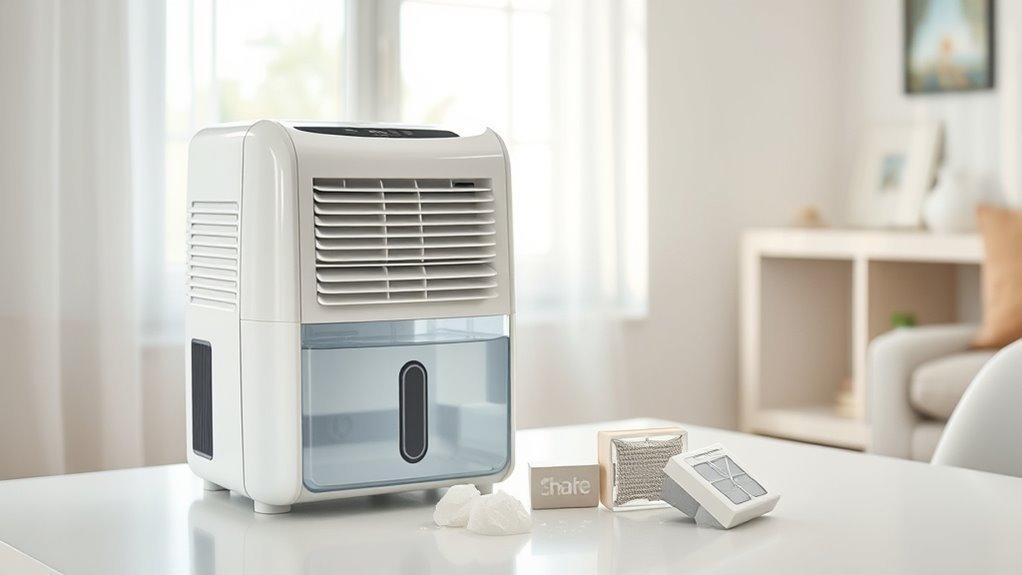
The BREEZOME offers the strongest overall combination of stated extraction, tank capacity, timer control, portability, and overflow protection in this comparison. Its manufacturer says the dual-semiconductor system can collect up to 700 ml of water per day in a closed area at 86°F and 80% relative humidity. That is a warm, very humid test environment, so normal RV collection will often be lower.
The 60-ounce tank provides more storage than a typical 35-ounce bedside model. It also includes auto shutoff, a carrying handle, a defrost function, sleep operation, and 12-, 24-, 36-, and 48-hour timer settings. These controls make it easier to run for a planned period instead of leaving it operating without a schedule.
Why you may like it: It combines a useful daily collection claim with a reasonably large tank and more operating control than many compact units.
Who should buy this: RV owners with compatible shore power who want one compact electric unit for regular condensation and mild-to-moderate humidity.
Who should avoid this: Anyone dealing with leaks, soaked materials, standing water, or severe humidity that calls for a properly sized compressor model.
Pros:
- Manufacturer-stated removal of up to 700 ml per day under specified test conditions.
- Large 60-ounce tank reduces emptying frequency.
- Timer, sleep mode, auto shutoff, handle, and defrost function.
Cons:
- Peak extraction depends on warm, high-humidity conditions.
- No continuous-drain hose is included.
- It still needs regular tank inspection, cleaning, and emptying.
Litever Portable Dehumidifier with Drain Hose
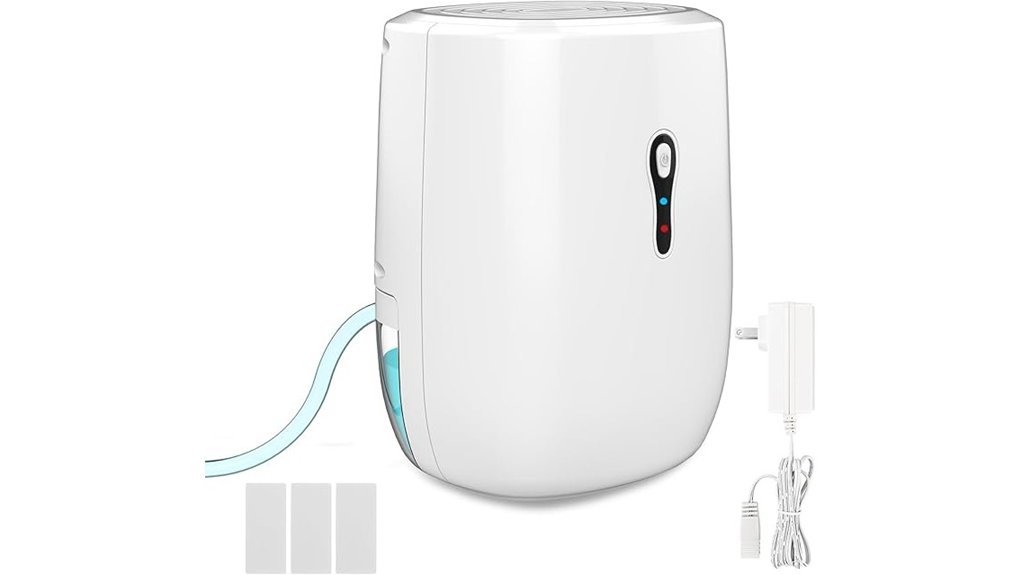
Best Continuous Drain
The Litever stands out because it includes a four-foot silicone drain hose. A secure continuous-drain setup can reduce tank emptying while an RV is parked, but the hose must run downhill to a suitable collection or discharge point. The hose cannot pump water upward.
The manufacturer states that the unit can extract up to 360 ml, or approximately 12 ounces, per day at 86°F and 80% relative humidity. It is designed for small enclosed areas and should be treated as localized moisture control rather than a whole-trailer solution for a serious moisture problem.
Why you may like it: It solves the common problem of a small collection tank filling while the trailer is parked.
Who should buy this: Owners who can create a stable, leak-free, gravity-fed drainage route.
Who should avoid this: Travelers who cannot keep the hose downhill, protected from kinks, and away from areas where discharged water could cause damage.
Pros:
- Four-foot continuous-drain hose reduces tank maintenance.
- Manufacturer-stated extraction of up to 360 ml per day under specified conditions.
- Auto shutoff remains available when using the tank.
Cons:
- The hose cannot move water uphill.
- Drain routing requires regular inspection.
- Its modest extraction is intended for small enclosed areas.
TABYIK 35 OZ Dehumidifier for RVs and Small Spaces
Best Quiet Compact Pick
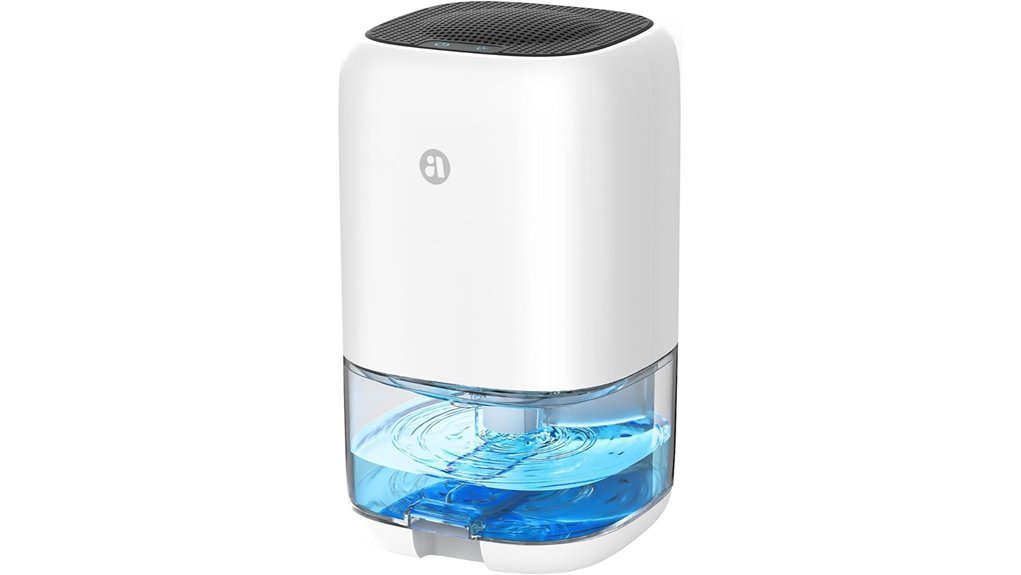
The TABYIK is well suited to a small RV bedroom, bathroom, closet, or wardrobe area. Its listing identifies a 35-ounce tank, automatic shutoff, a claimed operating level of 28 dB, and maximum collection of 450 ml, or about 16 ounces, per day at 86°F and 80% relative humidity.
The compact body is easier to position than a large 77- or 95-ounce model. The tradeoff is a smaller reservoir that needs more frequent checking during humid weather.
Why you may like it: It provides a useful stated extraction rate in a compact body designed for quieter spaces.
Who should buy this: Light sleepers and owners of smaller trailers who want a portable unit near a sleeping or storage area.
Who should avoid this: Users who need rapid structural drying or enough extraction for persistent whole-trailer humidity.
Pros:
- Up to 450 ml per day under the manufacturer’s stated test conditions.
- Claimed 28 dB operation suits noise-sensitive areas.
- Compact design and automatic full-tank shutoff.
Cons:
- The 35-ounce tank requires more frequent inspection.
- Performance falls as temperature or relative humidity decreases.
- No continuous-drain connection is highlighted.
TENKER 77 OZ Dehumidifier for RVs
Best High-Output Claim
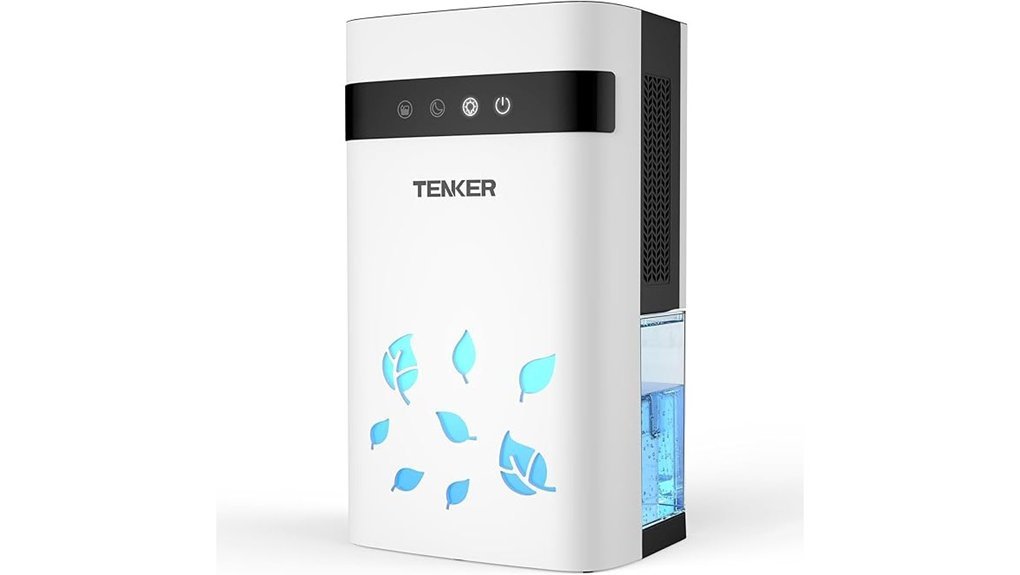
The TENKER combines a 77-ounce tank with dual semiconductor condensers, two operating modes, sleep operation, and automatic full-tank shutoff. The manufacturer states that it can collect up to 35 ounces of water in 24 hours in a closed area at 86°F and 80% relative humidity.
That is the largest stated daily collection figure among the retained compact electric models. However, it remains a manufacturer claim measured in unusually warm and humid conditions. It should not be interpreted as standardized compressor-dehumidifier performance.
Why you may like it: It offers a larger reservoir and a stronger laboratory-condition collection claim than most compact units in this list.
Who should buy this: Owners who want a larger tank and high- and low-speed operation without installing a drain hose.
Who should avoid this: Buyers selecting only from the advertised 1,000-square-foot figure or those needing continuous drainage.
Pros:
- Manufacturer-stated collection of up to 35 ounces per day.
- Large 77-ounce water tank.
- Sleep mode and automatic full-tank shutoff.
Cons:
- The peak collection figure uses 86°F and 80% RH test conditions.
- High-speed operation may be more noticeable near a bed.
- No continuous-drain connection is highlighted.
BEDRED 95 OZ Dehumidifier
Best Simple Large-Tank Pick
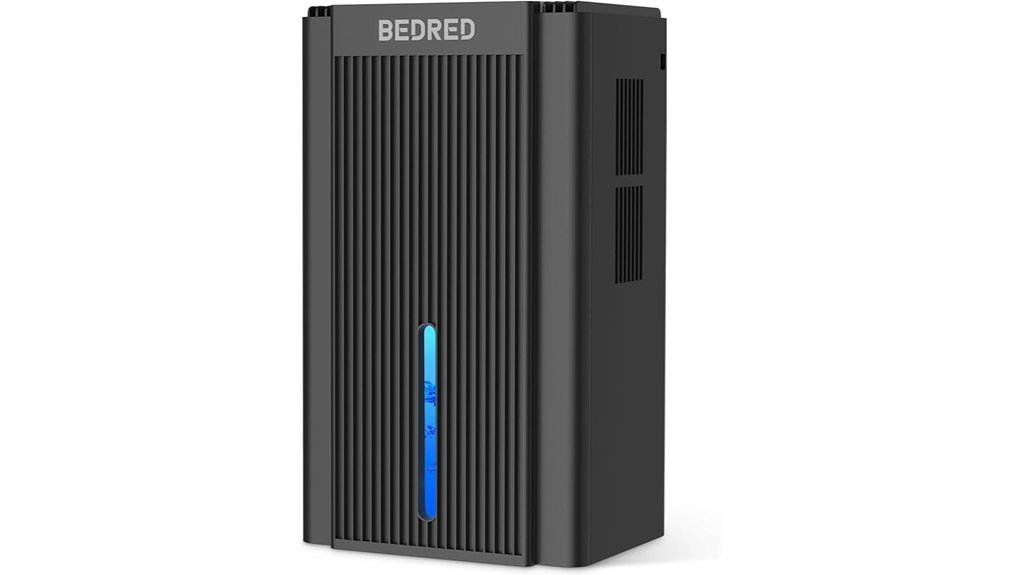
The BEDRED is a straightforward thermoelectric model with a 95-ounce tank, sleep mode, automatic full-tank shutoff, and ambient lighting. Its larger reservoir is the main reason to choose it over a compact 35- or 50-ounce model.
The listed dimensions are approximately 6.7 inches deep, 8.7 inches wide, and 14.6 inches high. Measure the intended location before ordering and allow open space around the inlet and outlet. A larger tank does not prove faster moisture removal, and a verified daily extraction rate was not established for this article.
Why you may like it: The large tank can reduce carrying and emptying frequency when the unit collects moisture slowly over several days.
Who should buy this: RV owners who prioritize simple operation and a large reservoir.
Who should avoid this: Buyers who need a verified extraction rate, built-in humidistat, or drain hose.
Pros:
- Large 95-ounce tank.
- Sleep mode and automatic full-tank shutoff.
- Simple controls for buyers who do not need several timers.
Cons:
- No verified daily moisture-removal figure is used here.
- The 1,000-square-foot marketing claim is not a useful capacity comparison.
- No continuous drainage is highlighted.
Deyagoo 1500ML Small Dehumidifier
Best Mid-Size Compact Pick
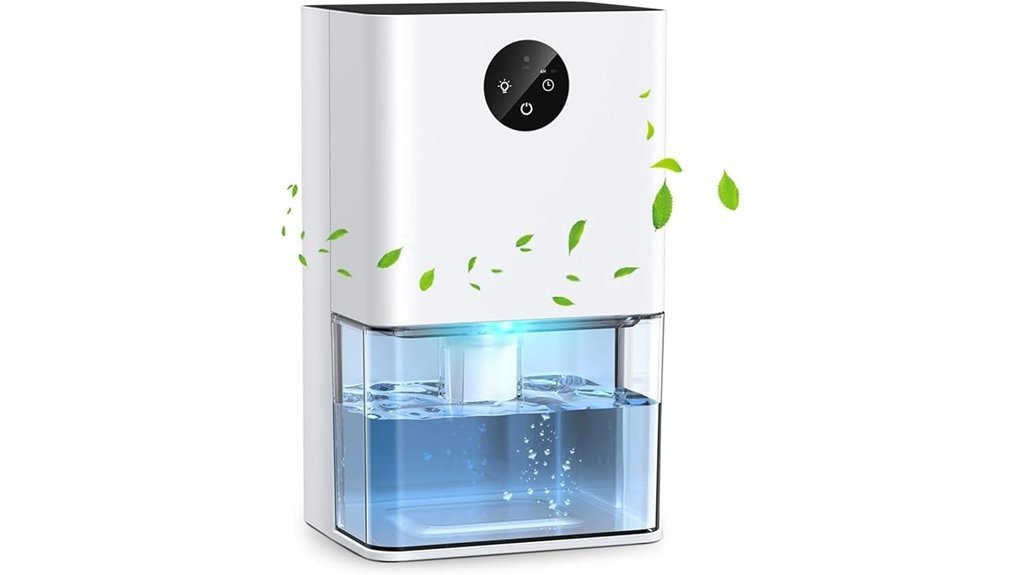
The Deyagoo uses a 1500 ml, approximately 50-ounce, tank in a compact body measuring about 5.91 by 4.72 by 9.84 inches. The manufacturer claims collection of up to 300 ml per day at 86°F and 80% relative humidity and an operating level of approximately 30 dB.
That combination makes it a practical middle ground between a small 35-ounce bedside model and a taller 77- or 95-ounce unit. Its footprint is useful in an RV bathroom, closet, or sleeping area where counter and floor space are limited.
Why you may like it: It balances compact dimensions with a tank that is easier to manage than the smallest models.
Who should buy this: Owners who need a compact unit for one local moisture-prone zone.
Who should avoid this: Users needing a drain hose or substantially faster water removal.
Pros:
- Compact footprint with a 50-ounce tank.
- Manufacturer-stated collection of up to 300 ml per day.
- Claimed 30 dB operation and automatic full-tank shutoff.
Cons:
- No continuous-drain connection.
- Lower stated collection than BREEZOME, TABYIK, or TENKER.
- Requires regular tank rinsing and air-inlet cleaning.
NeedDuck 44 OZ Portable Quiet Dehumidifier
Best Controls
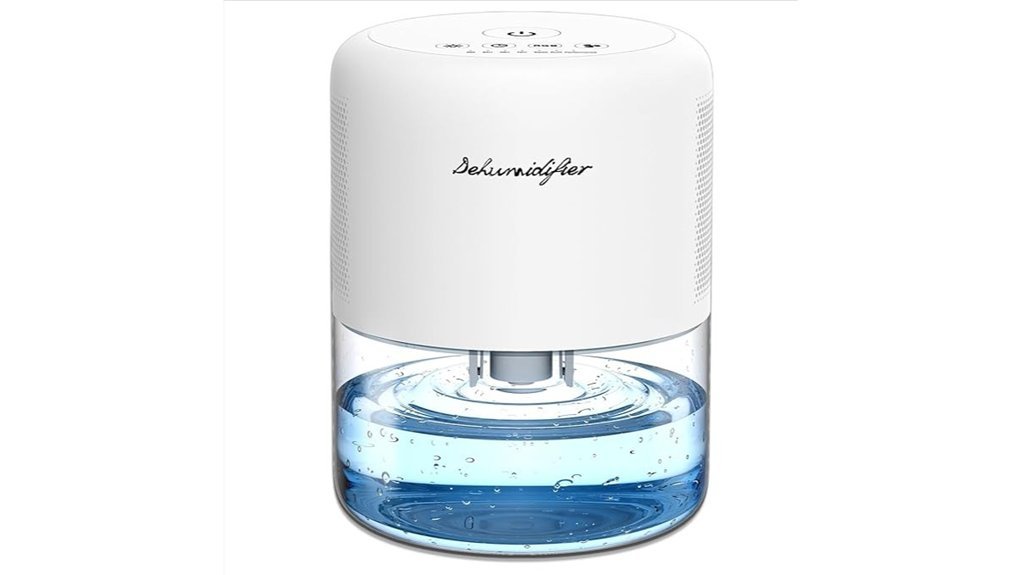
The NeedDuck includes a 44-ounce tank, automatic defrost, automatic full-tank shutoff, three operating modes, four timer options, and adjustable lighting. These controls are useful when you want separate settings for daytime operation, lower-noise nighttime use, or a limited run period.
The listing describes the unit as providing gradual, low-energy moisture reduction rather than rapid extraction. A dependable daily removal figure was not established for this article, so buyers should judge it by the amount of water collected in their own trailer.
Why you may like it: It provides more control over operating time and mode than a basic one-button model.
Who should buy this: RV owners who value timers, modes, and defrost protection.
Who should avoid this: Anyone who wants the fewest possible controls or needs continuous drainage.
Pros:
- Three operating modes and four timer options.
- Automatic defrost and full-tank shutoff.
- Compact tank is easier to carry to a sink.
Cons:
- No verified daily extraction figure is used here.
- The 44-ounce tank may fill faster than a larger reservoir.
- It is intended for gradual localized moisture control.
BeOkay 58 OZ Small Dehumidifier
Best Timer and Safety Controls
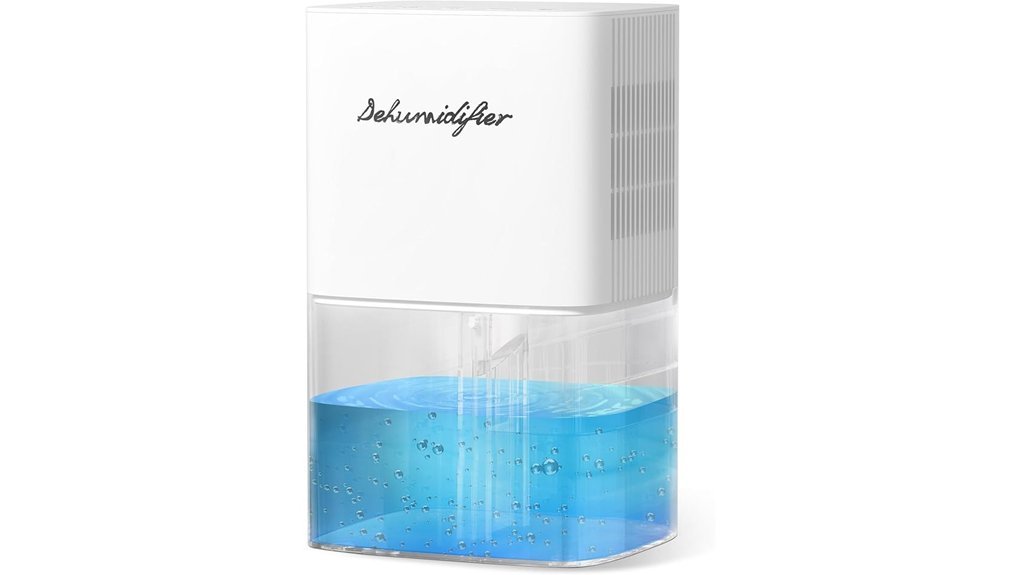
The BeOkay uses a 1657 ml, approximately 58-ounce, tank and includes five timer settings, three operating modes, automatic defrost, adjustable lighting, and automatic shutoff if the tank fills, is removed, or the unit tilts or falls.
The manufacturer states that sleep-mode noise remains below 40 dB. Noise tolerance varies, but the combination of timers and three modes gives RV owners more ways to balance moisture removal with nighttime comfort.
Why you may like it: It combines flexible scheduling with more shutoff conditions than most simple compact models.
Who should buy this: Owners who want planned run times, separate performance modes, and tilt protection.
Who should avoid this: Anyone who needs a drain hose or a verified high daily extraction rate.
Pros:
- Five timers and three operating modes.
- Defrost, full-tank, tank-removal, and tilt protection.
- Moderate 58-ounce tank size.
Cons:
- No verified daily moisture-removal rate is used here.
- More controls create a busier interface.
- No continuous-drain connection is highlighted.
Camco Refillable Moisture Absorber
Best Refillable Storage Absorber
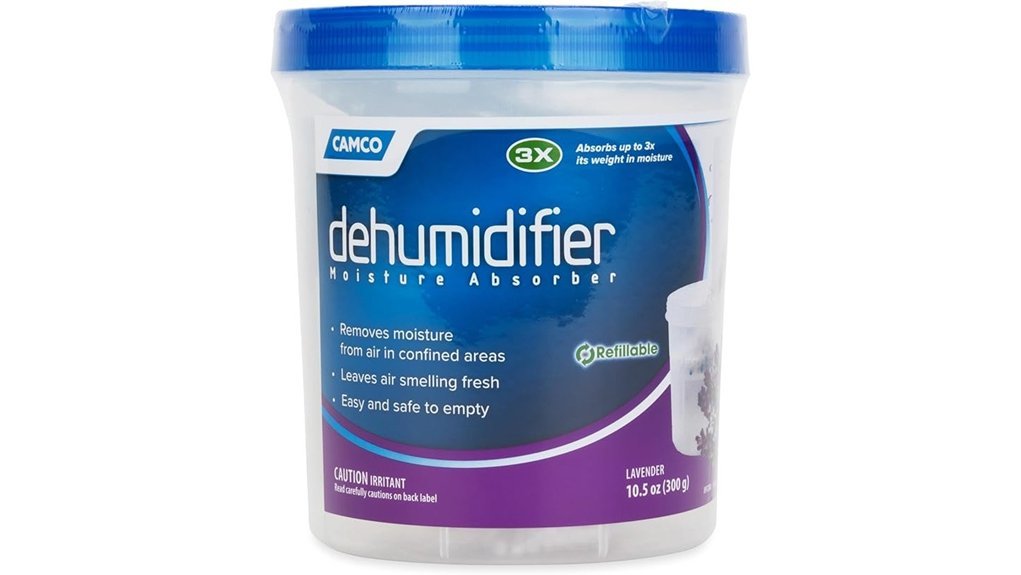
The Camco moisture absorber is designed for confined areas including RVs, boats, closets, bathrooms, and storage spaces. Its refillable media requires no electricity, and the manufacturer states that the media can absorb up to three times its weight in water. The included media also contains lavender-scented beads.
This is a passive absorber rather than a powered dehumidifier. It works slowly and cannot respond to cooking, showering, breathing, wet clothing, or active condensation as quickly as an electric unit.
Why you may like it: The refillable container provides basic moisture control where dependable power is unavailable.
Who should buy this: RV owners needing passive control in a parked, unpowered trailer.
Who should avoid this: Fragrance-sensitive buyers or anyone needing rapid moisture removal.
Pros:
- No electricity, fan noise, or collection-tank motor.
- Refillable container reduces full-unit replacement.
- Explicitly marketed for confined areas including RVs.
Cons:
- Much slower than an electric dehumidifier.
- Requires replacement media and careful liquid disposal.
- Lavender fragrance may not suit every user.
Vacplus Portable Moisture Absorbers (6 Pack)
Best for Multiple Storage Zones
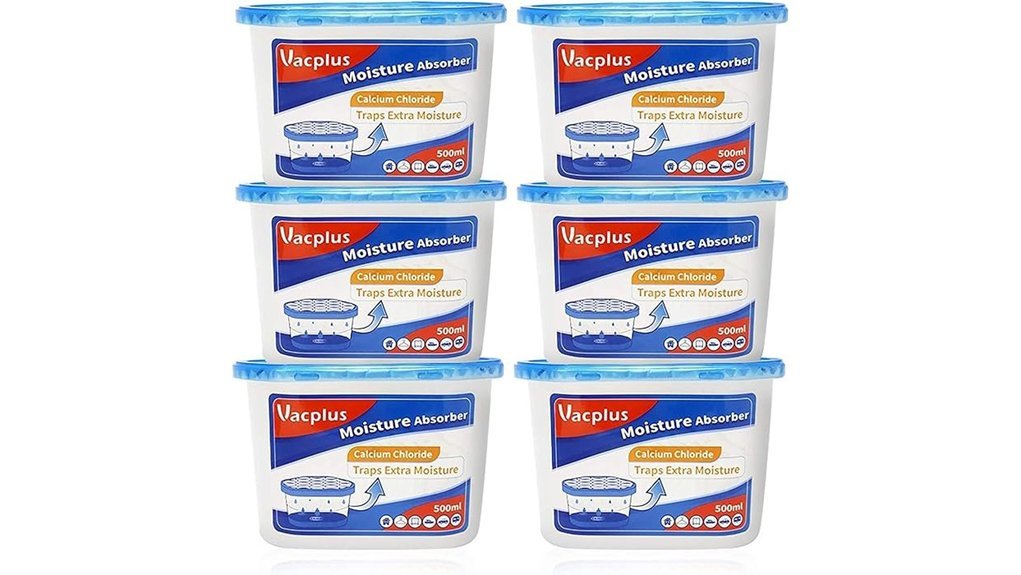
The Vacplus six-pack is useful when moisture collects in several small storage areas, such as an RV wardrobe, bathroom cabinet, under-bed compartment, or exterior storage bay. Each fragrance-free 10.5-ounce container uses calcium chloride and has a visible lower chamber for collected liquid.
Distributing several containers can provide better storage coverage than placing one passive absorber in the center of the trailer. However, these containers cannot actively circulate air and should not be expected to manage humidity throughout an occupied RV.
Why you may like it: Six separate containers can target several enclosed compartments without electricity or noise.
Who should buy this: Owners who want passive protection in multiple parked-storage zones.
Who should avoid this: Anyone expecting one pack to replace an electric dehumidifier during occupied use.
Pros:
- Six containers can be distributed around the RV.
- Fragrance-free selected version.
- No electricity, moving parts, or operating noise.
Cons:
- Single-use containers create recurring replacement cost.
- Slow moisture removal without active air circulation.
- Every container must remain upright and protected from spills.
Factors to Consider When Choosing a Dehumidifier for an RV Trailer
Electric vs. Non-Electric
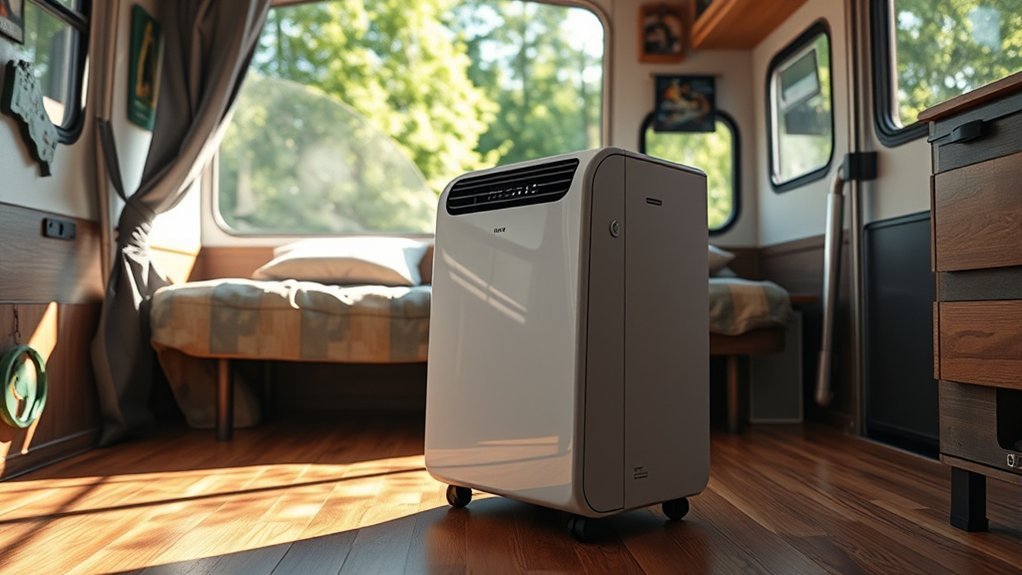
A compact electric unit actively moves air across a cooled surface and collects condensed water in a tank. It is generally the better choice for an occupied RV connected to suitable power. Passive calcium-chloride absorbers are more appropriate for cabinets, closets, and parked storage where electricity is unavailable. They work slowly, create concentrated liquid, and must remain upright.
Daily Moisture Removal
Do not choose from square-foot coverage alone. Compare the stated amount of water removed in 24 hours, the temperature and relative humidity used for the claim, and the amount the unit actually collects inside your trailer. Warm, very humid testing produces more water than cooler real-world RV conditions.
Tank Size and Drainage
Tank volume determines how much water can be stored before emptying; it does not show how quickly a machine removes moisture. A larger tank takes more space and becomes heavier when full. A drain hose is convenient only when it can run continuously downhill without kinks, backflow, loose connections, or exposure to freezing temperatures.
Noise and Sleep Mode
Small trailers can amplify fan and vibration noise. Manufacturer sound figures may use different test distances and conditions, so treat them as a general comparison rather than a guarantee. Place the unit on a level surface away from the bed and prevent it from touching a wall or cabinet that could transmit vibration.
Power Consumption and Electrical Compatibility
Check the voltage, frequency, wattage, plug, and adapter label on the exact unit supplied. Compare its load with your campsite hookup, inverter, battery bank, extension cord, and other operating appliances. A low-wattage unit is not automatically efficient if it runs continuously while collecting very little water.
Temperature and Defrost
Thermoelectric units normally remove less moisture as the air becomes cooler or drier. A defrost function may help manage frost on the cooling surface, but it does not give a small semiconductor unit the cold-weather performance of a compressor or desiccant dehumidifier. Follow the manufacturer’s operating-temperature range.
Placement and Travel Safety
Use a stable, level surface with open space around the intake and exhaust. Keep the appliance away from showers, sinks, bedding, curtains, flammable materials, and unprotected electrical connections. Switch off, unplug, empty, and secure portable electric units before driving. Remove or firmly secure liquid-collection absorbers before the RV moves.
Ventilation and Moisture Sources
Use bathroom and cooking exhaust fans when available, avoid drying wet clothing inside without ventilation, and wipe window condensation promptly. Inspect the roof, windows, plumbing, air conditioner drain, exterior seals, under-bed areas, and cabinets. A dehumidifier cannot correct continuing water entry.
Maintenance
Empty and rinse the tank regularly, wipe dust from the inlet and outlet, and clean any removable filter according to the manual. Inspect drain hoses for algae, kinks, freezing, or loose connections. Do not drink or reuse collected water. Allow cleaned parts to dry before reassembly.
Frequently Asked Questions
How Often Should I Empty the Dehumidifier Tank?
Check it at least once a day when first using the unit. Emptying frequency depends on the trailer’s humidity, temperature, ventilation, occupancy, tank size, and water-removal rate. Auto shutoff reduces overflow risk, but moisture removal stops when the tank is full.
Can a Dehumidifier Help Prevent Mold in an RV?
Lower humidity can reduce one condition that supports mold growth, but a dehumidifier cannot fix leaks, soaked insulation, trapped water, or existing contamination. Repair the moisture source, dry wet materials promptly, improve ventilation, and clean mold safely.
What Is the Ideal Humidity Level for an RV?
A practical starting target is approximately 30% to 50% relative humidity. Use a separate digital hygrometer because many compact thermoelectric units do not measure or control humidity precisely. Adjust operation if windows continue to condense or the air becomes uncomfortably dry.
Can I Run a Dehumidifier While Driving?
Portable tank units should normally be switched off, unplugged, emptied, and secured before travel. Movement can spill water, loosen a drain hose, obstruct airflow, or cause the unit to tip. Use a product in motion only when the manufacturer specifically permits it and the installation and power system are designed for mobile operation.
Are Portable Dehumidifiers Energy-Efficient?
Some compact thermoelectric units use modest wattage, but efficiency depends on how much water is removed for the electricity consumed. Compare wattage with the manufacturer’s daily extraction claim and your measured collection. A low-power unit that runs continuously while collecting little water may not be the best option.
Do Passive Absorbers Replace an Electric Dehumidifier?
No. Passive absorbers can help in small enclosed storage areas, but they do not actively circulate air or respond quickly to moisture generated by occupants, showers, cooking, wet clothing, or significant condensation. They are best treated as storage aids.
When Do I Need a Compressor Dehumidifier?
Consider a properly sized compressor model when humidity remains high despite ventilation and a compact unit, or when you need substantially faster water removal. Confirm that the RV has enough floor space, electrical capacity, airflow clearance, drainage, and suitable operating temperatures for the larger machine.
How Do I Maintain My Dehumidifier?
Unplug it before cleaning. Empty and wash the tank, clear dust from the air inlet and outlet, clean the filter if one is included, and inspect the power cord, adapter, and drain hose. Let washable parts dry before reassembly and follow the product manual.
Final Recommendation
Best overall compact electric: The BREEZOME 60 OZ offers the most balanced combination of a 60-ounce tank, stated 700 ml/day maximum collection, timer settings, sleep operation, portability, auto shutoff, and defrost.
Best low-maintenance powered option: Choose the Litever when the RV is parked and you can safely maintain a continuous downhill drain route.
Best quiet compact option: Choose the TABYIK for a small sleeping or storage area when compact size and a lower stated sound level matter.
Best higher-output claim: Consider the TENKER when you want a 77-ounce tank and the strongest manufacturer-stated daily collection figure in this comparison.
Best parked-storage solutions: Use the Camco refillable absorber or Vacplus containers in stable, protected locations when the RV is parked and unpowered.
The right choice is the model that matches your actual moisture load, temperature, power system, available space, and maintenance routine. Start with a hygrometer, repair leaks first, and record how much water the unit collects during several representative days. If relative humidity remains high or condensation continues, improve ventilation or move to a more capable dehumidifier rather than relying on a larger marketing coverage number.