Quick Verdict: Best Dehumidifiers for Basement Moisture
If your basement feels damp, smells musty, or collects moisture after rain, start by matching the dehumidifier to the size and severity of the problem. A wet basement usually needs a compressor-style electric dehumidifier with a hose drain option, while a small storage corner or closet may only need a passive moisture absorber.
- Best for large basements: Waykar 80 Pints, AEOCKY 4500 Sq.Ft, hOmeLabs Wi-Fi, and Vellgoo 64 Pint models.
- Best for medium basement spaces: VEAGASO 2500 Sq.Ft and KNKA 2500 Sq.Ft models with drain-hose support.
- Best for light dampness or small rooms: 95OZ Dehumidifier and KeepGlad 98OZ Dehumidifier.
- Best for closets, cabinets, RVs, and enclosed storage: Vacplus Moisture Absorber Buckets and Vacplus 2LB Moisture Absorber.
Before you buy: Confirm the current Amazon listing for capacity, room-size recommendation, hose details, warranty, dimensions, and included accessories because product specifications can change.
Choosing the right dehumidifier for basement moisture in 2026 depends on room size, humidity level, drainage setup, noise level, energy use, and how often you plan to run the unit. A small thermoelectric unit can work well for a bedroom, closet, bathroom, or lightly damp basement room, while a wet basement usually needs a larger compressor model with stronger daily moisture removal and continuous drainage.
This guide compares compact electric models, medium-size hose-drain units, large-room compressor dehumidifiers, smart Wi-Fi options, Energy Star-style picks, and passive moisture absorbers. The goal is to help you choose the right product for your actual space instead of buying a unit that is too weak, too large, too loud, or too inconvenient to maintain.
Use the comparison table first, then read each product section for the best use case, main strengths, honest limitations, drainage notes, and buyer cautions. Product details can change, so always confirm the current specs, warranty, size, drain-hose setup, and availability on Amazon before buying.
Quick Comparison of Basement Dehumidifiers
| Product | Best For | Listed Coverage or Capacity | Drainage Style | CTA |
|---|---|---|---|---|
| 95OZ Dehumidifier for Home with Auto Shut Off | Small rooms, bedrooms, and lightly damp spaces | Up to 1,000 sq. ft.; 95 fl oz tank | Manual tank with auto shutoff | Check Price on Amazon |
| VEAGASO 2500 Sq.Ft Dehumidifier with Drain Hose | Basements needing hose drainage | Up to 2,500 sq. ft.; up to 34 pints daily | Manual tank or hose drainage | Check Price on Amazon |
| Waykar 80 Pints Energy Star Dehumidifier for Home | Large basements and humid homes | Up to 5,000 sq. ft.; up to 80 pints daily | Manual tank or continuous drainage | Check Price on Amazon |
| KNKA 2500 Sq.Ft Dehumidifier with Drain Hose | Quiet operation in medium to large rooms | Up to 2,500 sq. ft.; up to 34 pints daily | Tank or included drain hose | Check Price on Amazon |
| Vacplus Moisture Absorber Buckets (4-Pack) | Closets, bathrooms, RVs, and small enclosed spots | 2200 ml bucket capacity | Passive disposable bucket | Check Price on Amazon |
| AEOCKY 4500 Sq.Ft Energy Star Dehumidifier | Energy-conscious large-room moisture control | Up to 4,500 sq. ft.; up to 80 pints daily | Tank or drainage setup | Check Price on Amazon |
| hOmeLabs Wi-Fi Dehumidifier for Home and Office | Smart control and remote monitoring | Up to 7,000 sq. ft.; up to 50 pints daily listed in article | Tank or hose connection | Check Price on Amazon |
| Vellgoo 64 Pint Energy Star Dehumidifier for Home | Large residential spaces and garages | Up to 4,000 sq. ft.; up to 64 pints daily | Manual tank or continuous drainage | Check Price on Amazon |
| KeepGlad 98OZ Dehumidifier for Home and Basement | Quiet moisture control in smaller basements | Up to 1,000 sq. ft.; 98 oz capacity | Tank or continuous drain option | Check Price on Amazon |
| Vacplus 2LB Moisture Absorber – 2 Packs | Small storage areas and odor-prone enclosed spaces | 2000 ml listed capacity | Passive disposable absorber | Check Price on Amazon |
How to Pick the Right Basement Dehumidifier Fast
Choose by moisture level first. A lightly damp finished basement may work with a smaller unit, but a wet or musty basement usually needs a higher-pint compressor model. If your basement has recurring water leaks, fix the water source first because a dehumidifier manages air moisture but does not solve foundation leaks.
Choose by drainage second. If you can place the unit near a floor drain, sink, or condensate pump, a hose-drain model can save you from emptying the tank every day. If you cannot use a drain hose, tank size and auto shutoff become more important.
Choose by comfort third. For finished basements, bedrooms, offices, and gyms, noise level, portability, display brightness, and smart controls can matter almost as much as capacity.
95OZ Dehumidifier for Home with Auto Shut Off
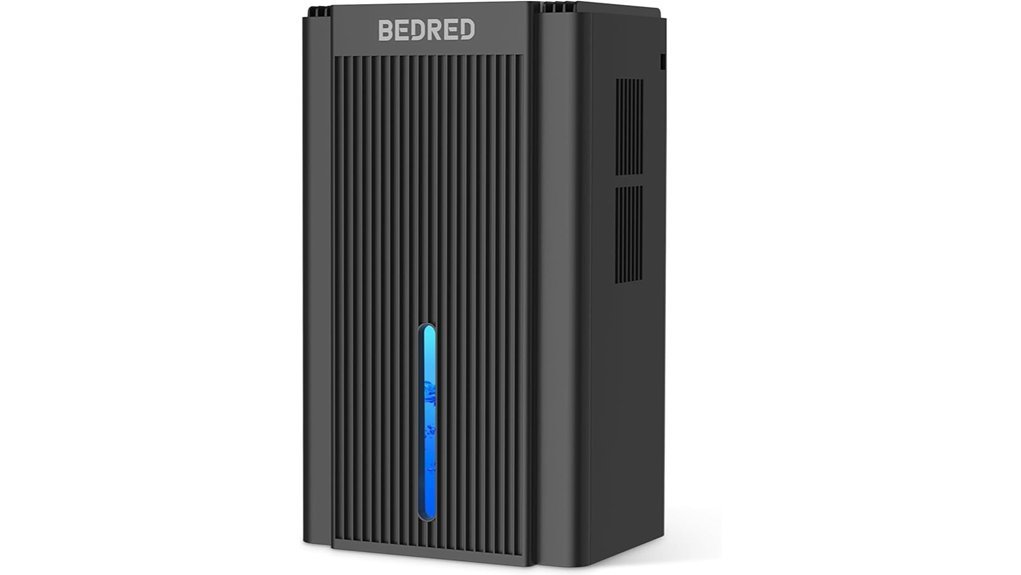
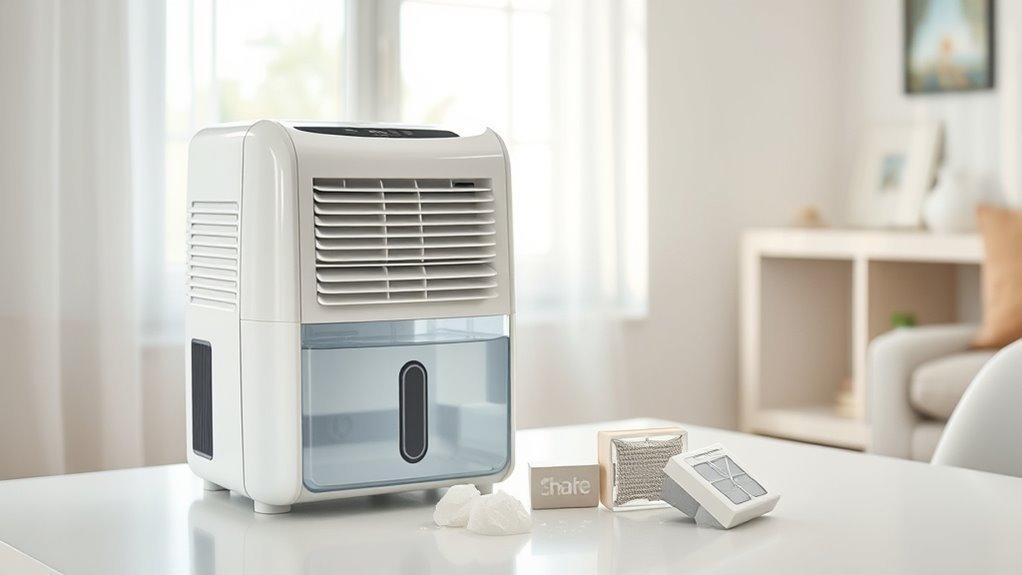
The 95OZ Dehumidifier for Home with Auto Shut Off is a practical choice if you want light moisture control in a basement room, bedroom, bathroom, closet, or small living area. This semiconductor dehumidifier is listed for spaces up to 1,000 square feet and uses thermoelectric cooling rather than a large compressor. That makes it better suited for mild dampness, small enclosed rooms, and everyday comfort rather than a severely wet basement.
Its 95 fluid-ounce tank helps reduce how often you need to empty it, and the auto shutoff feature powers the unit down when the tank is full. The sleek design, 7-color ambient lighting, and sleep mode make it easy to place in a room where appearance and noise matter. If your basement has standing water, musty walls, or heavy seasonal humidity, you may want a higher-pint compressor model instead.
Why You’ll Like It: This model is easy to place, simple to run, and more room-friendly than a bulky basement unit. It is a good fit when your goal is comfort, light dampness control, and overflow protection rather than aggressive whole-basement drying.
Best For: Homeowners seeking a compact, low-maintenance option for mild humidity in small to medium spaces.
Who Should Buy This: Buy it if you need a quiet, compact dehumidifier for a lightly damp room, bedroom, bathroom, closet, laundry corner, or finished basement area.
Who Should Skip It: Skip this model if you need heavy-duty moisture removal for a large, wet basement or if you want a unit with a high daily pint rating.
Pros:
- Compact design that fits seamlessly into different rooms and locations.
- Auto shutoff feature ensures safety by powering down when the water tank is full.
- 7-color ambient lighting creates a relaxing atmosphere while improving air comfort.
Cons:
- May require regular maintenance to keep the thermoelectric system functioning optimally.
- Coverage of 1,000 square feet may not be sufficient for larger open spaces.
- Some users may find the intermittent operation mode less effective in extreme humidity conditions.
Buyer Note: Confirm the current room-size recommendation and tank details on the product page before buying, especially if your basement moisture problem is more than light dampness.
VEAGASO 2500 Sq.Ft Dehumidifier with Drain Hose
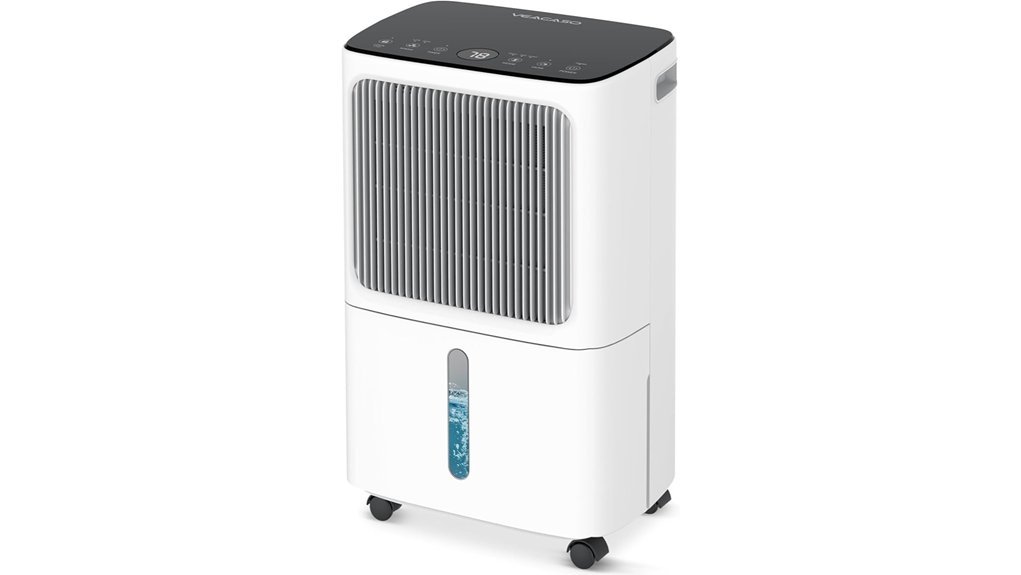
For homeowners tackling humidity issues in spaces up to 2,500 sq. ft., the VEAGASO 2500 Sq.Ft Dehumidifier is a strong option to compare. With a listed capacity to remove up to 34 pints of moisture daily, it is built for damp basements, laundry areas, storage rooms, and other spaces where a small desktop unit may not be enough.
You can choose from three smart modes, including DEHU, DRY, and CONT, so the unit can handle normal humidity control, clothes drying support, or ongoing moisture removal. The intuitive LED touch panel makes adjustments easy, while the whisper-quiet operation helps reduce disruption in finished basement areas. The flexible drainage options are one of the biggest advantages because you can connect a hose for continuous drainage or use the manual tank when a floor drain is not nearby.
Why You’ll Like It: This model gives you more serious moisture control than a compact unit without jumping straight to a large 80-pint class machine. The hose drainage option is especially useful if your basement gets damp often and you do not want to keep emptying the tank.
Best For: Homeowners seeking an effective solution for humidity control in medium to large basement spaces up to 2,500 sq. ft.
Who Should Buy This: Buy it if your basement is damp but not huge, and you want a model with simple controls, several operating modes, and continuous drainage support.
Who Should Skip It: Skip it if your basement is much larger than the listed coverage area or if you need an 80-pint class unit for extreme humidity.
Pros:
- Efficiently removes up to 34 pints of moisture daily, ideal for damp areas.
- Whisper-quiet operation of up to 40 dB listed in the article helps reduce disruption during use.
- Flexible drainage options provide convenience for continuous or manual drainage.
Cons:
- May require regular maintenance of the filter for optimal performance.
- The 0.53-gallon tank may need frequent emptying in very humid conditions.
- Limited to spaces up to 2,500 sq. ft., which may not suffice for larger areas.
Buyer Note: If you plan to use continuous drainage, check that your basement has a suitable drain location and that the hose path can slope properly.
Waykar 80 Pints Energy Star Dehumidifier for Home
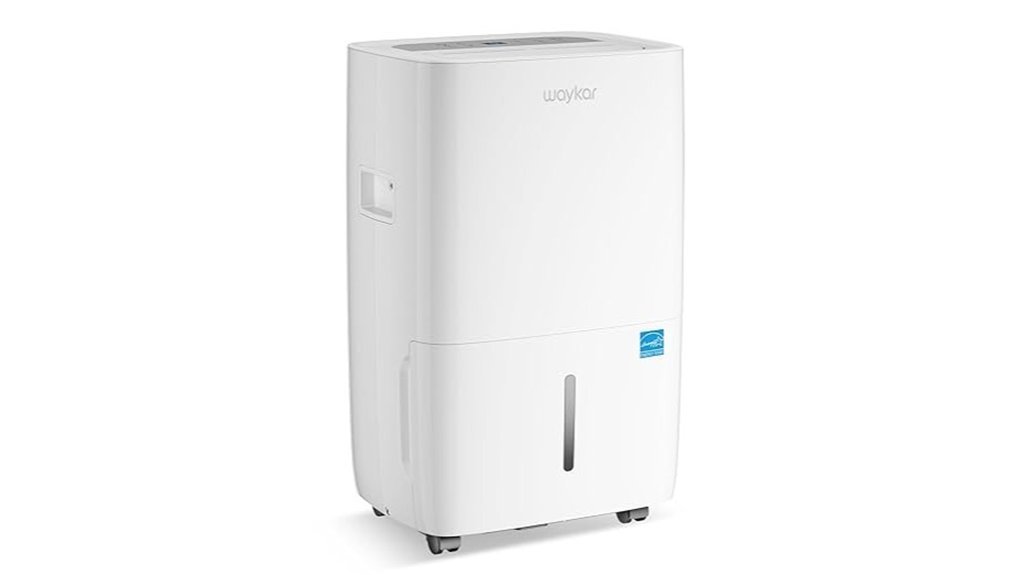
If you need a powerful solution for damp basements, the Waykar 80 Pints Energy Star Dehumidifier is designed for larger spaces. With a listed capacity of 80 pints per day, it covers up to 5,000 sq. ft., making it a better fit for open basements, humid homes, and areas where moisture returns quickly after rain or seasonal changes.
You can adjust humidity levels from 30% to 80%, while the 90° auto swing airflow helps distribute dry air more evenly. It operates quietly at just 42 dB, which is helpful if your basement is also used as a living room, office, gym, or guest space. The flexible drainage options, including a built-in hose for continuous drainage, simplify maintenance and reduce the need to empty the tank manually.
Why You’ll Like It: This is one of the stronger choices in the roundup for larger basements where dampness keeps coming back. The higher listed capacity, adjustable humidity range, and continuous drainage option make it easier to manage moisture over long periods.
Best For: Those seeking an efficient and reliable dehumidifier for large spaces, such as basements or homes in humid climates.
Who Should Buy This: Buy it if your basement is large, open, or frequently humid, and you want a model designed for stronger daily moisture removal.
Who Should Skip It: Skip this unit if your room is small and only lightly damp, since a large-capacity unit may be more than you need.
Pros:
- High Capacity: Removes up to 80 pints of moisture per day, making it suitable for large areas up to 5,000 sq. ft.
- Quiet Operation: Runs at a low noise level of 42 dB, ideal for bedrooms or workspaces.
- Flexible Drainage Options: Offers both manual and continuous drainage for easy maintenance.
Cons:
- Size: The unit may be larger and heavier than some portable dehumidifiers, making it less convenient for smaller spaces.
- Initial Cost: Higher upfront investment compared to basic models.
- Water Tank Capacity: The 1.14-gallon tank may need frequent emptying in extremely damp conditions.
Buyer Note: Large-capacity models work best when doors and windows stay closed and the unit is placed where air can move freely around it.
KNKA 2500 Sq.Ft Dehumidifier with Drain Hose
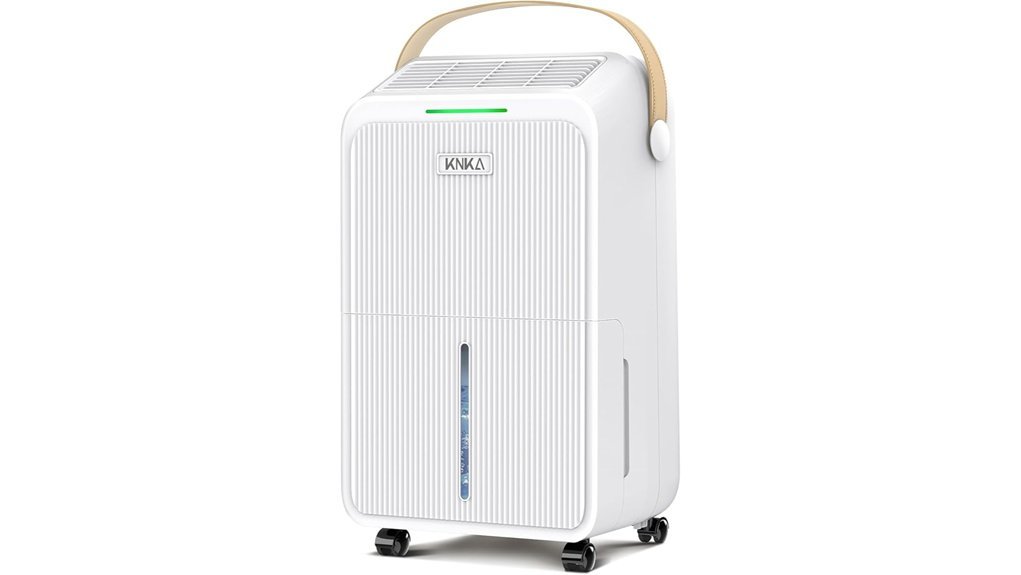
With coverage of 2500 sq. ft., the KNKA Dehumidifier is built for large rooms, basement areas, offices, and other moisture-prone spaces. It removes up to 34 pints of moisture daily, helping reduce damp air that can lead to musty smells, condensation, and discomfort.
You can choose from multiple modes, including DEHU for humidity control and DRY for quick clothes drying support. Its continuous drainage option with a 3.28 ft drain hose makes maintenance easier if you have a drain nearby. The quiet operation at just 37dB is a major advantage for finished basements, bedrooms, or work areas. The digital display and color-changing humidity indicator help you see what is happening at a glance, while the washable filter makes routine care more convenient.
Why You’ll Like It: The KNKA model is appealing if you want a balance of capacity, drainage convenience, quiet operation, and easy humidity feedback. It gives finished-basement users more comfort-focused features than a basic utility dehumidifier.
Best For: Those seeking a reliable dehumidifier for large spaces like basements, offices, or living areas to maintain optimal humidity levels.
Who Should Buy This: Buy it if you want a quiet dehumidifier for a medium basement, home office, bedroom area, or finished lower-level room.
Who Should Skip It: Skip it if you need coverage beyond 2,500 sq. ft. or if your basement has extremely heavy moisture that may require a higher-capacity unit.
Pros:
- Efficient moisture removal of up to 34 pints per day, ideal for reducing dampness and mildew risk.
- Multiple operational modes provide versatility for various needs, including clothes drying and continuous use.
- Quiet operation at just 37dB ensures minimal disruption in your home or workspace.
Cons:
- Tank capacity of 3 liters may require frequent emptying in high humidity conditions if not using continuous drainage.
- Size and weight might make it less portable for some users, especially in smaller spaces.
- Digital features may be overwhelming for those who prefer simpler, manual controls.
Buyer Note: This model is especially appealing if you want a quieter basement dehumidifier with visible humidity feedback.
Vacplus Moisture Absorber Buckets (4-Pack)
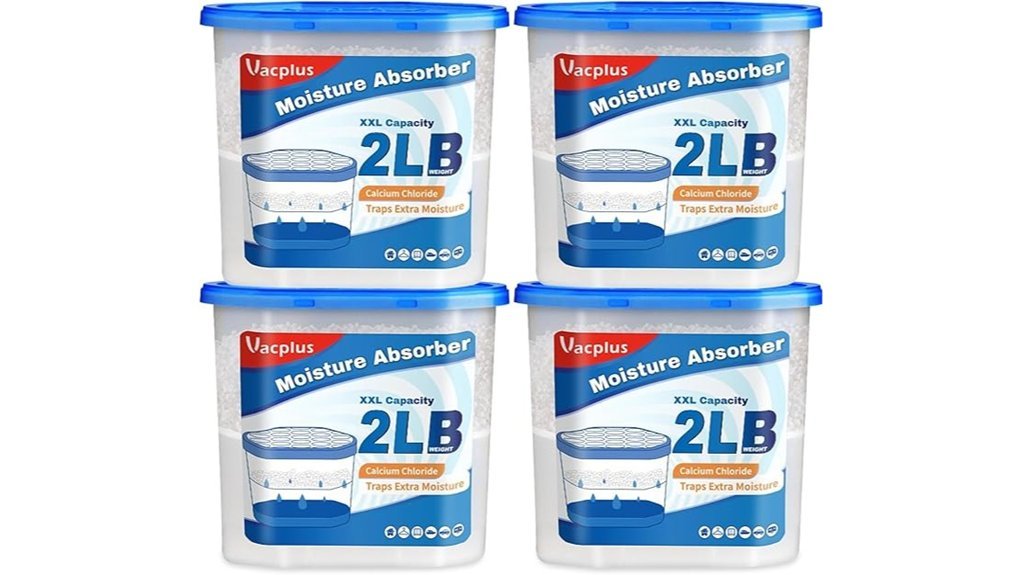
The Vacplus Moisture Absorber Buckets (4-Pack) are best viewed as a no-power moisture-control add-on for small spaces, not as a replacement for an electric basement dehumidifier. Each bucket holds 2200 ml of water and is designed to absorb excess moisture in enclosed areas. This makes the set useful for closets, bathrooms, cabinets, RVs, storage corners, and small basement zones where plugging in a machine is not practical.
These buckets contain high-purity calcium chloride, which starts working after opening and helps lock in excess humidity. The clear tank design makes it easy to track the fill level. They are family-safe, unscented, and require no setup, so you can peel the lid and place them where needed. For a large, humid basement, use these as a supporting option alongside an electric unit rather than your only moisture-control tool.
Why You’ll Like It: These buckets are simple, quiet, and electricity-free. They are useful when you want moisture control in places where a powered unit would be too large, too noisy, or inconvenient to plug in.
Best For: Those seeking an easy, no-electricity solution to reduce dampness in small enclosed spaces like closets, bathrooms, cabinets, and RVs.
Who Should Buy This: Buy it if you need spot moisture control in a storage area, closet, bathroom cabinet, RV, pantry-style space, or small basement corner.
Who Should Skip It: Skip these as your main basement solution if you need active moisture removal across a large room.
Pros:
- High Capacity: Each bucket absorbs over four times more moisture than standard options, with a capacity of 2200 ml.
- Family-Safe: The unscented formula is positioned for use around everyday home areas when placed properly.
- Easy to Use: No setup is required; simply peel the lid and place it in the desired area.
Cons:
- Limited Lifespan: The effectiveness may diminish as the moisture level rises, requiring regular replacement.
- Bulky Design: The size may not fit well in very tight spaces or small storage areas.
- Single-Use: Once the moisture is absorbed, the buckets cannot be reused and must be disposed of.
Buyer Note: Passive absorbers work slowly and locally. Use them for small areas, not whole-basement humidity control.
AEOCKY 4500 Sq.Ft Energy Star Dehumidifier
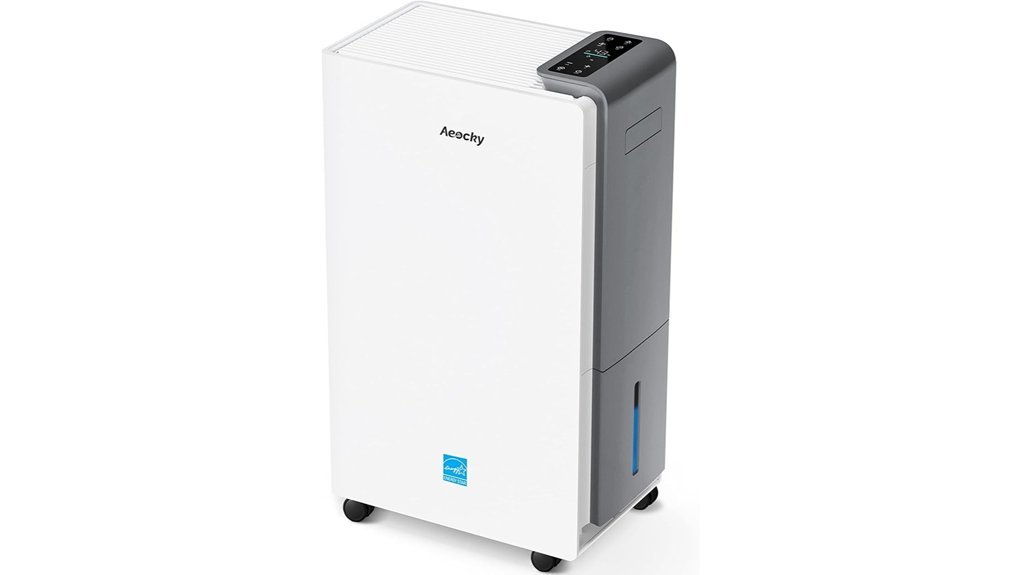
Looking for an energy-efficient solution for your basement? The AEOCKY 4500 Sq.Ft Energy Star Dehumidifier is designed to tackle moisture in large spaces while helping manage electricity use. With a listed capacity of 80 pints per day and coverage for up to 4500 sq.ft, it is a strong candidate for basements, open living areas, and larger rooms where humidity stays high for long periods.
Its ENERGY STAR Most Efficient 2025 certification claim should be confirmed on the current product page before buying, but the energy-efficiency angle is important for anyone who plans to run a dehumidifier often. Smart controls allow you to adjust humidity levels easily, while low noise operation helps keep your basement comfortable. With a durable build and a 3-year warranty listed in the source content, it is positioned as a long-term option for regular moisture control.
Why You’ll Like It: This model is made for buyers who expect frequent runtime and want to compare a stronger dehumidifier with an energy-conscious angle. It is a better fit for larger basement spaces than a compact 95 oz or 98 oz unit.
Best For: Homeowners seeking an energy-efficient and effective dehumidification solution for large spaces, such as basements or living areas.
Who Should Buy This: Buy it if you need a large-room dehumidifier and care about energy use, smart humidity control, and long-term basement comfort.
Who Should Skip It: Skip it if you only need a small unit for a closet, bathroom, or lightly damp room.
Pros:
- ENERGY STAR Most Efficient 2025 certification claim may appeal to buyers focused on energy savings, but it should be confirmed before purchase.
- Smart humidity control with adjustable settings and multiple operation modes supports comfort and convenience.
- Quiet operation at 44dB makes it suitable for use in living spaces without disruptive noise.
Cons:
- Initial investment cost may be higher compared to non-Energy Star models.
- Coverage limited to 4500 sq.ft, which may not be sufficient for larger homes or commercial spaces.
- Requires regular maintenance to ensure optimal performance and longevity.
Buyer Note: Before purchase, confirm the current ENERGY STAR listing, warranty terms, drainage setup, and any advertised energy-savings claims on the seller page.
hOmeLabs Wi-Fi Dehumidifier for Home and Office
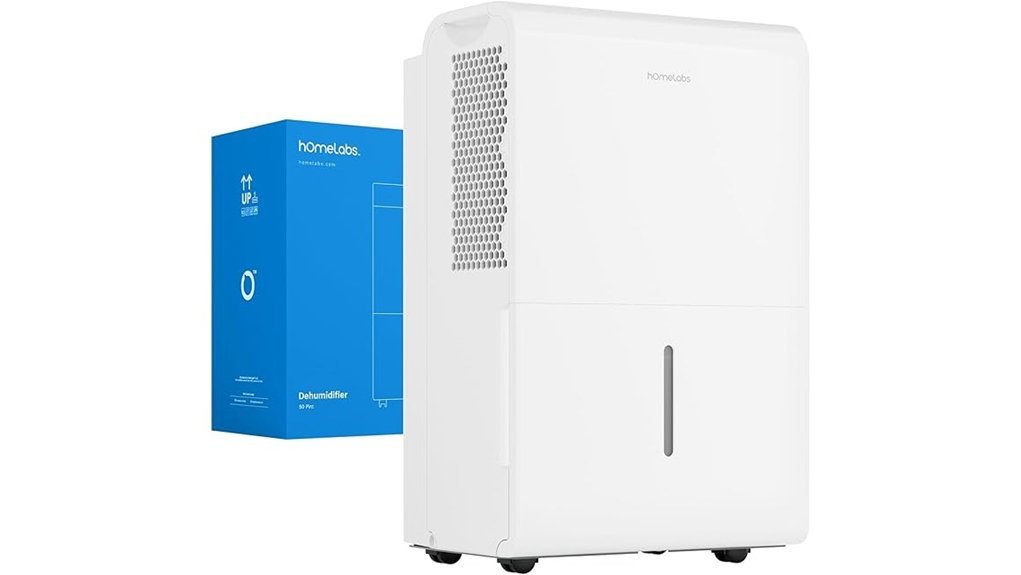
Experience ideal humidity control in your basement with the hOmeLabs Wi-Fi Dehumidifier. This unit is listed for coverage up to 7,000 square feet, with moisture removal details that should be checked carefully on the current Amazon page because capacity claims can vary by test condition. For buyers who want smart control, the big appeal is remote monitoring through Wi-Fi.
You’ll appreciate its adjustable humidity settings and smart features, which can help you control it remotely. The sleek design fits modern spaces, and its portability makes moving it easier when you need to dry different parts of the home. The quiet operation helps reduce disruption, while the 1.6-gallon tank and automatic shut-off reduce overflow worries. If you want app control for a basement, office, or large room, this is one of the more convenient options in the list.
Why You’ll Like It: This model is attractive for buyers who want to monitor and adjust humidity without always walking down to the basement. Wi-Fi control can be especially useful when the unit is placed in a lower level, office, rental space, or large home area.
Best For: Homeowners and office managers looking for an efficient and smart solution to control humidity in large spaces up to 7,000 sq ft.
Who Should Buy This: Buy it if you want app-based control, remote monitoring, automatic shutoff, and a larger listed coverage range.
Who Should Skip It: Skip it if you do not need Wi-Fi controls or if you prefer a simpler unit with fewer app-based features.
Pros:
- Wi-Fi Enabled: Allows for remote control and monitoring via smart home systems.
- High Capacity: The product listing mentions up to 120 pints in extreme conditions, but buyers should verify the exact model rating and test condition before purchase.
- Quiet Operation: Designed to operate with minimal noise, supporting a more comfortable environment.
Cons:
- Weight: At 41.2 pounds, it may be cumbersome for some users to move.
- Hose Not Included: Continuous drainage may require purchasing a separate hose for convenience.
- Limited Warranty Information: Details on warranty are not readily available without request.
Buyer Note: Because the section lists more than one moisture-removal figure, verify the exact model capacity and test-condition rating before deciding.
Vellgoo 64 Pint Energy Star Dehumidifier for Home
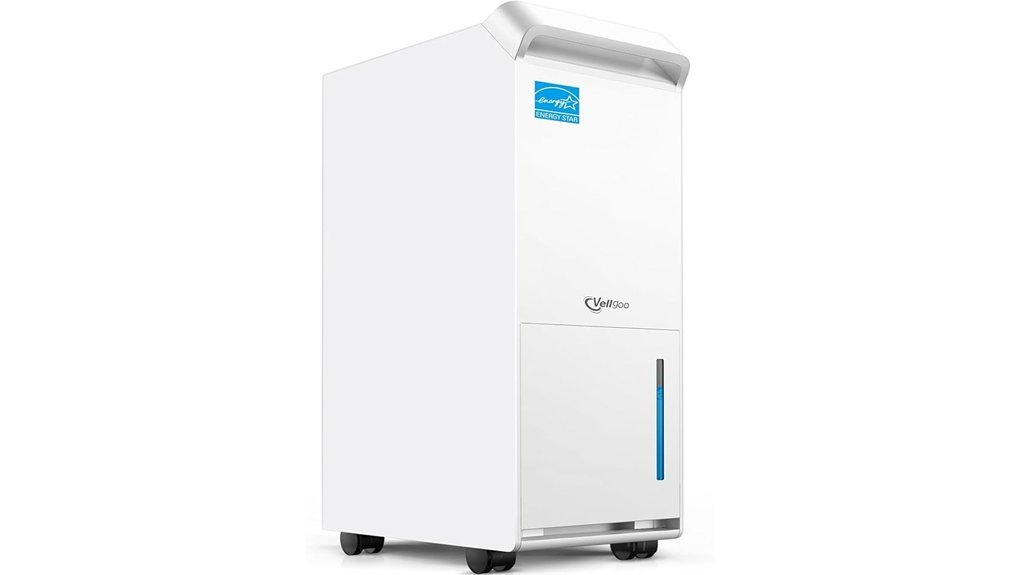
If you’re seeking an efficient solution for damp basements, the Vellgoo 64 Pint Dehumidifier is worth comparing. With a listed capacity to remove up to 64 pints of moisture daily, it covers areas up to 4,000 sq. ft. That makes it a middle-to-large space option for basements, bathrooms, garages, laundry areas, and other rooms where humidity can build up.
This Energy Star-certified model offers up to 44% greater energy efficiency according to the source content, which may help reduce electricity use during frequent operation. It features multiple operation modes, including Continuous and Humidity Control, along with a washable filter for easier maintenance. You can choose between manual tank emptying or continuous drainage, giving you flexibility based on your basement layout.
Why You’ll Like It: This model sits between the 34-pint class picks and the larger 80-pint class picks. That makes it useful if you want stronger drying power for a large residential area without necessarily choosing the highest listed capacity in the roundup.
Best For: Those needing an efficient dehumidifier for large residential spaces, such as basements, bathrooms, and garages.
Who Should Buy This: Buy it if you need a large-space dehumidifier for a basement, garage, bathroom area, or laundry room and want manual or continuous drainage flexibility.
Who Should Skip It: Skip it if you need the highest-capacity 80-pint class model or if your space is small enough for a compact unit.
Pros:
- Energy Star certified for up to 44% greater energy efficiency according to the product listing, which may help reduce electricity use.
- Versatile drainage options allow for manual emptying or continuous flow to suit user preferences.
- Multiple operation modes provide customizable humidity control for optimal comfort.
Cons:
- Weight not specified, which may be a factor for portability considerations.
- Limited warranty information available, requiring users to inquire for details.
- Potential noise level may be a concern for some users in quiet environments.
Buyer Note: Check the current product page for exact noise level, dimensions, warranty details, and whether a drain hose is included.
KeepGlad 98OZ Dehumidifier for Home and Basement
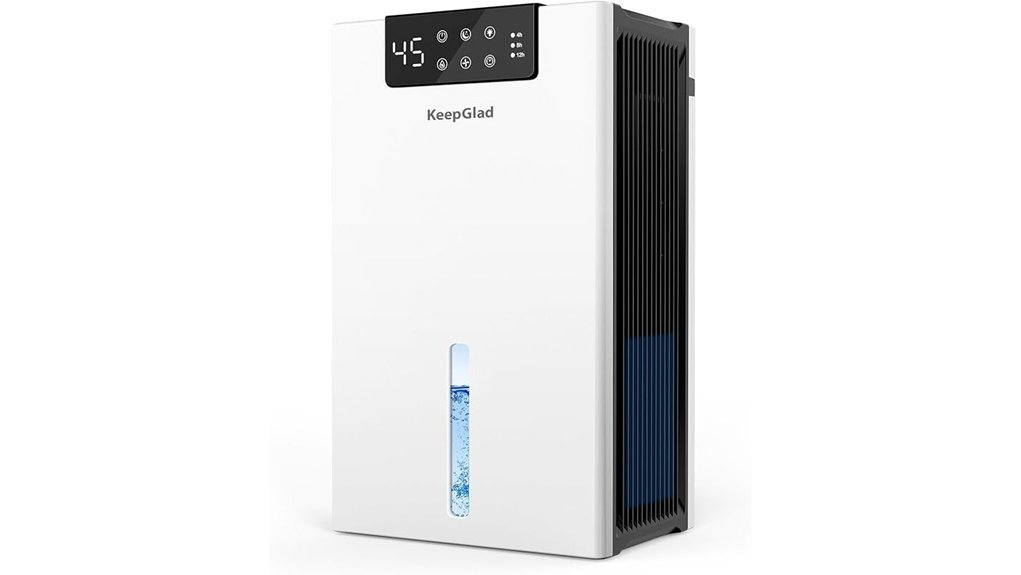
The KeepGlad 98OZ Dehumidifier is best for homeowners who want quiet moisture control in smaller basements, bedrooms, bathrooms, or living spaces. With a 98-ounce capacity, it covers up to 1,000 square feet and is listed as reducing humidity from 80% to 40%. Its smaller format makes it easier to place than a large compressor unit, but it is not the best match for a very wet or oversized basement.
The smart sensors help manage operation, and the continuous drain option reduces the need for manual tank emptying when set up correctly. The real-time humidity display and programmable timer help you manage energy use, while the ultra-quiet operation at just 28 dB is useful for sleeping areas or finished basements. Seven ambient lighting options, washable filters, and adjustable fan speeds add convenience.
Why You’ll Like It: This model is designed for comfort and convenience rather than industrial-level drying. It is a good match if you want a quiet unit with a display, timer, lighting, smart sensors, and a small-room footprint.
Best For: Homeowners seeking effective moisture control in smaller spaces like bedrooms, bathrooms, and compact basement rooms.
Who Should Buy This: Buy it if your priority is quiet operation in a bedroom, small finished basement, bathroom, or compact living area.
Who Should Skip It: Skip it if your basement is large, unfinished, very damp, or needs heavy-duty daily moisture removal.
Pros:
- High Capacity for Its Class: Can remove up to 40 ounces of moisture daily, making it useful for smaller rooms and light dampness.
- Quiet Operation: Operates at just 28 dB, making it suitable for bedrooms and living spaces.
- Convenient Features: Smart sensors and continuous drain option enhance ease of use.
Cons:
- Size: Its dimensions may be bulky for smaller rooms or tight spaces.
- Plastic Material: May not appeal to those preferring more durable or premium materials.
- Limited Coverage: Best suited for areas up to 1,000 square feet; larger spaces may require multiple units or a larger compressor model.
Buyer Note: This is a quiet comfort-focused option, so compare it against higher-pint models if your basement moisture problem is serious.
Vacplus 2LB Moisture Absorber – 2 Packs
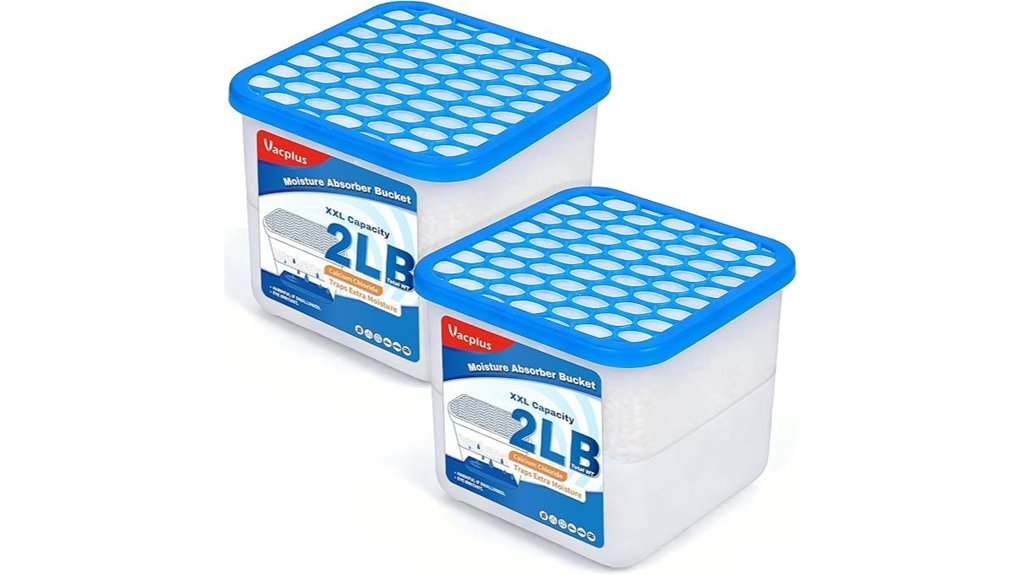
For those seeking a simple moisture solution for small spaces, the Vacplus 2LB Moisture Absorber offers a no-power alternative. It has a listed 2000ml capacity and uses calcium chloride crystals to capture moisture. Like the other Vacplus option above, this is best used in closets, bathrooms, cabinets, RVs, storage corners, or small basement sections rather than as a full-room electric dehumidifier.
Designed with a wide square base, it minimizes tipping and spills, making it practical for everyday placement. With a compact size of 6.5 x 6.5 inches, you can place it in different areas where musty odors or light moisture collect. Setup is simple: open the lid, remove the seal, and position it where needed. When full, disposal is straightforward, keeping maintenance hassle-free.
Why You’ll Like It: This is a low-maintenance pick for small enclosed spaces where dampness and odor collect slowly. It does not need a power outlet, so it can go in spots where an electric unit would not make sense.
Best For: Individuals looking to reduce moisture and musty odors in small indoor spaces without using electricity.
Who Should Buy This: Buy it for closets, storage shelves, cabinets, RV spaces, small bathrooms, and basement storage corners that need local moisture absorption.
Who Should Skip It: Skip this as a main basement dehumidifier if you need active humidity control across a large room.
Pros:
- High Capacity: Holds up to 2000ml of moisture, outperforming many smaller passive moisture absorbers.
- Stable Design: The wide square base helps prevent tipping, supporting safer placement in everyday areas.
- Easy Maintenance: Simple disposal of collected liquid makes upkeep hassle-free.
Cons:
- Limited to Calcium Chloride: May not be suitable for those preferring non-chemical solutions.
- Requires Replacement: Needs to be replaced periodically once full, adding to ongoing costs.
- Not Electrically Powered: Lacks the efficiency of electric dehumidifiers for larger spaces.
Buyer Note: Use this type of absorber as a spot-treatment product, especially in enclosed areas where a full dehumidifier would be too large.
Factors to Consider When Choosing Dehumidifiers for Basement Moisture
When you’re choosing a dehumidifier for your basement, several key factors come into play. Start with the room size and moisture level, then look at the unit’s capacity, drainage options, noise rating, and energy efficiency. A small bedroom unit may help with light dampness, but a wet basement usually needs a higher-capacity electric model with a hose connection.
Dehumidifier Capacity Requirements
Choosing the right dehumidifier for your basement starts with the coverage area. You’ll find units designed for spaces ranging from 1,000 to 7,000 square feet, so pick one that fits your basement size. Next, consider moisture removal capacity; smaller spaces may need dehumidifiers that remove 34 pints per day, while larger, humid areas might require 64 to 80 pints or more. Make certain the tank capacity aligns with expected moisture levels, as larger tanks mean less frequent emptying. For convenience, look for models with continuous drainage options, allowing you to connect a hose to a floor drain. Finally, assess the typical humidity levels in your basement to support better performance and comfort.
Coverage Area Considerations
Understanding the coverage area of a dehumidifier is essential for tackling basement moisture effectively. When you choose a unit, assess your basement size, as models in this roundup cover between 1,000 to 7,000 square feet according to the product listing. Larger spaces demand higher capacity models, which can remove 34 to 80 pints of moisture daily, depending on humidity levels and test conditions. It’s vital to match the dehumidifier’s capacity to your basement’s size for efficient moisture removal and to help reduce mold-friendly dampness. If your basement spans over 5,000 square feet, consider models specifically designed for larger areas. Additionally, keep in mind the basement’s ambient conditions, like temperature and humidity, as these factors influence how effectively the dehumidifier will operate in your space.
Drainage Options Available
Selecting the right drainage option is essential for maintaining ideal moisture control in your basement. Consider models with continuous drainage capabilities; these connect directly to a floor drain, sink, or suitable drain route, allowing uninterrupted moisture removal. If you prefer a simpler setup, many dehumidifiers come with a manual drainage option that uses a water tank, which automatically shuts off when full but requires regular emptying. Some units offer flexible solutions, like attachable hoses for automatic drainage, perfect for damp areas. Pay attention to drainage capacity, as some tanks hold several gallons, minimizing emptying frequency. Finally, confirm your drainage system fits your basement layout to maximize moisture removal effectiveness.
Noise Level Preferences
How important is the noise level of your dehumidifier when it comes to comfort in your basement? It can make a significant difference. Look for models with noise levels measured in decibels (dB); quieter units around 37-44 dB won’t disrupt your peace as much as louder utility models. Some dehumidifiers even come with a sleep mode, further lowering noise for nighttime use. If you want minimal disturbance, aim for whisper-quiet operation below 40 dB when possible. This is especially important for basements used as living rooms, bedrooms, home offices, gyms, or guest spaces.
Energy Efficiency Ratings
When you’re setting up your basement dehumidifier, energy efficiency ratings play a key role in your decision-making process. Look for models with ENERGY STAR certification or clearly stated efficiency information; these can reduce electricity use compared to less efficient options. Efficiency depends on how much moisture a unit removes relative to the energy it consumes, giving you a clearer performance metric. Aim for dehumidifiers with strong efficiency ratings, since better efficiency means more moisture extracted with less electricity. Many modern units also feature smart technology that adjusts operation based on current humidity levels, which can help reduce wasted runtime.
Portability Features Needed
While evaluating dehumidifiers for your basement, portability features are essential for ease of use and flexibility. Look for models with ergonomic handles and 360° swivel casters; these make it easy to move the unit across various surfaces. Weight also plays a significant role because lighter models are simpler to shift, especially in tight spaces. Compact dimensions enhance portability, allowing you to fit the dehumidifier into smaller areas without sacrificing efficiency. Some units offer built-in drainage options, like hoses, which enable continuous operation and reduce the need for frequent repositioning. Opt for design elements like wheels and handles that facilitate transport, making it easier to adjust the dehumidifier as humidity levels fluctuate throughout your basement.
Maintenance and Care Tips
Maintaining your dehumidifier is crucial for optimal performance and longevity. Regularly clean or replace filters to support ideal airflow and efficiency; clogged filters can hinder performance and increase energy use. Inspect and empty the water tank frequently to avoid overflow, especially in humid basements. Check drainage hoses for blockages and verify they’re securely connected to prevent leaks. Monitoring humidity levels is important; adjust settings to maintain a comfortable range of around 30%-50% relative humidity for effective moisture control and mold prevention. Finally, keep the exterior clean and free from dust and debris to enhance your dehumidifier’s performance. By following these care tips, you’ll maximize both efficiency and lifespan.
Electric Dehumidifier vs. Moisture Absorber
An electric dehumidifier is the better choice for a basement, large room, or any area where humidity is a recurring problem. It actively pulls moisture from the air and can run for long periods, especially when connected to a drain hose. A passive moisture absorber is better for small enclosed spots, such as closets, cabinets, bathrooms, RVs, or basement storage corners. It does not need electricity, but it also cannot match the drying power of a full-size dehumidifier. If your basement smells musty or feels damp across the whole room, start with an electric model and use passive absorbers only as extra support.
Pro Tips for Better Basement Moisture Control
- Place the unit away from walls: Leave open space around the intake and exhaust so air can move freely.
- Use continuous drainage when possible: A hose setup is better for basements that stay humid for long periods.
- Keep doors and windows closed: Open windows can bring in more humid air and make the unit work harder.
- Clean the filter regularly: A clogged filter can reduce performance and increase noise or energy use.
- Use passive absorbers only as support: They are helpful in closets and corners but are not replacements for electric basement dehumidifiers.
Safety Note Before Using a Basement Dehumidifier
A dehumidifier can help reduce damp air, musty smells, and moisture discomfort, but it should not be used as the only fix for leaks, flooding, or foundation water problems. If you see standing water, active leaks, wet electrical areas, or visible mold growth, address the water source and safety issue first. Always follow the manufacturer’s setup instructions, keep the unit on a stable surface, avoid blocking airflow, and use the correct drainage method.
Frequently Asked Questions
How Do I Know the Right Size Dehumidifier for My Basement?
To find the right size dehumidifier for your basement, measure the square footage and determine the humidity level. Generally, a unit with a capacity of 30-70 pints suits many basements effectively, while larger or wetter spaces may need a higher-capacity unit. If your basement is only lightly damp, a compact model may be enough for one room, but it may not control moisture across a large open basement.
Can Dehumidifiers Help With Mold Prevention in Basements?
Yes, dehumidifiers can help reduce indoor humidity, which makes the environment less favorable for mold growth. They work best when combined with good drainage, leak repair, airflow, and regular cleaning. If mold is already visible or widespread, moisture control alone may not be enough and the source of the problem should be fixed.
What Maintenance Do Dehumidifiers Require Over Time?
Dehumidifiers need regular maintenance, like emptying the water tank, cleaning or replacing filters, and checking for clogs. You should also inspect the unit’s coils, drainage hose, tank, and airflow area to keep it running efficiently. For basement use, check the filter more often during humid months because dust and moisture can build up quickly.
How Noisy Are Different Dehumidifier Models During Operation?
Most home dehumidifiers operate somewhere around quiet fan to noticeable hum levels, depending on the model, fan speed, and compressor design. Some models in this roundup list quiet operation around 28-44 dB, while larger compressor units may sound stronger during active moisture removal. If your basement is also a bedroom, office, gym, or living room, choose a model with a lower dB rating or sleep mode.
Are There Energy-Efficient Options for Large Basements?
Yes, there are energy-efficient options for large basements. Look for dehumidifiers with Energy Star-style claims, smart humidity control, auto mode, timer features, and continuous drainage. These features can help reduce wasted runtime while still lowering humidity. Always verify the current energy rating and performance details on the product page before buying.
Is a 95OZ or 98OZ Dehumidifier Enough for a Basement?
A 95OZ or 98OZ dehumidifier can help in a small, lightly damp basement room, closet, bathroom, or finished corner. It is usually not the best choice for a large, wet, unfinished, or very humid basement. For stronger moisture problems, compare compressor-style models with higher daily pint ratings and hose drainage.
Should I Use a Drain Hose in My Basement?
A drain hose is useful if your basement stays humid and the unit runs often. Continuous drainage lets the dehumidifier send collected water to a floor drain, sink, or other suitable drainage point instead of filling the tank. Make sure the hose is installed correctly and slopes properly unless your setup uses a pump.
Before You Buy Checklist
- Measure your basement square footage before choosing a coverage rating.
- Decide whether you need compact moisture control, medium-space drying, or large-basement performance.
- Check the listed daily pint capacity and remember that ratings can vary by test conditions.
- Confirm whether a drain hose is included or must be purchased separately.
- Check tank capacity if you cannot use continuous drainage.
- Compare noise level if the basement is used for sleeping, working, relaxing, or exercise.
- Review filter-cleaning instructions and maintenance needs before purchase.
- Verify warranty, dimensions, weight, and current product details on Amazon.
Conclusion
Choosing the right dehumidifier for basement moisture depends on how damp your space gets, how large the area is, and whether you can use continuous drainage. For larger basements, models like the Waykar, AEOCKY, hOmeLabs, and Vellgoo offer higher listed coverage and stronger moisture removal. For medium spaces, the VEAGASO and KNKA models give you useful drainage options and manageable daily capacity. For smaller enclosed areas, the Vacplus moisture absorbers can help control dampness without electricity, but they should not replace an electric dehumidifier in a wet basement.
If your basement is musty, humid, or uncomfortable, do not wait for the problem to get worse. Compare the coverage area, drainage style, noise level, maintenance needs, and tank setup, then choose the model that best fits your home. A well-matched dehumidifier can help create a drier, healthier, and more comfortable basement.
Final Recommendation
For the strongest basement-focused choices, start with Waykar, AEOCKY, hOmeLabs, or Vellgoo if your space is large or consistently humid. Choose VEAGASO or KNKA if you want a more manageable unit for a medium basement with hose-drain convenience. Choose the 95OZ or KeepGlad models only for lighter dampness or smaller rooms. Use Vacplus moisture absorbers as support products for closets, cabinets, RVs, storage corners, and small enclosed spaces.