Affiliate disclosure: This article includes Amazon affiliate links. If you buy through these links, we may earn a commission at no extra cost to you. Product specs can change, so always confirm capacity, coverage, drainage setup, dimensions, and current availability on Amazon before buying.
For basement moisture in 2026, you’ll want a dehumidifier that dries fast, drains easily, runs efficiently, and fits the way you use your lower level. The best choice depends on your basement size, moisture level, drainage access, and noise tolerance. Larger, damp basements usually need stronger compressor models such as the Yaufey 5000 Sq. Ft., AEOCKY 4500 Sq. Ft., Vellgoo 64 Pint, or Ludatido 80 Pint options. Smaller finished basements, bedrooms, laundry rooms, and storage areas may be better served by compact picks such as the KeepGlad, ToLife, CS08-Cream, or Midea Cube. Use the guide below to compare capacity, coverage, drainage, noise, and practical fit before you choose.
Quick Picks: Best Basement Dehumidifiers by Use Case
- Best for large damp basements: Yaufey 5000 Sq. Ft. Energy Star Dehumidifier
- Best quiet large-space option: AEOCKY 4500 Sq.Ft Energy Star Dehumidifier
- Best Energy Star pick with hose: Vellgoo 64 Pint Energy Star Dehumidifier with Drain Hose
- Best smart compact option: Midea Cube 20 Pint Dehumidifier with Alexa Compatibility
- Best compact quiet option: KeepGlad Dehumidifier for Home with Humidity Display
How to use this guide: First, measure your basement. Then choose by capacity, not just by price. A small dehumidifier can run constantly in a wet basement and still fall behind, while an oversized unit may be more than you need for a bedroom, bathroom, or small finished basement. For frequent basement use, prioritize continuous drainage, a washable filter, auto shut-off, and a noise level that fits how you use the space.
Quick Verdict
If your basement is large, musty, or damp after rain, start with a 50-, 64-, or 80-pint compressor dehumidifier and use hose drainage whenever possible. If your space is smaller or only mildly humid, a compact model can be easier to place, quieter to run, and less bulky. The biggest buying mistake is choosing only by square footage without considering actual dampness, drainage, and daily run time.
Basement Dehumidifier Comparison Table
| Product | Best For | Stated Coverage / Capacity | Notable Feature | CTA |
|---|---|---|---|---|
| Yaufey 5000 Sq. Ft. Energy Star Dehumidifier | Large basements and high moisture | Up to 5,000 sq. ft.; up to 80 pints/day | Energy Star, smart sensors, continuous drainage | Check Price on Amazon |
| 34-Pint Dehumidifier for 2500 Sq.Ft. Homes | Mid-size rooms and moderate basement dampness | Up to 2,500 sq. ft.; 34 pints/day | 40dB operation, timer, washable filter | Check Price on Amazon |
| KeepGlad Dehumidifier for Home with Humidity Display | Quiet portable use in smaller damp spaces | Up to 1,000 sq. ft.; up to 40 oz/day | 28 dB sleep mode and humidity display | Check Price on Amazon |
| ToLife Dehumidifier for Home, 1000 sq.ft with LED Light | Bedrooms, offices, and smaller basements | Up to 1,000 sq. ft.; up to 1 liter/day | Sleep mode and seven-color LED light | Check Price on Amazon |
| Vellgoo 64 Pint Energy Star Dehumidifier with Drain Hose | Large basements needing hose drainage | Up to 4,000 sq. ft.; up to 64 pints/day | Included hose and Energy Star Most Efficient 2024 claim | Check Price on Amazon |
| AEOCKY 4500 Sq.Ft Energy Star Dehumidifier | Quiet, efficient large-basement use | Up to 4,500 sq. ft.; up to 80 pints/day | 44 dB operation and smart humidity system | Check Price on Amazon |
| AEOCKY 3500 Sq.Ft Compressor Dehumidifier with Drain Hose | Compact basement, RV, and laundry areas | Up to 3,500 sq. ft.; up to 50 pints/day | Compact body, casters, and drain hose | Check Price on Amazon |
| Midea Cube 20 Pint Dehumidifier with Alexa Compatibility | Smart control and space-saving storage | Up to 1,500 sq. ft.; 20 pints/day | Wi-Fi, Alexa, Google Assistant, cube design | Check Price on Amazon |
| Dehumidifier for Home with Aromatherapy Diffuser (CS08-Cream) | Moderate moisture plus scent and LED features | Up to 1,000 sq. ft. | Aromatherapy diffuser, LED light, drain hose | Check Price on Amazon |
| Ludatido 2026 Energy Star Dehumidifier, 80 Pint, 5000 Sq.Ft | Large basements, garages, and apartments | Up to 5,000 sq. ft.; 80 pints/day | 35 dB claim, timer, child lock, continuous drain | Check Price on Amazon |
Yaufey 5000 Sq. Ft. Energy Star Dehumidifier
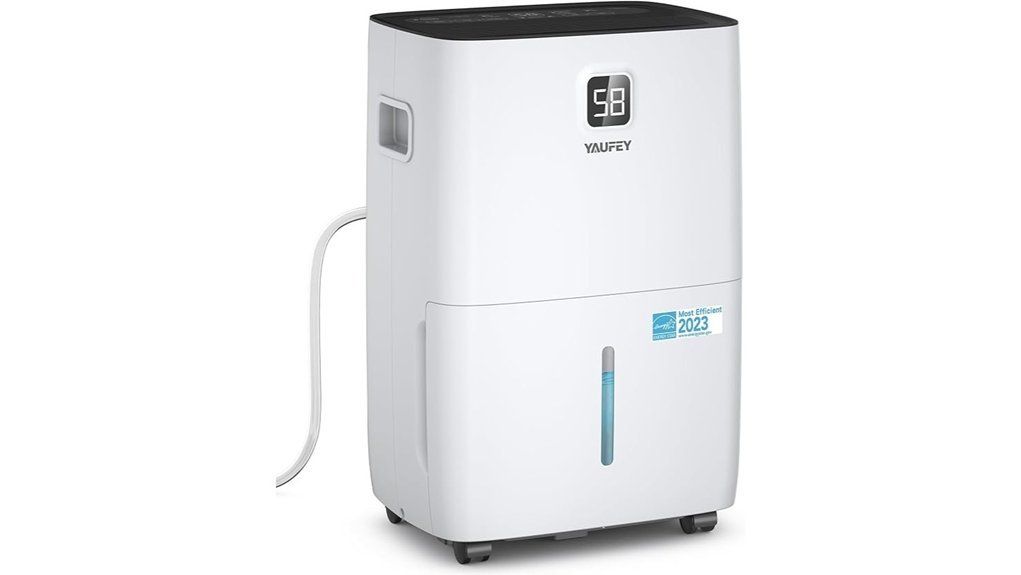
If you need a basement dehumidifier that can handle serious moisture without driving up your power bill, the Yaufey 5000 Sq. Ft. Energy Star Dehumidifier fits the job. The listing states up to 80 pints a day of moisture removal and coverage for spaces as large as 5,000 square feet. Energy Star certification can help lower energy use compared with many non-certified models, depending on conditions and usage. Choose manual or continuous drainage, use the 1.06-gallon tank, and rely on smart sensors, four modes, and quiet 52dB operation for steady control.
Why You’ll Like It: This is a practical pick if your basement feels damp often and you want a stronger unit that can be left in place with a drain hose. The combination of high stated capacity, sensor-based control, and continuous drainage makes it easier to manage moisture without checking the tank all day.
Best For: Homeowners, renters, and small business users who need a high-capacity, energy-efficient dehumidifier for large spaces like basements, garages, living rooms, or offices.
Who Should Skip It: Skip this one if you only need light moisture control in a small room, closet, or half bath. A high-capacity unit can be more power and size than you need for minor humidity.
Pros:
- Covers up to 5,000 sq. ft. and removes up to 80 pints per day, making it strong enough for serious moisture control.
- Energy Star certified, with smart sensors, four modes, and quiet 52dB operation for convenient everyday use.
- Offers both manual and continuous drainage, plus a visible 1.06-gallon tank and auto shut-off for added ease.
Cons:
- The 1.06-gallon tank may still require frequent emptying in very damp conditions if continuous drainage isn’t used.
- Best suited for larger spaces, so it may be more capacity than needed for small rooms.
- At 52dB, it’s fairly quiet for a dehumidifier, but not completely silent.
Bottom Line: Choose the Yaufey if your basement is large, humid, or slow to dry after rainy weather. It makes the most sense when you can set up continuous drainage and let it manage moisture without constant tank emptying.
34-Pint Dehumidifier for 2500 Sq.Ft. Homes
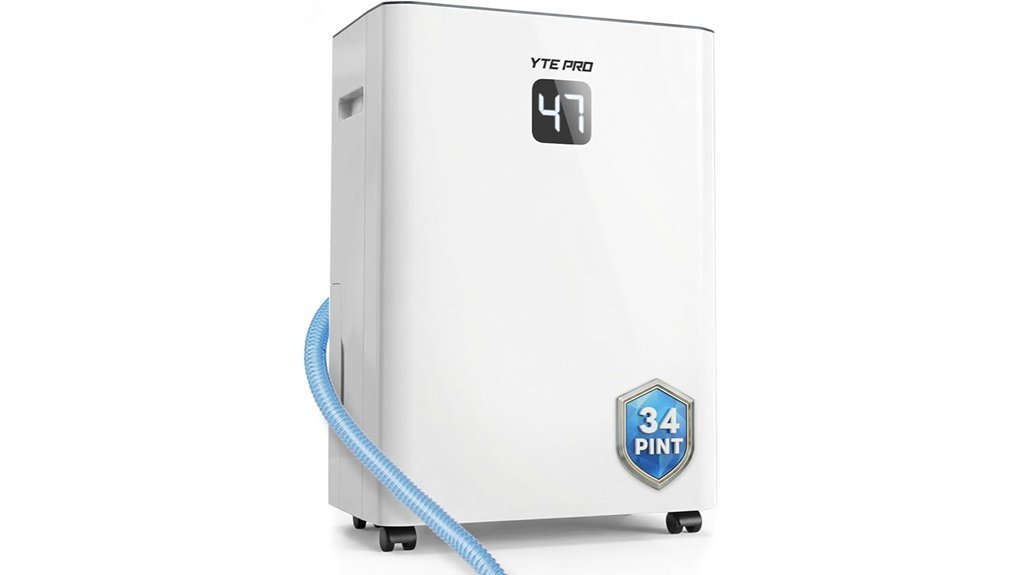
The 34-pint YTE PRO dehumidifier works well for homes up to 2,500 square feet. You can use it in bedrooms, bathrooms, or basements, and its compressor system helps you control humidity efficiently. It pulls up to 34 pints of moisture per day, while the LED display lets you check levels at a glance. Choose from three humidity modes, a 24-hour timer, or continuous operation. It runs quietly at 40dB, so you can leave it on overnight. Move it easily with wheels and a hidden handle, and use the washable filter, auto defrost, or drain hose for easier upkeep.
Why You’ll Like It: This model sits in the useful middle ground between small tabletop dehumidifiers and large basement machines. It is a good fit when your space feels damp but does not need a full 64- or 80-pint setup.
Best For: Homeowners who want a quiet, easy-to-move dehumidifier for bedrooms, bathrooms, or basements in spaces up to 2,500 sq. ft.
Who Should Skip It: Skip it if your basement has standing water, constant seepage, or extreme humidity. In that case, you may need a higher-capacity unit and possibly a separate water-control fix.
Pros:
- Covers large areas up to 2,500 sq. ft. with 34 pints/day moisture removal.
- Quiet 40dB operation makes it suitable for overnight use.
- Convenient features like LED humidity display, timer, washable filter, and drain hose.
Cons:
- Best suited for moderate moisture needs rather than extremely damp or flood-prone spaces.
- Water tank size may require frequent emptying without continuous drainage.
- Two fan speeds and basic controls may feel limited for users wanting more advanced customization.
Bottom Line: This is a practical mid-size choice if your basement, bedroom, or bathroom feels damp but is not soaking wet. The lower noise claim also makes it easier to place near living areas.
KeepGlad Dehumidifier for Home with Humidity Display
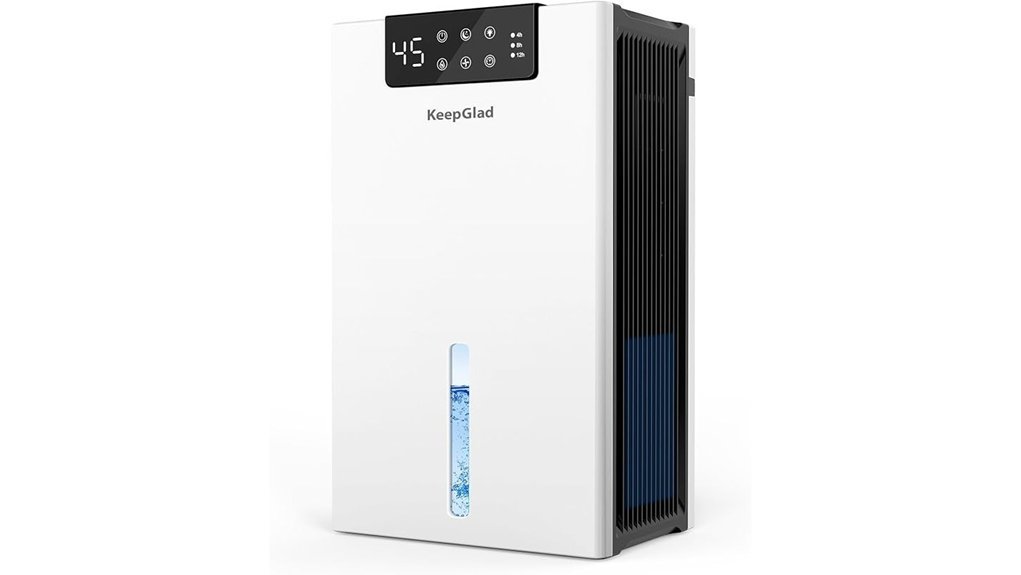
KeepGlad’s humidity display helps you track moisture levels at a glance. You can monitor real-time readings while the unit pulls up to 40 ounces of moisture a day from spaces as large as 1,000 square feet. Its 98-ounce tank, auto shut-off, and continuous drain hose give you flexible, hands-free use. With three fan speeds, 4-, 8-, or 12-hour timers, and 90W power use, you can balance comfort and efficiency. In sleep mode, it runs at 28 dB, so it won’t disrupt your basement, bedroom, or laundry room.
Why You’ll Like It: The visible humidity display is helpful if you want to know whether the room is actually improving. It is also easier to place than larger compressor models, making it useful for smaller basement zones, laundry corners, and bedrooms.
Best For: Homeowners or renters needing a quiet, portable dehumidifier for medium-sized spaces like basements, bedrooms, bathrooms, or laundry rooms.
Who Should Skip It: Skip it for very wet basements, large open lower levels, or spaces where you need pint-level compressor performance. This is better for comfort control than heavy water removal.
Pros:
- Removes up to 40 oz of moisture per day and covers up to 1,000 sq. ft.
- Quiet 28 dB sleep mode with 3 fan speeds and 4-, 8-, or 12-hour timer options.
- Features a humidity display, auto shut-off, and continuous drain hose for convenient use.
Cons:
- 98 oz tank may still require emptying in very humid conditions if not using continuous drain.
- 90W power use may be higher than some ultra-efficient compact models.
- Best suited for smaller to medium spaces rather than very large or open areas.
Bottom Line: KeepGlad is a good match when you want a quiet, portable dehumidifier with a visible humidity reading. It is especially useful for bedrooms, laundry rooms, bathrooms, and smaller basement zones.
ToLife Dehumidifier for Home, 1000 sq.ft with LED Light
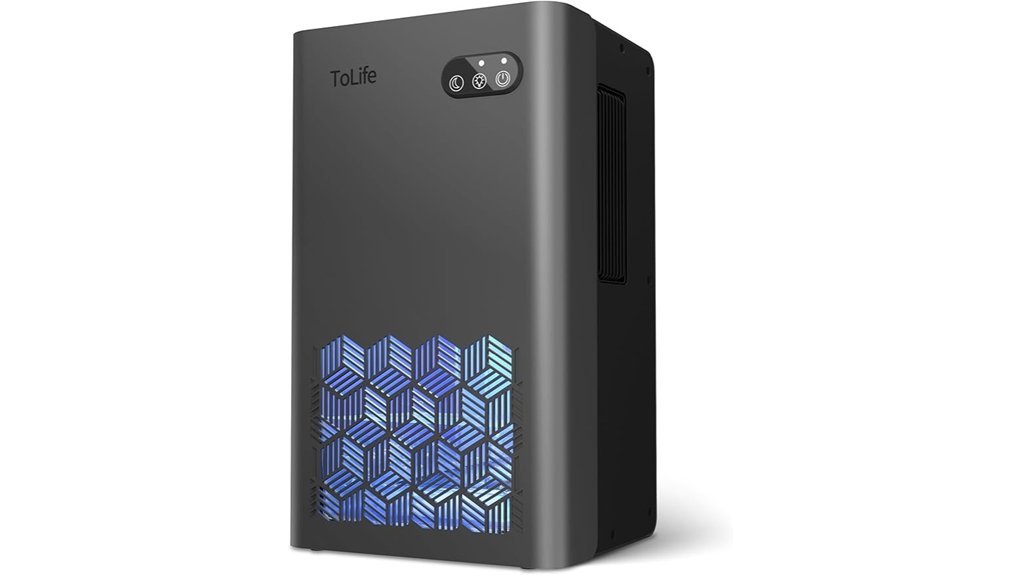
ToLife’s 1000 sq. ft. dehumidifier suits smaller basements, bedrooms, and offices needing quiet moisture control. You get semi-conductor condensation tech that removes up to 1 liter of moisture daily and helps reduce humidity in smaller rooms. In Powerful Mode, it tackles damp air faster, while Sleep Mode stays under 30 dB for nighttime use. Its 95-ounce tank, auto shut-off, and compact 2.64 kg build make it easy to manage and move. You can also use the seven-color LED light as a cozy night light, which adds a pleasant touch.
Why You’ll Like It: This is a comfort-focused dehumidifier for buyers who care about quiet operation, compact size, and simple everyday use. It works best when your goal is to reduce mild dampness, not dry out a severely wet basement.
Best For: People looking for a compact, quiet dehumidifier for smaller spaces like bedrooms, offices, or basements that also doubles as a night light.
Who Should Skip It: Skip it if your main problem is a wet, musty basement larger than a single room. The smaller daily removal capacity is not designed for the same workload as larger compressor dehumidifiers.
Pros:
- Quiet Sleep Mode stays under 30 dB, making it suitable for nighttime use.
- Seven-color LED light adds a cozy ambient/night-light feature.
- Compact 2.64 kg design with auto shut-off makes it easy and safe to use.
Cons:
- 1 liter per day capacity may be limited for very damp or larger spaces.
- 95-ounce tank may require frequent emptying in humid conditions.
- Best suited for smaller areas, not heavy-duty whole-home moisture removal.
Bottom Line: The ToLife makes sense for smaller spaces where quiet use and compact design matter more than maximum drying power. It is a better comfort pick than a heavy-duty basement moisture solution.
Vellgoo 64 Pint Energy Star Dehumidifier with Drain Hose
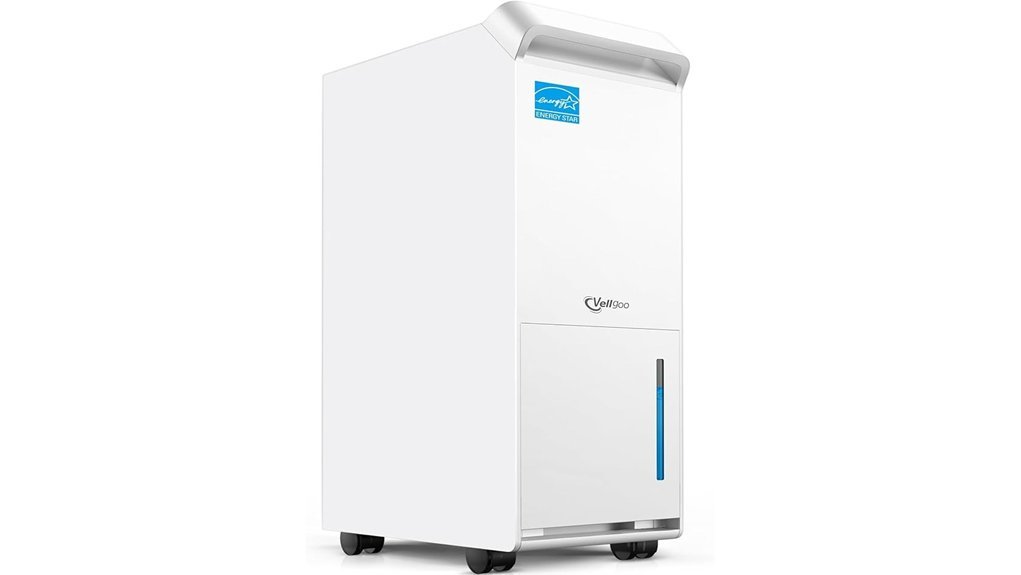
Vellgoo’s Max 64 Pint dehumidifier suits large basements up to 4,000 sq. ft. You can pull up to 64 pints of moisture daily, helping you fight dampness fast. Its Energy Star Most Efficient 2024 claim suggests a focus on lower electricity use, while continuous, comfort, and humidity control modes give you flexible operation. The rotary compressor and copper-coil “3+2” system are designed to support drying speed and durability. You can empty the tank manually or use the included 6.56-foot hose for continuous drainage, even with a garden hose adapter. The washable filter and child lock make upkeep simple and safer.
Why You’ll Like It: This model is appealing if you already know you want hose drainage. The included hose and adapter reduce setup friction, while the 64-pint capacity gives more breathing room than smaller mid-size units.
Best For: Homeowners with large basements, garages, or other spaces up to 4,000 sq. ft. who want strong moisture removal with flexible drainage and energy-efficient operation.
Who Should Skip It: Skip it if you do not have room for a larger unit or if your only moisture issue is light seasonal humidity in a small room.
Pros:
- Removes up to 64 pints of moisture per day, making it effective for large, damp areas.
- Energy Star Most Efficient 2024 claim helps position it as an energy-conscious option.
- Includes both manual tank emptying and continuous drainage with a hose and garden-hose adapter.
Cons:
- Bulky size may make it harder to move or store in smaller spaces.
- Specific warranty details are not clearly provided in the product facts.
- Best suited for residential use, so it may not be ideal for more demanding commercial applications.
Bottom Line: Vellgoo is a strong fit for buyers who want a large-basement dehumidifier with hose drainage included. It is a sensible pick when energy use and low-maintenance draining are both priorities.
AEOCKY 4500 Sq.Ft Energy Star Dehumidifier
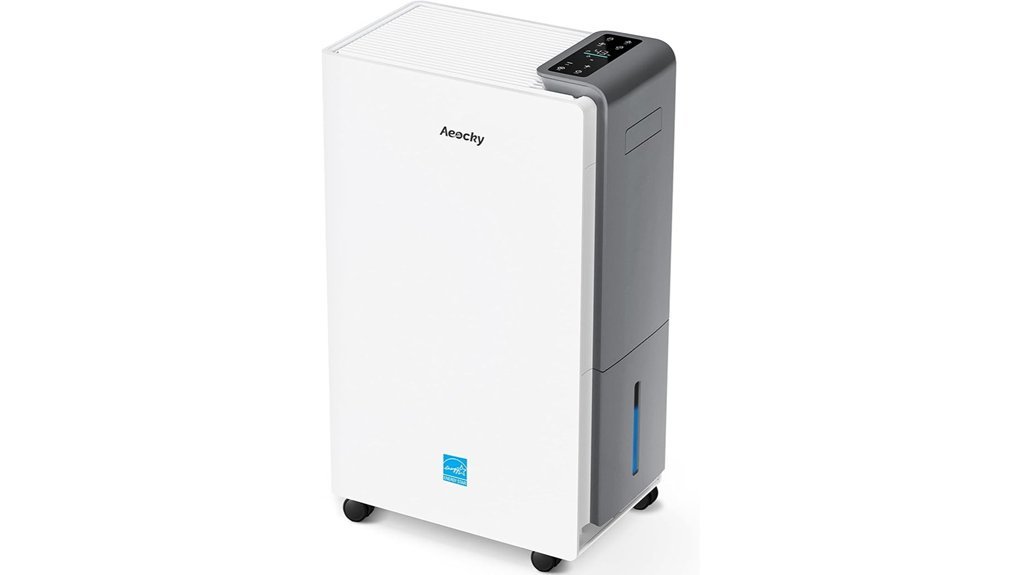
AEOCKY’s 4500 sq. ft. ENERGY STAR Most Efficient 2025 dehumidifier helps you tame damp basements with a focus on efficiency. The listing states up to 80 pints per day of moisture removal in hot, humid conditions and operation down to 65°F without frosting. Its smart humidity system tracks changes quickly, while the rotor compressor and copper piping are designed to support heat exchange. You’ll appreciate the quiet 44 dB operation, compact 31-pound build, adjustable modes, and energy-saving positioning for year-round basement use.
Why You’ll Like It: This model is especially useful for finished basements, basement offices, and family rooms where sound matters. It gives you high stated drying capacity without the louder feel that some big units can bring.
Best For: Homeowners needing an efficient, ENERGY STAR Most Efficient 2025 dehumidifier for large spaces like basements, especially where quiet operation, smart humidity control, and year-round use matter most.
Who Should Skip It: Skip it if you need a very small, low-cost unit for a closet or tiny bathroom. This model is aimed at bigger moisture problems and larger spaces.
Pros:
- Energy-efficient positioning, with ENERGY STAR Most Efficient 2025 certification claim and a large-space design.
- Strong moisture removal performance up to 80 pints per day in stated test conditions.
- Quiet, compact, and easy to use, with multiple modes and adjustable humidity settings.
Cons:
- Higher upfront cost than basic non-certified dehumidifiers.
- Best suited for larger spaces, so it may be more than some small rooms need.
- Some users may still find the 44 dB fan noise noticeable in very quiet environments.
Bottom Line: AEOCKY is one of the strongest choices here for buyers who want large-space drying with lower noise. It is especially appealing for finished basements, basement offices, and family rooms where sound matters.
AEOCKY 3500 Sq.Ft Compressor Dehumidifier with Drain Hose
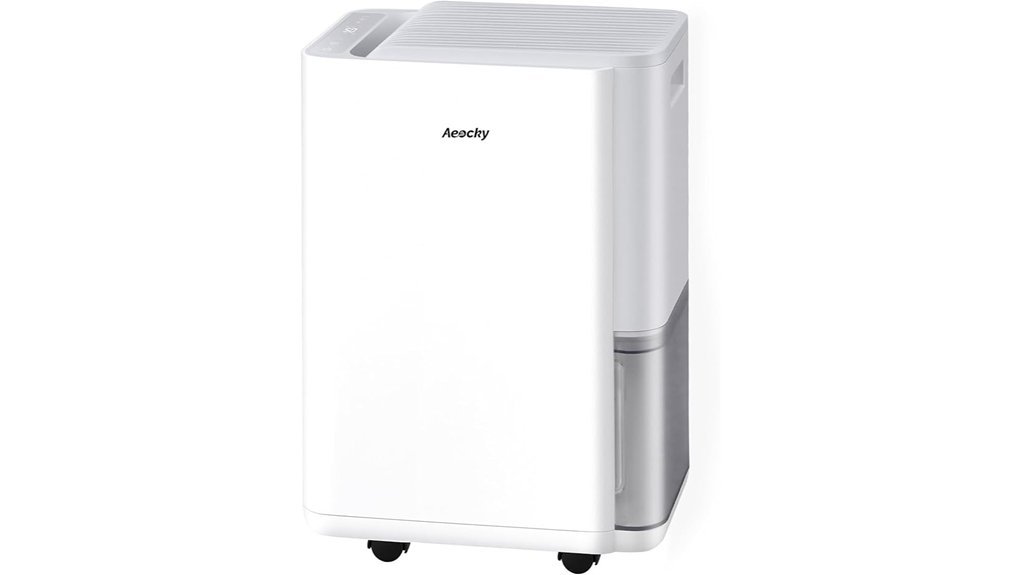
If you need basement coverage up to 3,500 sq. ft., this AEOCKY model fits well. You get strong compressor power in a compact 15.75-inch unit, so it works in tight spaces without crowding your basement. It can pull 50 pints per day in extreme humidity and 38 pints in normal conditions, while using less energy than many basic rivals. You can choose Continuous, Sleep, Auto, or Custom Humidity modes, and the high fan speeds can help with laundry drying. The drain hose supports nonstop gravity drainage, and the casters, handle, and auto-shutoff make it easy to use.
Why You’ll Like It: This is a useful choice when you want real compressor performance but do not want the largest unit in the lineup. The compact body, casters, and drain hose make it easier to place in laundry areas, RVs, and smaller basement zones.
Best For: Homeowners or renters who need a compact, energy-efficient dehumidifier for basements, bedrooms, RVs, or laundry areas up to 3,500 sq. ft.
Who Should Skip It: Skip it if your basement is closer to 5,000 sq. ft. or has severe moisture problems. In that case, one of the 80-pint options may give you more headroom.
Pros:
- Strong moisture removal capacity for both extreme and typical humidity conditions.
- Compact 15.75-inch design with casters and a hidden handle for easy placement and mobility.
- Multiple modes, quiet operation, and continuous drainage make it versatile and convenient.
Cons:
- Best performance depends on proper drainage setup for nonstop use.
- Large coverage may be overkill for small rooms or light humidity issues.
- Compact size may mean a smaller water tank than some full-size units.
Bottom Line: This AEOCKY model works best when you want a capable compressor unit but do not want a huge appliance taking over the basement. It is a good middle ground between compact convenience and stronger drying power.
Midea Cube 20 Pint Dehumidifier with Alexa Compatibility

The Midea Cube 20 Pint dehumidifier works well for medium basements up to 1,500 square feet. You get 20 pints of daily moisture removal, a 3.2-gallon tank, and a lift-and-twist design that expands for stronger performance or nests for easier storage. Use the Wi-Fi app, Alexa, or Google Assistant to change settings from anywhere. It handles humidity from 35% to 85%, includes a continuous drain hose, auto restart, and auto defrost. The washable filter cuts maintenance, and its 1-year warranty adds peace of mind.
Why You’ll Like It: The Cube design is the main draw. It gives you a larger tank than many compact units while still being easier to store, and smart controls are useful if the unit sits downstairs where you do not want to adjust it manually every time.
Best For: Homeowners needing a smart, space-saving dehumidifier for medium-sized basements or damp areas up to 1,500 sq. ft. that can be controlled remotely.
Who Should Skip It: Skip it if you do not need app or voice control, or if your basement is large enough to require a 50-, 64-, or 80-pint unit.
Pros:
- Wi-Fi, Alexa, and Google Assistant compatibility make it easy to control from anywhere.
- Lift-and-twist design offers flexible use and compact storage.
- Continuous drain option, washable filter, auto restart, and auto defrost add convenience and low-maintenance operation.
Cons:
- 20-pint capacity may be less ideal for very large or extremely wet spaces.
- At 33.3 pounds, it may be somewhat heavy to move often.
- 1-year warranty is shorter than some competing models.
Bottom Line: Midea Cube is the best fit here for buyers who want smart controls and a space-saving shape. It is not the biggest moisture remover, but it is easy to manage in a medium basement or damp room.
Dehumidifier for Home with Aromatherapy Diffuser (CS08-Cream)
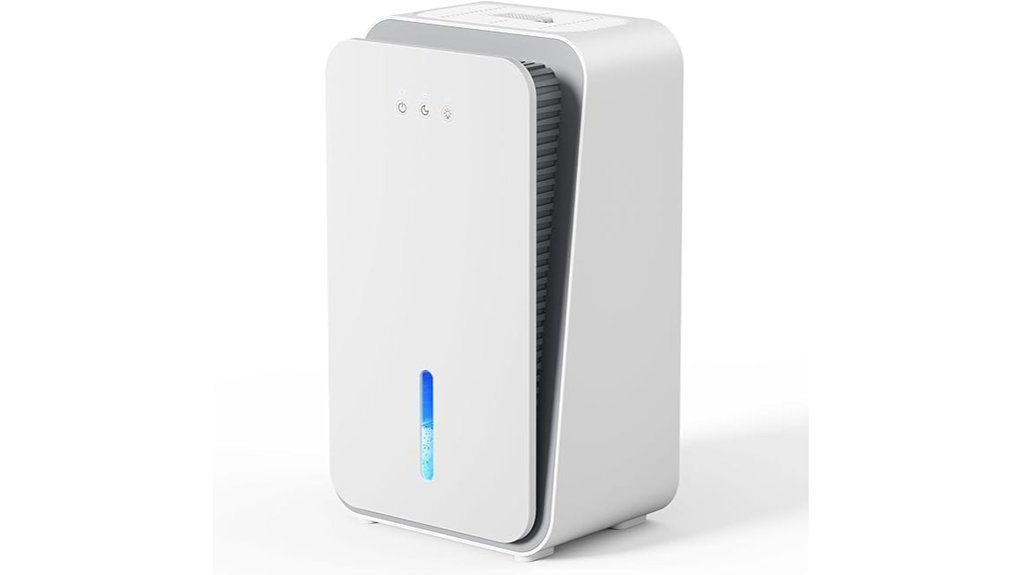
Need a compact, quiet dehumidifier that also freshens your space? You’ll like the CS08-Cream for rooms up to 1,000 square feet. Its semiconductor condensation system pulls moisture from the air while the built-in aromatherapy diffuser adds a pleasant scent. You can pick High Speed or Sleep mode, and Sleep stays below 45dB for quieter nights. The 7-color LED lets you set a static glow or dynamic cycle. It shuts off automatically when the tank’s full or misaligned, and the drain hose supports continuous use in basements, bathrooms, closets, RVs, and living rooms.
Why You’ll Like It: This model is less about heavy-duty basement drying and more about comfort. It is attractive for finished spaces where you want a compact dehumidifier that also adds scent, soft lighting, and simple drainage.
Best For: People who want a compact, quiet dehumidifier for medium to large rooms that also offers aromatherapy, LED lighting, and continuous drainage.
Who Should Skip It: Skip it if you want a plain, heavy-duty basement machine with no scent or lighting features. The aroma and LED extras are helpful only if you will actually use them.
Pros:
- Covers up to 1,000 sq. ft., making it suitable for multiple spaces.
- Quiet Sleep mode stays below 45dB for more comfortable nighttime use.
- Includes useful extras like an aromatherapy diffuser, 7-color LED lighting, and a drain hose for continuous operation.
Cons:
- Smaller tank may require frequent emptying without the drain hose.
- Best suited for moderate moisture control rather than heavy-duty industrial use.
- Aroma and LED features may be unnecessary for users who just want basic dehumidification.
Bottom Line: CS08-Cream is best for comfort-focused spaces where scent, lighting, and quiet operation matter. For a very damp basement, compare it carefully against the larger compressor units above.
Ludatido 2026 Energy Star Dehumidifier, 80 Pint, 5000 Sq.Ft
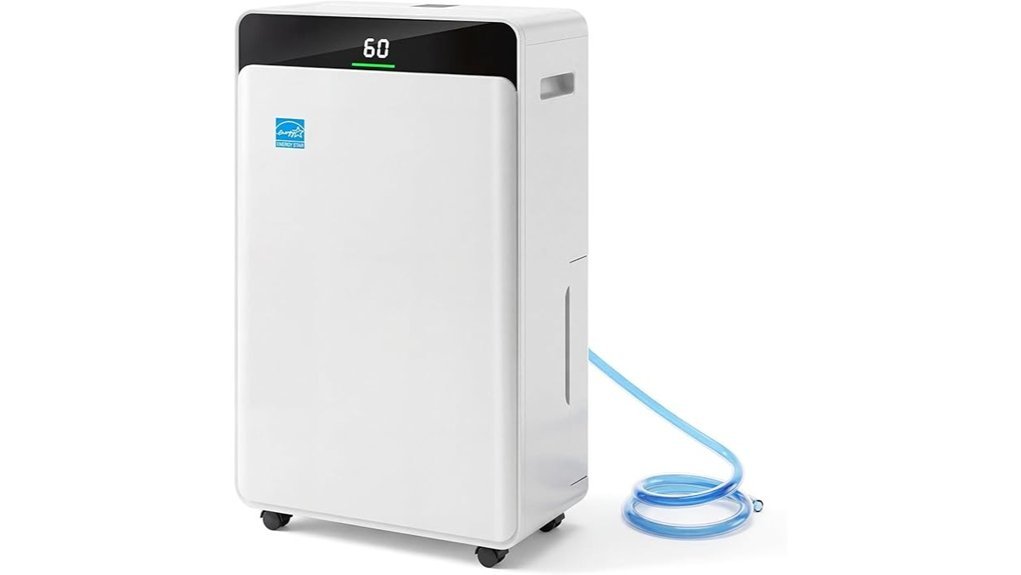
With 80-pint power and 5,000 sq. ft. coverage, it’s ideal for large, damp basements. The Ludatido 2026 ENERGY STAR Dehumidifier is positioned for fast moisture removal while using less energy than standard units, depending on room conditions and run time. Its 35dB operation claim keeps noise low, so it should be less disruptive in many spaces. Use dry mode for quick drying, sleep mode at night, or fan mode for circulation. The 24-hour timer and child lock add control and safety. You’ll also like the 1.72-gallon tank, auto shutoff, continuous drain option, and overheat protection for hassle-free use.
Why You’ll Like It: This is a strong choice when you want high stated capacity plus a larger tank than many compact models. It is built for buyers who expect the dehumidifier to run often, not just once in a while after a humid day.
Best For: Homeowners or property managers needing a quiet, energy-efficient dehumidifier for large damp spaces like basements, garages, attics, RVs, or apartments.
Who Should Skip It: Skip it if you need a lightweight unit for one small room or if you prefer a smaller tank-style model that you can move frequently.
Pros:
- 80-pint capacity and 5,000 sq. ft. coverage handle large, moisture-prone areas effectively.
- ENERGY STAR certification claim helps position it as a more energy-conscious option.
- Quiet 35dB operation claim plus sleep mode, 24-hour timer, and child lock improve everyday convenience.
Cons:
- At 13.5 kg, it may be somewhat heavy to move frequently.
- The 1.72-gallon tank may require regular emptying if continuous drain isn’t used.
- Best suited for larger spaces, so it may be more than needed for small rooms.
Bottom Line: Ludatido 2026 is a strong large-space pick if you want high stated capacity, quiet operation, and continuous drainage. It is best for buyers who need regular basement moisture control rather than occasional light dehumidifying.
Factors to Consider When Choosing a Dehumidifier for Basement Use
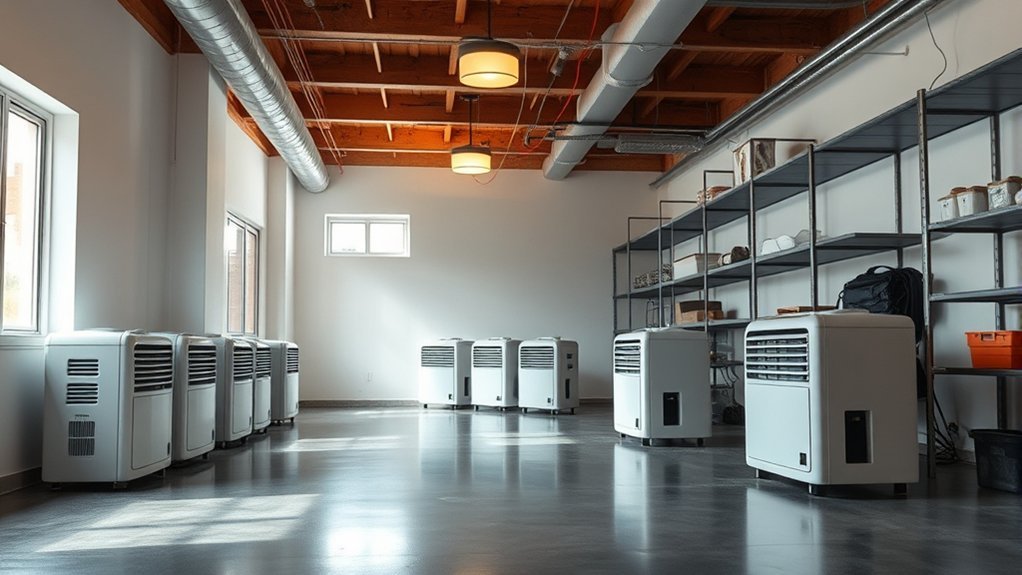
When you choose a basement dehumidifier, make sure it matches your basement size and pint capacity so it can handle the moisture effectively. You’ll also want to check drainage options, energy efficiency, and noise levels to keep upkeep simple and daily use comfortable. The right balance of these factors helps you pick a unit that works well without wasting power or causing extra hassle.
Before You Buy Checklist
- Measure your basement or the exact room you want to dry.
- Check whether the basement is mildly damp, very humid, or wet after rain.
- Decide whether you want manual tank emptying or continuous hose drainage.
- Confirm that the drain hose can slope safely toward a floor drain, sink, or condensate pump.
- Compare noise levels if the basement is used as an office, bedroom, gym, or family room.
- Check Amazon for the latest product specs, included accessories, warranty details, and availability before ordering.
Basement Size Coverage
A dehumidifier’s coverage area should match your basement’s size, which usually falls between 1,000 and 5,000 square feet depending on the unit. You should measure the space first, then choose a model rated for that footprint so it can control moisture effectively. If your basement stays above 80% humidity, pick a unit built for tough dampness. In smaller basements, a coverage rating that fits the area keeps conditions balanced without wasting energy. If you have multiple rooms, hallways, or odd corners, choose a larger coverage range so moisture doesn’t linger in hidden spots. You’ll also want continuous drainage, since basements can collect water fast. With the right coverage, you can keep the entire area drier and more comfortable.
Pint Capacity
Pint capacity tells you how much moisture a dehumidifier can remove each day, so it needs to match both your basement size and how damp the space gets. For a basement up to 1,000 square feet, a 20- to 34-pint unit usually works well. If your basement reaches 5,000 square feet, you’ll often need around 80 pints per day to keep moisture under control. When you choose a capacity that fits your space, the unit runs more efficiently and helps protect your basement from mold and structural damage. If your basement feels especially humid, pick a higher-capacity model so it can keep up with tougher conditions. The right pint rating gives you steadier performance and fewer moisture problems year-round.
Drainage Options
Drainage options come down to how much maintenance you’re willing to do and how your basement is set up. You’ll usually choose between manual drainage and continuous drainage. Manual drainage means you empty the tank yourself, so it works best if your basement only gets damp now and then. Continuous drainage lets you attach a hose to a floor drain, which gives you hands-free operation and fits basements with steady humidity. Many models include a hose or adapter, so setup is usually simple. If you prefer fewer trips to the sink, look for a larger tank or an automatic shut-off feature to help prevent overflow. Before you buy, check where the unit will sit and whether a drain is close enough.
Energy Efficiency
Once you’ve sorted out drainage, the next thing to consider is how much power the dehumidifier will use over time. You’ll save more with an energy-efficient model, since it can use less electricity than a basic unit in similar conditions. Look for ENERGY STAR certification; those models are designed to control humidity while reducing wasted energy. If you need steady protection, choose a unit with continuous operation mode so it can hold consistent moisture levels without wasting power. Regular upkeep also matters: clean washable filters and confirm drainage works properly to keep efficiency high. Over time, these habits help you reduce operating costs and extend the unit’s useful life.
Noise Levels
Noise matters more than many buyers expect, especially if your basement doubles as a living area, bedroom, or home office. You’ll usually see dehumidifiers rated from 28 dB to 52 dB, and that spread can change how comfortable the space feels. Around 40 dB sounds fairly quiet, while anything above 50 dB can start to feel intrusive in a quiet room. If you plan to run the unit often, look for adjustable fan speeds so you can balance performance with a lower sound level when needed. Many modern models also include noise-reduction features and sleep modes that keep operation calmer at low speed. If you’re sensitive to sound, compare decibel ratings carefully, because even a few dB can make a noticeable difference in your basement.
Humidity Controls
Humidity control is one of the most important things to get right in a basement, because keeping moisture in a healthy target range helps reduce musty odors, condensation, and mold risk. You should look for a dehumidifier with adjustable humidity settings so you can match performance to your basement’s conditions. If you want less hands-on management, smart sensors can detect moisture changes and adjust output automatically. Multiple modes, such as continuous or auto, give you flexibility when humidity swings during rainy spells or damp seasons. A digital display also helps you check current levels quickly and make sure the room stays in the ideal range. By monitoring humidity regularly, you can keep excess moisture under control and avoid long-term damage.
Auto Shut-Off Features
Auto shut-off is a must-have feature for basement dehumidifiers because it stops the unit when the tank is full, helping prevent overflow and spills. You’ll want this protection in a basement, where humidity can rise fast and the unit may run for long periods. Smart sensors detect water levels and trigger shutdown automatically, so you don’t have to keep checking the tank. That saves you time and gives you peace of mind. Some models also shut off if the tank isn’t seated properly, which helps avoid leaks and water damage. For continuous basement use, this feature keeps the dehumidifier working safely while helping you maintain steady humidity without constant monitoring or worry.
Portability And Design
When you’re choosing a basement dehumidifier, portability and design matter more than you might think. You’ll want 360° wheels and built-in handles so you can move it easily from one damp corner to another. A compact shape helps it fit into tight spots without blocking walkways, which matters in crowded basements. If you have stairs or multiple levels, a lighter model can save you effort every time you relocate it. Continuous drainage is another smart design choice because it lets the unit run without constant emptying, so you won’t interrupt mobility. Look for a clear, user-friendly control panel and display, too. When settings and humidity readings are easy to adjust and read, you won’t have to bend, crouch, or guess.
Tank Size vs. Hose Drainage
A large tank sounds convenient, but a basement dehumidifier can fill quickly when humidity is high. If you only run the unit after rainy days, manual emptying may be fine. If you plan to run it daily, a drain hose is usually the better choice because it turns the dehumidifier into a more hands-off system. Before buying, check whether the drain port location works with your floor drain, sink, or condensate pump setup.
Finished vs. Unfinished Basements
A finished basement usually needs a quieter, cleaner-looking dehumidifier because people may work, sleep, exercise, or watch TV nearby. An unfinished basement may need more capacity, easier drainage, and stronger moisture removal. If your basement stores tools, holiday bins, books, wood furniture, or workout gear, steady humidity control can help reduce odors and moisture-related damage.
Common Buying Mistakes to Avoid
- Buying only by square footage: Humidity level matters as much as room size. A wet 1,000 sq. ft. basement may need more power than a lightly damp 2,000 sq. ft. space.
- Ignoring drainage: If you hate emptying tanks, choose a model with continuous drainage and plan the hose path before it arrives.
- Forgetting noise level: A loud unit in a basement office or bedroom can become annoying fast.
- Choosing a tiny unit for a wet basement: Compact dehumidifiers are useful, but they may not keep up with heavy dampness.
- Skipping filter maintenance: A clogged filter can reduce airflow, slow moisture removal, and make the unit work harder.
Basement Safety Note
A dehumidifier helps control moisture in the air, but it does not fix water intrusion. If your basement has standing water, active leaks, foundation cracks, sewage backup, or repeated flooding, address the water source first. Use a grounded outlet, keep the unit level, avoid extension cords when the manual warns against them, and keep the air intake clear for safer operation.
Frequently Asked Questions
How Often Should Basement Dehumidifier Filters Be Cleaned?
You should clean your basement dehumidifier filter every two to four weeks, or more often if you notice dust, pet hair, or reduced airflow. Check your manual, because some units need monthly cleaning.
Can Dehumidifiers Run Continuously in Unfinished Basements?
Yes, you can run them continuously in unfinished basements, but you should monitor humidity and empty or drain them properly. Like a steady rain, they’ll protect your space, but you’ll still need occasional checks.
Do Basement Dehumidifiers Need a Dedicated Drain Line?
No, you don’t always need a dedicated drain line; you can empty the tank manually or use a hose to a nearby drain. If you want continuous operation, a dedicated drain makes your life easier.
What Noise Level Is Acceptable for a Basement Dehumidifier?
You’ll usually want a basement dehumidifier under 55 dB, since that’s about normal conversation. If you use the basement often, aim for 45 dB or less so it won’t feel intrusive.
How Much Does Basement Dehumidifier Maintenance Usually Cost?
You’ll usually spend $20–$100 a year on basement dehumidifier maintenance. You’ll replace filters, clean coils, and sometimes buy a drain hose or service. If you maintain it yourself, you’ll keep costs near the low end.
What Size Dehumidifier Do I Need for a Basement?
You should match the size to both square footage and moisture level. Smaller basements or mildly damp rooms may work with 20- to 34-pint models, while large or very damp basements often need 50-, 64-, or 80-pint options. If your basement stays wet or smells musty after rain, choose more capacity rather than less.
Is Continuous Drainage Worth It for a Basement?
Yes, continuous drainage is usually worth it if you run your dehumidifier often. It saves you from emptying the tank every day and helps prevent shutoffs when the tank fills. Just make sure the hose can slope toward a drain, sink, or pump without kinks.
Where Should I Place a Dehumidifier in the Basement?
Place it near the dampest area while leaving open space around the air intake and exhaust. Avoid pushing it tightly against a wall, furniture, boxes, or curtains. If you use hose drainage, place it close enough to the drain so the hose stays secure and water flows properly.
Can a Dehumidifier Remove a Musty Basement Smell?
A dehumidifier can help reduce musty odors caused by excess moisture, but it may not remove smells from mold growth, water damage, old carpet, or hidden leaks. If the odor continues after humidity improves, inspect the basement for moisture sources, damp materials, and poor ventilation.
Final Recommendation
Best overall direction: For a large, damp basement, start with Yaufey, AEOCKY 4500, Vellgoo, or Ludatido because their higher stated capacity gives you more drying power. For smaller finished spaces, bedrooms, laundry areas, and comfort-focused rooms, compare KeepGlad, ToLife, CS08-Cream, and Midea Cube. The best model is the one that matches your moisture level, not just your square footage.
Conclusion
Choosing the right basement dehumidifier is like picking the perfect umbrella before a storm. You want one that keeps your space dry, comfortable, and protected before moisture turns into a bigger problem. If you have a large, damp basement, start with higher-capacity options like the Yaufey, AEOCKY 4500, Vellgoo, or Ludatido models. If you need a smaller, quieter, or smarter unit, compare the KeepGlad, ToLife, CS08-Cream, or Midea Cube. Match the unit to your basement’s size, moisture level, and drainage needs, and you’ll reduce the risk of mold, musty odors, and moisture-related damage down the road. Compare your options carefully, focus on the features that matter most, and you’ll create a basement that feels fresher, cleaner, and easier to enjoy year-round.