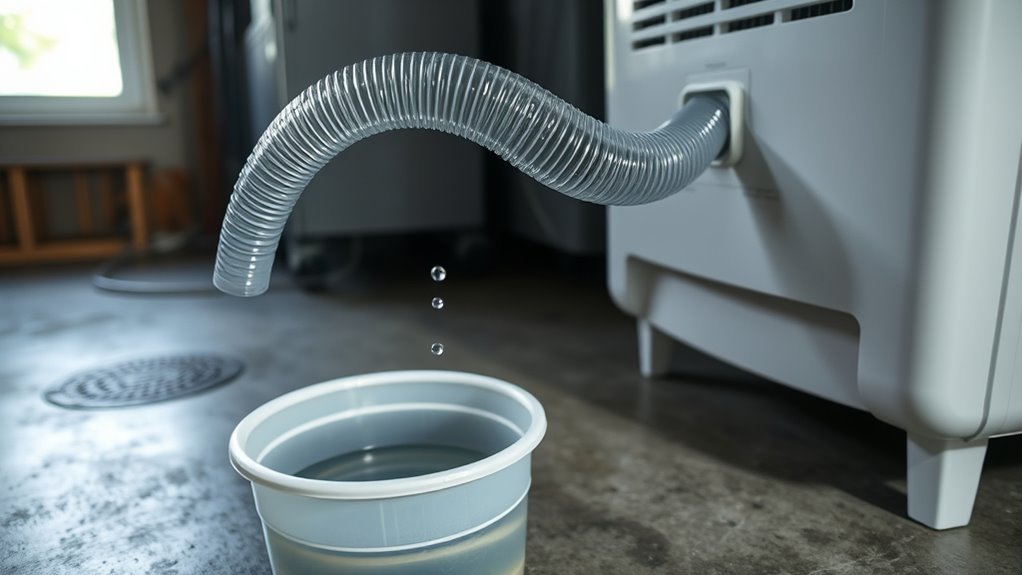
If you need a dehumidifier for an RV up to 300 sq. ft., focus on physical size, water-removal capacity, electrical demand, automatic shutoff, and nighttime noise—not only the largest coverage number in a product title. The three models below are compact semiconductor or thermoelectric dehumidifiers intended for everyday condensation and mild humidity in campers, travel trailers, and motorhomes.
Updated: August 2026. Product details are based on current seller-listed information. No hands-on testing is claimed.
These small units are best viewed as supplemental RV moisture-control tools. Their actual water collection depends on temperature, relative humidity, ventilation, occupancy, cooking, showering, and the amount of outdoor air entering the RV. They cannot repair a roof leak, plumbing leak, failed window seal, or other source of water intrusion.
Quick verdict:
The Sefaul T1-WHITE is the easiest model to place in a small RV because it has the smallest footprint and a seller-listed 300-sq.-ft. rating. The ONWORK CT2 is the most informative option for power and moisture-removal planning because its current listing publishes a 65-watt rating and up to 1,000 ml/day extraction under stated warm, humid test conditions. The NineSky 95 OZ is a straightforward alternative for buyers who want a large tank and simple controls.
How these products were selected: Recommendations are based on current listing identity, RV or small-space suitability, dimensions, nominal tank size, seller-listed water removal, power information, shutoff features, nighttime controls, and honest limitations. Decorative features and oversized coverage claims were not treated as evidence of stronger moisture removal.
Important capacity note: Tank size and moisture-removal rate are different measurements. A 95 oz tank does not mean the unit removes 95 oz of water per day. Compare published extraction under stated test conditions whenever that information is available.
Quick Comparison of RV Dehumidifiers
| Product | Best For | Seller-Listed Coverage | Nominal Tank | Seller-Listed Extraction | Notable Feature | Amazon |
|---|---|---|---|---|---|---|
| Sefaul T1-WHITE | Small RVs and limited placement space | 300 sq. ft. | 700 ml | Up to 700 ml/day at 86°F and 80% RH | 6.1-by-6.1-inch footprint | Check Price on Amazon |
| ONWORK CT2 | Power planning and a larger tank | 800 sq. ft. | 95 oz | Up to 1,000 ml/day at 86°F and 80% RH | 65-watt rating and drain hose | Check Price on Amazon |
| NineSky 95 OZ | Simple controls and a large tank | 1,000 sq. ft. | 95 oz | Not clearly published for this ASIN | Two modes and switchable lighting | Check Price on Amazon |
Coverage and extraction figures are seller-listed specifications, not independent performance guarantees. Daily collection generally decreases as the RV becomes cooler or drier. Products tested under different temperature and humidity conditions cannot be compared directly.
Sefaul T1-WHITE Dehumidifier for 300 Sq. Ft.
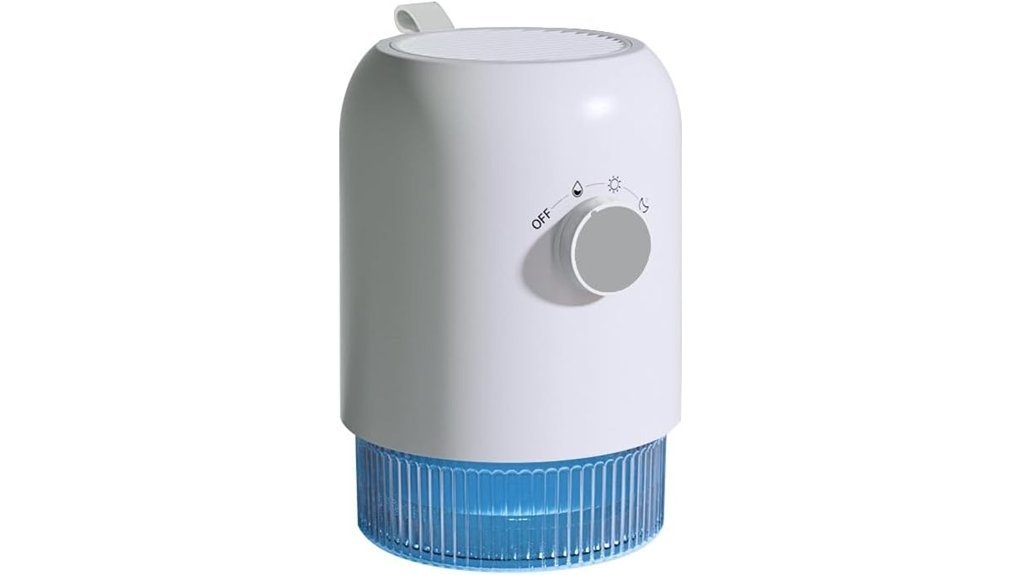
The Sefaul T1-WHITE is the easiest option to place in a compact camper. Its seller-listed dimensions are approximately 6.1 inches deep, 6.1 inches wide, and 8.4 inches high, allowing it to fit on a small counter, shelf, or stable floor area without taking up much living space.
The listing identifies a 700 ml tank and claims collection of up to 700 ml per day in a closed space at 86°F and 80% relative humidity. That is a warm, very humid test environment, so collection inside a cooler RV may be significantly lower.
The unit also includes automatic shutoff, quiet operation, a removable tank, a carrying handle, and a night-light feature. Its seller-listed 300-sq.-ft. coverage matches the article’s target, but that number should not be interpreted as guaranteed, even moisture control through closed cabinets and separated rooms.
Why you’ll like it: Its small footprint makes it easier to place securely in an RV than the taller 95 oz models.
Best for: Small campers, sleeping areas, wardrobes, and localized window condensation.
Main trade-off: Its small tank may require more frequent checking during humid weather.
Who should avoid it: Buyers dealing with leaks, soaked materials, widespread condensation, or a moisture load that requires a compressor dehumidifier.
Pros:
- Seller-listed for spaces up to 300 sq. ft.
- Compact 6.1-by-6.1-inch footprint.
- Seller publishes extraction conditions for easier comparison.
- Automatic shutoff helps reduce overflow risk.
- Small enough to move between an RV bedroom, bathroom, and storage area.
Cons:
- The 700 ml tank is the smallest in this shortlist.
- The maximum extraction claim is based on warm, highly humid conditions.
- No timer or published wattage figure was confirmed.
- Best suited to mild or localized moisture rather than severe dampness.
ONWORK CT2 95 OZ Dehumidifier
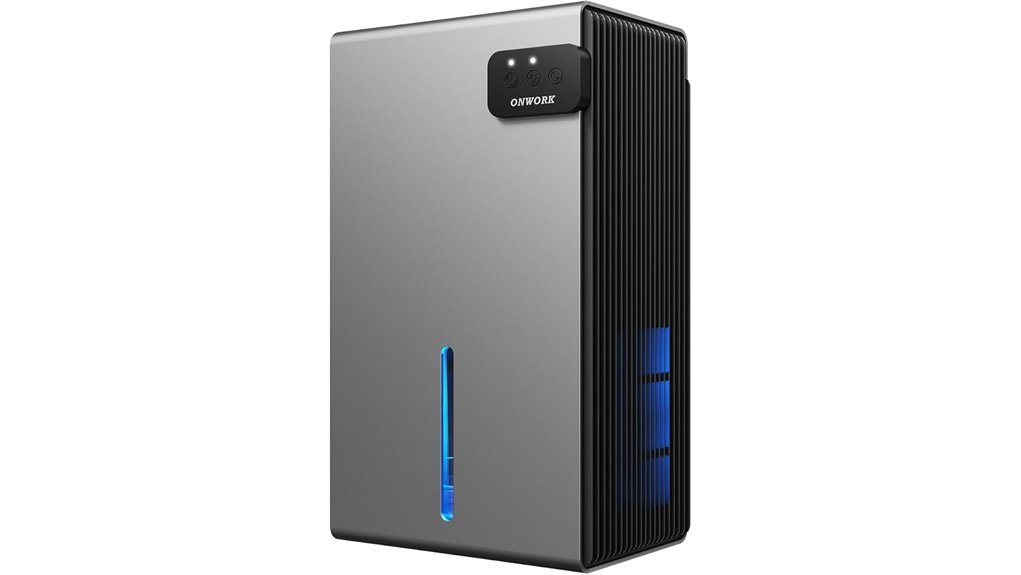
The ONWORK CT2 combines a nominal 95 oz tank with a seller-listed 65-watt power rating. Its current listing also states moisture removal of up to 34 oz (1,000 ml) per day at 86°F and 80% relative humidity. A published wattage figure and stated extraction condition make this model easier to evaluate for RV power and moisture-control planning.
At its listed 65 watts, eight hours of operation would consume approximately 520 watt-hours, or 0.52 kWh, before accounting for inverter losses and other connected equipment. Actual consumption can vary by mode and operating cycle, so confirm the rating on the product label before planning off-grid use.
The listing also identifies two operating modes, automatic shutoff, optional LED lighting, a drain hose for continuous drainage, and a body that is nearly 14 inches tall. Its product title specifically mentions RV use, although the advertised 800-sq.-ft. coverage should be treated as a seller claim rather than a guarantee of whole-RV performance.
Why you’ll like it: The published wattage, stated extraction conditions, and included drain hose provide more practical planning information than most compact picks in this shortlist.
Best for: RV owners who want a larger tank and clearer power information.
Main trade-off: The up-to-1,000 ml/day extraction figure is based on a warm 86°F, 80% RH test environment, so real RV collection can be substantially lower.
Who should avoid it: Owners of very small teardrop campers where a nearly 14-inch-tall appliance would be difficult to secure and ventilate.
Pros:
- 95 oz nominal tank offers more storage than compact 700 ml units.
- Seller lists 65-watt power consumption.
- Product listing specifically mentions RV use.
- Two operating modes provide some control over performance and noise.
- Automatic shutoff helps manage a full or incorrectly positioned tank.
Cons:
- Taller and heavier than the Sefaul.
- The up-to-1,000 ml/day figure is a seller-listed maximum measured at 86°F and 80% RH.
- The drain hose needs a secure, appropriate gravity-drain route if used in an RV.
- The 800-sq.-ft. figure should not be used as the main sizing measurement.
NineSky 95 OZ Dehumidifier with 7-Color Light
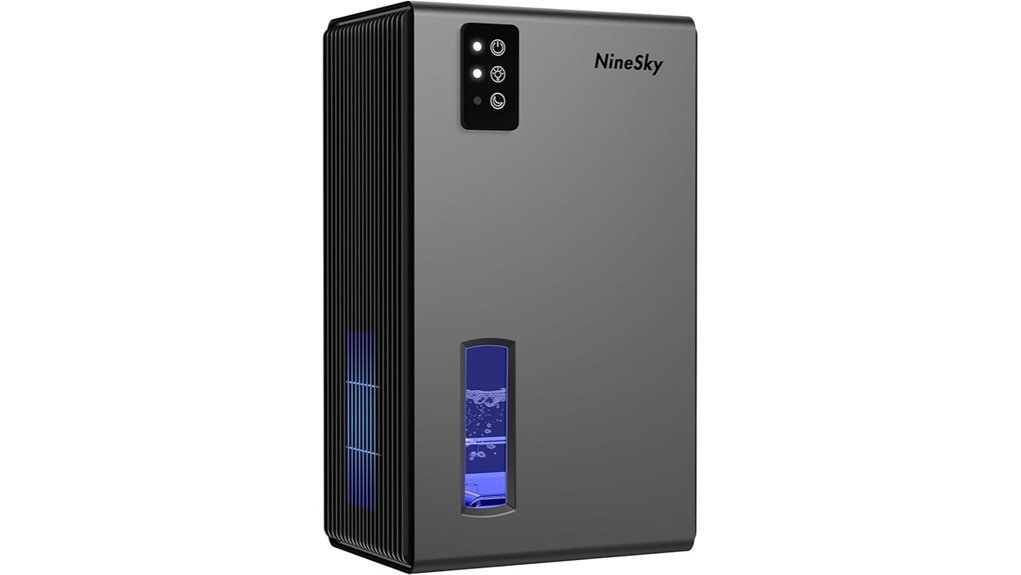
The NineSky 95 OZ Dehumidifier is a straightforward alternative for buyers who want a larger tank, automatic shutoff, and uncomplicated controls. Its seller-listed dimensions are approximately 8.27 inches deep, 5.71 inches wide, and 13.78 inches high, making it narrow enough for many RV counters and storage areas.
The unit includes two operating modes and optional seven-color lighting. The listing indicates that night mode can provide quieter operation and turn off the light, which is more useful for RV sleeping areas than leaving decorative illumination active overnight.
The 1,000-sq.-ft. coverage claim should not be interpreted as evidence that this compact thermoelectric unit can manage severe humidity throughout a large open room. A reliable seller-listed extraction figure was not confirmed for this exact ASIN, so buyers should compare the live listing and manual before ordering.
Why you’ll like it: It provides a large nominal tank and simple controls without requiring a complicated setup.
Best for: Mild condensation in RV living areas where a narrow, tall unit can be placed securely.
Main trade-off: Published extraction and wattage data are less clear than the information supplied for some leading picks.
Who should avoid it: Buyers who require verified daily water removal, documented inverter demand, or compressor-level extraction.
Pros:
- 95 oz nominal tank provides useful collection capacity.
- Automatic shutoff helps reduce overflow risk.
- Two operating modes support daytime and quieter nighttime use.
- Night mode can turn off the decorative light.
- Narrow design may fit beside furniture or cabinetry.
Cons:
- The 1,000-sq.-ft. marketing claim is not a standardized performance measurement.
- No clearly verified extraction figure was found for this exact ASIN.
- No built-in pump or continuous drain is identified.
- Its tall design requires secure placement before the RV moves.
Factors to Consider When Choosing an RV Dehumidifier
A dehumidifier for a 300-sq.-ft. RV should be selected according to the actual moisture problem, available power, placement space, and published extraction rate. Do not choose solely by the largest square-foot number in a product title.
Thermoelectric vs. Compressor Dehumidifiers
The three products in this guide use compact semiconductor or thermoelectric technology. These units are generally easier to place and quieter than compressor appliances, but they also remove much less water.
A thermoelectric model can be useful for mild window condensation, damp closets, bedding moisture, or a slightly musty sleeping area. A compressor dehumidifier may be more appropriate when the RV remains very humid, surfaces stay wet, or the small unit fills rapidly without lowering the hygrometer reading.
Daily Water Removal
A dehumidifier’s useful capacity is the amount of water it can collect over 24 hours under stated temperature and humidity conditions. This is different from the amount of water the tank can hold.
Seller figures are often measured in warm, humid test environments. Your actual collection may be much lower after the RV begins drying, during cold weather, or when relative humidity is moderate.
Persistent wet surfaces, soaked flooring, recurring water stains, soft wall panels, or damp insulation indicate a leak or construction problem that should be corrected directly.
Coverage Area Claims
Coverage figures such as 300, 800, or 1,000 sq. ft. are not directly comparable unless the products were tested using the same method and conditions. An RV also has partitions, closed cabinets, furniture, and limited airflow that can prevent one small unit from reaching every area.
Place the unit near the main moisture source while maintaining the clearance required by the manufacturer. Open interior doors and cabinets when appropriate so humid air can circulate toward the dehumidifier.
RV Power Compatibility
Check the dehumidifier’s input voltage, adapter output, wattage, and connection type before using it in an RV. A standard AC appliance should not be connected directly to a 12V socket unless the manufacturer explicitly approves that connection.
When using an inverter, confirm that its continuous-output rating can support the dehumidifier and every other connected appliance. Allow for inverter losses when calculating battery runtime.
Power example: A 65-watt dehumidifier running for eight hours uses approximately 520 watt-hours before inverter losses. Longer operating times or additional appliances will increase the required battery capacity.
RV safety note: Operate the dehumidifier on a stable, level surface. Keep cords and adapters away from wet areas, do not block ventilation openings, and empty or secure the tank before moving the RV. Follow the appliance manual and the limits of your RV electrical system.
Water Tank Capacity
A larger tank can reduce emptying frequency, but it also makes the appliance larger and increases the amount of water that could spill during travel. A 700 ml tank may be enough for localized moisture, while a 95 oz nominal tank offers more storage during longer operating periods.
Check whether automatic shutoff occurs before the tank reaches its full advertised volume. Never leave collected water in the tank while driving. Empty, rinse, and dry the tank before storage.
Noise and Sleep Mode
Noise is particularly noticeable in an RV because the dehumidifier is close to the bed, seating area, and kitchen. A sleep or low-speed mode can reduce fan noise and turn off indicator lights, but it may also reduce moisture removal.
Vibration matters as well. A quiet fan can create an audible hum when the appliance sits on a hollow cabinet or unstable shelf. Use a solid, level surface without blocking the air intake.
Temperature and Cold-Weather Performance
Compact thermoelectric dehumidifiers generally collect the most water in warm, humid air. Their extraction can fall considerably as the RV becomes cooler or drier.
A seller-listed defrost feature may protect the unit when frost is detected, but it does not guarantee strong dehumidification in a cold, unheated camper. Insulation, controlled heating, ventilation, and reducing indoor moisture generation may be more effective in cold conditions.
Portability and Placement
Measure the intended location before ordering. Check the complete height, width, and depth while allowing room for airflow, tank removal, the power connector, and access to the controls.
Secure the appliance before driving. Even a lightweight unit can tip, damage cabinetry, or spill water during sudden braking or cornering.
Verify the Brand, Model, and ASIN
Generic model identifiers can appear on products sold under more than one brand. For example, CT2 may identify different seller-branded listings. Confirm the exact brand, ASIN, color, adapter, dimensions, voltage, and included components rather than relying on the model code alone.
Before You Buy Checklist
- Measure the intended placement area.
- Allow clearance around the air inlet and outlet.
- Confirm the exact brand and Amazon ASIN.
- Check input voltage, adapter specifications, and wattage.
- Confirm that your outlet, inverter, generator, or shore-power connection can support the unit.
- Compare daily extraction separately from tank size.
- Check the temperature and humidity used for extraction claims.
- Look for automatic shutoff when the tank is full or incorrectly installed.
- Confirm how the tank is removed and emptied.
- Decide whether you need sleep mode, continuous drainage, or other control features.
- Review the current return policy and warranty information.
- Use a separate digital hygrometer to measure actual RV humidity.
- Repair leaks and improve ventilation before relying on an appliance.
Frequently Asked Questions
What Is the Ideal Humidity Level for an RV?
A practical indoor target is approximately 30% to 50% relative humidity. Try to keep the level below 60%, especially when condensation appears on windows, walls, pipes, or other cold surfaces. Use a digital hygrometer rather than estimating humidity by feel.
Can a Small Dehumidifier Handle an Entire 300-Square-Foot RV?
It may help with mild, evenly distributed humidity, but the advertised coverage number does not guarantee equal performance in every compartment. Closed cabinets, divided sleeping areas, bathrooms, and poor airflow can require repositioning the unit or using additional ventilation.
If humidity remains above your target after extended operation, the RV may have too much moisture for a compact thermoelectric model.
How Often Should I Empty the RV Dehumidifier?
Check the tank at least once a day when first using the appliance. Empty it sooner if it approaches the full line or the unit shuts off. Once you know how much water your RV produces, you can adjust the schedule. Always empty the tank before driving.
Can I Use a Home Dehumidifier in an RV?
Yes, provided the appliance fits securely, has adequate ventilation clearance, and is compatible with the available electrical supply. A compressor dehumidifier removes more moisture but usually consumes more power and occupies more floor space. A thermoelectric model is easier to place but has lower extraction capacity.
Can I Plug an RV Dehumidifier Into a 12V Outlet?
Only when the manufacturer explicitly identifies the model as compatible with that voltage and connection. Most standard AC units require an AC outlet or a correctly sized inverter. Never assume that an adapter-powered appliance can connect directly to the RV’s 12V system.
Do Small RV Dehumidifiers Use a Lot of Electricity?
Power use varies by model and operating mode. Multiply the nameplate wattage by the planned operating hours to estimate watt-hours. For example, a 65-watt unit running for eight hours uses approximately 520 watt-hours before inverter losses.
Sleep and low-speed modes can reduce noise or power demand, but they may also reduce the amount of moisture collected.
Will a Small Dehumidifier Stop Mold?
No dehumidifier can guarantee that mold will not grow. It can help reduce humidity, but you must also repair leaks, dry wet materials, clean existing contamination appropriately, and improve airflow. Continuously wet surfaces require correction of the moisture source.
Why Is My RV Dehumidifier Not Collecting Much Water?
Low collection can occur when the air is cool, the humidity has already fallen, airflow is blocked, the tank is installed incorrectly, or the unit is too far from the moisture source. Ventilation with dry outdoor air can also reduce the amount collected.
Check the hygrometer reading, room temperature, tank position, and air openings before assuming that the appliance has failed.
Should I Run an RV Dehumidifier All Night?
You can run a model overnight when the manufacturer permits extended operation, the appliance is placed securely, ventilation openings are clear, the cord and outlet are in good condition, and automatic shutoff works correctly. A sleep mode may reduce noise and indicator lighting.
How Do I Maintain an RV Dehumidifier?
Unplug the unit before cleaning. Empty and rinse the tank regularly, wipe dust from the air openings according to the manual, and allow washable components to dry before reassembly. Inspect the cord and adapter periodically and store the appliance with an empty, dry tank.
Final Recommendation
Best compact fit: The Sefaul T1-WHITE has the smallest footprint, seller-published extraction conditions, and the closest advertised match to a 300-sq.-ft. RV.
Best for electrical and extraction planning: Consider the ONWORK CT2 because its listing supplies a 65-watt figure, stated up-to-1,000 ml/day extraction conditions, and a drain hose for continuous drainage.
Best simple large-tank alternative: The NineSky 95 OZ provides automatic shutoff, two modes, switchable lighting, and a relatively narrow body.
The best RV dehumidifier is not necessarily the model with the largest advertised coverage. Choose the product that fits securely, works with your electrical system, offers enough tank capacity, and publishes useful extraction information for the moisture problem you are trying to solve.
For better results, combine the dehumidifier with a digital hygrometer, working roof and bathroom vents, insulated cold surfaces, prompt leak repairs, and sensible moisture control while cooking, showering, and drying wet clothing.