Excess moisture in a travel trailer can cause window condensation, musty odors, damp bedding, and moisture inside cabinets. The best solution depends on the moisture load and your power setup: a compact thermoelectric dehumidifier suits mild condensation in a small trailer, a larger unit or compressor model handles heavier humidity, and a passive absorber helps during storage or when no outlet is available.
There is no single best model for every RV. The CLEVAST Mini Quiet Dehumidifier is the easiest fit for tight spaces and light moisture. The TENKER 77 oz Dehumidifier offers a larger tank and a higher listing-rated extraction rate, while the Levoair 68 oz Dehumidifier is the better choice when continuous drainage matters. For a large parked RV with reliable shore power and a heavier moisture load, the Glowells 21-Pint Dehumidifier provides compressor-class performance. The Camco Moisture Absorber and wisedry Silica Gel Packs are storage aids rather than whole-trailer replacements for an electric dehumidifier.
Quick verdict
- Best compact pick for mild condensation: CLEVAST Mini Quiet Dehumidifier
- Best higher-capacity thermoelectric pick: TENKER 77 oz Dehumidifier
- Best for continuous drainage: Levoair 68 oz Dehumidifier
- Best for a large parked RV with shore power: Glowells 21-Pint Dehumidifier
- Best controls and timer options: NeedDuck 44 oz Dehumidifier
- Best no-power storage aid: Camco Moisture Absorber
How these picks were evaluated
The comparison focuses on RV-relevant factors: moisture-removal rating and test conditions, tank size, drainage method, power demand, physical size, noise-related features, cold-weather limitations, storage usefulness, and whether the current product listing clearly supports the claimed specification. Large square-foot claims were treated as secondary because trailer humidity depends more on temperature, ventilation, occupants, and the actual moisture source.
Quick Comparison of Travel Trailer Dehumidifiers
| Product | Best for | Type | Key specification | Main limitation | Amazon |
|---|---|---|---|---|---|
| CLEVAST Mini | Tight spaces and mild condensation | Thermoelectric | 30 oz tank; 4.57 × 6.5 × 9.25 inches; two speeds | Current listing does not clearly publish a daily extraction rate | Check Price |
| TENKER 77 oz | Humid trailers needing a larger tank | Thermoelectric | Up to 1,000 mL/day at 86°F and 80% RH; 88 W | Higher power draw and nearly 6 lb | Check Price |
| Levoair 68 oz | Long stays and continuous drainage | Thermoelectric | Up to 1,000 mL/day at 86°F and 80% RH; continuous-drain setup | Confirm whether the drain hose is included with the current offer | Check Price |
| Glowells 21-Pint | Large parked RVs and heavier humidity | Compressor | Up to 21 pints/day at 95°F and 90% RH; three modes; 24-hour timer | Bulky for small trailers; coverage claims vary within the listing | Check Price |
| Lonxfy 35 oz | Quiet-featured overnight use | Thermoelectric | 35 oz tank; sleep mode; automatic shut-off | Current listing does not clearly show wattage or daily extraction | Check Price |
| NeedDuck 44 oz | Timers, modes, and auto-defrost | Thermoelectric | 44 oz tank; three modes; four timer choices | Daily extraction capacity is not clearly stated | Check Price |
| Camco 44280 | Closets, cabinets, and stored RVs | Passive absorber | Refillable; no electricity required | Not a whole-trailer humidity solution | Check Price |
| wisedry 2-Pack | Stored trailers and small compartments | Rechargeable silica gel | Two 500 g bags; about 150 g absorption per bag before reactivation | Requires weighing or monitoring and periodic reactivation | Check Price |
CLEVAST Mini Quiet Dehumidifier for Home
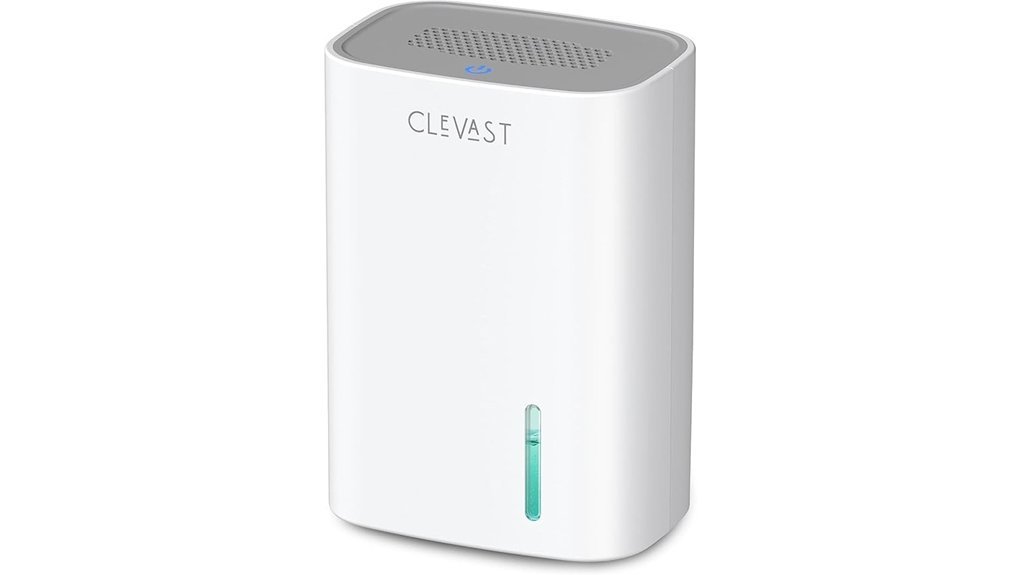
Best compact pick for mild condensation. This CLEVAST thermoelectric dehumidifier has a 30 oz removable tank and measures 4.57 × 6.5 × 9.25 inches. Its small footprint, two-speed operation, automatic shut-off, overheat protection, and carrying handle make it easier to place in a compact trailer than a compressor model.
The current listing recommends warm operating conditions and positions the unit for small enclosed spaces, including RVs and campers. However, the accessible product details do not clearly publish a daily water-removal rate, wattage, or verified sleep-mode noise figure. Treat it as a light-duty choice for mild window condensation and dampness, not as a solution for leaks, saturated materials, or constant water runoff.
Why you’ll like it: It takes up little counter space, has a reasonably sized tank for its body, and includes basic overflow and overheat protection.
Who should buy this: Owners of small travel trailers who have shore power and need gradual moisture control near a sleeping area, closet, or dinette.
Who should avoid it: Campers dealing with wet walls, plumbing leaks, severe humidity, or cold conditions where thermoelectric performance may drop sharply.
Pros:
- Compact 4.57 × 6.5 × 9.25-inch body fits tight trailer interiors.
- Two speeds provide more flexibility than a single-mode mini unit.
- Automatic shut-off and overheat protection support safer everyday use.
Cons:
- The current listing does not clearly state daily extraction capacity.
- Thermoelectric output falls in cooler or less-humid air.
- No continuous drain connection is listed.
TENKER Dehumidifier for Home with 77oz Water Tank
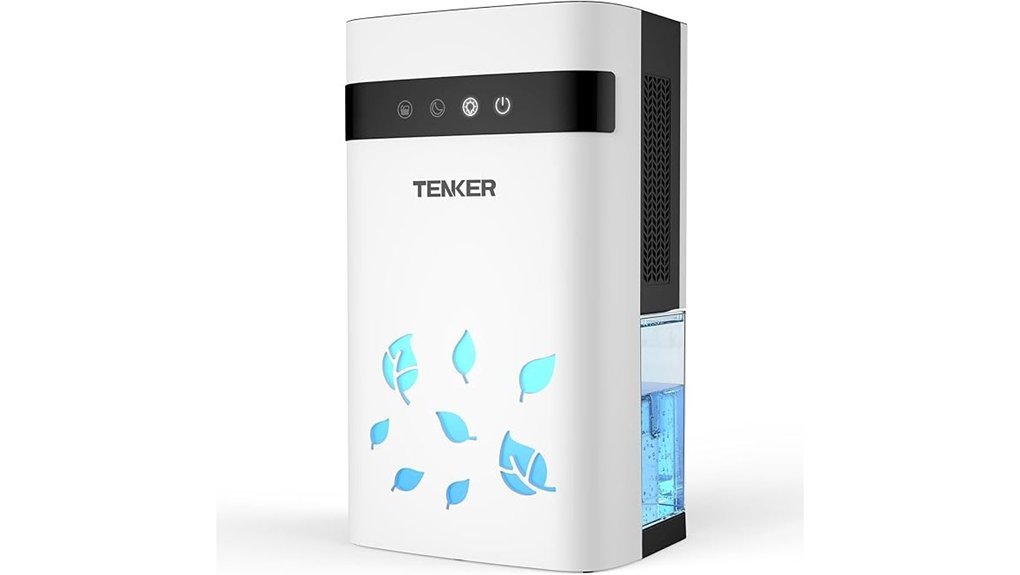
Best higher-capacity thermoelectric pick. The current TENKER listing identifies model QIG-D03 with a 2,200 mL, or roughly 77 oz, tank. It lists moisture removal of up to 1,000 mL per day at 86°F and 80% relative humidity, an 88 W power rating, and a weight of 2.71 kg, or about 6 lb.
Those test conditions are hot and very humid, so real collection in a cooler trailer will usually be lower. The listing also uses a broad 1,000-square-foot headline while its specification block gives a much smaller 10–30 m² coverage range. For RV use, rely on the rated extraction conditions, tank size, wattage, and your hygrometer rather than the largest marketing number.
Why you’ll like it: The large tank reduces emptying frequency, and the higher listing-rated extraction can better handle humid summer camping than a basic single-module tabletop unit.
Who should buy this: Campers with reliable AC power who want more thermoelectric capacity without moving to a compressor appliance.
Who should avoid it: Boondockers with a limited battery bank should calculate inverter losses and daily energy use before choosing an 88 W appliance.
Pros:
- Large 77 oz tank and up to 1,000 mL/day listing-rated removal.
- Auto and sleep modes provide useful flexibility.
- Automatic shut-off helps prevent overflow.
Cons:
- 88 W draw is relatively high for a thermoelectric trailer unit.
- At about 6 lb and nearly 14 inches tall, it needs more secure space than a mini model.
- The listing’s coverage claims are internally inconsistent.
Levoair 68oz Dehumidifier with Drain Hose

Best for continuous drainage. The Levoair listing shows a 2-liter, or about 68 oz, tank and advertises moisture removal of up to 1,000 mL per day at 86°F and 80% relative humidity. It also describes a continuous-drain setup and lists quiet operation below 40 dB.
The drain option is the main reason to choose this model for a longer stay. The product description refers to a 5 ft drain hose, but the current included-components field lists only the dehumidifier and user manual. Confirm that the hose is included with the exact seller offer, or plan to obtain a compatible hose. Any gravity drain must run continuously downhill without kinks.
At 5.4 × 7.9 × 14 inches and about 5 lb, it is larger than a tabletop mini but still easier to place than many compressor units. Secure it before travel and allow enough room to remove the tank and maintain airflow.
Why you’ll like it: It offers a practical middle ground between a tiny tank-based model and a heavier compressor dehumidifier.
Who should buy this: Travelers staying in one location for several days who have shore power and a safe downhill drain route.
Who should avoid it: Skip it if your trailer has no secure placement or suitable gravity-drain path.
Pros:
- Large 68 oz tank with continuous-drain capability.
- Up to 1,000 mL/day listing-rated extraction under hot, humid test conditions.
- Automatic shut-off and a carrying handle support easier use while parked.
Cons:
- Confirm whether a drain hose is included with the current offer.
- The hose must remain unkinked and slope downward.
- Rated extraction will be lower in cooler or less-humid air.
Glowells 21 Pints Dehumidifier for Home and RV
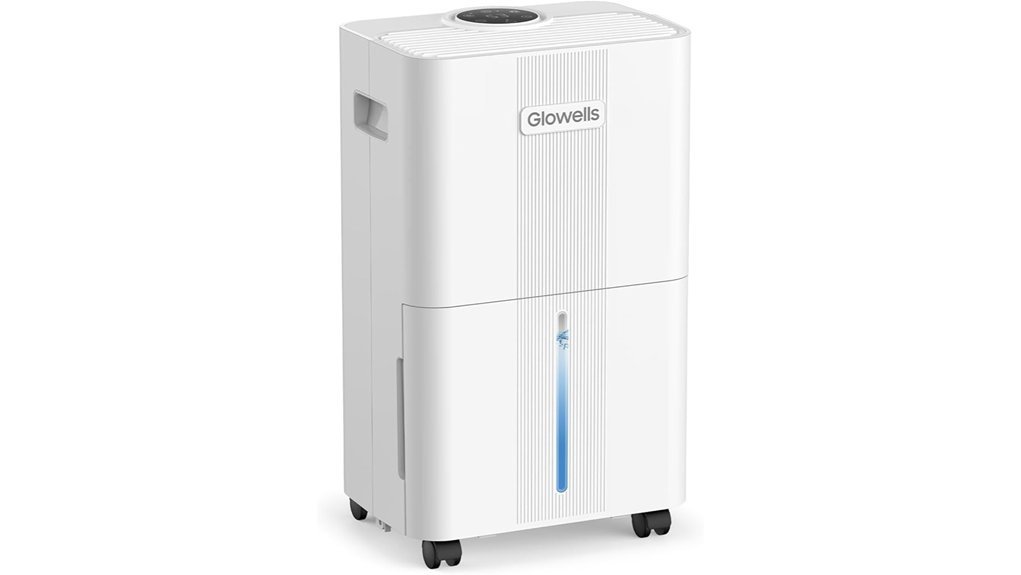
Best for a large parked RV or heavier humidity with shore power. The Glowells listing advertises compressor-based removal of up to 21 pints per day at 95°F and 90% relative humidity, along with three operating modes and a 24-hour timer. That capacity is in a different class from the small thermoelectric products in this guide.
The listing’s headline says 1,500 square feet, while a feature bullet says up to 1,600 square feet. That inconsistency is a reminder not to choose by coverage marketing alone. In a travel trailer, the more useful questions are whether the unit physically fits, whether the electrical circuit can support it, how much water it removes under relevant conditions, and how you will empty or drain it.
This type of appliance makes the most sense in a fifth wheel, destination trailer, large motorhome, or RV that stays parked with reliable 120 V AC power. Confirm the current dimensions, weight, drainage accessories, operating-temperature range, and seller offer before ordering.
Why you’ll like it: A compressor system can respond better to persistent dampness and higher moisture loads than a small Peltier unit.
Who should buy this: Owners of larger parked RVs who have adequate floor space, shore power, and a significant humidity problem.
Who should avoid it: Small-trailer owners, boondockers, and anyone without a secure floor location will likely find it excessive.
Pros:
- Higher moisture-removal class than tabletop thermoelectric models.
- Three modes and a 24-hour timer add useful control.
- Better suited to heavier moisture loads in a large parked RV.
Cons:
- Bulky and more power-hungry than compact units.
- The listing’s square-foot claims are inconsistent.
- Current dimensions, weight, drainage accessories, and offer availability should be confirmed.
Lonxfy 35 oz Dehumidifier with Sleep Mode
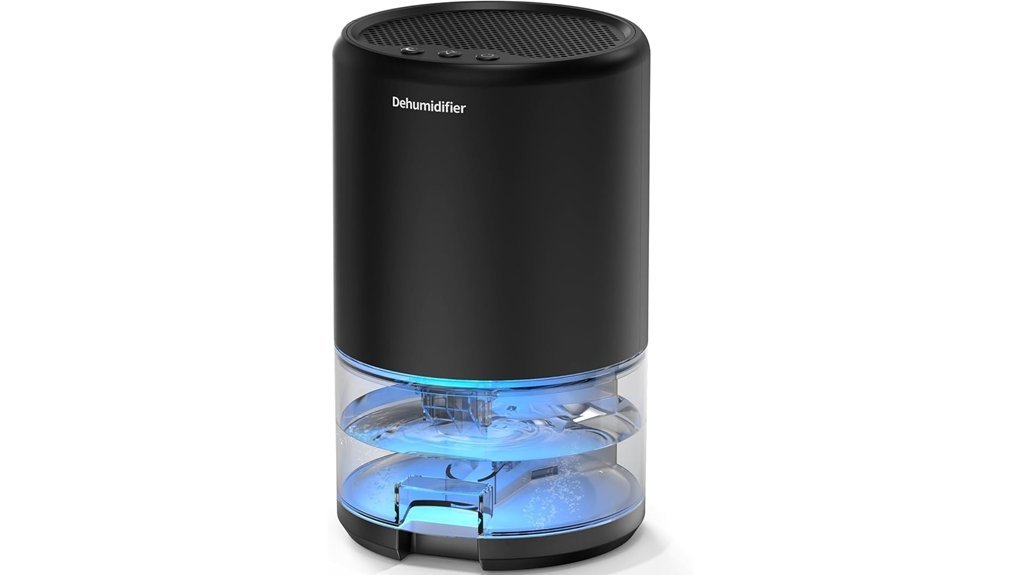
Best quiet-featured compact alternative. The current Lonxfy listing shows a 35 oz tank, sleep mode, seven-color lighting, automatic shut-off, and positioning for small spaces including RVs. These features make it easier to use near a sleeping area than a larger compressor appliance.
The current accessible product details do not clearly publish a daily extraction rate, wattage, or a true humidistat. That makes it difficult to compare its moisture-removal performance directly with the TENKER or Levoair. Treat it as a light-duty option and judge the result with a separate hygrometer.
Why you’ll like it: Sleep mode and automatic shut-off make it convenient for overnight use in a compact trailer.
Who should buy this: Campers who prioritize a small footprint and bedroom-friendly controls for mild condensation.
Who should avoid it: Choose a model with a clearly stated extraction rating if your trailer regularly stays above your target humidity.
Pros:
- 35 oz tank is larger than many tiny tabletop reservoirs.
- Sleep mode and automatic full-tank shut-off improve convenience.
- Compact design is intended for closets, bedrooms, and RVs.
Cons:
- Daily extraction and wattage are not clearly shown in current accessible details.
- Decorative lighting may be unnecessary in a trailer bedroom.
- No clearly stated built-in humidistat.
NeedDuck Portable Dehumidifier with 44OZ Tank
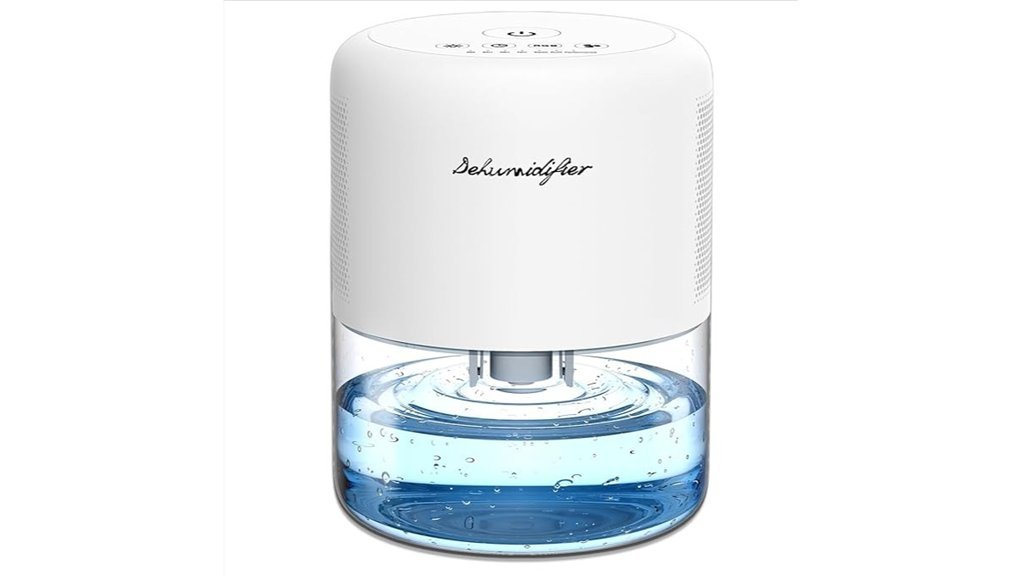
Best controls and timer options. The current NeedDuck listing shows a 44 oz tank, automatic defrost, automatic shut-off, three operating modes, four timer choices, and 10-color lighting. That control set is more flexible than a basic one-button thermoelectric model.
The listing does not clearly state a daily extraction capacity in the accessible details. That omission matters because tank size and square-foot marketing do not tell you how quickly a dehumidifier can lower humidity. Use this model for gradual control in a small trailer and verify performance with a hygrometer.
Why you’ll like it: Multiple modes, timer choices, and auto-defrost provide more control across changing camping conditions.
Who should buy this: Campers who value scheduling and operating modes more than a published high extraction rate.
Who should avoid it: It is not the strongest choice for rapid drying after a leak or for severe, continuous moisture intrusion.
Pros:
- 44 oz tank reduces emptying compared with very small reservoirs.
- Automatic defrost and full-tank protection add useful safeguards.
- Three modes and four timer choices improve control.
Cons:
- Daily extraction capacity is not clearly stated.
- Gradual operation may be too slow in very humid weather.
- Lighting controls add complexity if you only want basic moisture removal.
Camco Dehumidifier Moisture Absorber (Refillable)
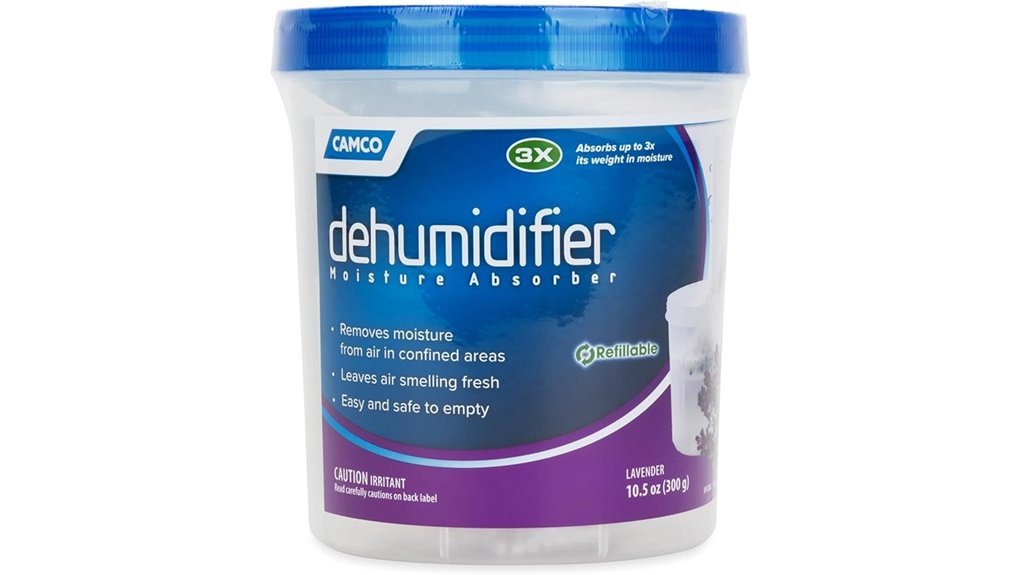
Best no-power storage aid. The Camco 44280 is a refillable passive moisture absorber designed for confined areas such as RV cabinets, closets, bathrooms, and storage compartments. The listing says its media can absorb up to three times its weight in water, while lavender-scented beads help reduce musty odors.
Because it has no fan or compressor, it is silent and needs no outlet. It also cannot actively circulate trailer air or respond quickly to a high moisture load. Use it during storage or in enclosed compartments, not as the main humidity-control system in an occupied, damp trailer.
Why you’ll like it: It is compact, refillable, and useful in cabinets or storage bays that an electric unit cannot serve directly.
Who should buy this: RV owners who need passive moisture control during storage or in small enclosed areas.
Who should avoid it: Anyone needing measured, rapid humidity reduction throughout an occupied trailer should use an electric unit and a hygrometer.
Pros:
- No electricity, fan noise, or electronic tank sensor.
- Refillable with compatible Camco 44284 media.
- Designed for confined areas including RVs and boats.
Cons:
- Not suitable as a whole-trailer dehumidifier.
- Requires replacement media and careful emptying.
- Lavender fragrance may not suit scent-sensitive users.
wisedry Rechargeable Silica Gel Dehumidifier Pack
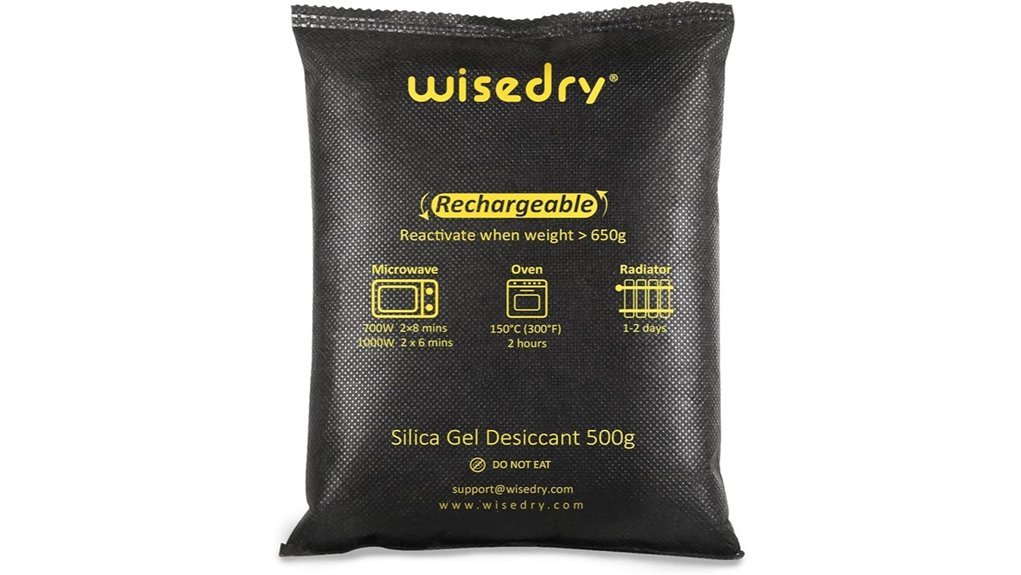
Best rechargeable option for storage. This wisedry set contains two 500 g silica gel bags. The listing says each bag adsorbs about 150 g of moisture, with a stated maximum of 180 g, before reactivation. The flexible bags can fit under seats, near windows, inside closets, or in storage bins without continuous power.
The listing describes microwave reactivation in about 10–16 minutes depending on microwave power. Weigh the bag and follow the included instructions instead of recharging on a fixed calendar. The listing specifically warns not to recharge a bag before it reaches the stated saturation weight.
Why you’ll like it: The two-bag design lets you target separate condensation or storage zones, and the bags can be reused instead of discarded after one cycle.
Who should buy this: Owners storing a trailer without shore power or protecting cabinets, tool compartments, and window areas.
Who should avoid it: Do not rely on silica gel bags to control whole-trailer humidity during occupied camping or to dry wet building materials.
Pros:
- Two 500 g bags can be placed in separate problem areas.
- No continuous electrical draw.
- Microwave or oven reactivation supports repeated use when instructions are followed.
Cons:
- Limited total absorption compared with an electric dehumidifier.
- Requires weighing or monitoring and periodic reactivation.
- Overheating or recharging too early can damage the bags.
Factors to Consider When Choosing a Dehumidifier for a Travel Trailer
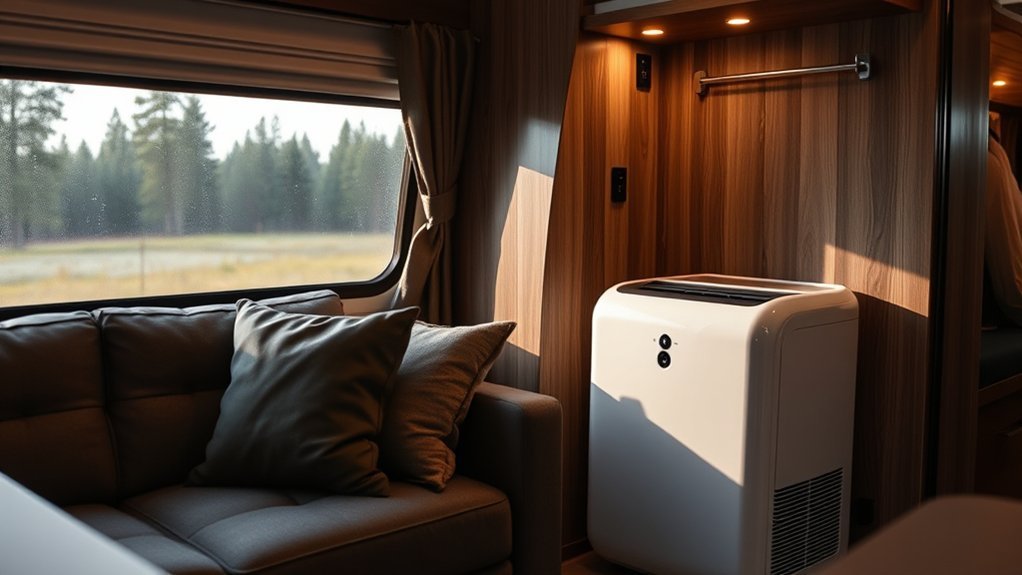
A travel trailer is a small space, but its moisture load can change quickly with cooking, showering, wet clothing, cold windows, air leaks, and the number of people inside. Use a digital hygrometer and judge a dehumidifier by actual relative humidity and collected water, not only by a large square-foot claim.
Active vs. Passive Moisture Control
Electric dehumidifiers actively move air across a cold surface and collect condensed water. They are the better choice for occupied trailers and measurable humidity reduction. Passive calcium-chloride or silica-gel absorbers are better for cabinets, storage compartments, and parked trailers without power. They work slowly and should supplement ventilation or an electric unit rather than replace one during severe humidity.
Thermoelectric vs. Compressor Dehumidifiers
Thermoelectric, or Peltier, models are compact, relatively quiet, and simple, but they remove less water and lose performance in cool air. Compressor models are larger, heavier, and more noticeable, yet they are usually better for persistent humidity and larger RV interiors. Choose by moisture load, available power, and space rather than assuming one technology is best for every trailer.
Moisture Removal Capacity and Test Conditions
Compare how much water a unit is rated to remove in 24 hours, but read the test conditions. Small thermoelectric models often publish maximum output at about 86°F and 80% relative humidity, while some compressor ratings use even hotter and wetter conditions. Ratings taken under different conditions are not directly comparable. A persistent leak, wet subfloor, or soaked insulation needs repair and drying, not simply a larger appliance.
Humidity Control and a Hygrometer
A practical indoor target is generally around 30% to 50% relative humidity. In a cold trailer, the exact target may need adjustment to limit window condensation without making the air uncomfortably dry. A separate hygrometer is especially useful with mini units that do not include a true humidistat.
Power Consumption and RV Electrical Limits
Check wattage before buying. An 88 W thermoelectric model and a compressor unit place very different demands on an RV electrical system. Most electric products in this guide use 120 V AC. Running one from a 12 V battery requires a suitable inverter, enough usable battery capacity, and allowance for conversion losses. Do not assume a small appliance can run continuously from a standard RV battery.
Size, Weight, and Secure Placement
Measure the intended shelf or floor space, including airflow clearance and room to remove the tank. Weight matters because every appliance contributes to trailer payload. Place the unit level on a stable surface while parked, keep the intake and exhaust clear, and switch it off, empty it, and secure it before towing.
Noise Level During Operation
Thermoelectric units are usually the quieter choice near a bed because they avoid a compressor. Compare stated decibel ratings only when manufacturers provide them under similar modes. Sleep mode may reduce fan noise, but it may also reduce moisture removal. Compressor models are stronger but more noticeable in a compact trailer.
Drainage Options
A removable tank is simple for weekend trips. For longer stays, continuous drainage can reduce daily maintenance. Gravity hoses must slope continuously downward to a suitable drain or container, without kinks or uphill sections. Confirm whether a hose is included, what size it requires, and whether the trailer layout provides a safe outlet.
Temperature and Defrost
All dehumidifiers lose performance as conditions move outside their intended operating range. Thermoelectric models generally collect less water in cool air. Compressor models may need automatic defrost to manage frost on the coil. Check the manufacturer’s minimum operating temperature before using a unit during cold-weather camping.
Control Moisture at the Source
A dehumidifier works better when you also reduce moisture production. Use roof or bathroom vents while showering, run the range hood while cooking, dry wet clothing outside when possible, wipe heavy window condensation, avoid blocking wall vents, and repair roof, plumbing, seal, or window leaks promptly.
Safety Features
Prioritize automatic full-tank shut-off, overheat protection, stable construction, and a suitable power adapter or cord. Keep water away from plugs and extension-cord connections, follow the RV’s circuit limits, and never block the air openings. Stop using a unit with a damaged cord, cracked tank, unusual smell, or repeated overheating.
Before you buy
- Measure the available space, tank-removal clearance, and airflow clearance.
- Check daily water-removal rating, test conditions, tank size, wattage, and operating-temperature range.
- Decide whether you need sleep mode, a humidistat, timer, auto-defrost, or continuous drainage.
- Confirm whether hoses, adapters, or other drainage accessories are included.
- Verify that your shore-power circuit, inverter, and battery system can support the load.
- Use a hygrometer to confirm that the selected unit is actually lowering humidity.
Frequently Asked Questions
How Do I Determine the Right Dehumidifier Size for My Travel Trailer?
Start with the trailer’s interior size, but do not choose by square footage alone. Measure relative humidity with a hygrometer, note whether you have light condensation or persistent dampness, and compare daily water-removal capacity at the stated test conditions. A mini thermoelectric unit may be enough for mild moisture in a small trailer, while severe humidity may require a compressor model, stronger ventilation, and correction of the moisture source.
Should I Choose a Thermoelectric or Compressor Dehumidifier?
Choose thermoelectric for a small trailer, mild condensation, lower noise, and easier placement. Choose a compressor model when humidity is persistent, the RV is larger, and you have reliable shore power and enough floor space. Neither type can fix a leak or dry saturated insulation without addressing the water source.
Can I Use a Dehumidifier While Camping in Cold Weather?
Yes, provided the model is rated for the temperature. Thermoelectric units become less productive as the air cools, and compressor models may frost without effective auto-defrost. Check the minimum operating temperature and monitor actual humidity rather than assuming the unit is working.
Can I Run a Travel Trailer Dehumidifier From a Battery?
Possibly, but most electric models use 120 V AC and require an inverter when powered from a 12 V battery. Calculate appliance wattage, expected run time, inverter losses, and usable battery capacity before relying on it. Shore power is the simpler option for high-capacity or continuous use.
Can I Leave the Dehumidifier Running While Towing?
No. Switch it off, unplug it, empty the tank, disconnect any drain hose, and secure the appliance before travel. Movement can spill water, block airflow, damage the unit, or turn a loose appliance into a hazard.
What Maintenance Is Required for My Dehumidifier?
Empty and rinse the tank regularly, clean the intake screen or filter according to the manual, keep the air openings clear, inspect any drain hose for kinks or buildup, and check the cord and adapter for damage. Let the tank dry before storage to reduce odor and residue.
Are Passive Moisture Absorbers Enough for an RV?
They can help in cabinets, closets, and stored trailers, but they are usually too slow for whole-trailer humidity during occupied camping. Use them as a supplement and address major moisture sources through ventilation, leak repair, and active dehumidification when needed.
How Often Should I Empty the Water Tank?
Check it at least daily at first. Emptying frequency depends on tank size, temperature, humidity, and how much moisture cooking, showering, and occupants add. Automatic shut-off prevents many overflows, but a full tank also stops dehumidification until you empty it.
Conclusion
For a small travel trailer with shore power and mild condensation, the CLEVAST Mini Quiet Dehumidifier is the easiest compact option to place. Choose the TENKER 77 oz when you want a larger tank and a clearly stated higher thermoelectric extraction rating, or the Levoair 68 oz when continuous drainage is the priority.
The Glowells 21-Pint Dehumidifier is better reserved for a large parked RV with reliable AC power and a heavier humidity load. The Lonxfy 35 oz and NeedDuck 44 oz are light-duty alternatives that emphasize sleep, timer, and mode controls, but their current accessible listings do not clearly state daily extraction capacity.
For storage or small enclosed compartments, the Camco Moisture Absorber and wisedry Silica Gel Packs provide useful no-power moisture control. Whichever option you choose, pair it with a hygrometer, ventilation, prompt leak repair, and safe placement. A dehumidifier can manage airborne moisture, but it cannot fix water intrusion or wet building materials.
Final recommendation
Choose by moisture load, not by the largest square-foot claim. Start with CLEVAST for a tight space and mild condensation, TENKER for stronger thermoelectric performance, Levoair for a drain-hose setup, or Glowells for compressor-level removal in a large parked RV. Use Camco or wisedry only as storage and compartment aids.