Affiliate disclosure: As an Amazon Associate, we may earn from qualifying purchases at no extra cost to you.
Quick Verdict: Best Alexa-Enabled Dehumidifiers for 2026
If you want easier humidity control through your phone, app, or Alexa voice commands, these smart dehumidifiers give you more flexibility than basic plug-in models. The Frigidaire 22-Pint Portable Dehumidifier with Wi-Fi is a strong fit for smaller rooms, while the Midea Cube 35 Pint Dehumidifier with Smart Control stands out for homes that need a bigger tank and flexible storage. For larger basements and damp open areas, the Sijipt 100 Pint Dehumidifier, Waykar 80 Pints Energy Star Dehumidifier, and AEOCKY 4500 Sq.Ft Energy Star Dehumidifier offer higher moisture-removal capacity.
Not every product here is fully Alexa-focused, so the safest buying move is to check the Amazon listing before ordering and confirm the current smart-home compatibility, app name, drainage setup, room-size rating, and warranty details.
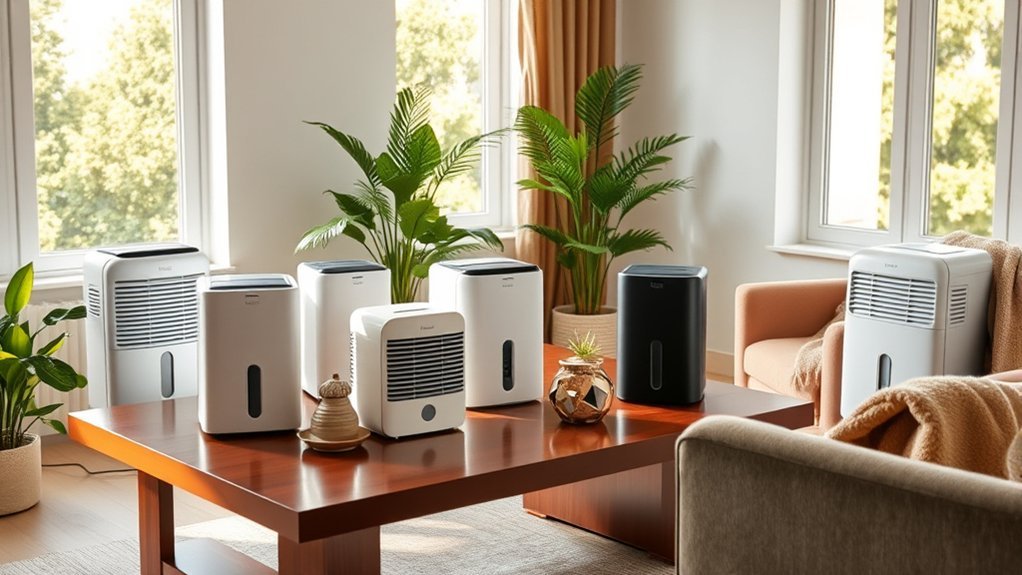
If you’re looking for the best Alexa-enabled dehumidifiers for 2026, you’ll want a model that does more than pull moisture from the air. The right option should match your room size, support convenient smart control, offer practical drainage, and run quietly enough for your space. Some models are better for bedrooms and bathrooms, while others are built for basements, laundry rooms, garages, or large open-plan areas. This guide keeps the focus on smart and app-friendly dehumidifiers, while also helping you compare capacity, coverage, noise level, drainage options, and everyday usability.
| Product | Best For | Key Strength | Check Price |
|---|---|---|---|
| Frigidaire 22-Pint Portable Dehumidifier with Wi-Fi | Small to medium rooms | Wi-Fi control and quiet operation | Check Price on Amazon |
| 2500 sq.ft Dehumidifier with WiFi Control | Larger rooms and everyday home use | Smart Life app control | Check Price on Amazon |
| AEOCKY 4500 Sq.Ft Energy Star Dehumidifier | Large damp spaces | High capacity and quiet performance | Check Price on Amazon |
| Midea Cube 35 Pint Dehumidifier with Smart Control | Smart homes and long run time | Large tank and app control | Check Price on Amazon |
| Dehumidifier for Basement with App Control | Basements and very large spaces | High moisture removal and app control | Check Price on Amazon |
| ToLife 1000 sq.ft Dehumidifier with 95 OZ Tank | Compact rooms and simple moisture control | Quiet sleep mode and portable design | Check Price on Amazon |
| Waykar 80 Pints Energy Star Dehumidifier for Large Rooms | Large rooms and basements | Energy Star design and flexible drainage | Check Price on Amazon |
Frigidaire 22-Pint Portable Dehumidifier with Wi-Fi
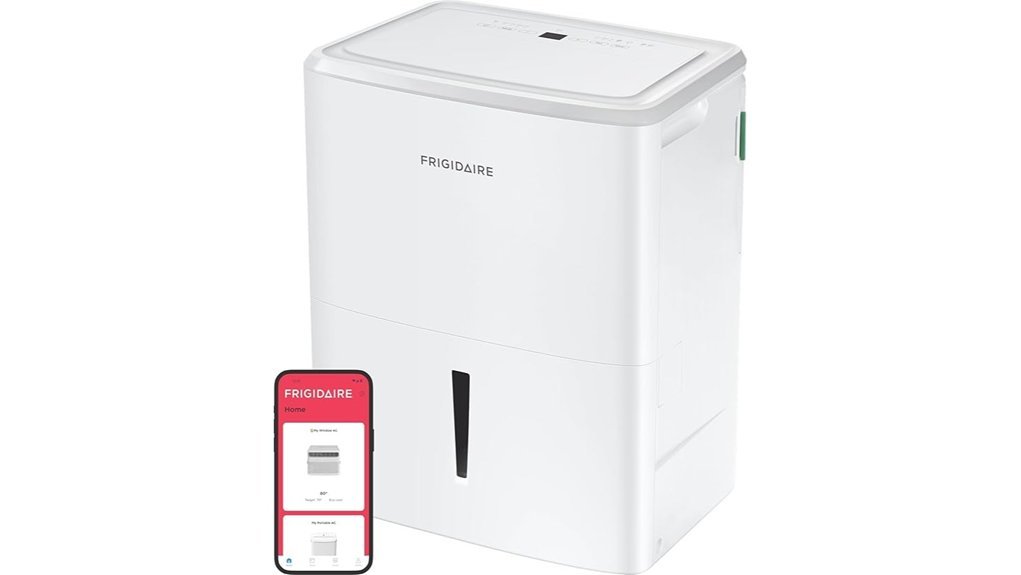
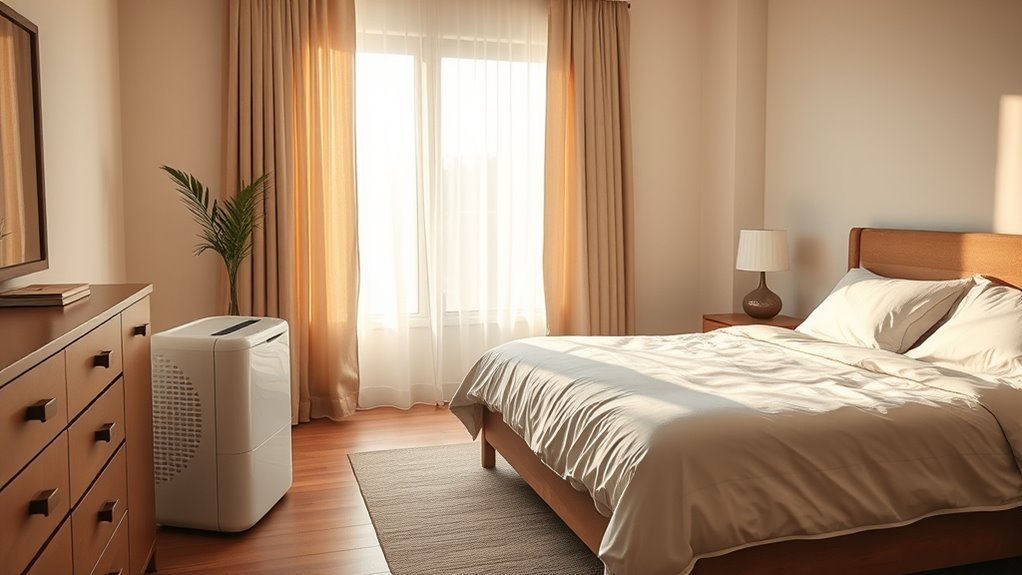
The Frigidaire 22-Pint Portable Dehumidifier with Wi-Fi is a practical choice if you want smart humidity control in a bedroom, bathroom, home office, or other small to medium room. With a dehumidification capacity of 22 pints per day, it is designed to manage everyday moisture without taking over the room. Its Wi-Fi connectivity lets you control the unit through the Frigidaire app, and the product listing shows voice-control support through Alexa or Google Home.
You’ll also get a 24-hour programmable timer, quiet operation, and a portable design that is easier to move than many larger basement models. It is a good fit if you want smart convenience but do not need a huge 80-pint or 100-pint machine.
Why You’ll Like It: This model makes the most sense for buyers who want smart control, lower noise, and simple moisture management in normal living areas. The smaller capacity can also be a benefit if you do not want a bulky unit in a bedroom or bathroom.
Who Should Buy This: Choose this model if you need an app-friendly dehumidifier for a smaller space and want the convenience of scheduling, remote control, and voice-assistant compatibility.
Who Should Avoid This: Skip it if you need to dry a large basement, crawl space, or very damp open area. Its 22-pint capacity may require longer run times in heavy-humidity conditions.
Best For: Those looking for an energy-efficient and convenient dehumidification solution for small to medium-sized rooms, such as bedrooms and bathrooms.
Pros:
- Energy Star certified for energy-efficient performance, helping to reduce electricity bills.
- Smart features including Wi-Fi connectivity and compatibility with voice assistants for hands-free control.
- Quiet operation at only 43 dBA, making it suitable for nighttime use without disturbing sleep.
Cons:
- Limited capacity of 22 pints per day may not be sufficient for larger spaces.
- Manual water bucket removal may require frequent emptying if not using the continuous drain option.
- Plastic design may not appeal to those seeking a more premium look in their home decor.
2500 sq.ft Dehumidifier with WiFi Control
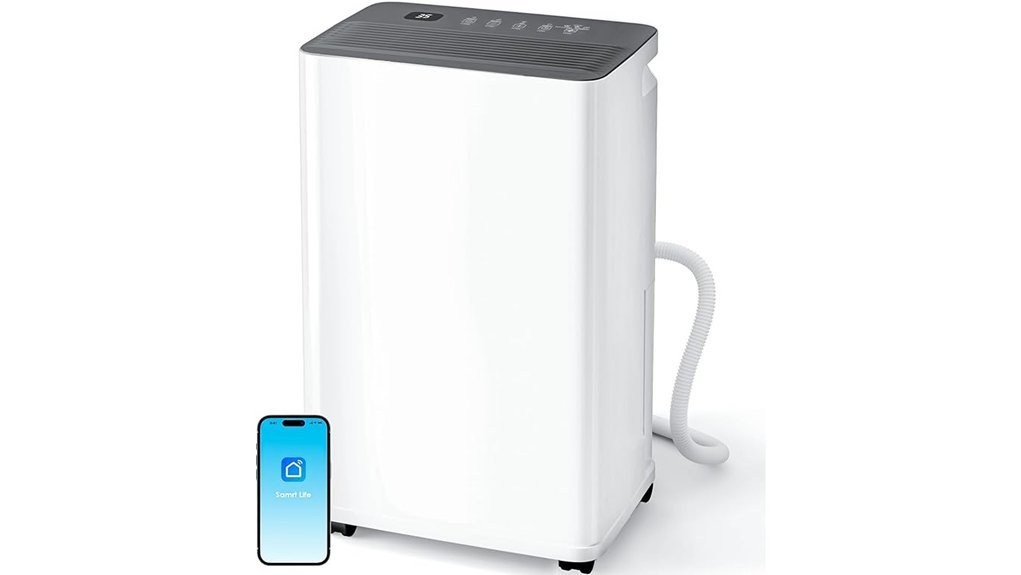
If you need a stronger solution for larger rooms, the Manastin 2025 Upgraded 35-Pint Dehumidifier gives you more coverage than compact bedroom units. It is listed as covering up to 2,500 sq. ft. and removing up to 35 pints of moisture daily. With Wi-Fi control through the Smart Life App, you can adjust settings remotely and manage humidity without walking over to the unit every time.
It includes Auto, Manual, and Drying modes, which makes it easier to match the setting to your situation. Auto mode is useful for daily humidity control, while drying mode can help when you need faster moisture removal in a laundry area, closet-adjacent room, or damp living space. Its quiet operation and washable filter also make it more practical for regular home use.
Why You’ll Like It: This model is appealing if you want smart app control, several operating modes, and a larger coverage rating without jumping straight to a heavy high-capacity basement unit.
Who Should Buy This: Choose it for living rooms, larger bedrooms, home offices, and finished basements where remote control and easy scheduling matter.
Who Should Avoid This: It may not be the best pick if your main concern is Alexa voice control specifically. Check the current Amazon listing and app details to confirm voice-assistant support before buying.
Best For: Individuals seeking an efficient and user-friendly dehumidifier for large spaces up to 2,500 sq. ft.
Pros:
- Smart Wi-Fi Control: Easily adjust settings remotely via the Smart Life App.
- Whisper-Quiet Operation: Operates as low as 30dB, ensuring minimal disruption.
- Energy Efficient: Consumes only 0.23 kWh per day, leading to potential savings on energy bills.
Cons:
- Limited Capacity for Continuous Use: While it has a 0.8-gallon tank, frequent manual drainage may be necessary for prolonged operation.
- Dependent on Wi-Fi: Features reliant on internet connectivity may be problematic during outages.
- Initial Cost: Higher upfront investment compared to basic dehumidifiers.
AEOCKY 4500 Sq.Ft Energy Star Dehumidifier
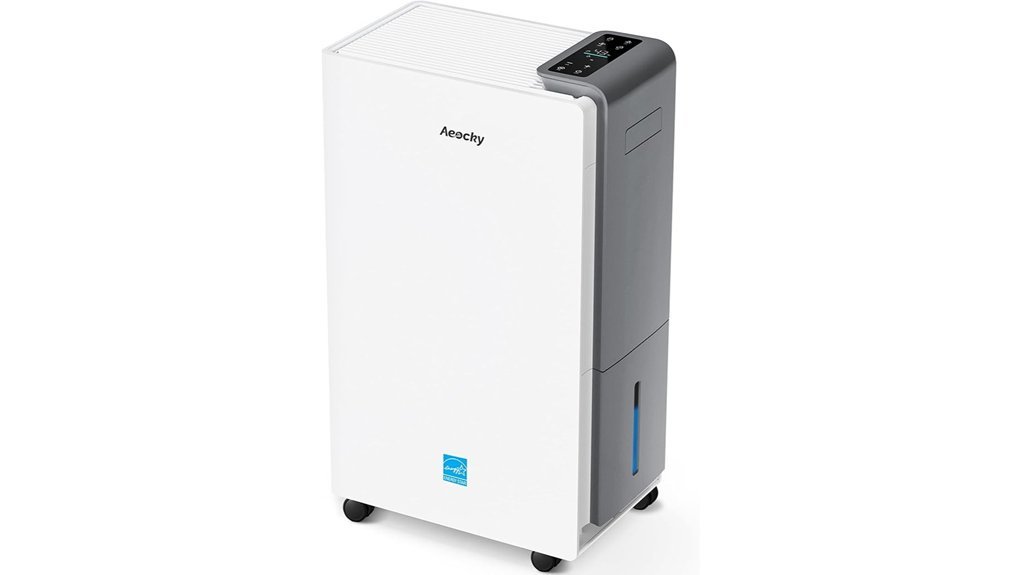
Looking for a powerful dehumidifier that can handle bigger humidity problems? The AEOCKY 4500 Sq.Ft Energy Star Dehumidifier is designed for larger spaces and higher moisture removal. The product listing shows an 80-pint-per-day capacity, adjustable humidity control, quiet operation, and power-off memory, which helps the unit resume operation after a power interruption.
This model is a better match for buyers who care about performance first and smart-style convenience second. It may fit basements, large living areas, storage spaces, and damp rooms where smaller 22-pint or 35-pint units may work too slowly. Its listed 44 dB noise level also makes it more appealing for homes where loud compressor noise would be annoying.
Why You’ll Like It: The main attraction is capacity. If humidity builds up quickly in your home, a larger dehumidifier can remove moisture faster and may run less constantly than a small unit pushed beyond its comfort zone.
Who Should Buy This: Choose it if you have a large damp space and want a high-capacity Energy Star model with humidity control and automatic restart-style convenience.
Who Should Avoid This: Avoid it if you only need a small bedroom unit or if you want guaranteed Alexa voice control. Confirm the current smart-home details on Amazon before ordering.
Best For: Homeowners seeking an energy-efficient and quiet dehumidifier that integrates well into smart home systems.
Pros:
- Energy-efficient with up to $1,000 in potential annual savings on electricity bills.
- Smart features like adjustable humidity control and power-off memory for automatic resumption.
- Low noise operation at just 44dB, making it suitable for bedrooms and living areas.
Cons:
- Initial cost may be higher compared to non-Energy Star models.
- Weight of 31 lbs may make it less portable for some users.
- Limited to specific conditions as performance is optimized for high humidity environments.
Midea Cube 35 Pint Dehumidifier with Smart Control
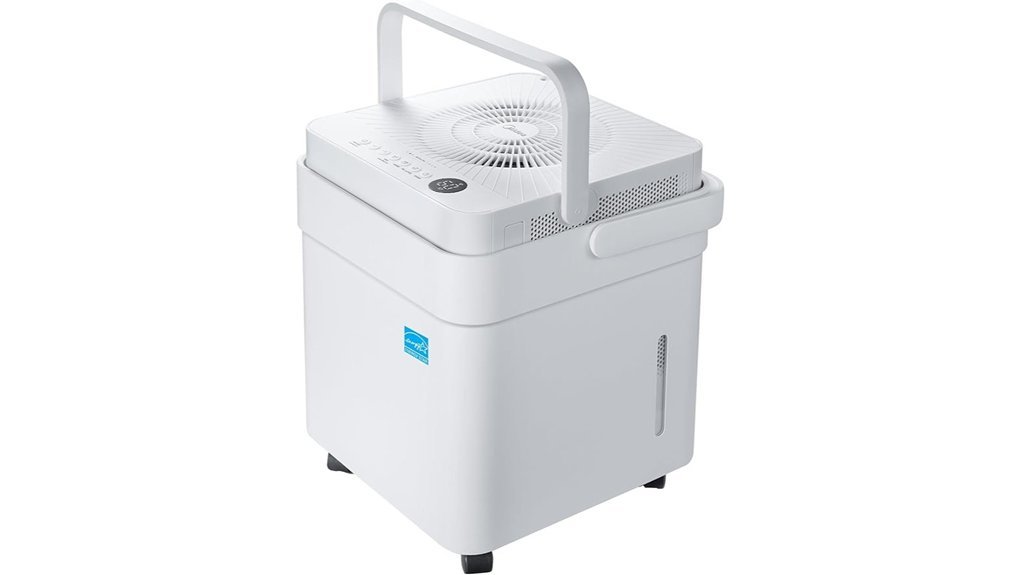
For convenience and smart-home control, the Midea Cube 35 Pint Dehumidifier with Smart Control is one of the most interesting options in this list. It is listed for spaces up to 3,500 sq. ft. and removes 35 pints of moisture daily. Its standout feature is the lift-and-twist design, which allows the unit to operate in extended or nested form and makes storage easier when it is not in use.
The Wi-Fi connectivity lets you control the dehumidifier through the SmartHome app or through Alexa. The 4.2-gallon tank is also a major advantage because it can run longer between emptying compared with smaller-tank models. If you dislike checking a water bucket several times a day, this design may reduce that hassle.
Why You’ll Like It: This model blends smart control, a space-saving cube shape, and a larger tank. It is especially useful if you want a dehumidifier that is easier to store and does not need constant bucket emptying.
Who Should Buy This: Choose it if you want Alexa support, app control, long tank runtime, and a design that works well in homes where storage space matters.
Who Should Avoid This: It weighs more than many compact units, so it may not be ideal if you plan to carry it up and down stairs often.
Best For: Homeowners seeking an efficient and convenient solution for controlling humidity in large spaces up to 3,500 sq. ft.
Pros:
- Wi-Fi enabled: Control the dehumidifier remotely via SmartHome app or voice assistants like Alexa and Google Assistant.
- Longer operation time: The 4.2-gallon tank allows it to run up to three times longer than traditional models.
- Compact design: Unique lift-and-twist design enables easy storage when not in use.
Cons:
- Weight: At 39.62 pounds, it may be cumbersome to move around.
- Temperature limit: Operates optimally only up to 90°F, which may not suit all environments.
- Plastic construction: Some users may prefer more durable materials over plastic.
Dehumidifier for Basement with App Control
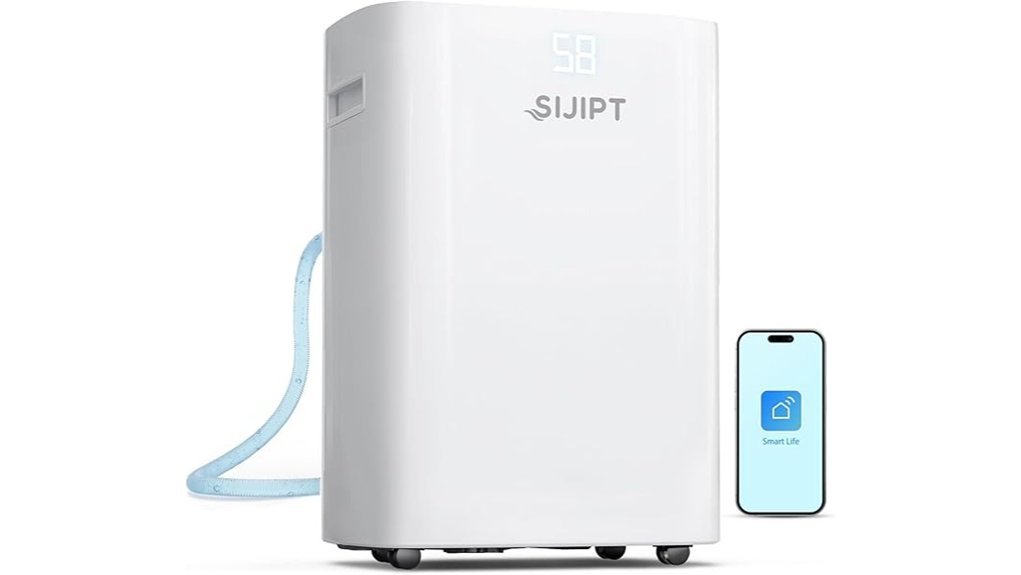
The Sijipt 100 Pint Dehumidifier stands out with its app control feature, making it a strong option for tech-savvy homeowners who want easier basement moisture control. With a listed coverage of up to 6,000 square feet, it is built for very large spaces and can remove 100 pints of moisture daily. You can manage it remotely via Wi-Fi or Bluetooth, and the three smart modes help you customize operation based on humidity level and room use.
The 24-hour programmable timer, auto shutoff, and auto restart functions make it more convenient for set-and-check operation. You can choose between a detachable bucket or continuous drainage, which is especially important in basements where humidity can build quickly. Its listed 43dB operation also helps keep noise more controlled than many heavy-duty units.
Why You’ll Like It: This is the type of model you consider when a small dehumidifier keeps filling up or cannot lower humidity fast enough. The app control and drainage flexibility make it more useful for basements and larger damp areas.
Who Should Buy This: Choose it for basements, large open areas, storage rooms, or damp lower-level spaces where capacity and remote control matter.
Who Should Avoid This: Avoid it if you only need a compact unit for a bedroom or bathroom. A 100-pint dehumidifier can be more machine than you need for small rooms.
Best For: Tech-savvy homeowners seeking an efficient dehumidification solution for large spaces up to 6,000 square feet.
Pros:
- App control allows for remote management and monitoring via Wi-Fi or Bluetooth.
- Quiet operation at just 43dB makes it suitable for bedrooms and living areas.
- Energy Star certified for efficient energy consumption, helping to lower electricity bills.
Cons:
- Initial cost may be higher compared to traditional dehumidifiers.
- Requires Wi-Fi connection for full app functionality, limiting usability in areas with poor connectivity.
- Tank volume may require frequent manual emptying if not using continuous drainage.
ToLife 1000 sq.ft Dehumidifier with 95 OZ Tank
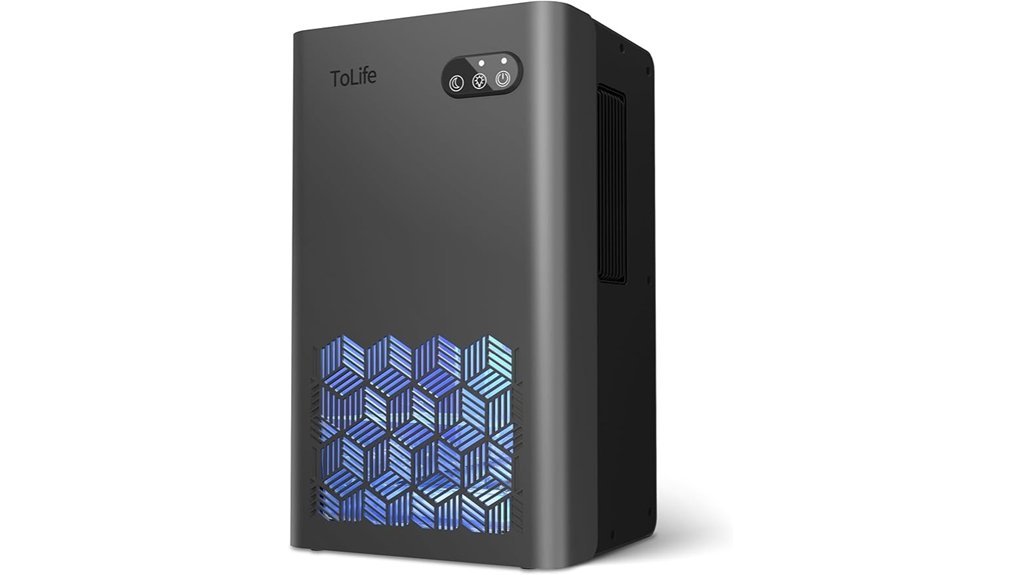
If you need a reliable solution for high humidity areas but do not necessarily need full smart-home control, the ToLife 1000 sq.ft Dehumidifier is a simple and portable choice. With its 95-ounce tank, it extracts up to 1 liter of moisture daily and is listed for spaces up to 1,000 sq.ft. This makes it better for bedrooms, bathrooms, closets, RV-style spaces, small offices, and other areas where a full-size compressor dehumidifier may feel too large.
It includes a powerful mode for faster dehumidification and a low-speed sleep mode that operates quietly under 30 dB. The compact design and built-in handles make it easy to move between rooms. It also includes ambient lighting with seven color options, which can add a softer look for bedrooms or nighttime use.
Why You’ll Like It: This model is about simple moisture control, quiet operation, and portability. It is not the most advanced smart option, but it can still be useful if your main goal is reducing dampness in a smaller space.
Who Should Buy This: Choose it if you want a compact, quiet, easy-to-move dehumidifier for moderate humidity in smaller rooms.
Who Should Avoid This: Avoid it if you specifically want Alexa control or app scheduling.
Best For: Individuals seeking an efficient dehumidifier for medium to large spaces, such as homes, basements, or offices, to maintain a comfortable humidity level.
Pros:
- Efficient moisture extraction: Removes up to 1 liter of moisture daily, ideal for high humidity areas.
- Quiet operation: Low-speed sleep mode ensures minimal noise (<30 dB) for undisturbed rest.
- Portable design: Compact with built-in handles for easy relocation between rooms.
Cons:
- Limited smart compatibility: Not compatible with smart home systems.
- Plastic material: May not be as durable as metal alternatives.
- Manual water tank emptying: Requires regular checking and emptying of the 95-ounce tank.
Waykar 80 Pints Energy Star Dehumidifier for Large Rooms
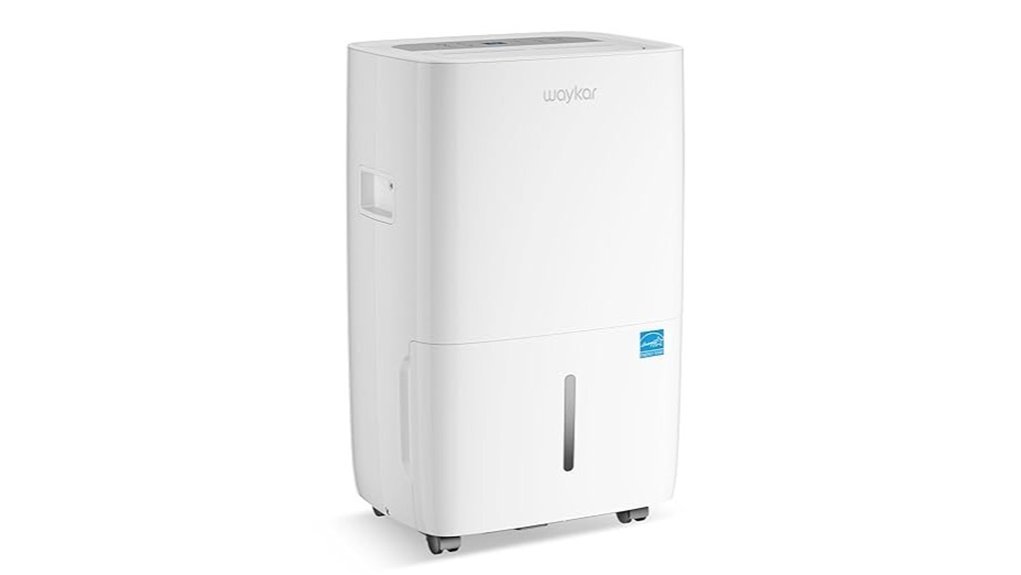
Need a powerful solution for damp spaces? The Waykar 80 Pints Energy Star Dehumidifier is designed for large rooms up to 5,000 sq. ft. It removes 80 pints of moisture daily, helping tackle damp air, musty smells, and excess moisture in larger areas. With 90° auto swing airflow, it can distribute dry air more evenly across the room.
The smart humidity control lets you adjust settings between 30% and 80% RH, giving you more control over comfort and moisture level. The Energy Star certification supports efficient operation, and the listed 42 dB noise level makes it easier to use in living areas, workspaces, or basements. Flexible drainage options also help reduce the chore of constant tank emptying.
Why You’ll Like It: The Waykar is a strong option if you want big-room coverage, adjustable humidity, and dependable drainage choices without making the unit too complicated to use.
Who Should Buy This: Choose it for basements, large rooms, bathrooms, laundry rooms, and damp areas where you need stronger daily moisture removal.
Who Should Avoid This: Avoid it if you need a small smart speaker-compatible unit for voice commands. Confirm any current app or Alexa details on Amazon before buying.
Best For: Those seeking an efficient and reliable solution for moisture control in large spaces, including basements and bathrooms.
Pros:
- Energy Star Certified: Ensures efficient operation, reducing energy costs while maintaining performance.
- Quiet Operation: Functions at a low noise level (42 dB), making it suitable for living and working environments.
- Flexible Drainage Options: Offers both manual and continuous drainage solutions for convenience.
Cons:
- Initial Cost: Higher upfront investment compared to smaller dehumidifiers.
- Size and Weight: May be cumbersome to move in smaller spaces due to its size.
- Maintenance Needs: Regularly emptying the water tank may be required for optimal performance in certain settings.
Factors to Consider When Choosing an Alexa Dehumidifier
When choosing an Alexa-enabled dehumidifier, you’ll want to evaluate several key factors before clicking buy. Look at smart features, coverage area, dehumidification capacity, energy efficiency, drainage options, and noise level. Also confirm whether the model truly supports Alexa, only supports a mobile app, or uses a third-party smart app such as Smart Life.
Smart Features Integration
As you explore options for an Alexa-enabled dehumidifier, consider the smart features that can enhance your experience. Look for models with Wi-Fi connectivity that let you control humidity settings from your smartphone, allowing for adjustments even when you’re away. Verify compatibility with smart home systems like Amazon Alexa or Google Assistant for convenient voice control and seamless integration into your routines. Opt for customizable humidity control to set specific target levels for comfort and efficiency. Programmable timers can also help automate operation, offering flexibility in scheduling and energy savings. Finally, choose devices with multiple operational modes, such as auto, manual, and drying, to adapt to different environmental conditions and specific drying needs.
2. Coverage Area Requirements
Selecting the right dehumidifier involves understanding your coverage area, which can greatly impact its effectiveness. Dehumidifiers vary, with options for small spaces up to 1,000 sq. ft. and larger areas that can handle up to 6,000 sq. ft. It’s essential to evaluate your space and choose a model that meets those needs. For larger areas, you’ll often need a dehumidifier with a higher pint capacity, typically 80 pints or more, especially in high-humidity conditions. Keep in mind that environmental factors like temperature and humidity can affect performance. Confirm the dehumidifier you select operates efficiently within your area’s specific humidity range for best results. This will help you maintain a comfortable and healthy living environment.
3. Dehumidification Capacity Levels
Understanding dehumidification capacity is essential for choosing the right Alexa-enabled dehumidifier for your space. Typically measured in pints per day, units range from 22 pints for smaller rooms to over 100 pints for larger areas. If you’re tackling excessive humidity in basements or open-plan living spaces, look for models that remove up to 80 pints daily or more. For compact areas like bedrooms and bathrooms, smaller units are often more suitable. Remember, a dehumidifier’s effectiveness depends on both room size and humidity levels. To optimize performance, select a unit that matches your space’s square footage and moisture conditions. Some models even offer adjustable capacities, giving you the flexibility to control moisture removal effectively.
4. Energy Efficiency Ratings
When choosing an Alexa-enabled dehumidifier, energy efficiency ratings play a key role in making a smart investment. Look for models with ENERGY STAR certification, as they are designed to meet energy-saving guidelines and may help lower electricity use compared with less efficient units. You’ll also want to take into account wattage consumption, run time, and whether the unit is sized correctly for your room. An undersized unit may run too often, while an oversized unit may cost more upfront than you need to spend. Additionally, quieter units around 30-44 dB often feel more comfortable in bedrooms, nurseries, offices, and living areas. Finally, verify the dehumidification capacity matches your coverage area, so you’re not overworking the unit and wasting energy.
5. Drainage Options Available
Choosing the right drainage option can greatly impact your experience with an Alexa-enabled dehumidifier. Many models offer multiple choices, including manual removal via a water tank or continuous drainage through a hose for hands-free operation. If you prefer minimal maintenance, look for a unit with an included drain hose or a simple hose connection that allows for uninterrupted moisture removal. Some dehumidifiers have built-in tanks that automatically shut off when full, preventing overflow and ensuring safe operation. Remember, the tank capacity can vary considerably; larger tanks mean longer operation between emptying. Also, pay attention to ease of access for draining, as features like handles or spill-proof designs can enhance usability, especially in larger spaces.
6. Noise Level Considerations
While you might prioritize features like efficiency and drainage options, noise level is another vital factor when selecting an Alexa-enabled dehumidifier. Noise levels can vary markedly, with some models operating as quietly as 30 dB, which is comparable to a whisper. This makes them useful for bedrooms or living spaces where silence matters. Many modern dehumidifiers feature noise levels around 42 dB, allowing them to run unobtrusively at night. If you need a quieter option, look for models with multiple fan settings; these often let you choose a lower operation mode for enhanced comfort. Opting for a quieter unit is essential for environments like nurseries, libraries, or home offices, ensuring your space remains peaceful.
7. Mobile and Compact Design
Finding the right balance between performance and mobility can make a significant difference in your dehumidifier experience. A mobile and compact design enhances portability, letting you easily move the dehumidifier between rooms or store it when not in use. Look for models with built-in caster wheels and handles, which facilitate transportation, especially for larger units. Lightweight materials can also make a big difference, allowing you to maneuver the device without straining. A compact design saves space in smaller rooms, ensuring it won’t obstruct pathways or furniture arrangements. Some innovative designs include lift-and-twist mechanisms, offering versatile storage options while maintaining functionality. Choosing the right size and design will keep your space comfortable and clutter-free.
Before You Buy Checklist
- Confirm whether the unit supports Alexa voice control, app control only, or both.
- Match the pint capacity to your room size and humidity level.
- Check whether the dehumidifier includes a drain hose or requires you to buy one separately.
- Measure the space where the unit will sit, especially if you plan to place it in a bathroom, closet, laundry room, or basement corner.
- Check the water tank size if you do not plan to use continuous drainage.
- Look at the listed noise level if you need the unit for a bedroom, office, nursery, or living room.
- Review the current Amazon listing for updated compatibility, warranty, and included accessories.
Pro Tips for Better Humidity Control
For best results, place your dehumidifier where air can move freely around the intake and exhaust vents. Keep doors and windows closed when the unit is running, clean or wash the filter as recommended, and use continuous drainage in basements if moisture builds up quickly. For most homes, a target humidity range around the middle of the comfort zone feels better than letting the room become too dry or too damp.
Safety and Use Note
Always follow the manufacturer’s setup instructions. Keep the unit on a stable, level surface, do not block the vents, and make sure the drainage hose is positioned correctly if you use continuous drainage. If you notice persistent mold, water leaks, or musty odors that return quickly, a dehumidifier may help with moisture control, but it will not fix the source of the water problem.
Frequently Asked Questions
Are Alexa-Enabled Dehumidifiers Compatible With All Alexa Devices?
Alexa-enabled dehumidifiers are generally designed to work with Alexa through a compatible app, skill, or smart-home setup. However, compatibility can vary by model, app, region, and firmware version, so always check the current Amazon listing and manufacturer instructions before buying.
How Do I Set up My Dehumidifier With Alexa?
To set up your dehumidifier with Alexa, plug it in, download the manufacturer’s app, connect the dehumidifier to Wi-Fi, and follow the app pairing steps. Then open the Alexa app, enable the matching skill if required, and link the account. After Alexa discovers the device, you can test basic voice commands.
Can I Control Multiple Dehumidifiers With One Alexa Device?
Yes, you can usually control multiple compatible dehumidifiers with one Alexa device as long as each unit is connected to your Wi-Fi and linked to the same Alexa app. Naming each unit by room, such as “basement dehumidifier” or “bedroom dehumidifier,” makes voice commands easier.
What to Do if Alexa Doesn’t Recognize My Dehumidifier?
If Alexa does not recognize your dehumidifier, restart the dehumidifier, check your Wi-Fi connection, confirm that the device is paired in the manufacturer’s app, and re-link the skill in the Alexa app. Also make sure the dehumidifier is connected to the correct Wi-Fi band if the product requires 2.4 GHz.
Do Alexa-Enabled Dehumidifiers Require a Constant Wi-Fi Connection?
Yes, Alexa-enabled dehumidifiers need a stable Wi-Fi connection for voice commands, remote app control, schedules, and smart-home routines. Without Wi-Fi, the dehumidifier may still run from its onboard controls, but smart features will be limited or unavailable.
Is App Control the Same as Alexa Control?
No. App control means you can manage the unit from a phone app. Alexa control means the unit can also connect to Amazon Alexa for voice commands or smart routines. Some dehumidifiers offer both, while others may only offer app control.
What Size Dehumidifier Do I Need for a Basement?
For a small finished basement, a mid-capacity unit may be enough. For a large, damp, or unfinished basement, you may need an 80-pint or 100-pint model with continuous drainage. Room size, humidity level, temperature, and drainage access all matter.
Final Recommendation
If you want the most balanced smart-home option, the Midea Cube 35 Pint Dehumidifier with Smart Control is a strong choice because it combines app control, Alexa support, a large tank, and a storage-friendly design. For smaller rooms, the Frigidaire 22-Pint Portable Dehumidifier with Wi-Fi is easier to fit into bedrooms, bathrooms, and offices. For large damp spaces, the Sijipt 100 Pint Dehumidifier, AEOCKY 4500 Sq.Ft Energy Star Dehumidifier, and Waykar 80 Pints Energy Star Dehumidifier are better suited to heavier moisture problems.
Conclusion
In a world where humidity can affect comfort, odor, and indoor air quality, having an Alexa-enabled dehumidifier or app-controlled dehumidifier can make daily moisture control much easier. You get smart control, scheduling, and convenience at your fingertips, making it simpler to manage your home’s air quality. Whether you need a compact option for a cozy room or a powerful unit for a basement, there is something on this list for different spaces and moisture levels. Before you buy, confirm the current smart-home compatibility, drainage setup, room coverage, and tank size so the model you choose truly fits your home.