
Affiliate disclosure: As an Amazon Associate, we earn from qualifying purchases. This does not increase the price you pay.
If you need light moisture control in a small room, wardrobe, camera cabinet, equipment case, or safe, these three USB dehumidifiers cover two different jobs. The SOLUSTRE is an active, USB-powered thermoelectric unit with a fan and collection tank. The JJC and Kiorafoto models are USB-C rechargeable desiccant absorbers that work passively inside enclosed storage spaces and use power only for regeneration.
The key is choosing the correct type. A mini active unit may help with mild local humidity, but it cannot handle flooding, structural dampness, or a persistently humid basement. A rechargeable silica-gel unit can protect stored items in a reasonably sealed enclosure, but it is not designed to dehumidify an open room.
Quick Verdict
- Best compact active USB model: SOLUSTRE 500ML USB Mini Air Dryer
- Best for cameras and precision gear: JJC RD-1 Reusable Desiccant Dehumidifier
- Best for safes and small cabinets: Kiorafoto USB-C Rechargeable Dehumidifier
Important distinction: An active USB dehumidifier runs continuously and collects liquid in a tank. A rechargeable desiccant unit absorbs moisture silently without power, then uses USB-C power only to dry and reactivate its silica gel. Choose active for a small open area; choose desiccant for an enclosed cabinet, safe, case, or storage box.
How these picks were compared: We focused on product type, intended space, tank or silica-gel capacity, USB power requirements, shutoff or regeneration safeguards, listing clarity, and the main limitation buyers should understand before ordering.
Freshness note: Product-type and key-feature checks were refreshed in August 2026. Marketplace specifications, seller details, package contents, and purchase options can still change, so confirm the current Amazon listing and the manual supplied with the exact unit.
Quick Comparison
| Product | Type | Best For | Key Claim | Main Limitation | Details |
|---|---|---|---|---|---|
| SOLUSTRE 500ML | Active USB tank unit | Desks, bedrooms, wardrobes, and compact spaces | Listing claims up to 100ml per day | Too small for serious dampness | Check on Amazon |
| JJC RD-1 | USB-C rechargeable desiccant | Camera gear, electronics, tools, and cabinets | Reusable silica gel with a status window | Not designed to dehumidify a room | Check on Amazon |
| Kiorafoto USB-C Dehumidifier | USB-C rechargeable desiccant | Safes, toolboxes, cabinets, and sealed storage | 70g silica gel, auto-off, and overheat protection | For enclosed storage only; regeneration is required | Check on Amazon |
SOLUSTRE USB Mini Air Dryer Dehumidifier
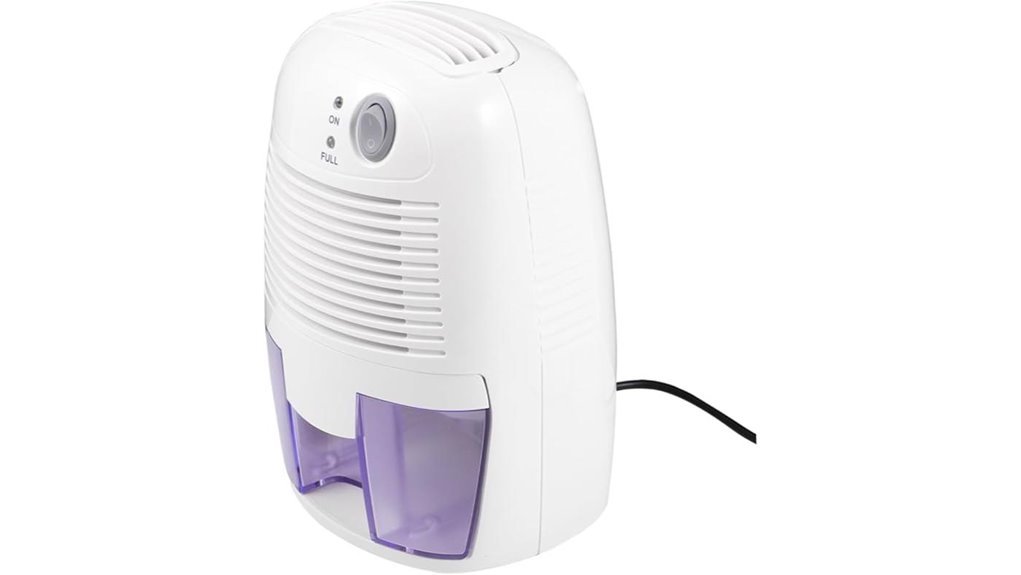
Best Compact Active USB Pick
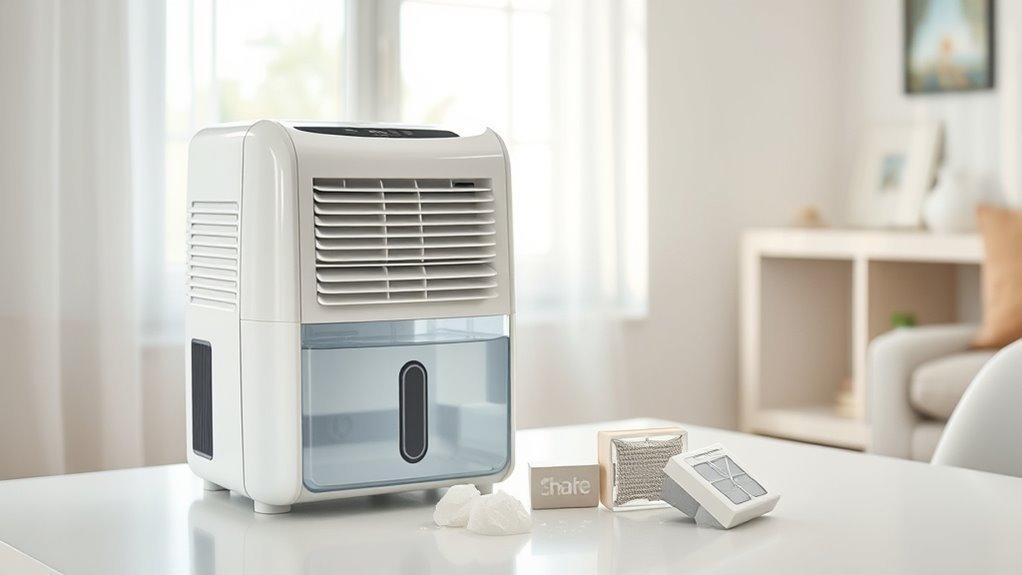
The SOLUSTRE 500ML USB Mini Air Dryer is designed for people who want a compact, powered dehumidifier for a desk, wardrobe, small bedroom, office, or similarly limited area. Unlike a passive desiccant pack, it uses a fan and condensation plate to collect liquid in a removable tank.
The marketplace listing describes a 500ml tank, 10W DC5V USB operation, noise at or below 40dB, and moisture extraction of up to 100ml per day. These details could not be independently confirmed from a manufacturer page, so treat them as listing claims rather than guaranteed specifications. Actual collection will depend heavily on room temperature, relative humidity, airflow, and placement.
Why You’ll Like It: Its small footprint and USB power make it easier to place near a desk, shelf, wardrobe, or other area where a standard dehumidifier would be inconvenient. The listing also describes a full-tank indicator and automatic shutoff to help reduce overflow risk.
Who Should Buy This: People dealing with mild condensation or light moisture in a very small space.
Who Should Avoid This: Anyone trying to dry a basement, laundry room, large bathroom, or room with visible water damage or persistent high humidity.
Pros:
- Compact 500ml tank design fits smaller living and work areas.
- Listing states quiet operation at no more than 40dB.
- The listing states that automatic full-tank shutoff helps protect against overflow.
- Low 10W power claim makes it economical to run compared with full-size units.
Cons:
- The claimed 100ml-per-day extraction rate is modest.
- Performance can drop substantially in cooler or less humid conditions.
- A USB power cable may be included without a wall adapter, so check the current package contents.
- It is not a replacement for a compressor dehumidifier in a damp room.
Before you buy: Confirm the exact model, required USB output, included power accessories, current dimensions, seller information, return policy, and purchase availability on the Amazon listing.
JJC Reusable Desiccant Dehumidifier with USB-C Charging
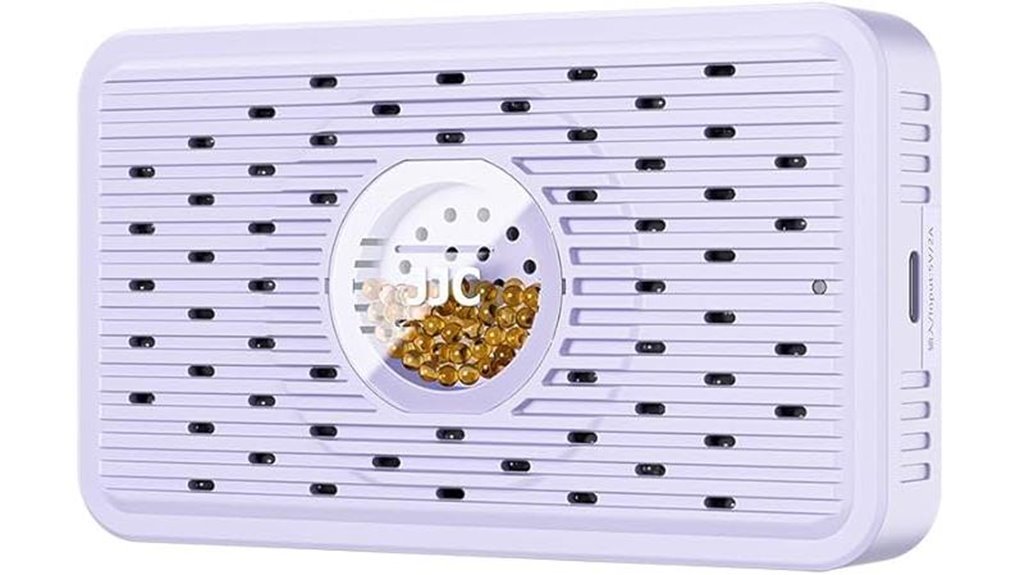
Best for Cameras and Precision Gear
The JJC RD-1 is a reusable USB-C desiccant dehumidifier intended for enclosed storage spaces. It does not use a fan, compressor, or collection tank. Instead, approximately 70g of silica gel inside the ventilated case absorbs moisture while the unit sits inside a camera cabinet, toolbox, safe, equipment case, or similar enclosure.
A viewing window shows when the indicator beads have become saturated. Published JJC pages show different indicator-color pairs for different versions, so use the colors described in the manual supplied with your unit. When regeneration is needed, remove the JJC from the enclosure and connect the included Type-C cable so its internal heater can dry the silica gel.
Why You’ll Like It: It is silent while absorbing moisture, has no liquid tank to spill, and can be reused instead of continually replacing disposable silica packets.
Who Should Buy This: Photographers, electronics hobbyists, tool owners, and anyone storing moisture-sensitive equipment in a small cabinet or case.
Who Should Avoid This: Anyone expecting it to lower humidity throughout a bedroom, bathroom, basement, or other open room.
Pros:
- Reusable silica gel reduces the need for disposable moisture packets.
- USB-C connection and the included cable make regeneration more convenient than oven drying.
- Compact card-style shape fits camera and equipment storage areas.
- Indicator window helps show when regeneration is needed.
- Silent and cord-free during the moisture-absorption stage.
Cons:
- Designed for enclosed storage spaces rather than rooms.
- Regeneration can take several hours depending on the model and saturation level.
- The unit becomes warm during regeneration and must be kept outside the sealed enclosure.
- Indicator colors and specifications may vary between product revisions.
Regeneration safety: Place the unit on a dry, heat-resistant surface with its vents uncovered. Do not regenerate it inside a camera bag, safe, drawer, or sealed cabinet because heat and released moisture need to escape.
Kiorafoto USB-C Rechargeable Safe Dehumidifier
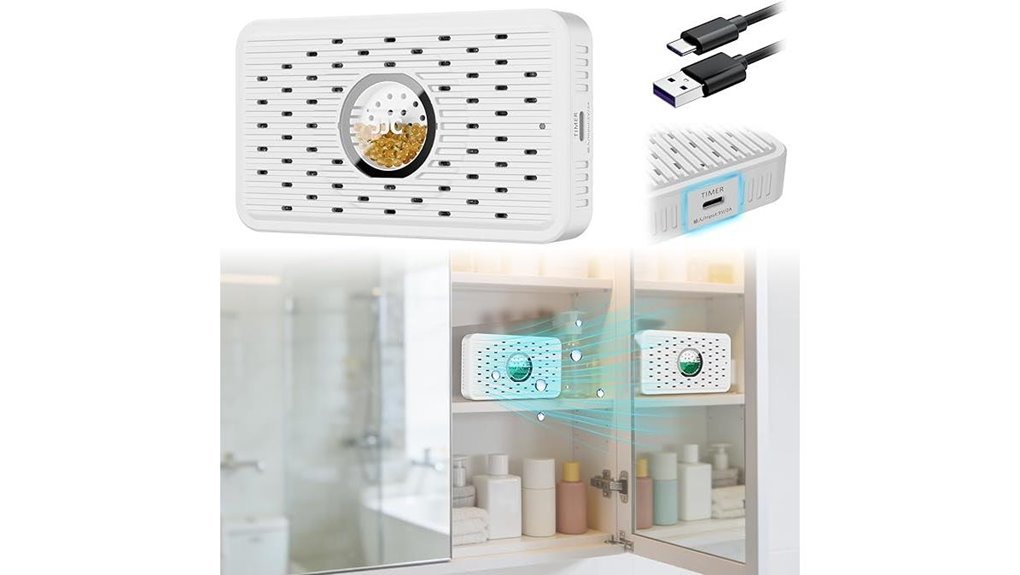
Best for Safes and Small Cabinets
The Kiorafoto USB-C rechargeable desiccant dehumidifier is designed to help control moisture in small enclosed spaces such as safes, toolboxes, equipment cabinets, 3D-printer filament storage, RV cupboards, and document boxes. It works passively while stored with your belongings and requires electricity only when the silica gel needs to be regenerated.
The current listing describes 70g of silica gel, a visual saturation indicator, Type-C regeneration, overheat protection, and automatic power-off after about 10 hours of continuous powered reactivation. It also lists a compact card-style body and an included Type-C cable. Because enclosure sealing and opening frequency strongly affect performance, use a digital hygrometer instead of relying on a broad coverage claim.
Why You’ll Like It: Its flat shape fits tight storage areas, and USB-C regeneration eliminates the need to open the case or replace the desiccant after every cycle.
Who Should Buy This: People protecting tools, optics, documents, electronics, metal equipment, or other moisture-sensitive items in a compact enclosure.
Who Should Avoid This: Buyers trying to control humidity in an open bedroom, bathroom, basement, garage, or frequently opened large cabinet.
Pros:
- Reusable silica gel provides passive, silent moisture absorption.
- USB-C regeneration is convenient and does not require disposable refills.
- Visual indicator helps reduce guesswork about saturation.
- Overheat protection and approximately 10-hour auto power-off add safeguards during regeneration.
- Compact body fits shelves, safes, cases, and toolboxes.
Cons:
- Effective only in small, reasonably enclosed spaces.
- Absorption slows as the silica becomes saturated.
- Frequent opening of the enclosure introduces more humid air and shortens each cycle.
- Regeneration must be completed outside the storage enclosure.
Important: Do not rely on marketplace “tank volume” fields for this product. It is a solid 70g desiccant absorber and does not have a liquid collection tank.
Factors to Consider When Choosing a USB Dehumidifier
Start by deciding whether you need an active USB-powered thermoelectric dehumidifier or a rechargeable silica-gel desiccant absorber. Then compare moisture-removal claims, tank or desiccant capacity, USB power requirements, noise, regeneration safeguards, listing clarity, and the size of the area you need to protect.
Choose quickly:
- Choose an active tank model for mild humidity in a small open area where continuous USB power is available.
- Choose a USB-C desiccant model for a safe, camera box, toolbox, cabinet, or other reasonably enclosed storage space.
- Choose a full-size room dehumidifier for persistent high humidity, wet laundry, water damage, or a damp basement.
Active USB Unit vs. Rechargeable Desiccant
An active USB unit draws humid air across a cooled surface, condenses water, and collects it in a tank. It needs continuous power and works best in a small open area with mild humidity.
A rechargeable desiccant product contains silica gel that absorbs moisture without electricity. You place it inside an enclosed cabinet, safe, case, or storage box. Once saturated, you remove it and connect USB-C power to heat and dry the silica. It is not an active room dehumidifier.
Tank or Absorption Capacity
For active models, tank capacity determines how often you need to empty collected water. The 500ml SOLUSTRE tank keeps the unit compact, while larger tank designs in this product category may reduce emptying frequency. Do not confuse tank size with daily moisture-removal capacity.
For desiccant models, look for the amount of silica gel or moisture absorbed per regeneration cycle. This is different from a daily extraction rate. Desiccant capacity is gradually used up as the material becomes saturated.
Moisture Removal Rate
Active USB products commonly advertise moisture removal in milliliters per day. These figures are usually measured under warm, humid test conditions. The same unit may collect much less water in a cool bedroom or during a dry season.
A compact USB model can help with mild condensation or local moisture, but it is not suitable for flooding, structural dampness, wet laundry loads, or a consistently humid basement. Those conditions usually require a properly sized compressor or desiccant room dehumidifier.
Coverage Area
Do not directly compare a floor-area rating with an enclosure-volume rating. Active units may be marketed with a floor-area range, while desiccant products may use an enclosure-volume claim. Both are heavily affected by temperature, humidity, sealing, airflow, and how often the space is opened.
Coverage claims are also less useful when a closet, cabinet, or safe is frequently opened. Every opening introduces more humid air. For valuable equipment, use a small digital hygrometer to see whether the product is actually maintaining the desired humidity.
Noise Level
Active USB dehumidifiers contain a fan, so check the stated decibel rating when choosing one for a bedroom or office. A listing claim of 40dB or less may be suitable for many users, although fan tone and vibration can still affect perceived noise.
Desiccant units are silent while absorbing moisture because they have no operating fan. They may become warm and may produce a small amount of sound only during powered regeneration.
Power Consumption
Compact active USB models may use relatively low power, but always compare the stated wattage with any separate energy-use claim. For example, a constant 10W load equals approximately 0.24 kWh per day or 0.48 kWh over 48 hours. If a listing gives a materially different figure, verify the label and manual before relying on either number.
Check the required USB voltage and current before connecting the unit to a wall adapter or power bank. A product designed for DC5V at 2A may not perform correctly from a low-output USB port. Unless the listing clearly says otherwise, do not assume a wall adapter is included.
Automatic Shutoff
For a tank-style model, automatic shutoff should stop operation when the water tank is full. This helps prevent overflow but does not replace correct placement and periodic inspection.
For a rechargeable desiccant model, timed shutoff or temperature protection applies during the heating and regeneration cycle. Follow the manual, keep the vents clear, and unplug the unit after regeneration is complete.
Regeneration Time
Rechargeable desiccant products can require several hours to regenerate, depending on their heater, silica quantity, saturation level, and product revision. Some listings describe cycles from roughly 2–6 hours, while other models use an approximately 10-hour cycle. Follow the indicator and instructions supplied with the exact unit.
Regenerate the product in an open, ventilated area. Heating a saturated desiccant releases its stored moisture back into the surrounding air, so regeneration inside the protected cabinet defeats the purpose.
Portability and Placement
Check the complete dimensions rather than relying only on words such as “mini” or “compact.” An active model needs enough clearance around its intake and exhaust vents. It also needs a level surface where a full tank will not be knocked over.
A flat desiccant unit should be positioned so its ventilation holes remain open. Do not bury it under clothing, equipment, documents, or other stored items.
Before You Buy Checklist
- Decide whether you need active room moisture removal or passive enclosed-space protection.
- Check the exact USB voltage and current requirement.
- Confirm whether a USB wall adapter is included.
- Look for automatic full-tank shutoff on active models.
- Check regeneration instructions and safety features on desiccant models.
- Verify the product dimensions and required ventilation clearance.
- Review the seller, current purchase options, return policy, warranty, and package contents.
- Watch for contradictory coverage, wattage, or energy-use claims on marketplace pages.
- Use a hygrometer when protecting valuable or moisture-sensitive equipment.
Safe Use Tips
- Keep active electrical units away from sinks, showers, splashing water, and wet floors.
- Place tank models on a stable, level surface with their vents unobstructed.
- Do not operate or regenerate a USB dehumidifier unattended in a hot parked vehicle unless the manufacturer specifically permits that use.
- Do not cover an active dehumidifier or block its intake and exhaust.
- Remove desiccant units from safes, bags, drawers, and cabinets before regeneration.
- Regenerate desiccant products on a dry, heat-resistant surface in an open area.
- Stop using a unit if its cable, connector, housing, tank, or safety shutoff appears damaged.
- Follow the manual supplied with the exact model because specifications and indicator colors can change between revisions.
Frequently Asked Questions
How Often Should USB Dehumidifiers Be Recharged?
Only desiccant-style products need regeneration. Regenerate one when its indicator shows saturation or when a hygrometer shows that humidity is no longer being controlled. Depending on enclosure size, sealing, and humidity, this may be every few days or every few weeks. Active tank models are not recharged; their tanks are emptied while they continue to run from USB power.
Can USB Dehumidifiers Remove Mold Odors Effectively?
They may reduce damp or musty conditions by lowering moisture, but they cannot remove established mold or permanently eliminate its odor. Clean visible mold safely, repair leaks, dry affected materials, and improve ventilation. Large or recurring mold problems may require professional assessment.
Are USB Dehumidifiers Safe to Leave Running Overnight?
A properly functioning active model with full-tank shutoff may be designed for extended operation, but follow the manufacturer’s instructions and keep it on a stable surface away from water and fabrics. A desiccant product can remain in an enclosure while absorbing moisture, but its powered regeneration cycle should take place outside the enclosure with ventilation holes uncovered.
Do USB Dehumidifiers Work in Very Cold Environments?
Active thermoelectric USB models usually become less effective as temperatures fall because producing condensation becomes more difficult. A desiccant absorber may still collect moisture in a cool enclosure, although the absorption rate and regeneration interval can change.
Can a Power Bank Run a USB Dehumidifier?
Some active models may run from a power bank that provides the required voltage and current. Check the product label first. A 10W unit can drain a small power bank quickly, and some power banks may shut down if the load is too low, too high, or unstable. USB-C desiccant products use power only during regeneration and should be placed on a suitable open surface during that process.
How Do I Know When a Reusable Desiccant Unit Needs Replacement?
Regenerate it first according to the manual. Replacement may be needed if the indicator no longer returns to its dry state, the housing is cracked, the heating system stops working, or the unit no longer reduces humidity after a complete regeneration cycle.
Will a USB Dehumidifier Dry a Bathroom?
A mini USB unit may help with mild residual humidity in a very small bathroom, but it usually cannot keep up with steam from frequent showers. An exhaust fan, open ventilation path, leak repair, and a higher-capacity dehumidifier are more appropriate when condensation is persistent.
Conclusion
The best USB dehumidifier depends on whether you need active moisture collection or passive storage protection. Choose the SOLUSTRE model when you want a compact active unit for mild moisture in a small open area and can provide continuous USB power.
For enclosed storage, the JJC RD-1 is the more focused choice for cameras, electronics, and precision equipment. The Kiorafoto USB-C rechargeable model is better suited to safes, toolboxes, cabinets, and other compact enclosures where auto power-off and overheat protection are useful during regeneration.
Final Recommendation
Choose an active tank model when you need continuous moisture collection in an open space.
Choose a USB-C desiccant model when you need silent protection inside a sealed or mostly enclosed storage area.
For persistent room humidity, water damage, or visible mold, move up to a properly sized full-room dehumidifier and address the underlying moisture source.

[…] Best USB Dehumidifiers 2026: 3 Mini Picks Compared […]