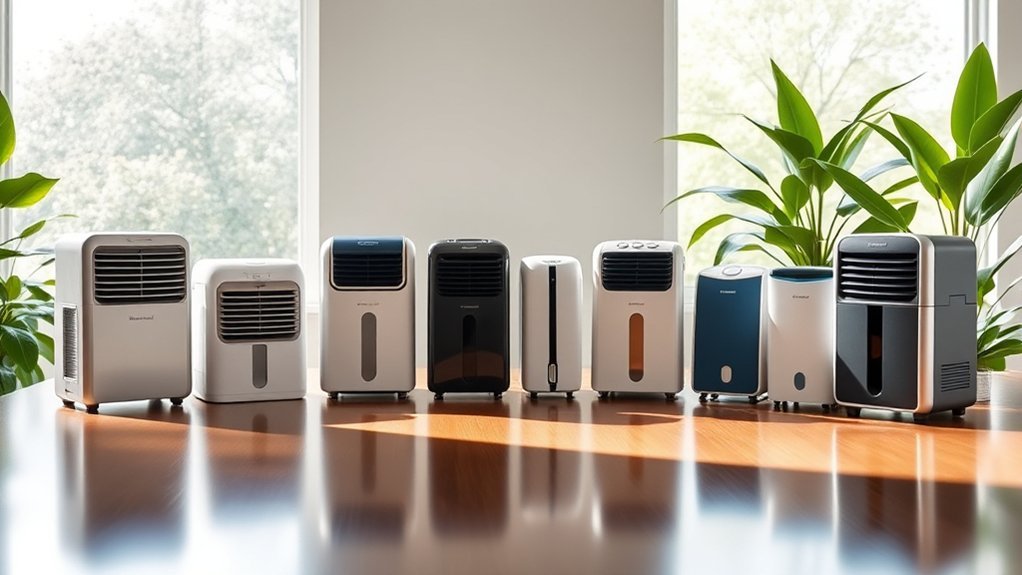
A dehumidifier can help people with mold sensitivities by controlling the moisture that allows mold to grow, but it does not remove existing mold or replace leak repair and proper cleanup. For most homes, the practical goal is to keep indoor relative humidity around 30% to 50% and avoid letting it remain above 50% for long periods. The seven compressor dehumidifiers below are better suited to persistent bedroom, basement, bathroom, and whole-room humidity than small thermoelectric or passive moisture absorbers.
Quick Comparison of the Best Dehumidifiers for Mold-Prone Homes
| Product | Best For | Advertised Maximum | Drainage | Main Limitation | Amazon |
|---|---|---|---|---|---|
| Waykar 2000 Sq. Ft | Medium rooms and energy-conscious use | Up to 34 pints/day under the seller’s warm, humid test conditions | Tank or included hose | Marketing capacity is higher than its standardized ENERGY STAR test rating | Check on Amazon |
| KNKA 2500 Sq.Ft | Bedrooms, basements, and laundry drying | Up to 34 pints/day | Tank or included hose | Floor-area claim depends heavily on conditions and airflow | Check on Amazon |
| PLUSCENT 32 Pint | Compact compressor performance | Up to 32 pints/day | Tank or gravity hose | Small tank makes the hose more important in damp rooms | Check on Amazon |
| VEAGASO 2500 Sq.Ft | Simple controls and continuous drainage | Up to 34 pints/day | Tank or included hose | Similar feature set to several competing 34-pint models | Check on Amazon |
| AEOCKY 50 Pint | Damp basements and higher moisture loads | Up to 50 pints/day under stated test conditions | Tank, hose, or garden-hose adapter | The 0.8-gallon tank can fill quickly | Check on Amazon |
| Waykar 80 Pints | Large open basements | 80-pint marketing maximum; 24.93 pints/day in the ENERGY STAR standardized listing | Tank or included hose | Large difference between marketing and standardized ratings | Check on Amazon |
| Yaufey 5000 Sq. Ft | Large-room humidity control | Up to 80 pints/day under the seller’s stated test conditions | Tank or drain hose | Confirm the current model number and certification details before buying | Check on Amazon |
Capacity note: Advertised pint ratings are not always measured under the same temperature and humidity conditions. Use the model number, standardized capacity, room temperature, drainage setup, and actual hygrometer readings—not the floor-area headline alone—to compare dehumidifiers.
Waykar 2000 Sq. Ft Energy Star Dehumidifier
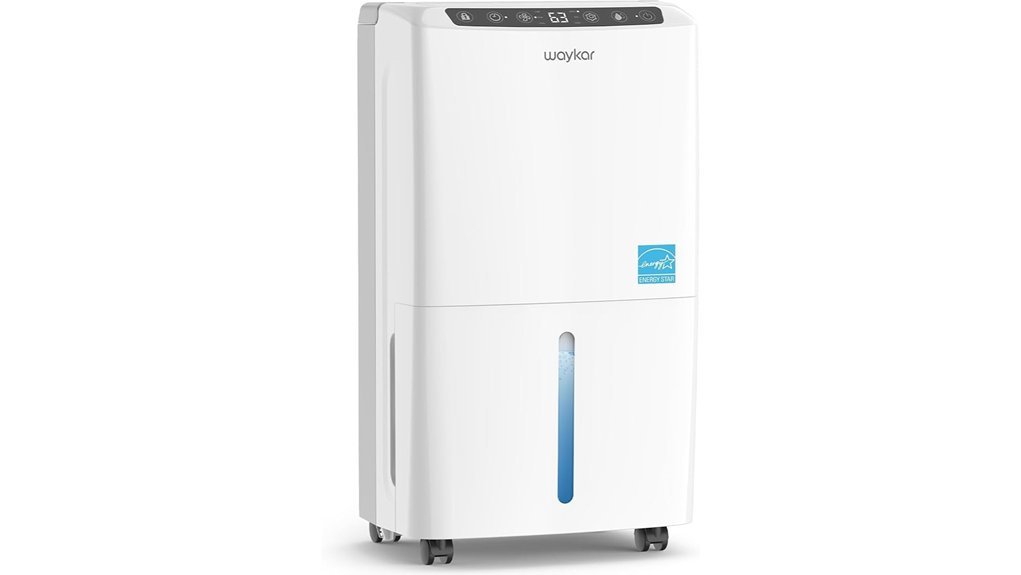
The Waykar PD160B-PRO is a compressor dehumidifier for bedrooms, living areas, and moderately damp basements. The seller advertises removal of up to 34 pints per day in hot, highly humid conditions, while the official ENERGY STAR listing reports 10.16 pints per day under its standardized test method. That standardized figure is the more useful number when comparing it with other certified models.
Why you’ll like it: It combines adjustable humidity control, automatic defrost, a washable filter, a child lock, a relatively compact body, and both manual and continuous drainage. The listed 33 dB low-noise mode makes it one of the more bedroom-friendly compressor options in this group.
Who should buy this: Buyers who want an efficient compressor unit for one medium room, an open living area, or a basement section with a nearby drain.
Who should avoid this: Anyone expecting one small unit to control several closed rooms or a very wet whole basement without continuous drainage.
Pros:
- ENERGY STAR certified and listed as a 2025 Most Efficient model.
- Adjustable 30%–80% humidity range with automatic operation.
- Included drain hose reduces the need to empty the tank.
Cons:
- The 34-pint headline is based on different conditions from the standardized ENERGY STAR rating.
- The 0.62-gallon tank is small for a persistently damp space.
- The 2,000-square-foot claim should be treated as a best-case marketing estimate.
KNKA 2500 Sq.Ft Dehumidifier with Drain Hose
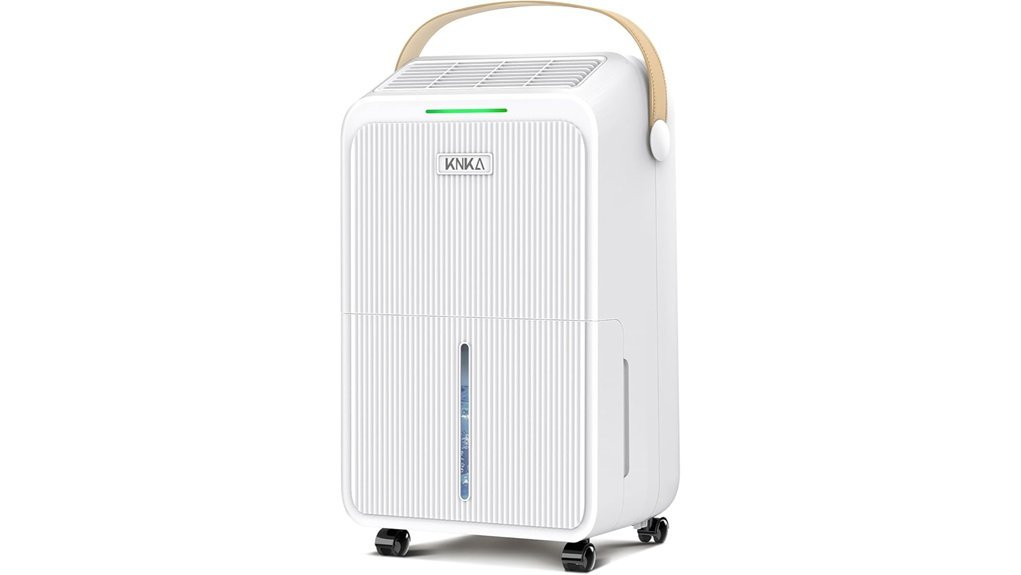
The KNKA PD22SC-12 is a conventional compressor model advertised to remove up to 34 pints per day. It offers dehumidify, continuous, and laundry-drying modes, plus adjustable humidity, automatic defrost, a 24-hour timer, and a washable filter. Its included drain hose is important because the approximately 3-liter tank can fill quickly in a damp basement.
Why you’ll like it: The digital humidity display, indicator light, sleep mode, child lock, caster wheels, and continuous drainage provide the convenience most buyers expect from a modern room dehumidifier.
Who should buy this: Buyers who need a reasonably portable compressor model for a bedroom, bathroom, laundry area, or moderately damp basement.
Who should avoid this: Buyers who need a built-in pump or who cannot place the unit above a suitable gravity drain.
Pros:
- Up to 34 pints per day under the seller’s stated test conditions.
- Three useful modes and adjustable humidity control.
- Includes a drain hose, washable filter, child lock, and caster wheels.
Cons:
- The 2,500-square-foot claim may be optimistic in divided or very damp spaces.
- The tank requires frequent emptying when the hose is not used.
- The 37 dB claim should be treated as a low-mode specification, not silence.
PLUSCENT 32 Pint Dehumidifier for Home
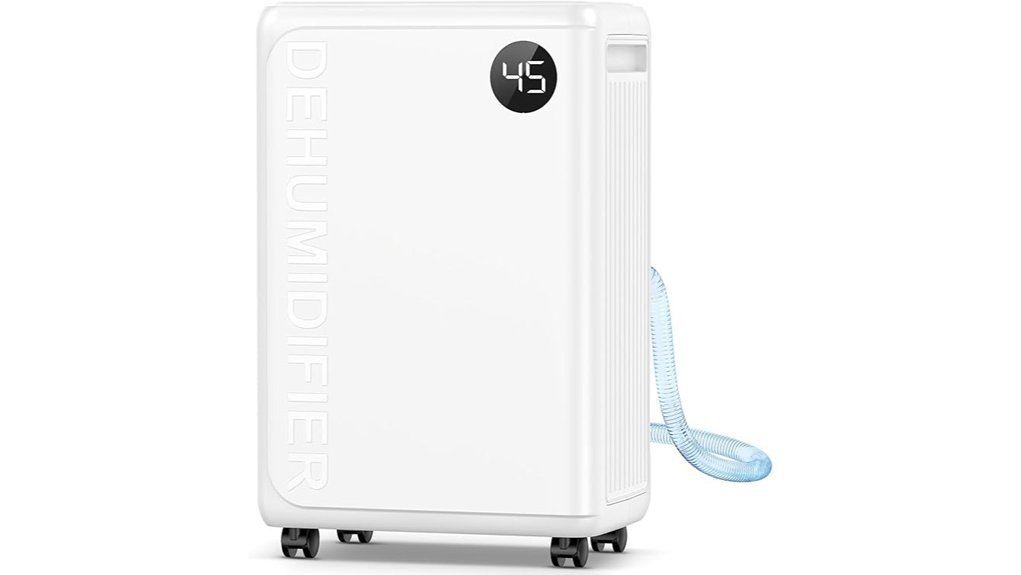
The PLUSCENT PD10 is advertised to remove up to 32 pints of moisture per day. Its compact body, adjustable target humidity, 24-hour timer, washable filter, child lock, automatic defrost, and three operating modes make it a practical option where floor space is limited.
Why you’ll like it: It provides real compressor-based moisture removal in a smaller cabinet than many competing models. The included hose supports continuous gravity drainage, which is the best setup for ongoing mold-prevention humidity control.
Who should buy this: Apartment, bedroom, bathroom, or small-basement users who want compressor performance without a large cabinet.
Who should avoid this: Buyers who need a large bucket, a built-in pump, or verified whole-home coverage.
Pros:
- Compact design with up to 32 pints per day of advertised removal.
- Adjustable humidity, timer, child lock, and automatic defrost.
- Washable filter and continuous-drain connection simplify maintenance.
Cons:
- The 2-liter tank is small for heavy moisture removal.
- Continuous drainage depends on proper downward hose routing.
- The 2,500-square-foot headline should not replace actual room sizing.
VEAGASO 2500 Sq.Ft Dehumidifier with Drain Hose
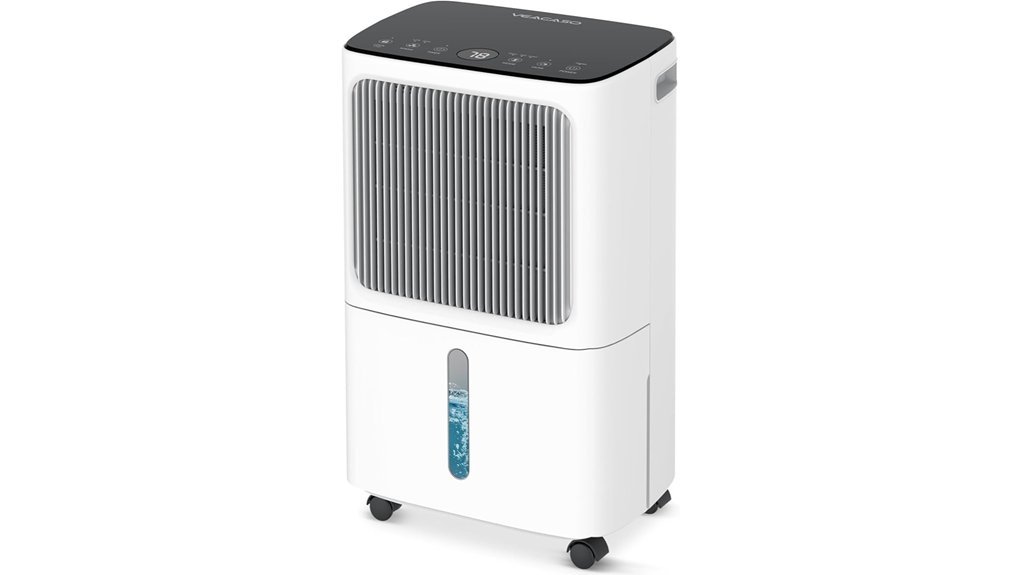
The VEAGASO VG380 is another compressor option advertised at up to 34 pints per day. It includes dehumidify, continuous, and clothes-drying modes, along with an adjustable humidistat, automatic shutoff, automatic defrost, timer, washable filter, and drain hose.
Why you’ll like it: The controls are straightforward, and the included hose makes it suitable for a basement or laundry room where water can flow downhill into a floor drain or sink.
Who should buy this: Buyers who want a basic 34-pint-class machine with manual and continuous drainage.
Who should avoid this: Buyers who need a pump, smart app control, or a large tank for operation far from a drain.
Pros:
- Up to 34 pints per day under the seller’s stated conditions.
- Multiple modes for normal dehumidification, continuous use, and laundry drying.
- Included hose, washable filter, timer, and automatic defrost.
Cons:
- The tank may need frequent emptying without continuous drainage.
- Its feature set is similar to several competing models.
- Actual coverage will be lower in closed-off or severely damp areas.
AEOCKY 50 Pint Dehumidifier for Home and Basement
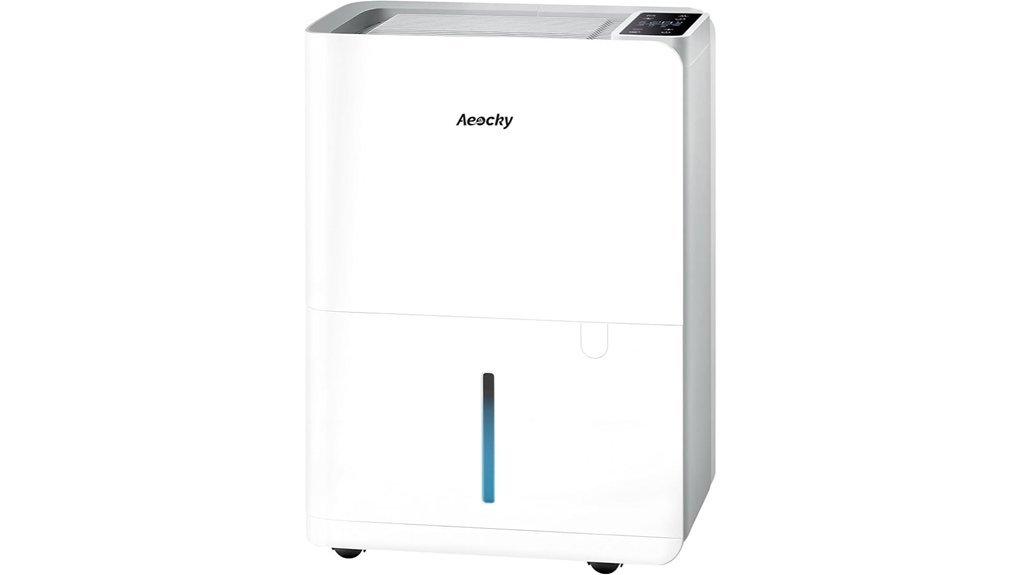
The AEOCKY BOREAS-001 is a compressor dehumidifier advertised to remove up to 50 pints per day in hot, humid test conditions. Its adjustable 40%–80% humidistat, fan-speed control, timer, child lock, drain hose, and garden-hose adapter make it a stronger fit for damp basements, garages, and larger open areas than a mini dehumidifier.
Why you’ll like it: The 0.8-gallon tank is easier to carry than a very large bucket, while the continuous-drain options let the machine run with less daily attention. Its roughly 40 dB listed operating sound is reasonable for a compressor unit, although it will still be audible.
Who should buy this: Homeowners with a persistent moisture load who can use a drain hose and want more capacity than a 32- or 34-pint marketing class.
Who should avoid this: Buyers who need a target below 40% RH or who plan to rely on the bucket in a very wet space.
Pros:
- Higher advertised moisture-removal capacity than the medium-space models.
- Includes both a drain hose and garden-hose adapter.
- Adjustable humidistat, timer, fan control, and child lock.
Cons:
- The 50-pint figure is a maximum under stated warm, humid conditions.
- The 0.8-gallon tank can fill several times a day in a damp basement.
- The minimum target setting is listed as 40% rather than 30%.
Waykar 80 Pints Energy Star Dehumidifier for Home
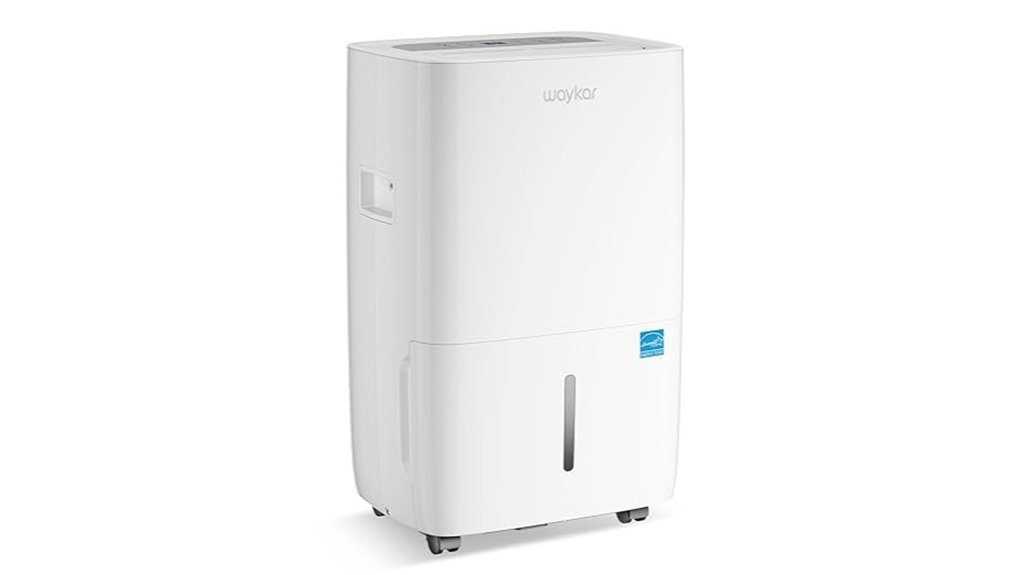
The Waykar JD025CE-80 is marketed as an 80-pint model for large spaces, but that headline rating is measured under hot, highly humid conditions. The official ENERGY STAR product listing reports a standardized capacity of 24.93 pints per day. It remains a relevant large-room option, but buyers should compare the standardized number rather than assuming it removes 80 pints every day in a typical home.
Why you’ll like it: It offers a 1.14-gallon tank, included drain hose, automatic defrost, timer, washable filter, two fan speeds, and an auto-swing outlet that can help distribute dry air in an open room.
Who should buy this: Buyers with a large, mostly open basement or living area who want an ENERGY STAR-certified model and can use continuous drainage.
Who should avoid this: Buyers comparing products only by the “80-pint” name or expecting one unit to control multiple closed rooms.
Pros:
- ENERGY STAR certified under model JD025CE-80.
- Large 1.14-gallon tank and included continuous-drain hose.
- Auto swing, automatic defrost, timer, and washable filter.
Cons:
- The marketing maximum is much higher than the standardized 24.93-pint rating.
- The 5,000-square-foot claim is a best-case estimate, not a guarantee.
- At about 31 pounds, it is less convenient to carry between floors.
Yaufey 5000 Sq. Ft. Dehumidifier
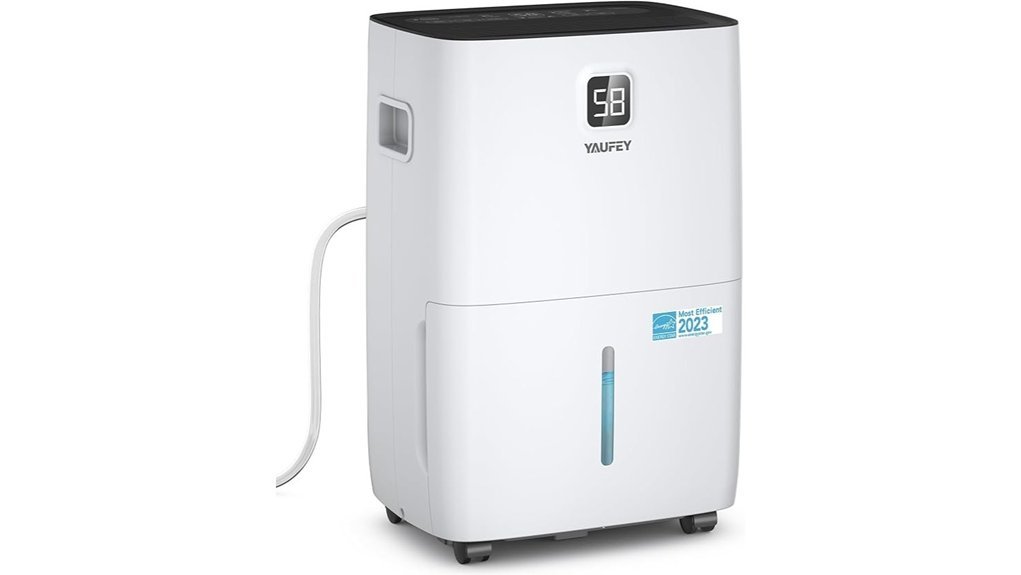
The Yaufey JD025Q-80 is marketed for areas up to 5,000 square feet with an advertised maximum of 80 pints per day at 95°F and 90% relative humidity. It provides adjustable 30%–80% humidity control, multiple operating modes, a 1.06-gallon tank, automatic shutoff, and continuous drainage.
Why you’ll like it: The larger tank and drain-hose option make it easier to use in a basement or large open room. Three fan speeds and separate settings for sleeping areas, living areas, basements, and continuous operation provide useful flexibility.
Who should buy this: Buyers who want a large-room alternative and are willing to verify the current listing’s model number, certification, warranty, and standardized capacity before ordering.
Who should avoid this: Buyers who want a clearly documented standardized pint rating without checking the current product page and certification database.
Pros:
- Advertised high-output operation for warm, humid conditions.
- Adjustable 30%–80% humidity range and multiple fan speeds.
- 1.06-gallon tank with continuous-drain capability.
Cons:
- The 80-pint and 5,000-square-foot claims depend on favorable test and room conditions.
- Current certification details should be confirmed using the exact model number.
- A single unit may not control humidity evenly across closed rooms.
Factors to Consider When Choosing a Dehumidifier for Mold Allergies
The right dehumidifier is the one that can hold your actual room near the target humidity without running inefficiently, overflowing, or requiring constant attention. Start with a hygrometer reading, identify the source of moisture, and then compare capacity, drainage, temperature range, noise, and maintenance.
Humidity Control Range
Aim for an indoor relative humidity of about 30% to 50%. For mold-prone homes, keeping the room at or below 50% is a practical target. Avoid forcing the space much lower than necessary, because overly dry air can also feel uncomfortable. Choose a model with a built-in humidistat, but confirm its readings with a separate hygrometer placed away from the machine’s exhaust.
Compare Standardized Capacity, Not Just the Product Name
Terms such as “34 pint,” “50 pint,” and “80 pint” may refer to maximum extraction under hot, highly humid test conditions. ENERGY STAR and Department of Energy listings may show a lower standardized capacity for the same model. Compare exact model numbers and standardized pints per day whenever possible. Also consider room temperature, because compressor dehumidifiers remove less moisture in cooler conditions.
Room Size, Dampness, and Layout
Square-foot coverage is only a rough marketing guide. A damp basement with concrete walls, an active leak, cool temperatures, or several closed rooms needs more capacity than a warm, open room of the same size. One dehumidifier cannot move air efficiently through closed doors, so multiple rooms may need separate units or better air circulation.
Compressor vs. Mini Dehumidifiers
For persistent mold-prevention humidity control, a compressor dehumidifier is usually the better fit. Small thermoelectric units and passive desiccant absorbers can help inside closets, cabinets, cars, or other tiny enclosed spaces, but their extraction rates are generally too low for a damp bedroom, bathroom, or basement.
Energy Efficiency Ratings
ENERGY STAR certification can help identify models that remove moisture efficiently under a standardized test. Match the exact model number on the product listing to the certification database, because similar-looking models or marketing names can have different ratings. Avoid relying on unsupported annual savings estimates; actual electricity cost depends on local rates, runtime, temperature, and moisture load.
Noise Level Considerations
A compressor dehumidifier will produce fan and compressor noise even when the listing describes it as quiet. Low modes in the 30- to low-40-dB range may be suitable for many bedrooms, but sound perception varies. For sleeping areas, look for a sleep mode, adjustable fan speed, light-off setting, and automatic humidity cycling.
Safety and Cold-Room Features
Useful features include automatic shutoff when the tank is full, automatic defrost, a grounded plug, child lock, restart after a power interruption, and washable air intake filters. Place the unit on a stable, level surface with the clearance required by the manual. Do not use an extension cord unless the manufacturer explicitly permits it.
Drainage Options Available
Manual tank drainage works for occasional use, but continuous gravity drainage is more practical in a persistently damp room. The hose must run downhill without kinks into a suitable drain. A built-in pump is needed when the drain is higher than the unit. Always test the setup for leaks before leaving it unattended.
Before You Buy Checklist
- Measure current humidity with a separate hygrometer.
- Fix plumbing, roof, foundation, or condensation problems first.
- Check the exact model number and standardized pint rating.
- Confirm the operating temperature range for a cool basement.
- Plan where the collected water will drain.
- Check filter access, tank size, dimensions, weight, and warranty terms.
- Confirm that replacement parts and customer support are available.
Frequently Asked Questions
How Do Dehumidifiers Help with Mold Allergies?
They reduce the moisture that supports mold growth. This can help make indoor conditions less favorable for new mold, but a dehumidifier does not remove existing mold, filter all mold spores, or treat allergy symptoms.
What Humidity Level Is Ideal for Preventing Mold Growth?
Keep indoor relative humidity around 30% to 50%, and try not to let it remain above 50%. Use a separate hygrometer because the sensor near a dehumidifier can read differently from the far side of the room.
What Size Dehumidifier Do I Need?
Choose by standardized moisture-removal capacity, room dampness, temperature, layout, and drainage access—not square footage alone. A very damp or cool basement often needs more capacity than a similarly sized bedroom.
Can a Dehumidifier Remove Existing Mold?
No. It can slow future growth by lowering humidity, but existing mold must be cleaned or contaminated material removed after the moisture source is corrected. Significant or hidden contamination may require professional assessment.
How Often Should I Empty the Water Tank?
Empty it whenever the full-tank indicator appears and check it daily during the first week. In a damp room, a small tank may fill several times a day. Continuous drainage is usually the better choice for long-term operation.
How Should I Maintain a Dehumidifier?
Clean the washable filter on the schedule in the manual, keep the intake and exhaust clear, wash and dry the tank regularly, inspect the drain hose for algae or blockages, and verify humidity with a separate meter. Unplug the unit before cleaning.
Conclusion
A properly sized compressor dehumidifier can be a useful part of a mold-control plan, but the best results come from combining humidity control with leak repair, ventilation, prompt drying, and safe removal of existing mold.