Affiliate Disclosure: As an Amazon Associate, this site may earn from qualifying purchases. Product details can change over time, so always check the latest specifications, warranty details, and seller information on Amazon before buying.
If you want the best dehumidifiers for allergies, focus on one goal first: keeping indoor humidity low enough to discourage dust mites, mold, mildew, and that damp smell that can make allergy symptoms feel worse. The right pick depends on your room size, how much moisture you need to remove, how quiet the unit needs to be, and whether you want simple tank emptying or continuous drainage.
This roundup covers compact moisture absorbers, quiet bedroom-friendly models, smart dehumidifiers, larger basement units, and multifunctional options with lights or aromatherapy features. Use the quick comparison below to match each model to your room before you jump into the full reviews.
Quick Verdict: Choose the Eva-Dry E-333 for closets and tiny enclosed spaces, the Midea 1,500 Sq. Ft. model for smart everyday room humidity control, the Waykar or KNKA for stronger medium-room moisture removal, and the Yaufey 5,000 Sq. Ft. unit for larger damp spaces such as basements.
Best allergy-focused target: Look for a dehumidifier that can help keep indoor humidity around 30% to 50%, is easy to clean, and is quiet enough that you will actually run it consistently.
Quick Comparison: Best Dehumidifiers for Allergies
| Product | Best For | Stated Coverage / Capacity | Standout Feature | Jump to Review |
|---|---|---|---|---|
| Eva-Dry Wireless Mini Dehumidifier, White (E-333) | Closets, bathrooms, cars, and other small spaces | Up to 333 cubic feet, absorbs up to 6 oz | Cordless, rechargeable, non-toxic design | Read Review |
| Midea 1,500 Sq. Ft. Energy Star Dehumidifier | Bedrooms, living rooms, and medium spaces | Up to 1,500 sq. ft., removes up to 22 pints daily | Wi-Fi control, quiet operation, ENERGY STAR certification | Read Review |
| Waykar 34 Pints Energy Star Dehumidifier | Homes needing stronger moisture control | Up to 2,000 sq. ft., removes up to 34 pints daily | Smart humidity control and dual drainage options | Read Review |
| KeepGlad Dehumidifier for Home (1000 sq.ft) | Bedrooms, basements, and bathrooms | Up to 1,000 sq. ft., 98 oz tank | 28 dB operation and washable filters | Read Review |
| Dehumidifier with Aromatherapy Diffuser and LED Light | Small rooms where comfort features matter | Up to 1,000 sq. ft. | Aromatherapy tray, LED lighting, sleep mode | Read Review |
| Dehumidifier with 75 OZ Tank and 7 Colors LED | Bedrooms, closets, and nurseries | 75 oz tank, removes up to 23 oz daily | Quiet sleep mode and auto shut-off | Read Review |
| Dehumidifier for Home 1000 Sq.Ft with Ambient Light | Medium rooms that need simple humidity control | Up to 1,000 sq. ft., 95 oz tank | Ambient light and set-it-and-forget-it operation | Read Review |
| TENKER Dehumidifier for Home (77oz Water Tank) | Portable use around the home | Up to 1,000 sq. ft., removes up to 35 oz daily | Ergonomic handle, quiet mode, LED light | Read Review |
| Yaufey 5000 Sq. Ft. Energy Star Dehumidifier | Large rooms, basements, and humid climates | Up to 5,000 sq. ft., removes up to 80 pints daily | Large-space moisture removal and smart modes | Read Review |
| KNKA 2500 Sq.Ft Dehumidifier with Drain Hose | Medium to large rooms with drain access | Up to 2,500 sq. ft., removes up to 34 pints daily | Digital display, drain hose, 360° wheels | Read Review |
Before you buy: A dehumidifier can help reduce moisture that supports mold and dust mites, but it does not replace cleaning, HVAC filtration, medical care, or an air purifier when airborne particles are the main issue. For allergy relief, look for a model that can keep your room near the 30% to 50% humidity range without becoming too loud or hard to maintain.
How to use this guide: Match the product to the room, not just the biggest number on the box. A small cordless model can be useful in a closet, while a damp basement usually needs a higher-capacity electric unit with continuous drainage.
Buying tip: For allergy-focused humidity control, prioritize coverage, moisture removal capacity, tank size, washable filters, drainage options, noise level, and ease of cleaning.
Eva-Dry Wireless Mini Dehumidifier, White (E-333)
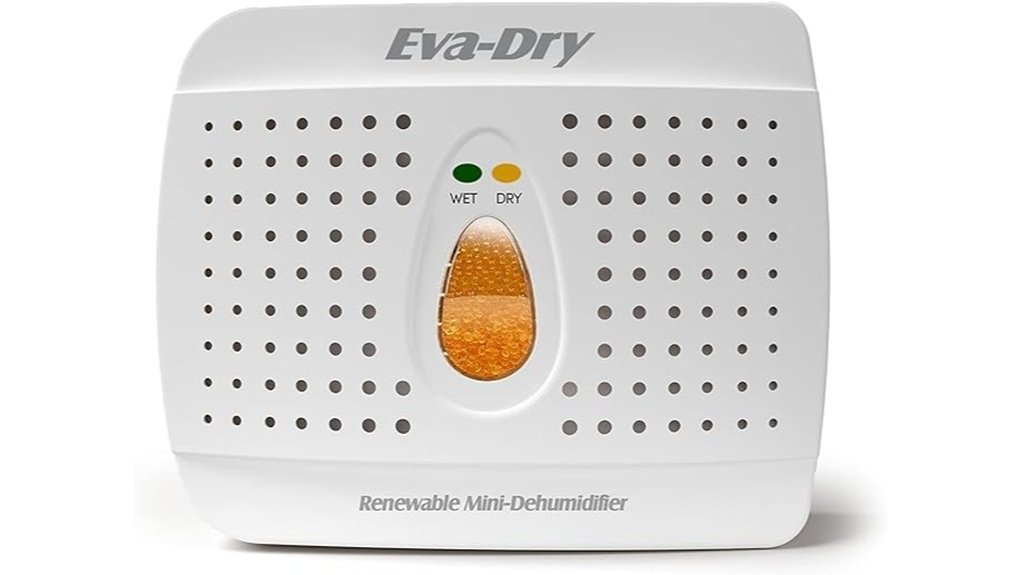
Best For: Closets, bathrooms, cars, cabinets, gym bags, and other compact enclosed spaces.
The Eva-Dry Wireless Mini Dehumidifier (E-333) is a compact option for small, enclosed spaces where a full-size plug-in dehumidifier would feel like too much. It is a good fit for closets, bathrooms, cars, gym bags, cabinets, and other tight areas that tend to hold stale moisture.
It operates cord-free and absorbs up to 6 ounces of moisture in spaces up to 333 cubic feet. The moisture indicator beads show when it needs to be recharged, so you do not have to guess when it has reached capacity. Because it is non-toxic and mess-free, it may appeal to households with kids or pets, especially in storage areas where you want a simple humidity-control tool.
Why You’ll Like It: It is simple, cordless, and easy to move. You can place it in spots where a plug-in dehumidifier would not fit, which makes it useful for hidden moisture pockets around the home.
Why it works for allergies: Small damp areas can hold musty odors and moisture that may support mildew. This model is not meant for whole-room allergy control, but it can help manage hidden moisture pockets around the home.
Who should buy this: Buy it if you need a low-maintenance moisture absorber for a closet, small bathroom, cabinet, RV storage area, or car interior.
Who should skip it: Skip this one if you need active moisture removal for a bedroom, basement, laundry room, or large living space. A compressor or higher-capacity electric dehumidifier will be more practical for those jobs.
Pros:
- 100% cordless operation allows for versatile placement without the hassle of cords.
- Non-toxic and safe for both children and pets, ensuring a worry-free environment.
- Long-lasting performance with a 20-30 day duration before needing a recharge.
Cons:
- Limited to areas up to 333 cubic feet, which may not be sufficient for larger spaces.
- Requires recharging periodically, which may interrupt use in some situations.
- Plastic material may not appeal to those preferring more premium finishes.
Midea 1,500 Sq. Ft. Energy Star Dehumidifier
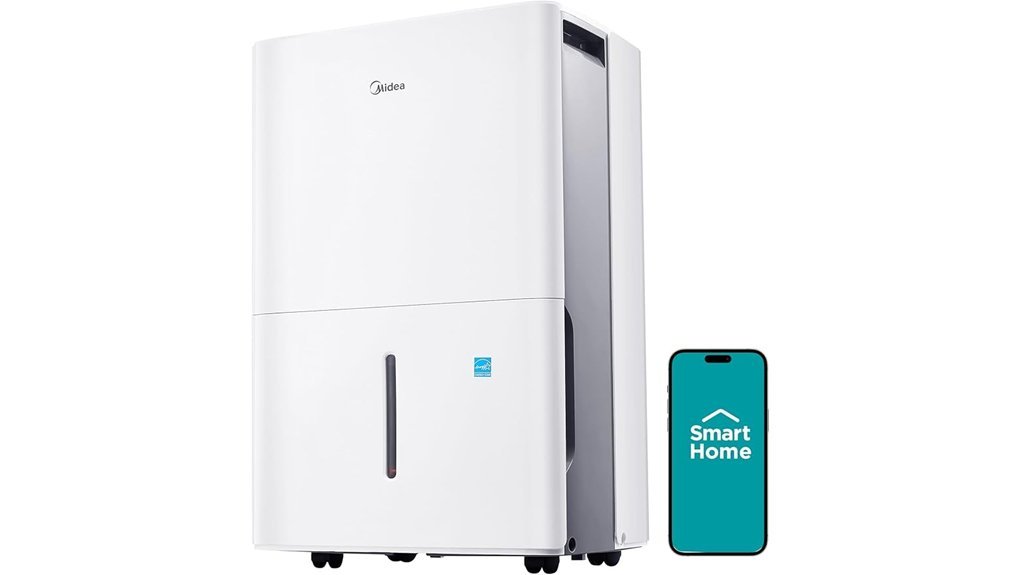
Best For: Smart humidity control in bedrooms, living rooms, offices, and medium spaces.
The Midea 1,500 Sq. Ft. Energy Star Dehumidifier is suited for readers who want a more traditional room dehumidifier with smart controls. It removes up to 22 pints of moisture daily and lets you maintain humidity levels between 35% and 85%, which gives you more control than a basic on/off unit.
Its ENERGY STAR certification makes it a stronger choice if you plan to run a dehumidifier often during humid months. The 47 dBA noise level is also helpful for bedrooms, living rooms, and shared spaces where a loud unit would become annoying. Wi-Fi capability adds another layer of convenience because you can adjust settings through a smartphone or compatible voice assistant.
Why You’ll Like It: It gives you real room-level humidity control without feeling overly complicated. The smart controls are useful if you want to check or adjust humidity without walking over to the unit.
Why it works for allergies: If your allergy triggers get worse in humid rooms, this model gives you steady humidity control, quiet operation, and a practical size for everyday living spaces.
Who should buy this: Buy it if you want an efficient, app-friendly dehumidifier for a bedroom, living room, apartment, or medium room where humidity changes during the day.
Who should skip it: Skip it if you need a very small cordless unit or if your space is much larger than 1,500 sq. ft. without separate zones.
Pros:
- Energy-efficient with ENERGY STAR certification, saving 31% more energy than traditional models.
- Ultra-quiet operation at 47 dBA, making it ideal for bedrooms and living areas.
- Smart features including Wi-Fi control and compatibility with voice assistants for added convenience.
Cons:
- Water tank needs manual emptying unless a continuous drainage option is set up with a hose.
- Initial setup may require some familiarity with the app and controls for optimal use.
- Mobility features may not be effective on carpeted surfaces due to wheel design.
Waykar 34 Pints Energy Star Dehumidifier
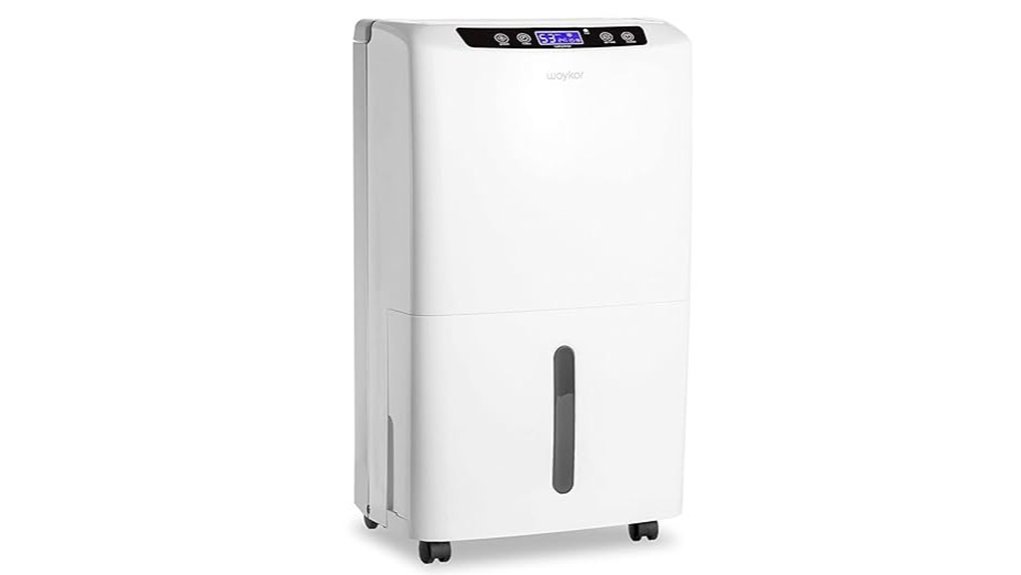
Best For: Stronger moisture control in larger rooms, damp basement areas, and humid homes.
For allergy sufferers seeking stronger moisture control, the Waykar 34 Pints Energy Star Dehumidifier is built for spaces up to 2,000 sq. ft. and removes up to 34 pints daily. That makes it a better fit for larger rooms, damp basement areas, or homes where humidity rises quickly.
You get manual airflow adjustment, two fan speeds, and smart humidity control from 30% to 80%. Those settings matter because allergy-focused buyers usually need more than basic moisture removal. They need a unit that can help hold a consistent range instead of cycling randomly.
Why You’ll Like It: This is a practical step up from small tabletop dehumidifiers. It gives you stronger moisture removal, adjustable humidity settings, and drainage flexibility for rooms that need more consistent control.
Why it works for allergies: The higher daily moisture removal capacity helps in rooms where mold, mildew, and dust-mite-friendly humidity are recurring concerns.
Who should buy this: Buy it if you need a stronger dehumidifier for a large bedroom, living area, basement zone, laundry space, or humid room that smaller models struggle to handle.
Who should skip it: Skip it if you only need a small bathroom or closet unit. In small spaces, this may be more dehumidifier than you need.
Pros:
- ENERGY STAR certified for energy efficiency, reducing electricity costs.
- Quiet operation ensures minimal disruption in living or working environments.
- Versatile drainage options provide flexibility for easy maintenance.
Cons:
- The water tank capacity of 0.66 gallons may require frequent emptying in high humidity conditions.
- Manual airflow adjustment may not offer as precise control as automated systems.
- Limited warranty period may be shorter compared to some competitors.
KeepGlad Dehumidifier for Home (1000 sq.ft)
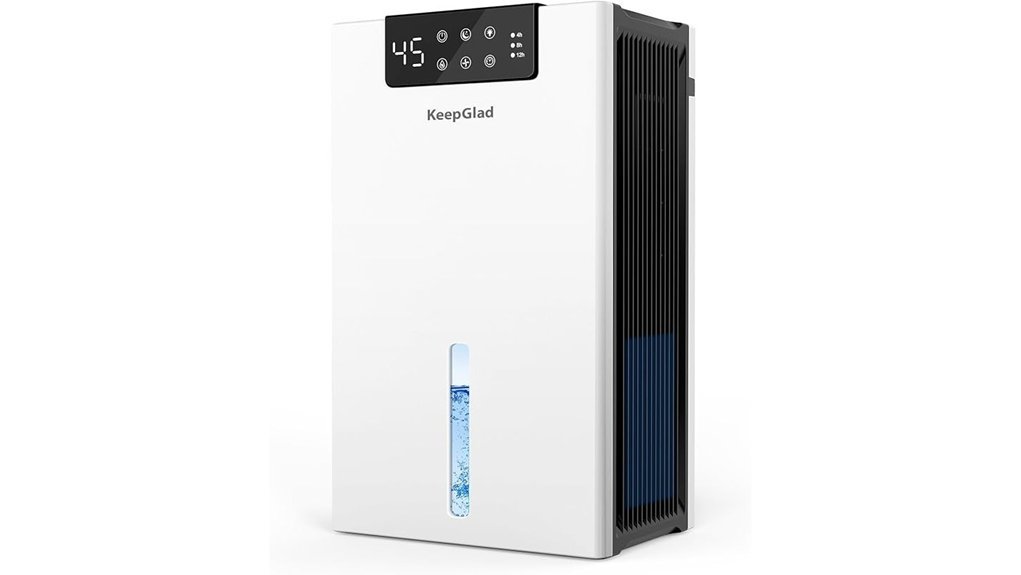
Best For: Quiet bedroom, bathroom, and small basement humidity control.
The KeepGlad Dehumidifier RX02-B is a compact home option for rooms up to 1,000 square feet. It has a 98 fluid ounce tank and is designed to reduce humidity from 80% to 40%, making it useful for bedrooms, bathrooms, and smaller basement spaces where damp air builds up.
It can remove up to 40 ounces of moisture daily while running at a stated 28 dB. That quiet operation is one of its biggest strengths for allergy sufferers who need humidity control overnight but do not want a loud appliance next to the bed. The digital controls also let you monitor humidity levels in real time, while the auto shut-off feature helps prevent overflow.
Why You’ll Like It: It is made for people who want quiet daily humidity control without dealing with a large floor-standing appliance. The washable filters and display make routine use easier.
Why it works for allergies: Quiet operation, washable filters, and real-time humidity monitoring make it easier to run regularly, which is important if damp air is a recurring trigger in your home.
Who should buy this: Buy it if you want a quiet, compact dehumidifier for a bedroom, bathroom, office, or smaller basement area where moderate humidity is the main issue.
Who should skip it: Skip it if your main problem is a very wet basement or a large open-plan floor. A pint-rated compressor model may handle those conditions better.
Pros:
- Efficient moisture removal: Can extract up to 40 ounces of moisture daily, significantly reducing humidity levels.
- Ultra-quiet operation: Runs at a noise level of just 28dB, ensuring minimal disruption in living spaces.
- User-friendly features: Equipped with digital controls, a timer, and washable filters for improved air quality.
Cons:
- Limited capacity: The 98 fluid ounce tank may require frequent emptying in very humid conditions.
- Plastic construction: May not be as durable as metal alternatives over long-term use.
- No advanced modes: Lacks specialized dehumidification modes beyond standard operation.
Dehumidifier with Aromatherapy Diffuser and LED Light
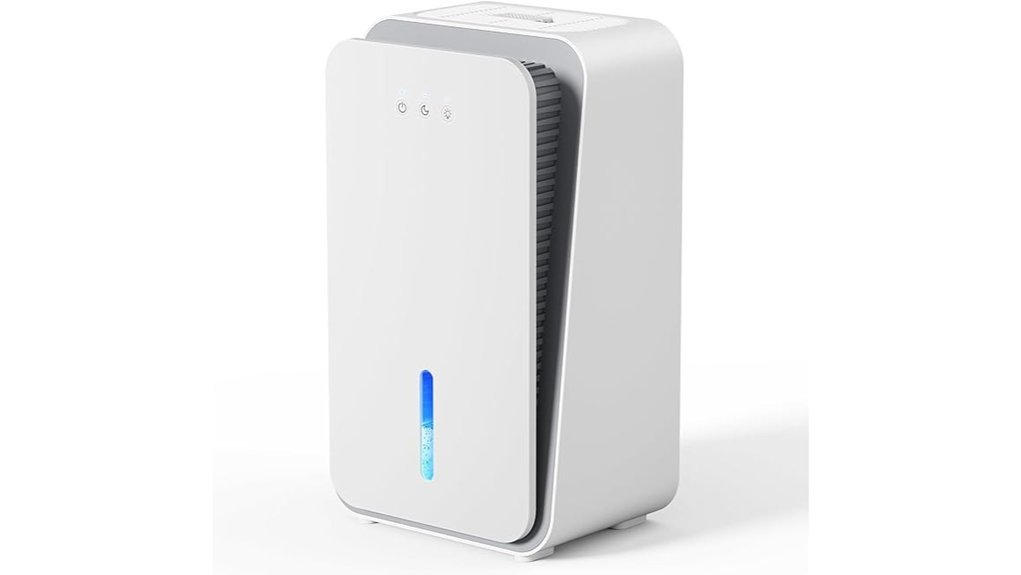
Best For: Small to medium rooms where moisture control and comfort features both matter.
The CS08 Dehumidifier is a multifunctional option for buyers who want moisture control plus comfort features. It covers up to 1,000 sq.ft and is designed for bathrooms, basements, living rooms, and other small to medium areas where dampness and stale air can collect.
Its semiconductor condensation technology removes moisture, while two modes, “High Speed” and “Sleep,” let you choose between stronger performance and quieter operation. The built-in aromatherapy diffuser and seven LED colors add a lifestyle element, which may appeal if you want the unit to blend into a bedroom or relaxation space.
Why You’ll Like It: It combines basic humidity control with a softer bedroom-friendly design. The sleep mode and LED lighting make it feel less like a utility appliance and more like part of the room.
Why it works for allergies: It can help control room moisture while offering quieter nighttime use. The aromatherapy feature is a comfort add-on, not a replacement for humidity control or air filtration.
Who should buy this: Buy it if you want a compact dehumidifier for a bedroom, bathroom, or living space and you like the idea of optional lighting and aroma features.
Who should skip it: Skip it if you are sensitive to fragrances or essential oils. For allergy-focused use, the dehumidifier function matters more than the diffuser.
Pros:
- Effective moisture removal with semiconductor condensation technology.
- Built-in aromatherapy diffuser and customizable LED lighting enhance ambiance.
- Quiet operation in Sleep mode ensures undisturbed rest.
Cons:
- Limited coverage area of 1,000 sq.ft may not suit larger spaces.
- Tank capacity may require frequent emptying in high humidity conditions.
- Initial setup for continuous operation with a drain hose may be cumbersome for some users.
Dehumidifier with 75 OZ Tank and 7 Colors LED
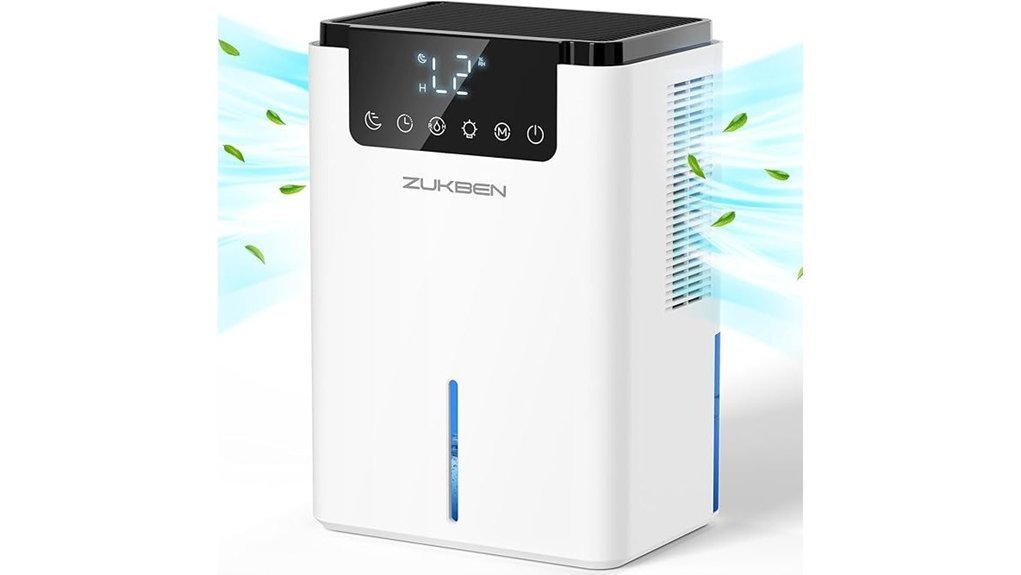
Best For: Bedrooms, closets, nurseries, and small rooms with light to moderate humidity.
This dehumidifier combines a 75 OZ tank, 7-color LED lights, and semiconductor condensation technology for smaller areas such as bedrooms, closets, and other moisture-prone spaces. It extracts up to 23 oz of moisture daily, making it more suitable for light to moderate humidity rather than heavy basement dampness.
You can choose a powerful mode for quicker moisture control or a quiet sleep mode below 30 dB for nighttime use. Safety features include auto shut-off to help prevent overflow and an auto-defrost function for colder temperatures. The timer options also help you run the unit on a schedule instead of leaving it on continuously.
Why You’ll Like It: It is compact, quiet, and easy to place in a bedroom or closet. The tank size is more practical than tiny mini units, while the sleep mode helps reduce nighttime disruption.
Why it works for allergies: It gives you a quieter way to manage humidity in rooms where sleep comfort matters. That can be helpful if damp air makes your bedroom feel stuffy.
Who should buy this: Buy it if you need a small-room dehumidifier with quiet operation, auto shut-off, and a simple design for everyday use.
Who should skip it: Skip it if you need high-capacity pint-per-day moisture removal. This model is better for small spaces and moderate humidity.
Pros:
- Efficient Moisture Extraction: Removes up to 23 oz of moisture daily, enhancing air quality.
- Quiet Operation: Runs at less than 30 dB, perfect for bedrooms and nurseries.
- Safety Features: Includes an auto shut-off and auto-defrost function for added peace of mind.
Cons:
- Tank Size Limitations: The 75 oz tank may require frequent emptying in very humid conditions.
- Power Consumption: While energy-efficient, higher settings may still consume noticeable energy.
- LED Light Brightness: The 7-color LED lights may be too bright for some users during nighttime use.
Dehumidifier for Home 1000 Sq.Ft with Ambient Light
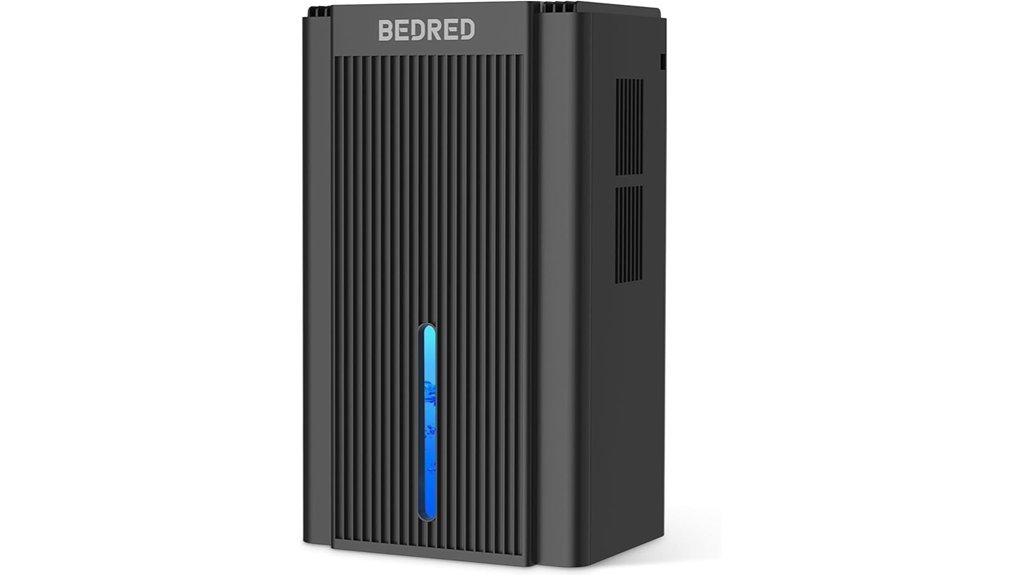
Best For: Medium rooms where a compact, decorative dehumidifier is preferred.
If you want humidity control for a 1000 sq. ft. space with a more decorative design, the BEDRED CT11 dehumidifier is worth considering. This semiconductor unit uses thermoelectric cooling and includes a 95-ounce capacity tank, making it useful for bedrooms, offices, bathrooms, and other medium-sized spaces.
The auto shutoff feature helps prevent overflow when the tank is full. Its sleek design and customizable 7-color ambient light help it blend into a room instead of looking like a utility appliance. The sleep mode is also useful if you want overnight moisture control without adding too much noise.
Why You’ll Like It: It balances room-friendly styling with practical moisture control. The larger tank helps reduce how often you need to empty it compared with smaller compact units.
Why it works for allergies: It is easy to place in the rooms where you spend the most time, and the tank size gives it more run time than very small mini models.
Who should buy this: Buy it if you want a compact dehumidifier for a bedroom, office, bathroom, or medium room and prefer a unit that looks less industrial.
Who should skip it: Skip it if you need a rugged, high-capacity dehumidifier for a wet basement, crawl space, or large open area.
Pros:
- Compact and stylish design fits seamlessly into various home environments.
- Auto shutoff feature ensures safety and energy efficiency when the tank is full.
- Customizable 7-color ambient light enhances the atmosphere of any room.
Cons:
- May require frequent emptying of the water tank in high humidity conditions.
- Limited to spaces up to 1000 sq. ft., not suitable for larger areas.
- Thermoelectric cooling may be less effective than compressor-based units in extreme humidity.
TENKER Dehumidifier for Home (77oz Water Tank)
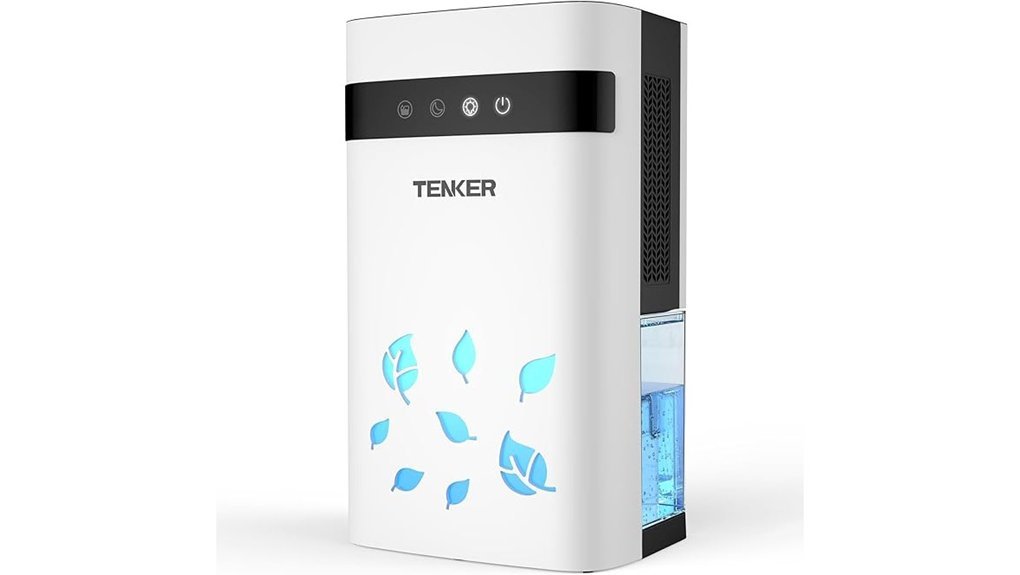
Best For: Portable room-to-room humidity control in small and medium spaces.
The TENKER Dehumidifier is another portable home model for allergy sufferers who want to reduce excess moisture in spaces up to 1,000 sq.ft. It uses semiconductor condensation technology and removes up to 35 oz of moisture daily, which places it above many small tabletop units but below larger pint-rated compressor models.
The 77 oz water tank, ergonomic handle, and lightweight design make it easy to move between rooms. You can choose between high-speed and low sleep modes, and the stated noise level under 30 dB makes it a practical pick for bedrooms, study areas, or quiet corners of the home.
Why You’ll Like It: It is easy to carry, easy to place, and quiet enough for bedrooms or study areas. That makes it a flexible choice if you do not want to buy a separate dehumidifier for every room.
Why it works for allergies: It is simple to move where you need it, which helps if humidity problems shift between a bedroom, bathroom, closet, or small basement area.
Who should buy this: Buy it if you want a portable dehumidifier for rotating use around the home, especially in bedrooms, closets, bathrooms, or small living spaces.
Who should skip it: Skip it if you want set-and-forget continuous drainage for very damp rooms. You may prefer a larger model with a drain hose.
Pros:
- Efficient moisture removal of up to 35oz per day in humid environments.
- Quiet operation mode (< 30 dB) ideal for bedrooms and study areas.
- Portable design with ergonomic handle and ambient LED lighting for added convenience.
Cons:
- Limited capacity with a 77oz water tank, requiring frequent emptying.
- May not be suitable for extremely high humidity levels beyond its specifications.
- Requires regular maintenance to ensure optimal performance.
Yaufey 5000 Sq. Ft. Energy Star Dehumidifier
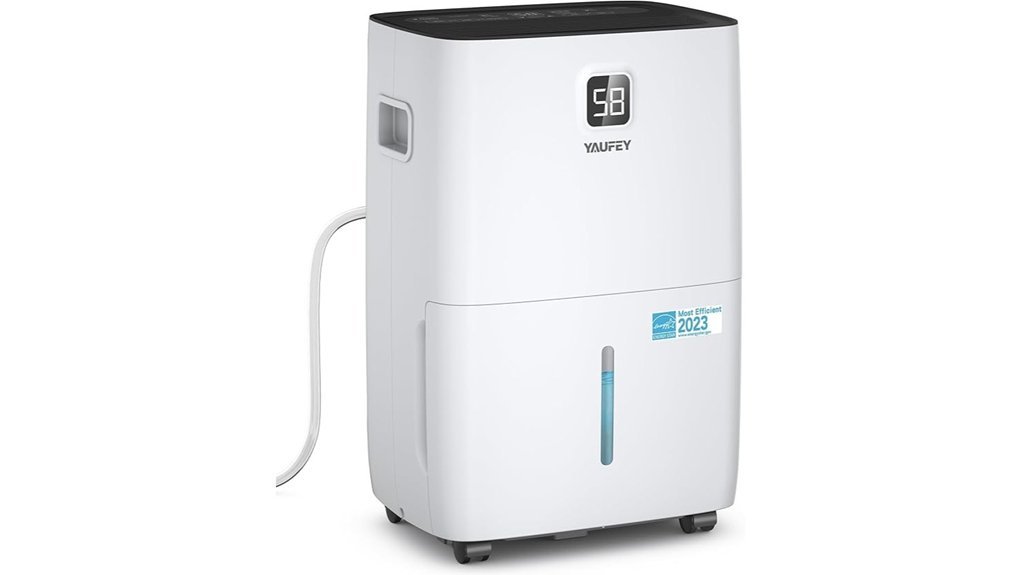
Best For: Large rooms, basements, humid climates, and bigger damp areas.
The Yaufey 5000 Sq. Ft. Energy Star Dehumidifier is the large-space option in this roundup. It is designed for areas up to 5,000 sq. ft. and can remove up to 80 pints of moisture daily, making it a stronger match for basements, large living areas, and homes in humid climates.
It includes smart modes, safety features such as auto shut-off, and dual drainage options. The stated 52dB noise level is not the quietest in this list, but it is reasonable for a larger-capacity unit, especially if you place it in a basement, utility area, or room where moisture control matters more than silent operation.
Why You’ll Like It: It is built for bigger moisture problems. If smaller dehumidifiers need constant emptying or fail to lower humidity enough, this type of larger-capacity unit is a more practical choice.
Why it works for allergies: Bigger spaces need more moisture removal. If your allergy issues are tied to a damp basement or large humid area, a small tabletop dehumidifier may not keep up, while this model is built for heavier jobs.
Who should buy this: Buy it if you need a large-capacity dehumidifier for a basement, large open room, humid home, or damp area where moisture returns quickly.
Who should skip it: Skip it if you only need a bedroom or closet dehumidifier. It may be larger and louder than necessary for small-room use.
Pros:
- Energy Star Certified, saving on electricity costs compared with less efficient models.
- Multiple smart modes for tailored humidity control, ensuring optimal comfort.
- Quiet operation at 52dB for a larger-capacity unit, making it suitable for many home spaces.
Cons:
- Initial cost may be higher compared to non-Energy Star models.
- Requires occasional maintenance for the water tank and filter.
- Large-capacity design may be more than needed for small rooms.
KNKA 2500 Sq.Ft Dehumidifier with Drain Hose
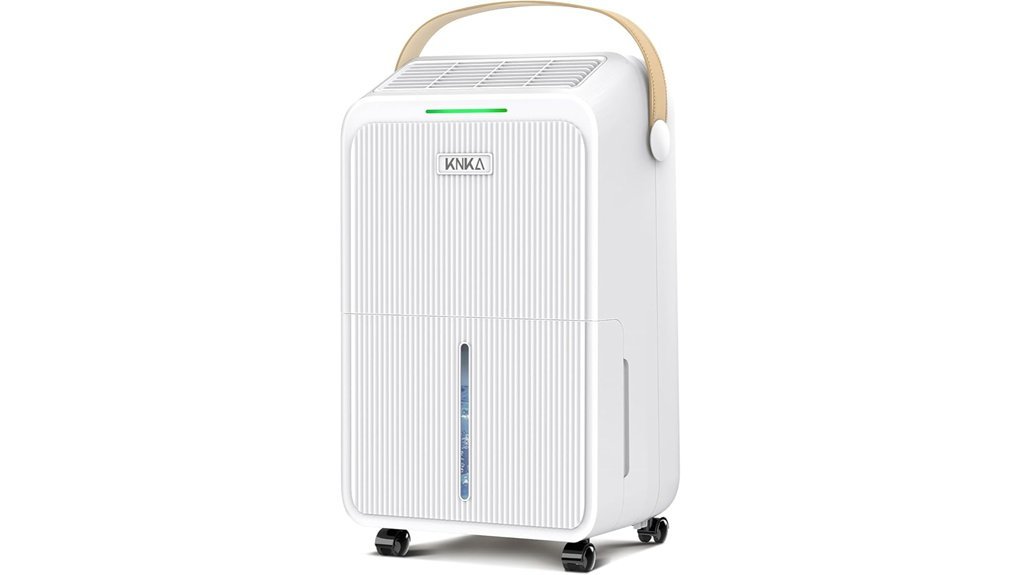
Best For: Medium to large rooms where continuous drainage and easy movement matter.
The KNKA 2500 Sq.Ft Dehumidifier is a practical middle-ground choice for allergy sufferers who need more capacity than a small LED-style unit but do not need the largest 5,000 sq. ft. option. It removes up to 34 pints of moisture daily and is designed for basements, bedrooms, and other damp rooms.
You can choose from multiple operating modes and use either manual drainage or continuous drainage with the included drain hose. The stated quiet operation at 37dB makes it more bedroom-friendly than many larger units. A digital display, adjustable humidity control, and 360° wheels make it easier to set up and move around the home.
Why You’ll Like It: It gives you stronger performance than many compact dehumidifiers while still staying manageable for everyday home use. The drain hose support is especially helpful if you do not want to empty the tank often.
Why it works for allergies: It offers a useful mix of moisture removal, quiet operation, and continuous drainage support, which is helpful if you want consistent humidity control without emptying the tank constantly.
Who should buy this: Buy it if you want a floor-standing dehumidifier for a bedroom, basement, bathroom, or medium damp room and prefer the option to use continuous drainage.
Who should skip it: Skip it if you need a cordless unit for cabinets or cars, or if you do not have room to store a larger floor-standing model.
Pros:
- Quiet Operation: At just 37dB, it runs quietly, making it suitable for bedrooms and living areas.
- Multiple Modes: Offers various operating modes for tailored humidity control.
- Easy Mobility: Equipped with 360° wheels for convenient movement around the home.
Cons:
- Tank Capacity: The 3L water tank may require frequent emptying in high humidity conditions.
- Power Consumption: Operates at 230 watts, which could impact energy bills with prolonged use.
- Manual Drainage Option: Users may need to deal with manual drainage if continuous drainage isn’t set up.
Factors to Consider When Choosing Dehumidifiers for Allergies
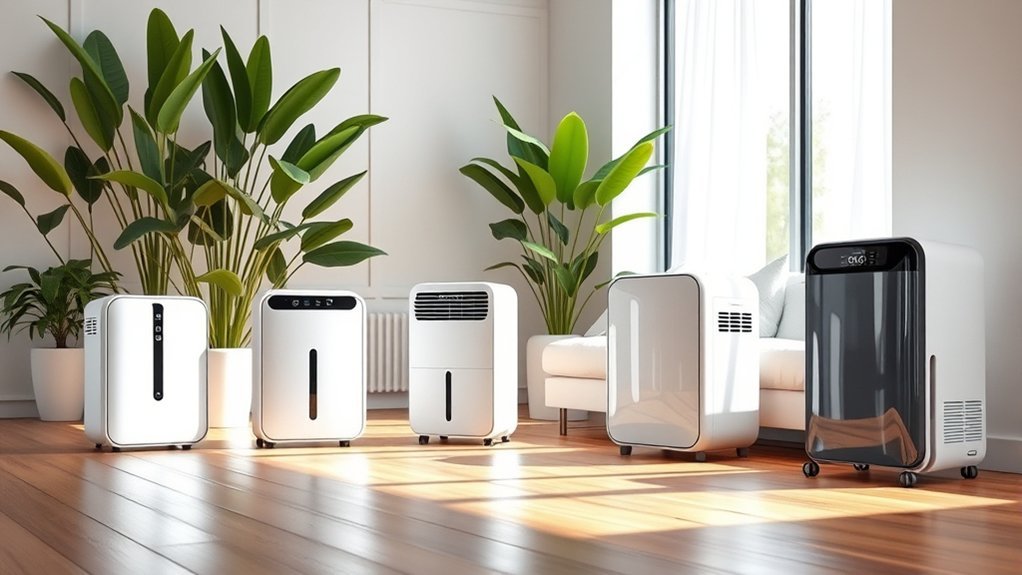
When choosing a dehumidifier for allergies, do not shop by room size alone. You also need to think about humidity range, moisture removal capacity, noise, drainage, safety, and cleaning. A model that is powerful enough but too loud to use will not help much, and a quiet model that is too small may leave the room damp.
Before You Buy Checklist:
- Measure the room or area where you plan to use the dehumidifier.
- Decide whether you need tank collection, continuous drainage, or both.
- Check the stated daily moisture removal capacity.
- Look for quiet operation if the unit will run in a bedroom.
- Choose washable or easy-access filters if allergies are a concern.
- Confirm the product details on Amazon before buying because specifications can change.
Optimal Humidity Levels
To effectively combat allergies, maintaining ideal indoor humidity levels between 30% and 50% is essential. Excess humidity can worsen your allergy symptoms by encouraging the growth of dust mites, mold, and mildew. By keeping humidity below 50%, you can greatly reduce these allergens, leading to better air quality and fewer allergy flare-ups.
A dehumidifier can help you reach and maintain these best levels, especially in damp areas like basements and bathrooms. It’s vital to regularly check and adjust humidity levels, as both too high and too low can affect your respiratory health. By monitoring moisture in your home, you can create a more comfortable living environment that supports your overall well-being.
Energy Efficiency Ratings
Choosing a dehumidifier with a strong energy efficiency rating can greatly impact both your wallet and your comfort. Look for models with ENERGY STAR certification, as they are designed to use less energy than many non-certified options. This can matter if you plan to run the unit daily during humid seasons.
Opting for a dehumidifier with a lower wattage rating also helps reduce electricity costs without sacrificing moisture removal. Energy-efficient models often feature smart humidity sensors and programmable timers, which maximize efficiency and minimize unnecessary energy use. By making an informed choice, you’ll manage humidity more effectively while keeping your living space more comfortable.
Noise Level Considerations
Energy efficiency isn’t the only factor to keep in mind; the noise level of a dehumidifier can greatly affect your comfort, especially if you’re prone to allergies. Noise levels can vary considerably, with some models operating as quietly as 28 dB, perfect for bedrooms or quiet spaces.
Aim for a dehumidifier with noise levels below 45 dB if you plan to use it while sleeping, reading, or working. Consider options with sleep modes that reduce noise during the night. High noise levels, often exceeding 50 dB, can disrupt your rest and may make you less likely to run the unit consistently.
Portable Design Features
When considering a dehumidifier for allergy relief, portability can make a significant difference in your experience. Look for a lightweight design and compact dimensions that allow for easy movement between rooms. Models with 360° rotatable wheels or ergonomic handles simplify transport, especially in tight spaces like basements or bathrooms.
Cordless options add versatility, letting you use the unit without worrying about outlet accessibility. Make sure it fits comfortably in small areas, such as closets or cabinets, while still effectively absorbing moisture. Finally, consider noise levels; choose models that operate below 45 dB for a peaceful environment in bedrooms or study areas.
Moisture Removal Capacity
Understanding moisture removal capacity is essential for effectively managing humidity and allergies in your home. A dehumidifier’s capacity, measured in pints per day or ounces per day depending on the model type, determines how well it can address moisture levels. If you’re dealing with larger or more humid spaces, choose a stronger unit with higher daily removal capacity.
This helps ensure better performance in areas like basements or bathrooms, where humidity often spikes. For allergy relief, aim to keep indoor humidity between 30% and 50%, as this range helps minimize mold, dust mites, and other allergens. Regularly assess your dehumidifier’s capacity and adjust its settings to maintain a comfortable environment that reduces allergy triggers.
Safety Features Included
Maintaining ideal humidity levels is just one aspect of choosing a dehumidifier, but safety features play a vital role in your overall experience. Look for models with auto shut-off mechanisms that prevent overflow when the water tank is full, helping protect against water damage.
Some units have automatic defrost functions to keep them running smoothly in cooler temperatures, avoiding ice formation. If you have young children, consider dehumidifiers with child locks to prevent accidental operation. Indicator lights can alert you when it’s time to empty the tank, reducing spill risks. Finally, prioritize devices made from non-toxic materials if the unit will be used around kids or pets.
Maintenance and Cleaning
Regular maintenance and cleaning are essential for maximizing the effectiveness of your dehumidifier, especially if you suffer from allergies. Cleaning the water tank and filters regularly helps prevent mold and bacteria growth, which can worsen your symptoms. Opt for a dehumidifier with a washable filter to enhance air quality by trapping allergens and pollutants.
Make it a habit to empty the water tank frequently, particularly in high humidity, to avoid overflow and stagnant water that attracts pests. While some models have auto shut-off features, you should still monitor and maintain your unit for ideal performance. Using a timer or smart features can help schedule maintenance, ensuring your dehumidifier operates efficiently and consistently reduces allergens in your space.
Additional Functionalities Offered
Keeping your dehumidifier in top shape is just the beginning. You should also consider additional functionalities that enhance your indoor environment. Some models come with built-in air purifiers, while others focus on moisture control only. If you enjoy pleasant aromas, look for units with aromatherapy diffusers, but avoid fragrance use if scents trigger your symptoms.
LED lighting options can create a calming atmosphere, contributing to overall well-being. Advanced humidity control settings let you maintain ideal levels, minimizing mold growth. Plus, smart features like Wi-Fi connectivity allow you to monitor and adjust humidity levels remotely, ensuring your home remains a consistently healthy space. These added functionalities can improve convenience, but they should not matter more than the unit’s moisture removal ability, cleaning needs, and room-size match.
Safety Note: Do not let collected water sit in the tank for long periods. Empty and clean the tank regularly, keep vents clear, and follow the manufacturer’s instructions for filters, drainage hoses, and placement.
Allergy note: A dehumidifier helps with moisture-related triggers, but it does not remove all airborne allergens. If pollen, smoke, pet dander, or fine dust is the main problem, you may also need improved filtration or an air purifier.
How to Choose the Right Size Dehumidifier for Allergies
Start with the room where your allergy symptoms feel worst. If the issue is a closet, car, cabinet, or small bathroom, a compact or cordless model may be enough. If the issue is a bedroom, office, or living room, look at models that cover around 1,000 to 1,500 sq. ft. If the issue is a basement or large humid area, choose a higher-capacity pint-rated unit with a drain option.
Also think about how wet the space gets. A mildly damp room may only need light moisture control, while a basement with a musty smell may need a stronger unit that removes dozens of pints per day. For allergy-focused use, the best dehumidifier is not always the biggest one. It is the one you can run consistently, clean easily, and match to the space without creating too much noise.
Which Dehumidifier Should You Buy?
If you want the simplest option for a closet, car, cabinet, or other small enclosed space, the Eva-Dry Wireless Mini is the most convenient choice because it is cordless and rechargeable. If you want a stronger everyday dehumidifier for a bedroom or living room, the Midea 1,500 Sq. Ft. model is a good fit because it combines room coverage, smart controls, and energy-conscious operation.
If your home has recurring dampness, the Waykar and KNKA models are stronger choices because they offer higher daily moisture removal and drainage flexibility. If you need to control moisture in a large basement or a humid large room, the Yaufey 5,000 Sq. Ft. model is the best fit from this list. For decorative bedroom use, the KeepGlad, BEDRED, TENKER, and LED-style models offer quieter designs that are easier to place in everyday living spaces.
Frequently Asked Questions
How Do Dehumidifiers Help With Allergy Symptoms?
Dehumidifiers reduce humidity, creating an environment less favorable for mold and dust mites. By lowering moisture levels, you’ll breathe easier, experience fewer allergy symptoms, and enjoy a healthier space overall.
What Size Dehumidifier Do I Need for My Space?
You need a dehumidifier that matches your space’s square footage and moisture level. For a closet, cabinet, car, or tiny bathroom, a compact model may be enough. For bedrooms and living rooms, choose a room-size electric model. For basements or larger damp spaces, look for higher pint-per-day capacity and continuous drainage.
Are Dehumidifiers Noisy During Operation?
Dehumidifiers can be noisy during operation, but it really depends on the model. Some are designed to operate quietly, while others might produce noticeable sounds. Check the stated dB level and user feedback to find a quieter option that suits your room.
How Often Should I Clean My Dehumidifier?
You should clean your dehumidifier every few weeks to guarantee peak performance. Regularly check the water collection bucket and filters, and clean them as needed to prevent mold and maintain efficiency.
Can Dehumidifiers Reduce Mold Growth in My Home?
Yes, dehumidifiers can substantially reduce mold growth in your home. By lowering humidity levels, they create an environment less conducive to mold. Regular use helps keep your indoor air healthier and cleaner.
Is a Dehumidifier or Air Purifier Better for Allergies?
A dehumidifier is better when your main issue is excess moisture, mold risk, mildew odor, or dust mites. An air purifier is better when your main issue is airborne particles like pollen, pet dander, smoke, or dust. Many allergy sufferers use both: the dehumidifier controls moisture, while the air purifier filters particles.
What Humidity Level Is Best for Allergies?
A common target is 30% to 50% indoor humidity. Staying in this range can make your home less friendly to mold and dust mites while still keeping the air from feeling too dry. Use a hygrometer or a dehumidifier with a humidity display to track the room instead of guessing.
Where Should I Place a Dehumidifier for Best Results?
Place the dehumidifier in the room with the highest humidity or the room where you notice musty odors, condensation, or allergy flare-ups. Keep the air intake and exhaust areas clear, close nearby windows, and avoid placing the unit tight against a wall unless the manual says it is safe.
Do Small Dehumidifiers Work for Allergies?
Small dehumidifiers can help in closets, bathrooms, cabinets, and compact rooms, but they are not the best choice for whole-home or basement humidity problems. If your allergy symptoms are tied to a large damp area, choose a higher-capacity unit that can remove more moisture per day.
Should I Use Continuous Drainage?
Continuous drainage is helpful if the dehumidifier will run often or if the room gets very humid. It saves you from emptying the tank every day. Make sure the hose slopes properly toward a drain and check it regularly so water does not back up or leak.
Can I Use Aromatherapy in a Dehumidifier for Allergies?
You can use aromatherapy only if the product is designed for it and the manual allows it. However, fragrance can bother some allergy-sensitive users. If scents trigger headaches, coughing, sneezing, or irritation, skip the aromatherapy feature and focus on humidity control instead.
Do I Still Need a Hygrometer?
A hygrometer is useful because it shows the actual humidity level in the room. Some dehumidifiers include a humidity display, but a separate hygrometer can help you confirm whether the room is staying near your target range.
Conclusion
Finding the right dehumidifier can make your home feel cleaner, drier, and more comfortable if excess humidity is making allergy symptoms worse. For small spaces, the Eva-Dry Wireless Mini is simple and cordless. For everyday room use, the Midea, KeepGlad, BEDRED, and TENKER models offer quiet operation and practical controls. For larger damp areas, the Waykar, Yaufey, and KNKA models provide stronger moisture removal.
Before you choose, match the unit to your room size, noise tolerance, drainage needs, and maintenance habits. A dehumidifier that fits your space and is easy to run daily is more useful than one with features you will not use. Pick the model that helps you keep humidity under control, then maintain it regularly so your indoor air stays more comfortable over time.
Final Recommendation: For most readers, start with the room where humidity causes the biggest problem. Choose a compact model for small enclosed spaces, a quiet 1,000 to 1,500 sq. ft. model for bedrooms and living areas, and a higher-capacity pint-rated unit for basements or large damp rooms.
Best buying move: Check the latest Amazon listing details before ordering so you can confirm current specifications, included accessories, drainage setup, warranty information, and seller terms.