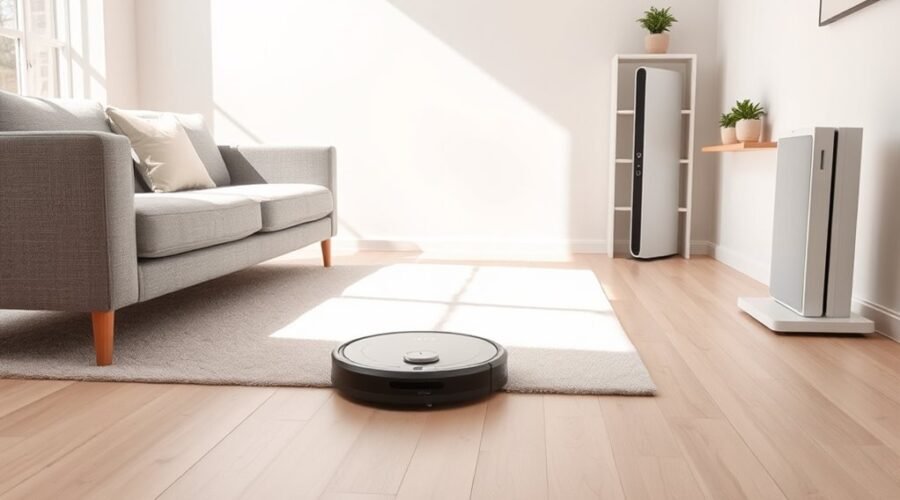
For allergy households, a robot vacuum can be more than a convenience. With the right setup, it may help reduce dust, pet dander, and other common triggers before they settle. HEPA filtration, strong suction, and mapped no-go zones all influence how well it performs. Daily cleaning can be useful, but only if the machine is configured and maintained with care. The next step is where the results start to separate.
Set Up Your Robot Vacuum for Allergy Control
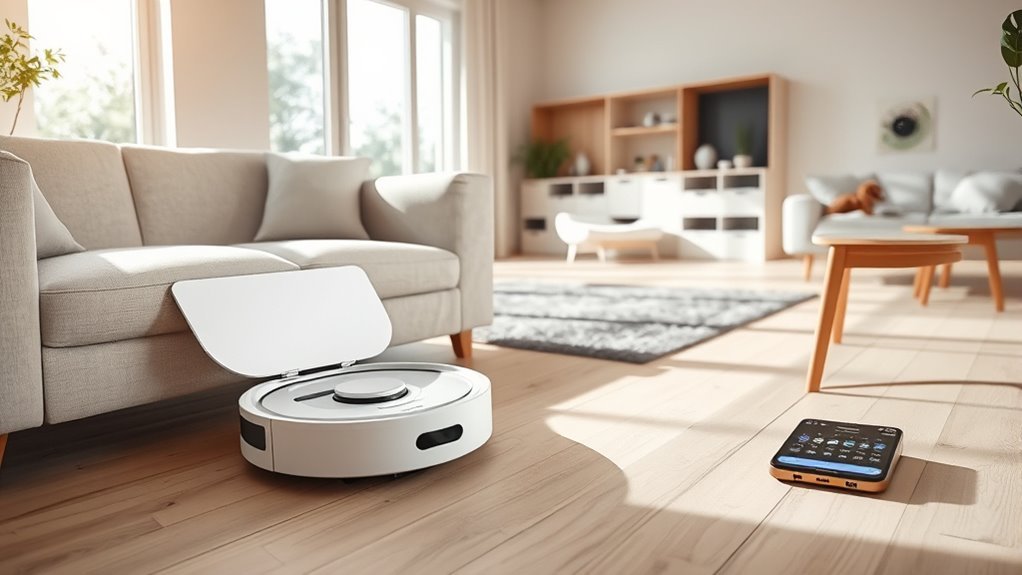
Setting up a robot vacuum for allergy control begins with a HEPA filter, which can trap particles as small as 0.3 microns and help reduce dust mites and pet dander. A properly fitted HEPA filter supports lower allergen levels by capturing fine debris before it recirculates.
Using the app, the robot vacuum should be mapped to identify high-traffic areas and pet resting places, where dust tends to accumulate. No-go zones can be assigned to cluttered spaces or storage areas that are difficult to clean safely.
Daily cleaning, preferably at a consistent time, helps maintain a stable baseline of cleanliness and reduces allergen buildup. The cleaning schedule should also preserve suction power by limiting debris overload.
Routine filter maintenance and brush cleaning are essential for sustained performance, preventing clogs and keeping the system responsive. With these steps in place, the device can operate reliably and support a more controlled, breathable home environment.
Choose the Best Cleaning Modes and Schedule
Daily auto-clean scheduling helps maintain a consistent reduction of airborne allergens by removing dust before it accumulates.
Carpet boost mode is useful for deeper extraction on fabric surfaces, while spot cleaning can target localized debris with precision.
Together, these settings provide a controlled, efficient routine that supports cleaner indoor air with minimal disruption.
Daily Auto-Clean Scheduling
A consistent auto-clean schedule can reduce allergen buildup more effectively than occasional manual cleaning, especially when the vacuum is set to run mid-morning, when pollen levels are typically lower. Daily auto-clean scheduling lets a robot vacuum work into a stable cleaning routine, limiting allergens and dust particles without added effort.
| Setting | Result |
|---|---|
| Mid-morning run | Lower pollen exposure |
| Edge cleaning | Better baseboard coverage |
| Multi-room navigation | Complete floor coverage |
| Customizable cleaning zones | Fewer disturbed allergens |
| Maintenance alerts | Sustained HEPA filtration |
When multi-room navigation is paired with customizable cleaning zones, coverage remains controlled and efficient. Maintenance alerts should be reviewed routinely so HEPA filtration continues supporting allergy control. This approach reduces repeated exposure, preserves order, and grants households more freedom from constant cleaning tasks.
Carpet Boost And Spot Cleaning
Carpet Boost mode can improve allergen removal on carpeted surfaces by increasing suction power for deep cleaning, which helps lift embedded dust mites and pet dander more effectively than standard settings.
For households seeking liberation from routine exposure, carpet boost supports targeted allergen management on rugs and stairs, while advanced filtration traps fine debris.
- Spot cleaning is useful for pet beds, entryways, and other concentrated allergen zones.
- Edge cleaning helps capture dust along walls, baseboards, and corners.
- Multi-floor mapping allows separate cleaning schedules for each level.
Scheduled mid-morning runs can align with lower pollen periods, improving consistency without manual effort.
When combined, these modes create a precise system for controlling allergens, reducing visible buildup, and maintaining cleaner air and surfaces across multiple floor types.
Why Strong Suction and HEPA Filtration Matter
Why do some robot vacuums perform better in allergy households than others? The answer lies in strong suction and HEPA filtration. A robot vacuum with high Pascal ratings, such as 25,000 Pa, lifts fine debris from carpets and hard floors with greater cleaning power. For allergy sufferers, HEPA filtration is equally important because it traps dust mites, pet dander, and other allergens as small as 0.3 microns, supporting indoor air quality and more restful living.
| Feature | Effect |
|---|---|
| Strong suction | Removes embedded dust |
| HEPA filtration | Captures microscopic allergens |
| Advanced filtration systems | Contain particles securely |
| Smart navigation | Focuses on high-traffic zones |
Together, these advanced filtration systems reduce the home’s allergen load. With regular use, the robot vacuum offers a controlled, dependable path toward cleaner air and greater daily freedom.
Prevent Dust From Being Redistributed
Sealed filtration systems help guarantee that captured dust and allergens remain contained within the robot vacuum rather than being released back into the air.
This design is especially important when fine particles are trapped during cleaning and later handled in the dust bin.
Dust bin hygiene further reduces exposure by limiting disturbance of collected debris during emptying and maintenance.
Sealed Filtration Systems
An effective sealed filtration system helps robot vacuums contain allergens rather than recirculate them during cleaning. In an allergy household, a sealed filtration system with HEPA support can capture dust mites, pollen, and pet dander down to 0.3 microns, helping minimize dust and airborne allergens.
- Sealed airflow keeps captured particles inside the vacuum.
- Advanced dust management, such as cyclonic separation, reduces particle escape.
- Regular maintenance preserves peak performance and lowers user exposure.
This design supports cleaner air and greater freedom from constant cleaning concerns. By containing debris within a closed path, the vacuum limits redistribution during daily use and emptying.
Filter checks and timely replacement remain essential for sustained allergen control. When maintained correctly, the system offers reliable, precise, and reassuring performance in homes where respiratory comfort matters most.
Dust Bin Hygiene
Regular emptying of the dust bin is essential to prevent captured dust and allergens from being redistributed into the air during cleaning cycles. | Action | Benefit |
| — | — |
|---|---|
| Empty dust bin regularly | Limits allergen exposure |
| Use sealed dust bins or HEPA filtration | Preserves filtration efficiency |
| Follow regular cleaning instructions | Supports hygiene and freedom from residue |
Models with self-emptying capabilities further reduce direct contact, while hygienic easy-empty systems allow one-touch disposal with minimal release. After each use, the dust bin and filters should receive regular cleaning per manufacturer guidance so captured debris remains contained. This routine supports stable performance, protects indoor air, and helps households reclaim a cleaner environment with less effort. When dust bin maintenance is consistent, the robot vacuum can continue operating as a controlled, low-exposure tool rather than a source of redistributed contaminants.
Run Daily Cleaning to Reduce Allergens
Daily cleaning can greatly lower indoor allergen levels by removing dust, pet dander, and pollen before they settle and recirculate. A robot vacuum with HEPA filters supports daily cleaning to reduce allergens, helping allergy sufferers maintain more stable indoor air quality and a calmer, improved environment.
- It captures dust and pollen before airborne exposure increases.
- It supports customizable cleaning schedules for consistent operation.
- It helps manage pet dander during high pollen seasons.
Scheduled runs are most effective when performed every day, especially in mid-morning windows when dust and pollen may be more active.
Automated operation reduces reliance on manual effort and preserves routine without constant oversight. For households seeking greater freedom from symptoms, this steady approach offers a practical, low-interruption method of control.
Over time, consistent use limits accumulation and keeps living spaces cleaner, more predictable, and less reactive.
Clean Filters, Brushes, and Bins Regularly
Maintenance is most effective when the robot vacuum’s HEPA filter, brush roll, and dust bin are kept clean on a regular schedule. A robot vacuum should clean filters every 1–2 months to preserve suction and capture allergens down to 0.3 microns.
Brush rolls require weekly inspection for hair and debris, since buildup lowers cleaning efficiency and limits liberation from manual sweeping. The dust bin should be emptied after each cleaning cycle, especially in homes with pets or heavy pollen exposure, so allergens do not recirculate into air quality.
Monthly, the exterior and sensors should be wiped with a damp cloth to support navigation and prevent dust accumulation. This maintenance routine is simple, controlled, and effective.
Following the manufacturer’s guidelines helps extend service life, stabilize performance, and keep daily cleaning reliable without burden.
Frequently Asked Questions
Which Robot Vacuum Is Best for People With Allergies?
For allergies, the Narwal Freo X Ultra is favored: HEPA filters, strong filtration systems, and smart navigation technology aid allergy relief against pet dander and dust mites. Frequent cleaning frequency, surface types, maintenance tips, and user reviews matter.
Is It Okay to Use a Robot Vacuum Every Day?
Yes, daily use is generally safe—practically a miracle for freedom from chores. With scheduling options, dust detection, smart home integration, and allergen reduction, daily cleaning can improve carpet performance, pet hair control, battery life, and maintenance tips.
Can Robot Vacuums Help With Allergies?
Yes; robot vacuums can reduce allergy triggers by removing dust mites and pet dander. HEPA filters, consistent cleaning frequency, and proper vacuum maintenance improve indoor air across surface types, helping limit allergy symptoms during seasonal changes.
What Are the Downsides of Using a Robotic Vacuum Cleaner?
A shadow of convenience, robotic vacuums can underperform: limited suction power, uneven navigation efficiency, floor types variability, pet hair buildup, small dust bin, modest battery life, noise levels, and cost considerations. User reviews and maintenance tips help.
Conclusion
In allergy households, a robot vacuum becomes most effective when configured with careful mapping, strong suction, and HEPA filtration. Daily automated runs can intercept dust and pet dander before they settle, while no-go zones help prevent debris from being scattered. Isn’t it reassuring to imagine cleaner air maintained with minimal effort? With regular emptying, brush care, and filter checks, the system remains dependable, supporting a calmer, healthier indoor environment.