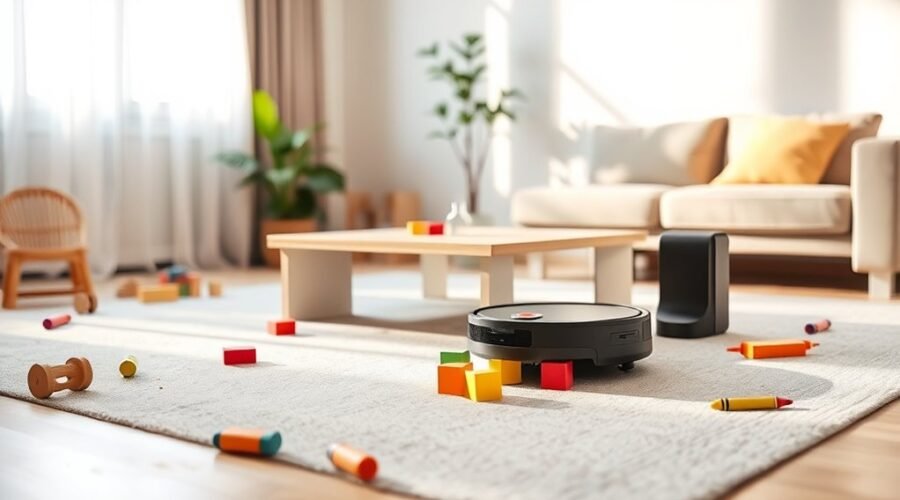
A robot vacuum can make daily cleanup easier in a home with kids, but only if it is set up well. Toys, cords, and small obstacles need to be cleared first, and the dock should sit in an open spot with enough space around it. After that, schedules, quiet modes, and routine maintenance start to matter, especially when naps, meals, and mixed flooring enter the picture.
What Makes a Robot Vacuum Kid-Friendly?
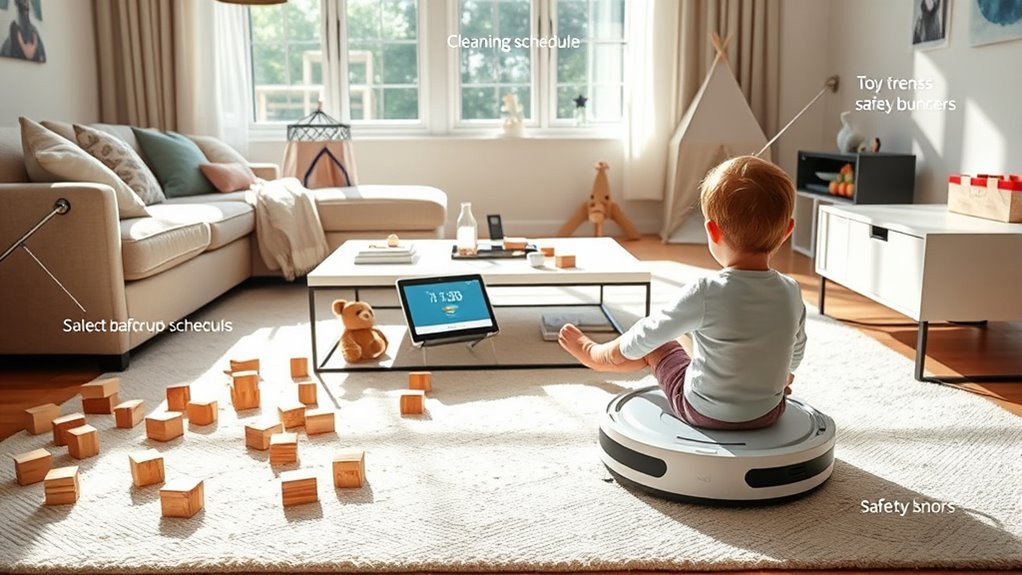
What makes a robot vacuum truly kid-friendly is the way it reduces disruption while helping maintain a cleaner, safer home. Effective obstacle avoidance helps it steer around toys, furniture, and scattered debris, supporting child safety and lowering the risk of bumps or tangles.
Quiet operation matters as well, because it allows home cleaning to happen during naps, playtime, or focused family moments without adding stress. Strong pet hair management also supports households where children and animals share space, keeping floors more comfortable and reducing visible mess.
Customizable cleaning schedules give parents control over when cleaning runs, making routine maintenance easier to fit around daily life. Self-emptying functionality further improves user-friendliness by limiting manual emptying and reducing chore burden.
Together, these features make the machine practical rather than intrusive, helping families keep rooms orderly while preserving time, calm, and a sense of freedom from constant cleanup.
How Do You Set Up a Robot Vacuum Easily?
Setting up a robot vacuum is usually straightforward when the space and settings are prepared in advance. The first step is clearing toys, laundry, and charging cables so the robot can move freely and avoid delays.
Next, the charging dock should be placed in a designated area with enough open space for reliable docking. Once the hardware is ready, the companion app can be downloaded to handle scheduling cleanings, adjusting preferences, and linking with smart home devices.
A test cleaning cycle helps reveal the robot’s performance and shows whether room-specific settings need refinement. For homes with children, this early check can prevent missed spots and repeated interruptions.
Afterward, regular care should be simple: empty the dustbin, check and replace filters, and clean brushes as needed. Consistent maintenance supports strong performance and helps the vacuum remain dependable, so the setup continues to serve a busy household with less effort.
Where Should You Place the Charging Dock?
The charging dock should be placed in a spot that gives the robot vacuum enough room to approach and leave without obstruction, ideally with at least 3 feet of clearance in front and 1.5 feet on each side. This spacing reduces obstructed access and supports reliable docking after each cleaning run.
Place the dock with enough clearance in front and on the sides for smooth, reliable docking.
A flat surface is essential, because a level surface helps the unit align correctly and protects overall performance. The dock is best kept away from high-traffic areas, where frequent movement can interrupt recharging and create avoidable delays.
A clear path should lead to the dock, with obstacles removed so the vacuum can return without confusion or strain. Choosing a calm, open location also simplifies routine maintenance, since the dock remains easier to inspect and keep tidy.
When the charging dock is placed thoughtfully, the robot gains more independence, and the home gains more freedom from constant manual intervention.
How Do Robot Vacuums Handle Toys and Cords?
Robot vacuums handle toys and cords best when their navigation systems can identify and work around common obstacles without losing their route. Using lidar, bump sensors, and adaptive mapping, robot vacuums can pass around scattered obstacles while keeping cleaning cycles efficient.
Models like the Roborock Q7 M5+ let users mark no-go zones, which helps keep cords, small toys, and busy play areas out of reach. Others, such as the Tapo RV30 Max Plus, adjust their path to room layouts and furniture, lowering the chance of snagging.
Still, their performance depends on maintenance and room preparation; clearing loose cables and larger toys before a run reduces interruptions and protects efficiency. In homes with children, supervision remains wise because small obstacles are usually managed well, but complex clutter can still cause trouble.
With thoughtful setup, these machines can support a freer routine and keep floors cleaner with less effort.
How Do You Set Schedules in the App?
To set a cleaning schedule in the app, the user opens the companion app and goes to the scheduling option in the settings menu. From there, a Roborock model such as the Q7 M5+ can be assigned specific days and times, making cleaning routines more predictable and less dependent on constant oversight.
Multiple schedules can be created, which helps separate room-by-room needs in homes with kids and supports customized coverage across the week. The app also allows notifications to be turned on, so start and end alerts arrive without manual checking. That small layer of awareness can support a calmer household rhythm.
For added freedom, voice commands through smart assistants like Siri, Alexa, or Google Home can start scheduled cleanings or adjust settings when hands are full. This flexible setup gives families practical control while keeping daily upkeep largely automatic.
Which Quiet Modes Work Best for Naps?
Quiet mode scheduling is often the most practical option for nap times, since app controls can place cleaning during windows when children are least likely to notice it.
Nap-time noise levels matter as well, with models like the Roborock Q7 M5+ and Shark PowerDetect ThermaCharged offering quieter operation that better fits sleeping households.
Low-disruption cleaning cycles, especially those using noise-reduction technology, can help maintain tidiness without interrupting rest.
Quiet Mode Scheduling
When nap time is on the schedule, the best robot vacuums are those that combine a true quiet mode with reliable scheduling controls, allowing cleaning to happen without disrupting sleep. For liberation from constant chores, the Roborock Q7 M5 stands out for naptime use. | Feature | Practical value |
| — | — |
|---|---|
| quiet mode | lowers routine disruption |
| scheduling | runs during naps |
| battery life | supports extended cleaning sessions |
| customizable cleaning settings | targets pet hair quietly |
User feedback often favors a noise level below 60 dB, and that threshold suits many homes. Models with flexible timing can handle whole-room coverage while children rest, then pause demand on caregivers later. Cleaners with smart scheduling and quieter paths help maintain order without forcing daytime compromises.
Nap-Time Noise Levels
Nap-time cleaning works best with robot vacuums that can stay in a true quiet mode, typically around 50 to 60 dB, since that range is low enough for many homes with sleeping children.
At those noise levels, quiet operation is usually noticeable only in very calm rooms. Models such as the Roborock Q7 M5+ fit this need well, while the Shark PowerDetect ThermaCharged, at about 61.59 dB, may still register in a silent space.
For households needing freedom from constant oversight, customizable cleaning modes help adjust suction power without losing efficient cleaning.
Eufy C10 T2292 is another practical choice, especially for pet hair.
Scheduling options also matter, letting families place cleaning sessions when naps are least likely, so robot vacuums keep working without disrupting rest.
Low-Disruption Cleaning Cycles
Low-disruption cleaning cycles matter just as much as low noise levels, because a vacuum that sounds acceptable can still interrupt a child’s rest if it runs too aggressively or covers too much ground at once.
For that reason, robot vacuums with scheduling features help families preserve nap time while keeping floors managed. Models such as the Roborock Q7 M5+ and Tapo RV30 Max Plus offer low noise and quiet operation in modes near 55 dB, supporting efficient cleaning with minimal disruption.
Customizable settings let users limit zones, reduce power, or target rooms one at a time, which keeps cleaning cycles predictable. Regular maintenance, including filters and brushes, also supports peak performance and steadier sound levels.
Used well, these tools give caregivers more freedom without sacrificing cleanliness.
Which Robot Vacuum Works Best on Mixed Floors?
Other options remain competitive.
The Tapo RV30 Max Plus cleans well on mixed floors and lifts deep dust, though corners may need attention.
The iRobot Roomba Combo 10 Max offers solid overall performance, and the Shark PowerDetect ThermaCharged is highly efficient on hardwood, though noisier.
For mixed floors, the Roborock Q7 M5+ offers the most balanced mix of freedom, control, and dependable cleaning.
How Do You Maintain Brushes and Filters?
Once the right robot vacuum is chosen for mixed floors, regular upkeep keeps it performing well in a busy home.
Care begins with the brushes: side brushes should be checked often, then cleared of hair and debris so they can sweep freely. The main brush also deserves routine attention, especially in homes with pet hair or crumbs.
Filters need cleaning every 2 to 4 weeks, or sooner if the user manual advises, because clogged filters reduce suction power and lower cleaning efficiency.
After each cycle, the dustbin should be emptied to prevent overflow and keep airflow open.
Parts do wear down, so it is practical to replace the main brush and side brushes every 6 to 12 months, depending on use.
Following the maintenance schedule in the user manual helps keep care simple, extends lifespan, and supports a more independent cleaning routine.
How Do You Fix Common Robot Vacuum Problems?
Common robot vacuum problems are often resolved by clearing the cleaning path of toys, cables, and other small obstacles that can stop the machine or send it off course.
Regular maintenance of brushes, dustbins, and filters helps preserve suction and reduces tangles, especially in homes with pets or frequent debris.
If the vacuum still misses areas or struggles to return home, adjusting docking placement and navigation settings can improve mapping and overall coverage.
Clear the Cleaning Path
Keeping a robot vacuum running smoothly in a home with kids starts with clearing its path before each cleaning cycle. To clear the cleaning path, remove toys, laundry, and charging cables so obstacles do not slow movement or trap the unit.
Leave a few feet open around the docking station so it can return easily after work. Regular maintenance should include checking wheels and brushes for tangles, which helps preserve performance and efficiency.
The dustbin should be emptied often, especially in homes with pets, so peak suction power is maintained. Many models offer customizable cleaning settings that can focus on high-traffic rooms or snack zones, giving families practical control over daily messes.
With a prepared floor plan, the vacuum can work independently and support a more liberated routine.
Maintain Brushes And Filters
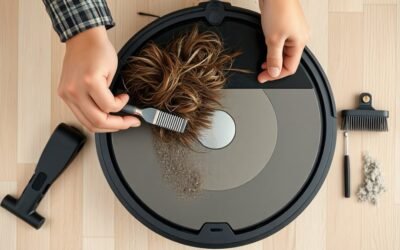
Regular brush and filter care is one of the simplest ways to fix common robot vacuum problems before they affect daily cleaning. To maintain brushes, side and main brush parts should be checked every few weeks for hair and debris buildup.
| Task | Timing | Result |
|---|---|---|
| Clean brushes | Every few weeks | Better performance |
| Replace filters | Every 2-3 months | Stronger suction power |
| Empty dustbin | After each run | Steady clean |
Filters should be replaced on schedule, because clogged filters reduce suction power and weaken clean results. The dustbin must be emptied after each session, especially in homes with kids. Wheel bearings should also be inspected for dirt so navigation stays smooth. A simple maintenance log helps track parts and extend vacuum lifespan while keeping operation reliable and orderly.
Improve Docking And Navigation
A robot vacuum docks more reliably when the charging station sits in an open area with at least three feet of clearance on all sides, giving it room to approach and realign without obstruction.
The docking station should also have clean charging contacts, since dust or crumbs can interrupt power transfer and reduce reliability.
For steady navigation, it helps to inspect and clean sensors and wheels often, especially after passes through cluttered areas where toys or hair may interfere.
In homes with kids, virtual boundaries and no-go zones can keep the robot away from play spaces and reduce confusion.
Testing floor types and room layouts reveals weak spots, allowing the cleaning schedule to be adjusted for ideal performance.
Frequently Asked Questions
Which Robot Vacuum Is Best for a House With Kids?
The Roborock Q7 M5+ appears best for a house with kids, balancing child safe features, noise levels, pet compatibility, floor types, ease of use, maintenance tips, price comparison, battery life, smart technology, space saving design.
Is It Okay to Use a Robot Vacuum Every Day?
Like clockwork, yes—daily cleaning is usually fine. With pet hair, safety features, obstacle navigation, and dirt detection, it stays practical across floor types. Attention to noise levels, battery life, app integration, and maintenance tips matters.
Are Robot Vacuums Good With Kids?
Yes, robot vacuums can suit homes with kids, offering cleaning efficiency, safety features, and kid friendly design. Their navigation technology handles floor types, pet hair, and messes, though noise levels, durability concerns, user reviews, and maintenance tips matter.
What Is the Best Vacuum for a House With Kids?
The best vacuum for a house with kids is a robot with strong suction power, childproof features, safety sensors, smart connectivity, low noise levels, long battery life, floor types support, pet hair handling, maintenance tips, and price comparison.
Conclusion
In the rhythm of a busy home, a robot vacuum can become a steady small helper, gliding like a patient shuttle between toys, crumbs, and daily messes. With thoughtful setup, a well-placed dock, and kid-friendly schedules, it works best as part of a simple routine rather than a stand-alone solution. Regular brush and filter care keep it moving smoothly, helping the house stay cleaner while children play, nap, and grow.