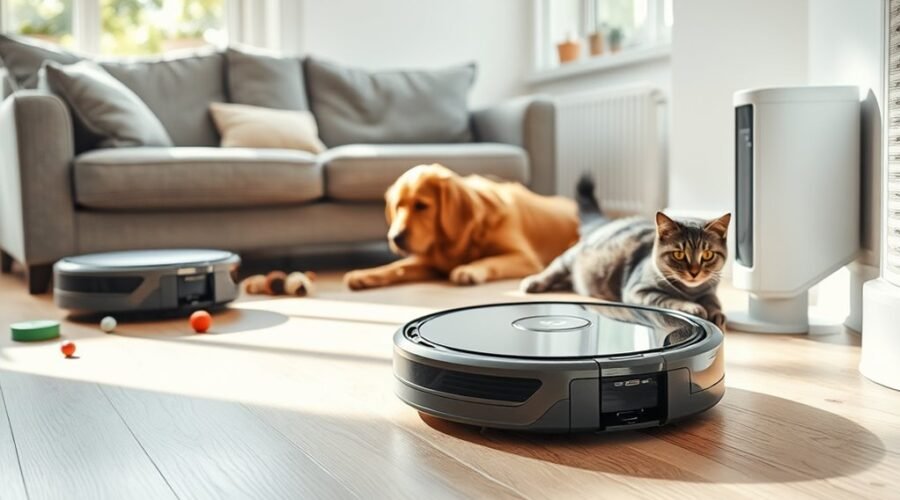
A robot vacuum for pets can keep everyday shedding under control, but the right setup makes a big difference. Pet hair collects under furniture, along baseboards, and deep in carpet fibers. A reliable cleaning routine starts with safe mapping, suitable vacuum settings, and regular brush maintenance.
Quick Answer
To set up a robot vacuum for pets, fully charge it, clear floor hazards, map your rooms, and create no-go zones around pet bowls and accident-prone areas. Schedule daily cleaning during heavy shedding. For better results, use strong carpet suction, anti-tangle brushes, and an auto-empty dock, then inspect the filters and rollers regularly.
At a Glance
| Difficulty | Beginner-friendly |
| Tools Needed | Robot vacuum, charging dock, smartphone app if supported, and cleaning brush |
What to Set Up Before Your First Run?
)
Before your first cleaning run, charge the robot, prepare the floor, and create a safe cleaning map. These steps help prevent interruptions and protect your pet’s belongings.
Follow this setup process before turning on automatic scheduling.
- Fully charge the robot. Place it on its charging dock and follow the manufacturer’s initial charging instructions. For example, the MOVA V70 Ultra Complete specifications confirm a 6,400 mAh battery. A full charge helps the robot complete its initial mapping and cleaning cycle.
- Position the charging dock. Set it against a wall on a firm, level surface. Leave enough open space around the dock for the robot to approach and return. Connect the power supply and check that charging begins.
- Remove floor obstacles. Pick up electrical cords, small toys, loose clothing, and other items that could wrap around the brushes. Check underneath furniture and around feeding areas.
- Connect the app and create a map. Use the manufacturer’s supported Wi-Fi connection and mapping feature. Let the robot explore accessible rooms, then confirm that the map shows the correct room boundaries.
- Mark pet zones. Use no-go zones to protect food bowls, water dishes, and sensitive areas. If your model supports targeted cleaning zones, mark high-shedding areas for additional vacuuming instead.
- Choose suitable cleaning modes. Select stronger suction for carpets and heavy shedding. Use a lower setting for quiet maintenance cleaning. Enable carpet detection and mop lifting where supported.
- Test the cleaning route. Run the robot while you are home. Confirm that it avoids restricted areas, collects hair, and returns to the dock. Set your regular schedule after the test succeeds.
Warning: Always remove pet urine, feces, and other wet accidents before starting a robot vacuum. A robot can spread waste across the floor and into its internal parts. Never assume obstacle avoidance will detect every accident.
Some models offer specialized pet-waste detection. For example, iRobot’s pet-waste avoidance technology is designed to recognize solid pet waste on supported Roomba models. However, detection has limitations and does not replace checking the floor.
Once mapping works properly, schedule cleaning when pets are comfortable and the floor is clear. This creates a safer routine with fewer interruptions.
How Does a Robot Vacuum for Pets Pick Up Hair Daily?
A robot vacuum collects pet hair using suction, rotating brushes, and planned cleaning routes. Frequent cleaning removes loose fur before it becomes heavily embedded in rugs and carpets.
Brush design and floor contact often matter as much as advertised suction power. The robot must loosen hair before airflow can carry it into the dustbin.
| Feature | Daily effect |
|---|---|
| Suction power | Pulls loose hair and debris into the dustbin |
| Anti-tangle rubber brushes | Loosen hair while reducing strands wrapped around the roller |
| LiDAR navigation | Uses laser distance measurements to map rooms and plan cleaning paths |
| Daily runs | Reduce loose hair buildup between deeper cleaning sessions |
| Consistent floor coverage | Helps collect fur along common travel routes and accessible edges |
LiDAR helps a robot navigate systematically, but it does not guarantee that it will recognize pet waste, cables, or small toys. Reliable object avoidance may require additional cameras or sensors.
For everyday cleaning, focus on the places where your pets shed the most. These often include sleeping areas, favorite resting spots, hallways, and spaces around furniture.
You can also adjust cleaning frequency based on shedding:
- Heavy shedding: Schedule daily vacuuming and use extra passes in problem areas when supported.
- Moderate shedding: Start with regular scheduled cleaning and increase frequency if visible hair accumulates.
- Low shedding: Use fewer runs if floors remain clean and the dustbin fills slowly.
For hard floors, regular vacuuming helps collect loose fur before it gathers into larger clumps. On carpets, stronger brush agitation may be necessary to lift hair caught between fibers.
Robot vacuum and mop combinations can also remove light paw prints from suitable sealed hard floors. However, the vacuuming system should handle dry hair before the mop spreads moisture across the surface.
Why Carpet Pickup and Anti-Tangle Brushes Matter?
Carpet pickup matters because pet hair becomes trapped between carpet fibers. A robot that performs well on hard floors may still leave noticeable hair inside rugs and medium-pile carpeting.
Anti-tangle brushes also reduce the time you spend removing wrapped fur. They are especially useful when you have long-haired pets or several animals sharing the same home.
For example, the Dreame L60 Ultra PE offers 30,000 Pa maximum rated suction and a HyperStream detangling DuoBrush. Its paired rollers are designed to loosen hair and limit tangling.
However, suction ratings alone cannot tell you how much embedded hair a robot will collect. Brush design, carpet pile, airflow, and cleaning passes also affect results.
When evaluating carpet performance, look for these practical signs:
- Embedded hair removal: The vacuum lifts fur from a frequently used pet mat rather than collecting only surface strands.
- Minimal brush wrapping: Hair moves into the dustbin instead of building up around the roller ends.
- Effective carpet suction: The robot removes hair and fine debris without repeatedly leaving visible clumps.
- Consistent coverage: The robot crosses accessible carpet areas and cleans around furniture without frequent interruptions.
These differences become more noticeable in multi-pet households, where shedding continues throughout the day.
Pro Tip: After the first few carpet-cleaning sessions, inspect the same high-shedding area before and after vacuuming. If embedded hair remains, try an additional pass or a stronger carpet mode before changing your cleaning schedule.
Even a capable robot may struggle with thick rugs and deeply embedded fur. A regular upright or cordless vacuum can still help with occasional deep cleaning, stairs, and upholstery.
Which Dock Features Help With Pet Hair and Dander?
An auto-empty dock makes pet-hair cleaning easier by transferring collected fur into a larger storage container. More advanced docks also manage mop washing, drying, and water refilling.
These features reduce repetitive maintenance, but they do not eliminate the need to inspect the robot and its cleaning parts.
- Automatic dustbin emptying: The dock transfers hair and debris from the robot after cleaning. This reduces manual emptying, particularly during heavy shedding.
- Large debris storage: Some manufacturers advertise storage for up to 100 days. Actual intervals depend on household size, shedding, debris volume, and cleaning frequency.
- High-efficiency filtration: A well-sealed HEPA or high-efficiency filtration system can help retain fine particles during collection and disposal. Filtration performance varies by model.
- Automatic mop washing: Supported docks wash dirty mop pads, sometimes using heated water. This helps remove routine floor residue and reduces manual washing.
- Mop drying and water management: Automatic drying helps limit lingering moisture and odors. Some docks also refill the robot’s clean-water tank and dispense approved cleaning solution.
- Adjustable emptying frequency: Compatible apps may let you change how often the robot empties its bin. Frequent emptying can help prevent compacted pet hair from blocking the transfer path.
The Dreame L60 Ultra PE, for example, advertises up to 100 days of automatic dust disposal. That figure is based on manufacturer testing, so a home with heavily shedding pets may need more frequent bag changes.
For households concerned about pet dander, filtration deserves extra attention. The US Environmental Protection Agency’s indoor particulate matter guidance recommends frequent cleaning and considering HEPA filtration to reduce dust buildup and escaping particles.
Note: A robot vacuum can reduce settled pet hair and dust, but it cannot remove every airborne allergen. If someone in your household has asthma or pet-related allergies, follow their healthcare professional’s advice about exposure control and cleaning.
Remember that obstacle avoidance comes from the robot’s sensors and software, not the dock itself. A feature-rich base cannot prevent the robot from running over an object it fails to recognize.
How to Maintain Your Pet Robot Vacuum?
Maintain your pet robot vacuum by checking its dustbin, cleaning brushes, and keeping filters clear. Hair buildup can reduce airflow, interfere with moving parts, and cause the robot to leave debris behind.
A short routine after cleaning helps prevent larger problems later.
After Each Cleaning Run
- Check whether the onboard dustbin emptied successfully, or empty it manually if your model has no auto-empty dock.
- Look for compressed hair around the suction opening and brush housing.
- Remove any visible cords, hair clumps, or debris caught near the wheels.
- Check the app for cleaning errors or areas the robot could not reach.
Weekly Brush and Filter Care
Inspect the main roller, side brush, and filter at least weekly, and more frequently during heavy shedding.
For example, iRobot’s Roomba s Series maintenance chart recommends cleaning filters and multi-surface brushes twice weekly in homes with pets. It also specifies a two-month filter replacement interval for that series.
- Turn off the robot according to its manual before removing cleaning parts.
- Remove the main roller and carefully clear wrapped hair from the brush and its ends.
- Inspect the side brush for tangled strands and worn or bent bristles.
- Remove dust from the filter using the approved cleaning method.
- Reinstall each part securely before restarting the robot.
Never assume a filter is washable. Some robot filters must remain dry, while others allow rinsing. Follow the instructions for your exact model and let washable parts dry completely before reinstalling them.
Monthly Dock and Navigation Checks
- Wipe accessible sensors and charging contacts with a suitable dry cloth.
- Inspect the auto-empty dock’s airflow path for compacted hair.
- Replace dust bags when the dock or app indicates they are full.
- Clean mop pads, water tanks, and washboards according to the manufacturer’s instructions.
- Review software updates and confirm that mapped rooms and restricted zones remain accurate.
What If the Vacuum Leaves Pet Hair Behind?
If your robot starts leaving hair clumps, begin with the simplest possible causes. A full dustbin, blocked filter, or tangled roller can reduce cleaning performance.
- Empty the dustbin and inspect the suction opening.
- Remove hair wrapped around the main and side brushes.
- Clean or replace the filter as directed by the manufacturer.
- Check that the robot is using the correct carpet or suction setting.
- Run another cleaning pass and compare the results.
If the robot still loses suction, produces unusual noises, or reports repeated motor errors, stop using it and contact the manufacturer’s support service.
Consistent maintenance helps your vacuum collect hair more reliably without turning every cleaning run into another chore.
Frequently Asked Questions
Is It Okay to Use a Robot Vacuum Every Day?
Yes, most robot vacuums are suitable for daily cleaning when maintained according to their instructions. Daily runs are especially useful during heavy shedding. Choose a schedule that fits your pet’s comfort, floor types, and noise preferences. Regularly inspect the brushes, filters, and dustbin to prevent hair buildup.
What Is the Best Robot Vacuum for Homes With Pets?
The Dreame L60 Ultra PE is a strong option for households with shedding pets. It offers 30,000 Pa maximum suction and anti-tangle brushes. One independent controlled test reported 100% pickup of flattened pet hair, but results vary by floor and test conditions. The best choice also depends on navigation, maintenance, noise, and price.
Are Robot Vacuums Worth It if You Have Pets?
Yes, a robot vacuum can be worth it if your pets shed regularly and you want less manual floor cleaning. Scheduled runs help control loose hair on hard floors and carpets. However, you still need occasional deep cleaning, routine maintenance, and manual removal of pet accidents.
Is Roomba or Shark Better for Pet Hair?
Neither brand is automatically better for every pet household. Some Roomba models offer dual rubber brushes and specialized obstacle avoidance. The Shark Matrix Plus provides a self-cleaning brushroll, HEPA filtration in its base, and LiDAR mapping. Compare specific models by tested pet-hair pickup, filtration, maintenance needs, and floor types.
Conclusion
A robot vacuum for pets works best when proper setup, frequent cleaning, and simple maintenance become part of your routine. Start with a fully charged robot, a clear floor, and accurate pet-area boundaries. Then adjust cleaning frequency and suction to match your pets’ shedding and your home’s flooring.
Check the brushes and filters regularly, and use an auto-empty dock if your model supports one. With a reliable schedule, you can keep more pet hair off your floors while spending less time cleaning manually.
Sources
- MOVA V70 Ultra Complete Specifications: Confirms the 6,400 mAh battery capacity and supported cleaning features.
- Dreame L60 Ultra PE Official Product Information: Confirms maximum suction, detangling brushes, navigation capabilities, and automatic dock functions.
- iRobot Pet Owner Official Promise: Explains supported pet-waste detection and its limitations.
- US Environmental Protection Agency: Sources of Indoor Particulate Matter: Supports the recommendations on regular cleaning, indoor dust, pet dander, and filtration.
- iRobot Roomba s Series Essential Care Frequency Chart: Provides the manufacturer-recommended brush, filter, sensor, and dock maintenance intervals.
- Shark Matrix Plus Official Product Specifications: Confirms brushroll design, HEPA filtration, mapping, and self-emptying features.