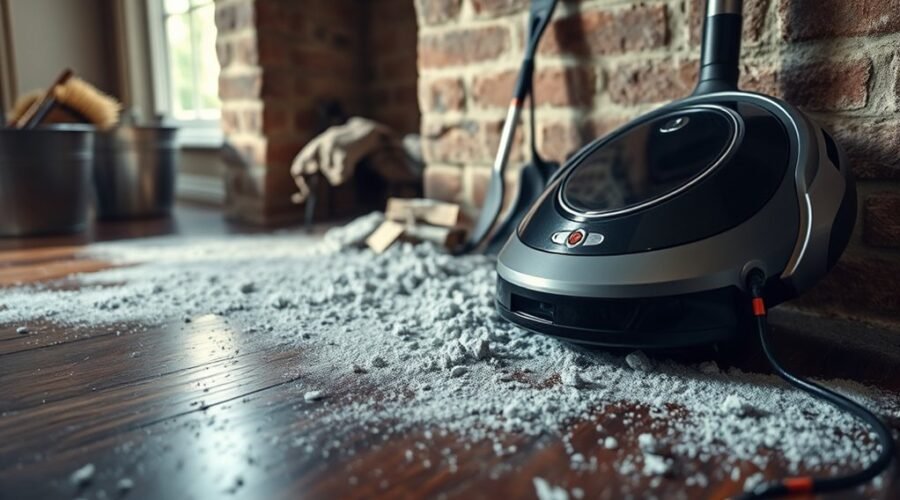
Can a robot vacuum clean fireplace ash? It may seem like an easy way to tidy up your hearth, but fireplace ash is different from ordinary household dust. Its fine particles can clog the machine, while hidden embers may cause a fire. Knowing the risks helps you choose a safer cleanup method without damaging your vacuum.
Quick Answer
No, you should never use a robot vacuum to clean fireplace ash, even if the ash looks cold. Fine particles can block filters, damage internal parts, and escape into the room. Hidden embers also create a fire risk. Instead, let the ash cool completely and use a dedicated ash vacuum or metal fireplace tools.
Key Takeaways
- Fireplace embers can remain hot for days, even when the top layer of ash feels cool.
- A HEPA-equipped robot vacuum is still not a suitable replacement for an ash vacuum.
- Ash vacuums need specialized filters and heat-resistant components, but they cannot safely collect burning coals.
- Store removed ash in a covered metal container outdoors, away from buildings and combustible materials.
- Burning properly seasoned wood and maintaining your chimney helps reduce soot and creosote buildup.
Can a Robot Vacuum Clean Fireplace Ash?
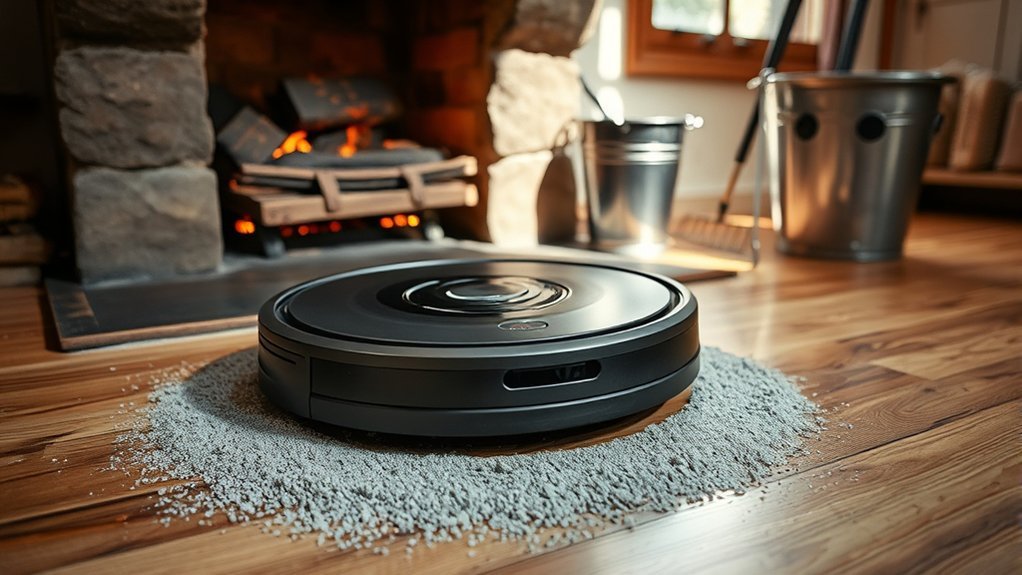
No. A robot vacuum should not collect fireplace ash because its dustbin, filters, brushes, and motor are designed for everyday floor debris. Ash from a wood-burning fireplace creates problems these components are not built to handle.
Even powerful robot vacuums can struggle with the fine, abrasive material. Ash may coat sensors, collect around moving parts, and reduce suction. Some particles can also escape through unsuitable filters and return to the room.
The biggest concern is fire. An ember can stay hot beneath a cool-looking layer of ash long after the flames disappear. If the robot collects it, heat may damage plastic components or ignite debris inside the dustbin.
The safety organization Electrical Safety First warns against collecting hot ashes with a robot vacuum.
Keep your robot vacuum for ordinary floor cleaning. For the fireplace itself, use a dedicated ash vacuum or remove fully cooled material by hand.
Why Robot Vacuums Struggle With Ash
Robot vacuums struggle with fireplace ash because it is finer and more difficult to contain than normal household debris. The main problems involve filtration, mechanical wear, and heat.
- Clogged filters: Fine ash can build up quickly inside filters, restricting airflow and reducing suction.
- Motor damage: Ash that passes through unsuitable filtration can enter areas that should remain clean, increasing wear and the risk of failure.
- Dirty sensors: Fine residue can cover navigation and obstacle-detection sensors, interfering with normal operation.
- Brush contamination: Ash may collect around brush bearings, wheels, and moving parts.
- Airborne dust: Poorly contained ash can escape into the room, where it may irritate your eyes and lungs.
- Fire hazards: Hidden embers can damage plastic parts and ignite collected debris.
According to Kärcher’s fireplace cleaning guidance, conventional vacuum filters and suction systems can become blocked by fine ash. In severe cases, this may lead to motor failure.
A robot vacuum’s strong suction rating does not solve these problems. The entire machine must be designed for ash collection, not simply equipped with a powerful motor.
What Makes Fireplace Ash So Hard to Clean?
Fireplace ash is difficult to clean because it contains tiny, lightweight particles that spread easily. Unlike larger debris, ash can form a dust cloud when you sweep, scoop, or disturb it.
Its texture also causes problems. Fine mineral residue can settle deep inside filters, while larger gritty particles may scratch delicate surfaces or contribute to wear.
Three characteristics make ash especially troublesome:
- Fine particle size: Ash contains particles small enough to challenge filters not designed for this material.
- Low weight: Air movement from brushes, fans, or sweeping can scatter ash across nearby surfaces.
- Hidden heat: A layer of insulating ash can conceal glowing or smoldering coals beneath the surface.
A fireplace may look ready for cleaning while heat remains deeper inside the ash bed. This is why you should never judge ash safety by its appearance alone.
Even after the material cools, regular vacuum cleaners can struggle with its texture. A purpose-built ash vacuum or careful manual removal offers better control.
When an Ash Vacuum Is the Safer Choice
A dedicated ash vacuum is the safer choice when you need to remove fine, fully cooled fireplace residue with less airborne dust. Unlike a robot vacuum, it uses components and filtration designed specifically for ash.
Typical features include:
- A metal collection canister that withstands more heat than a plastic dustbin.
- A heat-resistant hose or metal suction tube.
- Specialized filters designed to capture fine ash.
- A removable collection container for easier disposal.
- Filter cleaning or replacement options that help maintain suction.
Some models are rated for cool or moderately warm ash, but their temperature limits differ.
For example, the PowerSmith PAVC101 operator’s manual specifies a maximum material temperature of 140°F (60°C). It also explicitly prohibits vacuuming hot ashes, burning embers, and coals.
That temperature rating is specific to the model. It does not mean every ash vacuum can handle warm material safely.
Warning: Never vacuum glowing embers, burning coals, or ash that may contain hidden heat. Even a heat-resistant ash vacuum can present a fire hazard if burning material enters the machine. Wait until the ash is completely cold, and follow the manufacturer’s instructions.
Before using an ash vacuum, inspect its filter and confirm that the canister is empty and properly assembled. Do not operate it with a torn or missing filter.
Move the suction tube slowly across the cooled ash. Avoid taking in large amounts at once, which may cause blockages.
If the hose or canister becomes unusually hot, stop immediately and follow the manufacturer’s safety instructions.
How to Clean Fireplace Ash by Hand
You can clean fireplace ash without a vacuum using a metal shovel, fireplace brush, and covered metal bucket. The process is straightforward, but complete cooling and safe disposal are essential.
Prepare your tools before touching the ash so you can remove it with as little dust as possible.
Safety First
Allow the fire to go out completely and leave the ashes undisturbed until they are cold throughout. Cooling can take 24 to 48 hours or longer, and hidden embers may remain hot for several days.
Bonneville County’s fireplace ash safety guidance recommends allowing ashes to cool completely before removal. When possible, leaving them in the fireplace for several days provides additional protection.
Never assume that waiting 12 or 24 hours guarantees safety. Use a metal fireplace poker to check for concealed embers, and do not begin while any heat remains.
Wear protective equipment before cleaning:
- Heat-resistant work gloves to protect your hands.
- Safety goggles to protect your eyes.
- A well-fitting N95 respirator to reduce exposure to airborne particles.
- Long sleeves and suitable clothing to limit skin contact.
The CDC’s ash cleanup safety guidance recommends gloves, eye protection, and a properly worn N95 respirator to limit exposure to ash.
Avoid strong air movement while cleaning. Running fans or brushing aggressively can spread fine particles around the room.
Gather Cleaning Tools
Gathering the right tools makes fireplace ash removal easier and helps prevent accidental spills.
You will need:
- Metal ash shovel: For lifting cooled ash from the firebox.
- Fireplace brush: For collecting loose residue from corners and edges.
- Metal dustpan: For transferring smaller amounts of ash.
- Metal bucket with a tight-fitting lid: For safe temporary storage.
- Drop cloth: For protecting nearby flooring from stray dust.
- Damp cloth: For wiping fine residue from suitable, fully cooled surfaces.
A stiff brush may help remove loose soot from durable surfaces. A wire brush can tackle stubborn residue on some metal components, but only if the fireplace manufacturer permits it.
A chimney brush serves a different purpose. Cleaning the flue and removing heavy creosote deposits are maintenance tasks best handled by a qualified chimney sweep.
Sweep And Dispose
Once the entire ash bed is cold, remove the material slowly and transfer it to a covered metal container. Keep the work area calm and avoid scattering dust.
- Protect the surrounding floor. Place a drop cloth near the fireplace opening and put on your protective gear.
- Check for hidden embers. Carefully move the cold-looking ash with a metal poker. Stop if you find warmth or burning material.
- Scoop the loose ash. Use a metal shovel to lift small amounts from the firebox without throwing dust into the air.
- Transfer the ash. Lower each scoop gently into a metal bucket. Keep the container close enough to avoid spills.
- Clean the remaining residue. Use a fireplace brush for edges and a slightly damp cloth on suitable cooled surfaces. Avoid wetting hot firebrick or components.
- Close and move the container. Secure the metal lid and place the bucket outdoors on concrete or another noncombustible surface.
- Dispose of the ash safely. Keep it isolated until completely cold. Follow local waste disposal rules before placing it in regular trash.
The US Fire Administration recommends keeping covered metal ash containers at least 10 feet from your home and other buildings. It also advises wetting ashes to make sure they are extinguished.
If you need to wet ashes, do so in the outdoor metal container, not inside a hot fireplace or an electrical ash vacuum.
Pro Tip: Keep a dedicated lidded metal ash bucket for fireplace cleaning. Using the same container each time reduces handling and helps keep ash away from ordinary household trash until it is safe to dispose of.
Never place fresh fireplace ash directly into plastic trash cans, paper bags, cardboard boxes, or other combustible containers.
Which Fireplace Areas Need Special Care?
The firebox, grate, hidden corners, and chimney-related openings require special attention during cleaning. These areas collect ash and soot that can interfere with airflow or conceal remaining embers.
Careful inspection also helps you spot buildup that routine ash removal cannot fix.
Firebox And Grate
The firebox holds most of the ash left after burning wood. Regular removal of excess ash helps prevent blocked air openings and keeps the fireplace easier to maintain.
Start by checking the floor of the firebox for compacted residue. Then inspect the grate, especially the gaps beneath and between its bars.
Ash buildup around these openings may reduce airflow, affecting combustion and increasing smoke.
Remove excess material with a metal shovel and brush. If your fireplace manufacturer recommends leaving a thin protective ash bed, follow those instructions rather than clearing every trace.
Pay attention to black, sticky deposits that may indicate creosote. Unlike loose ash, creosote can accumulate inside the chimney and contribute to chimney fires.
Note: Routine ash removal does not replace professional chimney cleaning. Arrange an inspection by a qualified chimney professional if you notice heavy creosote, persistent smoke problems, damaged masonry, or restricted airflow.
Hidden Crevices And Edges
Fireplace corners, ledges, and joints often collect ash that is difficult to reach with ordinary cleaning tools. These spaces can also hide small pieces of charcoal.
Check around the sides of the firebox, behind the grate, and near accessible air openings.
A narrow fireplace brush or the suitable metal nozzle of an ash vacuum can help remove residue from tight areas.
Do not force tools into vents or dismantle fireplace components unless the manufacturer provides instructions for doing so.
Inspecting these spaces regularly helps prevent buildup and makes future cleaning easier. Robot vacuums cannot access these confined areas safely or effectively.
How to Reduce Soot and Ash Buildup
Burning properly seasoned wood is one of the best ways to reduce excess smoke and soot. Dry firewood burns more efficiently than wet wood and can help limit creosote deposits.
The US EPA’s wood-burning recommendations advise using firewood with a moisture content below 20%.
Use a moisture meter to check freshly split wood. Appearance, weight, and simple nail tests may offer clues about dryness, but they cannot reliably measure moisture content.
| Action | Effect |
|---|---|
| Season firewood fully | Reduces moisture and smoke |
| Store wood under cover | Protects fuel from rain and snow |
| Allow air circulation | Helps stacked logs dry evenly |
| Check with a moisture meter | Confirms wood is ready to burn |
| Inspect the chimney | Identifies soot and creosote buildup |
Store firewood off the ground with its top protected and its sides open to airflow. Proper seasoning may take several months or longer, depending on the wood and storage conditions.
During burning, use appropriate airflow and avoid letting fires smolder unnecessarily. Never burn painted, treated, or manufactured wood that your fireplace is not designed to handle.
Finally, schedule regular fireplace and chimney maintenance. The EPA recommends annual chimney inspection and maintenance by a qualified professional to reduce hazards associated with creosote buildup.
These habits help produce cleaner burns, limit unwanted residue, and reduce the amount of ash-related maintenance your fireplace needs.
Best Tools to Use Instead of a Robot Vacuum
The best alternative depends on how much fireplace ash you need to remove and whether you are doing routine cleaning or deeper maintenance.
A dedicated ash vacuum is convenient for fine residue. However, a simple metal shovel and bucket may be enough for occasional cleaning.
| Tool | Best Use | Main Limitation |
|---|---|---|
| Dedicated ash vacuum | Collecting fine, fully cooled ash with less dust | Cannot safely collect burning embers |
| Metal shovel and ash bucket | Removing larger amounts of cooled ash | Requires careful handling to control dust |
| Fireplace brush and dustpan | Cleaning corners and small residue deposits | Brushing can stir fine ash into the air |
| Damp cloth | Wiping light residue from suitable cold surfaces | Unsuitable for hot surfaces or large ash piles |
| Professional chimney sweep | Chimney inspections, flue cleaning, and creosote removal | Requires professional service |
If you regularly use a wood-burning fireplace, an ash vacuum can make routine cleanup easier. Look for a metal collection tank, an appropriate ash filter, and clear manufacturer instructions.
The PowerSmith PAVC101 and purpose-built Stanley ash vacuum models are examples of equipment made for this task. Check each model’s permitted ash temperature and filtration requirements before use.
For occasional cleaning, metal hand tools remain a practical choice. A chimney sweep is the better option when heavy soot or creosote needs professional attention.
Do not substitute an ordinary shop vacuum, robot vacuum, or wet-dry household vacuum unless the manufacturer explicitly approves it for fireplace ash.
Frequently Asked Questions
What Is the Best Vacuum for Cleaning Fireplace Ash?
A dedicated ash vacuum is the best type for cleaning fireplace ash. Models such as the PowerSmith PAVC101 and specialized Stanley ash vacuums are designed for this material. Choose one with suitable filtration, a heat-resistant collection system, and clear operating limits. Always remove only ash that is safe under the manufacturer’s instructions.
Can Fireplace Ash Be Vacuumed?
Yes, fireplace ash can be vacuumed with a purpose-built ash vacuum after it has cooled completely. Ordinary household and robot vacuums are not suitable because fine ash may clog filters or escape into the air. Hidden embers also create a serious fire risk, so you must check the ash before starting.
What Is the Best Way to Clean Out Fireplace Ashes?
The best way is to let the ashes cool completely, then remove them with a metal shovel or dedicated ash vacuum. Wear gloves, goggles, and suitable respiratory protection. Transfer the material to a covered metal container and keep it outdoors away from combustible surfaces until it is safe to dispose of.
Do You Need a Special Vacuum for Ash?
Yes, if you want to vacuum fireplace ash, you need equipment specifically approved for ash collection. A regular vacuum can suffer filter blockages, motor damage, or fire hazards. A metal shovel and covered ash bucket are also suitable alternatives, so purchasing an ash vacuum is not essential for manual cleanup.
Can a Robot Vacuum Pick Up Cold Ash From the Floor?
No, a robot vacuum should not pick up fireplace ash from the floor, even when the ash is completely cold. Fine particles can still clog its filters and contaminate internal components. For a small spill on a suitable hard surface, remove the cooled ash carefully with a damp cloth or an approved ash vacuum.
What Should You Do if a Robot Vacuum Already Picked Up Ash?
Stop the robot vacuum immediately and do not restart or charge it if hot embers may have entered. If there is smoke or a sign of fire, move away and contact emergency services. Otherwise, follow the manufacturer’s safety and cleaning instructions, inspect the filter and dustbin, and seek service advice if ash may have entered the motor.
Conclusion
A robot vacuum is not designed to clean fireplace ash, regardless of its suction power or navigation features. Fine particles can damage filters and motors, while hidden embers create a dangerous fire risk.
For safe cleanup, let the ash cool completely before using a dedicated ash vacuum or metal hand tools. Store the waste in a covered metal container outdoors and dispose of it only when fully extinguished. This protects your equipment, reduces dust exposure, and keeps your fireplace ready for its next use.
Sources
- Electrical Safety First: Robot Vacuums: Safe robot vacuum operation and warnings about hot ash.
- Kärcher: Cleaning Fireplaces: Conventional vacuum limitations and specialized ash vacuum components.
- PowerSmith PAVC101 Operator’s Manual: Ash temperature limits, filter requirements, and fire safety warnings.
- Bonneville County: Fireplace Ash Safety: Cooling, collection, and safe ash handling recommendations.
- CDC: Safety Guidelines After a Wildfire: Protective clothing, respiratory protection, and ash exposure precautions.
- US Fire Administration: Discard Ashes Safely: Covered metal containers, outdoor storage distance, and disposal precautions.
- US EPA: Best Wood-Burning Practices: Firewood moisture recommendations, seasoning, and safer burning techniques.
- US EPA: Learn Before You Burn Wood: Chimney maintenance, professional inspection, and creosote prevention.