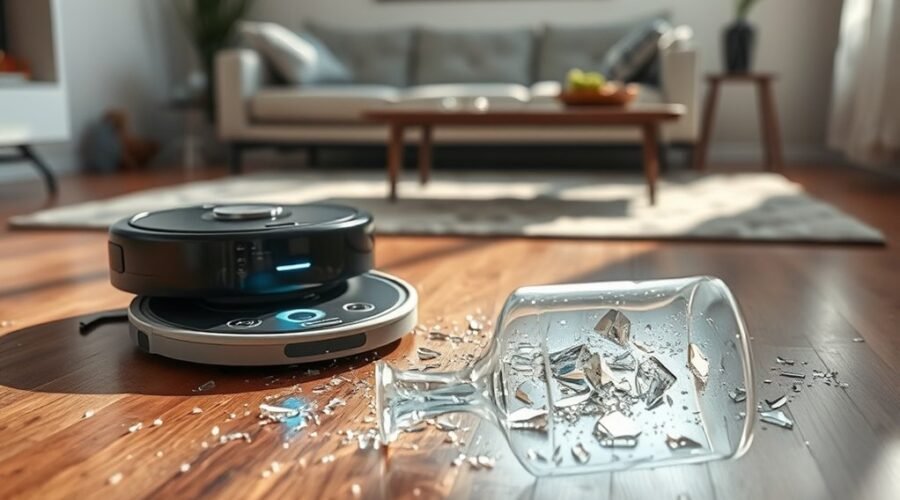
Can a robot vacuum pick up broken glass without getting damaged? Although it may collect some small pieces, using one for broken glass cleanup is unsafe. Sharp fragments can damage moving parts, reduce suction, and remain hidden on the floor. Knowing which tools to use helps you avoid injuries and expensive repairs.
Quick Answer
No. A robot vacuum should not pick up broken glass. Shards can jam wheels, damage brushes and seals, and leave sharp pieces behind. Switch the robot off or block the area. Use protective gloves, a broom or tongs for larger shards, then tape or damp paper towels for small fragments.
At a Glance
| Difficulty | Simple cleanup, but careful handling is essential. |
| Tools Needed | Cut-resistant gloves, closed-toe shoes, broom, dustpan, tongs, damp paper towels, tape, flashlight, and a sturdy disposal container. |
Can You Vacuum Broken Glass?
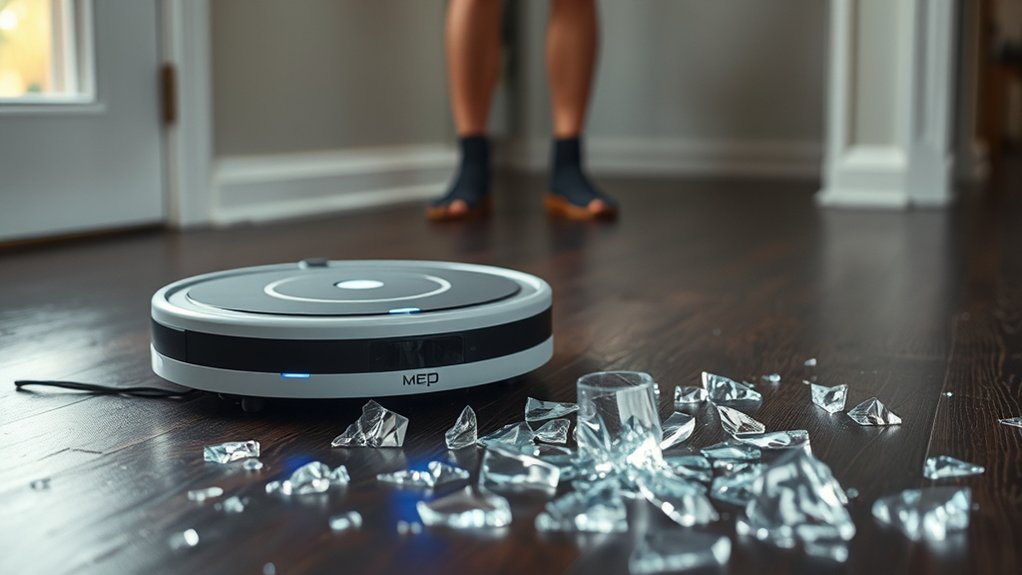
You should not use a robot vacuum to clean broken glass. Regular household vacuums are also poor choices for larger shards. A suitable shop vacuum may handle certain remaining fragments, but only when its manufacturer permits that type of debris.
Robot vacuums are designed for routine dirt, crumbs, hair, and dust. Their brushes and narrow air passages are not intended to handle sharp, irregular pieces of glass.
In fact, eufy’s official RoboVac safety guidance specifically lists broken glass among the sharp objects its robots should not vacuum.
Even a robot with advanced obstacle detection cannot be trusted to identify every transparent splinter. Tiny pieces can blend into flooring or hide in carpet fibers.
The safer approach is to collect the glass manually and inspect the surrounding area before restarting automated cleaning.
Why Broken Glass Damages Vacuums
Broken glass damages robot vacuums because its sharp edges can interfere with brushes, wheels, seals, and airflow. Unlike ordinary dust, glass does not bend easily when it encounters a narrow opening.
Problems can develop both outside and inside the machine.
- Brush damage: Sharp fragments can lodge between bristles or damage rubber brush surfaces.
- Wheel problems: Embedded shards may restrict movement or scratch floors as the robot travels.
- Reduced suction: Glass fragments and fine debris can obstruct filters and air passages.
- Sensor interference: Debris near sensors or moving components can interfere with navigation.
- Possible debris escape: Damaged or unsuitable filtration may allow fine particles to escape through exhaust airflow.
A robot vacuum may continue running after picking up glass, even when sharp fragments remain trapped inside its brushes or wheels.
These risks are consistent with ECOVACS’ guidance on vacuuming broken glass, which identifies possible damage to hoses, filters, seals, and internal components.
The risk also extends to your flooring. A sharp piece stuck in a wheel can drag across wood, vinyl, laminate, or other finished surfaces.
Removing glass before vacuuming protects both the machine and the area it cleans.
How Glass Damages a Vacuum Inside
Glass can damage a vacuum internally by cutting flexible parts, blocking airflow, or becoming trapped near moving components. The exact damage depends on shard size, vacuum design, and where the fragments travel.
These are the main areas at risk:
| Damage Point | Possible Damage | Result |
|---|---|---|
| Hose | Punctures or cuts | Suction loss |
| Motor and fan | Damage if debris reaches moving parts | Internal wear or failure |
| Wheels | Embedded fragments | Restricted movement and floor scratches |
| Filters | Clogging or tears | Reduced performance and possible dust escape |
A punctured hose or damaged seal can create an air leak. The motor may still operate, but less suction reaches the cleaning head.
Glass caught in the brush assembly may also cause unusual noises, repeated cleaning errors, or increased resistance.
Fine debris presents another problem. When it blocks the filter, the vacuum may lose airflow even though the dustbin is not full.
According to Shop-Vac’s troubleshooting guidance, clogged filters, damaged filters, and holes in hoses are recognized causes of weak suction or dust escaping from a vacuum.
If your robot develops these symptoms after running over broken glass, stop using it until you have checked for damage.
Which Vacuums Are Safe for Glass Cleanup?
Manual collection is the safest starting point for ordinary broken glass. If vacuuming becomes necessary, a suitable shop vacuum is generally a better option than a robot or standard household model.
However, not every shop vacuum is approved for sharp debris. Always follow the equipment instructions and use the correct collection system.
Industrial Shop Vacs
Industrial and heavy-duty shop vacuums are designed for tougher debris than most household machines. Their wider hoses and durable collection tanks can make them more suitable for certain glass cleanup tasks.
However, the vacuum’s construction alone does not guarantee that all glass sizes are safe to collect.
| Feature | Benefit |
|---|---|
| Wide hose | Helps larger approved debris move without clogging |
| Durable drum | Provides a sturdy collection container |
| Heavy-duty filter | Supports filtration when properly matched to the debris |
The Shop-Vac manufacturer’s FAQ discusses collecting water containing debris such as glass. It recommends considering a tear-resistant wet/dry collection bag where compatible.
It also explains that filtration requirements change with debris size and type. Fine dry material may require a more efficient filter than larger pieces.
For household glass cleanup, choose a model whose manual permits the task. Do not assume that every wet/dry vacuum can safely collect jagged shards.
Robot Vacuum Risks
Robot vacuums have a higher risk of damage because they operate with compact parts and limited debris clearance. Their automatic movement also makes it harder to control exactly which pieces they collect.
Four problems deserve special attention:
- Wheel obstruction: Sharp fragments can become trapped and restrict movement.
- Brush or suction damage: Shards can interfere with rollers and internal components.
- Incomplete cleanup: The robot may miss small splinters even after a full cleaning cycle.
- Repair expenses: Damage may require new components or professional servicing.
Warranty coverage is another concern. The ECOVACS warranty terms exclude certain damage caused by misuse, accidents, or operating outside published guidance.
Actual coverage depends on your manufacturer, model, and warranty conditions. Do not assume glass-related damage will be repaired free of charge.
Safer Cleanup Tools
A broom, dustpan, tongs, and disposable cleaning materials are usually more useful for broken glass than any vacuum. They give you direct control over sharp pieces and let you inspect the surface as you work.
Here is how common cleanup tools compare:
| Tool | Glass-safe |
|---|---|
| Broom | Yes, with careful sweeping |
| Dustpan | Yes |
| Tape | Yes, for tiny fragments |
| Shop vacuum | Conditionally, if approved for the debris |
| Robot vacuum | No |
Regular upright and cordless stick vacuums are also poor choices for loose, sharp shards. Their brushes, hoses, and dust collection systems may be damaged.
On carpet, avoid aggressive brushing that could drive small pieces deeper into the fibers.
How to Clean Broken Glass Safely
To clean broken glass safely, keep people away, wear suitable protection, and collect larger shards before dealing with tiny fragments. Work slowly so the pieces do not spread beyond the original spill area.
You can use this process for common household breakages such as a drinking glass, bowl, or vase.
Warning: Never pick up broken glass with bare hands. Wear cut-resistant gloves and closed-toe shoes. Thin disposable gloves may be punctured by sharp shards. Keep children and pets away until cleanup is complete.
- Secure the area. Stop the robot vacuum, move children and pets away, and prevent anyone from walking through the glass.
- Collect large shards. Use tongs, a dustpan, or stiff cardboard to lift visible pieces. Avoid grabbing sharp edges, even with gloves.
- Sweep smaller pieces. Gently use a broom and dustpan to gather fragments without scattering them across the floor.
- Pick up tiny splinters. Press a damp paper towel or sticky tape against remaining fragments. Dispose of the used material after each cleanup pass.
- Inspect surrounding surfaces. Use a flashlight to check corners, baseboards, floor joints, nearby rugs, and areas under furniture.
- Dispose of the glass. Place shards and used cleanup materials in a rigid, puncture-resistant container. Close it securely and label it as broken glass.
- Check the floor again. Confirm that no visible or detectable fragments remain before allowing normal traffic or automated cleaning.
The University of Vermont’s glass safety guidance recommends cut-resistant gloves, mechanical pickup tools, and damp paper towels or rolled tape for smaller shards.
Do not put loose glass directly into a thin trash bag. Sharp edges can puncture the bag and injure someone handling it.
For final disposal, follow local waste collection rules. Some areas require special packaging or separate handling.
Note: Broken glass contaminated with blood, chemicals, or other hazardous materials may require special handling. Follow the applicable safety procedures or ask a qualified cleanup professional rather than treating it as ordinary household glass.
When a Shop Vac Is the Better Choice
A shop vacuum can be the better choice when small fragments remain in hard-to-reach areas after manual pickup. Its hose and collection tank may handle tougher debris than a standard household vacuum.
Use one only if the manufacturer’s instructions allow the material and the filter is suitable.
Shop Vac Durability
Shop vacuums often have wider hoses, sturdy tanks, and filters designed for different cleanup tasks. These features can reduce the chance of clogging compared with compact household vacuums.
Consider four components before using one:
- Hose: A wider opening can help compatible debris move into the tank without becoming trapped.
- Filter: The correct filter prevents fine particles from escaping through the exhaust.
- Drum: A durable tank provides a collection space for suitable debris.
- Collection bag: A compatible tear-resistant bag may provide extra protection for certain materials.
Inspect these components before use. Replace anything visibly cracked, torn, or damaged.
Better Glass Pickup
Shop vacuums are particularly useful for reaching narrow gaps where a dustpan cannot fit. A suitable hose attachment may help collect remaining fragments along edges, beneath cabinets, and near fixed furniture.
However, large jagged shards should still be removed with manual tools whenever possible.
For a dry spill, use the dry-pickup configuration recommended by the vacuum manufacturer. A wet/dry machine should not automatically be placed in wet mode just because glass is present.
If the breakage includes liquid, confirm the correct filter and collection bag setup before using the vacuum. Wet pickup and dry pickup may require different equipment configurations.
On rugs and carpets, first remove visible glass using appropriate manual tools. A suitable shop vacuum may help with remaining particles, but deeply embedded fragments can be difficult to remove completely.
Lower Damage Risk
A properly equipped shop vacuum can reduce some equipment risks associated with glass pickup. Its wider hose and sturdier collection system are better suited to certain debris than a robot’s compact brush assembly.
Even so, careful operation matters.
- Remove large sharp pieces before using suction.
- Confirm the hose, collection tank, and filter are correctly installed.
- Use an appropriate attachment without forcing debris into the opening.
- Stop if suction drops, unusual noises develop, or fragments block the hose.
Never reach into a running vacuum to remove a lodged shard. Turn the machine off and disconnect its power before inspecting a blockage.
Use tools rather than bare fingers to remove sharp fragments from accessible parts.
How to Remove Tiny Shards and Dust
Tiny glass shards are often harder to remove than large pieces. They can settle into floor joints, carpet fibers, and textured surfaces where ordinary cleaning misses them.
Disposable materials are useful because they collect small fragments without leaving glass inside reusable cloths or sponges.
| Method | Use |
|---|---|
| Damp paper towel | Collects dust and tiny shards from suitable hard surfaces |
| Duct tape | Lifts fine fragments from hard floors and accessible fabric surfaces |
| Manual cleanup | Removes fragments that a robot cannot reliably detect |
| Final pass | Checks that the affected area is clear |
For hard flooring, gently press folded, slightly damp paper towels onto the affected area. Replace them as needed rather than rubbing collected glass across the surface.
Sticky tape can reach narrow joints and help lift fragments that remain after sweeping. Fold used tape inward so the collected pieces cannot easily fall out.
Use a flashlight close to floor level and shine it across the surface. The angled light can make reflective splinters easier to notice.
Pro Tip: Check the soles of shoes worn during cleanup. Tiny shards can become trapped in the tread and get carried into another room.
Avoid using ordinary cloth towels, reusable sponges, or mops to collect sharp fragments. Glass can remain embedded in them and create a hazard during later use.
For carpets, pay extra attention to the fibers near the impact point. If you cannot confidently remove deeply embedded fragments, consider professional cleaning or replacement of the affected material.
What to Check Before Using the Vacuum Again
If your robot vacuum accidentally ran over broken glass, turn it off and inspect the accessible components before restarting it. Do not assume the glass passed safely into the dustbin.
Small fragments may remain in the wheels, brush housing, or suction path.
- Power off the robot. Disconnect it from the charging dock and prevent an automatic cleaning cycle from starting.
- Inspect the wheels. Look for lodged shards and check whether the wheels move normally.
- Examine the brush roll. Check the bristles, rubber surfaces, brush guard, and nearby openings for cuts or trapped fragments.
- Empty the dustbin carefully. Wear protective gloves and empty any glass into a suitable rigid container rather than a loose trash bag.
- Check the filter. Look for tears, visible glass debris, or heavy clogging. Replace damaged filters instead of attempting to repair them.
- Inspect sensors and accessible air passages. Look for debris, scratches, cracks, or signs of obstruction without opening sealed internal components.
- Check the cleaned area. Confirm the floor is clear of glass before allowing another cleaning cycle.
For model-specific handling, follow the manufacturer’s instructions. For example, eufy’s dust collector instructions explain how to power off the robot and remove its collection bin, with differences between models.
Do not run a contaminated robot simply to shake loose trapped glass. This can spread fragments or cause further damage.
If the robot makes grinding noises, leaves unusual scratches, loses suction, or repeatedly reports errors, stop using it.
Visible damage to a sealed suction system, motor area, or other inaccessible component is a reason to contact the manufacturer or an authorized repair service.
Resume normal cleaning only after the area is clear, accessible parts are free of glass, and the robot appears undamaged.
Key Takeaways
- Even advanced obstacle detection cannot guarantee that a robot will recognize transparent glass splinters.
- Glass trapped in wheels or brush assemblies can damage flooring after the original spill has been cleaned.
- A shop vacuum needs manufacturer-approved debris handling and suitable filtration. Not every wet/dry model is appropriate.
- Broken glass should go into a sturdy, labeled container rather than loose household trash bags.
- Glass-related repairs may fall outside a robot vacuum’s warranty coverage, depending on the product terms.
Frequently Asked Questions
What Type of Vacuum Is Best for Picking up Broken Glass?
A suitable shop vacuum is generally a better choice than a robot or standard household vacuum for remaining glass fragments. However, the manufacturer must permit that type of debris, and the correct filter and collection system are essential. Remove large shards manually first.
Can You Use a Vacuum to Clean up Broken Glass?
You should not use a robot vacuum or ordinary household vacuum to collect broken glass. Sharp pieces can damage brushes, hoses, and collection systems. A compatible shop vacuum may help with remaining debris after larger shards have been removed by hand.
What’s an Easy Way to Clean up Broken Glass?
The easiest safe method is to use protective gloves, a broom, and a dustpan for visible pieces, followed by tape or damp paper towels for smaller fragments. Inspect the area carefully and place the collected glass in a sturdy container before disposal.
Does Glass Shatter in a Vacuum?
Glass does not automatically shatter when a vacuum cleaner picks it up. However, existing shards can chip or break further when they strike hard surfaces inside the machine. These smaller fragments may cause additional damage or become harder to remove safely.
Can a Robot Vacuum Mop Pick Up Broken Glass?
No. Adding a mopping function does not make a robot vacuum suitable for broken glass. Shards can damage the cleaning mechanism or remain trapped in the mop pad. Remove every fragment manually before using the vacuum or mop function again.
Can You Vacuum Broken Glass from Carpet?
A robot vacuum is not suitable for removing broken glass from carpet. Remove visible shards with protective tools, then use tape for accessible small fragments. A manufacturer-approved shop vacuum may help, but deeply embedded glass may require professional cleaning or carpet replacement.
Conclusion
A robot vacuum is not a safe choice for broken glass cleanup. Sharp fragments can damage internal components, scratch floors, and leave dangerous pieces behind. Collect large shards with protective tools, remove tiny fragments carefully, and use a compatible shop vacuum only when necessary. Before restarting your robot, make sure both the floor and the machine are free of glass.
Sources
- eufy Support: What Objects Should I Avoid Vacuuming with RoboVac?: Manufacturer restrictions on sharp objects, including broken glass.
- ECOVACS: Can You Vacuum Glass Without Damaging Your Vacuum?: Glass-related damage risks, safety precautions, and cleanup guidance.
- Shop-Vac: Frequently Asked Questions: Wet/dry vacuum filtration, hose selection, and collection bags for different debris.
- University of Vermont: Safe Handling of Glassware: Protective gloves, mechanical glass pickup, safe disposal, and removal of tiny shards.
- ECOVACS: Robotics Limited Warranty: Warranty exclusions involving misuse, accidents, and operation outside published guidance.
- Shop-Vac: Troubleshooting: Filter damage, hose problems, dust escape, and reduced suction.
- eufy Support: How to Empty the RoboVac’s Dust Collector: Manufacturer instructions for safely powering off and removing dust collectors.