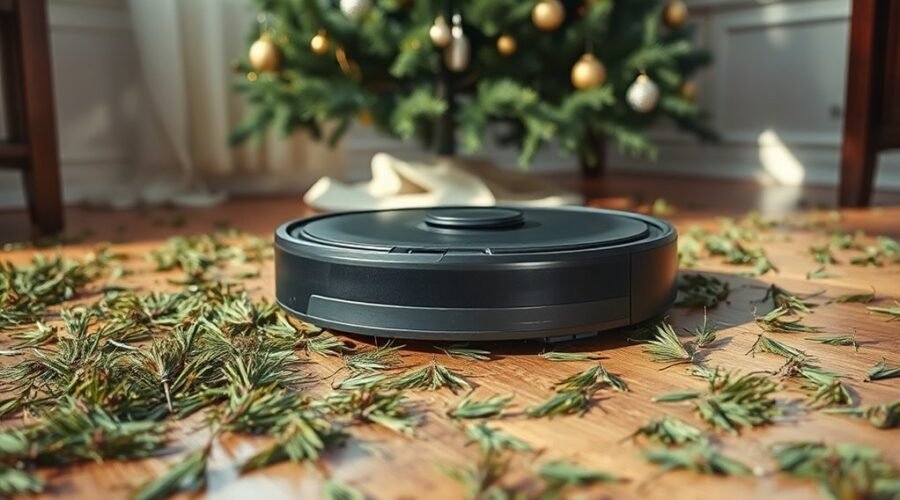
Can robot vacuums clean pine needles from your floors? Yes, but the results depend on your vacuum and the surface you clean. Loose needles are easier to remove from hard floors than from carpet, where they can become trapped between fibers. Understanding these differences helps you choose better cleaning settings and avoid frustrating clogs during the holiday season.
Quick Answer
Yes, robot vacuums can clean pine needles, especially from hardwood, tile, vinyl, and other hard floors. Independent testing found that a Roomba i7+ collected 99 out of 100 needles from a bare floor but only 75–80 from carpet. Strong suction, effective brushes, repeated cleaning, and regular maintenance improve results. Deeply embedded needles may require an upright vacuum.
Key Takeaways
- Hard floors give robot vacuums the best chance of collecting pine needles because the debris stays on the surface.
- Carpet fibers trap stiff needles, so stronger suction and brush agitation may still leave some debris behind.
- Obstacle avoidance helps robots work around furniture and cables, but it does not guarantee that every pine needle will be detected or collected.
- Frequent cleaning during heavy shedding helps prevent needles from becoming embedded in rugs or collecting around baseboards.
- Emptying the dustbin and checking rollers, intake passages, and filters reduces the risk of blockages.
Can Robot Vacuums Clean Pine Needles?
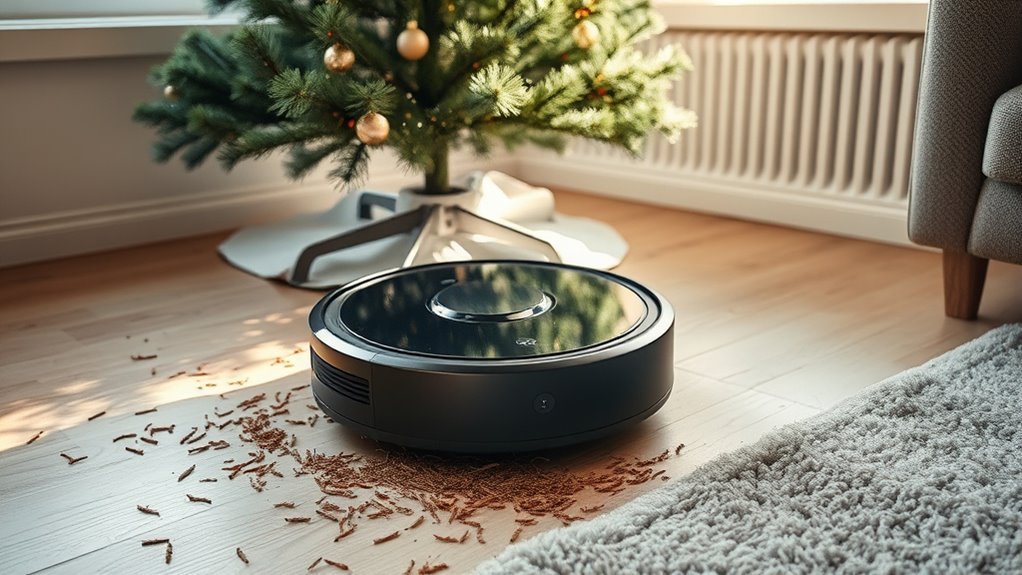
Robot vacuums can collect loose pine needles from hard floors and some carpeted surfaces. Their success depends on suction, airflow, brush design, and how deeply the needles have settled.
On smooth flooring, the vacuum can lift needles directly into its intake. Carpet presents a harder challenge because long, stiff needles may catch between fibers.
Independent tests show how large this difference can be. A Roomba i7+ collected almost every needle from a bare floor but left some behind on an area rug. An upright vacuum performed better on the carpet.
For everyday maintenance, a robot vacuum can reduce the amount of manual sweeping you need to do. However, it should not be your only cleaning tool when pine needles accumulate heavily.
Why Pine Needles Are Hard for Vacuums
Pine needles are difficult to vacuum because they are long, stiff, and narrow. Instead of behaving like ordinary dust, they can catch on carpet fibers, gather in floor gaps, or lie flat against smooth surfaces.
Their shape creates several cleaning problems:
- Carpet embedding: Needles slip between fibers, making them harder for the vacuum to reach.
- Roller tangling: Long needles can collect around brushes or their end caps.
- Intake blockages: Large amounts of needles may bridge narrow openings and restrict airflow.
- Scattering: Side brushes can push lightweight needles away before the intake collects them.
- Sticky residue: Sap or resin on some needles may increase debris buildup on brushes and nearby surfaces.
Dry needles can also break into smaller pieces, making cleanup more difficult. You may need several passes to collect the remaining fragments.
During heavy Christmas tree shedding, the volume of debris adds another challenge. A small robot dustbin may fill before the cleaning job is complete.
Best Robot Vacuum Features for Pine Needles
The best robot vacuum features for pine needles are strong airflow, effective cleaning rollers, adjustable suction, reliable navigation, and easy maintenance. These features help the machine collect long debris without frequent interruptions.
Look for the following capabilities:
- Strong suction and airflow: These help pull needles through the cleaning head and into the dustbin.
- Effective roller brushes: Rubber or bristle rollers can help lift needles from carpet fibers.
- Adjustable cleaning power: Higher suction can improve pickup where debris is difficult to remove.
- Edge-cleaning brushes: These help gather needles near walls and baseboards.
- Smart mapping: Room maps and targeted cleaning let you focus on areas where needles accumulate.
- Self-emptying docks: These reduce manual dustbin emptying during frequent cleaning.
The DEEBOT X11 OmniCyclone is one example of a powerful model. According to the official ECOVACS specifications, it delivers up to 19,500 Pa of suction and uses BLAST airflow technology.
It also includes ZeroTangle 3.0 brush technology and TruEdge 3.0 for edge cleaning. However, these specifications do not establish a measured pine-needle pickup rate.
Remember: A larger advertised suction number does not automatically mean better pine-needle cleaning. Brush contact, airflow, floor type, and cleaning patterns also affect real performance.
Do Robot Vacuums Work on Carpet?
Robot vacuums can remove pine needles from carpet, but they usually perform less effectively than on hard floors. Needles can become lodged between carpet fibers, where suction alone may not reach them.
A useful comparison comes from Reviewed’s pine-needle pickup test. The publication compared a Roomba i7+ with an upright vacuum using counted pine needles on different surfaces.
| Vacuum and surface | Needles collected | Result |
|---|---|---|
| Roomba i7+ on bare concrete | 99 out of 100 | Excellent pickup |
| Roomba i7+ on an area rug | 75–80 out of 100 | Some needles remained |
| Upright vacuum on the area rug | 100 out of 100 | Complete pickup in this test |
These results came from a specific test setup. They do not guarantee identical performance on every carpet or establish the pickup rates of other robot vacuum models.
Carpet Pickup Limits
Carpet pickup depends on pile height, needle condition, and how firmly debris becomes trapped. A robot vacuum may remove most loose needles while leaving fragments deeper in the carpet.
In the test above, the Roomba i7+ made multiple passes but still missed some needles. The upright vacuum’s rotating brush disturbed the carpet fibers more effectively and helped release trapped debris.
For low-pile carpet, regular robot cleaning can work well as a maintenance method. Thick rugs, dense carpet, and heavy shedding may require more powerful manual cleaning.
Needle Embedding Issues
Pine needles become harder to remove when foot traffic pushes them deeper into carpet fibers. Their narrow shape allows them to settle below the surface where a robot’s cleaning head may not make enough contact.
There are four common situations:
- Fresh, loose needles remain near the carpet surface and are easier to collect.
- Needles pressed into carpet fibers require more agitation.
- Broken fragments can remain even after larger needles disappear.
- Heavy accumulation may need an upright vacuum or careful manual removal.
Cleaning before people repeatedly walk over the needles can help prevent deeper embedding. This is especially useful around Christmas trees and entryway rugs.
Best Carpet Settings
For pine needles on carpet, use a high suction setting and an appropriate carpet-cleaning mode. Keep the main brushes engaged when the manufacturer recommends them for carpet cleaning.
Brush agitation can help release needles caught between fibers. A suction-only setting is not automatically better, especially on carpet where a rotating brush may provide the extra cleaning action needed.
For stubborn debris, try an additional cleaning pass or a supported deep-cleaning mode. Some robot vacuums offer repeated or cross-pattern cleaning that covers the same area from different directions.
If embedded needles remain after repeated passes, switch to an upright vacuum instead of running the robot continuously.
Why Hard Floors Are Easier for Pine Needles
Hard floors are easier for robot vacuums because pine needles stay exposed on the surface. Unlike carpet, hardwood, tile, laminate, and vinyl do not have fibers that trap the needles.
As a result, the vacuum can reach the debris more directly. The cleaning rollers and side brushes can guide loose needles toward the intake with less resistance.
Hard floors provide several advantages:
- Needles remain visible and accessible.
- Suction can act directly on loose debris.
- There are no carpet fibers holding needles in place.
- Repeated cleaning can remove fragments missed during the first pass.
Floor gaps, textured surfaces, and baseboards can still trap needles. However, a robot vacuum with good edge coverage can help reduce buildup in these areas.
For homes with mostly hard flooring, scheduled robot cleaning is often a practical way to manage ordinary pine-needle shedding.
How to Vacuum Pine Needles Without Clogs
To vacuum pine needles without clogs, remove large piles before running the robot and use a suitable cleaning mode. Keeping the intake clear is just as important as choosing strong suction.
Start with loose, dry needles rather than compacted clumps. Check the cleaning head and dustbin after the first run, especially when the tree is shedding heavily.
Strong Suction Settings
Higher suction can help lift stiff pine needles and keep them moving through the vacuum’s intake. It is especially helpful when needles lie against carpet fibers or collect along floor edges.
Follow these steps for better results:
- Prepare the floor. Pick up large clusters of needles, loose cables, and small decorations before starting.
- Select stronger suction. Use the highest practical setting available for the flooring and debris load.
- Clean the affected area. Choose a room, zone, or spot-cleaning mode if your robot supports it.
- Repeat when needed. Run another pass if loose needles remain, using a supported deep-cleaning option when available.
- Inspect the robot. Check the dustbin and cleaning head for trapped needles before the next run.
On hard floors, a suction-only option may help if a rotating brush scatters needles, but only if your model supports that mode. On carpet, brush agitation is usually more useful.
Higher suction may increase noise and battery use. Choose the setting that provides reliable pickup without unnecessary repeat cleaning.
Brush and Bin Care
Brush and bin maintenance helps prevent pine needles from collecting around rollers or blocking narrow intake passages. Long needles and sticky residue can interfere with brush rotation if buildup is ignored.
After a heavy cleaning run, remove the dustbin and inspect the brush assembly. Check the roller ends, brush bearings, and intake opening for trapped debris.
If needles become stuck, switch off the robot and remove them carefully using the manufacturer’s recommended cleaning tool. Avoid pulling forcefully on parts that do not detach.
Empty collected debris before it becomes tightly packed. Even with a self-emptying dock, check that larger needles are moving into the collection system properly.
Pro Tip: Before a major holiday cleanup, remove large needle piles with a broom and dustpan. Then let your robot vacuum collect the scattered leftovers. This reduces the amount of bulky debris entering the cleaning head at once.
Best Places to Use a Robot Vacuum for Pine Needles
The best places to use a robot vacuum for pine needles are open, uncluttered rooms with hard flooring. These areas allow the robot to travel freely and collect surface debris without fighting carpet fibers.
Good cleaning locations include:
- Kitchens and entryways: Tile and vinyl floors make tracked-in needles easier to collect.
- Living rooms: Hardwood and laminate floors benefit from regular cleanup around Christmas trees.
- Hallways: Scheduled cleaning helps manage needles carried through the home.
- Doorway cleaning zones: Targeted cleaning can remove debris near entrances, while virtual barriers or keep-out zones help protect areas the robot should avoid.
Mapping features can also help you clean specific rooms without sending the robot through the entire house.
However, obstacle detection is not the same as debris recognition. A robot designed to avoid shoes and cables may not identify individual pine needles as separate objects.
Warning: Before vacuuming around a Christmas tree, remove loose electrical cords, fragile ornaments, and broken decorations. Keep the robot away from spilled tree-stand water. Also, follow the U.S. Fire Administration’s holiday fire safety guidance: water real Christmas trees daily and remove them when they become dry.
For carpeted rooms, the robot can still manage light debris. However, choose manual cleaning when needles become embedded or collect in thick piles.
How to Keep Your Robot Vacuum Running Smoothly
Regular maintenance keeps a robot vacuum working effectively when pine needles are present. The most important areas to inspect are the dustbin, brushes, filters, and airflow passages.
These checks become especially useful during periods of heavy shedding. Even a powerful vacuum may lose pickup performance when its filters or cleaning head become blocked.
Empty Bin Promptly
Empty the robot’s dustbin after cleaning large amounts of pine needles. This prevents long debris from building up and restricting the airflow needed for effective suction.
For a robot with a self-emptying dock, verify that the transfer process has worked. Long needles or accumulated debris may still require manual inspection.
If you notice weaker suction or debris falling back onto the floor, check the bin and intake before increasing cleaning power.
Check Brushes Regularly
Inspect the main and side brushes regularly to catch pine needles before they interfere with rotation. Pay attention to brush ends and bearings, where debris can collect out of sight.
According to iRobot’s main brush maintenance guidance, Roomba owners should normally clean their main brushes weekly, or more often under demanding conditions.
When inspecting the brushes:
- Remove needles and hair from the roller ends.
- Check that the brush assembly turns freely.
- Clean accessible residue using manufacturer-approved methods.
- Replace worn, cracked, or damaged brushes when needed.
Do not use sharp tools directly against rubber rollers or delicate brush components. Follow your vacuum’s instructions for safe removal and cleaning.
Clean Filters Often
Clean filters help preserve airflow and maintain suction. When filters become clogged with fine debris, the vacuum may struggle to collect pine needles effectively.
Filter maintenance depends on the model. Some filters can be washed, while others must remain dry.
For example, iRobot’s guidance for Roomba e, i, and j series filters states that these filters should not be washed or exposed to liquid. Loose debris should instead be removed by tapping the filter against a trash container.
For any robot vacuum:
- Remove the filter according to the owner’s manual.
- Clear loose dust using the approved cleaning method.
- Wash only if the manufacturer confirms that the filter is washable.
- Allow washable filters to dry completely before reinstalling.
- Replace filters according to the model’s maintenance schedule.
Cleaning the filter alone will not solve every suction problem. If pickup remains weak, inspect the dustbin opening and internal airflow path for trapped debris.
When an Upright Vacuum Is the Better Choice
An upright vacuum is usually the better choice when pine needles become deeply embedded in carpet or accumulate in heavy patches. Its stronger carpet agitation can release debris that a robot leaves behind.
Choose an upright vacuum when:
- Needles are trapped in thick carpet or dense rugs.
- Large amounts of debris have accumulated after holiday activities.
- Repeated robot passes leave visible fragments behind.
- You need to clean a heavily affected area immediately.
- The robot repeatedly clogs or struggles with the debris load.
Upright vacuums also tend to offer larger collection capacity than compact robots, reducing interruptions during major cleaning jobs.
For everyday care, a useful approach is to let the robot handle light shedding and use an upright vacuum for deeper carpet cleaning.
This combination provides convenient maintenance without sacrificing thorough removal when conditions become difficult.
Best Robot Vacuums for Holiday Cleanup
The best robot vacuums for holiday cleanup should offer strong cleaning performance, dependable navigation, and manageable maintenance. Homes with Christmas trees may benefit from targeted cleaning, edge coverage, and self-emptying features.
Several models from the original comparison offer useful capabilities. However, direct pine-needle pickup results are available here only for the Roomba i7+. The other models should be compared by their verified features rather than assumed needle-removal percentages.
The Roomba j7+ product information confirms obstacle avoidance for common items such as cords and shoes. Meanwhile, Roborock’s model comparison confirms automatic dust emptying and dual-roller brushes on its S8 Pro Ultra and S8 MaxV Ultra models.
| Robot vacuum | Useful feature | Best reason to consider it |
|---|---|---|
| iRobot Roomba i7+ | Documented pine-needle pickup in independent testing | A useful tested reference for hard floors and carpets |
| iRobot Roomba j7+ | Smart mapping, obstacle avoidance, and self-emptying dock | Cleaning around household obstacles |
| ECOVACS DEEBOT X11 OmniCyclone | 19,500 Pa advertised suction, high airflow, anti-tangle brush, and bagless self-emptying dock | Strong manufacturer-specified cleaning hardware |
| Roborock S8 Pro Ultra | Dual-roller brushes and automatic dust emptying | Mixed-floor maintenance with less manual emptying |
| Roborock S8 MaxV Ultra | Dual rollers, obstacle recognition, edge-cleaning features, and self-emptying | Cluttered rooms and low-touch maintenance |
| Kärcher RCV 3 | LiDAR navigation, scheduled cleaning, and adjustable suction | Mapped cleaning on hard floors and low-pile carpet |
The Kärcher RCV 3 specifications confirm LiDAR navigation and a maximum suction rating of 2,500 Pa. It is intended for hard floors and low-pile carpets.
No single specification identifies the best pine-needle vacuum for every household. If you have mostly hard floors, prioritize reliable pickup and convenient cleaning. For carpet-heavy homes, brush design and agitation deserve more attention.
When holiday shedding is frequent, choose a model that lets you clean specific rooms or zones without repeating an entire house-cleaning cycle.
Frequently Asked Questions
What Is the Best Vacuum for Cleaning Pine Needles?
The best vacuum depends on your flooring. A powerful upright vacuum with a rotating brush is usually better for deeply embedded needles on carpet. For everyday hard-floor cleaning, a robot vacuum with strong airflow and effective brushes can work well. The DEEBOT X11 OmniCyclone offers high advertised suction, but a specific pine-needle pickup rate has not been established here.
What’s the Easiest Way to Clean Up Pine Needles?
The easiest way to clean up pine needles is to collect large piles with a broom and dustpan, then vacuum the remaining debris. Use a robot vacuum for regular maintenance on hard floors and light carpet debris. For thick rugs or heavy shedding, finish with an upright vacuum to remove needles that remain trapped.
What Are the Downsides of Using a Robotic Vacuum Cleaner?
Robot vacuum cleaners have smaller dustbins and may struggle with deeply embedded debris or large messes. They can also become tangled in cords, miss corners, or require frequent maintenance. High suction settings may reduce battery runtime. However, automatic scheduling and mapping make them convenient for everyday floor cleaning.
What Type of Device Is Best for Picking Up Pine Needles?
An upright vacuum with an effective brush roller is generally best for removing pine needles from carpet. A high-suction robot vacuum is useful for collecting loose needles from hard floors and maintaining cleaner rooms between deeper cleaning sessions. A broom and dustpan are practical for removing large piles before vacuuming.
Conclusion
Robot vacuums can handle pine needles effectively on hard floors, but carpet presents a greater challenge. Strong airflow, suitable brushes, and regular cleaning improve results, while occasional upright vacuuming helps remove deeply trapped debris.
For the easiest cleanup, remove heavy piles first, let your robot maintain the surrounding floors, and keep its brushes, bin, and filters clean.
Sources
- Reviewed: Can You Clean Pine Needles With a Robot Vacuum?: Independent pickup testing on bare floors and carpet.
- ECOVACS: DEEBOT X11 OmniCyclone: Manufacturer specifications for suction, airflow, brush design, and cleaning technology.
- iRobot: Roomba j7+: Official obstacle avoidance, mapping, cleaning system, and self-emptying features.
- Roborock: S8 Model Comparison: Verified differences and shared features of the S8 Pro Ultra and S8 MaxV Ultra.
- Kärcher: RCV 3: Official suction, navigation, and supported surface specifications.
- iRobot: Main Brush Care: Recommended roller maintenance and cleaning procedures.
- iRobot: Bin and Filter Cleaning: Official instructions for cleaning filters and dustbins in supported Roomba models.
- U.S. Fire Administration: Holiday Fire Safety: Christmas tree watering, electrical safety, and dry-tree precautions.