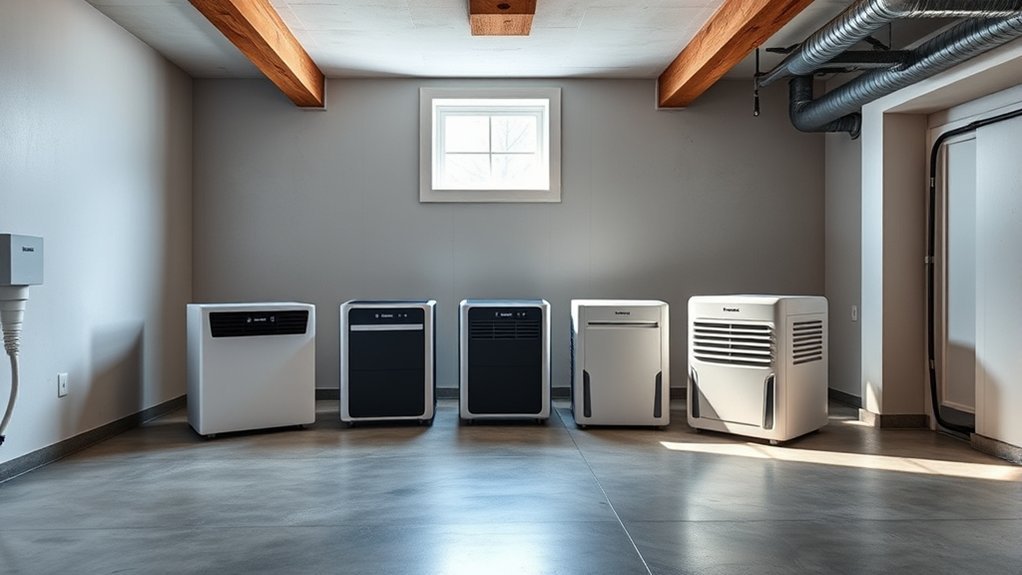
The best dehumidifier for allergy-prone households is usually a correctly sized compressor dehumidifier with an adjustable humidistat and continuous drainage. It can help control the excess moisture that supports mold and dust-mite activity, but it does not treat allergies, remove existing mold, or replace a properly sized air purifier.
For most medium or large rooms, the Waykar 2000 Sq. Ft. Energy Star Dehumidifier offers the best balance of capacity, drainage, and everyday controls. Choose the Yaufey 5000 Sq. Ft. model for a large damp basement, the hOmeLabs Wi-Fi model when remote monitoring matters, or the Tenergy Sorbi for a small room where modest moisture removal and HEPA filtration are both useful.
Quick Verdict
- Best Overall: Waykar 2000 Sq. Ft. Energy Star Dehumidifier
- Best for Large Basements: Yaufey 5000 Sq. Ft. Dehumidifier
- Best Wi-Fi Option: hOmeLabs Wi-Fi Dehumidifier
- Best Premium High-Capacity Pick: AEOCKY 4500 Sq.Ft Energy Star Dehumidifier
- Best Wide-Area Airflow: Waykar 80 Pints Energy Star Dehumidifier
- Best for Continuous Gravity Drainage: VEAGASO 2500 Sq.Ft Dehumidifier
- Best Simple Controls: PLUSCENT 32 Pint Dehumidifier
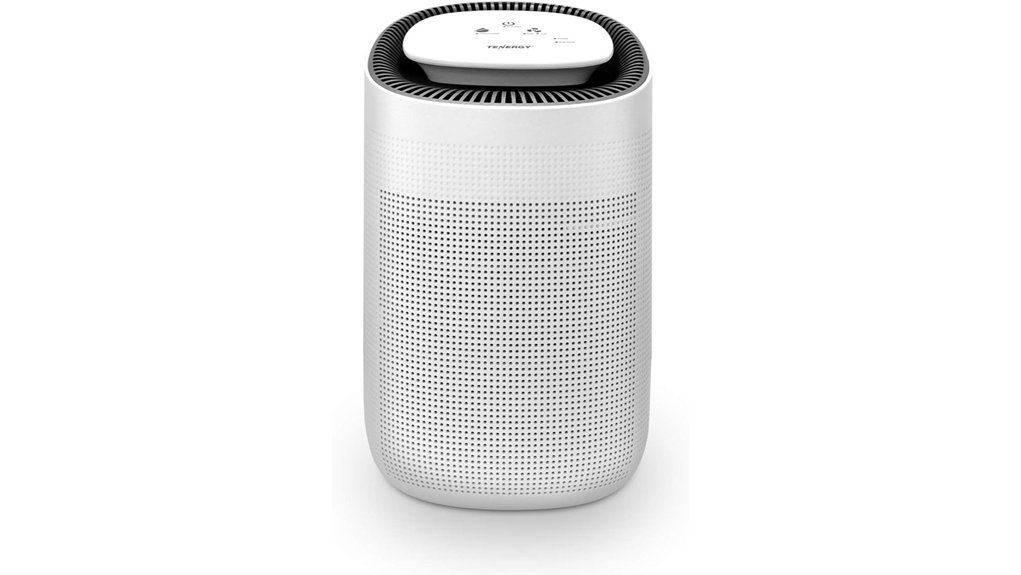
- Best Small-Room HEPA Combo: Tenergy Sorbi 1000ml
Key Takeaways for Allergy-Prone Homes
- Aim for roughly 30% to 50% relative humidity; many households find 40% to 50% comfortable.
- Use a compressor model for a bedroom, living area, basement, or other room with persistent dampness.
- Treat square-foot coverage as a marketing guide, not a guarantee; compare pint capacity, room conditions, and drainage.
- Most washable dehumidifier filters protect the appliance rather than remove fine airborne allergens.
- Fix leaks and remove existing mold instead of relying on a dehumidifier alone.
Quick Comparison
The table below focuses on models that can reasonably serve the article’s buyer intent. Capacity figures are described as seller-listed unless a standard rating is clearly stated, because manufacturers may advertise results measured under different temperature and humidity conditions.
| Product | Best For | Type | Listed Capacity | Drainage | Main Advantage | Amazon |
|---|---|---|---|---|---|---|
| Waykar 2000 Sq. Ft. Energy Star Dehumidifier | Balanced home use | Compressor | 34 pints/day | Tank or included hose | Compact full-size design | Check Amazon |
| Yaufey 5000 Sq. Ft. Dehumidifier with Drain Hose | Large damp basements | Compressor | Up to 80 pints/day at listed conditions | Tank or included hose | High capacity and mobility | Check Amazon |
| hOmeLabs Wi-Fi Dehumidifier for Home and Office | Remote monitoring | Compressor | 50-pint standard rating; higher maximum claim | Tank or hose connection | Wi-Fi control | Check Amazon |
| AEOCKY 4500 Sq.Ft Energy Star Dehumidifier | Premium large-room use | Compressor | Max 80 pints/day claim | Tank or hose | Smart humidistat and efficiency | Check Amazon |
| Waykar 80 Pints Energy Star Dehumidifier for Home | Large open rooms | Compressor | Up to 80 pints/day at listed conditions | Tank or hose | Swing airflow | Check Amazon |
| VEAGASO 2500 Sq.Ft Dehumidifier with Drain Hose | Hands-off gravity drainage | Compressor | 34 pints/day | Tank or included hose | Dedicated operating modes | Check Amazon |
| PLUSCENT 32 Pint Dehumidifier for Large Rooms | Simple scheduling and controls | Compressor | 32 pints/day | Tank or included hose | Timer and washable filter | Check Amazon |
| Tenergy Sorbi 1000ml Air Dehumidifier with HEPA Filter | Small-room moisture plus filtration | Thermoelectric | Up to 750 ml/day in optimal conditions | 1-liter manual tank | True HEPA filter | Check Amazon |
How We Chose These Dehumidifiers
We prioritized models that match real moisture-control needs in bedrooms, living areas, basements, bathrooms, and home offices. The main criteria were useful extraction capacity, adjustable humidity control, drainage options, automatic shutoff, defrost protection, noise management, filter maintenance, portability, and honest use-case limits.
We removed closet-scale and weakly verified mini models that could distract buyers from the capacity needed to control room humidity. We also avoided treating a washable appliance filter as equivalent to a dedicated HEPA air purifier.
Waykar 2000 Sq. Ft. Energy Star Dehumidifier
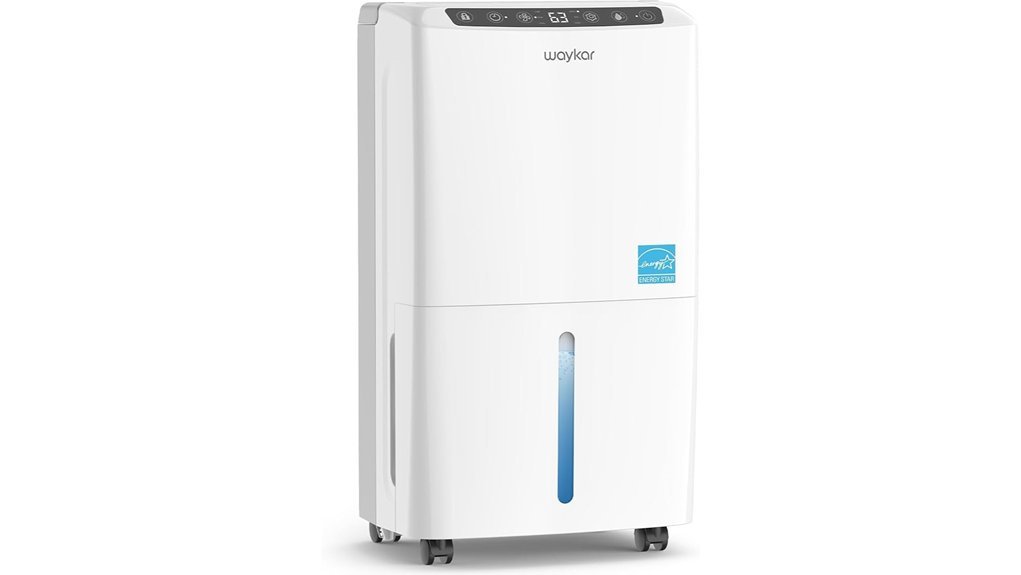
Best Overall
The Waykar is the most balanced choice for a bedroom, living area, home office, or moderately damp basement. Its listing identifies a 34-pint daily capacity, coverage up to 2,000 square feet, a 0.62-gallon tank, automatic defrost and restart, two fan speeds, and an included hose for continuous gravity drainage.
Why You’ll Like It: It offers full-size compressor performance in a relatively compact body, making it easier to place than many high-capacity basement models.
Best For: Households that need steady humidity control in one medium or large room.
Who Should Avoid It: Very wet basements, spaces above its practical capacity, or drainage setups that require a built-in pump.
Pros:
- Useful 34-pint listed capacity for moderate dampness.
- Included hose supports continuous gravity drainage.
- Automatic defrost, restart, and washable filtration simplify routine use.
Cons:
- The 0.62-gallon tank may fill quickly during humid weather.
- The quiet-operation figure is a seller claim and may not reflect every fan speed or room.
- Coverage still depends on temperature, layout, and moisture load.
Yaufey 5000 Sq. Ft. Dehumidifier with Drain Hose
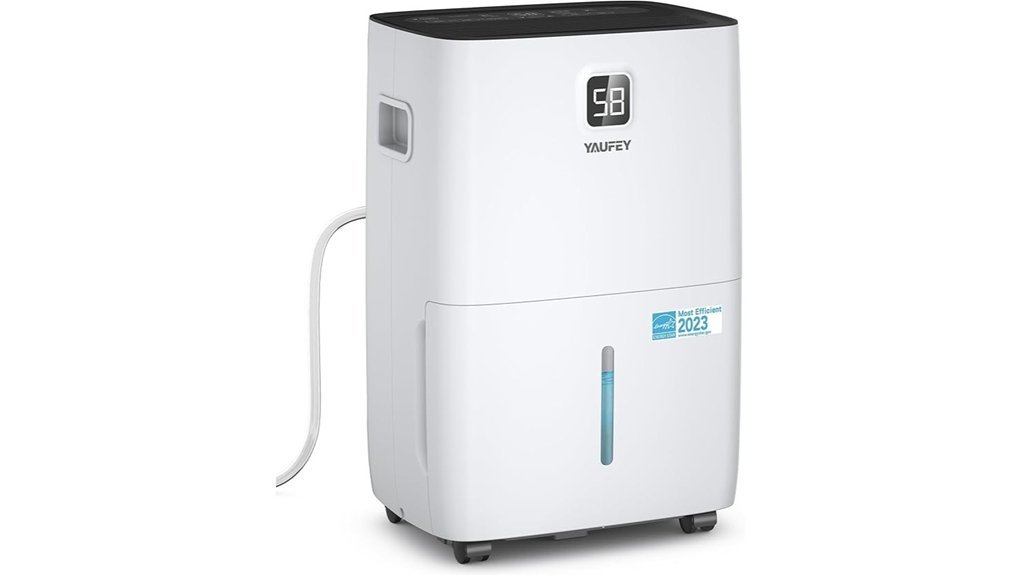
Best for Large Basements
The Yaufey is built for large, consistently damp areas. The seller lists removal of up to 80 pints per day under hot, highly humid test conditions, an adjustable 30% to 80% humidity range, a 1.06-gallon tank, an included drain hose, automatic defrost, multiple modes, casters, a handle, auto restart, and a child lock.
Why You’ll Like It: It combines high seller-listed capacity with continuous drainage and easy movement, which is useful when a basement has several damp zones.
Best For: Large basements, multi-room lower levels, laundry areas, and humid-climate homes.
Who Should Avoid It: Small bedrooms or buyers who need pumped drainage to a higher sink or window.
Pros:
- Higher listed extraction for demanding residential spaces.
- Included hose supports long-term gravity drainage.
- Auto defrost, restart, child lock, wheels, and display controls improve usability.
Cons:
- The 80-pint claim uses hotter and more humid conditions than current standardized ratings.
- The tank can still fill quickly if continuous drainage is not used.
- Its size and fan noise may be excessive for a quiet sleeping area.
hOmeLabs Wi-Fi Dehumidifier for Home and Office
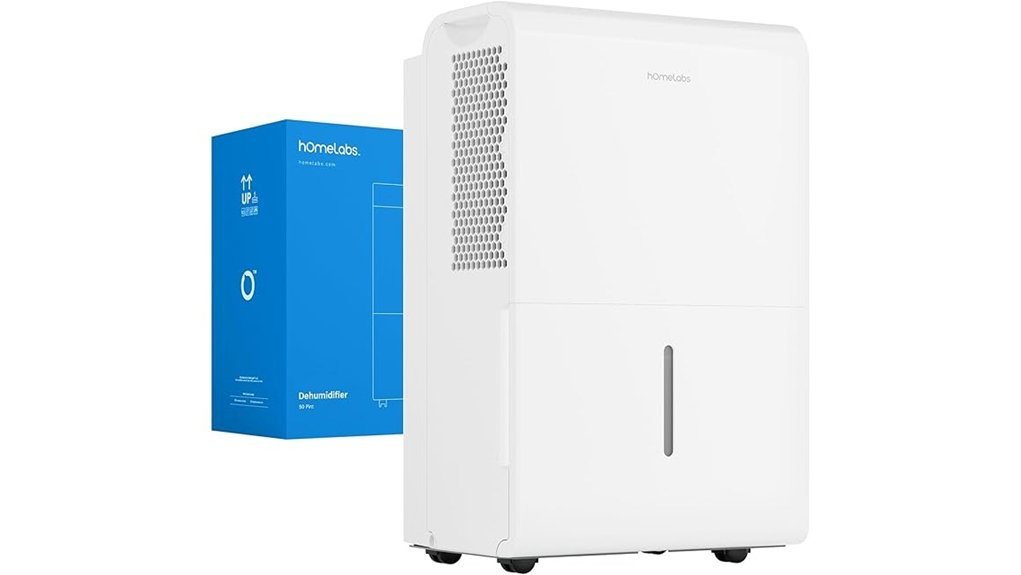
Best Wi-Fi Model
This hOmeLabs model is a high-capacity compressor dehumidifier with Wi-Fi control for a basement, large office, storage area, or other space that is not checked constantly. The manufacturer describes it as a 50-pint model under standard rating conditions, with a higher maximum-removal claim under hotter and more humid conditions.
Why You’ll Like It: Remote monitoring can reduce unnecessary trips to a basement and makes it easier to adjust the humidity target when conditions change.
Best For: Large-space users who want app control, strong capacity, a washable filter, casters, and continuous-drain compatibility.
Who Should Avoid It: Small bedrooms, users who prefer appliance-only controls, or buyers who need a guaranteed built-in pump.
Pros:
- Wi-Fi control adds convenience for remote or lower-level spaces.
- 50-pint standard capacity is appropriate for many large damp rooms.
- Washable filtration, a removable tank, casters, and hose drainage support practical daily use.
Cons:
- The large square-foot number should not replace capacity-based sizing.
- App setup and network reliability add another point of maintenance.
- Confirm whether the exact Amazon package includes a drain hose or pump.
AEOCKY 4500 Sq.Ft Energy Star Dehumidifier
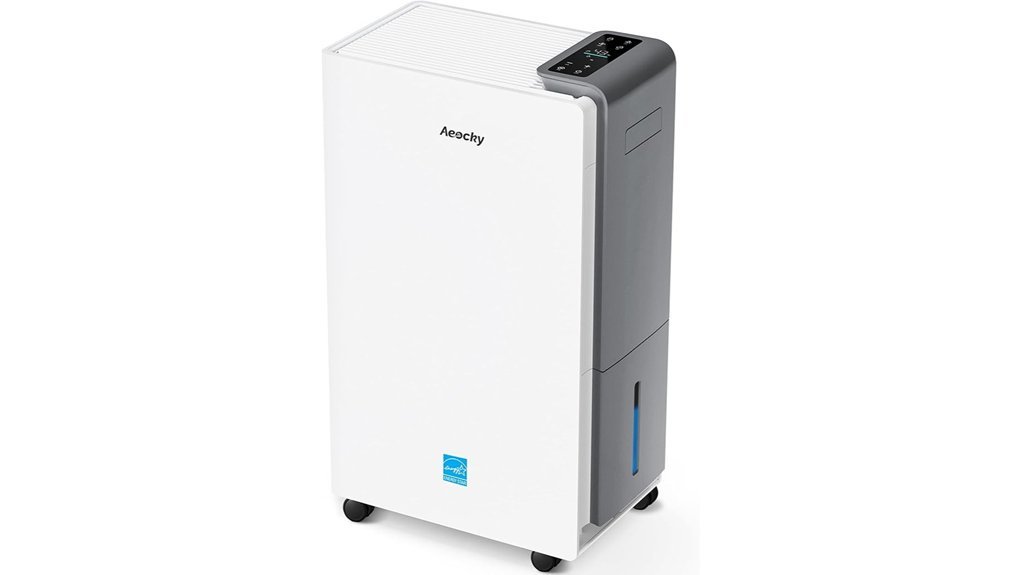
Best Premium High-Capacity Pick
The AEOCKY 4500 is a large-room compressor model with an intelligent humidistat, drain-hose compatibility, automatic controls, and an Energy Star efficiency claim. The current product title advertises a maximum 80-pint daily figure, so buyers should compare the exact standardized capacity shown on the current label or listing.
Why You’ll Like It: It is aimed at buyers who want high capacity, quieter positioning, automatic humidity control, and a longer seller-stated support period than many basic listings.
Best For: Large basements and buyers prioritizing efficiency, automatic control, and warranty support.
Who Should Avoid It: Lightly humid bedrooms or buyers who do not have room for a full-size compressor unit.
Pros:
- High-capacity design for substantial residential moisture loads.
- Intelligent humidistat supports set-and-maintain operation.
- Energy-efficiency positioning may reduce waste compared with an undersized unit running continuously.
Cons:
- Maximum-capacity marketing is not the same as a standardized pint rating.
- Warranty length, registration requirements, and exclusions should be confirmed.
- The tank is less convenient than continuous drainage in a wet basement.
Waykar 80 Pints Energy Star Dehumidifier for Home
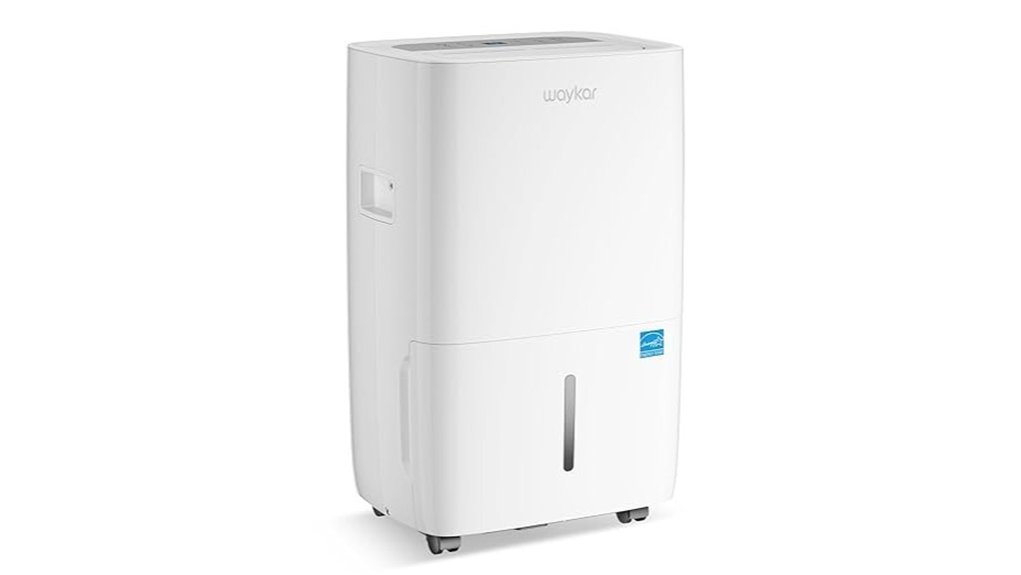
Best Wide-Area Airflow
The Waykar 80-pint model is intended for large rooms and basements, with a listing that highlights adjustable humidity, manual or continuous drainage, a washable filter, wheels, and 90-degree swing airflow. The swing louver can help distribute drier air through an open space more evenly than a fixed outlet.
Why You’ll Like It: It pairs high seller-listed extraction with broader airflow, which can be useful in a large open basement or combined living area.
Best For: Large rooms where air circulation is uneven and a high-capacity compressor unit is appropriate.
Who Should Avoid It: Small rooms, mild seasonal humidity, or installations that require pumped drainage.
Pros:
- High listed capacity for demanding residential use.
- Swing airflow may improve distribution across an open room.
- Adjustable humidity and continuous drainage support longer operation.
Cons:
- The 80-pint figure may use hot, highly humid test conditions.
- It has a larger footprint and higher upfront cost than 30- to 50-pint models.
- Confirm the current warranty and exact included hose length.
VEAGASO 2500 Sq.Ft Dehumidifier with Drain Hose
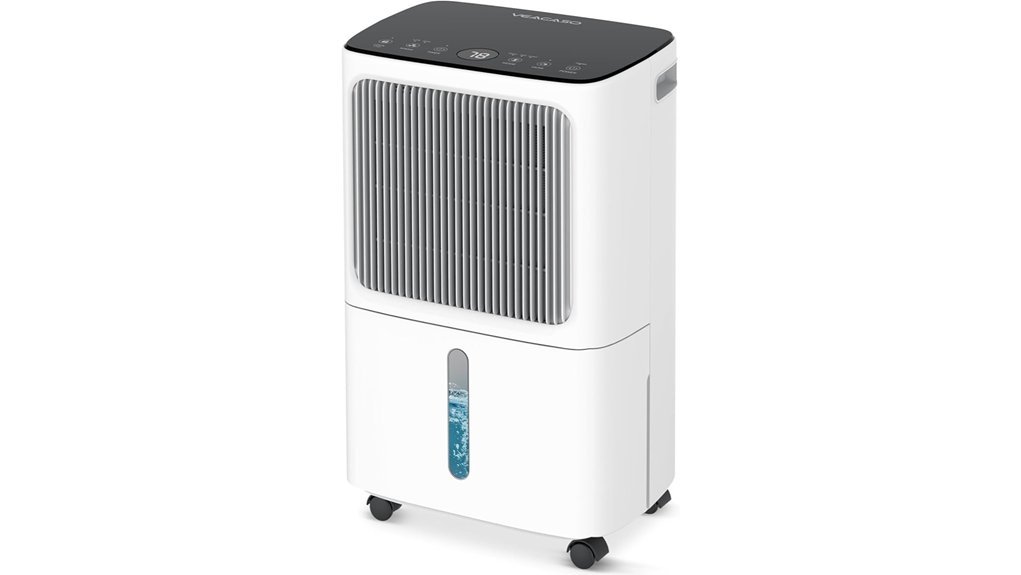
Best for Continuous Gravity Drainage
The VEAGASO is a practical 34-pint option for a basement, laundry room, or other regularly damp space with access to a low drain. Its listing includes adjustable humidity, dehumidify, laundry-dry, and continuous modes, a reusable filter, a timer, a child lock, casters, and an included gravity-drain hose.
Why You’ll Like It: The hose and dedicated continuous mode reduce the need to monitor a small tank every day.
Best For: Homeowners who can run a downhill hose to a floor drain, sump, or suitable low outlet.
Who Should Avoid It: Rooms without a safe gravity-drain route or buyers who need a built-in pump.
Pros:
- Included hose supports hands-off gravity drainage.
- Multiple modes cover humidity control and laundry drying.
- Adjustable controls and a washable filter improve everyday usability.
Cons:
- The tank may need frequent emptying when the hose is not used.
- Published noise figures may be lower than real-world readings.
- Coverage and extraction vary with room temperature and dampness.
PLUSCENT 32 Pint Dehumidifier for Large Rooms
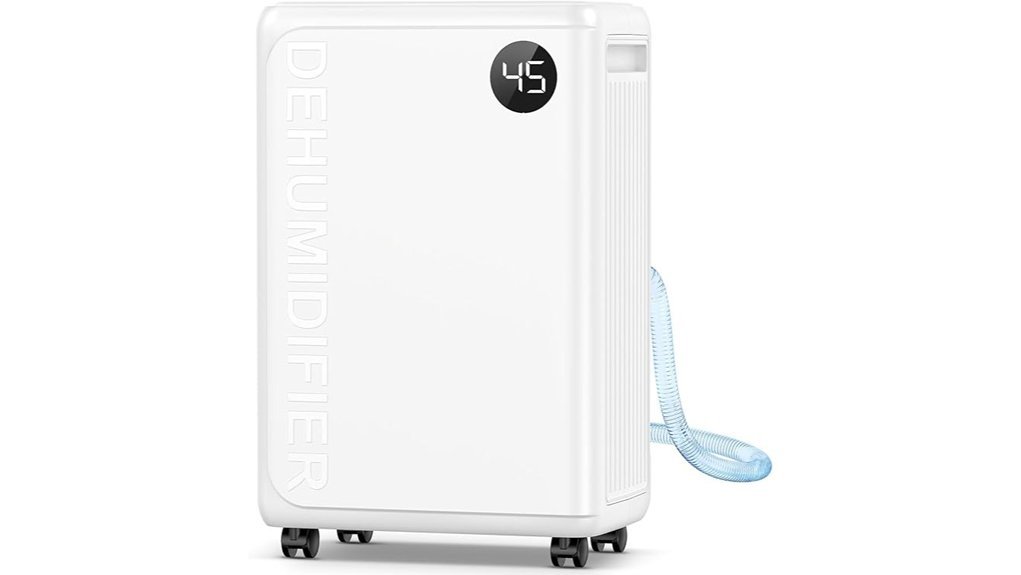
Best Simple Controls
The PLUSCENT combines a seller-listed 32-pint capacity with a digital display, adjustable humidity, two fan speeds, a 24-hour timer, automatic shutoff and restart, automatic defrost, a washable filter, a 2-liter tank, and an included drain hose.
Why You’ll Like It: Its control set is straightforward enough for everyday use while still offering scheduling and continuous drainage.
Best For: Bedrooms, living areas, and moderately damp basements where simple controls matter more than app connectivity.
Who Should Avoid It: Very wet basements, water-intrusion problems, or spaces that need a higher standardized capacity.
Pros:
- Timer, adjustable humidistat, and two fan speeds improve flexibility.
- Included hose and washable filter reduce routine maintenance costs.
- Compact dimensions are easier to place than many large-capacity units.
Cons:
- The 2-liter tank is small for continuous high-humidity use.
- Seller-listed noise and square-foot claims should be treated as estimates.
- It may need to run longer than a correctly sized higher-capacity model.
Tenergy Sorbi 1000ml Air Dehumidifier with HEPA Filter
Best Small-Room HEPA Combo
The Tenergy Sorbi is the only retained option that combines a thermoelectric dehumidifier with a True HEPA filter. It is designed for small areas up to about 200 square feet and lists removal of up to 750 ml per day under warm, humid conditions, with a one-liter tank, auto shutoff, two fan settings, and touch controls.
Why You’ll Like It: It addresses both modest moisture and airborne particles in one compact appliance, which may suit a small bathroom, office, or bedroom.
Best For: Small rooms with mild humidity where space is limited and integrated filtration is useful.
Who Should Avoid It: Large rooms, wet basements, severe condensation, or buyers who need a purifier with a published clean-air delivery rate.
Pros:
- True HEPA filtration is more relevant to airborne particles than a standard washable prefilter.
- Compact size and listed 35 to 42 dB operation suit many small-room setups.
- Dehumidification and filtration can run in one appliance.
Cons:
- Moisture removal is much lower than a compressor dehumidifier.
- No published CADR was confirmed, so do not assume whole-room purifier performance.
- The HEPA filter needs periodic cleaning and replacement.
Factors to Consider When Choosing a Dehumidifier for Allergy Sufferers
Choose the machine by matching its capacity and technology to the actual moisture problem. The most useful comparison points are target humidity, standardized pint rating, room dampness, drainage, noise, filtration, cold-room performance, and maintenance.
Ideal Humidity Levels
A practical indoor range is roughly 30% to 50% relative humidity. Many households target 40% to 50% for comfort, but the right setting varies by climate, season, and condensation risk. Use a separate hygrometer to confirm the room level and avoid running the machine simply to reach the lowest possible number.
Capacity and Test Conditions
Capacity is measured in pints of water removed over 24 hours, but listings may use different test conditions. A “maximum” figure measured in hot, highly humid air can be much higher than the current standardized rating. Compare the exact model label, current listing, and room dampness instead of relying only on a large coverage number.
Compressor vs. Thermoelectric
Compressor dehumidifiers are the correct choice for most bedrooms, basements, living areas, and persistent moisture problems. Thermoelectric or Peltier models are smaller and often quieter, but their water-removal rate is far lower and works best in compact, mildly humid spaces.
Room Size and Moisture Load
A cool basement with visible condensation needs more capacity than a warm bedroom of the same size. Consider room temperature, musty odor, damp surfaces, laundry activity, doors and windows, water intrusion, and whether the space connects to other rooms. Repair leaks and drainage problems before expecting a portable appliance to solve them.
Energy Efficiency Ratings
An Energy Star model can remove more water per unit of electricity than a less efficient comparable model, but actual operating cost depends on runtime, local electricity rates, room conditions, and capacity. A correctly sized machine with a reliable humidistat is usually a better choice than an undersized unit running continuously.
Noise Level Considerations
Seller-listed decibel figures are useful for comparison but may be measured under favorable conditions. Compressor cycling, fan speed, floor vibration, and placement can change the sound you hear. For a bedroom, look for a low fan setting, display-off option, and enough capacity to reach the target without constant high-speed operation.
Air Filtration Quality
Most dehumidifier filters protect the internal coil from lint and dust; they are not substitutes for a room air purifier. The Tenergy Sorbi includes a True HEPA filter, but its small-room design and lack of a confirmed clean-air delivery rate limit how confidently it can be compared with a dedicated purifier.
Drainage Options Available
A manual tank is simple but can fill quickly. Continuous gravity drainage works only when the hose slopes downward without kinks. If the water must travel upward to a sink or window, choose a model with a built-in pump or add a compatible condensate pump rather than attempting an unsafe hose route.
Cold-Room Performance
Compressor coils may frost in a cool basement, so automatic defrost and the listed operating-temperature range matter. Thermoelectric units also become less effective in cooler conditions. Keep the air intake and outlet clear and follow the manual’s temperature limits.
Maintenance and Safety
Clean washable filters on schedule, empty and rinse the tank, inspect the drain hose, and keep the unit on a stable level surface. Look for auto shutoff, auto defrost, restart protection, child lock where needed, and a grounded plug. Avoid extension cords unless the manufacturer specifically permits one.
Mold and Moisture Source Control
A dehumidifier can help prevent future moisture buildup, but it does not remove existing mold or repair a leak. Clean or remediate mold safely, dry wet materials promptly, improve ventilation, and correct the water source. Extensive mold or repeated water damage may require professional help.
Before You Buy
- Measure the room and classify it as mildly damp, very damp, or wet.
- Check the standardized pint rating, not only the maximum or square-foot claim.
- Confirm the operating-temperature range and automatic defrost feature.
- Decide whether you need a tank, gravity hose, or built-in pump.
- Verify whether the hose, filter, and other accessories are included.
- Check current warranty terms and whether registration is required.
- Allow clearance for airflow and easy filter cleaning.
- Use a hygrometer and target roughly 30% to 50% relative humidity.
Frequently Asked Questions
How Do Dehumidifiers Help Reduce Allergy Triggers?
They reduce excess moisture, which can make a room less favorable for mold and dust mites. They do not directly remove most airborne pollen, dander, or fine particles, so a separate air purifier may still be useful.
What Humidity Level Is Best for Allergy-Prone Homes?
A common target is 30% to 50% relative humidity. Many people use 40% to 50% as a comfortable working range, while staying alert for condensation or excessive dryness.
What Size Dehumidifier Is Best for Allergy Sufferers?
Size it to the room and moisture load rather than the health condition. A 30- to 50-pint compressor model can suit many medium or large rooms, while a larger wet basement may need a 50-pint standardized model or higher. Mini thermoelectric units are limited to small, mildly humid spaces.
Does a HEPA Filter in a Dehumidifier Replace an Air Purifier?
Not automatically. HEPA media can capture fine particles, but whole-room cleaning also depends on airflow and clean-air delivery rate. A compact combination unit may help in a small room, while a dedicated purifier is usually easier to size for airborne allergen control.
How Often Should I Empty the Water Tank?
Check it at least daily during the first week. A small tank can fill within hours in humid weather. Auto shutoff prevents overflow, but continuous drainage is usually more convenient for a basement or unattended area.
Can I Run a Dehumidifier and Air Purifier Together?
Yes. The dehumidifier controls moisture, while the purifier captures airborne particles. Place them so neither blocks the other’s intake or outlet, and follow each product’s room-size guidance.
Can a Dehumidifier Remove Existing Mold?
No. It may help prevent conditions that support new growth, but existing mold must be cleaned or remediated and the moisture source must be corrected.
Is Continuous Drainage Safe?
It is safe when the hose is securely attached, slopes continuously downward, and drains to an appropriate location. Check for leaks and kinks, and use a pump when gravity cannot move the water to the drain.
Final Recommendation
Choose the Waykar 2000 Sq. Ft. model for balanced everyday moisture control in a medium or large room. Select the Yaufey 5000 Sq. Ft. model for a large damp basement, the hOmeLabs Wi-Fi model when remote control is the priority, or the AEOCKY 4500 when you want a premium high-capacity option with smart humidity management.
The Waykar 80 Pints is the better choice for broad airflow in an open space, while the VEAGASO and PLUSCENT provide practical mid-capacity alternatives with hose drainage. Choose the Tenergy Sorbi only for a small, mildly humid room where its HEPA filter is useful; it is not a replacement for a full-size compressor dehumidifier in a damp basement.