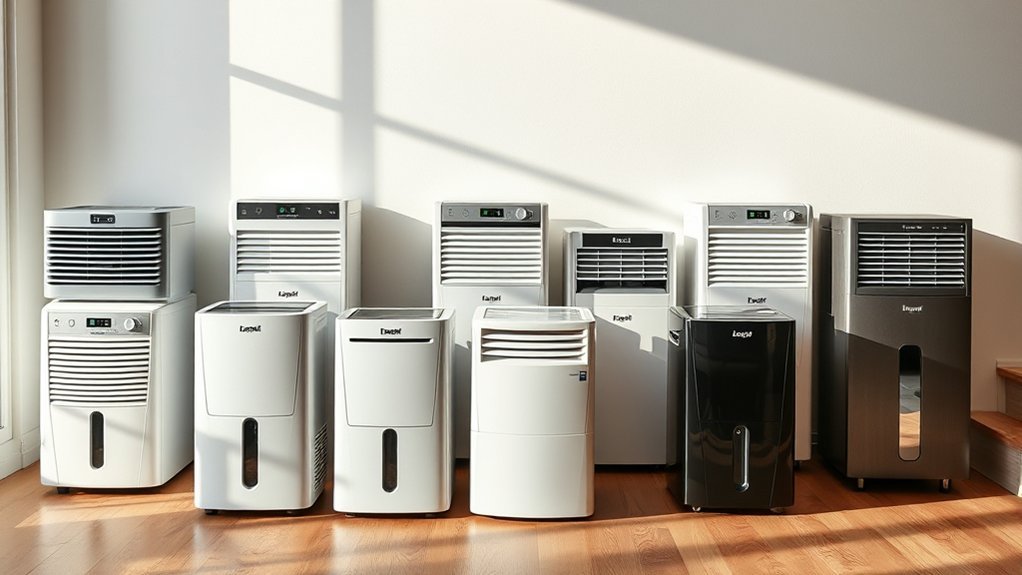
Choosing the best portable crawl space dehumidifier for 2026 takes more than comparing the largest pint number. Check how capacity was measured, whether the unit uses gravity or pump drainage, whether its dimensions fit the access opening, and whether its weight is practical for installation. The models below are compact commercial-style dehumidifiers for crawl spaces, basements, garages, and similar damp areas. In this category, “portable” usually means movable during setup—not lightweight enough for frequent carrying.
Quick Verdict
- Best overall for a typical crawl space: MOISWELL Defender ME-7S for its compact 12-inch height, built-in pump, 120 CFM airflow, and current ENERGY STAR listing.
- Best compact gravity-drain option: CADPXS Remois X70 for its 12.6-inch height, 131 CFM airflow, and included continuous-drain hose.
- Best low-profile airflow option: Yaufey 70 Pint for its 11.81-inch height, 159 CFM airflow, and published 36-pint standard-condition rating.
- Best quiet option: ALORAIR Sentinel HS35 because its listing states operation below 50 dB.
- Best high-capacity pump option: HBN 125 Pint for a listed 60-pint AHAM rating and dual pump/gravity drainage.
- Best heavy-duty option: Moiswell Defender M145 for 265 CFM airflow, ducting support, and a current ENERGY STAR certified capacity near 50 pints per day.
How We Compared These Models
We compared the exact linked ASINs by drainage method, capacity test context, current certified capacity where available, airflow, dimensions, weight, noise information, warranty wording, and the buyer problem each model solves. Marketplace specifications can conflict within the same listing, so the larger advertised pint number should never be used by itself for sizing.
Quick Comparison of Portable Crawl Space Dehumidifiers
| Model | Capacity Context | Drainage | Claimed Coverage | Weight | Best For | Amazon |
|---|---|---|---|---|---|---|
| Aiusevo 75 Pint | 75 PPD at 95°F and 90% RH; no comparable standard-condition rating clearly published | Built-in pump plus gravity drain | Up to 4,000 sq. ft. | 39 lb | Flexible drainage and higher airflow | Check Details |
| CADPXS Remois X70 | 80 PPD claimed; test conditions are not clearly separated in the listing | Gravity drain | Up to 1,000 sq. ft. | 36.1 lb | Compact installations near a lower drain | Check Details |
| MOISWELL Defender ME-7S | 24.0 PPD in the EPA ENERGY STAR directory; Amazon marketing also states 35 PPD AHAM / 70 PPD saturation | Built-in pump | Up to 1,000 sq. ft. | 39.5 lb | Typical residential crawl spaces without a lower drain | Check Details |
| HBN 125 Pint | 60 PPD under AHAM conditions / 125 PPD at 95°F and 90% RH | Built-in pump plus gravity drain | 5,900 sq. ft. in the title and description; another listing field shows 7,500 sq. ft. | Not clearly listed | Larger or wetter spaces needing pump drainage | Check Details |
| Moiswell Defender M145 | 49.83 PPD in the current EPA ENERGY STAR directory; Amazon marketing also states 70 PPD AHAM / 155 PPD maximum | Gravity drain | Up to 6,000 sq. ft. | 63 lb | High airflow, ducting, and heavy-duty drying | Check Details |
| Yaufey 70 Pint | 36 PPD at 80°F and 60% RH / 70 PPD under hotter, more humid conditions | Gravity drain | Up to 5,000 sq. ft. | 42 lb | Low-clearance spaces with a nearby lower drain | Check Details |
| ALORAIR Sentinel HS35 | 23.0 PPD in the EPA ENERGY STAR directory; Amazon listing states 35 PPD and uses a 70-pint class title | Gravity drain | Up to 1,000 sq. ft. | 37.8 lb | Lower-noise operation near occupied rooms | Check Details |
Capacity note: Certified DOE/ENERGY STAR capacity, legacy AHAM figures, and saturation ratings are not interchangeable. Use figures measured under the same test method when comparing models. Coverage numbers are manufacturer claims, not guarantees; moisture load, temperature, air leakage, standing water, and crawl space encapsulation can change the capacity you need.
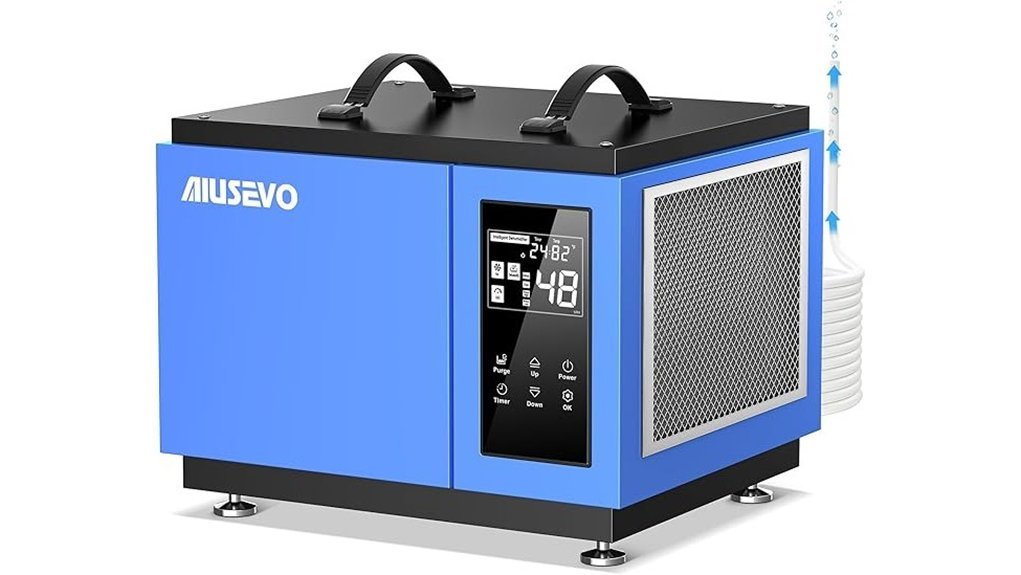
Aiusevo 75-Pint Crawl Space Dehumidifier with Pump
Best Flexible Drainage
The Aiusevo 75-Pint Crawl Space Dehumidifier is a practical choice when you need both pump and gravity drainage. The linked listing states up to 75 pints per day at 95°F and 90% RH, up to 200 CFM airflow, and manufacturer-rated coverage up to 4,000 square feet. Its built-in pump uses an included 16.4-foot hose for upward or longer-distance drainage, while the included 6.6-foot hose supports gravity drainage to a lower outlet. At about 39 pounds, it is manageable for installation, but it is better treated as a semi-permanent crawl space unit than a machine you will carry frequently.
Best For: Buyers who need a compact crawl space dehumidifier with both upward pump drainage and a simple gravity-drain option.
Why You’ll Like It: The combination of 200 CFM airflow, two drainage methods, auto defrost, humidity control, and power-outage restart gives you more placement flexibility than a gravity-only unit.
Who Should Avoid It: Buyers who need a clearly published standard-condition or currently certified pint rating for direct comparison.
Pros:
- Built-in pump and gravity drainage support difficult drain layouts.
- Stated 200 CFM airflow can help circulate damp air through a larger enclosed space.
- The 39-pound body is lighter than the heaviest commercial-style models here.
Cons:
- The 75-pint figure is measured under hot, high-humidity conditions.
- The 4,000-square-foot coverage number is a manufacturer claim, not a sizing guarantee.
- Warranty terms are not clearly summarized on the accessible listing, so review the current policy before ordering.
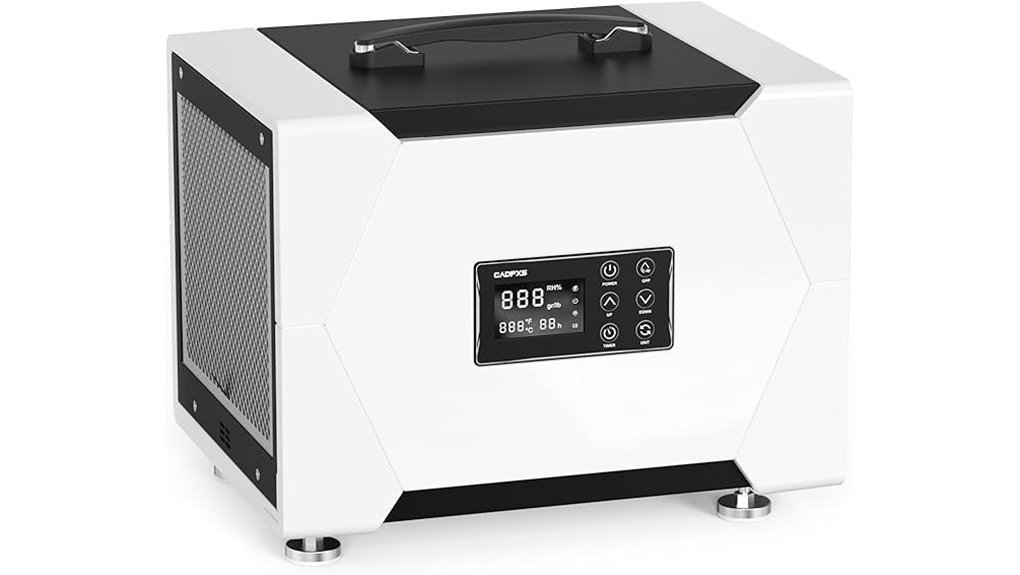
CADPXS Remois X70 80-Pint Commercial Dehumidifier
Best Compact Gravity Drain
The CADPXS Remois X70 is a low-profile commercial dehumidifier for crawl spaces, basements, and water-restoration work. Its listing states 80 pints per day, 131 CFM airflow, 310-watt operation, and coverage up to 1,000 square feet. The body measures about 15.6 by 12 by 12.6 inches and weighs 36.1 pounds, making it one of the easiest models here to fit through a small opening. It includes a hose for continuous gravity drainage, so the complete drain route must remain below the dehumidifier outlet.
Best For: Crawl spaces with limited clearance and a nearby floor drain, sump basin, or other lower drainage point.
Why You’ll Like It: The compact housing, washable filter, automatic defrost, timer, and memory restart support low-maintenance operation once the hose is routed correctly.
Who Should Avoid It: Anyone who must move condensate uphill or across a route that cannot maintain a continuous downward slope.
Pros:
- Compact 12.6-inch height suits many low-clearance installations.
- Included gravity-drain hose supports unattended moisture removal.
- The listing advertises cETL certification and a 5-year limited warranty.
Cons:
- No built-in pump on the linked 80-pint-without-pump variant.
- The listing does not clearly separate the test conditions behind the 80-pint claim.
- A gravity hose can stop draining if it sags, kinks, freezes, or rises above the outlet.
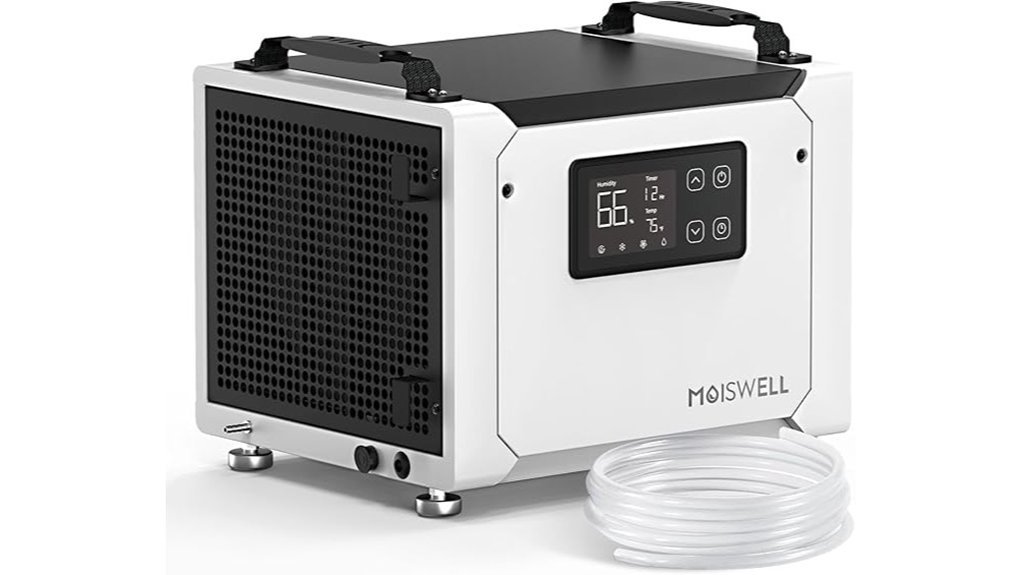
MOISWELL Defender ME-7S Dehumidifier with Pump
Best Overall
The MOISWELL Defender ME-7S combines a compact 13 by 15 by 12-inch body with 120 CFM airflow and a built-in pump that the listing says can move condensate vertically up to 16.4 feet. Capacity requires careful reading: Amazon marketing states 35 pints per day under AHAM conditions and 70 pints at saturation, while the current EPA ENERGY STAR directory lists 24.0 pints per day for this exact model and Amazon’s own specification table shows about 24.43 pints per day. For direct comparison, use the current certified figure and treat the larger numbers as different test-condition claims.
Best For: Typical residential crawl spaces where pump drainage is more practical than maintaining a continuously downhill hose.
Why You’ll Like It: The low 12-inch height, adjustable humidity control, automatic defrost, restart memory, and built-in pump solve the main installation problems found in many residential crawl spaces.
Who Should Avoid It: Buyers with a large, actively wet, or unencapsulated crawl space that needs substantially more certified capacity.
Pros:
- Built-in pump can lift water up to 16.4 feet according to the listing.
- Compact 12-inch height works well in many confined spaces.
- The exact Defender ME-7S model appears in the EPA ENERGY STAR product directory.
Cons:
- Capacity figures conflict between the marketing copy, Amazon specification table, and current certified listing.
- At 39.5 pounds, it is movable but not lightweight.
- The 1,000-square-foot claim may be optimistic in an unsealed or severely damp crawl space.
HBN 125-Pint Crawl Space Dehumidifier with Pump
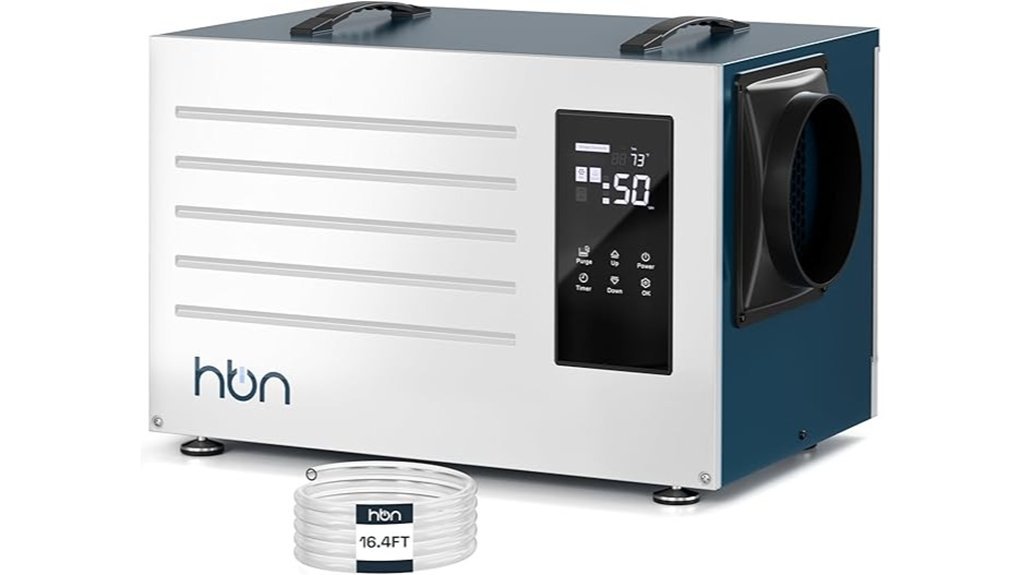
Best High-Capacity Pump Model
The HBN Crawl Space Dehumidifier sits between compact residential units and heavier restoration machines. Its listing separates capacity into 60 pints per day under AHAM conditions and up to 125 pints per day at 95°F and 90% RH. The title and description claim coverage up to 5,900 square feet, although another Amazon specification field shows 7,500 square feet, so buyers should treat coverage as an inconsistent manufacturer claim rather than a firm sizing limit. The dual drainage system includes a 6.6-foot gravity hose and a built-in pump that can lift water up to 16.4 feet. The housing measures about 19.3 by 12.6 by 13.8 inches.
Best For: Larger crawl spaces, workshops, or basements that need stronger listed capacity and pump-assisted drainage.
Why You’ll Like It: The 60-pint AHAM claim, dual drainage, automatic defrost, humidity control, timer, and power-outage memory give it more flexibility than a basic gravity-drain unit.
Who Should Avoid It: Buyers with a small, mildly damp crawl space who would pay for more capacity than they need.
Pros:
- Publishes both AHAM and hot/high-humidity capacity figures.
- Built-in pump and gravity hose support different drain layouts.
- The listing states a 1-year full-unit warranty, 5-year compressor warranty, and lifetime technical support.
Cons:
- The listing’s coverage fields conflict, showing 5,900 and 7,500 square feet in different places.
- Item weight is not clearly published in the accessible specifications.
- Coverage claims should not replace a moisture-load assessment or repairs to standing-water problems.
Moiswell Defender M145 Commercial Crawl Space Dehumidifier
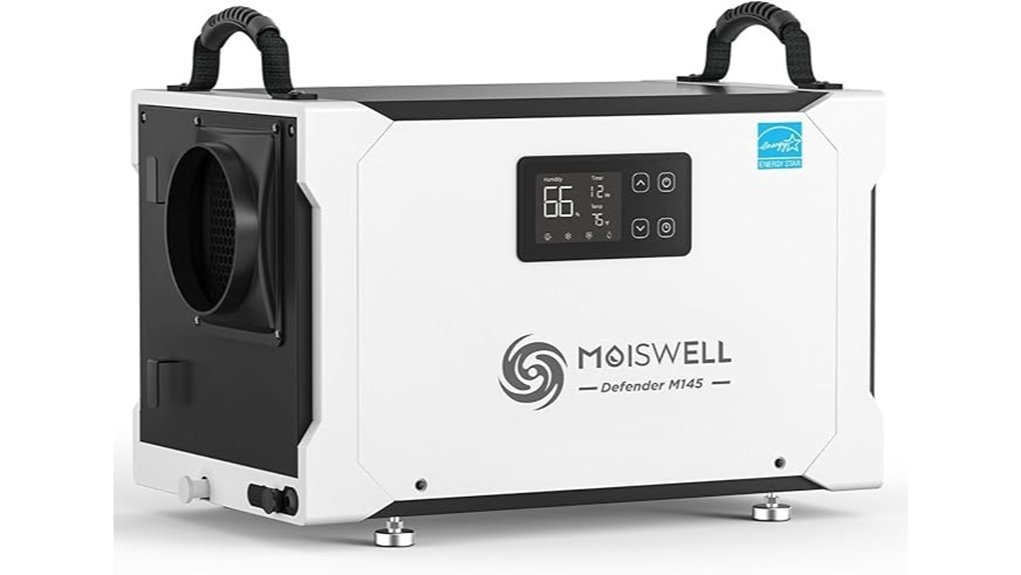
Best Heavy-Duty Choice
The Moiswell Defender M145 is the heaviest-duty option in this roundup by airflow and construction. Amazon markets it at 70 pints per day under AHAM conditions and up to 155 pints per day at maximum conditions, while the current EPA ENERGY STAR directory lists 49.83 pints per day for the exact Defender M145 model. It provides 265 CFM airflow and carries a manufacturer coverage claim up to 6,000 square feet. Its 22.5 by 14 by 14.7-inch metal housing accepts ducting, but the 63-pound weight makes it relocatable rather than truly portable. It uses continuous gravity drainage instead of a built-in pump.
Best For: Large, very damp crawl spaces, commercial areas, and restoration work where high airflow and ducting matter more than low weight.
Why You’ll Like It: The 265 CFM airflow, ductable outlet, auto defrost, memory restart, and current ENERGY STAR certification suit demanding installations.
Who Should Avoid It: Buyers who need to carry the unit frequently or drain water upward without adding a separate condensate pump.
Pros:
- Highest airflow in this comparison at a listed 265 CFM.
- Ductable design supports more controlled air distribution.
- The exact Defender M145 model is currently listed in the EPA ENERGY STAR directory.
Cons:
- At 63 pounds, it may require two people to place safely in a tight crawl space.
- Gravity drainage limits placement unless a lower drain is available.
- The current certified capacity is lower than the 70-pint AHAM and 155-pint maximum marketing figures.
Yaufey 70-Pint Commercial Crawl Space Dehumidifier
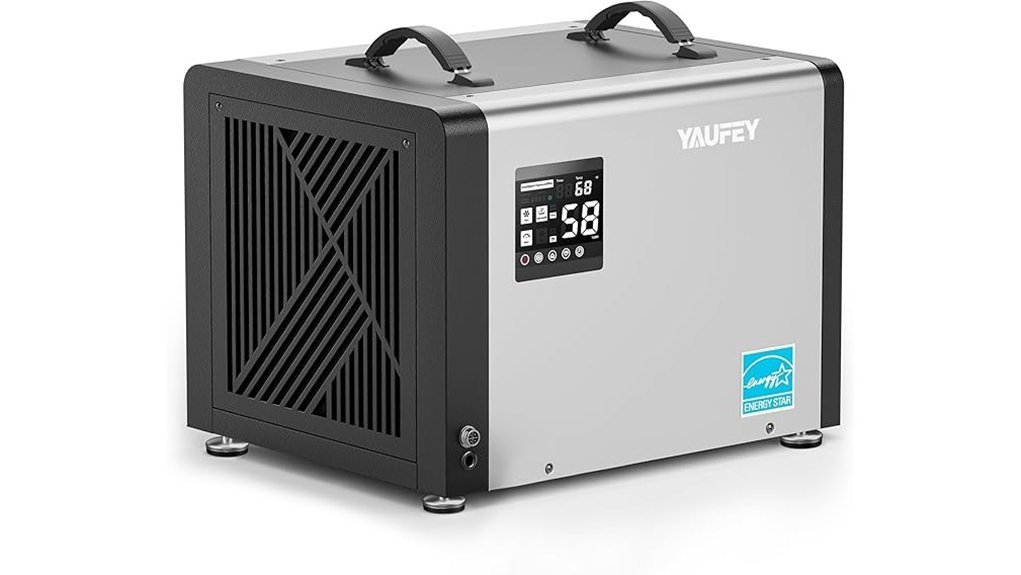
Best Low-Profile Airflow
The Yaufey 70-Pint Commercial Dehumidifier combines a low 11.81-inch height with 159 CFM airflow. The current listing states 36 pints per day at 80°F and 60% RH and a larger 70-pint rating under hotter, more humid conditions. It claims coverage up to 5,000 square feet, weighs 42 pounds, and includes a 6.56-foot hose for continuous gravity drainage. Automatic defrost, adjustable humidity control, automatic restart, a timer, and a washable filter are useful for crawl spaces that will be checked only occasionally.
Best For: Low-clearance crawl spaces with a nearby lower drain and a need for stronger airflow.
Why You’ll Like It: The short housing, 159 CFM airflow, published standard-condition rating, included drain hose, and automatic controls simplify installation in confined areas.
Who Should Avoid It: Buyers who need pump drainage or cannot maintain a continuously downhill hose route.
Pros:
- Low 11.81-inch height suits many tight crawl spaces.
- 159 CFM airflow is strong for a unit in this size range.
- The listing provides both a 36-pint standard-condition figure and a 70-pint extreme-condition figure.
Cons:
- No built-in pump on this ASIN.
- The 5,000-square-foot figure is a manufacturer claim and may be optimistic for a wet, unsealed space.
- The listing displays ENERGY STAR branding, but buyers should match model number AYD1.5D in the current EPA directory before relying on certification.
ALORAIR Sentinel HS35 Crawl Space Dehumidifier
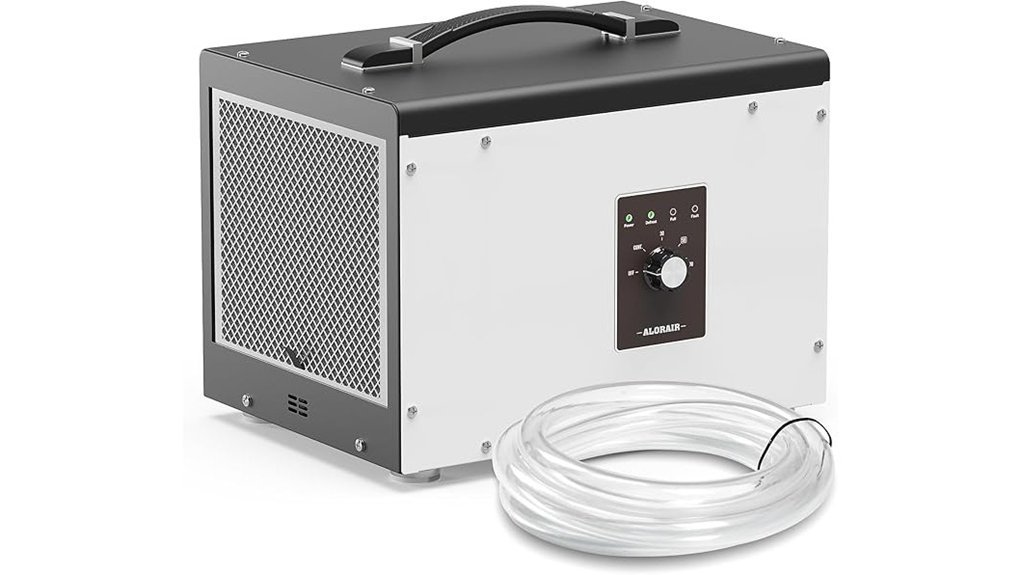
Best Quiet Option
The ALORAIR Sentinel HS35 is a compact gravity-drain model for crawl spaces up to a manufacturer-rated 1,000 square feet. Capacity labels need context: the Amazon listing states 35 pints per day and uses a 70-pint class title, while the EPA ENERGY STAR directory lists 23.0 pints per day for the Sentinel HS35 as an additional model under the Sentinel HD35P certification. It provides 115 CFM airflow, measures about 15.35 by 11.2 by 11.4 inches, and weighs 37.8 pounds. The listing also states operation below 50 dB, automatic defrost, memory restart, a drain hose, and a washable MERV-1 filter.
Best For: Crawl spaces near bedrooms, offices, or living areas where lower operating noise matters.
Why You’ll Like It: The low profile, sub-50 dB listing claim, simple controls, continuous drainage, and 6-year limited warranty make it a straightforward long-term option.
Who Should Avoid It: Buyers who need to pump water upward or require higher certified daily moisture removal.
Pros:
- The listing states operation below 50 dB.
- Compact dimensions and 37.8-pound weight aid positioning.
- The Sentinel HS35 appears as an additional model in the EPA ENERGY STAR directory.
Cons:
- Gravity drainage only.
- Manual controls are less convenient than app-based or remote operation.
- The 70-pint title and 35-pint listing claim are both higher than the current 23.0-pint certified capacity.
Factors to Consider When Choosing a Portable Crawl Space Dehumidifier
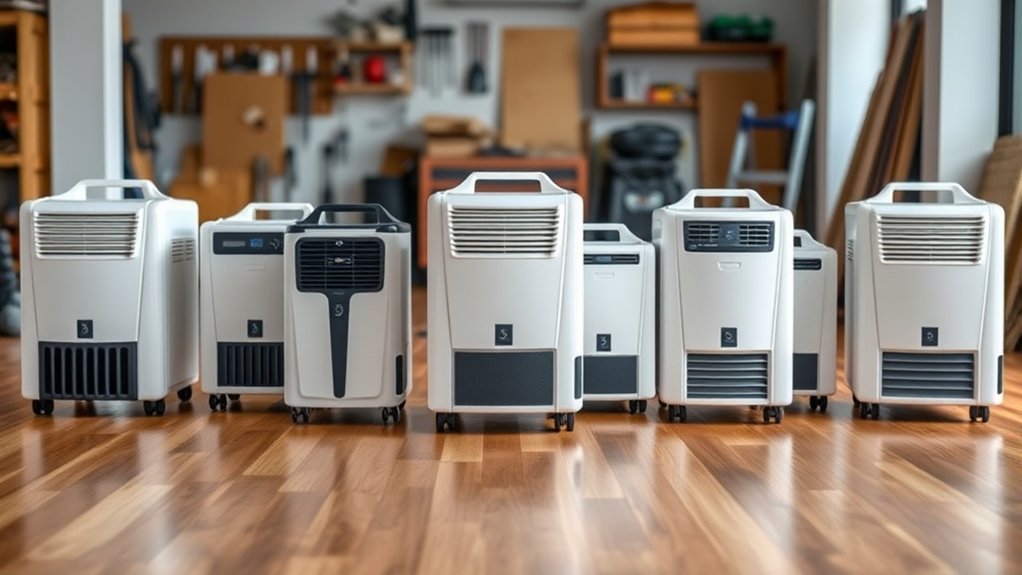
A crawl space dehumidifier should be selected for the actual moisture problem, not only for the largest coverage claim. Measure the opening, plan the drain route, compare capacity under the same test conditions, and decide how often you can access the unit for cleaning and inspection.
Compare Certified, Standard, and Saturation Capacity
Do not compare pint numbers unless the test conditions are the same. Marketplace titles often emphasize a maximum or saturation capacity measured at 95°F and 90% relative humidity, while standard-condition and current EPA ENERGY STAR figures can be much lower. Older AHAM-style marketing figures may also differ from current certified values because the test procedure has changed. For the fairest comparison, match the exact model number and compare capacities measured under the same procedure. Expect moisture removal to fall in cooler or less humid conditions.
Match Capacity to the Moisture Load
Square footage alone does not tell you how much dehumidification you need. A sealed, encapsulated 1,500-square-foot crawl space may need less capacity than a smaller space with standing water, open vents, bare soil, or plumbing leaks. Fix liquid water entry first, then size the dehumidifier for the remaining humidity load. A separate hygrometer placed away from the machine can help you confirm whether humidity is controlled throughout the space.
Choose the Right Drainage Method
Gravity drainage is simple and reliable when the hose can run continuously downhill to a suitable drain. The hose must not kink, sag, or rise above the outlet. A built-in pump is better when water must move upward to a sink, window, or higher discharge point. Check the pump lift rating and included hose length before choosing a location. If a gravity-only model otherwise fits your needs, a separate condensate pump may be an option.
Measure Size, Weight, and Clearance
Measure the crawl space opening and the final installation area before ordering. Leave the manufacturer-required clearance around the air inlet and outlet. Units in this guide range from about 36 to 63 pounds, so “portable” usually means movable during installation, not easy to carry every day. Use two people or suitable equipment for heavier models, especially when access is narrow or uneven.
Check Temperature Range and Auto Defrost
Auto defrost helps protect the evaporator coil when frost begins to form, but it does not make every dehumidifier suitable for every low-temperature environment. Check the listed operating range and expect lower moisture removal when the crawl space is cool. Do not block airflow or place the unit where water can reach electrical components.
Compare Verified Energy Efficiency
Do not judge efficiency by wattage alone. A higher-capacity unit may draw more power but still remove more water per kilowatt-hour. When available, compare the exact model’s Integrated Energy Factor and certified pint-per-day capacity in the current EPA ENERGY STAR product directory. Match the full model number because similar names and marketplace variants may have different ratings. A working humidistat, clean filter, unobstructed airflow, and correct sizing can also reduce unnecessary runtime.
Verify the Exact Model and Variant
Some Amazon listings group pump and non-pump versions or use a headline pint number that differs from the detailed specifications. Before ordering, match the ASIN, full model number, drainage method, voltage, dimensions, included hose, and warranty terms. This is especially important when a listing title, feature bullets, technical table, and certification record show different capacity or coverage figures.
Consider Noise Near Living Areas
Noise matters most when the crawl space is beneath a bedroom, office, or living room. Look for a published decibel figure rather than vague “quiet” wording. The ALORAIR listing states less than 50 dB, while several other listings do not provide a clear number. Vibration pads and a level mounting surface may reduce structure-borne noise, but they should not block airflow or create an unsafe installation.
Before You Buy Checklist
- Measure the access opening, final floor space, and required inlet and outlet clearance.
- Match the ASIN and full model number to the pump, capacity, and certification details you expect.
- Confirm whether each pint rating is certified, measured at standard conditions, measured at saturation, or unspecified.
- Choose gravity drainage only when the entire hose route can remain continuously downhill.
- Choose a built-in pump when condensate must travel upward or when a reliable downhill route is impossible.
- Check the operating temperature range, auto-defrost function, voltage, grounded-outlet requirements, and pump-lift limit.
- Read the warranty terms by component and confirm where parts and service are available.
- Plan regular filter cleaning, coil inspection, and drain-hose checks.
Specification check: Product details can change, and marketplace titles may not use the same test procedure as current certification records. Verify the exact model and variant on the linked listing before purchase.
Frequently Asked Questions
How Do I Determine the Right Size Dehumidifier for My Crawl Space?
Start with the crawl space area and ceiling height, then account for standing water, bare soil, open vents, air leakage, local climate, temperature, and whether the space is encapsulated. Compare capacities measured under the same test procedure rather than choosing the largest headline pint number. Correct leaks, drainage failures, and groundwater entry before relying on a dehumidifier.
Do I Need a Built-In Pump?
Choose a built-in pump when the drain point is higher than the dehumidifier or when a continuously downhill hose route is not practical. Gravity drainage is usually simpler when a suitable lower drain or sump is nearby. Follow the manufacturer’s pump-lift limit and hose-routing instructions.
What Maintenance Is Required for Portable Crawl Space Dehumidifiers?
Follow the manual for the exact model. Inspect and clean the filter regularly, especially in a dusty crawl space. Check the drain hose for algae, clogs, kinks, loose fittings, and improper slope. Keep the air inlet and outlet clear, inspect the coils for dirt or recurring ice, and confirm that condensate reaches the intended drain.
Can a Dehumidifier Reduce Conditions That Support Mold Growth?
A dehumidifier can reduce excess humidity that supports mold growth, but it does not remove existing contamination or repair leaks, drainage problems, or missing vapor barriers. Correct the moisture source first. Extensive or recurring contamination may require assessment and remediation by a qualified professional.
Are Portable Crawl Space Dehumidifiers Energy-Efficient?
Efficiency varies by model, capacity, and test method. When available, compare the exact model’s current certified capacity and Integrated Energy Factor rather than wattage alone. Correct sizing, clean filters, unobstructed airflow, reliable drainage, and a sensible humidity setting can help avoid unnecessary runtime.
How Noisy Are These Dehumidifiers During Operation?
Noise is model-specific, so look for a published sound rating rather than assuming every crawl space unit falls within the same range. Also consider vibration transfer through floor framing. Among the models reviewed here, the ALORAIR Sentinel HS35 listing specifically states operation below 50 dB.
Can a Crawl Space Dehumidifier Run Continuously?
Many commercial-style models support automatic operation when connected to a proper drain. The humidistat should cycle the compressor as needed rather than forcing nonstop compressor operation after the target humidity is reached. Use a grounded outlet, maintain required clearances, protect the unit from standing water, and inspect it on the schedule stated in the manual.
Conclusion
Final Recommendation
For a typical residential crawl space without an easy lower drain, the MOISWELL Defender ME-7S offers the most balanced mix of compact dimensions, automatic controls, and built-in pump drainage. Its current certified capacity is lower than the headline marketing figures, so size it for the real moisture load rather than the “70-pint” title alone.
The best portable crawl space dehumidifier depends on drainage, clearance, airflow, temperature, and moisture severity. Choose the CADPXS Remois X70 when compact gravity drainage is the priority, the Yaufey when very low height and stronger airflow matter, and the ALORAIR Sentinel HS35 when a published sub-50 dB claim is valuable near occupied rooms. The Aiusevo adds flexible pump and gravity drainage, while the HBN 125 Pint provides the strongest clearly stated standard-condition capacity among the pump-equipped models in this roundup. For demanding spaces where high airflow and ducting matter more than weight, the Moiswell Defender M145 is the heavy-duty choice. Measure carefully, correct liquid-water entry first, and verify the exact model, current certification record, warranty, and included drainage parts before ordering.