Affiliate disclosure: This article contains Amazon affiliate links. If you buy through these links, we may earn a commission at no extra cost to you.
Quick Verdict: Which One Should You Buy?
If your main problem is foggy glass, musty cabin smell, or damp classic car interiors, start with the Quebec Car Dehumidifier Bag or the 100g Rechargeable Desiccant Pack of 5. Both are compact, reusable, and designed for small enclosed spaces where condensation tends to build.
For simple no-power moisture control around a stored car, the Moismile Moisture Absorbers and Odor Eliminator Boxes are an easy replace-and-monitor option, while the Dri Z Air Dri-Z-Air Pot is better on a stable shelf or garage corner where spill risk is easier to control.
Classic cars benefit from steady moisture control during storage. Damp conditions can contribute to fogged glass, musty odors, mildew, condensation, and corrosion on vulnerable metal surfaces. The best solution depends on whether you need moisture absorption inside the cabin or passive control in the surrounding storage area.
This guide compares four practical options for protecting a classic car from moisture damage: the Quebec Car Dehumidifier Bag, 100g Rechargeable Desiccant Pack of 5, Moismile Moisture Absorbers and Odor Eliminator Boxes, and Dri Z Air Dri-Z-Air Pot. All four are passive moisture-control products, but they differ in placement, reusability, spill risk, and maintenance.
Storage tip: A moisture absorber can help manage damp conditions, but it cannot fix water leaks. Before buying, check door seals, trunk seals, windshield edges, wet carpets, and garage drainage so you are not only treating the symptom.
Quick Comparison: Dehumidifiers for Classic Cars
| Product | Type | Best Use | Power Needed | Main Limitation | Quick Action |
|---|---|---|---|---|---|
| Quebec Car Dehumidifier Bag | Reusable car moisture bags | Dashboards, windows, compact car interiors | No, but sunlight is used for recharging | May need more than one pack in damp conditions | Check Price |
| 100g Rechargeable Desiccant Pack of 5 | Rechargeable desiccant packs | Cabin, glove box, trunk, small storage spots | No, but requires microwave recharging | Needs periodic reactivation | Check Price |
| Moismile Moisture Absorbers and Odor Eliminator Boxes | Calcium chloride moisture absorber boxes | Garages, parked cars, closets, small storage areas | No | Single-use style boxes need replacement after use | Check Price |
| Dri Z Air Dri-Z-Air DZA-U Pot | Refillable moisture absorber pot | Small storage areas and enclosed spaces | No | Must stay upright to reduce spill risk | Check Price |
How to Think About These Picks
Classic car owners usually need one of two solutions: in-car moisture absorption or storage-area moisture control. Cabin products should be compact, stable, reusable or easy to replace, and suitable around carpet, trim, glass, and upholstery. Storage-area products should be easy to monitor and positioned where liquid or crystals cannot spill onto the vehicle.
This list keeps that buyer intent in mind by comparing reusable silica-gel bags, rechargeable desiccant packs, sealed passive absorber boxes, and a refillable moisture-absorber pot. Products that only circulate warm air without actually collecting or adsorbing moisture are not treated as direct dehumidifier picks here.
Quebec Car Dehumidifier Bag (2 x 350g)

Best Overall for Car Interiors: Dashboards, footwells, trunks, rear shelves, and classic-car windows that fog during damp storage.
The Quebec Car Dehumidifier Bag is one of the most car-focused options in this roundup. The 2-pack design gives you two 350g bags that can be placed in moisture-prone areas such as the dashboard, footwell, trunk, rear shelf, or near glass that fogs during damp weather.
These bags are designed to absorb excess moisture, reduce foggy windscreens, and help keep the interior drier. Their leakproof design is important for classic cars because old carpets, leather, vinyl, trim, and floor pans can be expensive to restore. The reusable format also reduces waste compared with single-use moisture tubs.
The recharge method relies on sunlight exposure, which is convenient in some climates but less convenient during long cloudy stretches. If your garage stays dark and damp, plan to recharge the bags on a sunny day or keep a spare set ready.
Why You’ll Like It: This is the most directly vehicle-focused option in the list. It is easy to place, does not need a cord, and makes sense for owners who mainly want to protect the interior from fogging, damp smell, and moisture buildup while the car is parked.
Best For: Classic car owners who want reusable, leakproof moisture bags made specifically for vehicle interiors.
Pros:
- Vehicle-friendly shape: Easy to place on dashboards, shelves, trunks, or other small cabin areas.
- Reusable design: Can be recharged by exposing the bags to sunlight.
- Leakproof construction: Helps protect seats, carpet, trim, and interior surfaces.
- Two bags included: Gives better coverage than a single small absorber.
Cons:
- Sunlight needed for recharging: May be inconvenient in cloudy or winter conditions.
- Effectiveness depends on humidity level: Very damp storage areas may require extra bags.
- Limited coverage: Larger vehicles or wet garages may need multiple packs.
Who Should Buy This: Choose this if you want a reusable car moisture bag for the dashboard, rear shelf, footwell, or trunk of a stored classic vehicle.
Who Should Avoid This: Skip it as your only solution if the whole garage is wet, poorly sealed, or affected by leaks. In that case, pair cabin bags with garage-level moisture control.
Buyer Note: This is a strong choice for keeping a classic car interior drier, especially when fogged glass or musty cabin smell is the main issue.
100g Rechargeable Desiccant Pack of 5

Best Multi-Pack Pick: Distributed moisture control inside the cabin, trunk, glove box, console, and other small enclosed storage spots.
The 100g Rechargeable Desiccant Pack of 5 is a simple choice for classic car owners who want moisture protection without continuous electricity. These compact packs can be placed in the cabin, trunk, glove box, console, or storage bins where damp air tends to collect. Because the set includes multiple packs, you can spread them around the vehicle instead of relying on one moisture absorber in a single spot.
The listed design focuses on reducing humidity in enclosed spaces, and the packs can be recharged in the microwave for reuse. That makes them useful for owners who store a vehicle for weeks at a time and want a low-maintenance way to manage light to moderate moisture. The humidity indicator helps show when recharging is needed, so you are not guessing when the packs have reached their limit.
Why You’ll Like It: This option is easy to understand, easy to place, and useful for cars with several moisture-prone zones. Instead of putting one large absorber in the vehicle, you can place smaller packs near the windshield, under a seat, inside the trunk, or near storage bins.
Best For: Classic car owners who need reusable, compact moisture absorbers for the cabin, trunk, dashboard area, or garage storage bins.
Pros:
- Rechargeable: The packs can be reactivated in the microwave for repeated use.
- Flexible placement: The small size works well in tight vehicle spaces.
- Good for distributed moisture control: A 5-pack lets you place absorbers in several parts of the car.
- Humidity indicator: The indicator helps show when the packs need to be recharged.
Cons:
- Requires maintenance: You need to recharge the packs periodically.
- Not a full-garage solution: These are better for enclosed vehicle areas than large open garages.
- Microwave recharging required: Owners who prefer a set-and-forget option may want a disposable absorber instead.
Who Should Buy This: Choose this if you want small, reusable packs that can be placed in several areas of the car without using electricity.
Who Should Avoid This: Skip it if you want a single product for a damp full-size garage or if you do not want to microwave-recharge moisture packs.
Buyer Note: Use several packs at once if your classic car sits in a humid garage or has a large cabin. Check the indicator regularly during wet seasons.
Moismile Moisture Absorbers and Odor Eliminator Boxes (3-Pack)
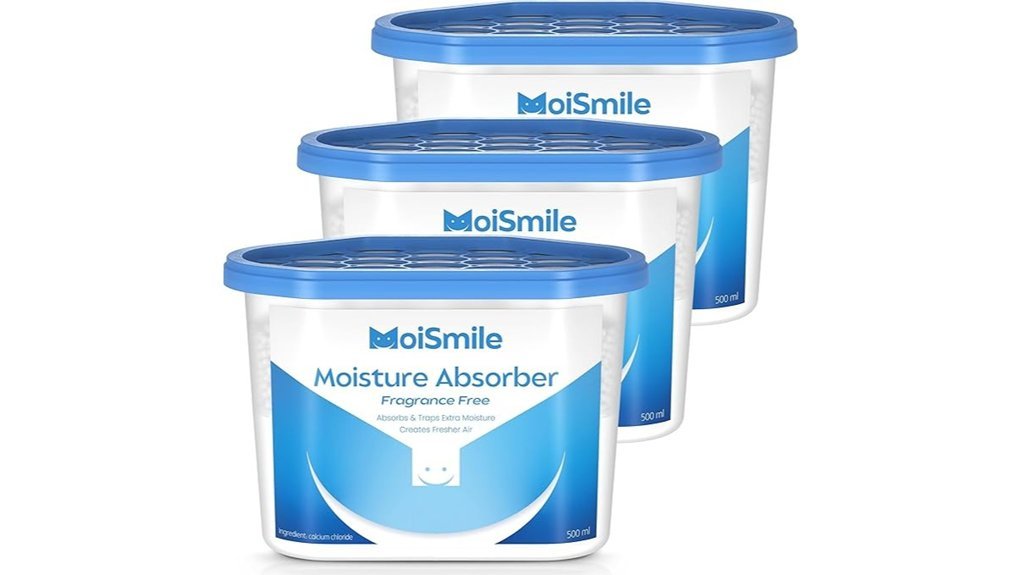
Best Replace-and-Monitor Pick: Parked cars, garages, closets, and small enclosed spaces where replacement boxes are easier than recharging.
Moismile Moisture Absorbers and Odor Eliminator Boxes are a practical option for classic car owners who want passive humidity control without cords, batteries, or recharging. This 3-pack uses high-purity calcium chloride and is designed to lower humidity in small enclosed spaces, making it useful for garages, parked vehicles, closets, and storage areas.
Each unit is listed to last up to 60 days, depending on humidity and placement. The clear design helps you monitor collected moisture, while the leak-proof construction is important when the product is used near a valuable interior or stored parts. Because the boxes are fragrance-free, they focus on moisture control rather than masking odors with scent.
For a classic car, these boxes work best when placed where they will not tip over or interfere with pedals, seats, or stored parts. They can also be useful outside the vehicle in a garage cabinet, parts shelf, or enclosed storage corner.
Why You’ll Like It: This is a straightforward option for owners who do not want to track recharge times. You place the boxes in stable areas, monitor collected moisture, and replace them when used up.
Best For: Classic car owners who want easy passive moisture control for a parked vehicle, garage, or small storage area.
Pros:
- Effective moisture absorption: Designed to lower humidity in small enclosed spaces.
- Long-lasting performance: Each unit is listed to last up to 60 days.
- Leak-proof design: Helps reduce spill risk around vehicle interiors or stored parts.
- No electricity required: Useful in garages, sheds, and storage areas without power access.
Cons:
- Fragrance-free: It will not add a scent if you want odor masking.
- Best for smaller spaces: Larger garages may need several units.
- Replacement needed: Once the absorber is used up, you will need a fresh box.
Who Should Buy This: Choose this if you want a simple, no-power, no-recharge moisture absorber for a parked car, garage shelf, parts cabinet, or small enclosed space.
Who Should Avoid This: Avoid loose placement where the box could tip over, slide during vehicle movement, or sit directly on delicate interior materials.
Buyer Note: Choose these if you want simple, visible moisture control and do not want to recharge bags.
Dri Z Air Dri-Z-Air DZA-U Pot
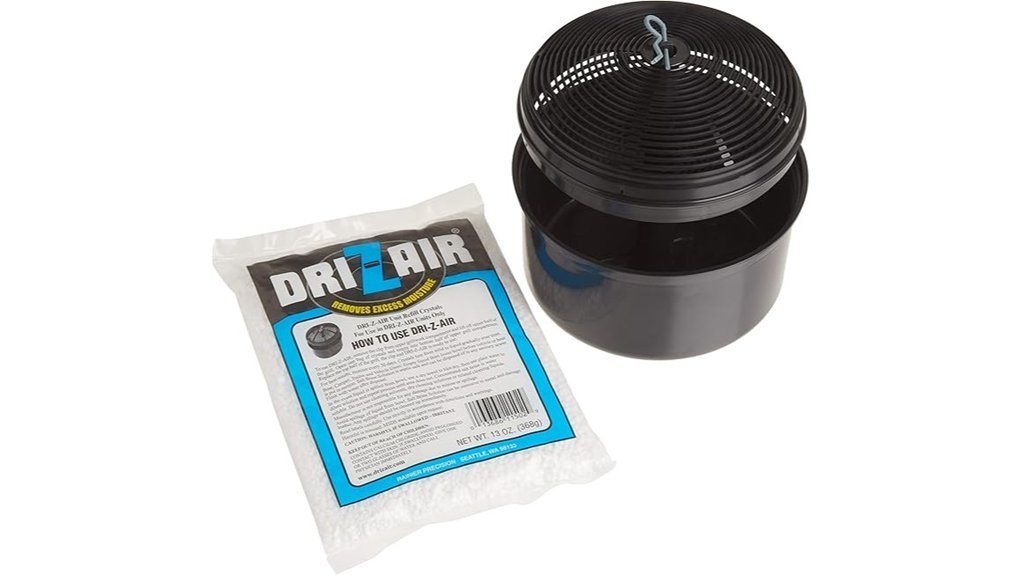
Best Refillable Pot: Stable shelves, storage corners, closets, boats, and compact garage areas near a parked classic car.
The Dri Z Air Dri-Z-Air DZA-U Pot is a compact, refillable moisture absorber for classic car storage areas, small garages, closets, boats, and enclosed spaces. The listing identifies a 13-ounce capacity, but the more important buying issue for a classic car is placement: the pot should remain upright and stable so collected moisture stays away from carpet, trim, and metal surfaces.
This product is useful if you prefer a passive option that does not need electricity. It comes with refill crystals and uses a simple pot-style design, so there are no cords, batteries, fans, or settings to manage. The glossy black finish and planter-like shape also make it less industrial-looking than many moisture control products.
For classic cars, this is best used in a safe, stable location where it cannot tip over. Place it in the storage area, garage corner, or another protected spot rather than loose on a seat or carpeted floor.
Why You’ll Like It: This is a good fit when you want a refillable passive absorber that can sit near the car rather than inside a tight dashboard area. It is especially useful for storage spots where cords are not practical and where you can check the absorber regularly.
Best For: Owners who want a refillable, non-electric moisture absorber for small storage spaces near a classic car.
Pros:
- Compact and lightweight: Easy to place in tight storage areas.
- Refillable design: Includes refill crystals for continued moisture absorption.
- No power required: Useful in storage areas without outlets.
- Clean visual design: The glossy black finish looks more discreet than many utility absorbers.
Cons:
- Needs monitoring: A small passive pot can require more frequent checks in very damp conditions.
- Placement matters: It should sit in a stable spot to reduce spill risk.
- Not ideal for the dashboard: A bag-style absorber may be safer for in-cabin placement.
Who Should Buy This: Choose this if you need a refillable passive absorber for a shelf, garage corner, closet, boat, or small storage area near the vehicle.
Who Should Avoid This: Avoid placing it loose inside the car where it could tip, spill, slide, or touch valuable carpet, upholstery, or trim.
Buyer Note: This is better as a storage-area moisture absorber than a loose in-car product. Use it where it can sit level and remain undisturbed.
Which Classic Car Dehumidifier Should You Choose?
Choose the Quebec Car Dehumidifier Bag if your main goal is keeping the vehicle cabin drier and reducing fogged glass. Choose the 100g Rechargeable Desiccant Pack of 5 if you want several reusable packs that can be distributed around the cabin, trunk, glove box, and storage bins.
Choose the Moismile Moisture Absorbers and Odor Eliminator Boxes if you want a visible, no-power product that is replaced after use. The Dri Z Air Dri-Z-Air Pot makes more sense on a stable shelf or storage corner near the car, where it can stay upright and be checked regularly.
Simple Buying Shortcuts
- For foggy windshield and musty cabin smell: Quebec Car Dehumidifier Bag.
- For several small areas inside one vehicle: 100g Rechargeable Desiccant Pack of 5.
- For a shelf, closet, or small storage corner: Dri Z Air Dri-Z-Air Pot.
- For easy replace-and-monitor moisture control: Moismile Moisture Absorbers and Odor Eliminator Boxes.
Factors to Consider When Choosing Dehumidifiers for Classic Cars
Choosing a dehumidifier for a classic car is not only about buying the biggest moisture absorber. The right choice depends on where the car is stored, how much humidity you deal with, whether you prefer reusable or replaceable products, and how often you want to inspect the setup.
Key Features to Evaluate
Start with the type of moisture control. Reusable silica-gel or desiccant products are compact and can be dried for reuse, while calcium-chloride-style boxes and pots collect moisture and require more attention to upright placement. The right type depends on where you can safely position it and how often you are willing to inspect it.
Look for a design that fits the way you store your classic car. A dashboard or cabin bag should be sealed, stable, and easy to remove before driving. A liquid-collecting box or pot should sit on a level, protected surface. Reusable products should also have a clear recharge method so you know whether the maker specifies sunlight, heat, or a microwave.
Size and Capacity
A small classic car cabin does not need the same setup as a large garage. For in-car use, compact moisture bags and desiccant packs are usually easier to place without blocking pedals, vents, seat movement, or visibility. For a larger storage area, several passive absorbers may be needed, but a severe whole-garage humidity problem can exceed what small bags and boxes are designed to handle.
Capacity also matters during winter storage or rainy seasons. If the product fills quickly, changes color often, or needs frequent recharging, the storage area may need more ventilation, more absorbers, or a stronger moisture-control setup.
Recharge, Replacement, and Running Cost
All four picks in this guide work without continuous electrical power. The main cost difference is maintenance: reusable bags and desiccant packs need periodic drying or reactivation, refillable pots need replacement crystals, and disposable absorber boxes need to be replaced when spent.
Choose the maintenance style you are most likely to follow. A reusable product may cost less over time, but a replaceable box can be more convenient if you do not want to track recharge cycles.
Portability and Placement
Portable moisture absorbers are useful because classic cars have several damp-prone zones. The trunk, footwells, dashboard area, under-seat spaces, and storage shelves can all collect moisture. A multi-pack lets you cover more of these areas at once.
Placement should be safe and practical. Do not place any absorber where it could spill, block controls, stain upholstery, or move while the car is being driven. If the car will be started or moved during storage, remove loose dashboard or floor absorbers first.
Moisture Absorption Method
Desiccant packs adsorb moisture and can often be reactivated with heat according to the maker’s directions. Reusable car bags may use silica gel and be dried for reuse, while calcium chloride boxes or pots collect absorbed water in a container. These methods control moisture differently, so follow each product’s recharge, refill, and placement instructions.
No passive method is perfect for every storage setup. A classic car in a reasonably dry garage may only need small in-cabin packs. If the entire garage stays wet, has standing water, or shows persistent condensation, address leaks, drainage, ventilation, or dedicated room-level humidity control rather than relying only on small absorbers.
Safety Features Included
Safety matters because classic cars are often stored unattended. For passive products, look for sealed construction, visible saturation or fill indicators where provided, and stable containers that are not likely to tip. Keep any product that can collect liquid away from valuable upholstery, carpet, wood trim, wiring, and exposed metal.
Never place a liquid-collecting absorber directly on valuable upholstery, carpet, wood trim, or exposed metal parts unless the design is sealed and stable. When in doubt, place it in a tray or on a protected surface.
Maintenance and Rechargeability
Reusable dehumidifiers save money only if you actually recharge them on schedule. Check color indicators, moisture levels, or collected liquid during storage. If the car is parked for months, set a reminder to inspect the absorbers every few weeks.
Rechargeable desiccant packs can be convenient for light moisture control. Sunlight-recharged bags are useful when you have suitable drying conditions. Replaceable boxes are easier if you prefer to discard a spent unit and start fresh, while refillable pots need fresh crystals. Choose the maintenance style you will follow consistently.
Before You Buy Checklist
- Check the real problem: Is the moisture inside the car, inside the garage, or caused by a leak?
- Pick the right type: Use compact bags and packs for cabins; use stable boxes or pots only where they can remain upright and protected.
- Plan the placement: Avoid pedals, seats, vents, delicate upholstery, and areas where a product can tip over.
- Think about maintenance: Choose between microwave or heat reactivation, sunlight drying, refill crystals, or replacement boxes.
- Monitor humidity: A small hygrometer can help you see whether your setup is actually keeping the storage space drier.
Classic Car Storage Tips for Better Moisture Control
- Clean the interior first: Dirt, food crumbs, and damp mats can worsen odors and mildew.
- Dry the car before covering it: Do not trap moisture under a cover after washing or driving in rain.
- Use absorbers in more than one spot: Place moisture control near the windshield, footwells, trunk, and storage shelves when needed.
- Check seals and weatherstripping: A dehumidifier cannot fix an active leak around glass, doors, or the trunk.
- Ventilate when possible: A dry, stable storage space helps every absorber work better.
- Inspect regularly: Look for fogging, musty smell, damp carpets, or water inside the absorber.
Important Safety Note
Do not drive with loose moisture absorbers sitting on the dashboard, floor, pedals, or seats. Remove or secure any loose product before moving the car. For liquid-collecting absorbers, use a stable surface and avoid direct contact with valuable carpet, leather, vinyl, wood trim, or exposed metal.
Frequently Asked Questions
How Do Dehumidifiers Prevent Rust in Classic Cars?
Moisture-control products can help reduce the damp conditions that contribute to condensation on metal surfaces. Less persistent condensation can lower corrosion risk over time, especially when a vehicle sits in an enclosed storage space for long periods. They work best as part of a dry-storage plan that also addresses leaks, wet floors, and poor drainage.
What Is the Ideal Humidity Level for Classic Car Storage?
There is no single humidity number that is right for every classic car, garage, climate, and mix of materials. The practical goal is a stable, reasonably dry storage environment without persistent condensation. Use a hygrometer to watch trends, and follow any humidity guidance provided by your vehicle-storage system, building, or preservation specialist rather than relying on one universal percentage.
Can I Use Moisture Absorbers in a Non-Ventilated Garage?
Yes, but small passive absorbers have limited capacity compared with the air volume in a full garage. They are best for targeted areas, cabinets, the vehicle interior, or mild storage conditions. If the garage has leaks, wet floors, poor drainage, or persistent condensation, fix those moisture sources first and consider room-level humidity control sized for the space.
How Often Should I Replace Desiccant Packs?
You should replace or recharge desiccant packs based on humidity, storage conditions, and the product indicator. In damp weather, they may need attention more often. If the pack feels saturated, the indicator shows it is full, or the cabin starts to smell musty again, recharge or replace it.
Are Reusable Desiccant Bags Better Than Absorber Boxes?
Neither type is automatically better. Reusable desiccant bags are convenient inside a cabin because they are compact and can be dried for reuse. Absorber boxes can make collected moisture easier to see, but they need stable upright placement and eventual replacement. Choose based on the space, spill risk, and the maintenance routine you prefer.
Where Should I Place a Dehumidifier Inside a Classic Car?
Good placement areas include the dashboard, rear shelf, trunk, footwell, and under-seat areas, as long as the product is stable and will not spill or block controls. Avoid placing liquid-collecting products directly on upholstery or carpet unless they are sealed and leakproof.
Do I Still Need Moisture Control If My Car Is Covered?
A cover mainly protects the vehicle from dust and surface contamination; it does not remove moisture from the surrounding air. If the storage area is damp, condensation can still develop around or inside the car. Make sure the vehicle is dry before covering it, follow the cover maker’s storage instructions, and add moisture control if you repeatedly see fogging, damp carpets, or musty odors.
Should I Use One Large Absorber or Several Small Ones?
For a classic car interior, several small absorbers can be easier to distribute because moisture can collect around the windshield, footwells, trunk, and under-seat spaces. For a full garage or storage bay, small passive products may not have enough capacity on their own because the air volume is much larger.
Can a Dehumidifier Remove Musty Car Smells?
A dehumidifier can help reduce the damp conditions that lead to musty smells, but it may not remove existing odor by itself. Clean the interior, dry wet mats or carpet, check for leaks, and replace or recharge moisture absorbers as needed.
Final Recommendation
For most classic car interiors, the Quebec Car Dehumidifier Bag is the easiest car-focused pick because it is reusable, leakproof, and designed for vehicle cabin areas. If you want more flexible coverage, add the 100g Rechargeable Desiccant Pack of 5 so you can distribute small absorbers around the trunk, glove box, console, and other enclosed spots.
For simple passive storage support, the Moismile Moisture Absorbers and Odor Eliminator Boxes are easy to monitor and replace, while the Dri Z Air Dri-Z-Air Pot is best kept on a stable protected surface. If the entire garage remains damp, treat the room-level moisture source instead of expecting small cabin absorbers to solve it.
Conclusion
A good classic car moisture-control setup helps reduce the damp conditions that contribute to fogged glass, musty odors, mildew, and corrosion. For a vehicle interior, the Quebec Car Dehumidifier Bag and 100g Rechargeable Desiccant Pack of 5 are compact and reusable. If you prefer a replace-and-monitor option, the Moismile Moisture Absorbers and Odor Eliminator Boxes are simple to use, while the Dri Z Air Dri-Z-Air Pot is better on a stable protected shelf. Match the product to the storage space, inspect it regularly, and fix leaks or persistent room-level dampness at the source.