Affiliate disclosure: This article contains Amazon affiliate links. As an Amazon Associate, we earn from qualifying purchases. If you buy through these links, we may earn a commission at no extra cost to you.
Safety first: Always follow your dehumidifier manual before using any surge protector, voltage protector, power strip, or corded accessory. If the manual says to plug the unit directly into a grounded wall outlet, follow that instruction. If an outlet feels hot, a breaker trips repeatedly, or a GFCI outlet keeps cutting power, stop and have the circuit checked by a licensed electrician instead of working around it.
For your dehumidifier, you need a surge protector that can handle appliance-level power draw, compressor startup, voltage swings, and outage recovery. A basic strip made for phone chargers or lamps may not be enough. The best choice is usually a grounded, appliance-rated protector with enough amperage, wattage capacity, and clear protection indicators.
A dehumidifier is a compressor appliance, not a simple electronic device. It pulls a short burst of extra current the moment the compressor kicks in, and it cycles on and off all day. That is why appliance-rated capacity matters more here than outlet count or a big joule number on the box.
This guide compares 8 appliance-focused options for 2026, including single-outlet appliance protectors, voltage protectors with restart delay, compact plug-in surge protectors, and one heavy-duty power strip. The safest pick depends on your dehumidifier label, outlet location, and whether you need simple surge defense, brownout protection, or multiple outlets.
Quick verdict: Choose a single-outlet voltage protector if your dehumidifier is the only device you need to protect. Choose a heavy-duty 15A strip only when you need extra outlets and can keep the total load within the strip rating.
How these picks were selected: Every option here was screened against the same checklist: a grounded North American Type B plug, appliance-level amperage and wattage where the manufacturer publishes it, a stated joule rating or voltage-protection function, a visible protection or status indicator, and a design intended for appliance loads rather than desk electronics. Light-duty charging strips were excluded even when they carry a high joule number.
This is a spec-based comparison built from manufacturer listings, not a hands-on lab test. Manufacturers change specifications without notice, so confirm the voltage, amperage, wattage, and joule rating on the current product page before you buy.
Before you buy, check these 3 numbers: your dehumidifier’s voltage, amperage, and wattage. They are printed on the nameplate sticker, usually on the back or side of the unit near the cord. If the protector is rated lower than your dehumidifier, do not use it. If you plug in a fan, pump, or air purifier too, add those loads together before deciding.
Quick Picks: Best Surge Protectors for Dehumidifier Use
- BSEED Single Outlet Surge Protector for Appliances – best overall for one dehumidifier on its own outlet.
- BSEED Single Outlet Voltage Protector for Appliances – best when you want a published 1050-joule rating with voltage cutoff.
- BSEED Electronic Surge Protector for Home Appliances – best voltage protector when one outlet is not enough.
- Refrigerator Voltage Protector for Brownouts and Surges – best for homes with brownouts and unstable voltage.
- Southwire Woods 1-Outlet Appliance Surge Protector – best simple surge-only pick for a finished room.
- Fosmon Refrigerator Surge Protector – best compact protector with real appliance capacity.
- CRST 10-Outlet Heavy Duty Surge Protector Power Strip – best for garages, basements, and workshops.
- TESSAN Single Plug Surge Protector with Indicator – best when space behind the unit is tight.
Comparison Table
| Product | Best For | Listed Protection or Capacity | Outlet Setup | Delay Feature | CTA |
|---|---|---|---|---|---|
| BSEED Single Outlet Surge Protector for Appliances | One dehumidifier on a dedicated outlet | 120V, 15A appliance use (joule rating not published) | 1 outlet | 3-minute delay | Check Price |
| BSEED Single Outlet Voltage Protector for Appliances | Large appliances in apartments or homes | 125V, 15A, 1050 joules, 1875W | 1 outlet | 3-minute delay | Check Price |
| BSEED Electronic Surge Protector for Home Appliances | Voltage protection plus one or two nearby plugs | 120V, 15A, up to 1800W | 3 outlets | 3-minute delay | Check Price |
| Refrigerator Voltage Protector for Brownouts and Surges | Brownouts, surges, and unstable power | Around 1800W working maximum, AC 85-135V | Corded single-appliance setup | About 4-minute safety cycle | Check Price |
| Southwire Woods 1-Outlet Appliance Surge Protector | Compact single-device protection | 1080 joules, 15A, 125V | 1 outlet | None listed | Check Price |
| Fosmon Refrigerator Surge Protector | Compact heavy-duty appliance protection | 1200 joules, 15A, 1875W | 3 outlets | None listed | Check Price |
| CRST 10-Outlet Heavy Duty Surge Protector Power Strip | Garage, lab, workshop, and long-cord setups | 2800 joules, 15A breaker | 10 outlets and 15-foot cord | None listed | Check Price |
| TESSAN Single Plug Surge Protector with Indicator | Tight spaces and simple single-plug use | 1050 joules, 1875W | 1 outlet | None listed | Check Price |
BSEED Single Outlet Surge Protector for Appliances
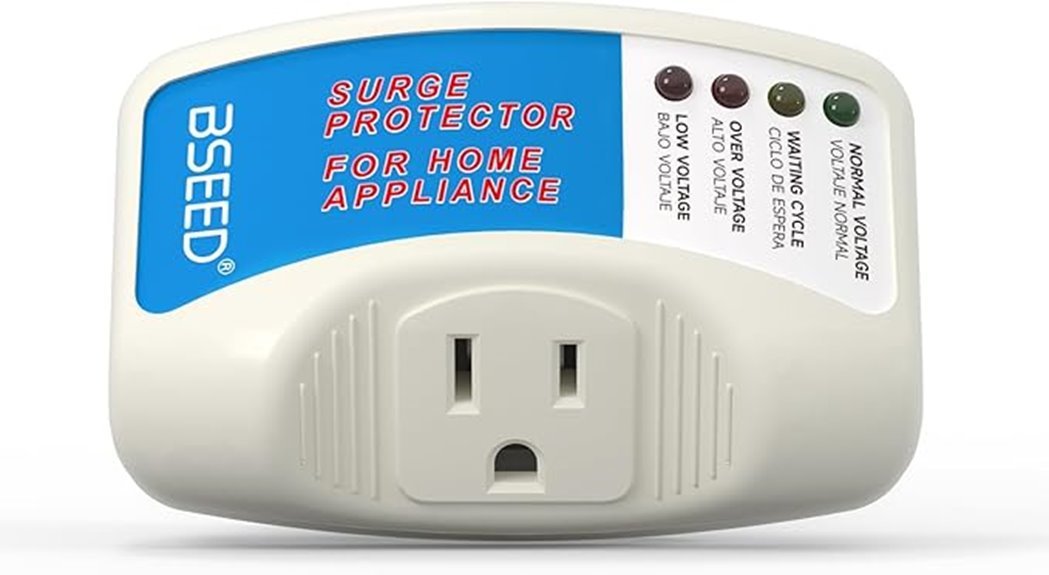
The BSEED Single Outlet Surge Protector is a smart pick if you want simple, plug-and-go protection for a dehumidifier or other compressor-based appliance. You just plug it into a standard 120V, 15A North American outlet, then connect your unit. It watches the incoming line and cuts power during surges, spikes, brownouts, and high or low voltage, then waits about 3 minutes before restoring power, which helps reduce the risk of compressor stress from rapid restart cycling. You’ll see clear indicator lights for voltage status and waiting cycles. Its wall-mountable, compact design fits neatly behind appliances. BSEED lists a 3-year warranty and 24/7 support.
Best For: Homeowners or renters with compressor-based appliances like refrigerators, dehumidifiers, freezers, or window AC units who want simple plug-in surge and voltage protection.
Why you’ll like it: This model keeps the setup simple. You do not need a large power strip, and the single outlet helps reduce the temptation to connect several high-draw devices at once.
Why it fits dehumidifier use: The single-outlet design keeps the dehumidifier as the main load instead of encouraging you to plug in several devices at once. The delay is also useful for compressor appliances because it gives the line time to stabilize before the unit restarts.
One thing to check: BSEED does not publish a joule rating for this model. It is built around voltage cutoff rather than a headline surge-absorption number, so if a published joule figure matters to you, look at the 1050-joule version below instead.
Pros:
- Cuts power during surges, spikes, brownouts, and high or low voltage
- 3-minute restart delay helps reduce compressor stress from rapid cycling
- Compact, wall-mountable design with clear status indicator lights
Cons:
- Single-outlet design only protects one appliance at a time
- Limited to 120V, 15A appliances in North American Type B outlets
- No published joule rating, and no app control or multi-device power management
Who should buy this: Buy it if you want focused protection for one dehumidifier and prefer a compact wall-plug design.
Who should skip it: Skip this one if you need several outlets in the same area or if your dehumidifier manual requires direct wall connection with no plug-in protector.
BSEED Single Outlet Voltage Protector for Appliances
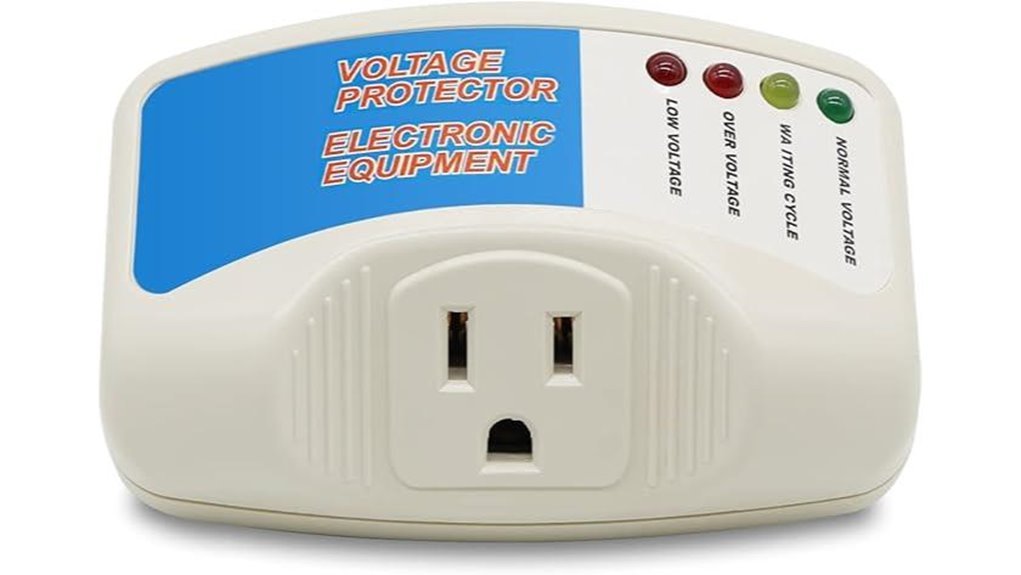
BSEED’s single-outlet voltage protector is ideal if you need dependable protection for a dehumidifier and other large appliances. You get automatic shutdown during voltage spikes, surges, brownouts, and harmful fluctuations, which helps keep the appliance out of harm’s way. The built-in delay mode waits 3 minutes before restoring power, and the DELAY light shows you it’s stabilizing. With 125V, 15A, 1050-joule protection, and a 1875W rating, it has the headroom for demanding gear like freezers, washers, and air conditioners. Its compact Type B plug, one outlet, and manufacturer-stated 3-year warranty make it a practical choice for apartments and residential use.
Best For: Homeowners or apartment residents who need reliable single-outlet surge and voltage protection for large appliances like air conditioners, freezers, washers, or dehumidifiers.
Why you’ll like it: It gives you a stronger appliance-focused setup than a basic strip, especially if your main concern is voltage fluctuation rather than just outlet expansion.
Why it fits dehumidifier use: This model covers both sides of the problem: a published 1050-joule surge rating and an active voltage cutoff. That combination is useful if your dehumidifier runs in a basement, garage, or older home where voltage dips and resets are common.
Pros:
- Automatically shuts off power during voltage spikes, surges, brownouts, and fluctuations.
- Built-in 3-minute delay mode with a clear DELAY indicator for safer power restoration.
- Compact design with a published 1050-joule rating and 125V/15A/1875W capacity.
Cons:
- Only has one outlet, so it’s not suitable for multiple devices at once.
- Best suited for large appliances, so it may be overkill for smaller electronics.
- Requires waiting during the delay period before power is restored after voltage issues.
Who should buy this: Buy it if you want a single-outlet protector with delay protection for one major appliance.
Who should skip it: Skip it if you mainly need a multi-outlet power station for a desk or entertainment center. This is better for one appliance that needs focused protection.
BSEED Electronic Surge Protector for Home Appliances
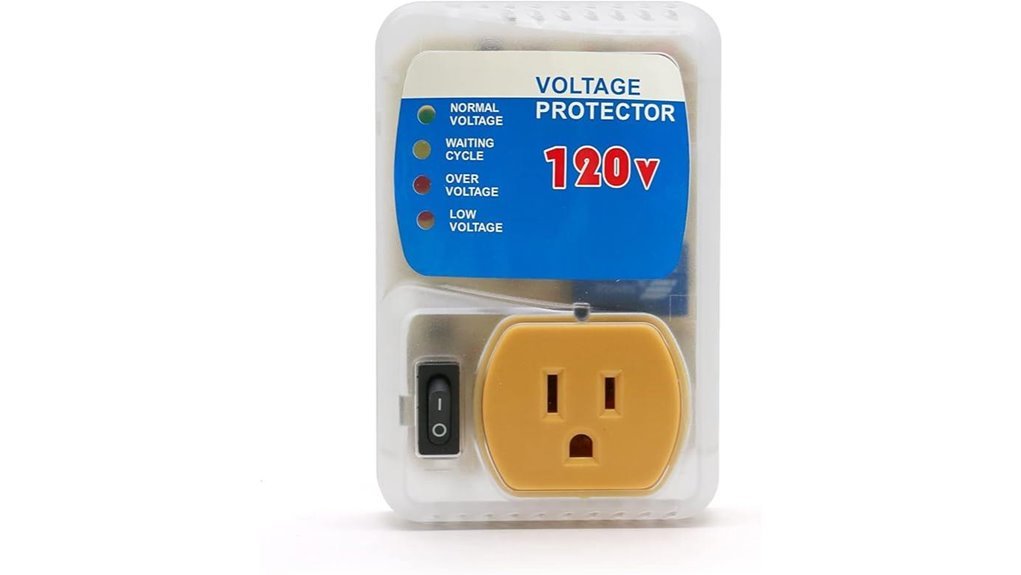
If you need surge protection for a dehumidifier and other large appliances, BSEED fits well. This ETL-listed voltage protector handles 120V, 15A, and up to 1800 watts, so it suits refrigerators, freezers, air conditioners, washers, and ice makers. It cuts power during surges, spikes, fluctuations, and brownouts, then waits three minutes before restoring service. You can also adjust the voltage cutoff range from 90V to 140V at the back, which is genuinely useful if your utility power runs low or high. With three outlets and a Type B plug, you get practical, flexible protection in a polycarbonate enclosure.
Best For: Homeowners who need reliable surge and voltage protection for dehumidifiers and other large 120V appliances like refrigerators, freezers, washers, and air conditioners.
Why you’ll like it: It gives you three outlets while still staying focused on appliance protection. That can be helpful in a utility area where you need one main appliance plus a low-draw accessory.
Why it fits dehumidifier use: The 3-outlet layout gives you more flexibility than a single-plug model, but it still targets appliance protection. For safety, keep the combined load within the listed 15A and 1800W rating and avoid plugging in multiple high-draw appliances at the same time.
Pros:
- ETL-listed protection with support for up to 1800 watts and 15A appliances.
- Automatic shutdown during surges, spikes, fluctuations, and brownouts, plus a 3-minute delay before restoring power.
- Adjustable voltage cutoff from 90V to 140V with three outlets for flexible use.
Cons:
- Only works with 120V appliances, so it is not suitable for higher-voltage equipment.
- The 3-minute restart delay may be inconvenient for some users.
- Limited to three outlets, which may not be enough for setups with multiple devices.
Who should buy this: Buy it if you want appliance-style voltage protection but need more than one outlet.
Who should skip it: Skip this one if you want a slim behind-furniture plug or if you only need to protect one appliance and prefer a smaller single-outlet design.
Refrigerator Voltage Protector for Brownouts and Surges
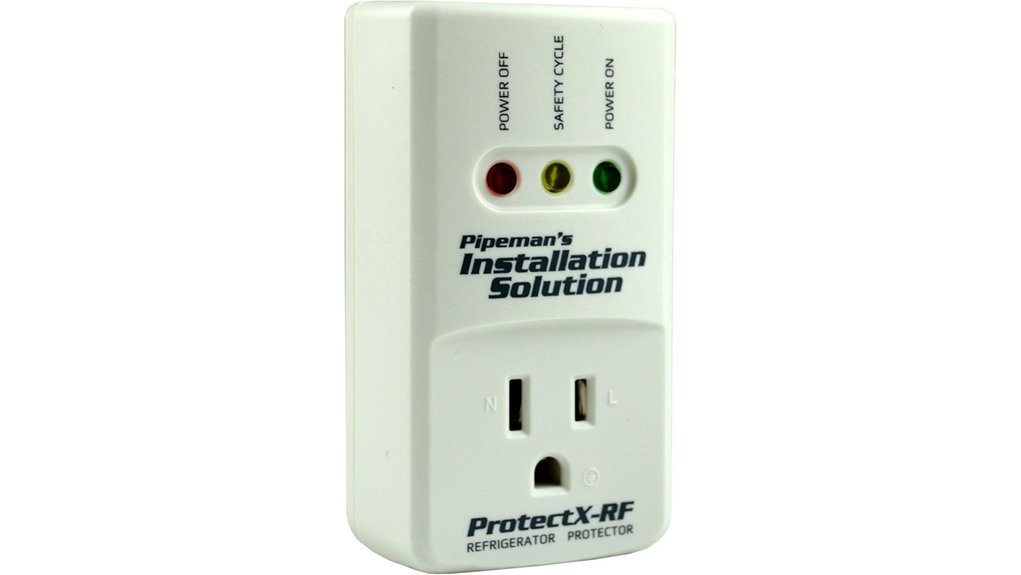
Need protection for a compressor appliance in a home with shaky power? The Nippon America Refrigerator Voltage Protector, model Protect-RF, is built to guard domestic appliances from brownouts and surges. It is marketed as an 1875-watt unit, while the specification sheet cites a maximum working load of around 1800 watts, so size your setup to the lower figure. It works across AC 85-135V, so you’re covered during unstable power, and it adapts to both 50Hz and 60Hz systems. Its roughly 4-minute safety cycle helps stabilize recovery after interruptions, while over-voltage disconnection blocks damaging spikes. This compact, corded unit suits compressors, automatic defrost models, and similar appliances.
Best For: Homeowners or renters who want reliable voltage protection for compressor appliances in areas with brownouts, surges, or unstable power.
Why you’ll like it: This is a strong fit for homes that deal with brownouts or unstable power. The corded design can also help when a direct wall-plug protector does not fit your outlet layout.
Why it fits dehumidifier use: A dehumidifier has the same compressor behavior as the refrigerators and freezers this unit was designed around. The longer safety cycle can help after power interruptions, especially in storm-prone or brownout-prone areas.
One thing to check: The listed wattage figures differ between the product name and the spec sheet, so plan against roughly 1800 watts and confirm the current rating on the listing.
Pros:
- Protects appliances from brownouts and power surges with over-voltage disconnection.
- Works with AC 85-135V and both 50Hz and 60Hz systems.
- Includes a roughly 4-minute safety cycle for more stable recovery after power interruptions.
Cons:
- Rated for appliances up to about 1800 watts, so it may not work for larger units.
- Published wattage figures are inconsistent between the product name and the spec sheet.
- Limited product details and features compared with more advanced home protection systems.
Who should buy this: Buy it if your home gets brownouts, storm-related outages, or voltage swings and you want a delay cycle before restart.
Who should skip it: Skip this model if you want several built-in outlets or USB ports. It is mainly for protecting one domestic appliance from voltage problems.
Southwire Woods 1-Outlet Appliance Surge Protector (1080J)
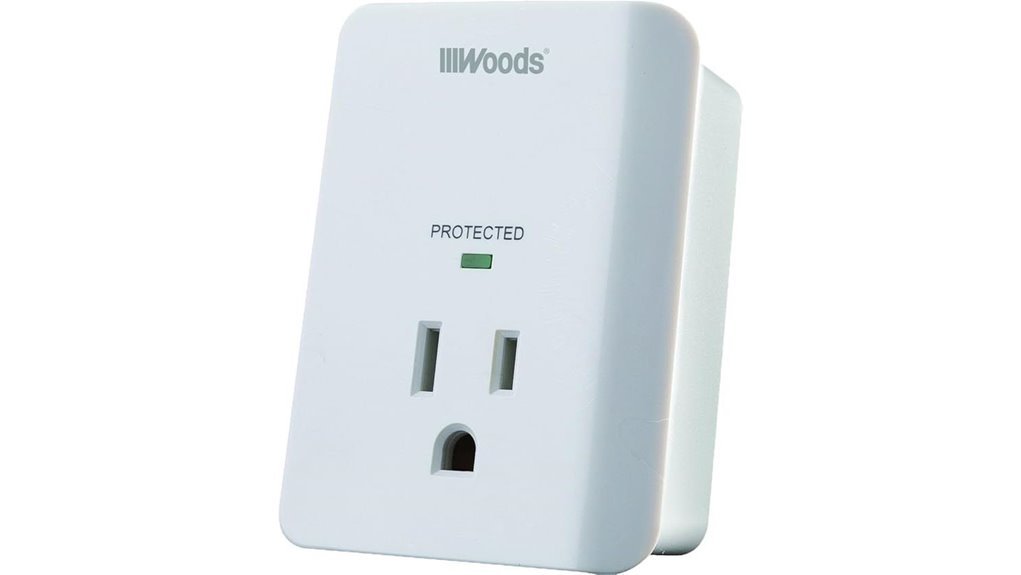
The Southwire Woods 1-Outlet Surge Protector suits you if your dehumidifier needs a compact, single-device setup. You get 1080 joules of protection in a slim, white design that won’t crowd your outlet area. Its 15-amp, 125-volt Type B plug fits standard North American outlets, and the LED indicator plus alarm help you spot protection issues fast, which matters because surge components degrade quietly over time. The cULus listing adds confidence, and Southwire is an established name in wire and cable products. It’s also handy for other indoor devices like printers, TVs, or refrigerators.
Best For: People who need a compact, single-outlet surge protector for one indoor appliance or device, such as a dehumidifier, printer, TV, or refrigerator.
Why you’ll like it: The compact design is easy to understand and easy to place. It is a good option when you want a simple protector with a status indicator instead of a bulky strip.
Why it fits dehumidifier use: This is a clean choice when you want straightforward surge defense rather than a larger power strip. Just be clear on what it does and does not do: it absorbs spikes, but it does not cut power during a brownout or delay the compressor restart after an outage.
Pros:
- 1080 joules of surge protection in a slim, space-saving design
- LED indicator light and alarm help confirm protection status
- cULus listed with a 15-amp, 125-volt Type B plug for standard North American outlets
Cons:
- Only one outlet, so it’s not suitable for multiple devices
- Manufacturer warranty details are not clearly specified
- No voltage cutoff or restart delay for compressor recovery
Who should buy this: Buy it if you want a compact single-device surge protector from a recognized electrical products brand.
Who should skip it: Skip it if you need built-in voltage delay protection for compressor restart. This is better for compact surge defense than advanced power recovery control.
Fosmon Refrigerator Surge Protector, 3-Outlet Heavy-Duty Appliance Surge Protector
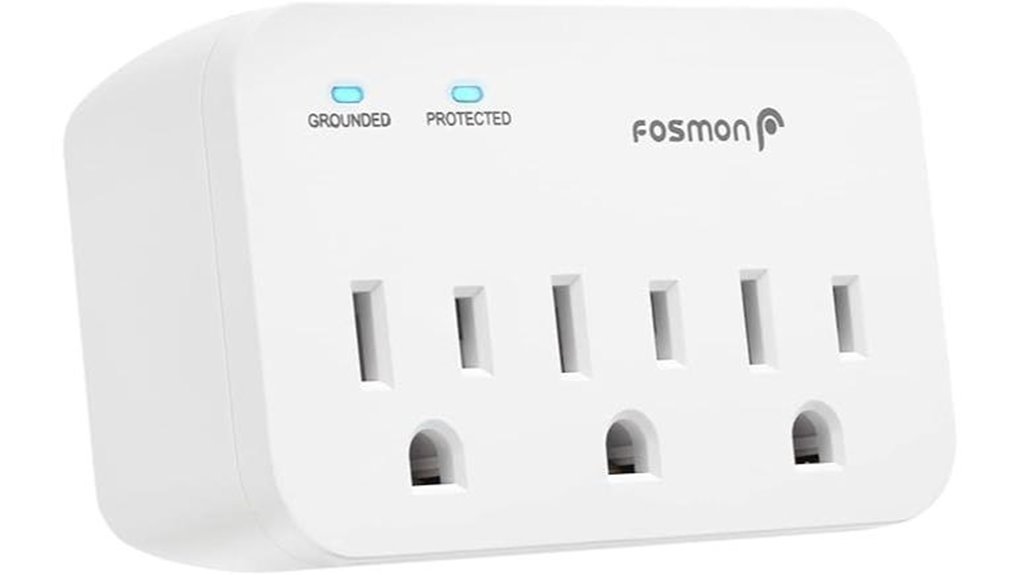
Fosmon’s 1200-joule protection suits you if you want a compact, heavy-duty option for a dehumidifier. You get three outlets, 15-amp support, and 1875-watt capacity, which is enough headroom for a dehumidifier plus a low-draw accessory or two. The 125-volt, 3-prong Type B design fits standard North American setups, and its lightweight, portable build makes it easy to move. LED grounded and protected indicators help you check status fast, including whether the outlet itself is wired correctly. Fosmon lists conformance with UL 498A and UL 1449, plus a limited lifetime warranty and USA-based support.
Best For: People who need a compact, heavy-duty surge protector for a dehumidifier or other household appliances in standard North American outlets.
Why you’ll like it: Fosmon gives you a compact wall-style form with multiple outlets. That is useful when a full-size strip feels too large but a single outlet feels too limiting.
Why it fits dehumidifier use: It has a stronger appliance-style profile than most small strips, with 15A support, 1875W capacity, and a grounded-outlet indicator. The grounding light is worth more than it sounds in a basement or older home, where a miswired outlet is common and would quietly defeat the protection.
Pros:
- 1200-joule surge protection with 15-amp, 1875-watt capacity for appliance loads
- Compact, lightweight, portable design with 3 outlets and Type B compatibility
- LED grounded and protected indicators, with listed UL 498A and UL 1449 conformance
Cons:
- Only 3 outlets, which may be limiting for larger setups
- Designed for 125V North American systems, so it won’t fit international outlets
- No voltage cutoff or compressor restart delay
Who should buy this: Buy it if you want a compact 3-outlet protector with a stronger appliance-style capacity than most small strips.
Who should skip it: Skip it if you specifically need a built-in delay timer for compressor restart after outages. This model’s strongest points are capacity, compact size, and indicators.
CRST 10-Outlet Heavy Duty Surge Protector Power Strip
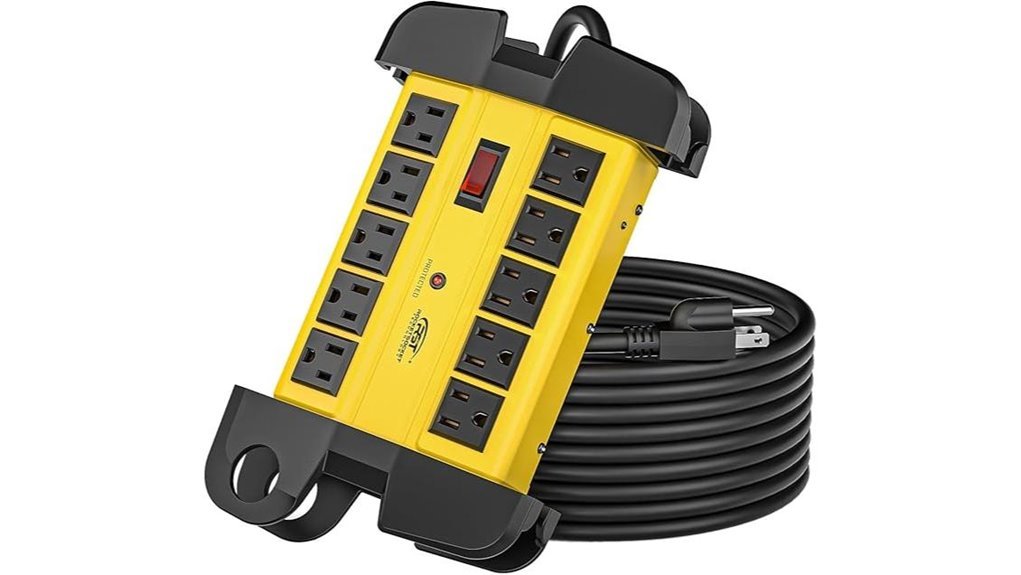
CRST’s 10-outlet heavy-duty strip is a solid pick when you need lots of plug space for a dehumidifier setup. You get 10 outlets, 2800 joules of surge protection, and a 15-foot cord, so you can place your unit where the drainage and airflow work best rather than where the outlet happens to be. The metal housing helps it handle tougher spaces like garages, labs, or construction areas. Its 15-amp breaker and reset switch add practical overload protection, while the cord holder keeps storage neat. You can also use it for fans, lamps, or laptops. CRST lists ETL certification and an 18-month warranty.
Best For: People who need a rugged, multi-outlet surge protector for dehumidifiers or other home, garage, lab, or light industrial setups that benefit from a long cord and durable metal housing.
Why you’ll like it: This is the tougher strip in the list. The long cord and metal housing make it more practical for garages, workshops, basements, and utility spaces.
Why it fits dehumidifier use: The 2800-joule rating, 15-foot cord, metal housing, and 15A breaker make it far better suited to basement and garage setups than small plastic strips. The one rule that still applies: 10 outlets is not permission to fill all 10. Keep the combined draw inside the 15A total.
Pros:
- 10 outlets provide plenty of plug space for multiple devices.
- 2800-joule surge protection and a 15A breaker add solid electrical safety.
- 15-foot cord and heavy-duty metal housing make placement flexible and durable.
Cons:
- Not smart home compatible.
- Bulky metal design may be less convenient for compact spaces or travel.
- Easy to overload if you treat all 10 outlets as usable at once with high-draw gear.
Who should buy this: Buy it if your dehumidifier sits in a garage, basement, workshop, or utility room where a long cord and rugged housing are useful.
Who should skip it: Skip it if you need a small plug-in protector behind a dehumidifier or if you do not need the long cord and metal housing.
TESSAN Single Plug Surge Protector with Indicator
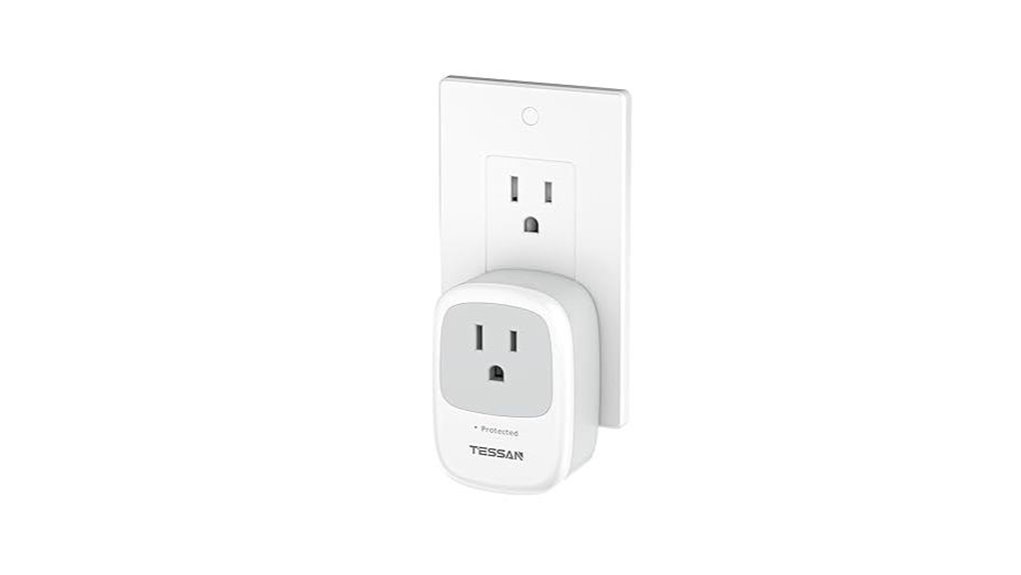
TESSAN’s 1050-joule single plug protector is ideal when you need compact, no-fuss dehumidifier protection. You get 1875W of capacity, so it has room for an appliance load rather than just electronics, and the light indicator lets you confirm surge protection at a glance. Its tiny 2.1×2.91×1.18-inch body and 2.83-ounce weight make it easy to fit behind furniture or pack for travel. You can use it with Type A or Type B North American outlets in your bedroom, kitchen, office, or living room. It isn’t smart-home compatible, but it delivers simple, focused protection.
Best For: People who want a compact, easy-to-use single-outlet surge protector for a dehumidifier or other household electronics in North American outlets.
Why you’ll like it: It is small, easy to move, and simple to check at a glance. That makes it appealing for finished rooms where a large power strip would look messy.
Why it fits dehumidifier use: TESSAN works best when space is tight and you want a tiny single-plug protector rather than a full strip. The indicator light matters more than its size suggests, because a worn-out protector still passes power while quietly giving you no surge defense at all.
Pros:
- 1050-joule surge protection with a light indicator for status at a glance
- Compact, lightweight design is easy to fit behind furniture or take while traveling
- 1875W capacity supports a wide range of devices, from TVs to appliances
Cons:
- Only provides a single outlet, so it won’t expand your plug count
- No voltage cutoff or restart delay for compressor recovery
- Limited to Type A and Type B North American outlets
Who should buy this: Buy it if you want a small single-plug protector with a simple indicator light.
Who should skip it: Skip it if you need automatic voltage cutoff, a restart delay, or several outlets for a larger basement or garage setup.
Factors to Consider When Choosing a Surge Protector for a Dehumidifier
When you choose a surge protector for your dehumidifier, check the power rating and make sure it matches your unit’s needs. You’ll also want to confirm voltage compatibility, startup draw, surge protection strength, outlet count, cord length, indicator lights, and whether a safety delay is included. These features help you protect your dehumidifier and keep it running reliably.
Pro tip: Do not buy only by outlet count or joule number. A high joule rating does not fix an amperage shortfall. For a dehumidifier, the decisive details are amperage, wattage, grounding, surge rating, protection indicator, and whether the protector is designed for appliance-style loads.
Power Rating
To keep your dehumidifier protected and running safely, choose a surge protector whose power rating matches or exceeds the unit’s load, which is often between 500 and 1500 watts. You should check your dehumidifier’s nameplate and buy a protector that can handle that demand without strain. A unit rated for 15 amps gives you a safer margin for typical household use. Don’t ignore surge protection capacity either; look for at least 1000 joules so it can absorb spikes more effectively. Features like automatic voltage cutoff and delay functions add another layer of safety by disconnecting during power fluctuations and easing the restart. When you match capacity correctly, you’ll reduce overheating risk, improve reliability, and help your dehumidifier last longer.
Startup Current and Compressor Load
Running watts only tell you part of the story. A dehumidifier uses a compressor, and a compressor pulls a short burst of extra current at the instant it starts, often several times its normal running draw for a fraction of a second. That is why a 500-watt dehumidifier is not automatically safe on any protector that says 1875 watts on the label. Look for a protector rated for appliance use at 15 amps rather than a strip designed for chargers and lamps, and leave headroom instead of running near the ceiling. The same logic explains why a restart delay is useful: it stops the compressor from trying to start against pressure that has not equalized yet.
Voltage Compatibility
Voltage compatibility matters just as much as wattage, so you should confirm that the surge protector matches your dehumidifier’s required voltage, which is usually 120V for North American models. If the voltage doesn’t align, you can damage the unit or prevent it from running properly. After that, check the protector’s amperage rating; 15 amps is typically enough for most residential dehumidifiers. You should also verify that its maximum power rating exceeds your dehumidifier’s wattage, which often falls between 500 and 700 watts for common home sizes. In areas with unstable utility power, look for voltage cutoff features that disconnect the appliance when the line drifts too high or too low. Matching these electrical specs lets you choose a protector that supports safe, reliable dehumidifier operation without unnecessary strain.
Surge Protection
Surge protection is a must for keeping your dehumidifier safe from sudden spikes and power fluctuations. You should choose a protector with at least 1000 joules so it can absorb damaging surges before they reach the unit. Automatic voltage cutoff adds another layer of safety by disconnecting the appliance during unstable voltage, which helps shield sensitive internal parts. A delay function matters too, because it waits for voltage to settle before restoring power after an outage or surge. Make sure the protector can support your dehumidifier’s maximum load, with 1875 watts being the common ceiling for household 15A models. Finally, check the indicator lights. They’ll tell you whether protection is still active, so you can replace the unit before your dehumidifier is exposed.
Grounded and GFCI Outlets
Dehumidifiers usually live in basements, garages, laundry rooms, and crawl spaces, and those areas commonly require GFCI outlets under modern electrical codes. A surge protector and a GFCI outlet do different jobs: the GFCI protects people from shock, while the surge protector protects equipment from spikes. You can generally use a surge protector plugged into a GFCI outlet, but the outlet must be properly grounded for surge protection to work at all. If your protector has a grounded indicator light and it does not come on, that is a wiring problem to fix, not a light to ignore. If the GFCI trips repeatedly with your dehumidifier plugged in, stop using that setup and have the circuit and appliance checked by a licensed electrician.
Outlet Count
Once you’ve covered surge protection, the next thing to check is outlet count. You’ll want enough outlets for your dehumidifier and any extras, like a fan or air purifier, so you don’t end up juggling power strips. If you’re only plugging in one appliance, a single-outlet model can work well and removes the temptation to overload. In a shared room, a multi-outlet surge protector gives you more flexibility. Make sure the layout leaves room for bulky plugs and won’t block neighboring outlets, especially in tight spaces. Also confirm the outlet type matches your dehumidifier’s plug. Remember that outlet count never raises the total amperage available, so add up every connected load before you fill the strip.
Safety Delay
A safety delay is worth looking for because it gives your dehumidifier time to sit out a power interruption before the protector restores power, usually after about 3 minutes. That pause lets the voltage settle and lets refrigerant pressure equalize, so your compressor isn’t forced to restart under load in a way that can overheat or wear it out. You’ll also want to check for automatic voltage cutoff, which disconnects the appliance during spikes and keeps the unit isolated when the line gets unstable. LED indicators are useful too, since they show when the protector is waiting or has spotted a voltage problem. Many newer dehumidifiers already include their own compressor delay, so treat this as a helpful backup rather than the only thing standing between your unit and damage.
Cord Length and Placement
Placement matters because a dehumidifier needs open airflow and a stable power connection. A short plug-in protector can work well when the outlet is directly behind or beside the unit. A longer cord can help in garages, basements, or utility rooms, but the cord must still match the power demand. Never run a dehumidifier through a weak or thin extension cord just to reach a better drain spot. Choose the safest outlet location first, then match the surge protector to that setup, and keep cords out from under rugs and away from standing water.
Indicator Lights and Alarms
Indicator lights help you avoid guessing. A protected light can show that the surge components are still working, while a grounded light can warn you if the outlet is not wired correctly. Some models also use alarms or delay lights. These simple signals are helpful because surge protectors wear down over time, and a dehumidifier may keep running even after the protector can no longer absorb spikes properly.
Which Type Should You Choose?
Choose a single-outlet appliance protector if your main goal is simple dehumidifier protection. Pick a voltage protector with delay if your home has brownouts, storms, or frequent outage recovery problems. Choose a heavy-duty 15A strip if you need a long cord, a rugged housing, or several outlets in a garage or workshop. Choose a compact plug-in protector if your dehumidifier sits in a finished room and you only need basic surge defense.
For the safest match, check three numbers before you buy: voltage, amperage, and wattage. If the protector is rated lower than your dehumidifier, do not use it. If you plan to plug in other devices too, add their power draw to the dehumidifier load before deciding.
Common Mistakes to Avoid
- Using a light-duty strip: Many basic strips are made for lamps, chargers, or small electronics, not compressor appliances.
- Treating joules as the only number: A high joule rating does nothing for you if the strip is only rated for 10 amps.
- Daisy-chaining protectors: Plugging one strip into another can overload the setup and create a fire risk.
- Ignoring the manual: Your dehumidifier manual should be the first rule for outlet and cord safety.
- Ignoring the grounded light: If the grounded indicator stays off, the outlet wiring needs attention before the protector can do its job.
- Forgetting replacement: A surge protector can wear out after repeated spikes. Replace it if the protection indicator fails.
Before you plug in: Make sure the outlet is grounded, the protector is not damaged, the cord is not covered by rugs, and the dehumidifier has enough airflow. Stop using any protector that feels hot, smells unusual, sparks, buzzes, or shows a failed protection indicator.
Frequently Asked Questions
Can a Dehumidifier Use a Regular Power Strip Safely?
A regular light-duty power strip is not the safest choice for a dehumidifier, especially if the unit draws high current. Use a grounded wall outlet first when the manufacturer requires it, or choose a heavy-duty surge protector rated for appliances, 15 amps, and the dehumidifier’s wattage.
Does My Dehumidifier Already Have a Restart Delay?
Many modern dehumidifiers include a built-in compressor delay of roughly 3 minutes after power returns or after the unit cycles off. Check your manual. If yours already has one, a protector with its own delay is a useful backup for outage recovery rather than a feature you must have.
Do Surge Protectors Affect Dehumidifier Performance?
A properly rated surge protector should not reduce dehumidifier performance. Match the protector to the appliance load, avoid daisy-chaining, and use a model with enough wattage, amperage, and surge capacity for the unit.
How Many Joules Does a Dehumidifier Surge Protector Need?
For many home dehumidifier setups, 1,000 to 2,000 joules is a practical range. A higher joule rating can be useful if your area has frequent storms, voltage swings, or repeated power interruptions. Just remember that joules measure surge absorption, not how much load the protector can carry.
Should Dehumidifiers Be Plugged Directly Into the Wall?
Check the dehumidifier manual first. Many manufacturers prefer a grounded wall outlet and warn against extension cords or light-duty power strips. If you use surge protection, choose an appliance-rated protector that matches the unit’s voltage, amperage, and wattage.
Can I Use a Surge Protector With a GFCI Outlet in a Basement?
In most cases yes, since the two protect against different things: a GFCI guards people against shock, while a surge protector guards equipment against spikes. The outlet still needs a proper ground for surge protection to function. If the GFCI trips repeatedly once the dehumidifier is running, have an electrician check the circuit rather than moving to a non-GFCI outlet.
Can I Use an Extension Cord With a Dehumidifier?
Most manuals advise against it. If your outlet is genuinely out of reach, the safer path is a protector with a longer built-in cord, like a heavy-duty appliance-rated strip, rather than a thin household extension cord. Never chain an extension cord into a surge protector or a surge protector into an extension cord.
Will a Surge Protector Help During Power Outages?
A surge protector will not keep your dehumidifier running during an outage. It can help shield the unit from damaging spikes when power returns, especially if it includes voltage protection and a restart delay.
Is a Voltage Protector Better Than a Basic Surge Protector?
A voltage protector can be better if your home deals with brownouts, unstable voltage, or frequent outage recovery. A basic surge protector mainly absorbs spikes, while a voltage protector may also disconnect power and delay restart until the line stabilizes.
Is a Whole-House Surge Protector a Better Option?
A panel-mounted surge protective device, installed by a licensed electrician, handles large surges arriving from outside the home. It is best treated as a first layer rather than a replacement, since plug-in protectors still handle smaller spikes generated inside the house. The two are commonly used together.
Can I Plug a Dehumidifier and Fan Into the Same Surge Protector?
You can only do that if the combined load stays within the surge protector’s rating. Add the power draw of the dehumidifier, fan, and any other device. If you are close to the limit, use a separate outlet instead.
How Do I Know If My Surge Protector Needs Replacing?
Replace it if the protection indicator turns off, the alarm sounds, the unit is damaged, or it has taken repeated surge hits. Surge protection parts can wear down, so an old protector may still pass power while no longer giving full surge defense.
Conclusion
Picking the right surge protector for your dehumidifier is like giving it a sturdy umbrella in a storm. It helps shield your appliance from sudden power spikes and keeps it running smoothly. Whether you need a single-outlet option or a heavy-duty power strip, choose one that matches your dehumidifier’s wattage, safety features, and plug style. You’ll protect your investment, reduce hassle, and keep your home comfortable longer.
If you want the most appliance-focused setup, start with a single-outlet voltage protector with a safety delay. If you need several outlets, look for a 15A heavy-duty strip with enough joules and a clear protection indicator. The best choice is the one that matches your dehumidifier label, your outlet location, and your home’s power conditions.
Final recommendation: For one dehumidifier, choose a single-outlet appliance or voltage protector. For a basement, garage, or workshop, choose a rugged 15A heavy-duty strip only if the total connected load stays within the listed rating.