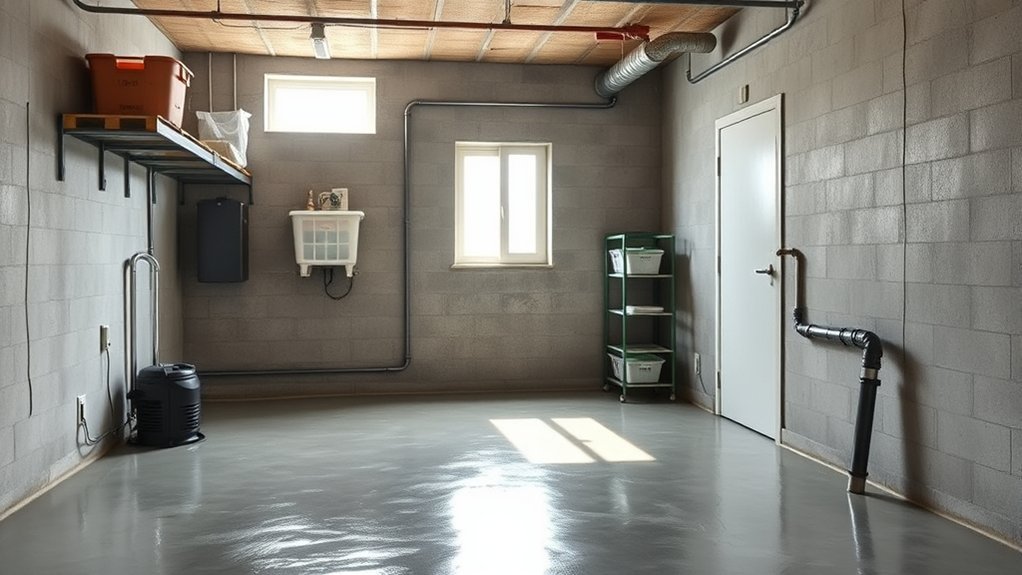
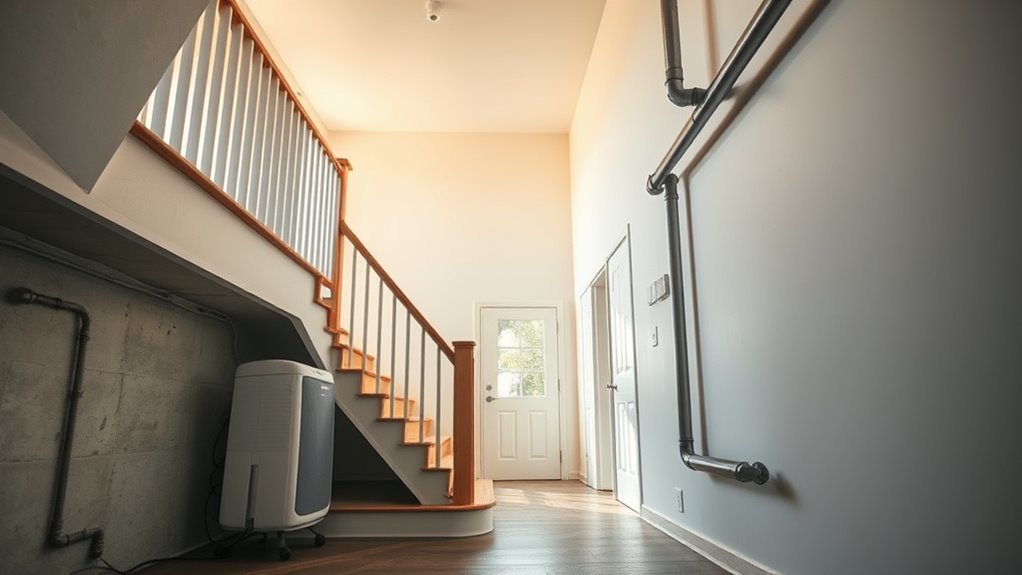
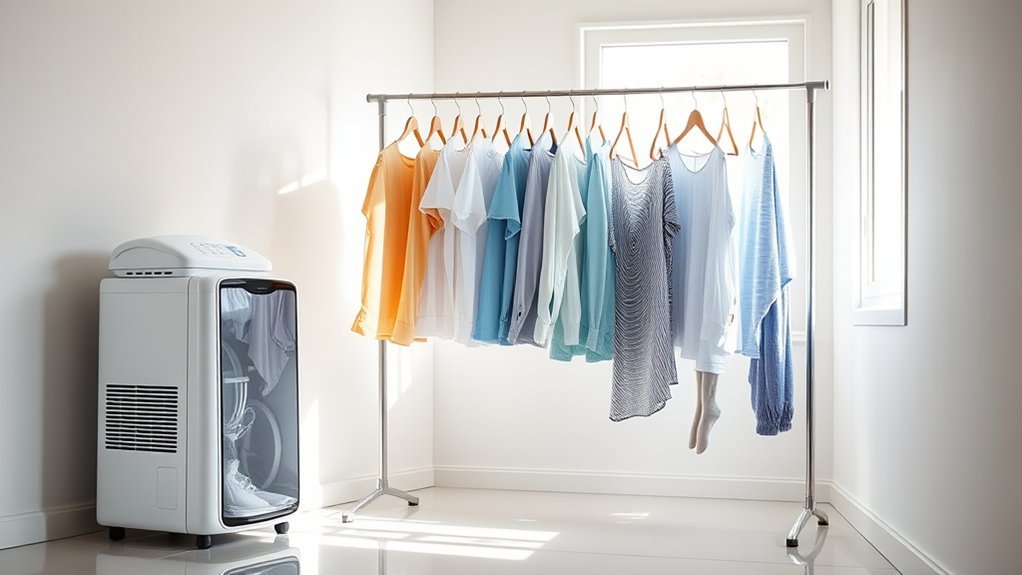
The best home dehumidifier or humidifier depends on the moisture problem you need to solve. Full-size compressor dehumidifiers such as the Yaufey, Tehanld, SEMKAP, and Waykar are better suited to basements, laundry rooms, garages, and sustained dampness. Compact thermoelectric models are quieter and easier to move, but they remove water more slowly and work best in warm, enclosed rooms with lighter humidity. The BNTET and DINZAN add humidifying modes for small spaces that feel damp in one season and dry in another.
- Choose a compressor model with continuous drainage for ongoing basement or laundry-room dampness.
- Use a thermoelectric model for mild moisture in a small, enclosed bedroom, bathroom, closet, or RV.
- Buy a combo humidifier-dehumidifier only when seasonal flexibility matters more than maximum output.
- Confirm the exact Amazon variation, included drain parts, warranty, and seller before ordering.
Quick Comparison
| Product | Type | Key seller-listed capacity | Best use | Drainage / standout feature | Details |
|---|---|---|---|---|---|
| Yaufey 80-Pint | Compressor dehumidifier | Up to 5,000 sq. ft.; up to 80 pints/day at 95°F, 90% RH | Large damp spaces | Tank or continuous drain hose | Check Price on Amazon |
| Tehanld 50-Pint | Compressor dehumidifier | Up to 5,000 sq. ft.; 50-pint seller listing | Large rooms and laundry areas | Drain hose, timer, child lock | Check Price on Amazon |
| SEMKAP 32-Pint | Compressor dehumidifier | Up to 2,500 sq. ft.; 32 pints/day | Medium basements and garages | Included hose and 2.5-liter tank | Check Price on Amazon |
| Waykar 30-Pint | Compressor dehumidifier | Up to 1,500 sq. ft.; 30 pints/day | Efficiency-focused buyers | Automatic or manual drainage | Check Price on Amazon |
| ToLife 95-Ounce | Thermoelectric dehumidifier | Seller lists up to 1,000 sq. ft.; 95-ounce tank | Bedrooms and closets | Manual tank; sleep mode | Check Price on Amazon |
| OWAAE 95-Ounce | Thermoelectric dehumidifier | Seller lists up to 1,000 sq. ft.; 95-ounce tank | Compact spot moisture control | Manual tank; sleep mode | Check Price on Amazon |
| Natrogix 106-Ounce | Dual thermoelectric dehumidifier | Up to 40 oz/day at 86°F, 80% RH; 106-ounce tank | RVs and enclosed rooms | Large tank, timer, smart defrost | Check Price on Amazon |
| BeOkay 58-Ounce | Thermoelectric dehumidifier | Up to 230 sq. ft.; 58-ounce tank | Very small rooms | Manual tank; multiple timers | Check Price on Amazon |
| BNTET 2-in-1 | Dehumidifier and humidifier | Up to 320 sq. ft.; 68-ounce tank | Seasonal small-room use | Remote; humidify or dehumidify | Check Price on Amazon |
| DINZAN 4-in-1 | Dehumidifier, humidifier, filter, diffuser | About 350 sq. ft.; up to 580 ml/day | Multifunction small-room use | Short drain hose; replaceable filter | Check Price on Amazon |
Yaufey 80-Pint 5000 Sq. Ft. ENERGY STAR Dehumidifier
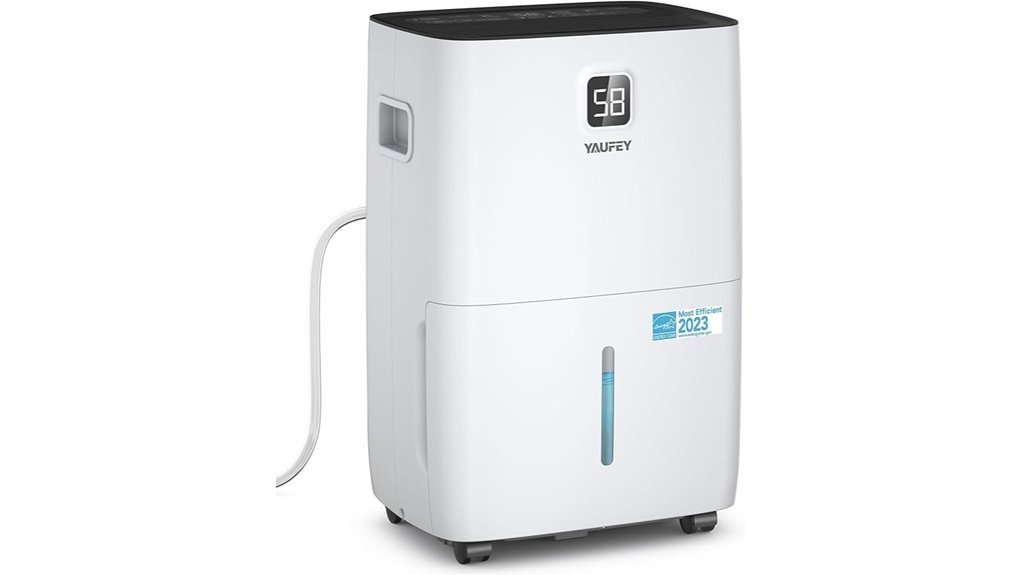
Best Overall for Large Damp Spaces
The Yaufey is the strongest large-area option in this list. Its current Amazon listing describes coverage up to 5,000 sq. ft., a 1.06-gallon collection tank, continuous-drain support, and adjustable humidity control from 30% to 80%. The seller lists moisture removal of up to 80 pints per day at 95°F and 90% relative humidity, or 60 pints per day at 86°F and 80% relative humidity, so real-world output will vary with room temperature and moisture level.
Best For: Large basements, open living areas, garages, and other persistently damp spaces where a compressor dehumidifier and hose drainage make sense.
Why You’ll Like It: It combines high seller-listed capacity, ENERGY STAR certification, a washable filter, automatic shutoff, a timer, and both tank and continuous drainage.
Who Should Avoid It: Small bedrooms or lightly humid closets where a full-size compressor unit would be more capacity, noise, and floor space than needed.
Pros:
- Seller-listed coverage up to 5,000 sq. ft. with high-capacity moisture removal under hot, humid test conditions.
- ENERGY STAR certified with adjustable humidity control and multiple operating modes.
- Supports continuous drainage as well as collection in the 1.06-gallon tank.
Cons:
- The 80-pint figure is tied to very hot and humid test conditions, not every home environment.
- Larger and heavier than thermoelectric tabletop models.
- The tank can still fill quickly in severe humidity unless the drain hose is used.
Tehanld 50-Pint 5000 Sq. Ft. Dehumidifier
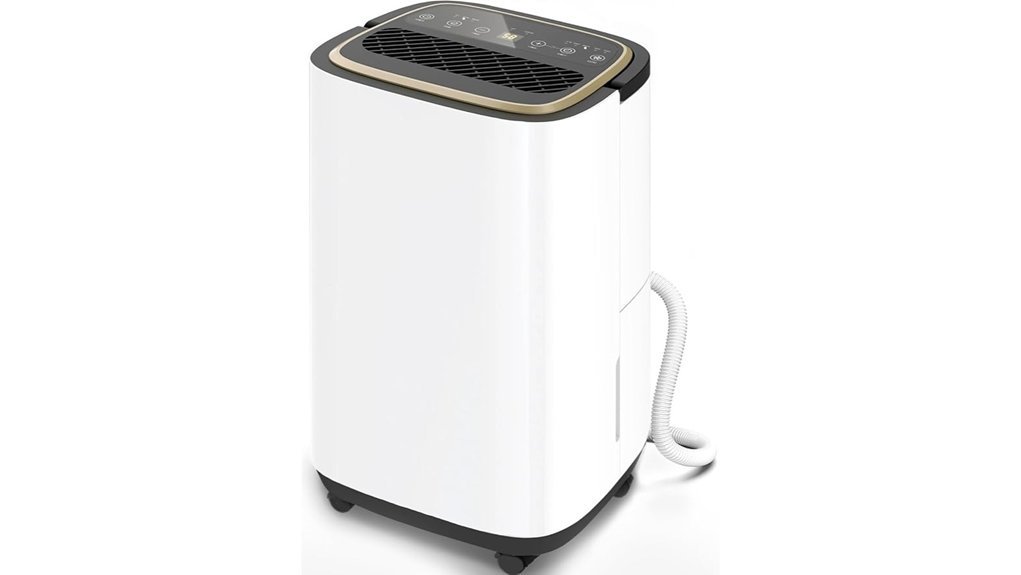
Best Large-Room Alternative
This Tehanld compressor dehumidifier is presented as a 50-pint-class model for spaces up to 5,000 sq. ft. Because seller fields can change or use different test conditions, confirm the exact daily-capacity wording on the linked page before ordering. It includes a drain hose, digital humidity controls, a 24-hour timer, a child lock, wheels, and automatic shutoff. The laundry-drying and air-circulation modes add flexibility, but the square-foot rating should still be treated as a seller guideline rather than a guarantee for every floor plan.
Best For: Basements, laundry rooms, garages, and large rooms where continuous drainage and adjustable humidity control are priorities.
Why You’ll Like It: The combination of compressor performance, hose drainage, a digital display, portability, and safety controls makes it easier to run for long periods.
Who Should Avoid It: Very small rooms or buyers specifically seeking a verified ENERGY STAR model.
Pros:
- Seller-listed 50-pint daily capacity and coverage up to 5,000 sq. ft.
- Includes continuous-drain capability, a timer, child lock, washable filter, handle, and wheels.
- Useful operating modes for standard dehumidifying, laundry drying, and air circulation.
Cons:
- Coverage and removal figures are manufacturer claims and can change with temperature and humidity.
- No ENERGY STAR certification is stated in the current product title.
- A full-size compressor unit takes more space and is usually louder than a small thermoelectric model.
SEMKAP 32-Pint 2500 Sq. Ft. Dehumidifier
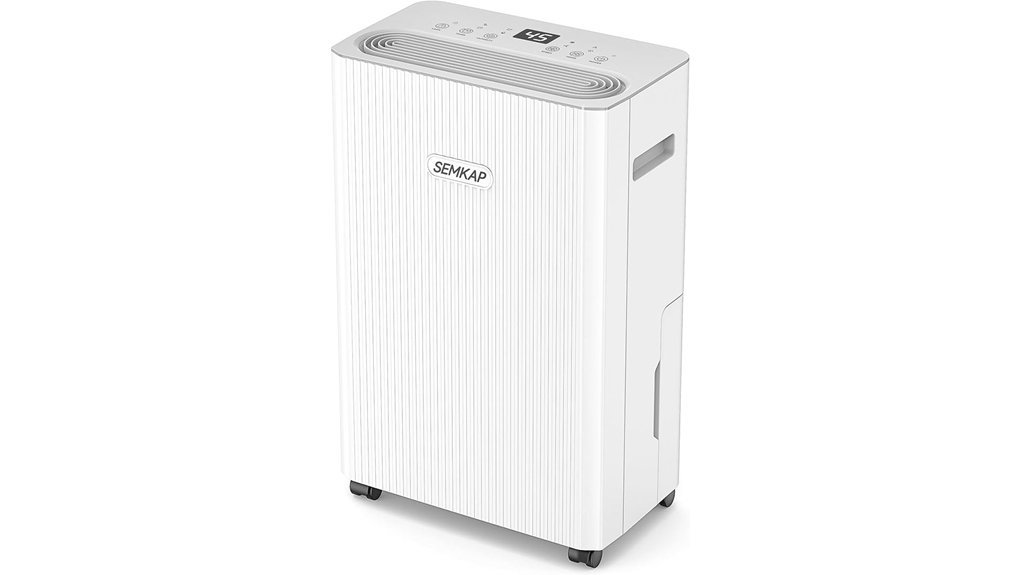
Best Value for Medium to Large Rooms
SEMKAP’s current listing identifies this as a 32-pint compressor dehumidifier for spaces up to 2,500 sq. ft. It includes intelligent humidity control, a 24-hour timer, a 2.5-liter tank, an included drain hose, automatic defrost, automatic shutoff, a child lock, wheels, and a carry handle. It offers a practical middle ground between compact tabletop units and the larger 50- to 80-pint choices.
Best For: Medium basements, bedrooms, bathrooms, kitchens, garages, and other damp rooms that need more power than a thermoelectric unit.
Why You’ll Like It: Manual and continuous drainage let you choose between portability and hands-free operation, while the compressor gives it more realistic damp-room capability than mini models.
Who Should Avoid It: Extremely wet or very large open basements that may need a higher-capacity unit or a dedicated drainage setup.
Pros:
- 32-pint seller-listed capacity with coverage up to 2,500 sq. ft.
- Includes a drain hose, timer, humidity control, auto defrost, child lock, wheels, and handle.
- More suitable for sustained moisture removal than small semiconductor models.
Cons:
- The 2.5-liter tank may need frequent emptying when the hose is not used.
- Lower capacity than the 50- and 80-pint large-space options.
- Compressor noise and heat output may be noticeable in quiet bedrooms.
Waykar 30-Pint 1500 Sq. Ft. ENERGY STAR Dehumidifier
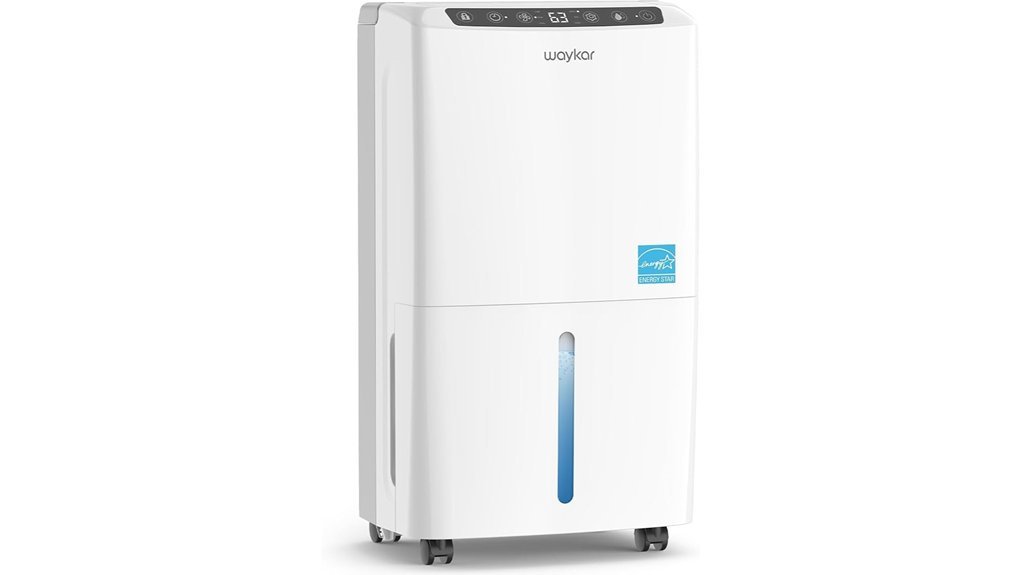
Best Energy-Efficient Pick
The linked Waykar ASIN is the 1,500 sq. ft., 30-pint version, not the 2,000 sq. ft., 34-pint variation. Its listing includes 2025 ENERGY STAR Most Efficient wording, a 0.62-gallon tank, automatic or manual drainage, adjustable humidity control, automatic defrost, automatic shutoff, a washable filter, and a minimum seller-listed noise level of about 38 dB. Actual electricity savings depend on climate, settings, runtime, and local utility rates.
Best For: Bedrooms, offices, living areas, and moderate basements up to the seller-listed 1,500 sq. ft. range where efficiency matters.
Why You’ll Like It: It pairs compressor-based moisture removal with ENERGY STAR recognition and flexible drainage in a relatively compact format.
Who Should Avoid It: Buyers who need the 2,000 sq. ft., 34-pint variation; that is a different ASIN and should not be confused with this model.
Pros:
- Correctly matched 30-pint, 1,500 sq. ft. configuration for the linked ASIN.
- 2025 ENERGY STAR Most Efficient listing with automatic and manual drainage options.
- Includes humidity control, auto defrost, tank-full shutoff, and a washable filter.
Cons:
- The 0.62-gallon tank is smaller than the tanks on some larger models.
- Not the 34-pint, 2,000 sq. ft. variation described in the original copy.
- Specific annual dollar savings cannot be promised because household conditions and energy rates vary.
ToLife 95-Ounce 1000 Sq. Ft. Dehumidifier
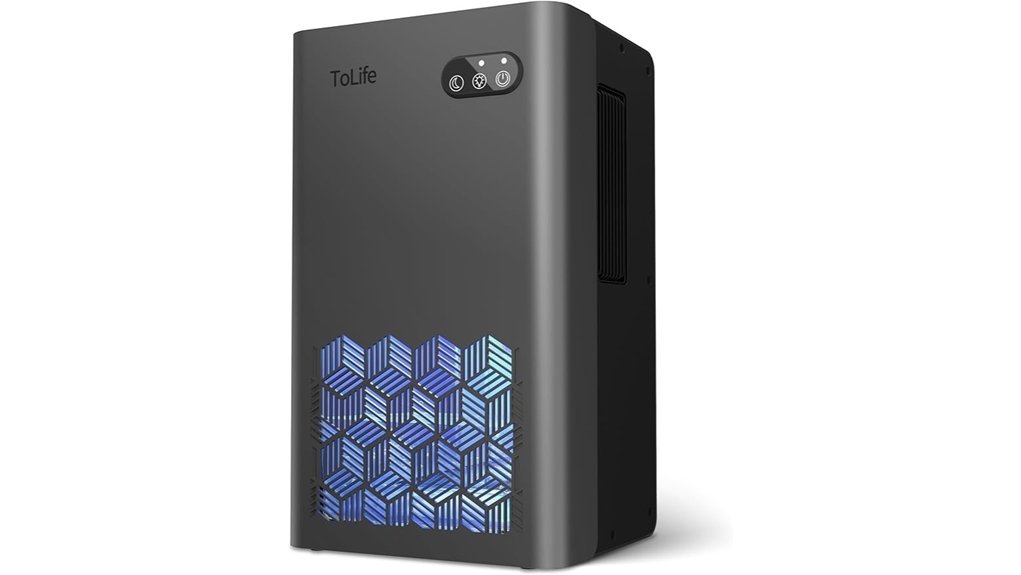
Best Compact Bedroom Pick
The ToLife uses semiconductor condensation rather than a compressor. Its listing highlights a 95-ounce tank, sleep mode, automatic shutoff, portability, and seven-color lighting, with seller-listed coverage up to 1,000 sq. ft. That coverage number is generous for a thermoelectric unit, so it is safer to view this as a compact option for enclosed bedrooms, bathrooms, closets, and similar spaces with light to moderate humidity.
Best For: Small enclosed rooms where quiet operation, simple controls, and easy portability matter more than heavy-duty extraction.
Why You’ll Like It: The large tank for its class, sleep mode, handle, and automatic shutoff make it convenient for everyday spot moisture control.
Who Should Avoid It: Wet basements, flood cleanup, or large open areas that need compressor-level moisture removal.
Pros:
- Compact design with a 95-ounce tank and built-in carry handle.
- Sleep mode, automatic shutoff, and seven-color lighting suit bedroom use.
- Simple operation with no drain hose installation required.
Cons:
- Thermoelectric performance is limited compared with compressor dehumidifiers.
- The 1,000 sq. ft. coverage figure should not be read as heavy-duty basement capability.
- No app or Wi-Fi control is stated for this model.
OWAAE 95-Ounce 1000 Sq. Ft. Dehumidifier
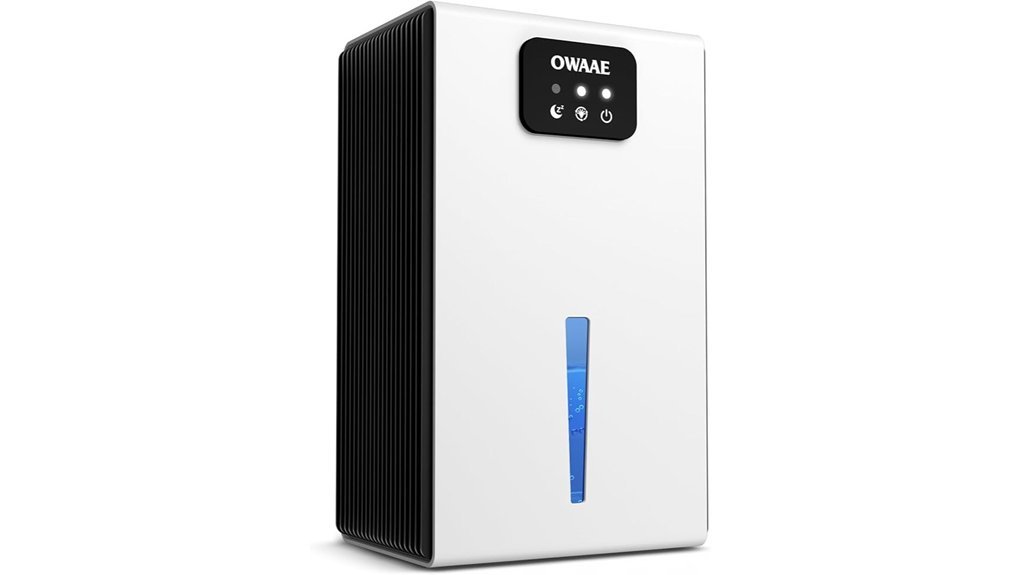
Best Compact Alternative
This OWAAE model has a similar small-room profile to the ToLife: a 95-ounce tank, sleep mode, automatic shutoff, a portable handle, and seven-color lighting. The listing states coverage up to 1,000 sq. ft., but its semiconductor design is better matched to contained rooms and localized dampness than to a large, wet basement.
Best For: Bedrooms, bathrooms, closets, nurseries, and small enclosed areas that need gentle moisture reduction.
Why You’ll Like It: It is easy to move, does not require a hose, and includes tank-full protection and a low-distraction sleep setting.
Who Should Avoid It: Buyers expecting the speed and capacity of a 30- to 80-pint compressor dehumidifier.
Pros:
- 95-ounce tank with automatic shutoff when the tank is full or incorrectly seated.
- Portable design with sleep mode and seven-color lighting.
- Straightforward choice for mild moisture in small enclosed areas.
Cons:
- Not appropriate for severe basement dampness or rapid drying jobs.
- Seller-listed square footage can overstate practical performance for thermoelectric units.
- Very similar in features to the ToLife, so buyers should compare current warranty and seller support.
Natrogix 106-Ounce 1000 Sq. Ft. Dehumidifier
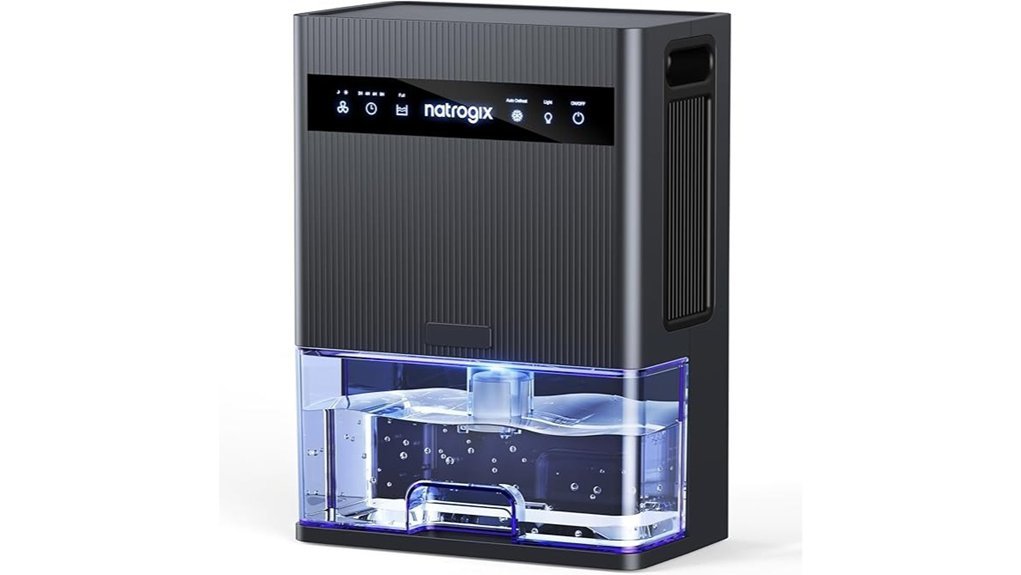
Best Large-Tank Thermoelectric Pick
The Natrogix uses dual-semiconductor condensation and pairs it with a 106-ounce tank. The seller lists maximum removal of up to 40 ounces per day in a sealed 86°F, 80% relative-humidity test environment. That condition is much warmer and wetter than many homes, so normal output may be lower. Sleep mode, timer settings, smart defrost, automatic shutoff, and seven-color lighting make it convenient for compact spaces and RV use.
Best For: Bathrooms, bedrooms, RVs, closets, and other enclosed spaces where a larger collection tank reduces emptying frequency.
Why You’ll Like It: Its larger tank and dual-semiconductor system provide a useful step up within the mini-dehumidifier category without the bulk of a compressor.
Who Should Avoid It: Cold rooms, very wet basements, or buyers who need a verified pint-per-day compressor rating.
Pros:
- 106-ounce tank is one of the largest among the compact thermoelectric picks.
- Seller lists up to 40 ounces per day under 86°F and 80% RH test conditions.
- Includes sleep mode, timers, defrost, automatic shutoff, and ambient lighting.
Cons:
- Real removal can be substantially lower in cooler or less humid rooms.
- Still not a substitute for a compressor dehumidifier in serious dampness.
- Needs clear space around the air intake and outlet for effective airflow.
BeOkay 58-Ounce 230 Sq. Ft. Small Dehumidifier
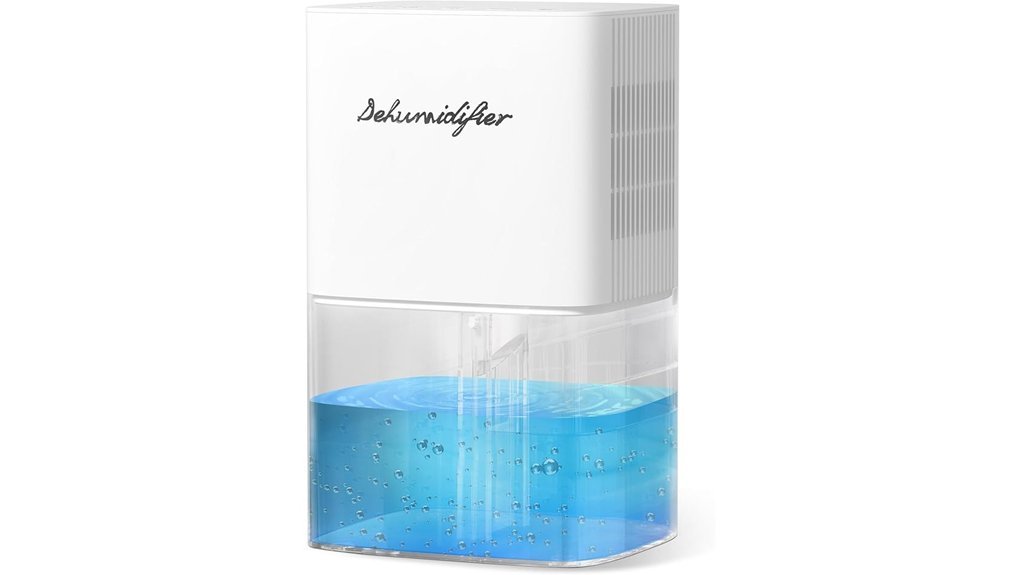
Best for Very Small Rooms
The BeOkay is a small thermoelectric model with a 1,657 ml, or 58-ounce, tank and a seller-listed treatment area of 230 sq. ft. It offers three operating modes, five timer choices, automatic shutoff protection, low-noise operation, defrost support, and ten color-light settings. Its more modest coverage figure makes it easier to match honestly to a bathroom, closet, or compact bedroom.
Best For: Very small bedrooms, bathrooms, closets, and other spaces around the seller-listed 230 sq. ft. range.
Why You’ll Like It: It provides a relatively large tank for a mini unit plus flexible timer and mode controls.
Who Should Avoid It: Large rooms, open floor plans, or persistently wet areas that need continuous drainage.
Pros:
- Clearer 230 sq. ft. seller-listed coverage for small-room use.
- 58-ounce tank, three modes, five timer choices, and automatic shutoff.
- Ten lighting options can serve as a soft night-light.
Cons:
- Small-room capacity only.
- Tank must be emptied manually because continuous drainage is not highlighted.
- Lighting features may add little value for buyers who want a plain appliance.
BNTET 2-in-1 Dehumidifier and Humidifier Combo
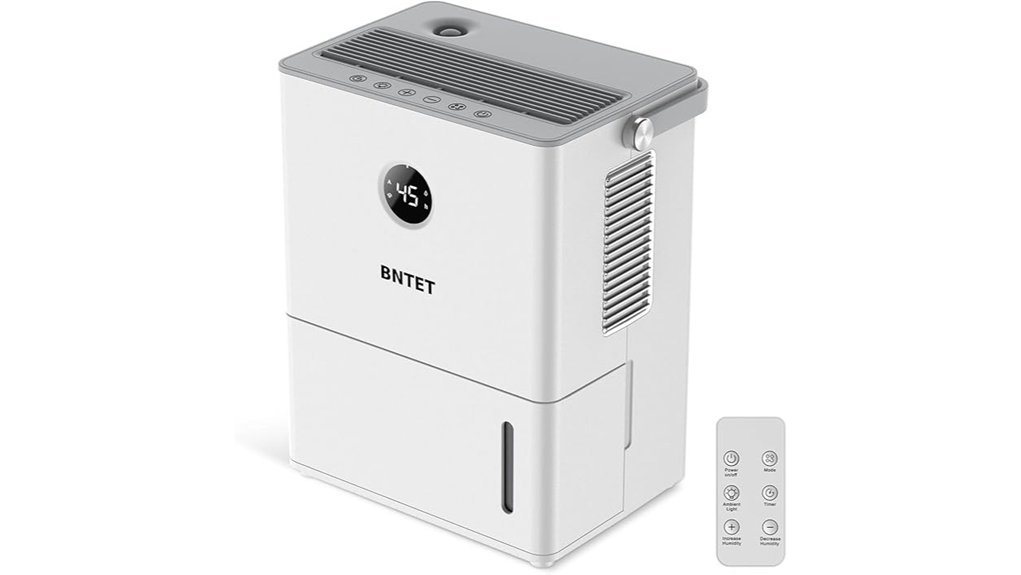
Best 2-in-1 for Small Spaces
The BNTET combines thermoelectric dehumidification and ultrasonic humidification in one compact appliance. Its listing states a 68-ounce tank, automatic humidity adjustment, a 12-hour timer, remote control, seven-color lighting, and coverage up to 320 sq. ft. The seller also lists dehumidification up to 27 fluid ounces per day at 86°F and 80% relative humidity, so normal output may be lower. The “smart” function refers to automatic humidity sensing and adjustment, not verified app or Wi-Fi connectivity.
Best For: Small bedrooms, offices, RVs, and seasonal climates where the same room can feel humid in summer and dry in winter.
Why You’ll Like It: One appliance can add or remove moisture, which saves shelf space and simplifies seasonal storage.
Who Should Avoid It: Large damp basements or buyers who need a powerful standalone humidifier and compressor dehumidifier.
Pros:
- Combines humidifying and dehumidifying for rooms up to the seller-listed 320 sq. ft.
- Includes automatic humidity control, a 68-ounce tank, timer, remote, and display.
- Seller lists up to 27 fluid ounces of daily removal under warm, humid test conditions.
- Compact design can reduce the need to store two separate small appliances.
Cons:
- Limited to small-room performance.
- Automatic humidity control does not mean app or smart-home connectivity.
- Combination units generally involve more cleaning and mode-specific setup than a single-purpose device.
DINZAN 4-in-1 Dehumidifier, Humidifier, Filter and Aroma Diffuser
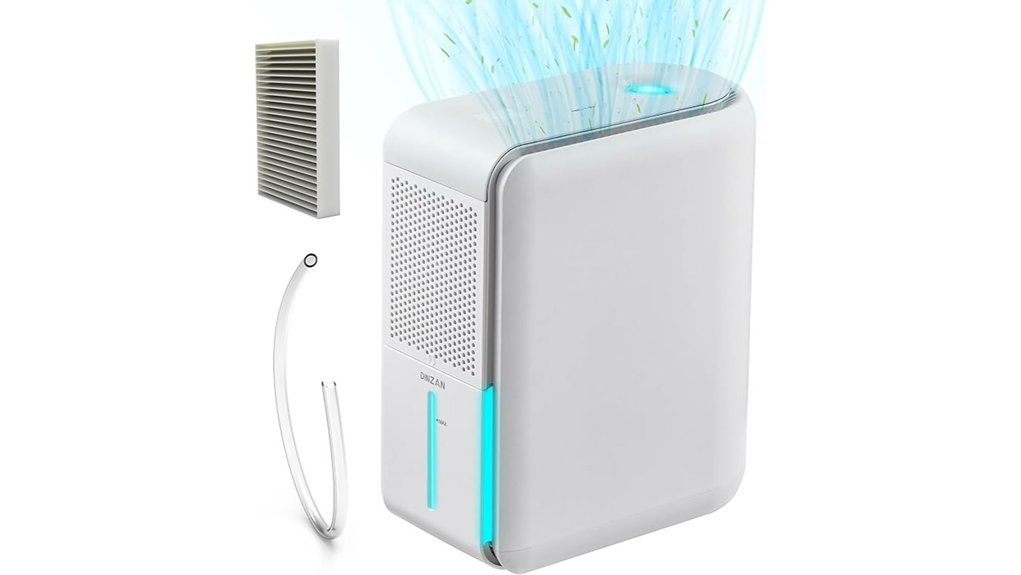
Best Multifunction Pick
The DINZAN listing describes four functions: dehumidifying, humidifying, filter-based air cleaning, and aroma diffusion. It is rated by the seller for about 350 sq. ft., with a 1-liter tank and dehumidification up to 580 ml per day. The listing also states operation at 25 dB or below, automatic humidity control, a replaceable filter, a touch screen, and a short drain hose. Treat the filtration function as basic particle filtering rather than a medical or whole-room air-purification claim.
Best For: Bedrooms and offices where moderate seasonal humidity control and multiple convenience functions matter more than maximum moisture removal.
Why You’ll Like It: It combines several small-appliance functions in a 3.97-pound body and can simplify a compact room setup.
Who Should Avoid It: Heavy basement dampness, flood drying, or buyers who need independently certified air-cleaning performance.
Pros:
- Four-in-one design with humidifying, dehumidifying, filter, and aroma functions.
- Seller-listed coverage around 350 sq. ft. and dehumidification up to 580 ml per day.
- Compact touch-screen design with automatic control and quiet-operation claims.
Cons:
- Not powerful enough to replace a full-size compressor dehumidifier.
- Filter-based cleaning should not be treated as a health or medical benefit.
- More functions mean more cleaning steps, consumables, and setup decisions.
Factors to Consider When Choosing a Home Dehumidifier or Humidifier
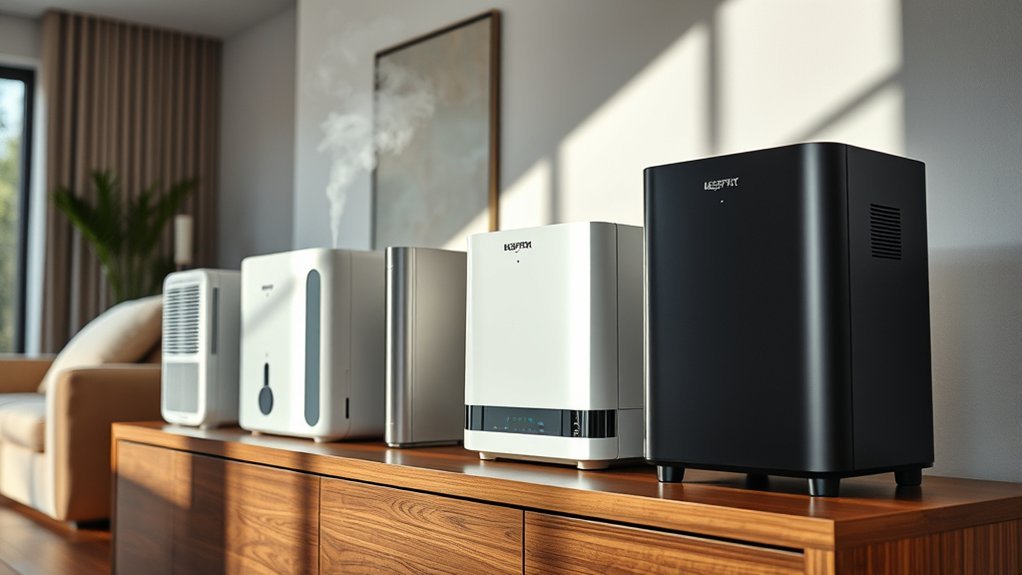
Start by deciding whether your room is too damp, too dry, or changes between the two. Then compare device type, realistic capacity, drainage, noise, maintenance, and energy use. Do not choose from square footage alone.
Choose the Right Device Type
A compressor dehumidifier is the better choice for basements, garages, laundry rooms, and ongoing moisture problems. A thermoelectric or semiconductor dehumidifier is smaller and often quieter, but it removes water more slowly and works best in warm, enclosed spaces. A humidifier adds moisture to dry air. A combo unit can be useful when seasons change, but it will not match the separate performance of a full-size compressor dehumidifier and a dedicated humidifier.
Moisture Control Needs
Use a hygrometer to measure the room before buying. A practical indoor target is generally around 30% to 50% relative humidity. If the room stays above that range, look for dehumidification. If it stays below it and feels uncomfortably dry, consider humidification. Fix leaks, standing water, and ventilation problems first because an appliance cannot correct an ongoing water source.
Room Size and Capacity
Compare both the seller-listed floor area and the amount of water the unit can remove. Pint-per-day ratings on compressor models are more useful than tank size alone. On thermoelectric models, pay attention to the stated test temperature and humidity because output drops in cooler or less humid rooms. When the room is very damp, choose more capacity than you would for a mildly humid room of the same size.
Tank Capacity
A larger tank reduces how often you need to empty a dehumidifier, but it does not make the machine remove moisture faster. Match the tank to the extraction rate and your maintenance routine. For a basement unit that may run for hours each day, a drain hose is usually more convenient than relying on the bucket.
Noise Level
Small thermoelectric units are usually the quieter category, while compressor models produce fan and compressor sound. Compare noise claims at the fan speed you plan to use, and remember that seller-listed decibel figures may represent the lowest mode. For bedrooms, place the unit on a level surface and keep the intake and outlet clear to reduce vibration and airflow noise.
Energy Efficiency
ENERGY STAR certification is most relevant for compressor dehumidifiers that run frequently. It indicates that the model meets current efficiency requirements, but it does not guarantee a specific dollar saving for every household. Runtime, humidity setting, climate, room sealing, and electricity rates all affect operating cost. Automatic humidity control and a correctly sized unit can reduce unnecessary runtime.
Drainage Options
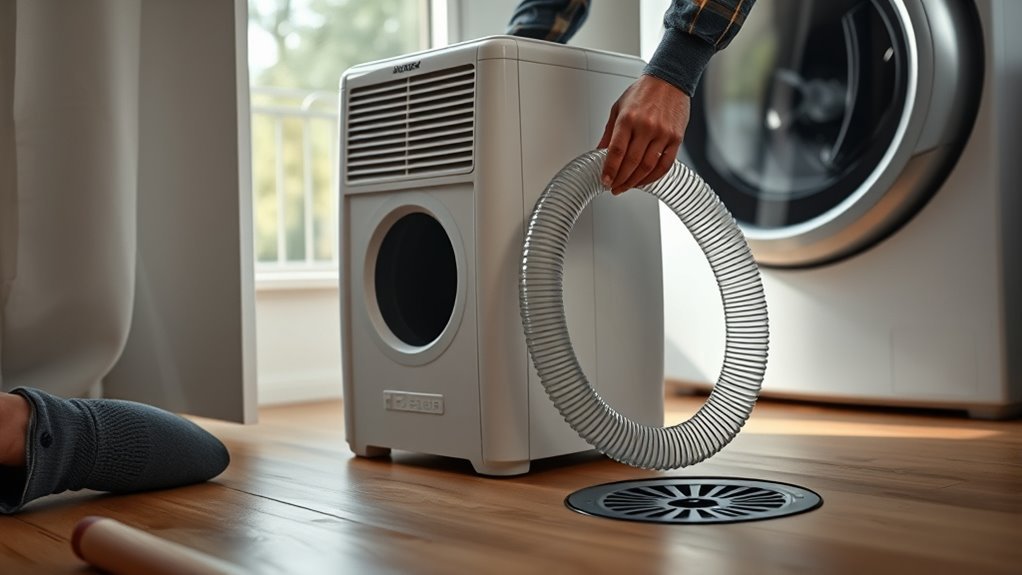
Manual tanks are simple and portable, but they require regular emptying. Continuous drainage works well when a floor drain or sink is nearby and the hose can slope downward without kinks. Confirm whether the hose is included, whether gravity drainage is required, and whether you need a separate pump for water to travel upward.
Controls and Convenience Features
A digital humidistat, timer, automatic restart, tank-full shutoff, child lock, defrost mode, washable filter, remote control, and memory function can make daily use easier. Do not assume the word “smart” means Wi-Fi or app control. In this roundup, it often refers only to automatic humidity sensing and adjustment.
Before You Buy Checklist
- Measure the room and note whether it is mildly humid, persistently damp, or affected by an active leak.
- Compare moisture-removal capacity, not only the advertised square-foot number or tank size.
- Confirm whether drainage is manual, gravity-fed through a hose, or requires a separate pump.
- Check operating temperature limits if the unit will run in a cool basement, garage, or RV.
- Review the current seller, warranty, return policy, included accessories, and replacement-filter availability.
Cleaning and Maintenance
Empty and rinse water tanks regularly, clean washable filters according to the manual, and let humidifier parts dry between uses. Humidifiers need especially careful cleaning because standing water and mineral buildup can affect mist quality. Never add essential oil unless the product has a dedicated aroma tray or the manual specifically allows it.
Frequently Asked Questions
What Indoor Humidity Should I Target?
A common target is about 30% to 50% relative humidity. Use a separate hygrometer if the built-in sensor seems inaccurate, and adjust for comfort, condensation, climate, and the manufacturer’s guidance.
How Often Should I Clean My Dehumidifier or Humidifier?
Empty and rinse a dehumidifier bucket whenever it fills and clean it regularly so residue does not build up. For a humidifier used daily, refresh the water every day and clean the tank and wetted parts at least weekly, or more often if the manual requires it. Stop using the unit and clean it immediately if you notice slime, odor, scale, or visible growth.
Can I Use Tap Water in a Humidifier?
Follow the product manual. Tap water can leave mineral scale and, in ultrasonic models, may create white mineral dust. Distilled or low-mineral water usually reduces buildup and cleaning, especially in hard-water areas.
How Noisy Are These Units at Night?
Thermoelectric models are generally quieter than compressor units, but fan speed, placement, vibration, and room acoustics matter. Treat the listed decibel rating as a seller claim and compare sleep-mode noise rather than only the lowest advertised number.
Do Dehumidifiers Raise Electricity Bills?
Any dehumidifier adds electricity use. Cost depends on wattage, runtime, humidity setting, climate, and local rates. A correctly sized ENERGY STAR model, continuous drainage, and automatic humidity control can reduce wasted runtime, but no fixed annual saving applies to every home.
When Should I Replace a Humidifier Filter?
Only replace a filter if your model uses one. Follow the manual and replace it when it is hardened, discolored, damaged, musty, or no longer wicks properly. Many dehumidifiers use a washable air filter instead of a disposable one, so clean rather than replace it unless the manufacturer says otherwise.
Can a Combo Unit Humidify and Dehumidify at the Same Time?
Usually, no. These are opposite functions, so combo appliances generally switch between modes according to the selected setting or sensed humidity. Check the manual for mode limitations, tank setup, filter use, and whether accessories must be changed.
Is a 1,000 Sq. Ft. Mini Dehumidifier Enough for a Basement?
Usually not for serious or continuous basement dampness. A compact thermoelectric model may help with light moisture in a small, enclosed area, but its advertised floor-area figure is not equivalent to a compressor model’s pint-per-day capacity. For a wet basement, prioritize a properly sized compressor dehumidifier and continuous drainage.
Do I Need a Continuous Drain Hose?
A drain hose is strongly worth considering when the unit will run for long periods or the tank may fill while you are away. Gravity drainage requires a nearby drain below the outlet and a hose that slopes downward. If water must travel upward, choose a model with a built-in pump or use a compatible external pump.
Conclusion
Choose by moisture problem first, not by feature count. The Yaufey is the highest-capacity large-space choice in this group, while the SEMKAP and correctly identified 30-pint Waykar fit moderate areas. The ToLife, OWAAE, Natrogix, and BeOkay are better for lighter moisture in enclosed rooms. Choose the BNTET or DINZAN only when you specifically need both humidifying and dehumidifying in a compact space.