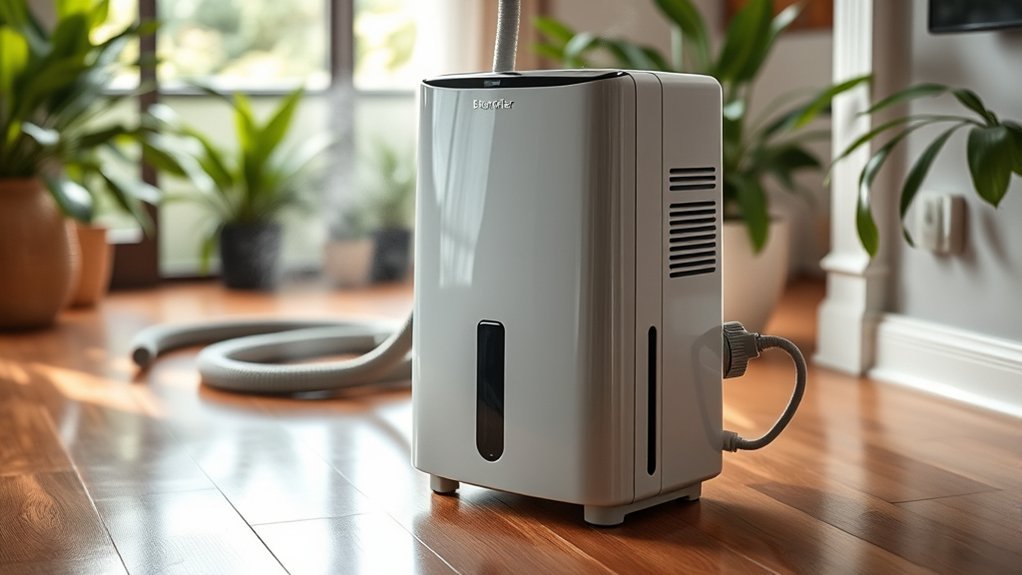
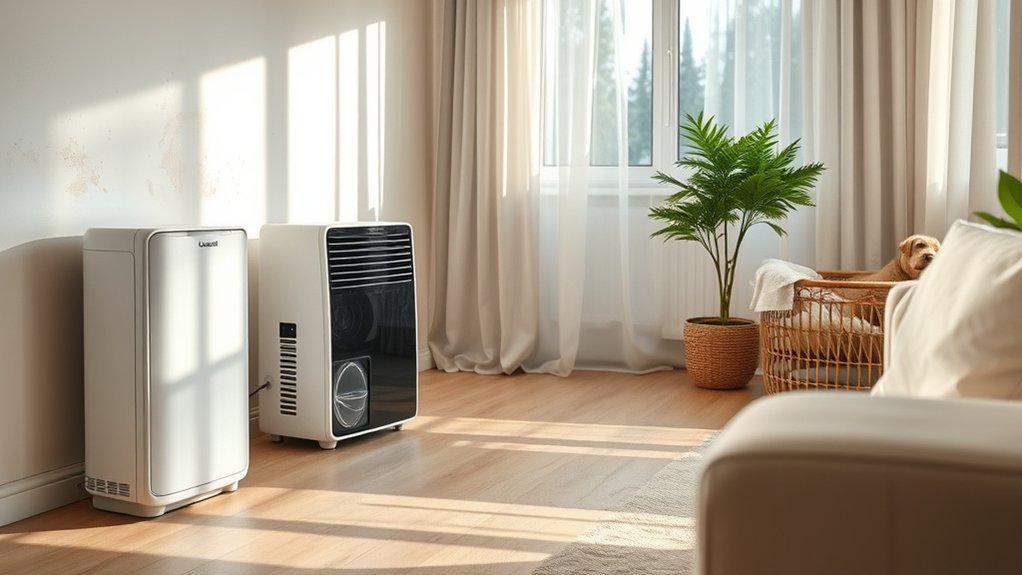
Persistent condensation, musty odors, damp closets, and humidity readings above 60% can signal that an apartment has too much moisture. For a mold-prone apartment, a compressor dehumidifier with a humidistat and practical drainage is usually a better choice than a small thermoelectric unit because it can remove substantially more water from the air.
Important mold note: A dehumidifier can help control the moisture that supports mold growth, but it cannot remove existing mold, repair a leak, or replace professional remediation when needed. Fix the water source first and use a separate hygrometer to keep relative humidity below 60%, ideally around 30% to 50%, as recommended by the U.S. Environmental Protection Agency.
Quick answer: Choose the AEOCKY for the strongest capacity and energy-efficiency focus, the KNKA for a balanced medium-to-large apartment option, or the VEAGASO when simple three-mode operation and continuous drainage are priorities.
Key takeaway: Compare verified pints-per-day capacity, drainage, noise, and room dampness—not only the advertised square-foot number.
Quick Comparison
| Product | Best Use | Advertised Capacity | Main Tradeoff | Amazon |
|---|---|---|---|---|
| AEOCKY 4500 Sq.Ft Dehumidifier Best Overall |
Persistent humidity in a large or open-plan apartment | Up to 80 pints/day under hot, highly humid conditions; compare the current federal-test rating on the listing | Largest, heaviest, and potentially more noticeable in a bedroom | Check Price |
| KNKA 2500 Sq.Ft Dehumidifier Best Balanced Pick |
Medium-to-large rooms, laundry areas, and connected apartment zones | Up to 34 pints/day under the maker’s stated conditions | Gravity drainage needs a lower drain, and the tank may fill quickly in wet conditions | Check Price |
| VEAGASO 2500 Sq.Ft Dehumidifier Best Simple Controls |
Living rooms, bedrooms, indoor laundry, and damp utility spaces | Up to 34 pints/day at 95°F and 90% relative humidity | Small bucket relative to its maximum collection rate | Check Price |
How these picks were narrowed down
The final list focuses on compressor dehumidifiers with adjustable humidity control and continuous-drain support because those features better match persistent apartment dampness and mold-prevention intent. Compact thermoelectric models were excluded because their low collection rates are better suited to closets or other limited spots, not ongoing humidity across an apartment.
AEOCKY 4500 Sq.Ft Energy Star Dehumidifier
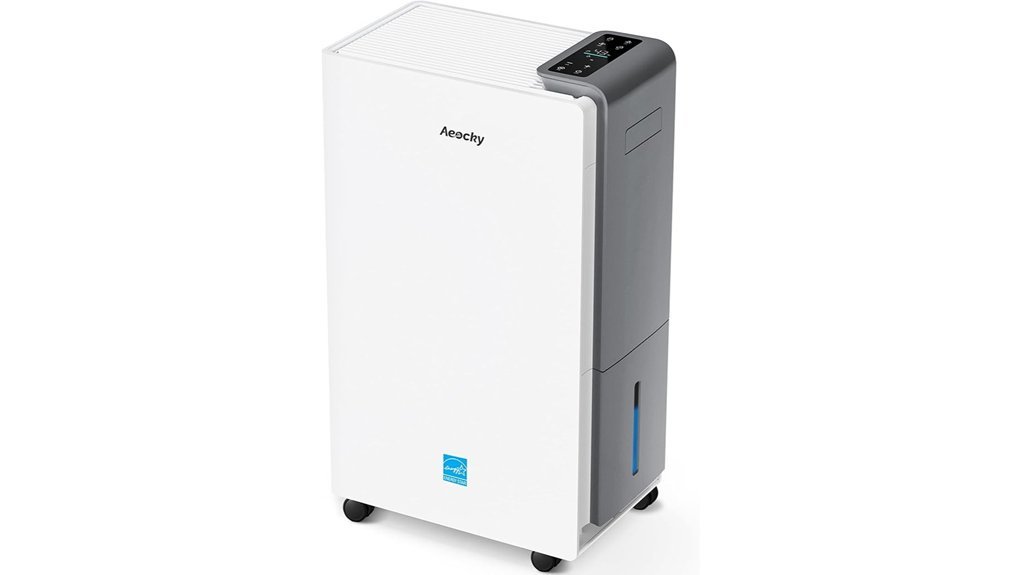
Best Overall for Persistent Apartment Humidity: The AEOCKY is the strongest option in this comparison for a large, open-plan apartment or a space that stays damp across several connected areas. Its compressor design, humidistat, drain-hose support, and high advertised moisture-removal ceiling give it more headroom than the two 34-pint-class models.
The listing advertises up to 80 pints per day under hot, highly humid conditions. That headline figure should not be compared directly with a capacity measured under the current federal dehumidifier test procedure, which uses cooler and more realistic conditions. Check the current listing and ENERGY STAR product information for the rated pints-per-day figure that applies to the exact model being sold.
The large square-foot claim is also a broad marketing guide rather than a guaranteed apartment size. Closed bedroom doors, showering, cooking, indoor laundry, outdoor humidity, and an active leak can all increase the moisture load. The practical advantage of this model is its reserve capacity: in a suitable open area, it may reach the target humidity and cycle off instead of running constantly.
Why You’ll Like It:
- High-capacity compressor design for persistent humidity and connected living areas.
- Adjustable humidity control helps maintain a target instead of running continuously.
- Continuous drainage can reduce bucket-emptying when a properly sloped drain route is available.
- ENERGY STAR positioning is valuable for a unit that may operate for many hours.
Who Should Buy This: Renters with an open-plan apartment, widespread condensation, indoor laundry moisture, or humidity that remains above 60% with a smaller dehumidifier.
Who Should Avoid It: Buyers who only need occasional moisture control in one small bedroom may find it larger, heavier, warmer, and more powerful than necessary.
Pros:
- Strongest advertised moisture-removal ceiling in this group.
- Humidistat, drain-hose compatibility, timer, and automatic operation.
- Better suited than a mini unit to sustained apartment humidity.
Cons:
- Larger footprint and greater weight than the other two picks.
- Fan and compressor noise may be noticeable in a quiet bedroom.
- The 80-pint headline uses different conditions from the federal rating, so buyers must compare like-for-like capacity figures.
- Confirm the current ENERGY STAR model designation and warranty terms before purchase.
KNKA 2500 Sq.Ft Dehumidifier with Drain Hose
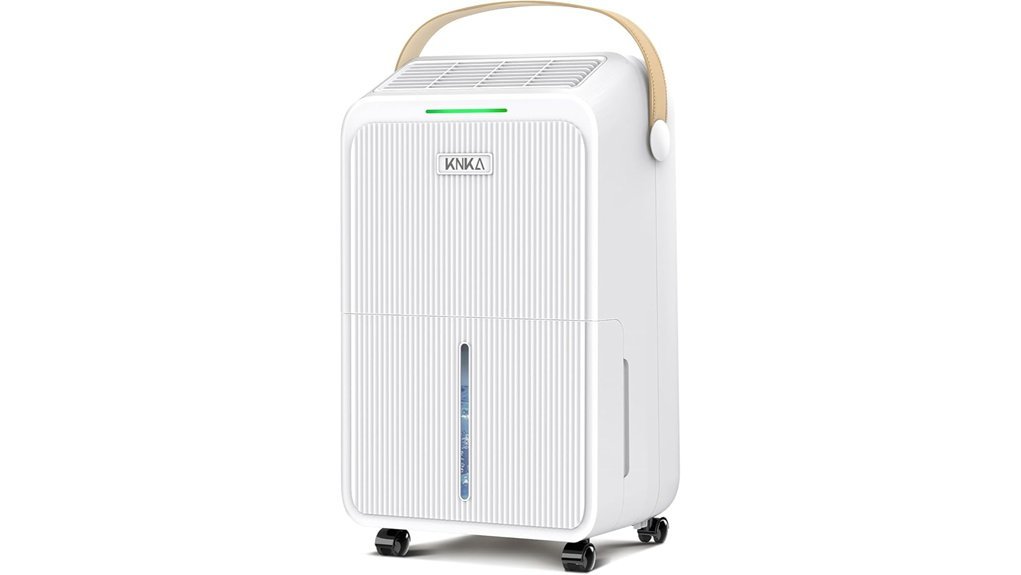
Best Balanced Pick for Medium-to-Large Apartments: The KNKA PD22SC-12 is a practical step up when a small dehumidifier cannot keep up but the largest AEOCKY would be excessive. It is advertised to remove up to 34 pints per day and provides DEHU, DRY, and CONT modes for routine humidity control, indoor laundry drying, or continuous operation.
The humidistat allows you to set a target rather than guessing from the amount of water in the bucket. A removable tank with automatic shutoff supports manual use, while the included hose allows continuous gravity drainage when the drain is below the outlet. Wheels and a handle make it easier to move the unit between a living room, bedroom, kitchen, or laundry area.
Its 2,500-square-foot claim should be treated as a maximum coverage guide. A divided apartment with closed doors may need repositioning, better air circulation, or more than one moisture-control strategy. Use a separate hygrometer at the far side of the space to confirm that the unit is lowering humidity where it matters.
Why You’ll Like It:
- More capable than compact thermoelectric units without the bulk of the largest pick.
- DEHU, DRY, and CONT modes make the controls easy to match to the task.
- Continuous drainage can reduce daily maintenance.
- Automatic defrost, washable filter, timer, child lock, and full-tank shutoff add practical convenience.
Who Should Buy This: Renters who need one movable compressor unit for a medium-to-large room, connected living zone, or indoor laundry area.
Who Should Avoid It: It is unnecessary for a lightly damp closet, and gravity drainage will not work if the hose must run uphill to a sink.
Pros:
- 34-pint-class advertised capacity for moderately damp areas.
- Adjustable humidity target and real-time display.
- Two drainage options and portable room-to-room design.
Cons:
- Coverage depends heavily on floor plan, temperature, and moisture load.
- The bucket may fill quickly during humid weather without continuous drainage.
- Compressor operation is more noticeable than a low-output mini unit.
VEAGASO 2500 Sq.Ft Dehumidifier with Drain Hose
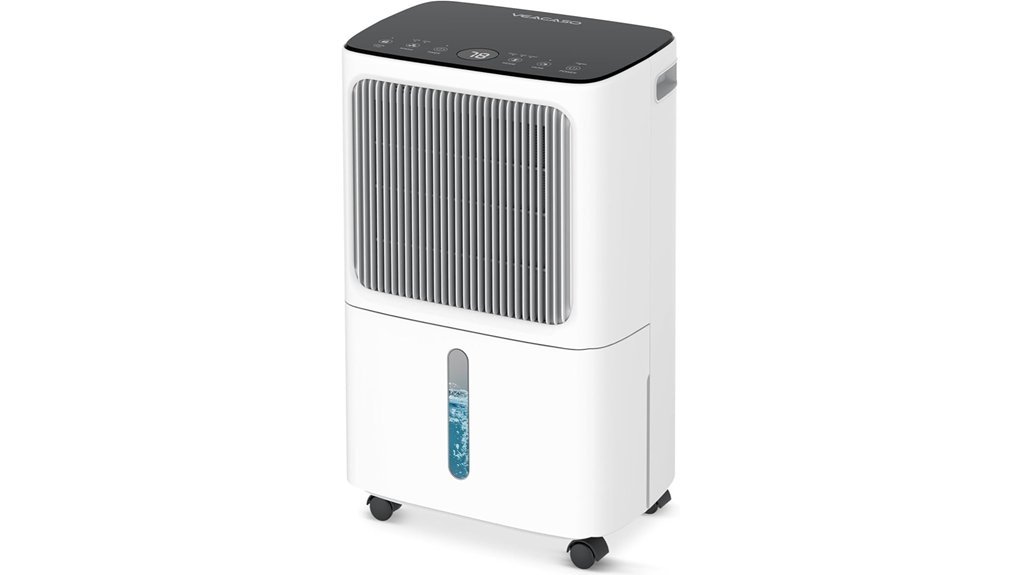
Best Alternative with Simple Three-Mode Controls: The VEAGASO VG380 is another compressor model advertised for up to 34 pints of moisture removal per day at 95°F and 90% relative humidity. It is a useful alternative to the KNKA when you want a straightforward digital touch panel, adjustable humidity settings, three operating modes, and an included drain hose.
DEHU mode is intended for normal humidity control, DRY mode can assist with indoor laundry, and CONT mode runs continuously in persistently damp conditions. The removable tank is relatively small compared with the maximum daily collection claim, so the hose becomes especially useful during humid weather.
The advertised 2,500-square-foot coverage is not a promise that one unit will control every closed room in an apartment. Place it where air can circulate, keep windows closed while outdoor air is humid, and confirm performance with a separate hygrometer rather than relying only on the built-in display.
Why You’ll Like It:
- Three clearly defined modes simplify everyday use.
- Continuous drainage supports hands-off operation near a suitable lower drain.
- Washable filter, timer, wheels, handle, automatic defrost, and full-tank shutoff.
- A useful middle-ground choice for living rooms, bedrooms, and damp utility spaces.
Who Should Buy This: Buyers who want a portable 34-pint-class compressor model with simple controls and expect to use continuous drainage.
Who Should Avoid It: Buyers without a lower drain point may need to empty the bucket often during peak humidity, and very wet conditions may require a higher federally rated capacity.
Pros:
- Suitable for medium-to-large apartment zones.
- Adjustable humidity range helps prevent unnecessary nonstop operation.
- Portable enough to reposition as moisture conditions change.
Cons:
- The 34-pint figure is based on hot, highly humid conditions.
- Small bucket relative to its maximum collection rate.
- Larger and louder than bedroom-focused thermoelectric devices.
How to Choose a Dehumidifier for a Mold-Prone Apartment
Fix the Moisture Source First
A dehumidifier manages water vapor in the air, but it cannot repair leaking plumbing, a roof leak, poor bathroom ventilation, a blocked dryer vent, or water entering through a wall. Report building-related leaks to the landlord or property manager, dry wet materials quickly, and clean or remediate existing mold before relying on a dehumidifier for prevention. The EPA emphasizes that moisture control is the key to mold control and recommends drying wet materials within 24 to 48 hours when possible.
Measure Humidity with a Hygrometer
Use a separate humidity meter instead of judging performance only by how much water appears in the tank. A practical target is roughly 30% to 50% relative humidity, with humidity kept below 60%. If the room remains above 60% while the unit runs, the dehumidifier may be undersized, poorly placed, or unable to keep up with an ongoing moisture source.
For more detail, see the EPA guide to mold and moisture control.
Choose Capacity by Dampness, Not Only Floor Area
ENERGY STAR advises sizing a portable dehumidifier by both the size of the space and how damp it is. For a small-to-medium space under 2,000 square feet, its current guidance suggests about 20 to 30 pints per day for slightly to moderately damp conditions, 25 to 40 pints for very damp conditions, and 30 to 50 pints for wet conditions. Those are starting ranges, not guarantees, because apartment layout and moisture sources vary.
See the ENERGY STAR dehumidifier buying guide for the current sizing chart and efficiency information.
Compare Capacity Ratings Under the Same Test Conditions
Dehumidifier listings may show a high “maximum” collection rate measured at 95°F and 90% relative humidity, while federal capacity ratings use cooler standardized conditions. Both figures can describe the same machine, but they are not directly comparable. For a fair comparison, look for the DOE or ENERGY STAR pints-per-day rating for each exact model and compare like with like.
Compare Pints Per Day, Not Only Square Feet
Tank size and daily removal capacity are different specifications. The tank tells you how much water the bucket holds; pints per day indicate how much moisture the unit can remove under stated test conditions. A large tank does not make a low-output unit more powerful, and a high-output unit with a small tank may need frequent emptying unless it is connected to a drain.
Drainage and Tank Size
Continuous drainage is valuable when humidity is high, but the included hoses on these models rely on gravity. The drain must be lower than the outlet, and the hose should run downhill without kinks or loops. If that setup is impossible, choose a unit with an easy-to-remove tank and expect to inspect it daily at first.
Noise and Placement
Compressor models usually remove more moisture but produce fan and compressor noise and release some warmth into the room. Place the unit on a level surface with the manufacturer’s recommended clearance around the intake and exhaust. Avoid splash zones, blocked corners, soft surfaces that obstruct airflow, and locations where children or pets can tip the unit.
Apartment Layout and Airflow
One dehumidifier works best in an open area with interior doors open and reasonable air circulation. Closed bedrooms, long hallways, and separate floors reduce how effectively one unit can treat the entire apartment. Move the unit between zones if needed, use exhaust fans during showers and cooking, and keep windows closed when outdoor air is more humid than indoor air.
Maintenance and Cleaning Ease
Empty and rinse the tank regularly, clean the filter on schedule, and inspect the reservoir for slime or mold. A dirty filter restricts airflow and reduces performance. Unplug the appliance before cleaning and follow the manufacturer’s instructions for the exact model.
Energy Efficiency
For a compressor model that may run for many hours, verify a current ENERGY STAR certification for the exact model and compare its integrated energy factor where available. Correct sizing, a working humidistat, clean filters, and closed windows during humid weather can reduce wasted runtime. Do not assume that the largest square-foot claim is automatically the most efficient choice.
Before You Buy Checklist
- Measure the room or connected apartment area.
- Check humidity in more than one location with a separate hygrometer.
- Identify and report leaks, water intrusion, or failed ventilation first.
- Compare capacity ratings measured under the same test conditions.
- Confirm tank volume, gravity-drain requirements, noise, dimensions, weight, and electrical needs.
- Check the exact model number, current ENERGY STAR status, warranty, and included hose on the live listing.
- Make sure the Amazon listing still matches the model and specifications described here.
Frequently Asked Questions
Can a Dehumidifier Remove Existing Mold?
No. A dehumidifier helps reduce the moisture that supports mold growth, but visible mold still needs to be cleaned or professionally remediated as appropriate. The leak, condensation problem, or other moisture source must also be corrected.
What Humidity Level Helps Prevent Mold?
Aim for approximately 30% to 50% relative humidity and keep the apartment below 60%. Use a separate hygrometer because the unit’s built-in sensor measures air close to the appliance and may not represent humidity in another room.
What Size Dehumidifier Do I Need for My Apartment?
Choose by both area and dampness. ENERGY STAR’s current guidance for spaces under 2,000 square feet starts around 20 to 30 pints per day for slightly to moderately damp conditions, 25 to 40 pints for very damp conditions, and 30 to 50 pints for wet conditions. Increase capacity when the apartment has indoor laundry, frequent showers, poor ventilation, high outdoor humidity, or several connected rooms.
Is a Mini Dehumidifier Enough for a Mold-Prone Apartment?
Usually not when humidity is persistent or affects more than a closet-sized area. Compact thermoelectric units can collect some moisture in a warm, enclosed space, but their daily removal rate is generally far below that of a compressor model. Use a hygrometer to judge the result; if humidity stays above 60%, move to a properly sized compressor dehumidifier and investigate the moisture source.
Why Do Some Dehumidifiers Show Different Pint Ratings?
A high maximum rating may be measured in very warm, highly humid air, while the federal rating uses standardized cooler conditions. The machine can collect more water when the air is warmer and contains more moisture. Compare models using the same rating method rather than comparing one brand’s hot-condition maximum with another brand’s federal-test number.
How Often Should I Empty the Water Tank?
Check it daily when you first begin using the unit. Empty and rinse it whenever full, and do not leave collected water sitting for long periods. A correctly installed continuous drain can reduce the workload, but inspect the hose periodically for kinks, clogs, or leaks.
Can I Run a Dehumidifier While Sleeping?
Many models are designed for extended operation when placed and maintained according to the manual. Use a stable grounded outlet, keep airflow openings clear, enable the humidistat or sleep setting, and avoid operating the unit where it could be splashed or tipped. Bedroom noise tolerance varies, so check the return policy and current specifications before buying.
Can One Dehumidifier Cover Several Rooms?
It may work across connected open areas, but closed doors and narrow hallways restrict airflow. Place the unit centrally, keep interior doors open when practical, and compare hygrometer readings in each room. Persistent differences may mean you need to reposition the unit, improve ventilation, or address a separate moisture source.
Which Type Is Best for a Mold-Prone Apartment?
For ongoing high humidity, a compressor dehumidifier with an adjustable humidistat and continuous-drain option is usually the better fit. The three products in this comparison match that use more closely than low-output thermoelectric devices.
Final Recommendation
Best overall: Choose the AEOCKY 4500 Sq.Ft Dehumidifier when persistent humidity affects a large or open apartment and you want the most capacity headroom.
Best balanced option: Choose the KNKA 2500 Sq.Ft Dehumidifier for a medium-to-large room, connected living zone, or laundry area where portability and practical controls matter.
Best alternative: Choose the VEAGASO 2500 Sq.Ft Dehumidifier when three-mode operation and an included gravity-drain setup fit your space.
Whichever model you choose, confirm the exact model number and current capacity rating on the listing, use a hygrometer to verify that humidity is falling, clean the tank and filter regularly, and address the underlying moisture source. The best dehumidifier is the one that can maintain the target humidity in your actual apartment without running endlessly or requiring constant attention.