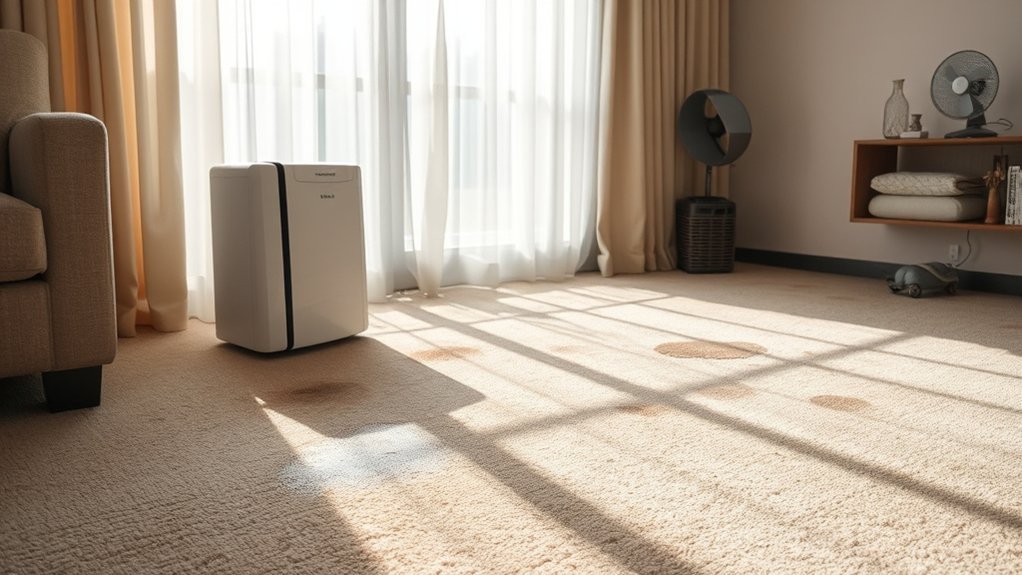
Yes, a dehumidifier can help dry wet carpet faster, but it works best after you remove as much water as possible and move air across the carpet with fans. The important part is not just drying the surface. Carpet padding and the subfloor can stay wet after the top feels dry, so you need to check deeper before calling the job done.
Quick Answer
A dehumidifier helps dry wet carpet by lowering indoor humidity so moisture can evaporate from the carpet and padding more easily. For best results, remove standing water first, run fans across the carpet, close doors and windows, and aim for about 30–50% indoor relative humidity.
Key Takeaways
- Use a wet/dry vacuum or extractor before running a dehumidifier; a dehumidifier is not meant to remove puddles.
- Pair the dehumidifier with fans so moisture leaves the carpet fibers faster.
- Dry clean-water carpet and backing within 24–48 hours when possible to reduce mold risk.
- Do not DIY carpet soaked by sewage, floodwater, or unknown water. Call a water damage professional.
- Check the padding and subfloor, not just the carpet surface, before assuming the area is dry.
At a Glance
| Time Required | Several hours for small damp spots; 24–48 hours or longer for soaked carpet and padding |
| Difficulty | Easy for small clean-water spills; moderate to professional for soaked carpet |
| Tools Needed | Wet/dry vacuum, dehumidifier, fans, towels, hygrometer, gloves, and optional moisture meter |
| Cost | Low if you own the equipment; higher if you need rental extractors or professional drying |
Does a Dehumidifier Dry Carpet Faster?
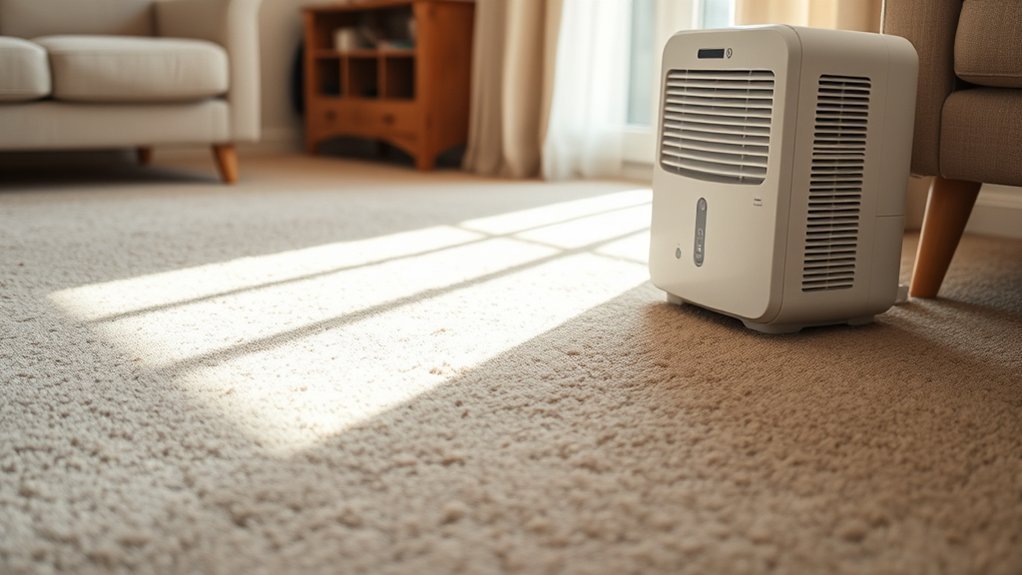
Yes, a dehumidifier can dry carpet faster because it removes moisture from the air. Drier air lets water evaporate from the carpet fibers and backing more easily. The EPA notes that a dehumidifier can reduce humidity while fans help accelerate the drying process for carpet and backing.
A dehumidifier works best when you use it as part of a drying system, not as the only tool. First remove standing water. Then run fans across the damp carpet, keep the room closed off from outside humidity, and let the dehumidifier pull moisture from the air.
Note: A dry-looking carpet surface does not always mean the padding underneath is dry. Padding can trap moisture and keep mold risk high even when the top feels normal.
Why Wet Carpet Needs Fast Drying
Fast drying matters because wet carpet can quickly become a mold, odor, and indoor air quality problem. The CDC recommends cleaning and drying or removing wet items within 24–48 hours to help prevent mold growth.
| Risk | Why speed matters |
|---|---|
| Mold | Wet materials should be dried within 24–48 hours when possible |
| Odor | Damp padding can create musty smells that return after surface drying |
| Fiber damage | Longer saturation can weaken backing, adhesives, and fibers |
| Subfloor damage | Moisture can move below the carpet and affect wood or underlayment |
The faster you remove water and control humidity, the better your chance of saving the carpet and preventing a small spill from becoming a larger restoration job.
Check the Water Source Before You Dry
Before you start drying, ask where the water came from. Clean water from a small plumbing leak, appliance overflow, or spilled bucket may be safe to handle if you act quickly. Sewage, floodwater, stormwater, or unknown water is different. It can carry germs, chemicals, and other hazards.
Warning: Do not plug in fans, dehumidifiers, or other electrical equipment while standing in water. If there is standing water near outlets, cords, appliances, or the breaker panel, shut off power from a dry location if you can do so safely, or call an electrician.
The CDC warns that floodwater and standing water can contain sewage, chemicals, downed power lines, sharp debris, and other hazards. If the carpet was soaked by floodwater, sewage, or water from an unknown source, call a water damage professional instead of trying to save it yourself.
Clear the Room Before Drying
Before you start drying the carpet, clear furniture, rugs, boxes, and anything else sitting on the wet area. This gives moisture fewer places to hide and gives air a clear path across the carpet.
- Move chairs, tables, decor, and storage bins out of the drying zone.
- Remove area rugs and mats so they do not trap moisture against the carpet.
- Place furniture on blocks or move it to a dry room to prevent staining and wood damage.
- Take photos before moving items if the damage may become an insurance claim.
A clutter-free space also makes it easier to check the carpet edges, padding, tack strips, baseboards, and flooring. That matters because hidden moisture is often the part that causes problems later.
Remove Standing Water First
Standing water needs to come out first. A dehumidifier removes water vapor from the air; it is not designed to handle puddles or a fully saturated carpet by itself. Use a wet/dry vacuum, water extractor, towels, or a pump for larger amounts of water before you turn your attention to humidity control.
- Stop the water source. Shut off the leaking supply line, appliance, or fixture if you can do it safely.
- Remove visible water. Use a wet/dry vacuum or extractor on the wettest areas first.
- Blot damp spots. Press clean towels into the carpet to pull out more moisture.
- Check the edges. Lift a corner if you can do so without damaging the carpet, and look for wet padding.
- Start airflow and dehumidification. Once puddles are gone and the area is electrically safe, run fans and a dehumidifier.
If water keeps seeping up when you press the carpet, the padding is likely saturated. At that point, drying the top layer alone is not enough.
Set Up the Dehumidifier Correctly
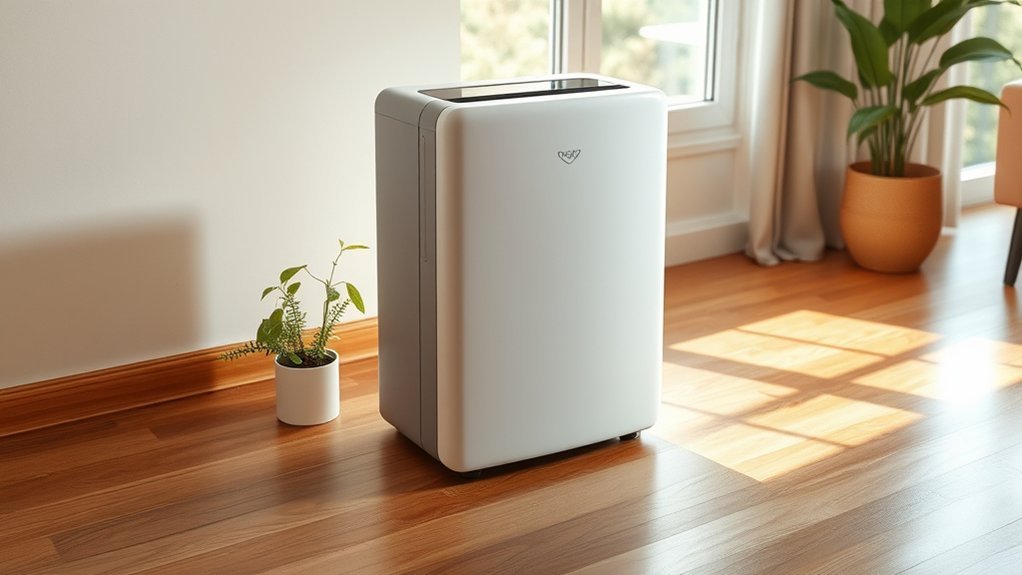
Place the dehumidifier in or near the wet room on a flat, stable surface where its intake and exhaust are not blocked. Close windows and exterior doors so the unit is not constantly fighting outdoor humidity. If the room has a door, keep it mostly closed while still allowing safe cord placement and airflow.
Aim for indoor relative humidity around 30–50% if possible. The EPA recommends keeping indoor humidity below 60%, ideally between 30% and 50%, to help discourage moisture and mold problems.
Recommended Products
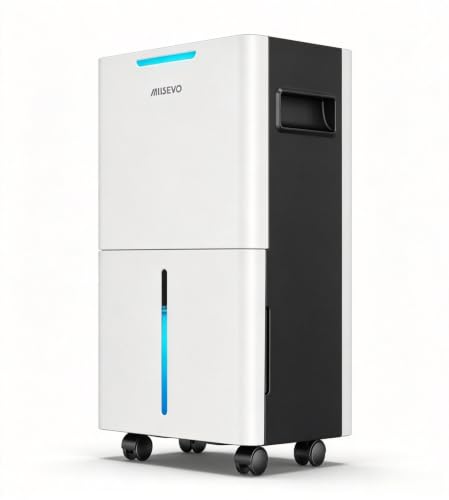
High Efficient Dehumidifier — Equipped with a high-performance compressor, Whether it’s your basement, bedroom, bathroom, living room, bathroom, crawlspace, or even an RV, this dehumidifier effectively keeps your environment dry, comfortable, and healthy.

Engineered with Dual Semiconductor Technology - Mecmic dehumidifier is designed with two semiconductor modules work together to remove moisture more efficiently than traditional single-semiconductor designs, up to 34 oz (1000 ml) of moisture per day under ideal conditions,helping your space feel fresher and more comfortable in less time. Specifically for bedrooms, bathrooms, closets, laundry rooms, RVs, and other compact areas.
Ideal Room Setup
For the best drying results, set the room up so air can move across the wet carpet and the dehumidifier can remove moisture continuously.
- Keep doors and windows closed to limit incoming humid air.
- Leave clear space around the dehumidifier intake and exhaust.
- Use the unit’s continuous drain hose if available, or empty the tank often.
- Use a hygrometer so you can track humidity instead of guessing.
- Keep cords away from wet areas and avoid overloading outlets.
Seal And Circulate
Sealing the room helps the dehumidifier work more efficiently, but sealed air still needs movement. Place fans so they blow across the carpet surface, not straight down into one small spot. Moving air helps moisture leave the carpet fibers, while the dehumidifier removes that moisture from the room air.
Pro Tip: If your dehumidifier has a drain hose, run it to a floor drain, utility sink, or safe collection point. Continuous drainage prevents shutoff from a full tank during the most important drying hours.
Position For Maximum Drying
Do not place the dehumidifier directly in standing water or against a wall. Keep it level, dry, and clear on all sides. If the wet area is large, move the fans during the day so airflow reaches corners, edges, closets, and areas near baseboards.
- Centered placement improves room coverage.
- Clear intake and exhaust areas help the machine work properly.
- Fans should sweep air across the wet carpet and toward open space.
- A larger wet area may need more than one fan or a higher-capacity dehumidifier.
Add Fans and Heat for Faster Drying
Fans make a major difference because they move moisture away from the carpet surface. Without airflow, damp air can sit close to the carpet and slow evaporation. Use box fans, air movers, or oscillating fans to create steady movement across the wet area.
Gentle heat can also help, but do not overdo it. Warm air holds more moisture, which can speed evaporation when a dehumidifier is running. Too much heat, however, can make the room uncomfortable, damage some materials, or increase odors. Keep the setup controlled and check the carpet, padding, humidity, and room temperature regularly.
Recommended Products
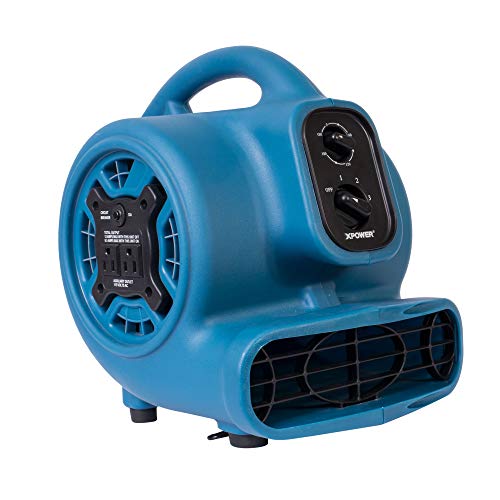
FASTER SURFACE DRYING–Speed-dry carpets, floors, furniture, windows, and walls with acentrifugal air mover! By producing a powerful, focused air current, the P-230AT is optimalfor drying flat surfaces and tight areas.

MADE FOR: A more efficient drying and cooling process
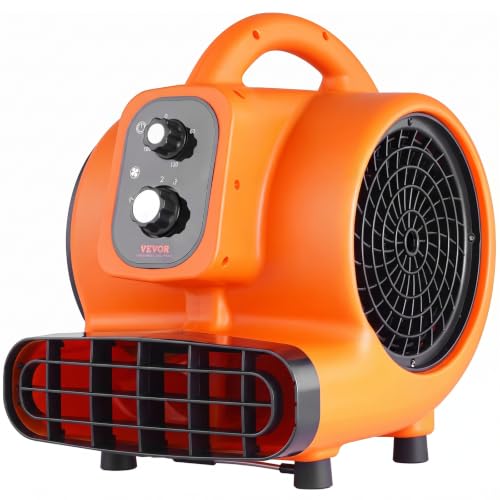
3 Blow Speeds: Power: 1/4 hp, 115V/60Hz. This carpet dryer offers three adjustable airflow options: 600, 800, and 1000 CFM. With its high-velocity airflow, our blower fan can effectively cool, ventilate, exhaust, and dry a space. It brings in fresh air, making you feel cool and relaxed.
How Long Wet Carpet Takes to Dry
Wet carpet can take a few hours, a full day, or longer to dry. The timeline depends on how much water got into the carpet, whether the padding is wet, the carpet fiber, the room temperature, airflow, humidity, and the size of the dehumidifier.
For clean-water damage, the practical goal is to dry carpet and backing within 24–48 hours when possible. If the carpet or pad is still wet after that, treat it as a mold-risk situation.
- Small damp spot: may dry the same day with towels, fans, and a dehumidifier.
- Soaked carpet but dry pad: often needs many hours of extraction, airflow, and dehumidification.
- Wet padding: can take much longer and may need lifting, replacement, or professional drying.
- Floodwater or sewage: should be handled by a professional, not treated as a normal drying job.
How to Tell the Padding Is Still Wet
Padding can stay wet after the carpet surface feels dry. That is why you should check more than the top layer. Start with smell and touch, then inspect the edges if possible.
- Musty smell: a damp or earthy odor can mean moisture is still trapped below.
- Soggy feel: press down with a towel. If water transfers up, the pad is still wet.
- Cool or clammy backing: lift a corner carefully and touch the carpet backing and pad.
- Dark tack strips or swelling: moisture may have reached wood, baseboards, or underlayment.
- Moisture meter readings: use the correct material setting and follow the meter instructions, or have a restoration pro test the pad and subfloor.
If the pad is saturated, the carpet may need to be lifted so air can reach underneath. In some cases, replacing the pad is cheaper and safer than trying to dry it in place.
When to Call Water Damage Professionals
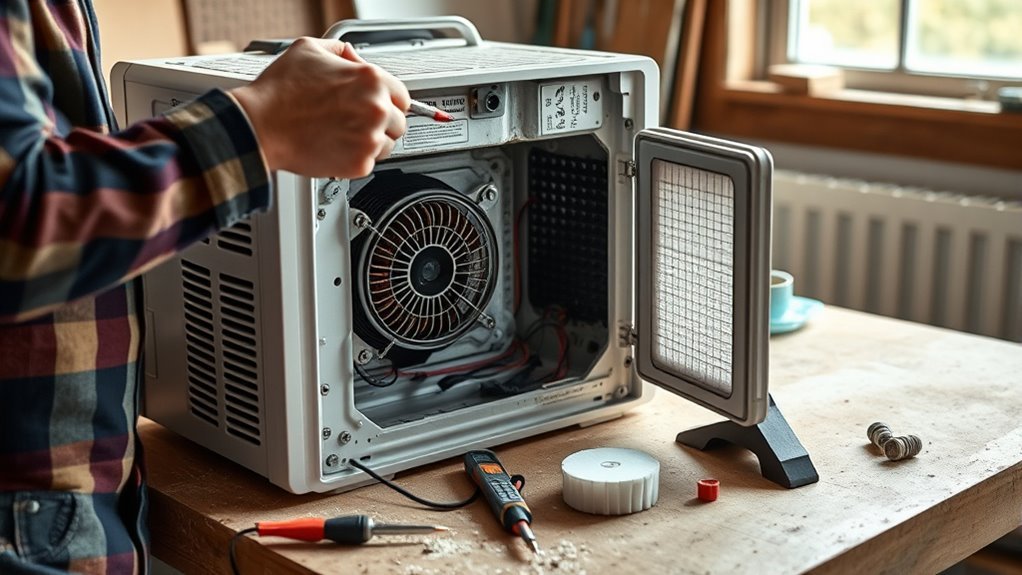
Call water damage professionals if the wet area is large, the padding is saturated, moisture has reached walls or subflooring, the water source is contaminated, or the carpet is still damp after 24–48 hours. Professional restoration companies use moisture meters, extraction tools, air movers, and commercial dehumidifiers to dry materials more thoroughly.
The ANSI/IICRC S500 standard describes professional procedures and precautions for water damage restoration in homes and buildings. That kind of guidance matters when water has moved beyond a small surface spill.
Recommended Products

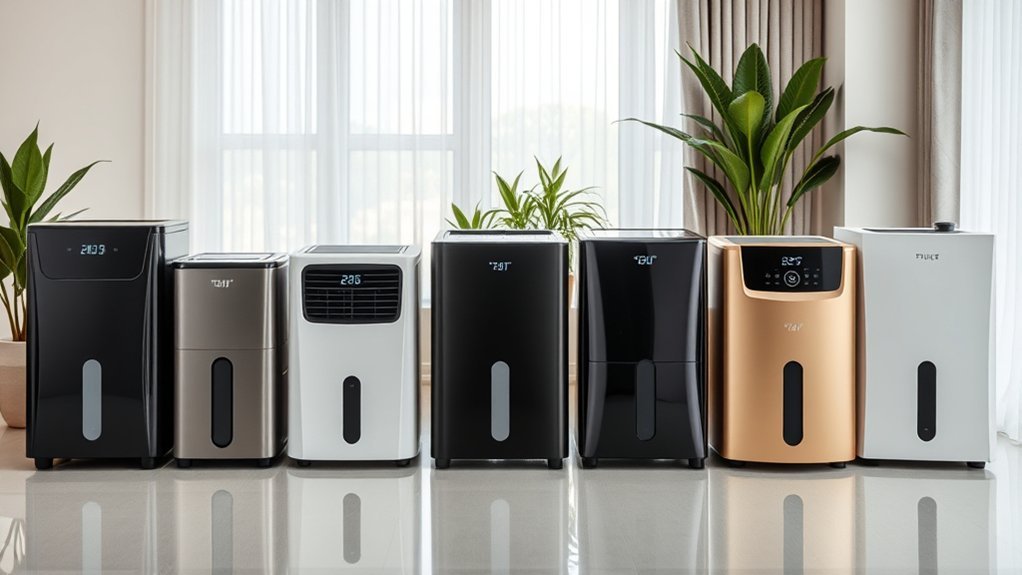
155 Pint Commercial Grade Moisture Removal: The Aegis HP150 crawlspace dehumidifier with pump removes up to 155 pints of moisture per day at saturation (70 PPD AHAM). Designed for demanding humidity control, this powerful dehumidifier quickly reduces excess humidity, helping protect your property from dampness, condensation, musty odors, and moisture-related damage.

A combo package Deals of 10pcs 1/4hp Low Profile Air Mover , 2pcs 550cfm AF650 Air Scrubber, 2pcs 180pints LGR Dehumidifier

Powerful Moisture Removal: Capable of removing up to 310 PPD (pints per day) at saturation and 165 PPD at AHAM conditions, while only consuming 10.5A of power. With a COP of 2.9 L/Kwh, this dehumidifier offers a super-efficient moisture removal solution for large spaces and restoration jobs.
Severe Flooding Risks
Severe flooding is not just a carpet problem. Floodwater can carry sewage, chemicals, debris, and electrical hazards. If water rose several inches, entered from outside, touched electrical systems, or sat for more than a day, do not rely on a household dehumidifier alone.
- Stay out of unsafe standing water.
- Call an electrician if power cannot be shut off from a dry location.
- Document damage with photos before cleanup if insurance may be involved.
- Contact a water damage restoration company for extraction, drying, and contamination assessment.
Persistent Moisture Problems
If the room smells musty, the carpet edges stay damp, or moisture keeps returning, there may be hidden water in the padding, subfloor, baseboards, or wall cavities. A dehumidifier can lower room humidity, but it cannot always remove trapped water from layers it cannot reach.
Persistent moisture is the point where guessing becomes risky. A professional can test the materials, remove unsalvageable padding, and dry the structure before mold and odor become harder to control.
Frequently Asked Questions
How long does it take for a dehumidifier to dry wet carpet?
It depends on how wet the carpet is. A small clean-water damp spot may dry in several hours with fans and a dehumidifier. Soaked carpet and padding may take 24–48 hours or longer, and saturated padding often needs professional drying or replacement.
How do I dry a wet carpet quickly?
Remove standing water first with a wet/dry vacuum or extractor. Clear the room, lift or check the carpet edge if possible, run fans across the wet area, close windows and doors, and run a dehumidifier until the carpet, padding, and subfloor are dry.
Should you use a dehumidifier if you have COPD?
Ask your clinician if you have COPD or another lung condition. A dehumidifier may help if your home is too humid or musty, but overly dry air can also irritate airways. Use a hygrometer and avoid letting the room become either damp or uncomfortably dry.
How do you get rid of carpet that has been wet for 3 days?
If carpet has been wet for 3 days, assume there may be mold risk, especially if the padding is damp or the room smells musty. Stop the water source, avoid disturbing visible mold, and call a water damage professional to inspect the carpet, pad, and subfloor.
Can I sleep in a room with wet carpet and a dehumidifier running?
It is better to sleep elsewhere until the carpet and padding are dry, especially if there is a musty smell, contaminated water, asthma, allergies, COPD, or visible mold. Keep electrical cords away from damp areas and follow the dehumidifier manufacturer’s safety instructions.
Conclusion
A dehumidifier can help dry wet carpet faster, but only when the basics are handled first: make the area electrically safe, remove standing water, clear the room, run fans, and keep humidity under control. The real test is whether the padding and subfloor are dry, not whether the carpet surface feels dry. If the carpet was soaked by floodwater, sewage, or unknown water, or if it stays damp after 24–48 hours, call a water damage professional before hidden moisture turns into mold, odor, and bigger repairs.
Sources
- U.S. EPA — Mold Course Chapter 4 — backs up drying carpet and backing within 48 hours, using wet vacuuming, fans, dehumidifiers, and heat.
- U.S. EPA — Mold Course Chapter 2 — backs up the recommended indoor relative humidity range of below 60%, ideally 30–50%.
- CDC — Dry Off Wet Items After a Storm — backs up cleaning, drying, or removing wet items within 24–48 hours to prevent mold growth.
- CDC — Reentering Your Flooded Home — backs up electrical safety guidance before using equipment in wet areas.
- CDC — Floodwater Safety — backs up warnings about sewage, chemicals, debris, and other hazards in floodwater.
- IICRC — ANSI/IICRC S500 Standard — backs up professional water damage restoration procedures and precautions.