Disclosure: This article contains affiliate links. If you buy through one of these links, we may earn a commission at no extra cost to you.
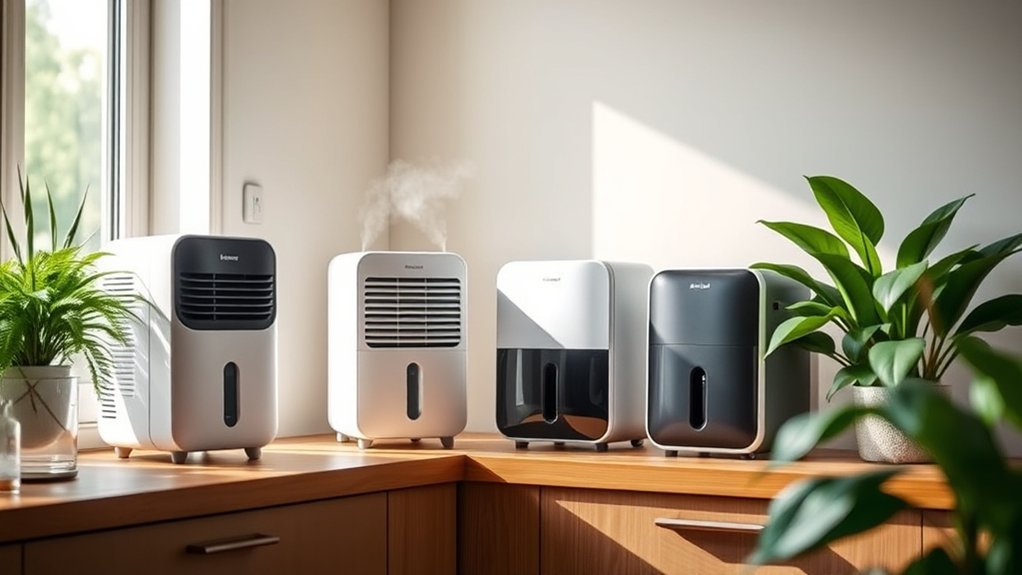
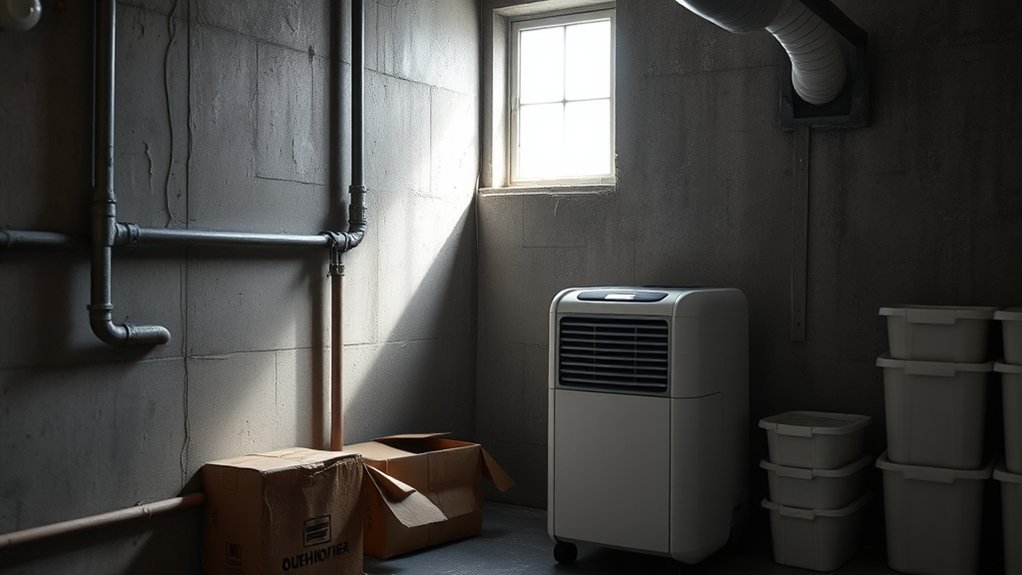
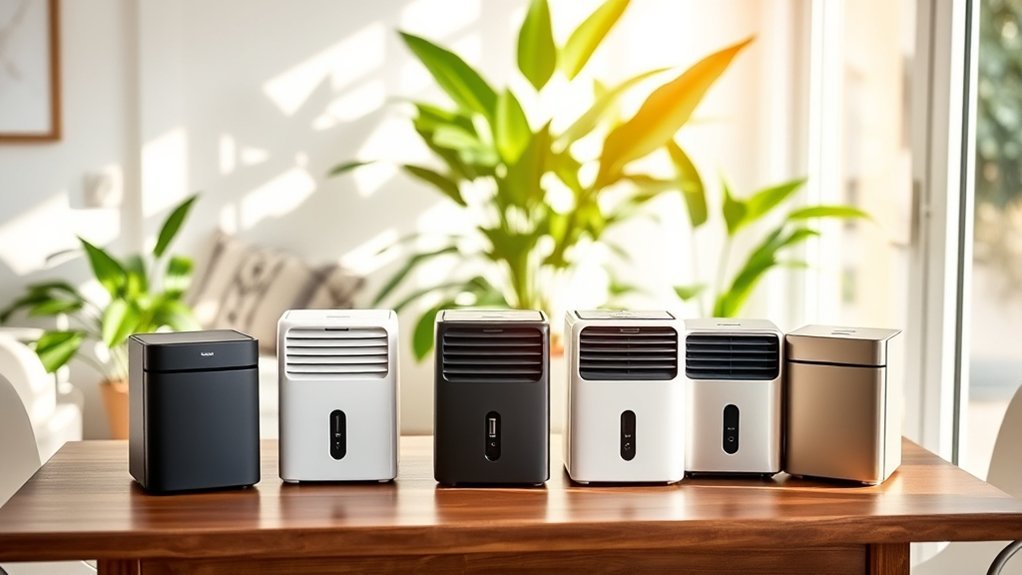
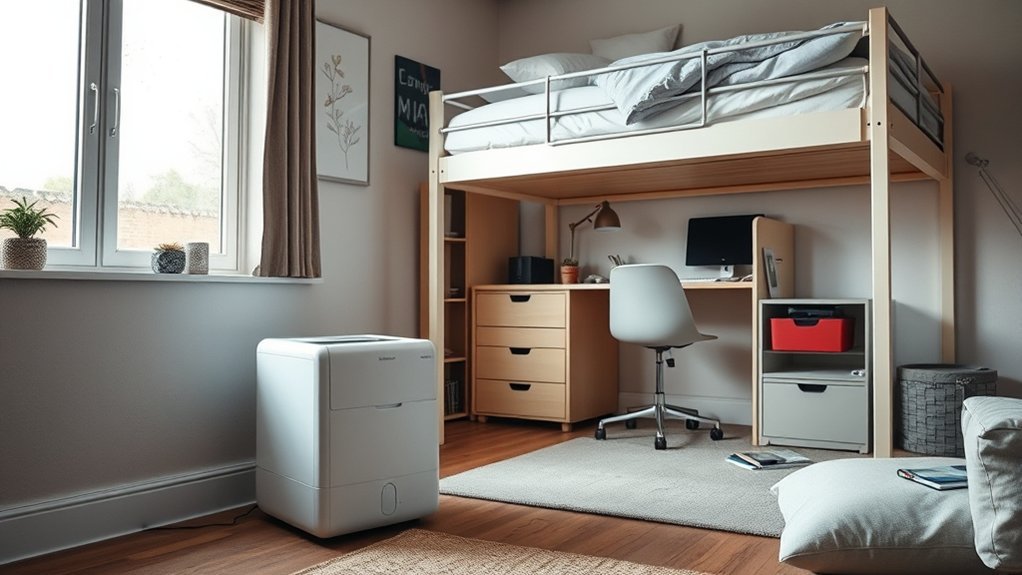
Large-tank dehumidifiers are useful when you want steady moisture control with fewer bucket-emptying trips. If your basement, laundry room, garage, large living area, or other humid space feels damp or musty, the right unit can give you a larger water reservoir along with continuous-drain options for easier day-to-day use.
This guide compares six large-bucket dehumidifiers from avylo, DREO, Ludatido, Gasbye, AEOCKY, and Waykar. Tank sizes range from about 1.14 gallons to 2.11 gallons, with options that also offer drain hoses, built-in pumps, smart controls, high stated moisture-removal capacity, and ENERGY STAR-focused efficiency. Remember that tank size and daily moisture-removal capacity are different measurements: the tank tells you how much collected water the bucket can hold, while the pints-per-day figure describes moisture-removal performance under stated test conditions.
Quick Picks:
- Best overall large-tank option: avylo Dehumidifier with Pump, 2.11-gallon tank
- Best smart option: DREO 110-Pint Smart Dehumidifier, 2-gallon tank
- Best straightforward large-bucket option: Ludatido 5000 Sq.Ft Dehumidifier, 6.5-liter tank
- Best for high stated moisture removal: Gasbye 2026 Energy Star Dehumidifier, approximately 1.7-gallon tank
- Best for upward pump drainage: AEOCKY 4500 Sq.Ft Energy Star Dehumidifier, 1.45-gallon tank
- Best balanced smaller-tank pick: Waykar 80 Pints Energy Star Dehumidifier, 1.14-gallon tank
Before You Buy:
A larger tank can reduce how often you carry a full bucket, but drainage setup may matter even more. A gravity drain hose is convenient when water can flow downward to a floor drain. A built-in pump is more useful when water must move upward or across the room. Also compare room conditions, noise, tank access, controls, and the manufacturer’s stated operating requirements before choosing.
Quick Comparison of Large-Tank Dehumidifiers
| Product | Best For | Tank Size | Max Stated Moisture Removal | Key Feature | Amazon |
|---|---|---|---|---|---|
| avylo Dehumidifier with Pump | Basements and buyers wanting a large tank plus pump drainage | 2.11 gallons | Up to 90 pints/day | Built-in pump and three drainage options | Check Price on Amazon |
| DREO 110-Pint Smart Dehumidifier | Smart homes and large open areas | 2 gallons | Up to 110 pints/day | App and voice-assistant control | Check Price on Amazon |
| Ludatido 5000 Sq.Ft Dehumidifier | Large rooms needing straightforward humidity control | 6.5 L / about 1.72 gallons | Up to 80 pints/day | Large bucket and drain-hose support | Check Price on Amazon |
| Gasbye 2026 Energy Star Dehumidifier | Very damp large rooms needing high stated output | Approximately 1.7 gallons | Up to 115 pints/day | Multiple drainage methods | Check Price on Amazon |
| AEOCKY 4500 Sq.Ft Energy Star Dehumidifier | Basements needing upward pump drainage | 1.45 gallons | Up to 80 pints/day | Pump system with upward drainage | Check Price on Amazon |
| Waykar 80 Pints Energy Star Dehumidifier | Large rooms where balanced capacity and simple drainage matter | 1.14 gallons | Up to 80 pints/day | 90° auto swing and drain-hose support | Check Price on Amazon |
Important Capacity Note:
Do not compare pints-per-day numbers without context. Manufacturers may state maximum moisture removal under different temperature and humidity conditions. Use the figures as product-specific maximum claims, then compare tank size, drainage method, room conditions, ENERGY STAR information, and standard-rated capacity where available.
avylo Dehumidifier with Pump for Home (90 Pint)
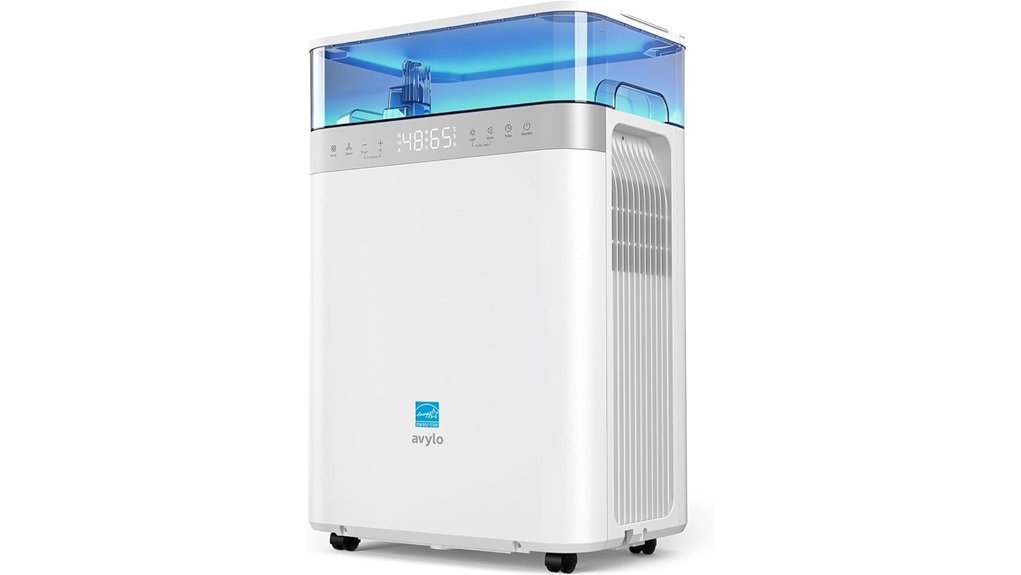
Best overall for a large tank plus pump drainage. The avylo Dehumidifier with Pump combines a large 2.11-gallon top-mounted tank with a maximum stated moisture-removal capacity of up to 90 pints per day. It is designed for large residential spaces and gives you three drainage approaches, including manual tank collection, gravity drainage, and pump drainage. That combination makes it especially practical in basements where carrying a full bucket upstairs or finding a conveniently positioned floor drain can be frustrating.
Why it may work well: The large tank gives you more bucket capacity than the other models in this roundup, while the pump provides another way to manage collected water. The manufacturer also lists operation as low as 41 dB, which may help in areas where noise matters.
Who should skip it: If you have a small room or already have an easy gravity-drain setup, you may not need the additional size and pump system. A simpler dehumidifier could be easier to justify.
Best For: Basements, garages, utility areas, and larger residential spaces where both bucket capacity and flexible drainage matter.
Pros:
- Large 2.11-gallon water tank reduces dependence on a small collection bucket.
- Built-in pump adds flexibility when gravity drainage is inconvenient.
- Multiple drainage choices let you switch between manual and continuous setups.
Cons:
- Larger pump-equipped construction takes more floor space than compact models.
- The extra pump system adds complexity if you only need basic bucket collection.
- Maximum moisture-removal ratings should not be compared directly with differently tested models.
Why You’ll Like It:
The combination of a 2.11-gallon tank and pump drainage addresses both sides of large-tank ownership: more collection capacity when using the bucket and less manual emptying when you switch to continuous drainage.
Quick verdict: Choose the avylo if your priority is a genuinely large bucket combined with flexible basement-friendly drainage. It is the strongest match to this roundup’s large-tank buyer intent.
DREO 110-Pint Smart Dehumidifier for Large Rooms
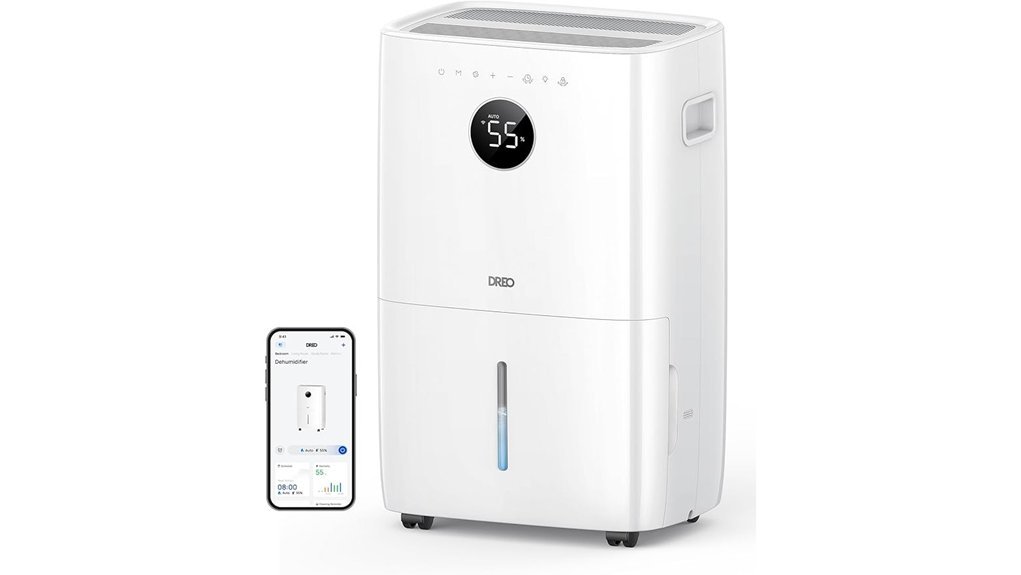
Best large-tank smart dehumidifier. The DREO 110-Pint Smart Dehumidifier pairs a 2-gallon water tank with app-based controls for large-room humidity management. Its maximum stated moisture-removal figure reaches up to 110 pints per day under the manufacturer’s specified high-humidity conditions, and the unit supports Auto, Comfort, and Continuous modes. You can also control compatible functions through the DREO app, Alexa, or Google Home.
Why it may work well: A 2-gallon bucket is useful if you want meaningful tank capacity without depending on a drain hose all the time. The smart controls are especially convenient when the unit sits in a basement, utility area, or another room you do not visit frequently.
Who should skip it: If you prefer simple physical controls and do not expect to use app or voice features, you may be paying for functionality you will rarely use.
Best For: Smart-home users, larger rooms, basements, laundry areas, and buyers who want a large bucket with remote control.
Pros:
- Large 2-gallon water tank.
- App and compatible voice-assistant controls provide convenient remote adjustment.
- Drain-hose support gives you an alternative to carrying the bucket.
Cons:
- Smart setup adds extra steps compared with a basic push-button model.
- The larger body may be unnecessary for small bedrooms or compact apartments.
- Maximum pints-per-day performance depends on operating conditions.
Why You’ll Like It:
This is one of the easiest options to monitor without standing beside the appliance. The 2-gallon tank also makes it a better fit for this roundup than smart dehumidifiers built around much smaller buckets.
Quick verdict: The DREO is the best choice here if you want a genuinely large water tank and smart controls in the same unit.
5000 Sq.Ft Dehumidifier with Drain Hose (80 Pints)
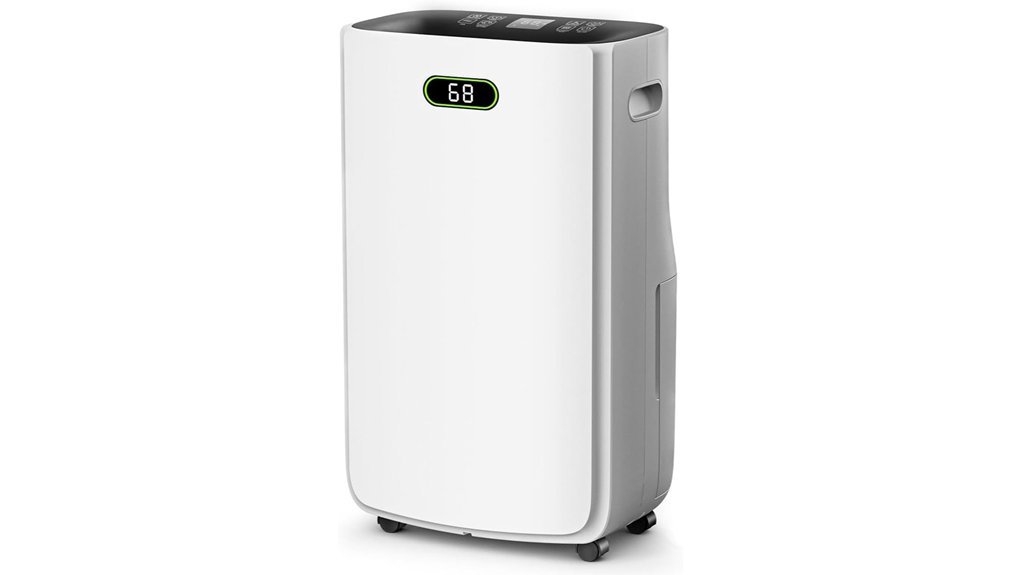
Best for a large bucket with straightforward controls. The Ludatido dehumidifier uses a 6.5-liter water tank, roughly 1.72 gallons, making it one of the larger bucket-style options in this comparison. Its maximum stated moisture-removal capacity is up to 80 pints per day, and it includes adjustable humidity controls, a timer, automatic shutoff, a washable filter, and continuous-drain support.
Why it may work well: This model focuses on the features many buyers actually use: a comparatively large bucket, adjustable humidity control, wheels, a timer, and a drain hose. You do not need to configure a smart-home account or pump system to get normal day-to-day dehumidification.
Who should skip it: If your drain point sits higher than the dehumidifier, a gravity hose may not solve the problem. In that situation, compare the pump-equipped avylo or AEOCKY instead.
Best For: Basements and large residential rooms where you want a sizable bucket and straightforward continuous drainage.
Pros:
- 6.5-liter tank provides substantial manual collection capacity.
- Includes a drain hose for continuous drainage.
- Adjustable humidity control and timer simplify everyday operation.
Cons:
- No built-in pump advantage for elevated drains.
- A full 6.5-liter tank can become heavy to carry.
- Maximum daily removal varies with room temperature and humidity.
Why You’ll Like It:
The large bucket is the main reason to consider this model. It gives buyers who still prefer manual collection more breathing room between emptying cycles, while the included hose remains available when continuous drainage makes more sense.
Quick verdict: Pick the Ludatido if you want one of the larger buckets in this roundup without making smart controls or a pump your main priority.
Gasbye 2026 Energy Star Dehumidifier for Large Rooms
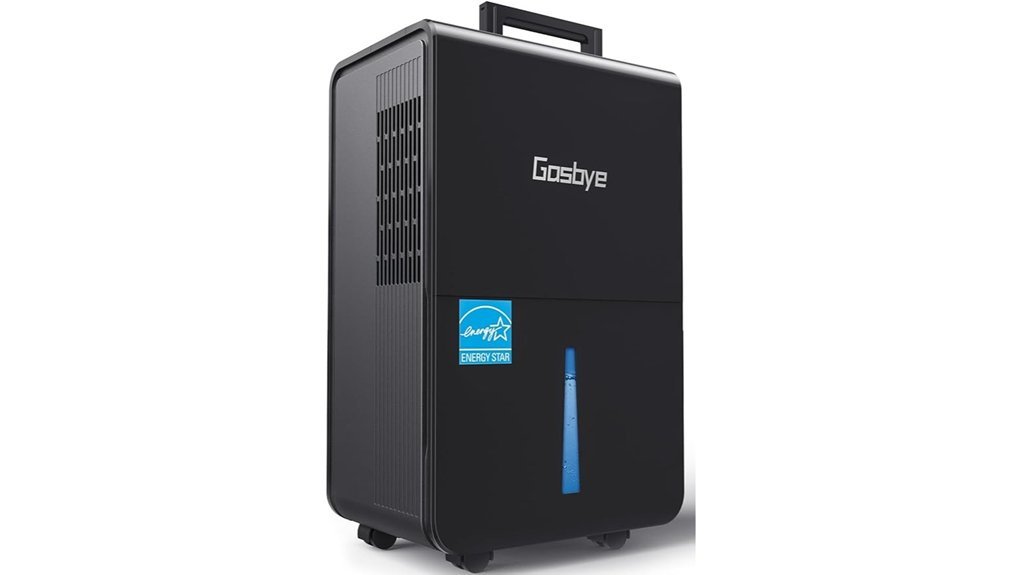
Best for high stated moisture removal with a large bucket. The Gasbye 2026 Energy Star Dehumidifier combines an approximately 1.7-gallon water tank with a maximum stated moisture-removal capacity of up to 115 pints per day. It is positioned for large rooms and basements and supports multiple drainage methods, giving you a choice between bucket collection and less hands-on water removal.
Why it may work well: This model is appealing when you want both a sizable collection tank and a high manufacturer-stated maximum output. Its drainage flexibility also helps when you expect the unit to run for long periods during humid weather.
Who should skip it: This is a larger unit, so it is less appealing if you need to carry your dehumidifier between rooms frequently. Buyers with only mild bedroom humidity may also find the capacity unnecessary.
Best For: Large basements, open residential areas, and persistently damp spaces where high stated moisture removal is a priority.
Pros:
- Approximately 1.7-gallon tank offers good manual collection capacity.
- Multiple drainage methods provide flexibility for different room layouts.
- High maximum stated moisture-removal figure for demanding conditions.
Cons:
- Heavier construction makes frequent relocation less convenient.
- The bucket will still require manual emptying if continuous drainage is not used.
- The 115-pint maximum should not be treated as directly equivalent to differently tested ratings from other brands.
Why You’ll Like It:
Gasbye offers a useful combination for very damp rooms: a reasonably large bucket, high stated moisture removal, and several ways to handle collected water.
Quick verdict: Choose the Gasbye if high stated output matters more than portability and you still want a large bucket for times when you are not using continuous drainage.
AEOCKY 4500 Sq.Ft Energy Star Dehumidifier
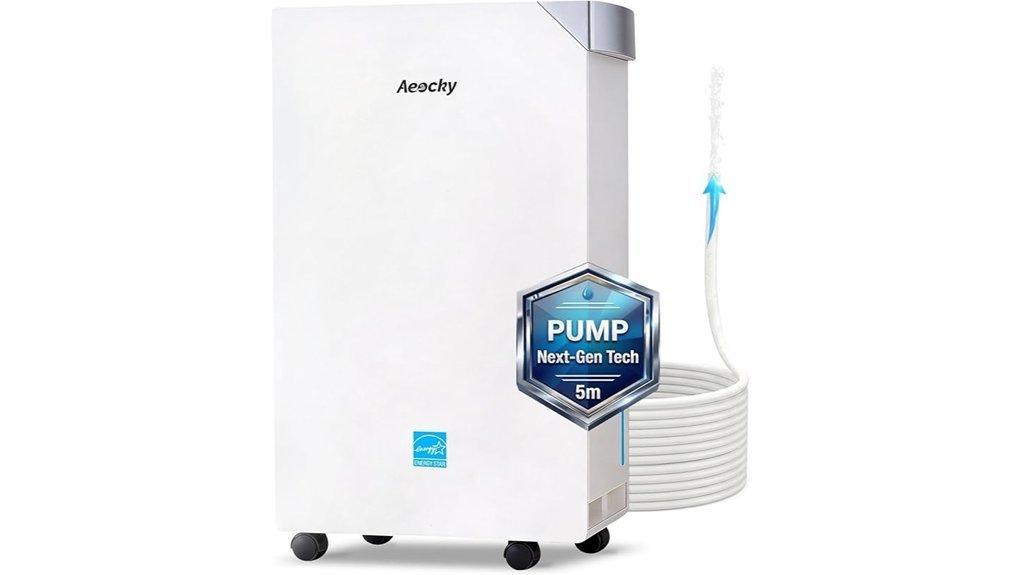
Best for upward pump drainage. The AEOCKY 4500 Sq.Ft Energy Star Dehumidifier has a 1.45-gallon tank and a maximum stated moisture-removal capacity of up to 80 pints per day. Its main advantage is the built-in pump system, which is designed to move collected water through the included hose when a simple downward gravity route is not practical.
Why it may work well: A pump can solve a common basement problem: the closest suitable drain may be higher than the appliance. That makes this model more flexible than a gravity-only dehumidifier while still giving you a 1.45-gallon bucket for manual collection.
Who should skip it: If you already have a floor drain beside the unit, a simpler gravity-drain model may meet your needs with less complexity. Also check the available installation space and hose route before buying.
Best For: Basements, utility areas, garages, and other spaces where collected water needs to travel upward or to a less convenient drain point.
Pros:
- 1.45-gallon tank is larger than many compact residential buckets.
- Built-in pump provides more drainage flexibility than gravity-only setups.
- Automatic humidity controls reduce the need for constant manual adjustment.
Cons:
- Pump-equipped models can cost more than simpler gravity-drain designs.
- Tank is smaller than the avylo, DREO, Ludatido, and Gasbye options in this comparison.
- Pump hoses and drainage routes still need regular inspection for secure connections and proper flow.
Why You’ll Like It:
This model earns its place because the pump solves a problem tank size alone cannot solve. If your basement lacks a convenient low drain, automatic upward drainage can matter more than having the absolute largest bucket.
Quick verdict: Choose the AEOCKY when drainage layout is your biggest concern and you want a reasonably large tank as a backup to the built-in pump.
Waykar 80 Pints Energy Star Dehumidifier for Home
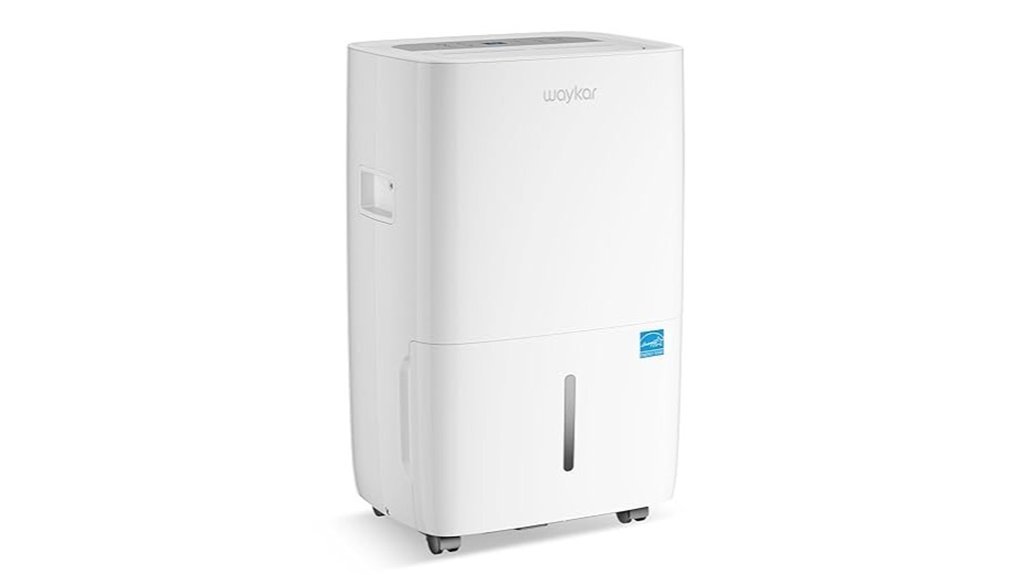
Best balanced option if you can accept a smaller tank. The Waykar 80 Pints Energy Star Dehumidifier has a 1.14-gallon water tank and a maximum stated moisture-removal capacity of up to 80 pints per day under the manufacturer’s specified high-temperature, high-humidity conditions. It is designed for larger residential spaces and includes features such as 90° auto swing, adjustable humidity control, automatic defrost, and continuous-drain support.
Why it may work well: Waykar combines broad room use with simple hose drainage and manufacturer-listed operation around 42 dB. It can work well for buyers who want a large-capacity residential dehumidifier without moving into a 2-gallon pump-equipped design.
Who should skip it: The 1.14-gallon bucket is the smallest among the six products in this roundup. If maximum time between manual emptying is your main concern, look first at the avylo, DREO, Ludatido, or Gasbye.
Best For: Larger residential rooms, basements, and other humid areas where straightforward controls and continuous-drain support are more important than having the biggest bucket.
Pros:
- 1.14-gallon tank still provides more collection capacity than many small dehumidifiers.
- Continuous-drain support reduces dependence on manual bucket emptying.
- 90° auto swing and adjustable humidity control add useful everyday flexibility.
Cons:
- Smallest tank among the products kept in this large-tank comparison.
- Manual emptying may become frequent in very damp conditions if you do not connect a hose.
- Large-area marketing should not replace proper sizing based on actual moisture conditions.
Why You’ll Like It:
Waykar is the more balanced choice for someone who values normal residential usability, drainage support, and lower listed noise without insisting on the largest bucket in the roundup.
Quick verdict: Keep the Waykar on your shortlist if 1.14 gallons is enough for your routine and you expect to use the drain hose during heavier humidity.
How to Choose the Right Large-Tank Dehumidifier
The best large-tank dehumidifier depends on more than the bucket volume printed in the specifications. Start with your room’s moisture problem, then compare tank size, drainage route, standard or manufacturer-stated moisture-removal capacity, noise, energy efficiency, portability, and controls.
- Choose a 2-gallon-class tank if reducing manual bucket-emptying frequency is one of your biggest priorities.
- Choose pump drainage if water needs to move upward or cannot reach the drain by gravity.
- Choose gravity drainage if you have a floor drain positioned lower than the dehumidifier.
- Choose smart controls if you want remote monitoring and adjustment from another room.
- Compare noise carefully when the unit will run near bedrooms, offices, or shared living areas.
- Compare energy-efficiency information if the unit may run for many hours per day.
- Check weight and caster design if you plan to move the unit regularly.
Pro Tip:
Do not buy by tank size alone. If you can connect a reliable continuous drain, even a somewhat smaller bucket may be easier to live with than a larger bucket that you have to carry repeatedly. If continuous drainage is impossible, then bucket volume becomes much more important.
Factors to Consider When Choosing a Dehumidifier With a Large Tank
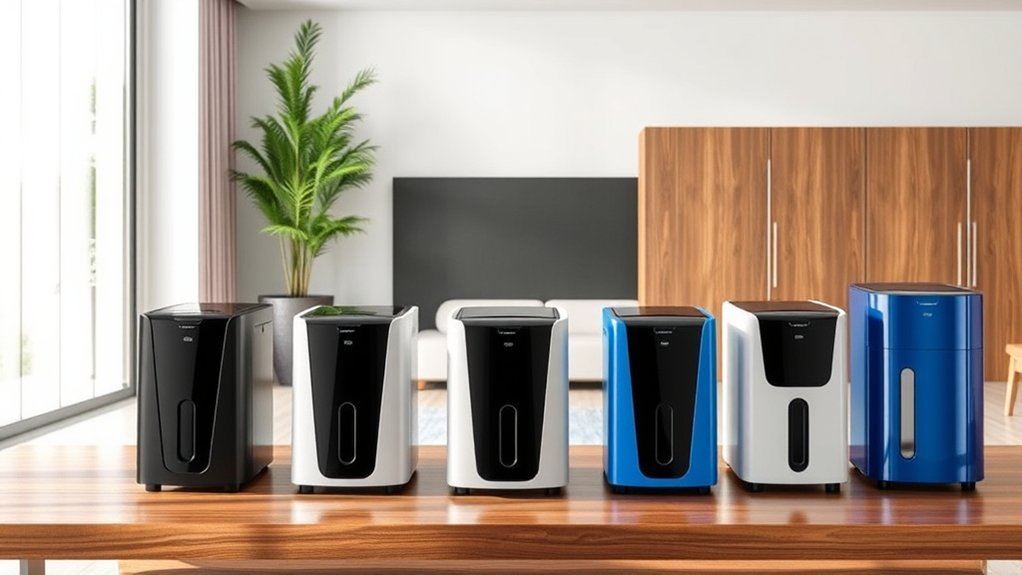
A good large-tank dehumidifier should fit both your moisture problem and your maintenance preferences. Use the factors below to compare models without confusing bucket size with moisture-removal capacity.
Water Tank Size
Tank volume tells you how much collected water the bucket can hold before it needs to be emptied. In this roundup, the remaining products range from about 1.14 gallons to 2.11 gallons. A larger bucket can reduce emptying frequency, but it also becomes heavier when full. If lifting a full tank is difficult, continuous drainage may be more important than simply choosing the biggest bucket.
Dehumidification Capacity Considerations
Moisture-removal capacity is normally expressed in pints per day, but do not assume every maximum rating was measured under identical conditions. Temperature and relative humidity can make a major difference in how much moisture a dehumidifier collects. Use capacity ratings to narrow your choices, but also check the manufacturer’s stated test conditions and standard-rated specifications where available.
Coverage Area Requirements
Manufacturer square-footage claims are useful as a starting point, not a guarantee. A lightly damp open room and a wet basement of the same size can require very different amounts of dehumidification. Consider actual humidity, water intrusion, room temperature, airflow, ceiling height, and how frequently doors or windows open.
Noise Level Expectations
Noise matters most when the unit will run close to sleeping, working, or living areas. Manufacturer dB figures are useful for comparison only when you know the fan speed and operating mode used for the measurement. Compressor cycling, fan speed, floor construction, and nearby walls can also change how loud a unit feels in your home.
Energy Efficiency Ratings
Look for current ENERGY STAR information where applicable and compare the Integrated Energy Factor (IEF) when it is provided. IEF measures water removal relative to energy consumed. Avoid assuming that a higher maximum pint rating automatically means lower electricity costs, because runtime, humidity, temperature, efficiency, and local electricity rates all affect operating cost.
Drainage Options Available
Large-tank dehumidifiers usually give you at least one of three approaches: manual bucket collection, gravity drainage through a hose, or pump-assisted drainage. Gravity drainage works only when water can flow downward. A pump adds flexibility when the destination is higher than the unit. Whatever method you use, secure the hose, check connections periodically, and make sure the drain point can safely accept the water.
Smart Technology Features
Smart controls can be valuable when the dehumidifier sits in a basement or utility room. Depending on the model, an app may allow remote humidity adjustment, operating-mode changes, status monitoring, or alerts. If you do not plan to use these functions, a simpler control panel may be easier and more economical.
Portability and Design
Large tanks and compressors can make these appliances heavy. Look for strong caster wheels, recessed handles, accessible filters, an easy-to-remove bucket, and controls that are visible from your normal standing position. Measure the available floor space and leave the clearance specified by the manufacturer for proper airflow.
Warranty and Support Options
Warranty terms vary by model and seller, so check the current product documentation before buying. Look at the coverage period, registration requirements, customer-support options, replacement-part availability, return conditions, and whether pumps or other components have different coverage terms.
Common Buying Mistakes to Avoid
A large bucket is helpful, but it does not automatically make a dehumidifier the right choice. Avoid these common mistakes before buying.
- Confusing tank size with pint capacity: A dehumidifier advertised as 80 or 110 pints per day does not have an 80- or 110-pint bucket.
- Ignoring drainage: Even a 2-gallon tank eventually needs emptying unless you use continuous drainage.
- Comparing maximum pint ratings as identical: Test temperature and relative humidity can differ between manufacturers.
- Buying too small for the moisture problem: A lightly damp room and a wet basement need different levels of moisture removal.
- Buying far more capacity than needed: A very large unit may add size, noise, and cost without providing a meaningful benefit in a small room.
- Forgetting the weight of a full bucket: A larger tank reduces emptying frequency but can be harder to carry.
- Assuming a hose can drain upward: Standard gravity drainage needs a downward path. Use a suitable pump model when elevation is required.
- Skipping measurements: Check appliance dimensions, airflow clearance, hose route, power access, and the final drain location before ordering.
Safety and Maintenance Note:
Place the dehumidifier on a stable, level surface and follow the manufacturer’s required airflow clearances. Keep the filter clean, inspect the bucket and drain hose for leaks, and keep electrical connections away from wet areas. For bathrooms, laundry spaces, and similar locations, follow all manufacturer placement and electrical-safety instructions rather than placing the appliance where it can be splashed or exposed to standing water.
Frequently Asked Questions
What Is the Difference Between Tank Size and Pints per Day?
Tank size is the amount of collected water the bucket can physically hold. Pints per day describes how much moisture the dehumidifier may remove from the air over 24 hours under specified conditions. An 80-pint dehumidifier can therefore have a tank that holds only a fraction of 80 pints.
How Do I Maintain a Dehumidifier With a Large Tank?
Empty and rinse the bucket as needed, clean the filter according to the manufacturer’s schedule, keep the intake and exhaust clear, and inspect drain hoses for kinks, leaks, or buildup. Pump-equipped models may also require specific pump and hose maintenance.
Can a Dehumidifier Help With Mold and Dust Mites?
Controlling excessive humidity can make the environment less favorable for moisture-related mold growth and dust mites. However, a dehumidifier is not an air purifier and does not remove existing mold or solve the source of water leaks. Existing mold or moisture damage should be addressed separately.
How Long Does a Dehumidifier Last?
There is no single lifespan that applies to every model. Compressor runtime, room conditions, maintenance, drainage problems, build quality, and how frequently the unit operates can all affect longevity. Check the current warranty and maintain the filter, bucket, coils, and drainage system as directed.
Are Larger Tanks More Energy-Efficient?
No. Tank size mainly affects how often you need to empty the bucket. Energy efficiency depends on the appliance design, compressor, controls, operating conditions, and efficiency rating. Compare ENERGY STAR information and IEF where available rather than assuming a larger bucket uses less electricity.
How Often Should I Empty the Tank Manually?
It depends on tank size, indoor humidity, temperature, moisture-removal rate, and how long the unit runs. A bucket may take many hours or considerably longer to fill under different conditions. Most models stop automatically when the tank reaches its full level, but checking the bucket regularly is still a good habit.
Do I Need a Drain Hose or a Built-In Pump?
Use a gravity drain hose when the water can flow downward to a suitable drain. Choose a built-in pump when the water must travel upward or when a gravity route is impractical. If neither setup is available, prioritize a larger bucket that is comfortable for you to remove and carry.
What Humidity Level Should I Set My Dehumidifier To?
Start with a moderate target within the range supported by your appliance, then adjust based on comfort, condensation, room conditions, and the manufacturer’s instructions. Avoid driving the setting unnecessarily low because that can increase runtime and energy use.
Is a Large-Tank Dehumidifier Good for a Bedroom?
It can be, but noise and physical size often matter more in a bedroom than maximum tank volume. Check the listed sound level, low-speed or sleep settings, display-light controls, dimensions, and airflow direction before placing a large dehumidifier near a sleeping area.
Can I Run a Dehumidifier Continuously?
Many models include a continuous operating or drainage mode. Follow the manufacturer’s instructions, use a secure drainage setup, and keep the filter and airflow path clean. If the appliance uses bucket collection only, it should stop when the tank reaches its full level.
Final Verdict
Final Recommendation:
If tank size and drainage flexibility are your main priorities, the avylo stands out with its 2.11-gallon tank and built-in pump. The DREO is the strongest smart-home choice and provides a 2-gallon bucket. The Ludatido gives you a straightforward 6.5-liter tank and drain-hose setup, while the Gasbye combines a large bucket with the highest maximum stated moisture-removal figure in this roundup.
The AEOCKY makes the most sense when you specifically need pump-assisted upward drainage. The Waykar has the smallest tank among the six remaining models, but it is still worth considering if you want balanced residential features and expect to use continuous drainage during heavier humidity.
Choose based on the combination of tank volume, drainage route, actual moisture conditions, noise, efficiency, and maintenance, not simply the largest pints-per-day number printed in the listing.
A large-tank dehumidifier can make humidity control more convenient, but the best model is the one that fits how you plan to handle the collected water. Buyers who rely on the bucket should prioritize tank volume and easy carrying. Buyers with a suitable drain may benefit more from continuous drainage, while difficult basement layouts may justify a built-in pump.
Before ordering, measure the space, plan the drain route, confirm the current specifications for the exact model, and decide how often you are realistically willing to empty a full tank. Those checks will help you choose a dehumidifier that is easier to live with throughout humid weather.