Affiliate disclosure: This article contains Amazon affiliate links. We may earn a commission from qualifying purchases at no extra cost to you.
Marketplace and electrical note: Amazon listings, sellers, plugs, voltage, warranty coverage, and shipping eligibility can vary by country. Check the product nameplate and local electrical requirements before ordering. A plug adapter changes the plug shape; it does not convert voltage.
Choosing a dehumidifier for your home is easier when you match the unit to the room, moisture level, drainage setup, and electrical supply. This guide compares compressor-based models for larger or wetter spaces with compact semiconductor models for bedrooms, closets, bathrooms, and other smaller areas. Coverage and moisture-removal figures below are manufacturer or seller claims, so real-world performance can vary with temperature, relative humidity, room layout, and airflow.
Quick Verdict
- Best Overall for Large Spaces: AEOCKY 4500 Sq.Ft Energy Star Dehumidifier
- Best Energy-Conscious Mid-Size Pick: Waykar 34 Pints Energy Star Dehumidifier
- Best Smart Pick: hOmeLabs Wi-Fi Dehumidifier
- Best Compact Pick: NeedDuck 44-Ounce Dehumidifier
Quick Comparison
| Product | Best For | Seller-Stated Capacity / Coverage | Drainage | Notable Feature | Amazon |
|---|---|---|---|---|---|
| AEOCKY 4500 Sq.Ft | Large basements and open areas | Up to 80 pints/day in hot, very humid test conditions; up to 4,500 sq. ft. | Tank or continuous hose | ENERGY STAR certification | Check Price |
| Waykar 34 Pints | Medium rooms, garages, and basements | Up to 34 pints/day; up to 2,000 sq. ft. | Tank or continuous hose | ENERGY STAR certification | Check Price |
| GoGuess 1600 Sq.Ft | Flexible room-to-room use | Up to 21 pints/day; up to 1,600 sq. ft. | Tank or included drain hose | Three operating modes | Check Price |
| ASAHWo 1600 Sq.Ft | Bedrooms, offices, and mid-size living areas | Up to 21 pints/day; up to 1,600 sq. ft. | 2-liter tank or gravity hose | Adjustable humidity control | Check Price |
| Tehanld 2500 Sq.Ft Smart Dehumidifier | App-based control in larger rooms | Up to 35 pints/day; up to 2,500 sq. ft. | Tank or continuous hose | Smart Life app control | Check Price |
| hOmeLabs Wi-Fi Dehumidifier | Smart control in medium spaces | 8 pints/day at standard test conditions; 24-pint maximum claim; up to 1,800 sq. ft. | Tank or continuous drainage | Wi-Fi and app control | Check Price |
| ToLife 95-Ounce Dehumidifier | Bedrooms and light spot-humidity control | Up to 1 liter/day under stated conditions; seller claims up to 1,000 sq. ft. | Manual tank | Sleep mode and ambient light | Check Price |
| BEDRED 95-Ounce Compact Dehumidifier | Bedrooms, RVs, and small enclosed areas | 95-ounce tank; seller claims up to 1,000 sq. ft. | Manual tank | Sleep mode and seven-color light | Check Price |
| NeedDuck 44-Ounce Dehumidifier | Closets, small bedrooms, and deskside use | 44-ounce tank; up to 215 sq. ft. | Manual tank | Three modes and compact size | Check Price |
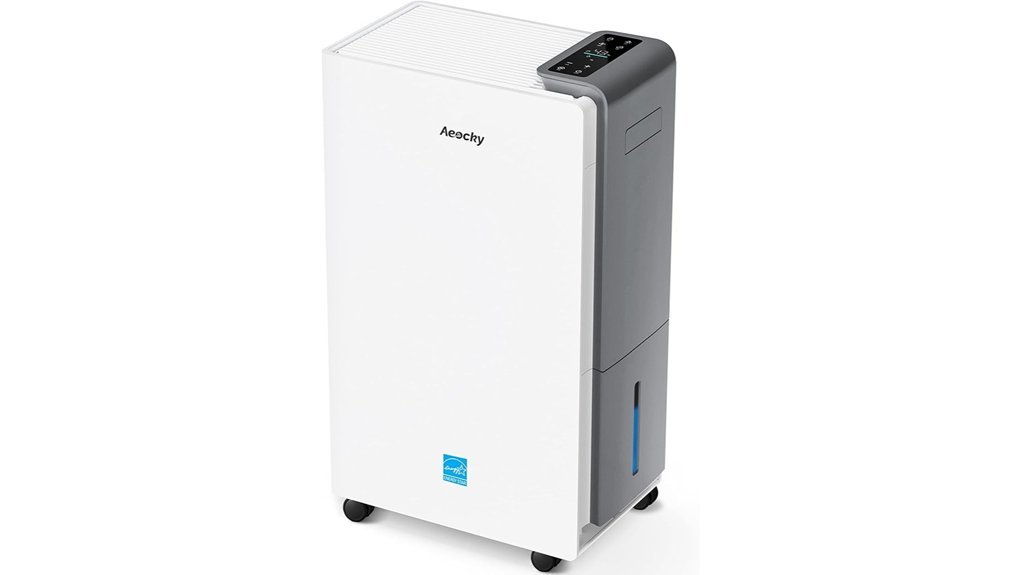
AEOCKY 4500 Sq.Ft Energy Star Dehumidifier
Best Overall for Large Spaces
The AEOCKY model is the strongest fit in this list for a large basement, open living area, or other moisture-heavy space. Its listing states a maximum removal rate of up to 80 pints per day in hot, very humid conditions and coverage up to 4,500 square feet. It also offers ENERGY STAR certification, a large tank, continuous-drain capability, adjustable humidity control, and a seller-stated operating noise of about 44 dB.
Why You’ll Like It: It combines high maximum capacity with automatic humidity control and continuous drainage, reducing the need to empty the tank during extended use.
Who Should Buy This: Buyers with a large basement, laundry area, or open-plan space who can place the unit near a suitable drain.
Who Should Avoid This: People who only need light moisture control in a closet or small bedroom; this compressor unit is larger and heavier than a compact semiconductor model.
Pros:
- High seller-stated maximum moisture-removal capacity for demanding spaces.
- ENERGY STAR certification helps compare efficiency with similar-capacity models.
- Supports both tank collection and continuous drainage.
Cons:
- Maximum pint claims are measured under hotter and more humid conditions than many homes.
- Its larger body needs more floor space than compact units.
- The warranty terms may differ between the standard limited period and supplemental coverage, so read the current listing carefully.
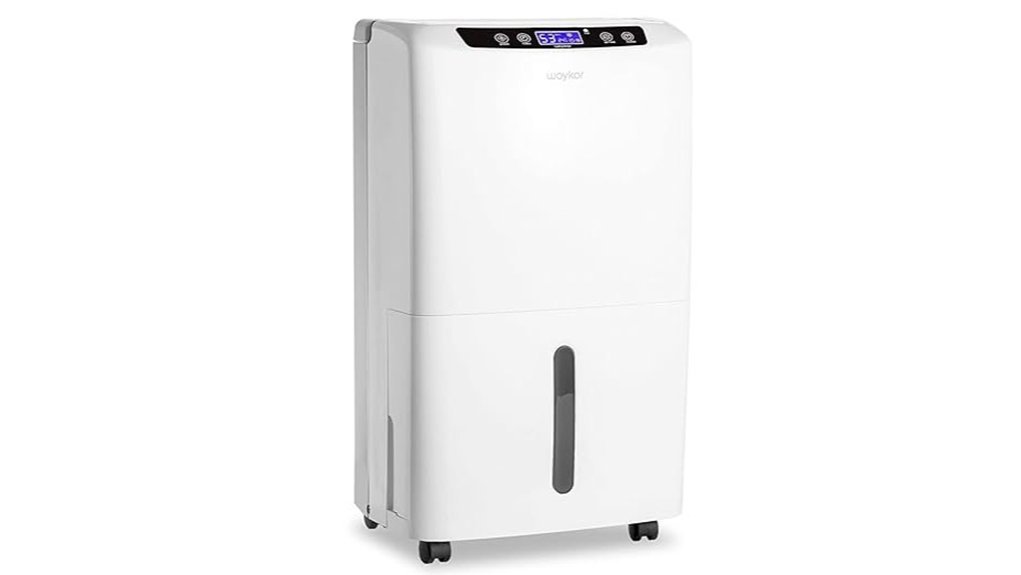
Waykar 34 Pints Energy Star Dehumidifier
Best Energy-Conscious Mid-Size Pick
The Waykar 34 Pints Energy Star Dehumidifier is a practical compressor model for medium-size basements, garages, living rooms, and offices. The listing states removal of up to 34 pints per day and coverage up to 2,000 square feet. Adjustable fan speeds, a 24-hour timer, a washable filter, a 0.66-gallon tank, and continuous drainage help it fit both occasional and longer-running use.
Why You’ll Like It: It offers a useful balance of capacity, ENERGY STAR certification, portability, and two drainage methods.
Who Should Buy This: Buyers who need more moisture removal than a small semiconductor unit can provide but do not need the size of a high-capacity basement model.
Who Should Avoid This: Buyers in countries where the listing’s 120V electrical specification does not match the local supply.
Pros:
- ENERGY STAR-certified design for easier efficiency comparison.
- Tank and continuous-drain options reduce maintenance friction.
- Adjustable fan settings and timer support flexible operation.
Cons:
- The small tank can fill quickly in humid conditions.
- Airflow direction is manually adjusted.
- Its 120V specification may make it unsuitable for some international markets without a properly rated voltage converter.
GoGuess 1600 Sq.Ft Dehumidifier with Drain Hose and Timer
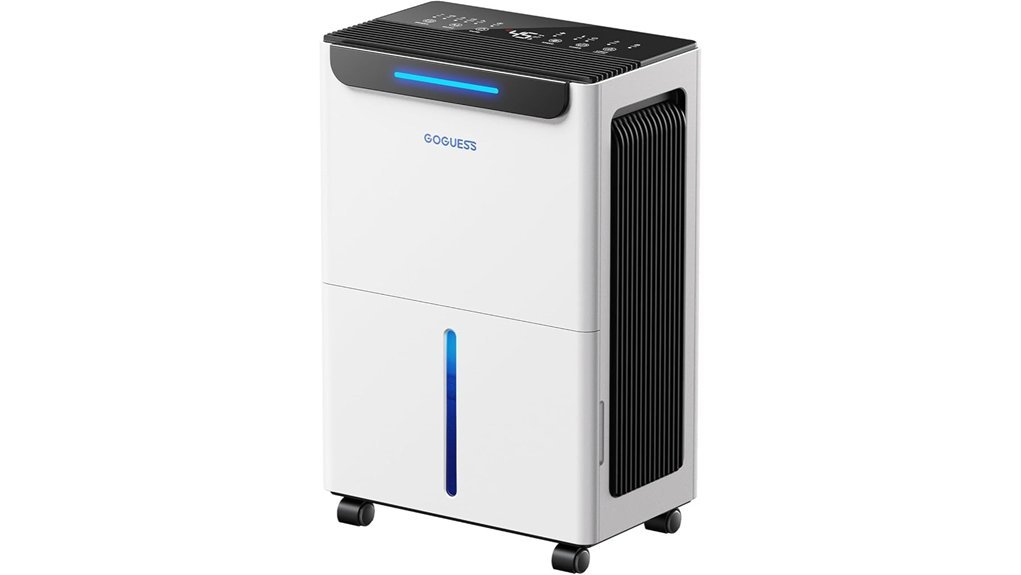
Best Flexible Mid-Size Pick
The GoGuess dehumidifier is designed for spaces up to 1,600 square feet, with a seller-stated removal rate of up to 21 pints per day. Its DEHU, TURBO, and SLEEP modes make it easier to choose between routine humidity control, faster fan operation, and quieter nighttime use. The included drain hose, automatic full-tank shutoff, auto-defrost function, and 24-hour timer support everyday convenience.
Why You’ll Like It: Three operating modes and dual drainage give you more control over how and where the unit runs.
Who Should Buy This: Homeowners who want one portable compressor dehumidifier for a basement, kitchen, bedroom, or laundry area.
Who Should Avoid This: Anyone who lacks a gravity drain and does not want to empty the tank regularly.
Pros:
- Up to 21 pints per day of seller-stated removal capacity.
- Three modes help match output and noise to the room.
- Includes a drain hose for continuous gravity drainage.
Cons:
- Actual extraction falls as temperature and humidity drop.
- The tank may need frequent emptying without a drain connection.
- Continuous drainage requires correct hose placement and downward slope.
ASAHWo 1600 Sq.Ft Dehumidifier with Drain Hose and Timer
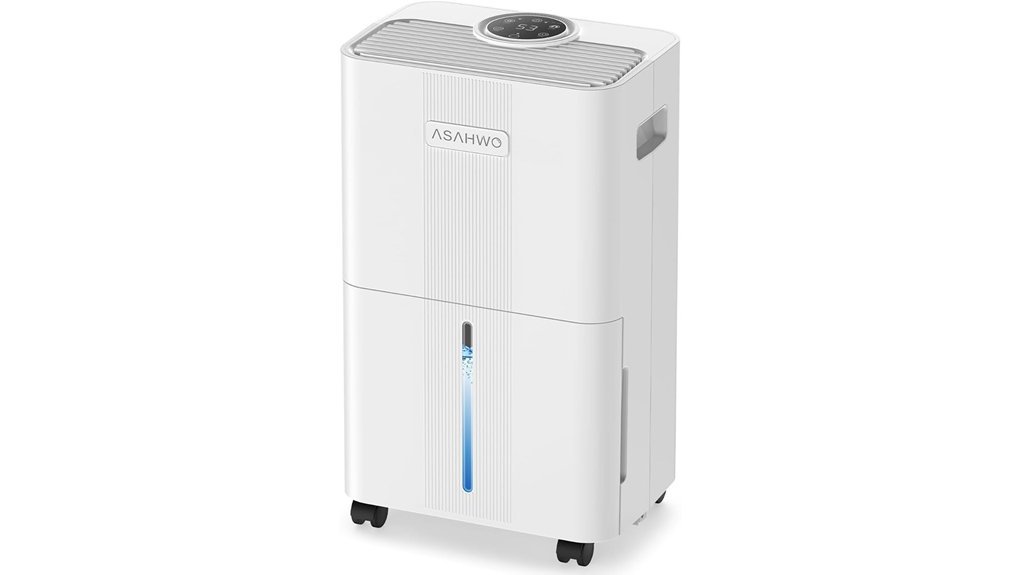
Best for Adjustable Humidity Control
The ASAHWo model is another 21-pint-class compressor dehumidifier aimed at rooms up to 1,600 square feet. Its touch panel lets you set a target humidity from 30% to 80%, while the listing also highlights a 2-liter tank, continuous gravity drainage, wheels, lift-up handles, auto shutoff, and auto defrost. The seller states a low operating noise of about 38 dB, although perceived noise will depend on fan speed and room acoustics.
Why You’ll Like It: The wide humidity setting range and portable design make it easy to move between living areas and adjust for different conditions.
Who Should Buy This: Buyers who value adjustable humidity control and want a wheeled unit for medium-size rooms.
Who Should Avoid This: Buyers who need pumped drainage to a sink or window; this model relies on gravity flow.
Pros:
- Adjustable target humidity supports more precise control.
- Wheels and handles improve room-to-room portability.
- Offers tank collection and continuous gravity drainage.
Cons:
- The 2-liter tank is modest for a compressor dehumidifier.
- Gravity drainage will not work when the drain point is above the outlet.
- The listed one-year warranty is shorter than some competing coverage packages.
Tehanld 2500 Sq.Ft Dehumidifier with Smart Humidity Control
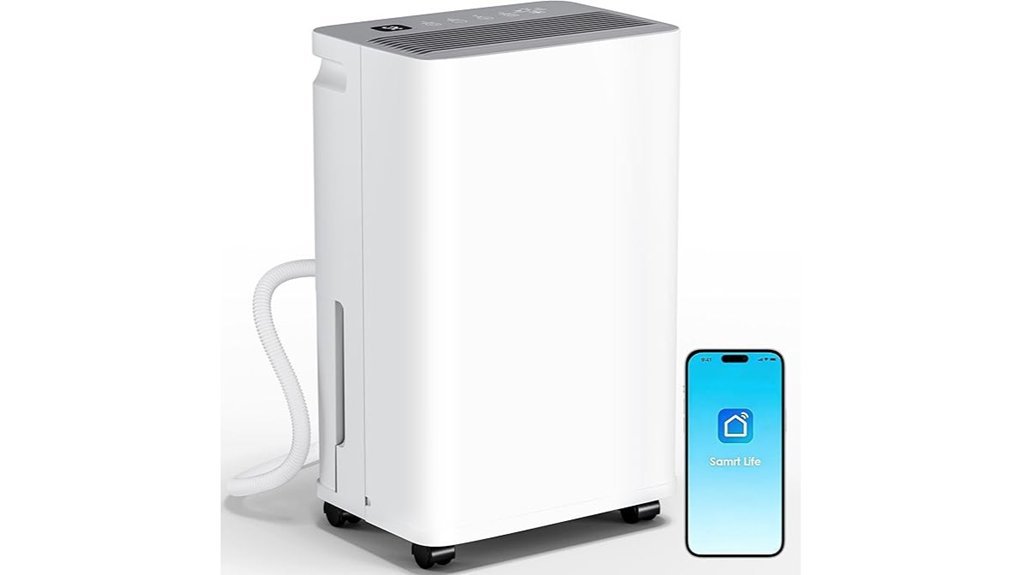
Best App-Controlled Large-Room Pick
The Tehanld model is marketed for spaces up to 2,500 square feet with removal of up to 35 pints per day. Smart Life app support lets you check or adjust settings remotely when the unit is connected to a compatible Wi-Fi network. A digital humidity display, multiple modes, fan-speed control, a timer, and tank or continuous drainage make it a flexible option for a basement or larger living area.
Why You’ll Like It: Remote control can help you manage humidity without walking to the unit, especially when it is placed in a basement or utility area.
Who Should Buy This: Buyers who prioritize app control and need more capacity than a compact tabletop unit.
Who Should Avoid This: Buyers who prefer simple offline controls or whose local voltage does not match the listing’s electrical requirements.
Pros:
- Smart Life app support for remote adjustments.
- Up to 35 pints per day of seller-stated removal capacity.
- Dual drainage options and a digital control panel.
Cons:
- App setup depends on Wi-Fi compatibility and account configuration.
- Seller-stated noise and energy-savings claims may vary in real rooms.
- Confirm current warranty, voltage, and included hose details before ordering.
hOmeLabs Wi-Fi Dehumidifier for Home and Office
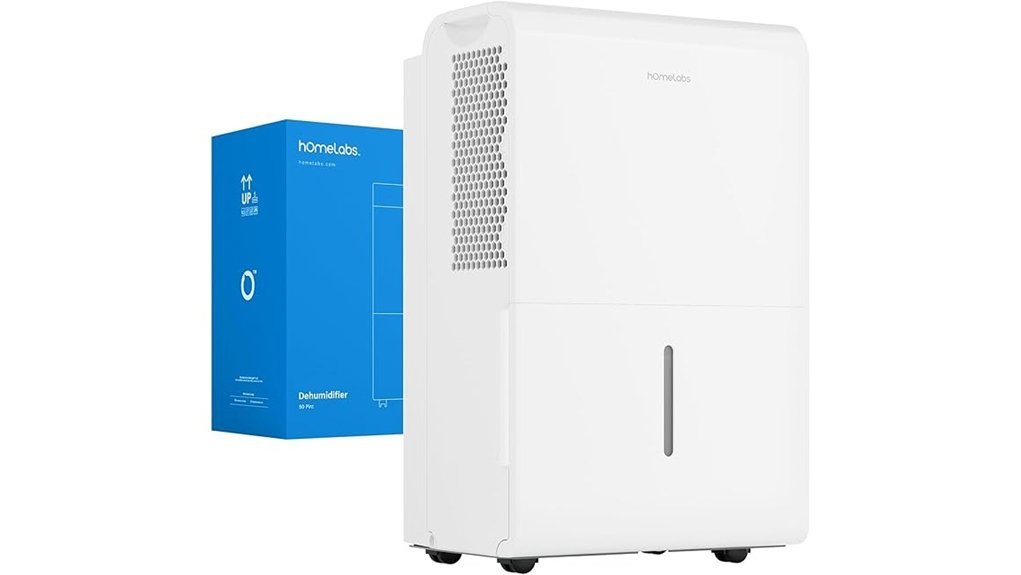
Best Wi-Fi Pick for Medium Spaces
This hOmeLabs Wi-Fi model is listed for spaces up to 1,800 square feet. Its current listing describes removal of 8 pints per day at standard test conditions and a maximum claim of 24 pints per day in hotter, more humid conditions. Wi-Fi control, adjustable humidity, Turbo mode, automatic full-tank shutoff, wheels, and continuous-drain support make it convenient for a home office, bedroom, or moderately damp basement.
Why You’ll Like It: App control lets you monitor settings remotely, while Turbo mode provides a higher-airflow option when moisture rises.
Who Should Buy This: Buyers who want a connected dehumidifier for a medium-size room and understand the difference between standard and maximum pint ratings.
Who Should Avoid This: Buyers who need a true 50-pint or high-capacity unit for a severely wet, very large basement.
Pros:
- Wi-Fi control for remote monitoring and adjustments.
- Adjustable humidity and Turbo mode add flexibility.
- Tank shutoff, wheels, and continuous-drain support improve convenience.
Cons:
- A drain hose may need to be purchased separately, depending on the current package.
- Current seller availability can change, so check the listing before relying on it for an urgent purchase.
ToLife Dehumidifier for Home with 95-Ounce Tank and LED Light
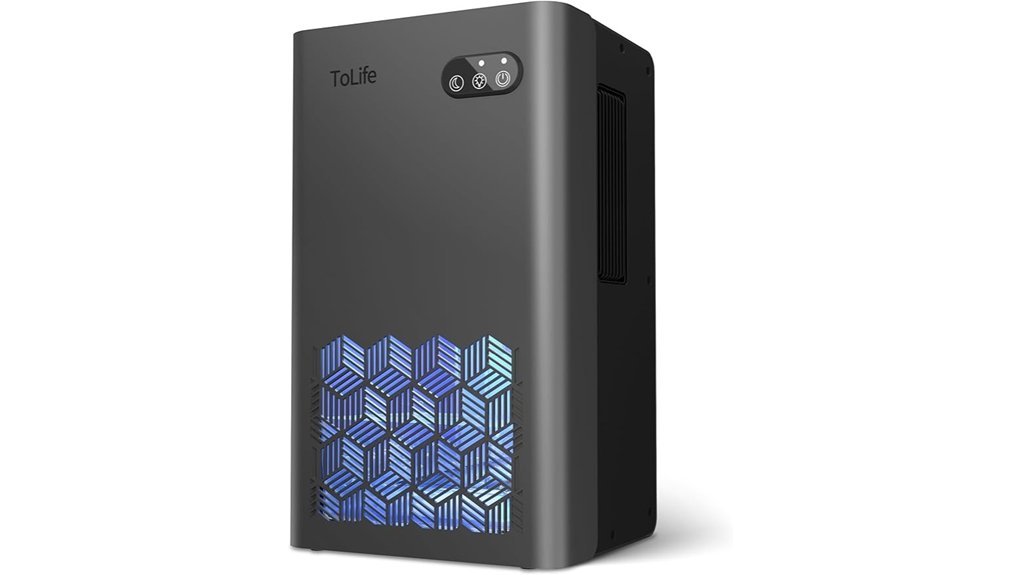
Best for Quiet Spot Dehumidification
The ToLife is a compact semiconductor dehumidifier with a 95-ounce tank, two operating modes, automatic shutoff, and seven-color ambient lighting. The seller claims coverage up to 1,000 square feet and collection up to 1 liter per day under stated conditions. In practice, this product type is best viewed as a light-duty option for a bedroom, bathroom, closet, or other enclosed area rather than a replacement for a compressor dehumidifier in a wet basement.
Why You’ll Like It: Sleep mode is designed to reduce fan noise, and the lighting can be turned into a steady color for nighttime ambiance.
Who Should Buy This: Buyers dealing with mild humidity in a smaller enclosed room who value quiet operation and a compact footprint.
Who Should Avoid This: Anyone facing water intrusion, persistent condensation across a large floor, or humidity that remains above the target despite ventilation and leak repairs.
Pros:
- Compact body is easier to place than a full-size compressor unit.
- Sleep mode and automatic shutoff support bedroom use.
- Large tank for its compact product category.
Cons:
- Semiconductor models remove moisture more slowly than compressor units.
- Seller coverage claims may overstate practical performance in open or very damp rooms.
- The tank still requires manual emptying.
BEDRED 95-Ounce Compact Dehumidifier with Lights
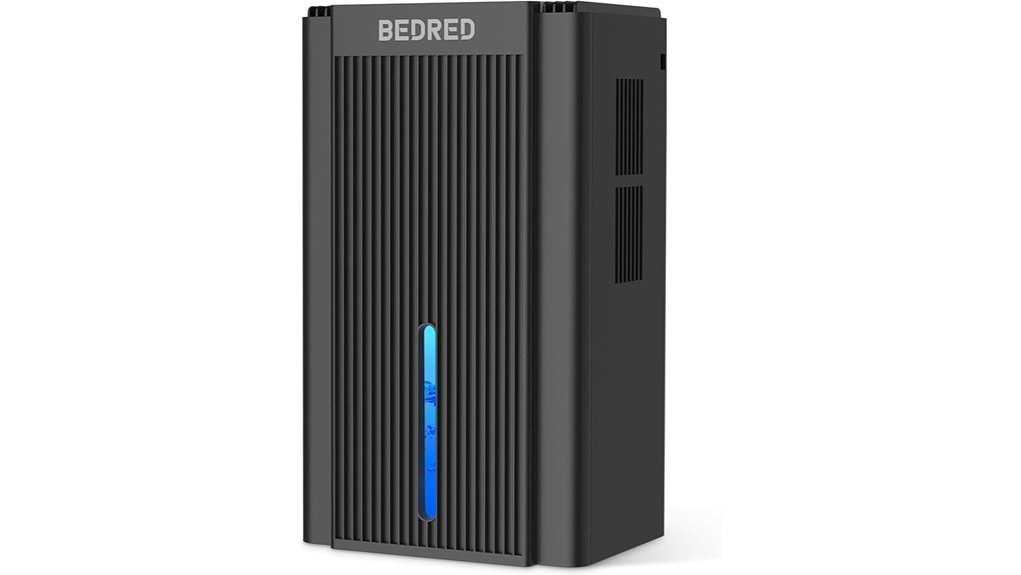
Best Compact Pick with Sleep Mode
The BEDRED model combines semiconductor moisture collection with a 95-ounce tank, sleep mode, automatic full-tank shutoff, and a seven-color ambient light. The seller markets it for areas up to 1,000 square feet, but its compact technology makes it more appropriate for mild humidity and spot treatment in bedrooms, RVs, bathrooms, or other smaller enclosed spaces.
Why You’ll Like It: The sleep setting turns down distractions, while the simple controls make the unit easy to operate.
Who Should Buy This: Buyers who want a compact, decorative unit for mild moisture control.
Who Should Avoid This: Buyers expecting rapid drying after flooding or strong whole-basement performance.
Pros:
- Compact design works where floor space is limited.
- Sleep mode and auto shutoff improve overnight convenience.
- Ambient light can be used as a soft night light or turned off.
Cons:
- Not as powerful as a compressor dehumidifier.
- Practical coverage depends heavily on room enclosure and humidity level.
- Manual tank emptying is required.
NeedDuck 44-Ounce Dehumidifier for Small Spaces
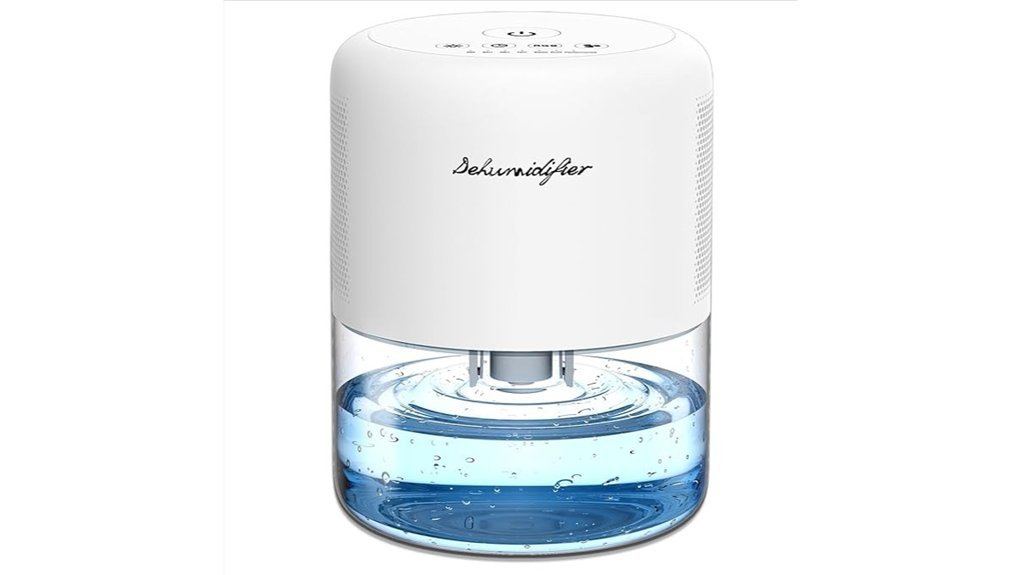
Best for Very Small Spaces
The NeedDuck B-2 is the smallest-space option in this roundup. It has a 44-ounce tank, seller-stated coverage up to 215 square feet, and Sleep, Auto, and Performance modes. Automatic shutoff, defrost protection, timer settings, and multiple light options add convenience without increasing its compact footprint.
Why You’ll Like It: Its small size and low weight make it easy to place on a shelf, desk, or counter in a closet, bedroom, or small office.
Who Should Buy This: Buyers who need gentle moisture control in a very small enclosed space.
Who Should Avoid This: Anyone trying to control humidity across a large room, open floor plan, or damp basement.
Pros:
- Compact and lightweight for easy placement.
- Three modes provide more control than many basic mini units.
- Auto shutoff and defrost functions support unattended operation.
Cons:
- Coverage is limited to small spaces.
- The 44-ounce tank requires more frequent emptying than larger models.
- It cannot match the extraction rate of a compressor dehumidifier.
Factors to Consider When Choosing a Dehumidifier for Home Use
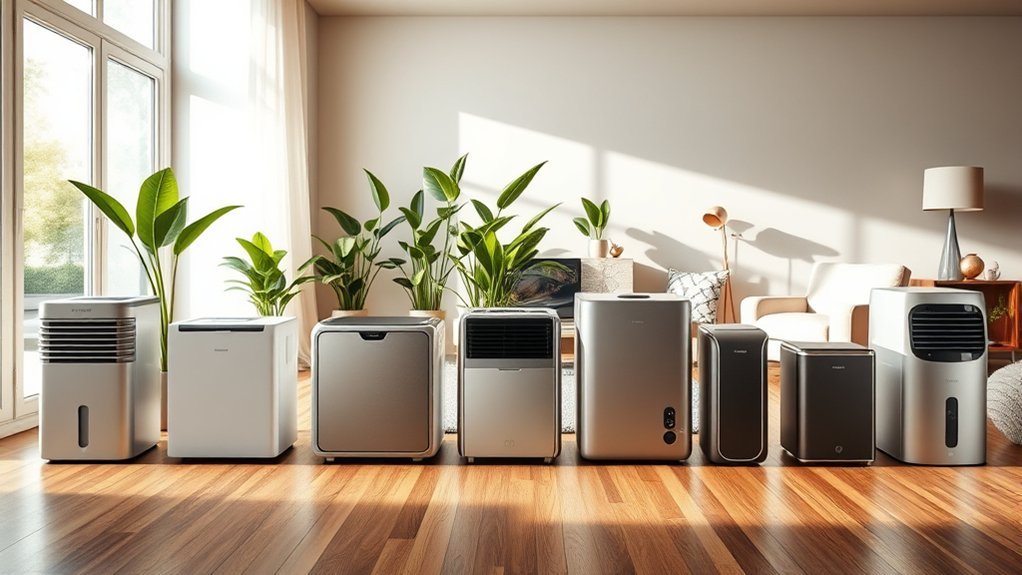
The best dehumidifier is not automatically the one with the largest square-footage claim. Compare capacity at the same test conditions, the room’s actual moisture problem, drainage access, operating temperature, noise, electrical compatibility, and maintenance needs.
Coverage Area and Room Conditions
Start with the room’s measured square footage, but treat coverage claims as a screening tool rather than a guarantee. An open basement with wet walls needs more capacity than a closed bedroom of the same size. Doors, ceiling height, air leaks, ventilation, and the source of the moisture all affect performance. Fix plumbing leaks, rain entry, or drainage problems before relying on a dehumidifier alone.
Moisture Extraction Capacity
Capacity is usually stated in pints collected over 24 hours. Compare ratings measured under the same temperature and relative-humidity conditions. A model may advertise a high maximum at 95°F and very high humidity but remove much less under normal indoor conditions. For a damp room, choose enough capacity to reach and maintain the target humidity without running continuously at maximum speed.
Compressor vs. Semiconductor Dehumidifiers
Compressor dehumidifiers are generally the better choice for basements, larger rooms, and heavier moisture loads. Semiconductor or thermoelectric models are smaller and often quieter, but they collect water more slowly and work best in compact enclosed spaces with mild humidity. Do not rely on a mini unit’s square-footage claim alone when comparing it with a compressor model.
Energy Efficiency Ratings
ENERGY STAR certification helps identify models that meet current efficiency requirements for their capacity class. Compare integrated energy factor, rated wattage, and expected daily runtime—not just the logo. A correctly sized unit with a humidistat and timer can avoid unnecessary operation, while an undersized unit may run for long periods without reaching the target.
Noise Level Considerations
Check the listed decibel rating and whether it applies to low or high fan speed. Around 30 to 40 dB is generally marketed as quiet, while compressor models often produce more noticeable fan and compressor sound. Room acoustics, hard floors, wall distance, and vibration can change how loud a unit seems. For a bedroom, prioritize sleep mode, light-off controls, and a return policy in case the sound is still distracting.
Drainage Options Available
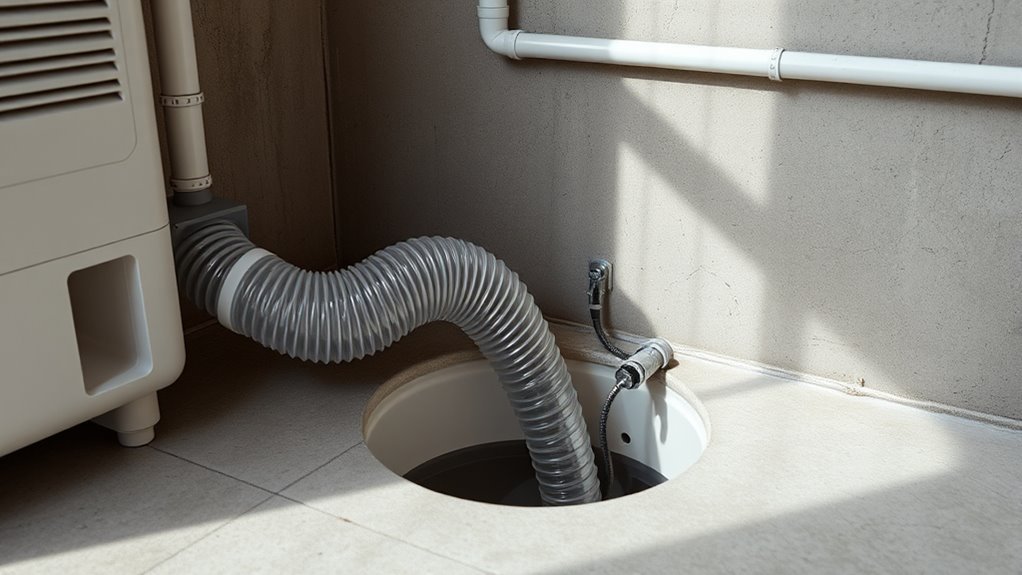
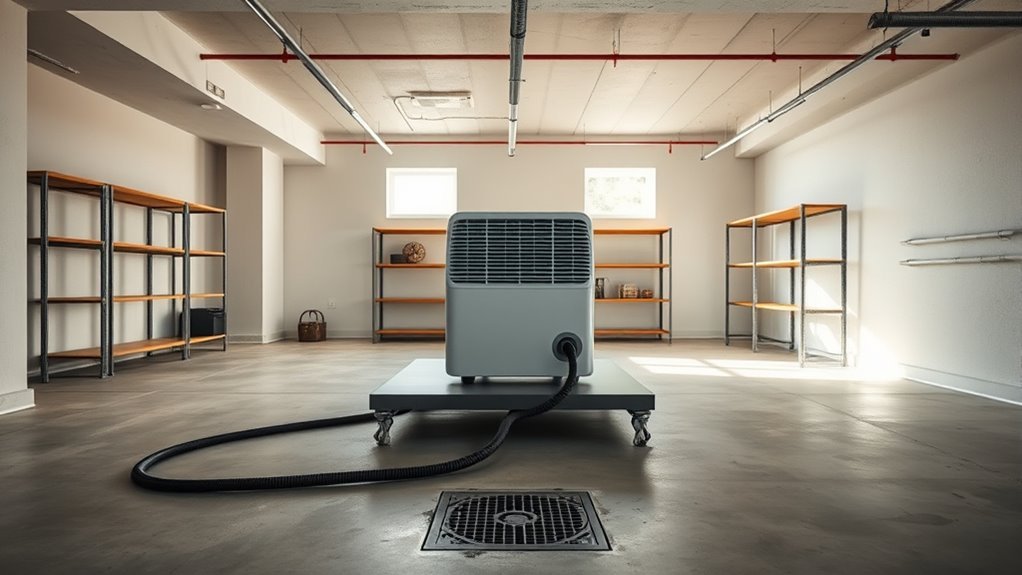
Manual drainage is simple but requires regular tank emptying. Continuous gravity drainage is better for basements and laundry rooms when a floor drain is below the outlet and the hose can slope downward without kinks. A gravity hose cannot push water uphill. For an elevated sink or window, look for a model with a built-in condensate pump or use a separately rated pump system.
Operating Temperature and Defrost
Compressor coils can frost in cool rooms, reducing extraction. Auto-defrost helps, but it does not make every model suitable for very cold spaces. Check the manufacturer’s minimum operating temperature and consider a desiccant solution or warmer placement if the room stays below the recommended range.
Portability and Design
Wheels, handles, weight, hose routing, cord length, and tank access matter more than appearance when moving a unit between rooms. Leave the recommended clearance around the air inlet and outlet, and avoid placing the dehumidifier where curtains, furniture, or walls restrict airflow.
Smart Features Integration
App control is useful for checking a basement or office remotely, but confirm Wi-Fi band requirements, app permissions, and whether core controls still work without an internet connection. A reliable humidistat, timer, auto restart, and full-tank shutoff are often more important than decorative lighting or voice control.
Voltage and Marketplace Compatibility
Before importing a dehumidifier, confirm the voltage, frequency, plug type, current draw, and warranty region on the current listing and product nameplate. Many Amazon.com models are designed for 115V or 120V service, while other countries use a higher mains voltage. A plug adapter alone does not convert voltage. Using an incompatible appliance can damage the unit and create an electrical hazard.
Maintenance and Care Needs
Empty and wash the tank regularly, clean or replace the filter according to the manual, inspect the drain hose for clogs, and keep the intake and exhaust free of dust. Before seasonal storage, dry the tank and hose completely. If performance drops suddenly, check room temperature, filter condition, airflow, and ice buildup before assuming the compressor has failed.
Before You Buy Checklist
- Measure the room and identify the moisture source.
- Decide whether you need compressor-level extraction or light spot control.
- Confirm the capacity test conditions, not only the maximum pint number.
- Plan where the tank or drain hose will discharge water.
- Check voltage, frequency, plug type, and warranty coverage for your country.
- Allow enough space around the unit for unrestricted airflow.
Frequently Asked Questions
How Do I Know What Size Dehumidifier I Need?
Measure the floor area and rate the room as slightly damp, very damp, or wet. For spaces under about 2,000 square feet, current sizing guidance commonly starts around 20 to 30 pints per day for mild-to-moderate dampness, 25 to 40 pints for very damp conditions, and 30 to 50 pints for wet conditions. Larger spaces or active moisture problems generally need more capacity. Use ratings measured under comparable test conditions and size up when the room is cool, open, or persistently wet.
Can Dehumidifiers Reduce Allergens in the Home?
Lower humidity can make the environment less favorable for mold and dust mites, but a dehumidifier does not filter allergens the way an air purifier does. It also cannot replace leak repair, mold remediation, cleaning, or medical advice. Aim for a comfortable indoor humidity range and address the moisture source.
What Maintenance Is Required for a Dehumidifier?
Clean the filter on the schedule in the manual, wash and dry the tank, inspect the hose, remove dust from the air intake, and keep the unit level. Unplug it before cleaning. If you use continuous drainage, check the hose slope and connection regularly to prevent leaks.
Are Dehumidifiers Noisy During Operation?
Compact semiconductor units are often quieter than compressor models, but all dehumidifiers produce fan noise. Compressor cycling can also be audible. Compare decibel figures at the same fan speed, look for sleep mode, and place the unit on a stable surface away from the bed or desk.
How Energy Efficient Are Modern Dehumidifiers?
Efficiency varies by capacity, design, room conditions, and runtime. ENERGY STAR-certified models are designed to meet stricter efficiency criteria than comparable conventional units. The biggest practical savings usually come from choosing the right size, using a humidistat, cleaning the filter, closing the room, and fixing the underlying moisture source.
Can I Use a U.S. Dehumidifier in Turkey or Another 230V Country?
Only when the product nameplate explicitly supports the local voltage and frequency, or when a properly rated voltage converter is approved for the appliance’s starting and running load. Many Amazon.com dehumidifiers are 115V or 120V models. A simple travel plug adapter is not enough. Confirm compatibility with the manufacturer or a qualified electrician before use.
Conclusion
For a large, persistently damp area, the AEOCKY 4500 Sq.Ft Energy Star Dehumidifier offers the strongest capacity and drainage package in this lineup. The Waykar 34 Pints Energy Star Dehumidifier is a more balanced choice for medium spaces, while the hOmeLabs Wi-Fi Dehumidifier suits buyers who prioritize app control. For a closet, small bedroom, or other light-duty area, the NeedDuck 44-Ounce Dehumidifier is the most appropriately sized compact option. Before ordering, verify the current Amazon listing, electrical compatibility, drainage setup, and warranty terms so the model matches both your room and your country.