Best Dehumidifier for a Very Wet Basement in 2026
Affiliate disclosure: This article contains Amazon affiliate links. If you click a link and buy through Amazon, we may earn a commission at no extra cost to you.
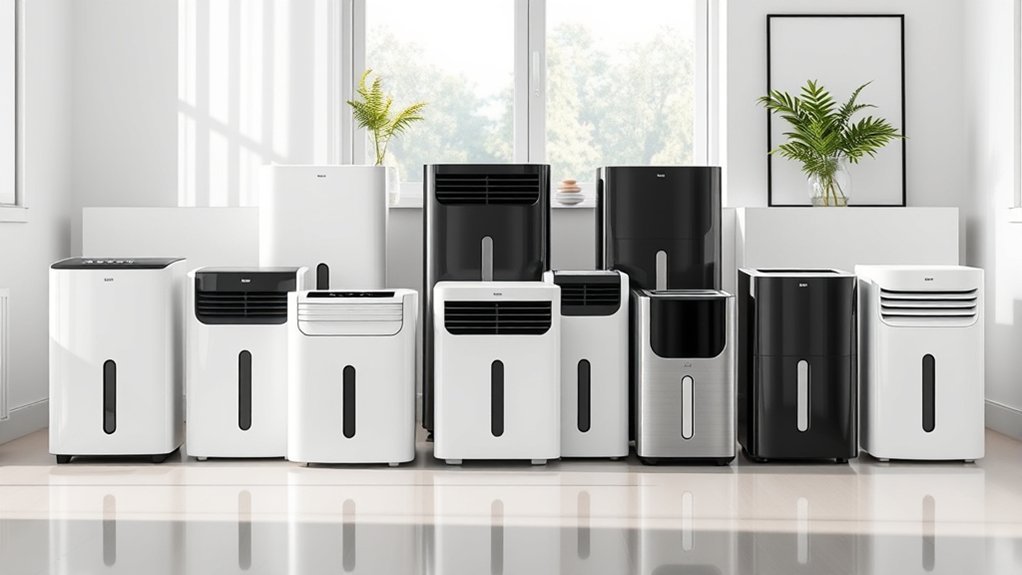
If your basement feels damp, smells musty, or collects moisture after rain, a small dehumidifier may not be enough. For a very wet basement, look for strong daily moisture removal, reliable drainage, safe shutoff, and enough coverage for the whole space. This guide compares five dehumidifiers that fit different basement needs: the SEMKAP 32 Pints Dehumidifier for smaller damp zones, the Midea 4,500 Sq. Ft. Dehumidifier with Pump for large spaces, the AIRPLUS 70 Pint Dehumidifier for heavy moisture removal, the Avylo Dehumidifier with Pump for high-capacity use, and the GE Portable Dehumidifier with Smart Dry Technology for hands-off humidity control.
A dehumidifier can help lower humidity, protect stored items, reduce musty odors, and make a basement more comfortable. It should not be treated as a fix for standing water, foundation leaks, or poor exterior drainage. If water is entering the basement, solve that problem first, then use a dehumidifier to control the remaining moisture in the air.
Quick Verdict: For the wettest basement in this lineup, start with the Avylo Dehumidifier with Pump because it has the highest listed capacity and pump drainage. For strong drying power without jumping to the biggest option, the AIRPLUS 70 Pint Dehumidifier is the heavy-moisture pick. For easier drainage and smart control, compare the Midea and GE models.
Best buying move: Choose capacity first, then drainage style. In a very wet basement, a pump or continuous drain setup can matter as much as the pint rating because it lets the unit run longer without constant bucket emptying.
Quick Comparison: Dehumidifiers for a Very Wet Basement
| Product | Moisture Removal | Best Fit | Drainage Style | Amazon CTA |
|---|---|---|---|---|
| SEMKAP 32 Pints Dehumidifier Best for smaller damp zones |
32 pints per day | Smaller damp basements, laundry rooms, and mixed-use spaces | Manual drainage with auto shutoff | Check Price on Amazon |
| Midea 4,500 Sq. Ft. Dehumidifier with Pump Best smart pump option |
Up to 50 pints per day | Large basements where bucket emptying is inconvenient | Built-in pump and timer control | Check Price on Amazon |
| AIRPLUS 70 Pint Dehumidifier Best heavy-moisture pick |
70 pints per day | High-humidity basements up to 4,500 sq. ft. | Continuous or manual drainage | Check Price on Amazon |
| Avylo Dehumidifier with Pump Best highest-capacity pick |
Maximum capacity of 90 pints per day | Very damp large basements where continuous drainage matters | Built-in pump with drainage up to 15 feet | Check Price on Amazon |
| GE Portable Dehumidifier with Smart Dry Technology Best automatic control |
Up to 50 pints per day | Basements, garages, and high-moisture rooms needing automatic fan adjustment | Built-in pump with drainage up to 16 feet | Check Price on Amazon |
Quick buying tip: For a very wet basement, start with capacity and drainage. A 50-pint to 90-pint model is usually a better fit for heavy moisture than a small room unit. If you do not want to empty a bucket often, choose a model with continuous drainage or a built-in pump.
Target humidity: Many homeowners aim for roughly 40% to 50% relative humidity in a basement. If the space still smells damp after running the unit, check for leaks, clogged gutters, grading problems, or poor airflow.
How these picks were positioned: The recommendations below are organized around real basement problems: smaller damp zones, large spaces, heavy humidity, pump drainage, smart control, tank emptying, noise, and ongoing maintenance.
Important note: Product specs can vary by listing version, seller, and model year. Before buying, confirm the current Amazon listing details, included hose or pump accessories, warranty terms, room coverage, and return policy.
SEMKAP 32 Pints Dehumidifier for Home and Basement
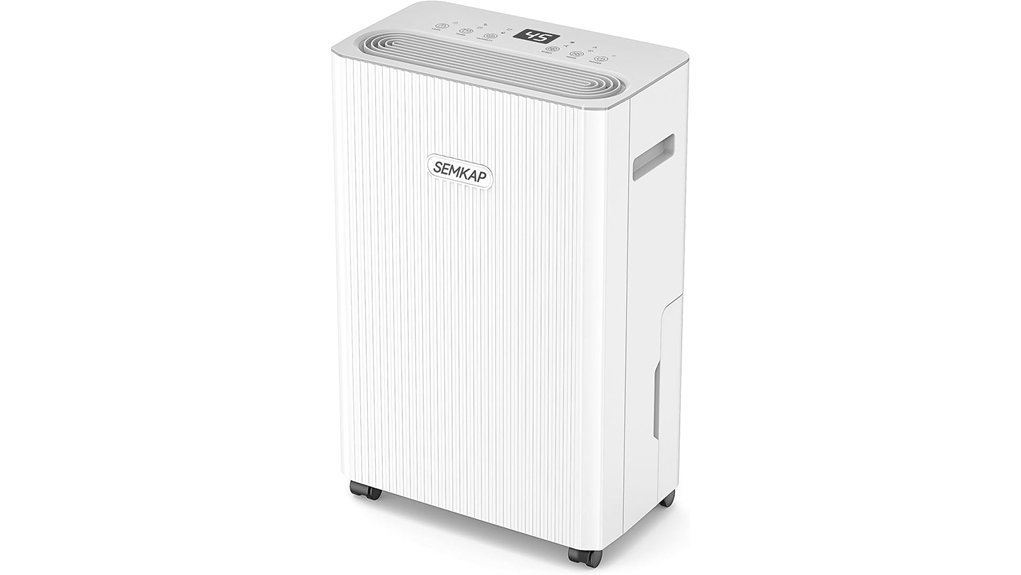
Best for smaller damp basement zones
The SEMKAP 32 Pints Dehumidifier is a practical choice if your basement is damp but not constantly soaked. It is built to remove 32 pints of moisture daily and helps keep humidity between 40%-60% RH. That range is useful for reducing musty air, protecting storage boxes, and making basement laundry areas feel less clammy.
Its compact design makes it easy to move from one area to another. The 360° wheels and handle are helpful if you need to dry a basement corner one day and a laundry room the next. You’ll also appreciate its quiet operation at just 35 dB, which makes it suitable for living areas, workspaces, bedrooms, and finished basement rooms where noise matters.
The auto shutoff feature helps prevent overflow when the tank is full, while the washable filter simplifies maintenance. The main limitation is capacity. If your basement is very large, has constant seepage, or stays wet after storms, this model may need to work harder than a larger 50-pint, 70-pint, or 90-pint unit.
Best For: Individuals and families who need an efficient dehumidifier for smaller damp basements, laundry rooms, living rooms, and mixed-use indoor spaces.
Why it fits a wet basement: It is quiet, mobile, and simple to maintain. It works best when you need steady humidity control rather than maximum moisture removal for a large, saturated basement.
Why you’ll like it: This is the easiest pick to justify if your biggest problems are musty air, mild condensation, or a damp laundry corner rather than severe water intrusion. The portable design also makes it more flexible than a heavier basement-only unit.
Who should buy this: Buy it if your basement is smaller, partly finished, or only seasonally damp, and you want a simple unit you can move around without much effort.
Who should skip it: Skip this one if your basement is over 2,500 sq. ft., has standing water, or needs continuous heavy-duty moisture removal after frequent rain.
Pros:
- Quiet Operation: Runs at just 35 dB, making it ideal for bedrooms, finished basements, and workspaces.
- Easy Mobility: Compact design with 360° wheels and a handle for convenient movement.
- User-Friendly Features: Includes an LED display, a 24-hour timer, and customizable settings for optimal performance.
- Simple Maintenance: The washable filter helps reduce ongoing upkeep costs.
Cons:
- Limited Capacity: May not be sufficient for larger spaces exceeding 2500 sq. ft.
- Manual Drainage Option: Requires manual intervention for drainage, which may be less convenient for some users.
- Small Water Tank: The 2.5L capacity may need frequent emptying in high humidity conditions.
- Not the strongest choice for severe basement moisture: Heavy wetness may call for a larger unit with a pump or continuous drain.
Bottom line: Choose the SEMKAP 32 Pints Dehumidifier if you want a quieter, portable unit for moderate basement moisture. For a very wet, large basement, compare it against the higher-capacity options below before deciding.
Midea 4,500 Sq. Ft. Dehumidifier with Pump
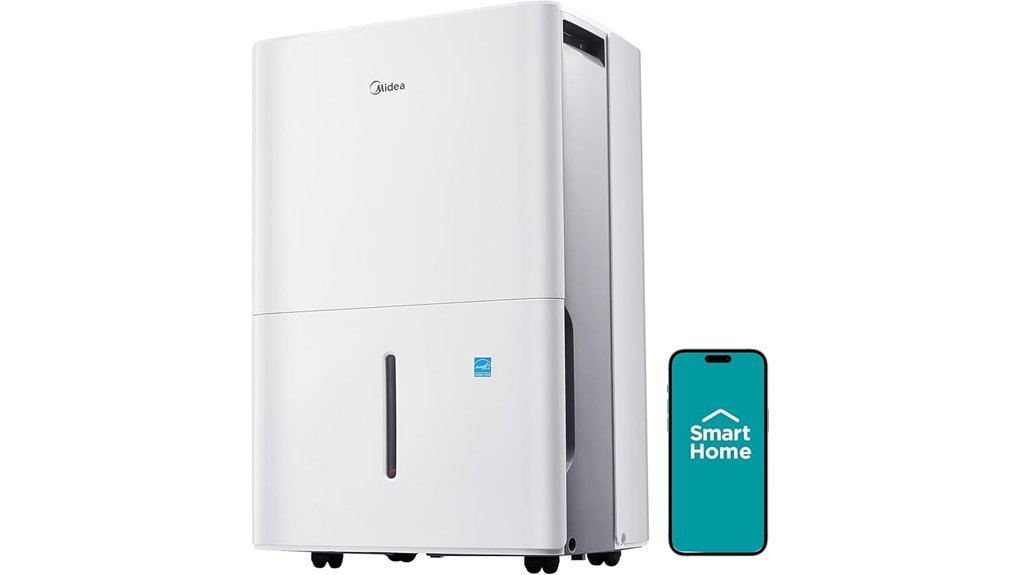
Best for smart pump drainage
For homeowners battling humidity in large spaces, the Midea 4,500 Sq. Ft. Dehumidifier with Pump is a strong option. It efficiently removes up to 50 pints of moisture daily, making it suitable for basements, kitchens, offices, and other moisture-prone rooms. If your basement is large but you do not want to keep checking a bucket, the built-in pump is the key feature to notice.
With adjustable humidity settings from 35% to 85%, you can set the level you want and let the unit work toward that target. The built-in pump allows easier drainage and reduces the hassle of manual emptying. This is especially helpful if your drain is above the unit, across the room, or in a utility sink rather than directly on the floor.
The Midea model also offers quiet operation at 49 dBA, Wi-Fi capability, and a timer function. That combination gives you more control over when and how the unit runs. For a basement that gets humid overnight or after storms, the timer and remote-control features can make daily use easier.
Best For: Homeowners seeking an effective solution for managing humidity in large spaces, such as basements, kitchens, and offices.
Why it fits a wet basement: The 50-pint moisture removal rating, large coverage area, and built-in pump make it a practical pick for basements where frequent bucket emptying would be annoying.
Why you’ll like it: The built-in pump makes it easier to place the unit where it works best instead of only where gravity drainage is convenient. Wi-Fi control is also helpful if the basement is not a space you visit often.
Who should buy this: Choose this model if your basement is large, you want app-friendly control, and you prefer pump drainage over repeatedly emptying a bucket.
Who should skip it: If your basement is small or only mildly damp, this may be more machine than you need. If you are sensitive to noise, consider where you place it and which fan setting you use.
Pros:
- Efficient moisture removal with a capacity to eliminate up to 50 pints daily.
- Built-in pump for easy drainage, avoiding the need for manual bucket emptying.
- Wi-Fi enabled for remote control and compatibility with smart home devices.
- Adjustable humidity settings help you fine-tune comfort and moisture control.
Cons:
- Initial cost may be higher compared to basic dehumidifiers.
- Requires a power source for operation, limiting placement options.
- Possible noise at higher settings, which may be disruptive for some users.
- Smart features may be unnecessary if you only want a basic plug-in unit.
Bottom line: The Midea 4,500 Sq. Ft. model is a good match for a large wet basement where convenience matters. The pump and Wi-Fi features make it especially appealing if you want less hands-on maintenance.
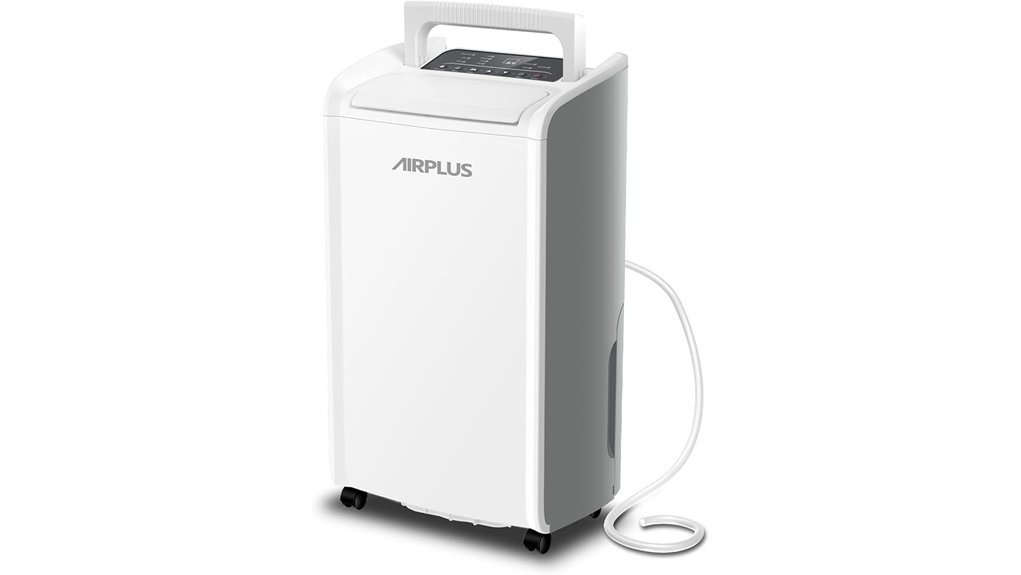
AIRPLUS 70 Pint Dehumidifier for Basements and Home
Best for heavy basement humidity
Struggling with dampness in your basement? The AIRPLUS 70 Pint Dehumidifier is built for stronger moisture control. Covering up to 4,500 sq. ft., it removes 70 pints of moisture daily, which gives it more drying power than many smaller household units. That extra capacity matters if the basement often feels humid, smells musty, or takes a long time to dry after wet weather.
With smart modes like noise reduction and sleep mode, you can customize its operation to fit your routine. The digital control panel makes monitoring easy, while the 24-hour timer helps you avoid running the unit longer than needed. The dual protection features add peace of mind during regular use.
You can choose between continuous or manual drainage. Continuous drainage is usually the better setup for a very wet basement because it saves you from emptying the tank repeatedly. Manual drainage can still work if you check the tank often and use the dehumidifier in shorter cycles.
Best For: Homeowners and renters looking to effectively reduce humidity in large spaces like basements, ensuring a comfortable and dry environment.
Why it fits a wet basement: The 70-pint capacity gives it stronger moisture removal for damp, large spaces. It also offers flexible drainage and a washable filter, which are useful for ongoing basement use.
Why you’ll like it: This is one of the most direct matches for the phrase “very wet basement” because it focuses on higher moisture removal. It is a better fit than smaller models when the air feels damp again soon after the unit shuts off.
Who should buy this: Buy this if your basement is large, humid, or musty and you want more drying power than a 30-pint or 50-pint model may provide.
Who should skip it: If you need the easiest no-touch drainage setup, compare this against models with built-in pumps. If you plan to rely on the tank, remember that the listed 0.7-gallon tank may fill quickly in very humid conditions.
Pros:
- High Capacity: Removes up to 70 pints of moisture daily, suitable for large areas up to 4,500 sq. ft.
- Smart Functionality: Features multiple modes including sleep and noise reduction for tailored operation.
- Easy Maintenance: Comes with a detachable, washable filter and flexible drainage options.
- Good fit for severe humidity: The higher pint rating can help when a smaller unit cannot keep up.
Cons:
- Tank Size: The 0.7-gallon tank may require frequent emptying depending on humidity levels.
- Weight: At 28 pounds, it may be cumbersome to move between locations.
- Limited Warranty: The one-year warranty might be shorter than some competitors offer.
- Drainage planning matters: Continuous drainage works best only when you have a suitable drain location.
Bottom line: The AIRPLUS 70 Pint Dehumidifier is one of the better fits here for a very wet basement because of its larger moisture removal capacity. It is especially useful when you need more drying power than a compact 30-pint unit can provide.
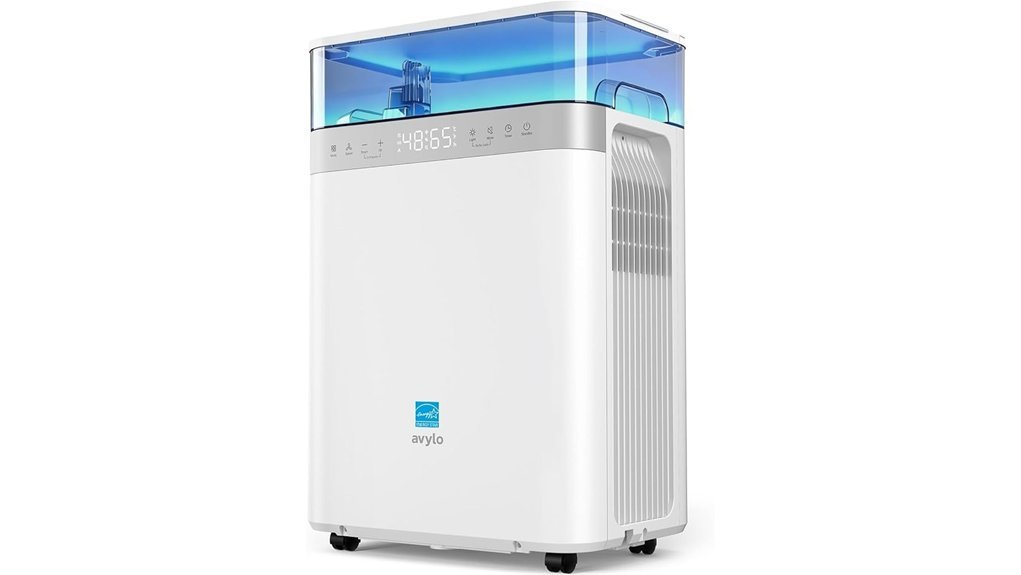
Avylo Dehumidifier for Basement with Pump
Best highest-capacity option
If you’re looking for an efficient solution for damp spaces, the Avylo Dehumidifier with Pump is a strong choice for large, wet basements. With a maximum capacity of 90 pints daily, it tackles areas up to 4,500 sq. ft. and gives you the highest listed moisture removal capacity in this roundup.
Its ENERGY STAR certification helps keep operating costs under control, with the article listing around $1 per day. Advanced sensors adjust dehumidification based on your target humidity, while the built-in pump allows for easy drainage up to 15 feet. That matters in a basement where the best drain location may not be right beside the machine.
Operating quietly at just 41 dB, it’s suitable for finished basements, living rooms, and areas near bedrooms. Mobility features and safety protections also make it easier to rely on for long-term use. If your basement stays wet for days after rain, the Avylo is the kind of high-capacity option that can make more sense than a smaller portable model.
Best For: Those seeking an efficient and quiet dehumidifier for large damp spaces such as basements, living rooms, and garages.
Why it fits a wet basement: The 90-pint maximum capacity and built-in pump make it a strong match for heavy humidity, larger square footage, and long run times.
Why you’ll like it: It gives you the most headroom in this roundup. That matters when humidity spikes after storms, when the basement has poor airflow, or when you want a unit that does not feel undersized during the wettest weeks.
Who should buy this: Choose it if your main concern is maximum listed capacity, pump drainage, and long run times in a large or very damp basement.
Who should skip it: If your basement is only mildly damp or you do not need pump drainage, a simpler and lower-capacity model may be enough.
Pros:
- Energy-efficient with an estimated daily operating cost of ≤ $1.
- Built-in pump for easy drainage up to 15 feet, ideal for long-term use.
- Quiet operation at 41 dB, making it suitable for bedrooms and living areas.
- High listed capacity makes it a strong option for very wet basements.
Cons:
- Initial cost may be higher compared to standard dehumidifiers without pumps.
- Size and weight could be cumbersome for some users, despite mobility features.
- Requires periodic maintenance for optimal performance, such as cleaning the pump and tank.
- May be more powerful than needed for small rooms or lightly damp spaces.
Bottom line: The Avylo Dehumidifier with Pump is a strong pick if your main priority is capacity. It is best for buyers who want high moisture removal, quieter operation, and less bucket emptying.
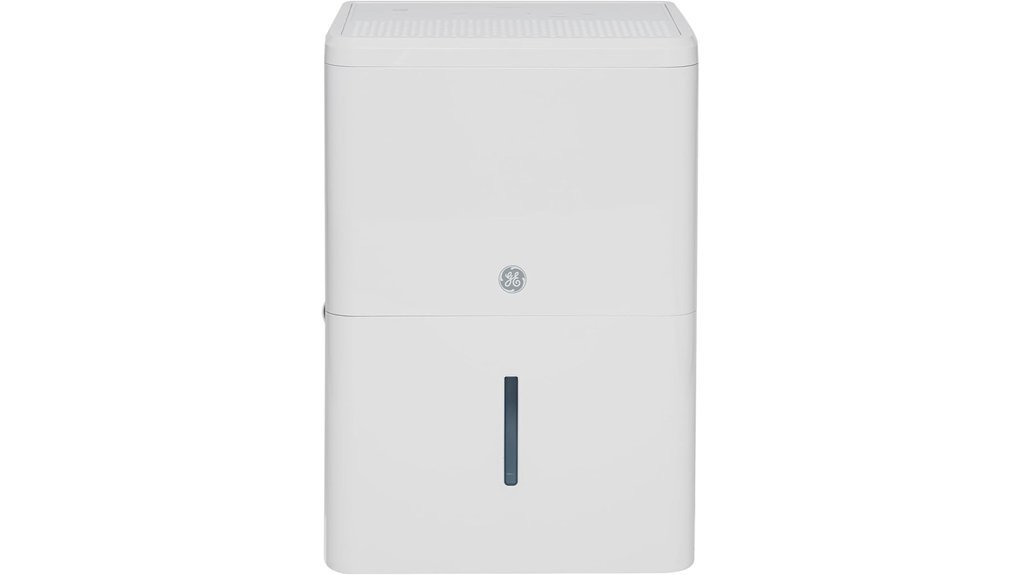
GE Portable Dehumidifier with Smart Dry Technology
Best for automatic humidity control
The GE Portable Dehumidifier with Smart Dry Technology is built for homeowners who want automatic humidity control in basements, garages, and high-moisture rooms. It removes up to 50 pints of moisture daily, making it a better fit for damp environments than smaller room dehumidifiers.
Smart Dry Technology automatically adjusts the fan speed based on the room’s humidity. That means the unit can respond as the basement gets wetter or drier instead of forcing you to adjust settings constantly. You can set your desired humidity level between 30-70% with its adjustable humidistat.
The built-in pump allows for hassle-free drainage up to 16 feet away. This is useful if your basement drain, sink, or outlet point is not right beside the unit. With portability features like easy-roll wheels and pocket handles, you can move it to the area where moisture is worst.
Best For: Homeowners seeking an efficient solution to manage humidity in basements, garages, and other high-moisture areas.
Why it fits a wet basement: The combination of 50-pint removal, Smart Dry fan adjustment, and built-in pump drainage makes it a convenient option for regular basement humidity control.
Why you’ll like it: The automatic fan adjustment reduces the need to keep checking settings. It is especially useful if your basement humidity changes throughout the day or after rain.
Who should buy this: Buy it if you want a balanced 50-pint option with pump drainage, portability, and automatic humidity response.
Who should skip it: If you need maximum capacity for a severely wet basement, compare it with the 70-pint and 90-pint options above. If you need a compact model for a small room, this may feel bulky.
Pros:
- Effective moisture removal: Removes up to 50 pints of moisture daily, ideal for damp environments.
- Smart Dry Technology: Automatically adjusts fan speed for optimal comfort based on humidity levels.
- Easy mobility: Equipped with pocket handles and easy-roll wheels for convenient transportation.
- Built-in pump convenience: Helps drain water away without relying only on the tank.
Cons:
- Size: May be bulky for smaller spaces or apartments.
- Noise level: Some users may find the operation noise noticeable, especially on higher fan settings.
- Drainage setup: The built-in pump requires a hose for optimal drainage, which may complicate setup for some users.
- Not the highest-capacity option here: Very wet large basements may benefit from a 70-pint or 90-pint model.
Bottom line: The GE Portable Dehumidifier is a useful choice if you want a familiar brand-style setup with automatic humidity response and pump drainage. It is a balanced option for basements that need steady moisture control without jumping to the largest capacity model.
Factors to Consider When Choosing a Dehumidifier for a Very Wet Basement
Choosing a dehumidifier for a very wet basement takes more than picking the first model with a large number on the box. You’ll want to focus on moisture removal capacity, coverage area, drainage, noise, energy use, and how easy the unit is to maintain. The right choice depends on your basement size, how often it gets damp, and whether you have a drain location nearby.
Before You Buy Checklist:
- Measure your basement square footage before comparing coverage claims.
- Decide whether you can use gravity drainage, pump drainage, or only a bucket.
- Check where the drain hose will run so it does not kink or become a trip hazard.
- Compare noise levels if the basement is finished or used as a living space.
- Confirm current product details on Amazon before buying because listing specs may change.
Key Features to Look For
Choosing the right dehumidifier for a very wet basement can improve air quality and help prevent moisture damage. First, look for a unit with a high moisture removal capacity, ideally between 50 to 90 pints per day, to handle high humidity effectively. Make certain it can cover your actual basement size, as larger spaces require more power. Consider models with built-in pumps or continuous drainage options to avoid manual emptying. Noise level matters too, especially in a finished basement. Quieter models that operate below 50 dB are easier to live with. Finally, compare ENERGY STAR-rated units if energy use is a concern, since a basement dehumidifier may run for long periods during humid seasons.
Capacity for Moisture Removal
To effectively manage a very wet basement, understanding the capacity for moisture removal is essential. Dehumidifiers typically remove moisture measured in pints per day, with capacities in this roundup ranging from 32 to 90 pints. For areas up to 4,500 square feet, you’ll often want a unit with at least a 50-pint capacity to combat high humidity effectively. Keep in mind that performance can vary based on environmental conditions, like temperature and humidity. Many dehumidifiers are designed to maintain an ideal humidity level of 40% to 60% for comfort and health. Choosing a unit with a higher pints-per-day rating than you think you need can provide extra assurance during peak humidity periods.
Coverage Area Requirements
Selecting the right dehumidifier for your very wet basement hinges on understanding coverage area requirements. Make certain the unit can effectively cover the entire space, with some options designed for areas up to 4,500 sq. ft. This helps support better humidity management. Pay attention to the moisture removal capacity, as units can range from 32 to 90 pints per day, which affects their efficiency in damp conditions. Evaluate airflow capacity; higher cubic feet per minute (CFM) ratings can lead to quicker moisture removal and better air circulation. Look for models with adjustable humidity settings to keep levels around a comfortable range. Prioritize a dehumidifier that meets your basement’s specific needs instead of buying only by price.
Drainage Options Available
When dealing with a very wet basement, understanding drainage options is essential for effective moisture management. You’ll find dehumidifiers typically offer manual drainage, requiring you to empty the water tank regularly. In contrast, continuous drainage features let water flow through a hose directly into a sink or drain, reducing your workload. Some models even have built-in pumps, allowing for vertical or horizontal drainage, which can push water further away from the unit. Pay attention to the length of drainage hoses, as longer ones offer more flexibility in positioning your dehumidifier. Finally, make sure the unit has an auto shut-off feature when the tank is full to prevent overflow and potential water damage.
Noise Level Considerations
Noise level can make a big difference when choosing a dehumidifier for your wet basement. Some models operate as quietly as 35 dB, which is helpful for finished basements, home offices, or guest spaces. Higher-capacity units can be louder, especially on higher fan settings, but that may not matter in an unfinished utility area. Pay attention to the operating mode, as many units offer low-speed settings to reduce noise. Consider models with sound-dampening technology, and be mindful of placement. Soft surfaces or anti-vibration pads can help reduce noise transfer. Your choice should balance drying power with comfort.
Energy Efficiency Ratings
Energy efficiency ratings play an essential role in choosing the right dehumidifier for a very wet basement, especially if you want to keep electricity costs down. Look for models with a strong Energy Efficiency Ratio (EER), which indicates better performance relative to power consumption. ENERGY STAR certified units meet strict energy guidelines, helping reduce energy use and operating costs. You can estimate daily operating costs based on wattage and local electricity rates. Additionally, selecting a dehumidifier with adjustable humidity settings allows it to operate only when necessary, optimizing energy use and improving overall efficiency. This helps you control moisture without wasting power.
Portability and Mobility Features
What factors should you consider for portability and mobility when selecting a dehumidifier for your wet basement? Look for models with 360° wheels and built-in handles, making it easy to move across basement floors. A compact design saves space and helps you position the unit where moisture is most prevalent. Weight matters too; lighter models are easier to relocate but should still be stable enough to prevent tipping. Features like pocket handles and easy-roll wheels are useful for transporting the unit around your home. Finally, consider the dimensions to make sure it fits in tight or awkward spaces while remaining easy to access for tank emptying, filter cleaning, or hose setup.
Smart Technology Integration
When considering a dehumidifier for your very wet basement, smart technology integration can make daily use easier. Some models offer Wi-Fi connectivity, letting you control and monitor humidity levels from a mobile app. You may also find compatibility with voice assistants like Alexa or Google Assistant for hands-free operation. Automated humidity control adjusts fan speeds and modes based on real-time data, improving both energy efficiency and performance. Programmable timers allow you to schedule operation times, while smart alerts may notify you of maintenance needs, like filter changes or full water tanks. These features are most useful if your basement humidity changes often or you want remote control.
Wet Basement Warning Signs a Dehumidifier Alone Will Not Fix
A dehumidifier removes moisture from the air, but it cannot stop water from entering your basement. If you see standing water, wet wall stains, crumbling concrete, repeated puddles, or water flowing in after storms, you may need drainage repair, gutter cleaning, grading work, sump pump service, or foundation sealing. Use a dehumidifier after the source of water is controlled. This helps protect the unit, improves drying results, and reduces the chance that the same moisture problem keeps coming back.
Best Setup Tips for Basement Use
Place the dehumidifier where air can move freely around the intake and exhaust. Do not push it tightly against a wall or hide it behind storage bins. If the unit has a pump or continuous drain hose, check that the hose is not kinked and that water flows safely to the drain point. Clean the filter on schedule, empty the tank before it overflows, and keep doors or windows closed when outdoor humidity is high. These small steps can help the unit work more efficiently and keep your basement drier.
Pro Tip: If your basement has several rooms, keep interior doors open or use a fan to improve air movement. A dehumidifier works better when damp air can reach the unit instead of getting trapped behind walls, storage boxes, or closed doors.
Safety note: Never run a dehumidifier in standing water. Keep the plug, outlet, extension setup, and drain hose away from water hazards, and follow the manufacturer’s instructions for electrical safety and maintenance.
Frequently Asked Questions
How Often Should I Empty the Dehumidifier’s Water Tank?
You should empty the dehumidifier’s water tank whenever it’s full, usually every few hours to daily, depending on humidity levels. In a very wet basement, a small tank can fill quickly. Regularly checking the tank helps maintain performance and prevents overflow. If you do not want to empty the bucket often, choose a model with continuous drainage or a built-in pump.
Can a Dehumidifier Reduce Mold Growth in Basements?
Yes, a dehumidifier can help reduce mold growth in basements by lowering humidity levels. Mold is more likely to thrive in damp, poorly ventilated areas, so keeping humidity under control can make the space less inviting for mold. For the best result, also fix leaks, improve airflow, and remove any water-damaged materials that already have mold growth.
Are Dehumidifiers Noisy During Operation?
Some dehumidifiers are quiet, while others produce noticeable fan and compressor noise during operation. Lower fan settings are usually easier to tolerate in finished basements or living areas. Higher-capacity models may be louder because they move more air and remove more moisture. If noise matters to you, compare listed dB levels and place the unit away from seating or sleeping areas.
What Size Dehumidifier Do I Need for My Basement?
To determine the right size dehumidifier for your basement, calculate its square footage and moisture level. Generally, a 30-pint unit suits smaller spaces with moderate dampness, while larger or very wet areas may require 50 to 70-pint models. For severe humidity, a 90-pint model may offer more headroom. If the space is large and wet, it is usually safer to choose more capacity rather than too little.
Do Dehumidifiers Consume a Lot of Electricity?
Dehumidifiers typically consume about 300-700 watts. While they can increase your electricity bill, energy-efficient models use less power. You’ll find that investing in the right one can balance comfort with energy savings effectively. Adjustable humidity settings, timers, and proper placement can also reduce unnecessary runtime.
Is a Built-In Pump Worth It for a Basement Dehumidifier?
A built-in pump is worth considering if you want continuous drainage but your drain point is above the unit, farther away, or located in a utility sink. Pump drainage can reduce bucket emptying and make the dehumidifier easier to run for long periods. If you already have a nearby floor drain, a gravity drain hose may be enough.
What Humidity Level Should I Set for a Basement?
Many homeowners set basement humidity around 40% to 50% for comfort and moisture control. If the basement still feels damp, smells musty, or shows condensation, lower the target slightly and check for water sources. Avoid setting the unit too low for no reason, since that can increase energy use without adding much benefit.
Should I Use a Pump or Gravity Drain for a Basement Dehumidifier?
Use a gravity drain if the hose can run downward into a nearby floor drain. Choose a built-in pump if the water must move upward, across the room, or into a utility sink. For a very wet basement, either setup is easier than relying only on a small bucket.
Where Should I Place a Dehumidifier in a Very Wet Basement?
Place it in an open area where air can flow around the intake and exhaust. Avoid corners packed with storage boxes, tight closets, or spots where the hose may kink. If one wall or room is much damper than the rest, start near that area while still leaving clear space around the unit.
Conclusion
A very wet basement needs a dehumidifier with enough capacity, reliable drainage, and simple controls. If you want the strongest moisture removal in this roundup, the Avylo Dehumidifier with Pump offers the highest listed capacity. If you want a strong large-room option with heavy moisture control, the AIRPLUS 70 Pint Dehumidifier is a solid fit. If pump drainage and smart control matter most, compare the Midea 4,500 Sq. Ft. Dehumidifier with Pump and the GE Portable Dehumidifier with Smart Dry Technology. For smaller damp rooms or moderate basement humidity, the SEMKAP 32 Pints Dehumidifier can still make sense.
Before buying, match the unit to your basement size, drainage setup, and moisture level. A good dehumidifier can make the air feel cleaner and drier, but it works best after leaks and water-entry problems are handled. Choose the model that fits your space now, and your basement will be easier to protect through the humid months of 2026.
Final Recommendation: If your basement is truly very wet, prioritize the Avylo or AIRPLUS first because they offer the highest listed capacity in this article. If you want more convenience and less manual emptying, the Midea and GE pump models are easier to live with. If your basement is smaller and only moderately damp, the SEMKAP can be the simpler choice.
One last check: Confirm the current Amazon listing details, drainage hose requirements, warranty, dimensions, and return terms before you buy.