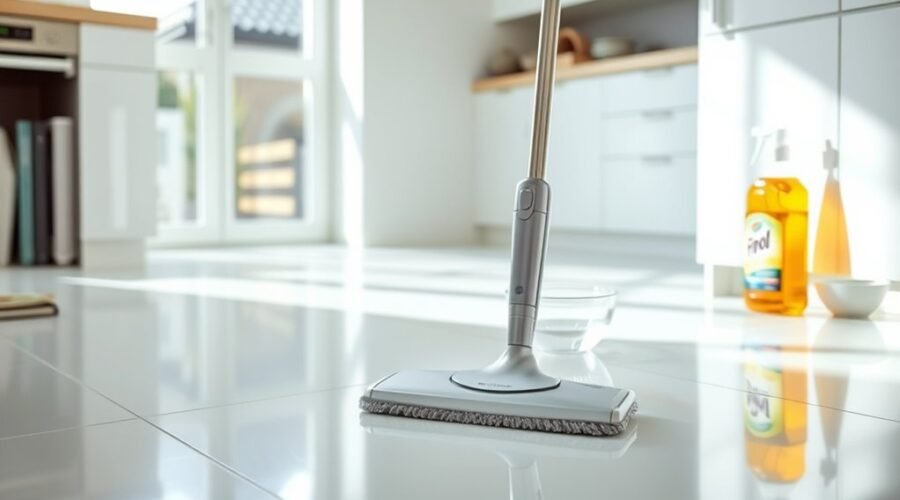
Can Pine-Sol go in a steam mop? The short answer is usually no. Most manufacturers say water only, and for good reason. Pine-Sol can leave residue, reduce steam flow, and may damage internal parts over time. It can also put the warranty at risk. There is a safer way to use it on floors, but the details matter.
Can You Use Pine-Sol in a Steam Mop?
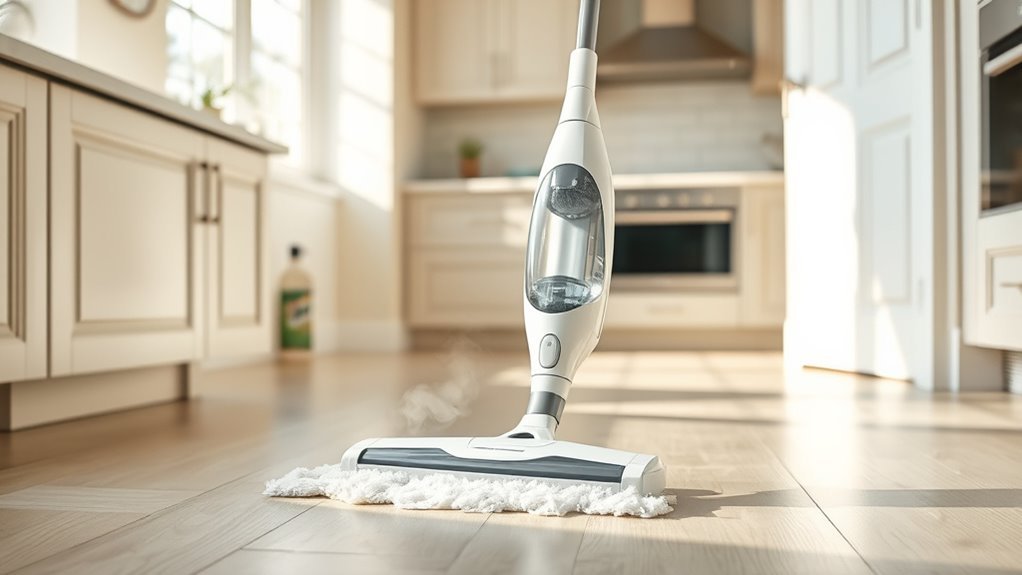
No, Pine-Sol should generally not be used in a steam mop. Most steam mop models are recommended for use with water only, because their tanks and internal parts are not designed for chemical cleaners.
Adding Pine-Sol or similar cleaning products can conflict with the manufacturer’s instructions and may affect warranty coverage. In practical terms, the safest approach is to check the user guide and confirm surface compatibility before adding anything beyond water.
For those who want stronger cleaning, it is usually better to spray Pine-Sol directly onto the floor, then use the steam mop as directed, rather than filling the tank with it.
For disinfection, apply full-strength Pine-Sol to the surface, allow it to sit for 10 minutes, and rinse as directed. This keeps the steam mop operating within its intended use while preserving control over the cleaning method and the floor itself.
Why Pine-Sol Can Damage a Steam Mop
Pine-Sol can damage a steam mop because the machine is built for water only, and added chemicals may corrode internal components over time.
Its residue can also clog steam vents and openings, reducing output and cleaning performance.
In addition, using such solutions may void the warranty on many models, including those that explicitly prohibit tank additives.
Chemical Corrosion Risks
Steam mop systems are engineered for water alone, so introducing Pine-Sol can expose internal parts to chemical corrosion and residue buildup.
In a steam mop, chemical corrosion may weaken seals, valves, and other internal components over time, even if the unit appears to run normally at first. Many cleaning solutions are incompatible with the heat and moisture cycle that supports safe operation.
Manufacturer guidelines typically warn against additives because they can reduce cleaning effectiveness, void warranties, and create potential damage that is costly to reverse.
For users seeking practical freedom from avoidable repairs, following the recommended water-only approach preserves performance and protects the machine.
Once cleaners enter a system not designed for them, the risk of malfunction rises, and longevity declines.
Clogged Steam Vents
A more immediate problem is that Pine-Sol can leave behind residue that clogs the small steam vents inside the mop. When those openings narrow, steam flow drops, and the unit cannot deliver peak steam production.
Over time, cleaner residue may accumulate in the internal passages, creating clogged steam vents that reduce pressure and strain the mechanism. Because steam mops are built for water only, adding cleaning solutions can interfere with their design and lower cleaning effectiveness.
In some models, this buildup can also contribute to damaging the device by forcing moisture through restricted channels. For anyone seeking a simple, effective routine, the practical choice is to keep the tank filled with water only and apply floor cleaners directly to the surface instead of inside the mop.
Warranty Coverage Problems
Just as important, warranty terms are often the deciding factor when using a steam mop with anything other than water. Many manufacturer instructions, including those from Shark, limit the steam mop to water alone to preserve warranty coverage.
Adding Pine-Sol can leave chemical residues that corrode internal components and clog steam vents, reducing performance and risking early failure. If that happens, the manufacturer may deny warranty coverage and narrow repair options, even when the damage seems minor.
For anyone seeking practical freedom in home care, the safest path is to respect the stated limits. Using Pine-Sol may offer a familiar scent, but it can shift responsibility for repairs to the owner and make a simple cleaning choice far more expensive.
How Pine-Sol Can Reduce Steam Output
Pine-Sol can leave residue inside a steam mop, and that buildup may clog steam vents.
With less steam released, the mop loses power and cleans less effectively.
Over time, the cleaner buildup can interfere with normal steam flow and reduce performance.
Residue Clogs Steam Vents
When Pine-Sol is used in a steam mop, it can leave behind residue that gradually clogs the steam vents and reduces steam output.
This buildup narrows the openings meant for steam release, making the tool less effective during cleaning. Because steam is the core of the mop’s function, any restriction undermines its ability to perform deep cleaning with precision and ease.
Manufacturers generally recommend using only water, since chemical cleaners may damage internal components and weaken efficiency over time.
For anyone seeking clean floors without unnecessary dependence on harsh additives, following the approved method preserves both performance and freedom from avoidable repairs.
Respecting these guidelines helps the steam mop stay reliable, responsive, and ready for sustained use.
Less Steam, Less Power
Reduced steam output is one of the most immediate signs that a steam mop is not being used as intended. When Pine-Sol enters a steam mop, residue can narrow passages and reduce water flow, leaving less force at the head.
As clogged steam vents develop, the machine may release weaker bursts instead of consistent heat, which lowers cleaning effectiveness. That loss matters for anyone seeking an easy, independent routine without unnecessary setbacks.
Manufacturers usually specify water use only, so adding cleaners can also risk the warranty and shorten dependable service. For ideal steam output, the simplest path is plain water and careful maintenance.
- weaker steam pressure
- uneven floor coverage
- slower dirt release
- higher misuse risk
- reduced warranty protection
Cleaner Buildup Hurts Performance
Chemical cleaners can leave behind residue inside a steam mop, and that buildup may clog vents, reduce steam output, and weaken overall cleaning performance.
When Pine-Sol is added, cleaner buildup can accumulate in narrow passages, limiting flow and forcing the steam mop to work harder for less effect.
Over time, chemical buildup may also damage internal parts, raising the risk of malfunction or breakdown.
Reduced steam production means surfaces receive less heat and moisture, which undermines the tool’s purpose and leaves more work behind.
Manufacturers often require water only to preserve peak performance, and using Pine-Sol may void the warranty.
For anyone seeking freedom from wasted effort, the practical choice is simple: keep the steam mop free of additives, prevent clogged vents, and protect performance.
Will Pine-Sol Void Your Steam Mop Warranty?
Yes—using Pine-Sol in a steam mop can void the warranty if the manufacturer specifies that only water should be used. Many brands, including Shark, state this in manufacturer guidelines to protect internal components from damage.
When cleaning solutions are added, residue may build up in vents, reduce steam output, and trigger repair exclusions under the warranty. That means the owner could be left paying for service costs that would otherwise be covered.
Careful users should treat the steam mop as a tool with strict limits, not a catchall cleaner.
Careful users should treat the steam mop as a strict tool, not a catchall cleaner.
- Check the manual before adding anything
- Look for “water only” warnings
- Note exclusions tied to cleaning solutions
- Watch for residue-related clogs and damage
- Keep receipts and warranty records handy
Following the manufacturer’s rules helps preserve performance, extend lifespan, and keep the warranty intact. That approach supports freedom through fewer repairs, less waste, and cleaner control over the device.
The Safest Way to Use Pine-Sol on Floors
The safest approach is to keep Pine-Sol out of the steam mop and apply it directly to the floor only when the surface is compatible. This avoids the risks tied to using a steam mop with added chemicals, including possible damage and warranty loss.
For routine clean tasks, the product should be used only as directed on suitable floors. On hard, nonporous surfaces, Pine-Sol can be used full strength for disinfection, then left in place for 10 minutes before rinsing. It works well on porcelain floors, but it should not be used on aluminum, copper, or marble.
Before treating painted surfaces, always test a small, inconspicuous area first to check for reaction. Careful selection among cleaning products protects both the floor and the user’s freedom to maintain a safe, effective routine.
Clear boundaries make floor care simpler, safer, and more independent.
When to Use Pine-Sol for Deep Cleaning
Deep cleaning is the right time to use Pine-Sol® Multi-Surface Cleaner on hard, nonporous surfaces such as floors, sinks, and countertops when a stronger disinfecting step is needed.
Pine-Sol can support cleaning effectiveness when used on suitable surfaces and handled as directed. For disinfecting, apply full-strength and let it sit 10 minutes before rinsing. Heavily soiled areas should be precleaned first so the formula can work properly.
- Use Pine-Sol during deep cleaning, not as an everyday shortcut.
- Reserve it for hard surfaces that can tolerate wet treatment.
- Apply full-strength only when disinfecting is the goal.
- Preclean heavily soiled spots to improve cleaning effectiveness.
- Keep it away from aluminum, copper, marble, and unfinished wood.
It may also help remove grease spots from laundry, but surface compatibility remains essential.
Careful use protects autonomy, hygiene, and the freedom to maintain a cleaner space without unnecessary risk.
Which Floors Can Handle Pine-Sol?
Pine-Sol® Multi-Surface Cleaner is best suited to hard, nonporous floors such as vinyl, ceramic, and porcelain, where it can be used for routine cleaning when the surface is compatible.
These hard surfaces can usually tolerate Pine-Sol in measured use, but the flooring type still matters. A cautious approach is to test on an inconspicuous area first, especially on painted or sealed finishes, before committing to broader cleaning.
Test an inconspicuous area first, especially on painted or sealed finishes, before broader cleaning.
The cleaner should be paired with the manufacturer’s instructions for both the product and the specific floor, since those directions protect appearance and integrity.
A steam mop may be useful on compatible floors, yet the cleaner should not create excess moisture; avoid puddles, particularly on wood-adjacent edges or other vulnerable spots.
Pine-Sol is not a universal solution, but on approved nonporous flooring, it offers practical, controlled cleaning for people seeking clean spaces with less friction.
What Not to Do With Pine-Sol
Even on compatible hard floors, there are clear limits to how Pine-Sol should be used. A steam mop is not designed for use with added cleaners, and putting Pine-Sol in the tank can leave residue, reduce steam output, and cause damage to vents or openings.
To avoid damage, it should be applied directly to hard nonporous surfaces, not forced through the mop system.
- Do not pour Pine-Sol into the steam mop water tank.
- Do not assume more cleaner means better results.
- Do not mix cleaners; mixing cleaners can release hazardous gases.
- Do not use Pine-Sol on aluminum, copper, marble, or unfinished wood.
- Do not ignore the manufacturer’s warning about warranty risks.
This approach keeps cleaning practical and controlled. Pine-Sol can support a clean, independent routine, but only when used where it belongs and in the right amount.
How to Get Better Steam Mop Results
To get better steam mop results, the floor should be pre-cleaned when it is heavily soiled, since a steam mop works best on already cleared hard surfaces.
Pine-Sol should be sprayed directly onto the floor, not added to the cleaner and water tank, to protect the machine and preserve warranty coverage. On compatible hard surfaces such as porcelain, this approach supports ideal cleaning; it should be avoided on marble or aluminum.
For stronger disinfecting efficacy, Pine-Sol should remain on the surface for 10 minutes, where it can kill 99.9% of germs.
Before steaming, residue and debris should be removed so the mop can focus on lift and sanitation rather than thick buildup.
The tank should be cleaned regularly with distilled water to prevent leftover solution from limiting steam output.
If a model has separate tanks, it may allow cleaner and water use more flexibly, as with the Hoover Twin Tank.
Frequently Asked Questions
What Cleaner Can You Put in a Steam Mop?
Most steam mops use only water; manufacturer guidelines usually forbid steam mop cleaners in the tank. Safe alternatives include approved products, optional essential oils only if supported, and floor-specific DIY solutions that preserve cleaning effectiveness and product compatibility.
What Can I Mop With if I Don’t Have Pine-Sol?
A clean floor can feel like a fresh start. One may mop with natural alternatives: a vinegar solution water mixture, baking soda paste, diluted lemon juice, a few essential oils, disinfectant options, or commercial cleaners.
What Can I Put in My Steam Mop to Make It Smell Nice?
They should use only manufacturer-approved scent enhancers: a tiny amount of essential oils, a mild vinegar solution, citrus scents, herbal infusions, homemade cleaners, or baking soda. Avoid mixing anything unless compatibility and warranty terms are verified.
Can I Put Dawn Dish Soap in My Steam Cleaner?
No, Dawn is generally incompatible with most steam cleaners; soap residue can reduce steam cleaner compatibility, harm steam mop safety, and lower cleaning efficiency. For surface types, use alternative cleaners or scent options only as manufacturer-approved.
Conclusion
In the end, the answer remains simple: Pine-Sol does not belong in a steam mop. Like a locked door marked “water only,” the machine is built for one purpose, and shortcuts can lead to corrosion, weak steam, and a voided warranty. The safer path is to apply Pine-Sol directly to suitable hard floors, then rinse as directed. That cautious approach protects the mop, preserves performance, and keeps cleaning effective without unnecessary risk.