
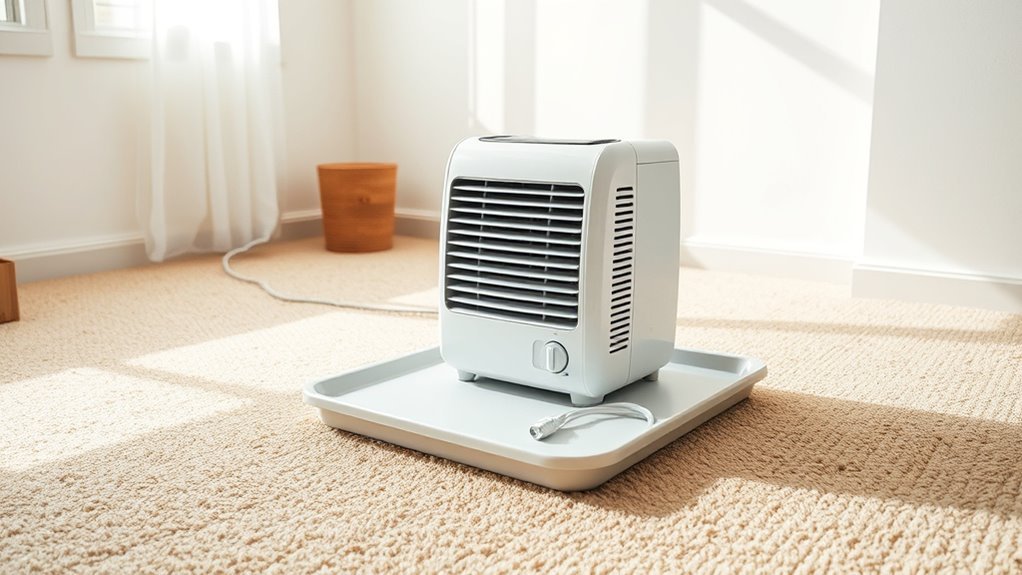
Yes, you can put a dehumidifier on carpet for short-term use, but direct carpet placement is not the safest or most efficient setup. Carpet can make the unit unstable, restrict low air intake, hide leaks, and keep damp padding wet below the surface. A hard, level surface is better because it supports the full bucket weight and keeps humid air moving freely through the machine.
Reviewed for placement safety and moisture guidance · Last updated September 14, 2026
Quick Answer
Yes, a dehumidifier can sit near or over carpet, but avoid placing it directly on thick, soft, uneven, or damp carpet. Put the unit on a rigid, waterproof, level tray or platform, keep every vent clear, check for leaks during the first hour, and aim for indoor humidity around 40% to 50%.
Key Takeaways
- A hard, flat surface is the safest place for a dehumidifier because it supports airflow, balance, and proper water collection.
- If carpet placement is unavoidable, use a rigid waterproof tray, appliance pan, plastic mat, or sealed board under the unit.
- Leave open space around the air intake and outlet, and follow the clearance listed in your owner’s manual.
- Dry wet carpet quickly. The EPA says wet or damp materials should be dried within 24 to 48 hours after a leak or spill when possible.
At a Glance
| Time Required | 5 to 10 minutes for safe placement; longer if the carpet is wet |
| Difficulty | Easy |
| Tools Needed | Rigid waterproof tray or appliance pan, hygrometer, towel, optional drain hose |
| Cost | No purchase required if you already have a rigid waterproof base; otherwise check current local pricing |
Quick Placement Decision Table
| Surface | Use It? | What to Do |
|---|---|---|
| Tile, vinyl, concrete, laminate, sealed wood | Best choice | Set the unit level and keep the clearance your manual requires. |
| Low-pile dry carpet | Use with caution | Add a rigid waterproof tray or board under the unit and check for leaks. |
| Thick, soft, or uneven carpet | Avoid direct placement | Move to hard flooring or use a stable platform wider than the base. |
| Wet carpet or wet padding | Do not place directly | Extract water first, raise airflow, and place the unit on a waterproof platform. |
Can You Put a Dehumidifier on Carpet?
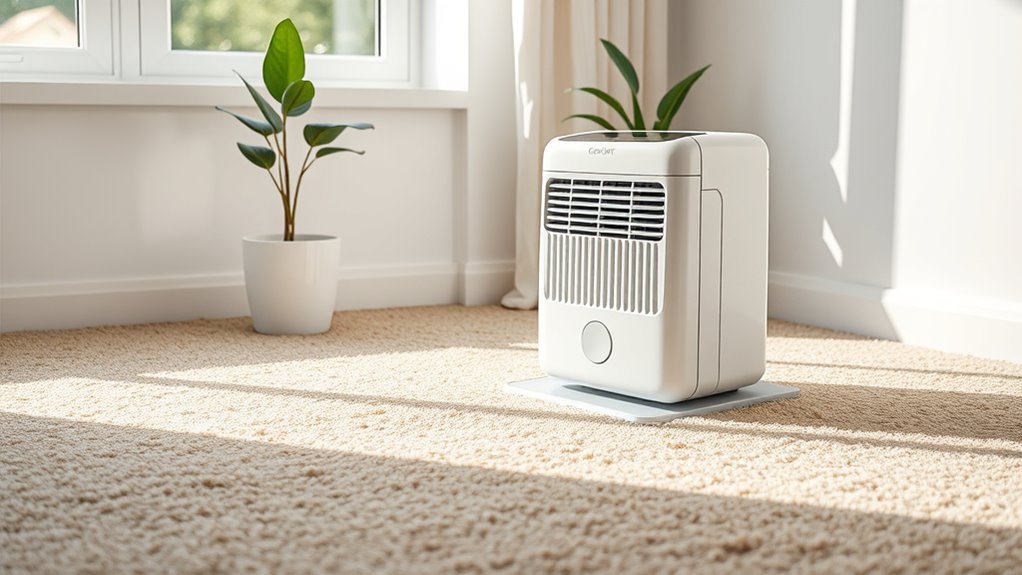
You can put a dehumidifier on carpet, but you should not place it directly on soft, thick, uneven, or damp carpet. Most portable dehumidifiers work best on a smooth, level surface that can support the unit when the water bucket is full. For example, a Midea dehumidifier manual advises placing the unit on a smooth, level floor and leaving open air space around the unit for circulation.
This comes up most often in carpeted basements, bedrooms, and living rooms with wall-to-wall carpet. If you’re setting up in a basement specifically, pair this guide with our basement dehumidifier placement guide for room-level positioning.
Carpet creates three problems: airflow, stability, and moisture. If the unit has low air intake or sits down into the carpet pile, the carpet can restrict air movement. If the unit leans, the bucket may not seat correctly, the float switch may misread the water level, or water may spill when you remove the tank. If the unit leaks, carpet and padding can hold that moisture where you may not notice it right away.
Warning: Do not run a dehumidifier on wet carpet with the power cord under rugs, carpet, furniture, or the appliance. Keep the plug and outlet dry, unplug the unit before moving it, and stop using it if you see sparks, a damaged cord, water near the outlet, or signs that the unit tipped over.
What Carpet Risks Should You Watch For?
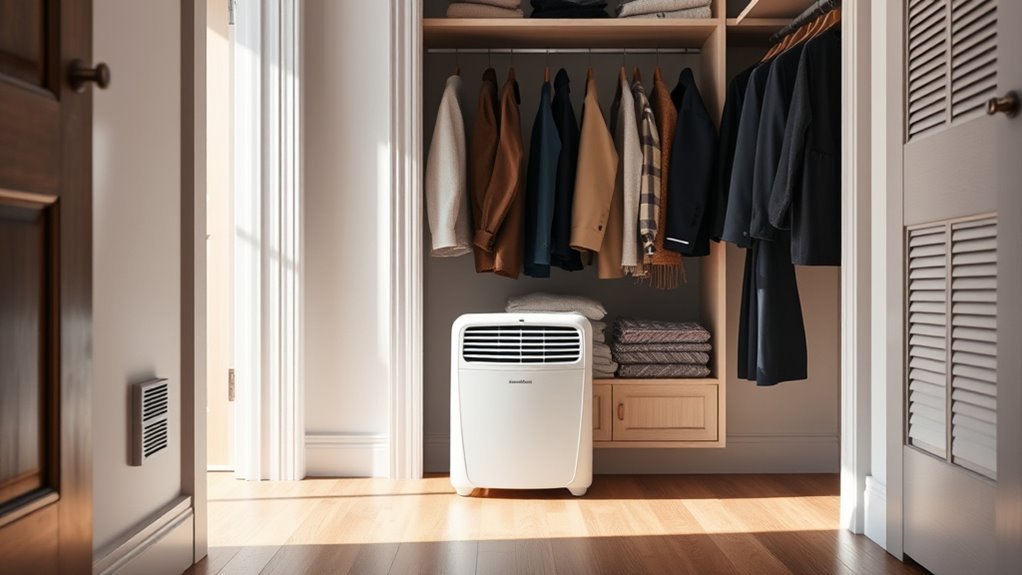
When you set a dehumidifier on carpet, watch for blocked vents, overheating, wobbling, bucket leaks, and damp spots around the base. The thicker the carpet, the more likely the feet can sink and reduce clearance around the intake or outlet. That can make the unit work harder and slow down moisture removal.
Carpet also hides leaks. A small spill from the bucket, a loose drain hose, or condensation around the base can soak into carpet fibers and padding. That moisture can create musty odors and support mold growth if it is not dried quickly. The EPA recommends keeping indoor humidity below 60% where possible and ideally between 30% and 50% relative humidity.
Electrical risk is another reason to be careful. The danger is not the carpet by itself; it is the combination of water, an appliance, and hidden cord damage. Keep the cord visible, straight, and away from foot traffic. Never cover it with a rug or tuck it under carpet.
How to Set Up a Dehumidifier on Carpet
For the safest setup, move the dehumidifier to a nearby hard floor such as tile, vinyl, concrete, sealed wood, or laminate. If that is not possible, create a firm barrier between the unit and carpet.
- Pick the driest, flattest spot. Avoid damp carpet, deep pile, loose rugs, sloped floors, and areas where people may trip over the cord.
- Add a rigid waterproof base. Use a plastic appliance pan, shallow boot tray, hard plastic mat, sealed plywood board, or another stable surface wider than the dehumidifier base.
- Check that the unit sits level. Press gently on each corner. If it rocks, move it or replace the base.
- Leave space around the vents. Follow your manual. Many units need several inches of open space on all sides, and some manuals call for more space at the air outlet.
- Keep the bucket seated. Slide the bucket in fully so the float switch works and the unit shuts off when full.
- Route the cord safely. Keep it visible and dry. Do not run it under carpet, rugs, or the dehumidifier.
- Check the first hour. Look for vibration, heat buildup, water under the base, or airflow blocked by carpet fibers.
Pro Tip: If you use a drain hose, make sure the hose slopes continuously down to the drain. A hose that rises, kinks, or dips can back up and send water into the bucket or onto the carpet. If water keeps backing up even with a proper slope, see our drain hose troubleshooting guide.
Recommended Products

【Designed for large appliances, providing comprehensive protection】The extra-large 19" x 15" size is specifically designed for modern, high-capacity dehumidifiers and humidifiers, ensuring they rest completely on the mat. The raised 0.8-inch rim provides excellent leak protection, effectively preventing spills from spreading and protecting expensive floors and carpets.
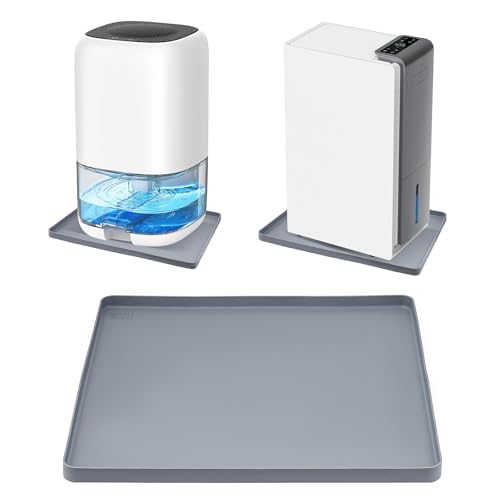
Floor & Carpet Protection Mat: This dehumidifier & humidifier drip pan mat can effectively protect your floor or carpet from the damage of water leakage, scratches and daily wear.

Floor & Carpet Protection Mat: This dehumidifier & humidifier drip pan mat can effectively protect your floor or carpet from the damage of water leakage, scratches and daily wear.
How Much Space Does a Dehumidifier Need?
Your owner’s manual is the rule to follow because vent locations vary by model. As a practical baseline, keep the unit away from walls, curtains, bedding, furniture, and laundry. The Midea manual referenced above calls for at least 8 inches of air space on all sides and at least 16 inches at the air outlet for some models.
Do not push the unit into a tight corner just because that is where the carpet is driest. A dehumidifier needs to pull humid room air in and push drier air out. Better airflow usually means faster drying, fewer short cycles, and less heat around the cabinet.
What Humidity Setting Should You Use?
A good target for most damp rooms is around 40% to 50% relative humidity. A small hygrometer can help because built-in humidistats may read the air close to the machine, not the whole room. If the air feels too dry, raise the setting. If you still smell mustiness or see condensation, lower the setting slightly and check for leaks or poor ventilation.
The EPA recommends reducing indoor humidity to help decrease mold growth. A dehumidifier can help, but it will not fix a roof leak, plumbing leak, groundwater problem, or wet carpet padding by itself.
How to Dry Wet Carpet Faster
You can dry wet carpet faster by removing as much water as possible first, then using a dehumidifier with air movement. Start with a wet/dry vacuum or extraction machine. Then run fans or air circulators across the carpet while the dehumidifier pulls moisture from the air. North Dakota State University Extension recommends using a wet/dry vacuum, circulating air, and using a dehumidifier to remove moisture from the air, while keeping windows closed when the dehumidifier is running.
- Remove standing water first. A dehumidifier is not a substitute for extraction.
- Move the dehumidifier onto hard flooring. If the room is carpeted wall to wall, use a rigid waterproof platform.
- Lift an edge if safe. Airflow under the carpet helps dry padding, but do not tear glued carpet or pull carpet that was exposed to sewage or floodwater.
- Run air movers across the surface. Moving air speeds evaporation.
- Keep doors and windows closed while dehumidifying. This keeps outside humidity from feeding the room.
- Check progress often. Feel the padding if accessible, watch the hygrometer, and empty the bucket before it fills.
Dry water-damaged carpet, padding, and nearby materials within 24 to 48 hours when possible. If they stay wet longer, mold risk rises and replacement may be safer than continued drying.
Recommended Products

EVERY PURCHASE SAVES PETS. BISSELL proudly supports BISSELL Pet Foundation and its mission to help save homeless pets.

COMPACT AND PORTABLE: Equipped with balanced top handle to clean up small messes on the go!

Cleaning All Types of Hard Floor: Extensively tested and refined, dreame G10 wet dry vacuum mop is perfectly matched with a wide range of North American flooring, including hardwood, marble, and rare wood, but not limited to these.
When to Use a Mat or Tray Under It
Use a waterproof mat, rigid tray, appliance pan, or sealed board anytime the dehumidifier must sit on carpet. The goal is not to absorb water. The goal is to keep the unit level, stop carpet pile from blocking the base, and contain small drips before they soak into padding.
Choose a base that is wider than the dehumidifier and strong enough to hold the unit with a full bucket of water. A shallow plastic tray works well because you can see and empty any water that collects. Avoid towels, bath mats, soft foam, and other absorbent materials under the machine because they can stay damp and musty.
Note: A tray is a backup, not a repair. If water keeps collecting under the dehumidifier, check whether the bucket is cracked, the float is stuck, the drain hose is loose, or the unit is not level.
Recommended Products

Engineered with Dual Semiconductor Technology - Mecmic dehumidifier is designed with two semiconductor modules work together to remove moisture more efficiently than traditional single-semiconductor designs, up to 34 oz (1000 ml) of moisture per day under ideal conditions,helping your space feel fresher and more comfortable in less time. Specifically for bedrooms, bathrooms, closets, laundry rooms, RVs, and other compact areas.

【Professional Waterproof Material】Our dehumidifier mat is made of thickened silicone, durable, anti-slip, and scratch-resistant. The drain pan provides excellent water storage to prevent overflow while enhancing the dehumidifier’s stability to protect the floor from scratches.

Design for Dehumidifier: The drip pan is specifically designed for dehumidifier.Widely compatible with most dehumidifiers.The inner size of this dehumidifier drip pan measures 13 inches length x 9 inches width.Please measure the size of your dehumidifier before purchasing.
When Not to DIY Wet Carpet
Do not rely on a household dehumidifier alone if the carpet was soaked by floodwater, sewage, a long plumbing leak, or water that may contain contaminants. Porous materials such as carpet padding can be difficult to clean and dry fully. The EPA notes that absorbent or porous materials such as carpet may need to be thrown away once they become moldy, since mold can grow into the empty spaces of these materials and be difficult or impossible to remove completely. If the carpet has been wet longer than 24 to 48 hours, smells musty, shows visible mold, or feels wet underneath after surface drying, call a restoration professional or consider replacing the padding and carpet.
Also stop and get help if water reached outlets, power strips, baseboard wiring, or the dehumidifier plug. Electrical safety comes first.
Frequently Asked Questions
Where should you not put a dehumidifier?
Do not put a dehumidifier on thick or wet carpet, against walls, under curtains, inside a cramped closet, near direct water spray, beside heat sources, or anywhere the cord must run under a rug. Keep the unit on a level surface with open airflow around the intake and outlet.
Is a dehumidifier safe on carpet?
It can be safe for short-term use if the carpet is dry, the unit sits level, the vents are clear, and the cord stays visible and dry. It is safer to place the dehumidifier on hard flooring or on a rigid waterproof tray or platform.
Can you leave a dehumidifier on carpet overnight?
Only do this if the carpet is dry, the unit sits on a rigid waterproof platform, the bucket is seated, and the cord is visible and dry. Test the setup for at least one hour first. Do not leave it overnight on thick carpet, wet carpet, a towel, or a soft mat.
Should you use a dehumidifier if you have COPD?
A dehumidifier may help if your home is damp, humid, or mold-prone, but it is not a COPD treatment. The American Lung Association links indoor mold and dampness to worsened asthma, coughing, and other airway irritation, and general guidance for people managing chronic lung conditions is to limit exposure to mold and damp indoor air [VERIFY: confirm current condition-specific guidance with a clinician or a COPD-focused source]. Use a hygrometer, avoid over-drying the air, and speak with your clinician if humidity changes affect your breathing.
Does a dehumidifier help with roaches?
It can help as part of pest prevention because cockroaches and other pests need water. The EPA recommends controlling pests by taking away food, water, and shelter. A dehumidifier can reduce dampness, but you still need cleaning, sealing gaps, fixing leaks, and using proper pest-control methods.
Can I put plywood under a dehumidifier on carpet?
Yes, if the plywood is flat, stable, sealed or protected from moisture, and wider than the dehumidifier base. A plastic tray or appliance pan is usually better because it is waterproof and easier to check for leaks.
Do you need to dry the carpet pad too?
Yes. Carpet can feel dry on top while the padding underneath still holds water. A hygrometer only tells you about moisture in the air; a moisture meter is the tool that shows whether the pad itself is still wet. If the pad is wet, lift the carpet edge only if it is safe, use airflow under the carpet, and consider replacing the pad if it stayed wet too long or was exposed to contaminated water.
Can a dehumidifier reduce dust mites in carpet?
Lower indoor humidity can make carpet a less favorable habitat for dust mites, especially when relative humidity stays near 30% to 50%. A dehumidifier will not remove mites or allergens already in the fibers by itself, so pair it with regular vacuuming, and fully dried bedding and rugs, for the biggest effect.
How often should you check the bucket on carpet?
Check it after the first hour, then several times a day in a wet room. A full or poorly seated bucket can stop the unit or spill when removed. If you use continuous drainage, check the hose for slope, kinks, and leaks.
Conclusion
Yes, you can place a dehumidifier on carpet, but it is safer and more effective to use a hard, flat surface. If carpet placement is your only option, put a rigid waterproof tray or platform under the unit, keep every vent clear, route the cord safely, and check for leaks often. For wet carpet, remove water first, move air across the room, run the dehumidifier correctly, and dry everything within 24 to 48 hours when possible to reduce mold risk.
Sources
- U.S. EPA — A Brief Guide to Mold, Moisture and Your Home — supports moisture control, relative humidity guidance, the 24 to 48 hour drying window, and guidance on discarding moldy porous materials.
- U.S. EPA — Mold Course Chapter 4 — supports wet carpet and backing drying guidance with wet vacuuming, fans, and dehumidifier use.
- Midea — Dehumidifier User Manual — supports smooth, level floor placement and clearance guidance.
- North Dakota State University Extension — Cleaning Flood-Damaged Carpets and Rugs — supports wet/dry vacuum, air circulation, dehumidifier use, and closed-window guidance while dehumidifying.
- American Lung Association — Mold — supports the asthma and airway-irritation link to indoor mold and dampness.
- U.S. EPA — Preventing Pests at Home — supports moisture reduction as one part of pest prevention.

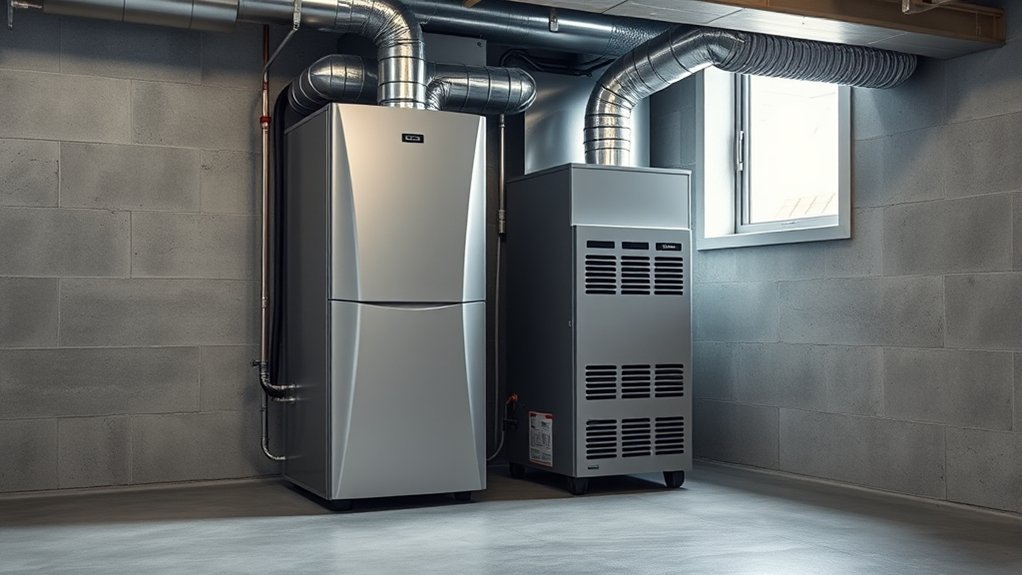
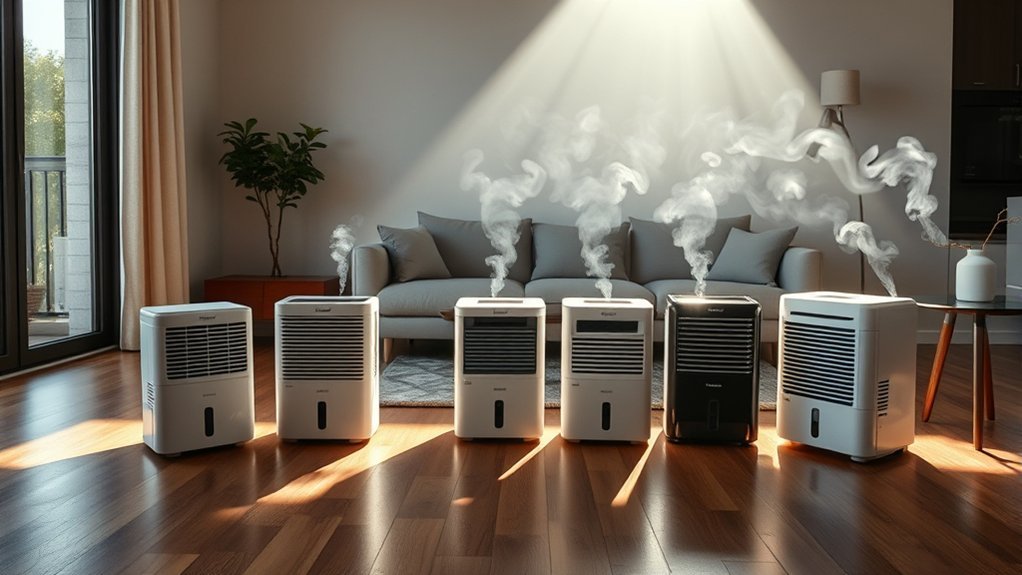
[…] If the living room is the only damp area, a properly sized portable unit may be enough. If several rooms stay humid, investigate whole-home moisture sources and consider a whole-house dehumidifier or HVAC inspection. For safe placement and airflow, see our dehumidifier-on-carpet setup guide. […]