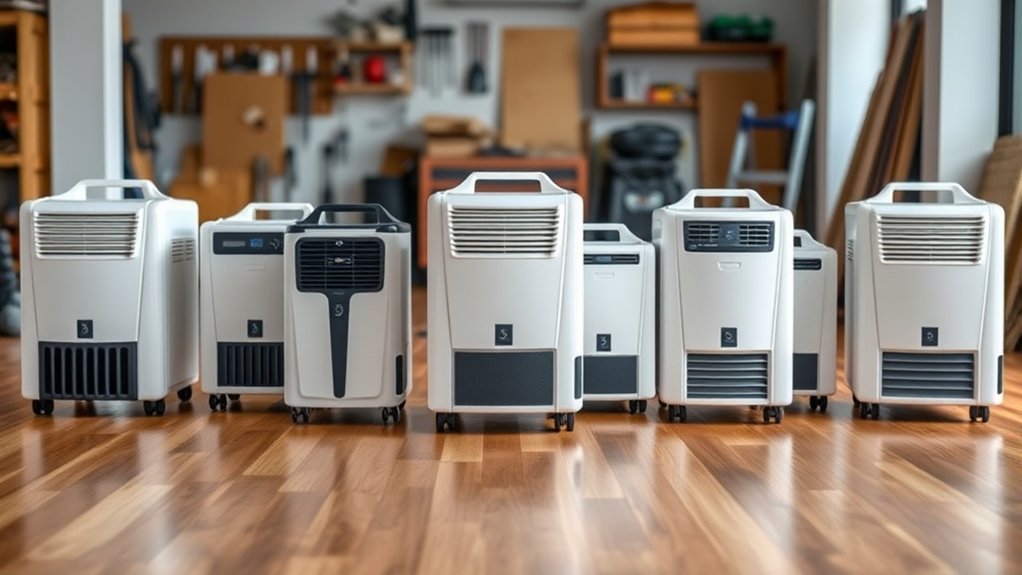
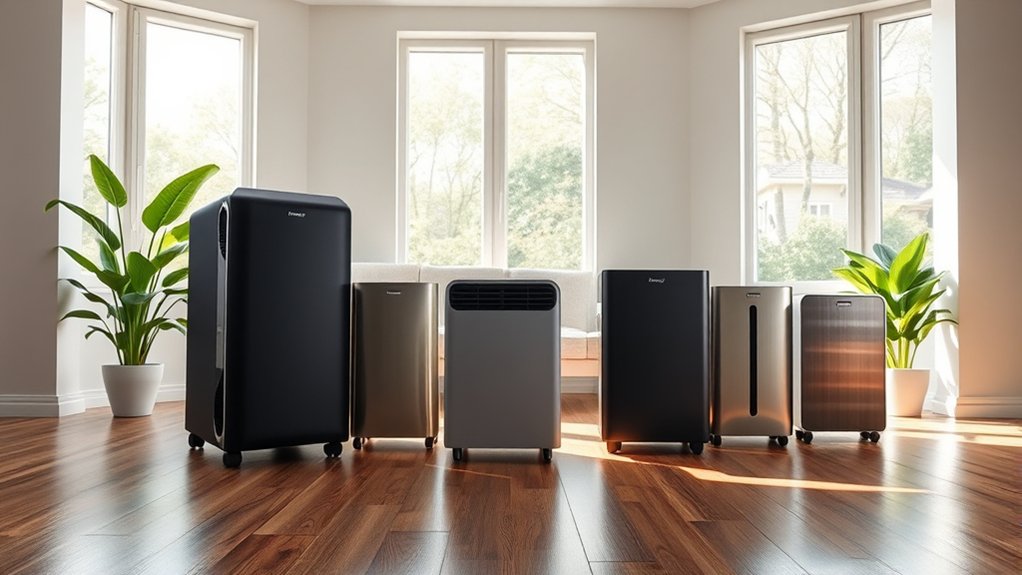
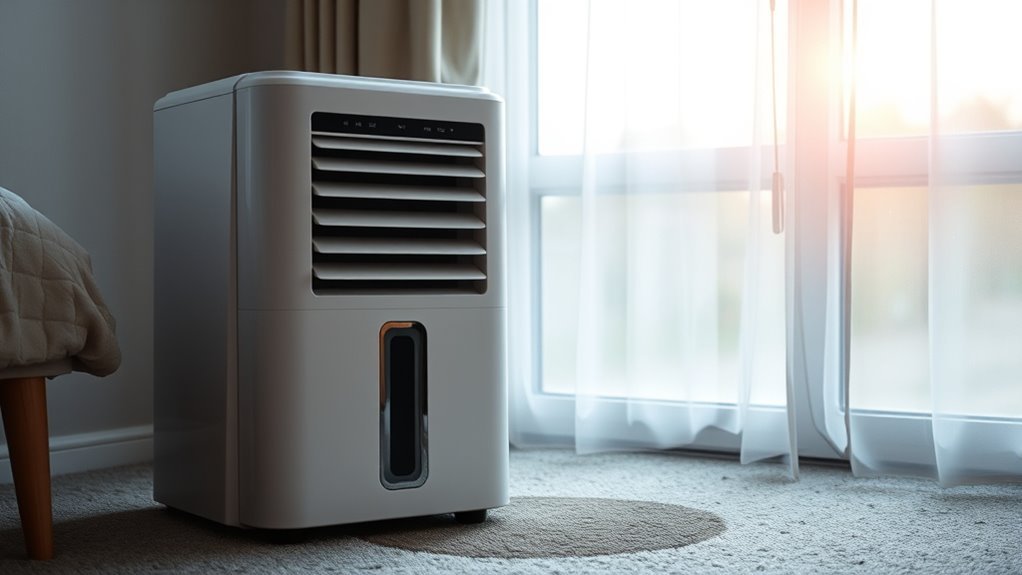
The best grow dehumidifier is the model that can keep up with your plants’ real moisture load while fitting your tent or grow room, draining safely, and maintaining a stable humidity target. Floor-area claims alone are not enough because irrigation, plant size, ventilation, room temperature, and crop stage can sharply change how much water must be removed.
For 2026, the AC Infinity HYDRONE 7 stands out for grow-specific humidity and VPD control, while the MARS HYDRO 18L/Day offers compressor capacity and ducting for enclosed grow spaces. The BANABIE 32 Pint and Midea 22 Pint are practical general-room options, and the KeepGlad 98 oz is reserved for very small, lightly loaded cabinets or propagation spaces.
Quick Verdict
- Best Overall for Precision: AC Infinity HYDRONE 7 for grow-focused humidity and VPD control.
- Best for Grow Tents: MARS HYDRO 18L/Day for compressor drying with tent-friendly ducting.
- Best for Larger Grow Rooms: BANABIE 32 Pint for higher listed capacity and continuous drainage.
- Best Efficient General-Room Pick: Midea 22 Pint for straightforward controls and verified model specifications.
- Best for Very Small, Low-Load Spaces: KeepGlad 98 oz for cabinets or propagation areas with modest moisture production.
Capacity note: Daily removal ratings are measured under specific temperature and humidity conditions. Do not compare an 8-liter real-world draw figure, a 38-pint compressor rating, and a mini semiconductor rating as though they were tested the same way.
Quick Comparison of the Best Grow Dehumidifiers
| Product | Best For | Rated Moisture Removal | Drainage | Main Tradeoff | Check Details |
|---|---|---|---|---|---|
| AC Infinity HYDRONE 7 | Growers prioritizing precise humidity and VPD control | 8 L real-world draw rate; manufacturer says it is not directly comparable with compressor ratings | Internal reservoir with optional gravity drain | Higher power use at maximum output and a more advanced setup | Check Current Amazon Availability |
| MARS HYDRO 18L/Day | Enclosed grow tents and ducted installations | Up to 18 L or 38 pints per day under stated test conditions | 2.1 L tank or included drain hose | Compressor heat, noise, and drainage still need planning | Check Current Amazon Availability |
| BANABIE 32 Pint | Larger grow rooms with moderate moisture loads | Listing-stated 32 pints per day at 95°F and 90% RH | 2.5 L tank or included gravity hose | Brand documentation is limited; verify the current seller listing and warranty | Check Current Amazon Availability |
| Midea 22 Pint | Moderate grow-room loads needing a general-purpose compressor unit | Up to 22 pints per day | Bucket or standard gravity-hose connection | No smart control or built-in pump; hose may be sold separately | Check Current Amazon Availability |
| KeepGlad 98 oz | Very small cabinets or propagation spaces with light moisture production | Up to 40 oz or about 2.8 pints per day at 86°F and 80% RH | Tank or included drain hose | Not suitable for heavy transpiration, mature crops, or a full grow room | Check Current Amazon Availability |
AC Infinity HYDRONE 7 Smart Plant Dehumidifier
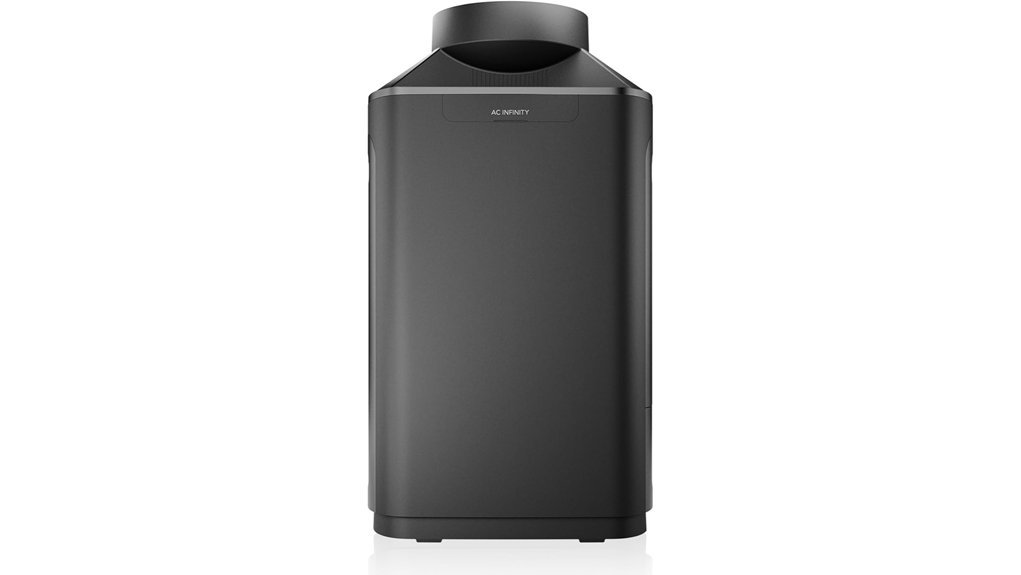
Best Overall for Precision: The AC Infinity HYDRONE 7 is the most grow-specific option in this roundup. It is rated for approximately four to six plants and uses 10 drying levels from a PWM-controlled rotary motor. A corded sensor supports humidity and VPD control, while dual 6-inch duct ports allow open-loop or closed-loop installation layouts.
The manufacturer lists an 8-liter real-world draw rate and specifically warns that this figure is not directly comparable with standard compressor pint ratings. It also has a 2-liter internal reservoir and supports optional gravity drainage, which is useful for longer grow cycles.
Why You’ll Like It: It can make smaller output adjustments than a basic on-off room dehumidifier, helping reduce wide humidity swings around the canopy.
Who Should Buy This: Choose it when precise humidity or VPD control, ducting flexibility, and grow-controller integration matter more than simple plug-and-play operation.
Who Should Avoid This: Skip it for a tiny cabinet, a limited electrical circuit, or a setup where you only need a basic compressor unit with simple controls.
Pros:
- Grow-specific humidity and VPD control with a corded sensor.
- Ten drying levels for finer output adjustment.
- Dual duct ports and optional gravity drainage support flexible installations.
Cons:
- More complex and typically more expensive than a basic room dehumidifier.
- Rated for about four to six plants, so larger rooms may need additional capacity.
- The 8-liter draw figure cannot be compared directly with compressor pint ratings.
MARS HYDRO 18L/Day Compressor Dehumidifier for Grow Tent/Home
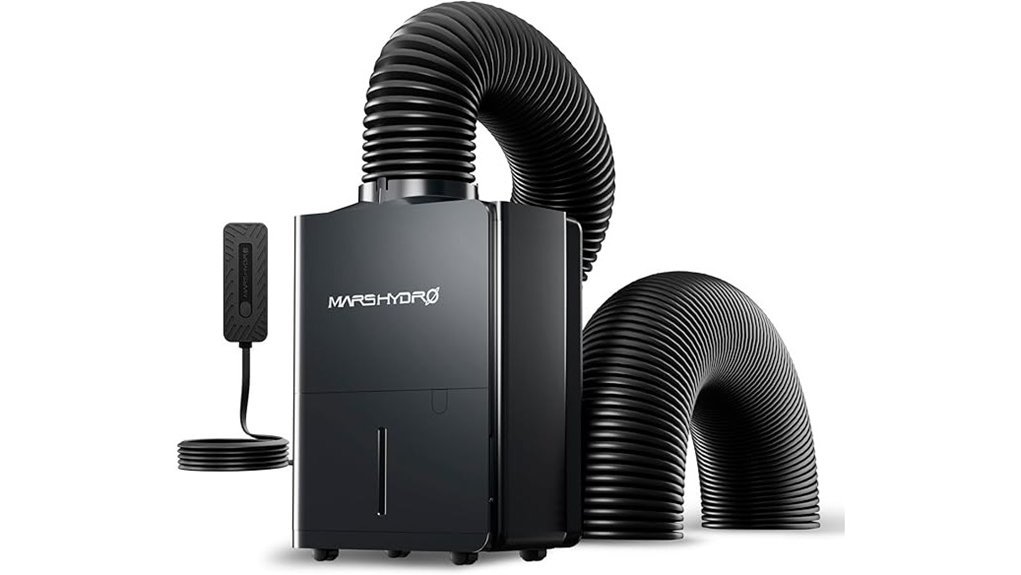
Best for Grow Tents: The MARS HYDRO compressor dehumidifier is designed for enclosed grow spaces and is currently promoted for grow tents up to 5×5, with real performance depending on temperature, humidity, tent size, and plant moisture output. Its rated removal capacity is up to 18 liters, or 38 pints, per day under the manufacturer’s stated conditions.
Dual ventilation ports support ducted airflow, allowing the main unit to be positioned to reduce the space it occupies inside a tent. The unit includes a 2.1-liter tank, drain hose, washable filter, temperature and humidity sensor, timer functions, and automatic operating modes. Smart linkage requires compatible MARS HYDRO control hardware.
Why You’ll Like It: It combines meaningful compressor capacity with ducting and controls designed around indoor growing.
Who Should Buy This: It suits growers who need more drying power than a mini unit and want to preserve valuable floor space inside a compact tent.
Who Should Avoid This: It may be excessive for a propagation cabinet, and every installation must account for compressor heat, airflow, noise, and a reliable drain route.
Pros:
- Up to 18 L or 38 pints per day under stated conditions.
- Ducted airflow can reduce the unit’s footprint inside the grow area.
- Tank drainage, an included hose, washable filter, sensor, and timer support longer grow cycles.
Cons:
- Compressor operation adds heat and some vibration.
- The 2.1-liter tank is small for high-load use, making hose drainage preferable.
- Smart integration may require a separate compatible controller.
BANABIE 2500 Sq.Ft Dehumidifier with Drain Hose, 32 Pint
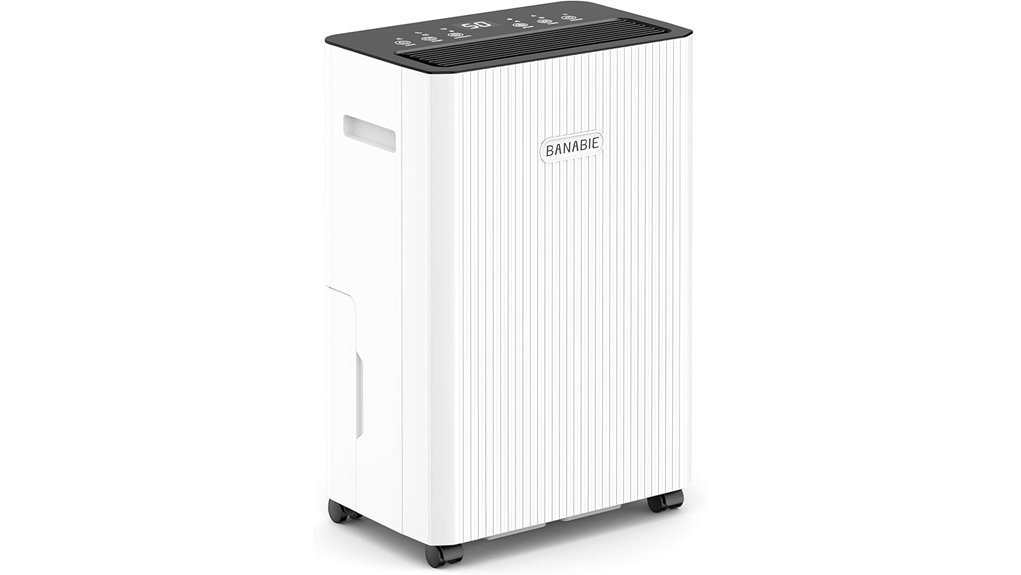
Best for Larger Grow Rooms: The BANABIE 32 Pint model offers a higher listing-stated compressor capacity than the Midea and can suit a larger room with a moderate moisture load. Its 32-pint daily rating is stated at 95°F and 90% RH, so output will normally be lower in cooler or drier grow conditions.
You can use the 2.5-liter bucket or the included 3.28-foot gravity hose. Auto, continuous, and custom modes are listed, while wheels and handles make it easier to position the unit near a drain or outside the main plant canopy.
Why You’ll Like It: It provides more listed moisture-removal capacity than a small room unit without moving into a large commercial dehumidifier.
Who Should Buy This: Consider it for a medium or larger grow room when you have measured a moisture load that exceeds what a 20- to 22-pint model can comfortably handle.
Who Should Avoid This: Do not select it only because of the 2,500 sq. ft. claim. Also verify current warranty, seller support, hose length, and return terms because brand documentation is less established than for the major appliance models.
Pros:
- Listing-stated capacity of up to 32 pints per day under hot, humid test conditions.
- Continuous gravity drainage and a backup bucket are both available.
- Multiple listed modes, wheels, handles, and automatic shutoff improve usability.
Cons:
- The included hose may be too short for some grow-room layouts.
- The 2.5-liter bucket can fill quickly during peak moisture periods.
- The listed 32 dB noise figure is a manufacturer claim and may vary by mode, room, and measuring distance.
Midea EasyDry Dehumidifier 22 Pint (White)
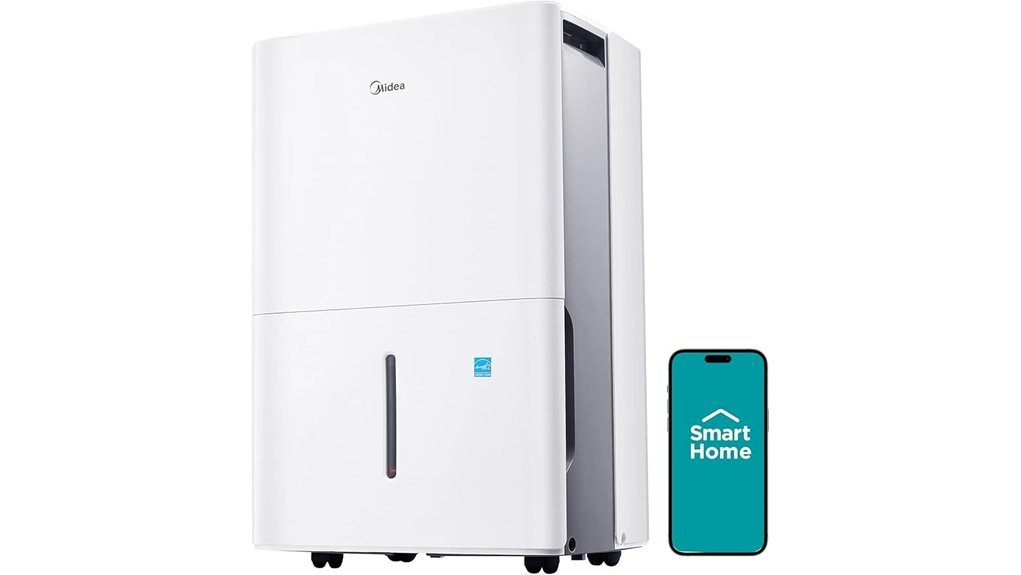
Best Efficient General-Room Pick: The Midea 22-pint EasyDry model is a practical general-purpose option for a grow room with a moderate moisture load. The model is rated at 22 pints per day and marketed for spaces up to 1,500 square feet. For growing, the pint rating and actual daily moisture load matter more than the household floor-area claim.
The unit includes electronic controls, a timer, wheels, a reusable filter, a removable bucket, and a connection for continuous gravity drainage. The official model specifications list no built-in pump and no smart control. The model also carries a one-year manufacturer warranty.
Why You’ll Like It: It offers a clearly documented 22-pint capacity and straightforward controls from an established appliance brand.
Who Should Buy This: It is a sensible choice for growers who need a conventional room dehumidifier and can place it near a low drain.
Who Should Avoid This: It is not designed for tent ducting, has no built-in pump, and is not the best fit for a high-transpiration room that needs substantially more than 22 pints removed per day.
Pros:
- Documented 22-pint daily capacity.
- Electronic controls, timer, wheels, reusable filter, and bucket drainage support easy daily use.
- Continuous gravity drainage is available with a compatible hose.
Cons:
- No smart control or built-in condensate pump.
- A compatible drain hose may need to be purchased separately.
- The room-coverage claim does not account for plant transpiration or irrigation.
KeepGlad Dehumidifier for Home with Humidity Display
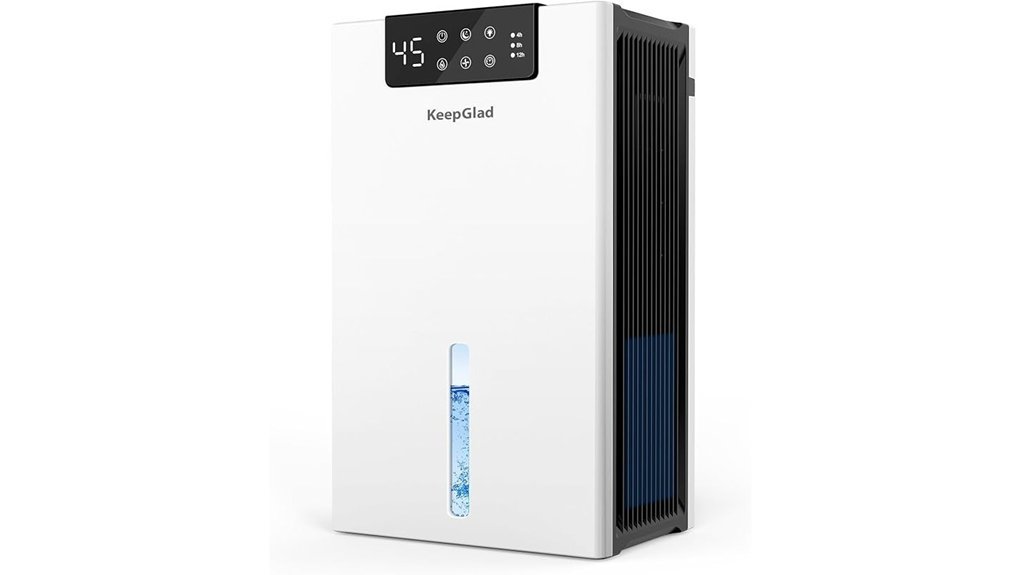
Best for Very Small, Low-Load Spaces: The KeepGlad 98 oz dehumidifier uses semiconductor technology and is rated to remove up to 40 ounces, or about 2.8 pints, per day at 86°F and 80% RH. That limited output makes it suitable only for a very small cabinet, propagation area, or lightly loaded grow enclosure—not a full grow room with mature plants.
It offers three fan speeds, a humidity and temperature display, 4-, 8-, and 12-hour timers, a washable filter, automatic shutoff, and an included hose for continuous drainage. Its listed 28 dB sleep mode may suit a space near living areas, although moisture removal will be much slower than with a compressor unit.
Why You’ll Like It: It is compact, easy to drain, and offers useful monitoring and timer controls for a small enclosure.
Who Should Buy This: Consider it only when your measured moisture production is low and space, noise, or portability matters more than fast water removal.
Who Should Avoid This: Skip it for flowering rooms, mature plant canopies, hydroponic reservoirs, heavy irrigation, or any setup that needs tens of pints removed each day.
Pros:
- Up to 40 oz or about 2.8 pints per day under favorable test conditions.
- Continuous drain hose, digital display, washable filter, and timer are included.
- Compact body and quiet sleep mode suit small, low-load spaces.
Cons:
- Far less capacity than the compressor models in this guide.
- The 1,000 sq. ft. marketing claim is not a reliable grow-space sizing guide.
- Output falls as temperature and humidity decrease.
How We Selected These Grow Dehumidifiers
This is an editorial comparison based on published manufacturer and product-listing specifications, grow-space suitability, drainage design, control options, and known operating tradeoffs. It is not presented as a laboratory or hands-on performance test.
We prioritized products that disclose a meaningful moisture-removal figure, offer controllable humidity, and provide practical drainage. We also considered ducting, heat management, noise, sensor placement, filter access, and suitability for longer grow cycles. Floor-area claims were treated only as rough household-use guidance because grow spaces can create much more moisture per square foot.
Factors to Consider When Choosing a Grow Dehumidifier
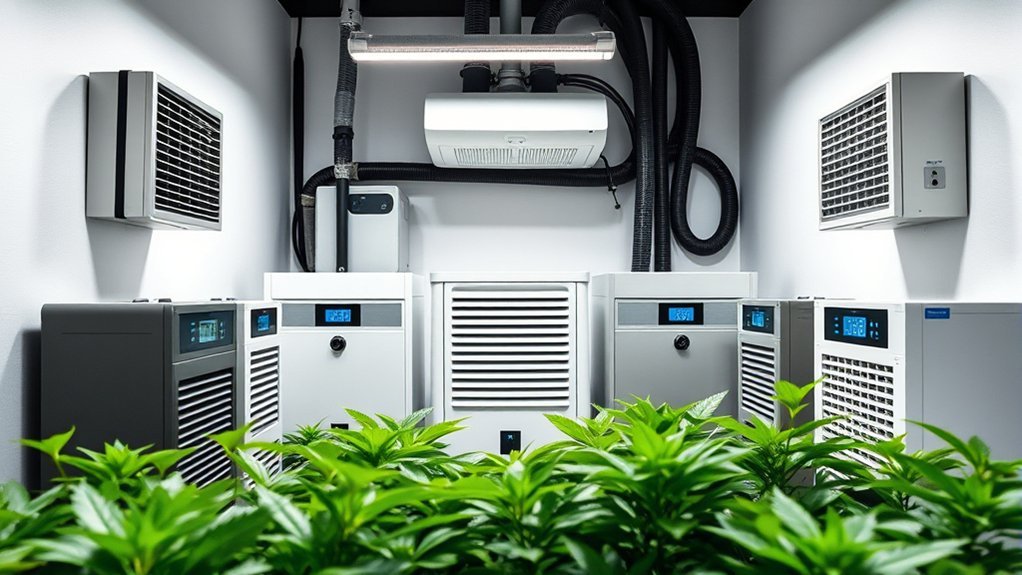
Choose a grow dehumidifier by matching its removal capacity to the water entering your room, not just the advertised floor area. Compare humidity-control accuracy, heat output, drainage, low-temperature performance, airflow, noise, power use, maintenance needs, and the support available from the manufacturer or seller.
Grow-Space Size and Moisture Load
Room-size claims are only rough household-use guides. A grow tent can produce far more moisture per square foot because plants release water through transpiration and irrigation adds more vapor. Count the number and size of plants, track daily watering, note whether runoff or open reservoirs remain inside the room, and consider how often the exhaust system replaces the air.
A useful starting point is to measure how much water you add each day and how much runoff you physically remove. The difference is not a perfect dehumidifier load calculation, but it gives you a more realistic sizing baseline than floor area alone. Leave extra capacity for humid weather, nighttime spikes, and later growth stages.
Moisture Removal Capacity
Capacity is usually listed in pints or liters per day, but ratings depend on temperature and relative humidity. A unit tested at 95°F and 90% RH will remove less water in a cooler room at 50% RH. Compare ratings only when the test conditions are similar, and avoid assuming that a mini semiconductor unit can replace a 22- to 38-pint compressor model.
Humidity and VPD Control
There is no single perfect RH target for every crop or growth stage. Seedlings, vegetative growth, flowering, fruiting, and drying may require different conditions. Choose a unit with adjustable humidity control and place its sensor near canopy height but away from direct mist, wet walls, supply air, and the dehumidifier outlet. Grow-specific VPD control can be useful when temperature and humidity must be managed together.
Heat and Airflow
Dehumidifiers release heat while they run. Confirm that your ventilation or air-conditioning system can remove that heat, especially in sealed rooms. Do not direct hot, dry discharge air onto leaves. Use circulation fans to mix the room evenly, keep the manufacturer’s required clearance around air inlets and outlets, and consider external ducting when the product supports it.
Drainage and Maintenance
Continuous drainage is usually the most practical option for a grow room. A gravity hose must slope downward without kinks, while an elevated drain requires a suitable condensate pump. Use a leak tray or water alarm near permanent installations. Clean washable filters according to the manual, inspect the drain line for algae or clogs, and make sure the bucket is seated correctly even when using a hose.
Noise and Power Use
Compare noise figures at the same fan mode and distance because manufacturer ratings are not always measured the same way. Compressor units usually remove more water but create more heat and vibration than semiconductor models. Efficiency matters, but correct sizing matters more: an undersized unit may run nonstop while still missing the humidity target.
Support, Warranty, and Replacement Parts
Check the current warranty, return policy, replacement-filter availability, drain-hose requirements, and customer-support contact before buying. This is especially important for marketplace brands with limited official documentation. Established brands may offer clearer manuals and replacement parts, but the model still needs enough capacity for your crop.
Before You Buy
- Estimate or measure how much water enters the grow space each day.
- Check the capacity rating and its stated test temperature and RH.
- Plan a safe drain route before choosing the unit location.
- Confirm that your HVAC or ventilation can handle the added heat.
- Place the humidity sensor where it represents canopy conditions.
- Use a separate calibrated hygrometer to confirm the built-in reading.
- Verify the warranty, return policy, included hose, and controller requirements.
Electrical and Water Safety
Place the dehumidifier on a stable surface, keep water away from plugs and outlets, use the grounded connection specified by the manufacturer, and follow the manual for clearances and drainage. Test the hose route for leaks before leaving continuous drainage unattended.
Frequently Asked Questions
How Often Should I Clean a Grow Dehumidifier Filter?
Check the filter every one to two weeks and clean it according to the product manual when dust or plant debris builds up. A common cleaning interval is about every two to four weeks, but busy grow rooms may need more frequent care. Reduced airflow, longer run times, or extra noise are signs to inspect it sooner.
Can I Use a Grow Dehumidifier With CO2 Enrichment?
Yes, but a sealed or semi-sealed room needs coordinated humidity, temperature, ventilation, and CO2 controls. A dehumidifier adds heat, so make sure the cooling system can handle its load. Use a secure condensate drain and follow the CO2 equipment manufacturer’s safety and monitoring instructions.
What Noise Level Is Ideal for Indoor Grow Rooms?
There is no universal ideal number. A lower dBA rating matters when the grow room is near a bedroom or shared wall, but capacity should not be sacrificed if humidity is difficult to control. Compare ratings by operating mode and remember that ducting, hard floors, and nearby walls can change the sound you hear.
Do I Need a Drain Hose for Continuous Operation?
A hose is not required if you are willing to empty the bucket, but it is strongly recommended for long grow cycles. Gravity drainage needs a continuously downward slope. Use a condensate pump when the drain is above the unit, and test the complete setup for leaks before leaving it unattended.
How Close Should a Dehumidifier Be to My Plants?
Use the clearance stated in the manual instead of a fixed distance. Keep the intake and outlet unobstructed, avoid blowing hot dry air directly onto leaves, and use circulation fans to mix the space. Place the humidity sensor near canopy height and away from the unit’s discharge so the reading represents the plants’ actual environment.
Should a Dehumidifier Go Inside or Outside a Grow Tent?
Either arrangement can work when the product supports it. An internal unit responds directly to tent air but takes up floor space and adds heat inside. A ducted external setup can preserve space and move some noise away from the plants, but the duct path must match the manufacturer’s instructions and avoid air leaks or restricted airflow.
Is Floor Area Enough to Size a Grow Dehumidifier?
No. Floor area is only a starting point. Plant count, leaf mass, watering volume, room temperature, outdoor humidity, ventilation rate, open reservoirs, and crop stage can all change the moisture load. Use rated pints per day, stated test conditions, and your real water input to choose safer capacity.
Conclusion
The AC Infinity HYDRONE 7 is the strongest choice for growers who prioritize precise, grow-specific humidity and VPD control. The MARS HYDRO 18L/Day is the better fit when a compact tent needs compressor capacity and ducting, while the BANABIE 32 Pint offers a higher listing-stated capacity for a larger room. Choose the Midea 22 Pint for a straightforward general-purpose unit with clearer brand documentation, and reserve the KeepGlad 98 oz for a very small, lightly loaded enclosure.
Before buying, compare moisture-removal ratings under their stated test conditions, plan drainage, account for added heat, and verify performance with a separate hygrometer. The right dehumidifier should maintain your crop-specific target without running nonstop, overheating the room, or requiring repeated bucket emptying.
Final Recommendation
Choose the AC Infinity HYDRONE 7 when control precision is the priority, or the MARS HYDRO 18L/Day when your tent needs stronger compressor drying. For any model, size by actual moisture load and drainage needs—not the largest square-foot number on the listing.