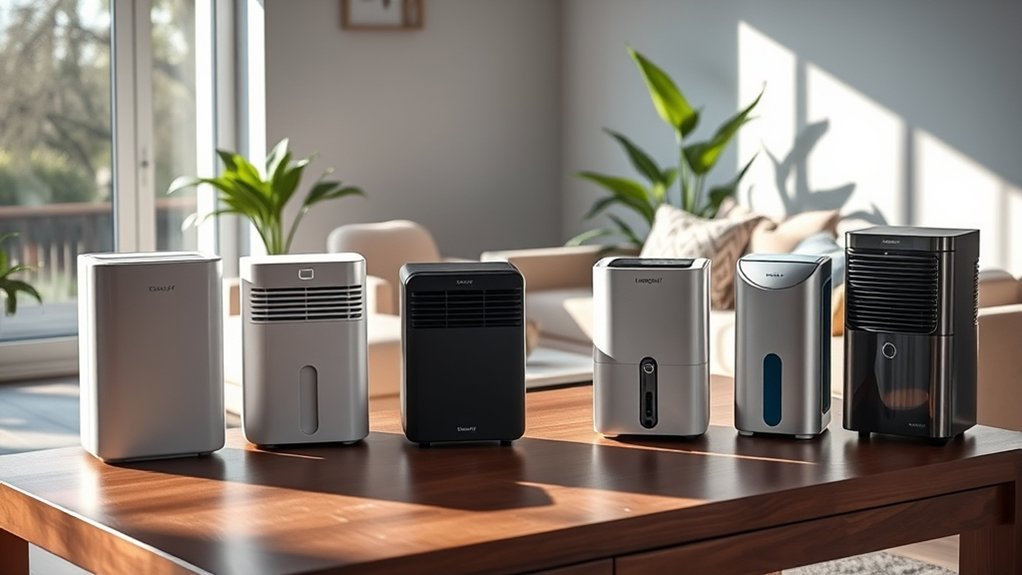
Choosing a dehumidifier for a home in India requires more than comparing pint ratings. Room size, monsoon humidity, drainage, noise, electrical input, plug type, local warranty, and replacement support all matter. Among the four relevant products retained in this guide, the Yaufey 80 Pint is the strongest large-area candidate, the KNKA 34 Pint offers a balanced feature set, the PLUSCENT 32 Pint suits medium-to-large rooms, and the compact NeedDuck B-2 is intended only for small enclosed spaces.
Affiliate disclosure: As an Amazon Associate, we may earn from qualifying purchases. This does not increase your price.
Important compatibility note for India: The product links below lead to Amazon.com listings. Before ordering, confirm that the exact unit is rated for 220–240V, 50Hz, uses a suitable grounded plug, can be delivered to your address, and includes warranty support you can use in India.
Do not connect a 110–120V appliance directly to Indian household power. A simple travel plug changes only the plug shape; it does not convert voltage or frequency.
Quick Verdict
- Best large-area candidate: Yaufey 80 Pint, based on its listed high daily moisture-removal capacity and continuous-drain option.
- Best balanced choice: KNKA 34 Pint, with a larger 3-liter tank, multiple modes, a washable filter, and continuous drainage.
- Best compact compressor option: PLUSCENT 32 Pint, for buyers who want medium-to-large-room capacity in a smaller cabinet.
- Best for a very small space: NeedDuck B-2, but only for closets, compact bathrooms, RVs, or similarly confined areas—not as a substitute for a compressor dehumidifier.
Quick Comparison
| Product | Best For | Listed Moisture Capacity | Listed Coverage | Tank | Main Buying Note | Check Details |
|---|---|---|---|---|---|---|
| Yaufey 80 Pint | Large rooms, basements, open living areas | Up to 80 pints/day | Up to 5,000 sq. ft. | 1.06 gallons | High-capacity listing; confirm voltage and local warranty | View on Amazon |
| KNKA 34 Pint | Bedrooms, basements, offices, laundry areas | Up to 34 pints/day | Up to 2,500 sq. ft. | 3 liters | Useful controls and drainage; verify electrical rating | View on Amazon |
| NeedDuck B-2 | Closets and very small enclosed spaces | Not clearly stated as pints/day | Up to 215 sq. ft. | 44 fl. oz. | Thermoelectric design; not suitable for heavy whole-room moisture | View on Amazon |
| PLUSCENT 32 Pint | Medium-to-large rooms and laundry drying | Up to 32 pints/day | Up to 2,500 sq. ft. | 2 liters | Compact cabinet; small tank makes drainage setup more important | View on Amazon |
Coverage and daily-removal figures are seller or manufacturer listing claims. Actual performance depends on temperature, starting humidity, air leakage, room layout, and the test conditions used for the rating.
Yaufey 80 Pints Energy Star Dehumidifier for Home
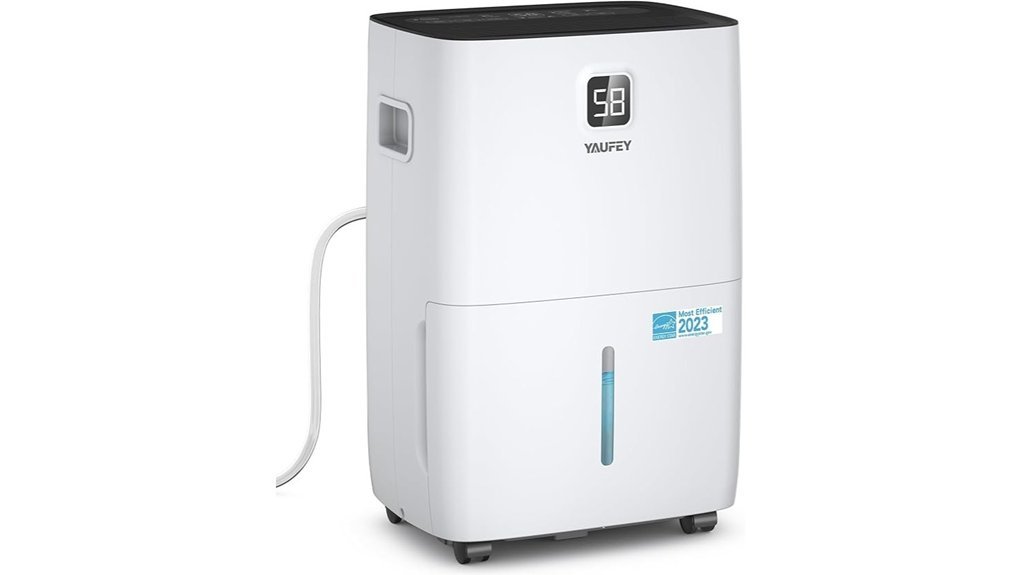
The Yaufey 80 Pint is the highest-capacity model retained in this guide. Its listing describes moisture removal of up to 80 pints per day, coverage up to 5,000 sq. ft., adjustable humidity control, a 1.06-gallon tank, automatic shutoff, and continuous drainage. Those features make it the most practical candidate here for a large living area, basement, garage, or open floor plan where a small thermoelectric unit would be overwhelmed.
Why you may like it: The combination of a larger moisture-removal rating and drain-hose support can reduce the need to empty the bucket repeatedly during humid weather. Wheels also make it easier to reposition than a fixed appliance.
Best For: Buyers who need a compressor dehumidifier for a large enclosed area and have verified that the exact unit supports Indian voltage and frequency.
Who Should Avoid It: Buyers who cannot confirm 220–240V/50Hz input, need dependable local service, or only need moisture control in a wardrobe or tiny bathroom.
Pros:
- Highest listed daily moisture-removal capacity in this shortlist.
- Continuous-drain connection can support longer unattended operation when installed correctly.
- Adjustable humidity control, timer, automatic shutoff, and caster wheels improve convenience.
Cons:
- The article source did not establish Indian voltage compatibility, shipping, or local warranty coverage.
- The 1.06-gallon tank may still fill quickly in severe humidity if a drain hose is not used.
- Large coverage figures are listing claims and may be optimistic in open, leaky, or extremely humid rooms.
KNKA 2500 Sq.Ft Dehumidifier with Drain Hose
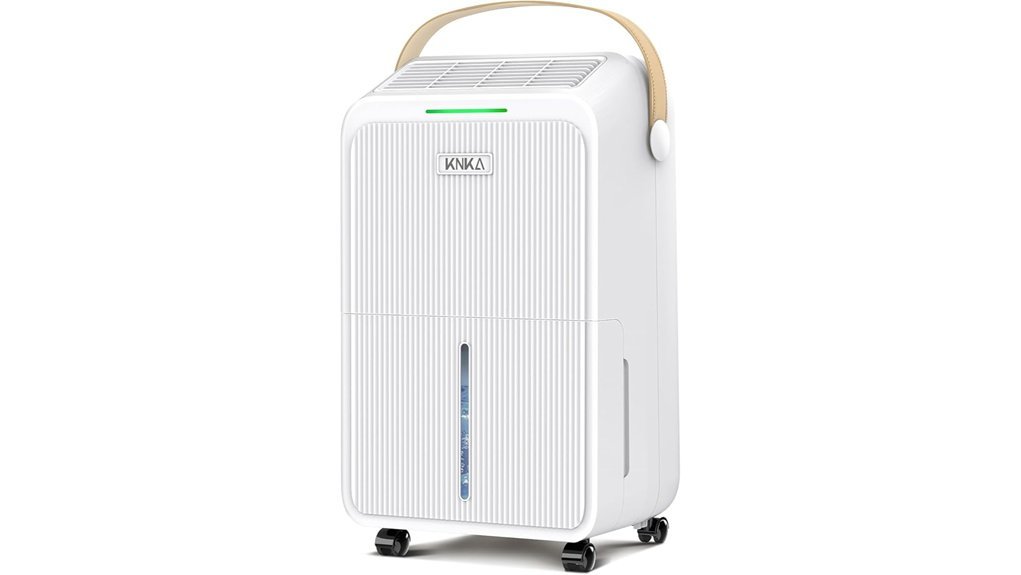
The KNKA is a more balanced option for buyers who want compressor-based moisture removal without moving to the largest unit in the roundup. Its listing describes up to 34 pints of daily moisture removal, coverage up to 2,500 sq. ft., a 3-liter tank, dehumidify, continuous, and clothes-drying modes, a washable filter, child lock, automatic defrost, a timer, and continuous drainage.
Why you may like it: The 3-liter tank is larger than the PLUSCENT tank, while the drain-hose option is useful for monsoon conditions or damp basements where manual emptying becomes inconvenient.
Best For: Bedrooms, offices, basements, laundry areas, and medium-to-large enclosed rooms where buyers want a practical mix of capacity and controls.
Who Should Avoid It: Buyers needing confirmed India-market certification, local installation support, or a unit for a very large open area beyond the listing’s claimed range.
Pros:
- Useful 34-pint/day listing rating for moderate-to-heavy moisture control.
- Multiple operating modes, washable filter, child lock, and automatic defrost.
- Three-liter tank plus a drain-hose option for flexible water removal.
Cons:
- Electrical input for direct use in India was not clearly established in the source material.
- Quiet-operation marketing should not be treated as a guarantee for noise-sensitive sleepers.
- Coverage depends heavily on room sealing, temperature, and actual humidity load.
NeedDuck B-2 Dehumidifier with 44OZ Water Tank
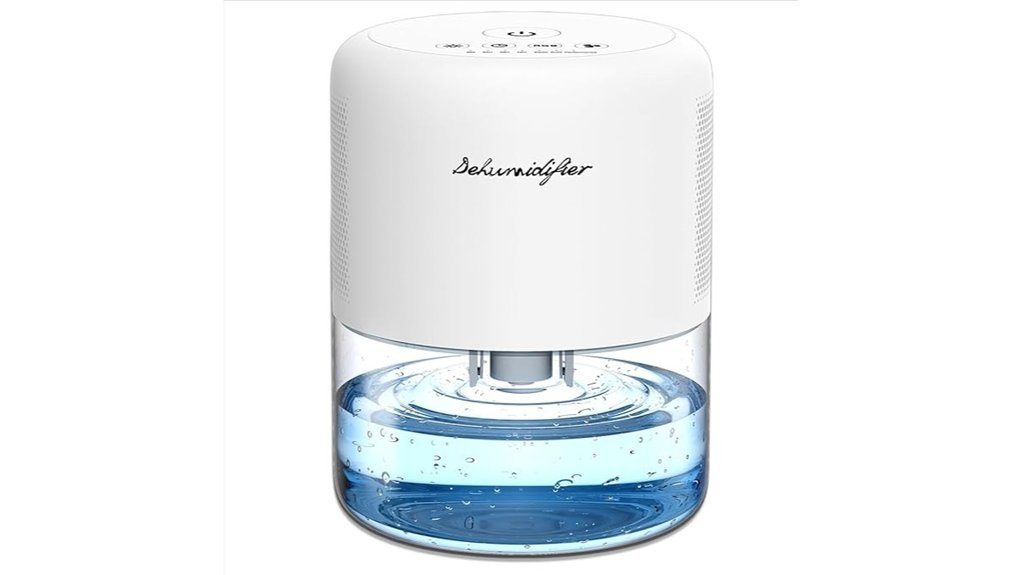
The NeedDuck B-2 is a compact thermoelectric dehumidifier rather than a high-capacity compressor model. Its listing describes coverage up to 215 sq. ft., a 44-fluid-ounce tank, 28-watt operation, automatic defrost, automatic shutoff, timer choices, several operating modes, and decorative lighting. It is best treated as a small-space moisture helper, not a whole-room solution for severe monsoon humidity.
Why you may like it: It is lightweight, easy to place on a stable surface, and less bulky than the compressor models. The automatic shutoff helps prevent overflow when the tank is full.
Best For: Wardrobes, compact bathrooms, small storage areas, RVs, and other enclosed spaces with mild moisture problems.
Who Should Avoid It: Anyone trying to dry a large bedroom, living room, basement, or persistently wet space. The listing does not clearly provide a comparable pints-per-day removal figure.
Pros:
- Small footprint and low listed wattage.
- Automatic shutoff and defrost add convenience.
- Suitable where a full-size compressor unit would be too large.
Cons:
- Not designed for heavy moisture loads or large rooms.
- The 44-ounce tank requires more frequent emptying than a compressor model with drainage.
- Decorative lighting does not improve dehumidification performance.
PLUSCENT 32 Pint Dehumidifier for Home
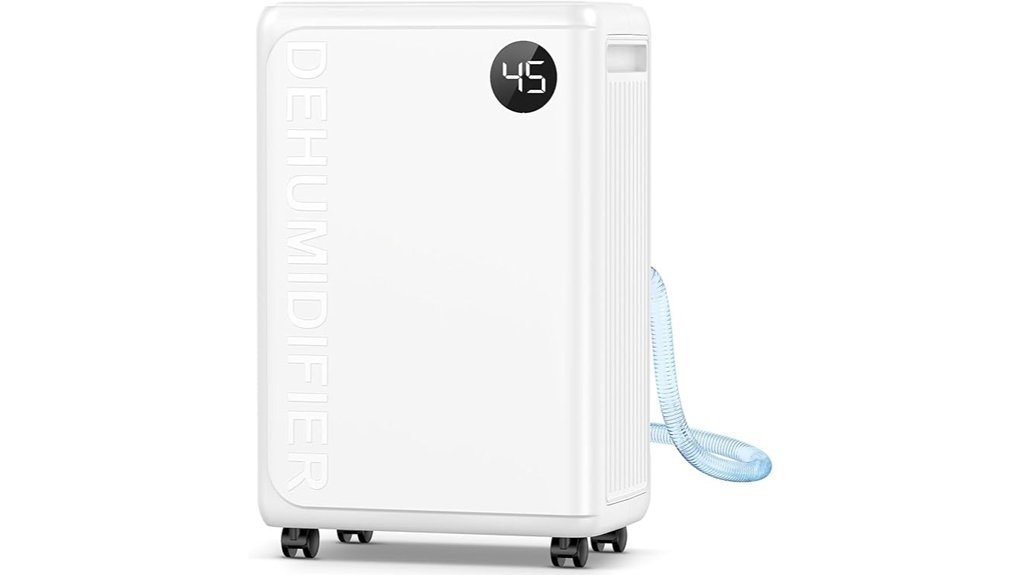
The PLUSCENT 32 Pint targets buyers who want compressor-based dehumidification in a relatively compact cabinet. Its listing describes up to 32 pints of moisture removal per day, coverage up to 2,500 sq. ft., a 2-liter removable tank, a 24-hour timer, automatic defrost and shutoff, adjustable humidity control, a washable filter, and a continuous-drain connection.
Why you may like it: It offers a higher-capacity approach than a mini thermoelectric unit while taking up less floor space than many larger compressor models. The clothes-drying mode may also help in a closed laundry area during wet weather.
Best For: Medium-to-large bedrooms, living areas, home offices, storage rooms, and enclosed laundry spaces where a compact footprint matters.
Who Should Avoid It: Buyers who cannot set up gravity drainage and do not want to empty a 2-liter tank frequently during high humidity.
Pros:
- Listed 32-pint/day compressor capacity for more demanding moisture control.
- Timer, automatic defrost, humidity controls, washable filter, and drainage connection.
- Compact dimensions and caster-style portability.
Cons:
- The 2-liter tank is relatively small for a unit with this listed daily capacity.
- Gravity drainage needs a hose route that continuously slopes toward a lower drain.
- Voltage, plug compatibility, and usable warranty support in India must be confirmed before ordering.
Factors to Consider When Choosing Dehumidifiers for Home in India
A dehumidifier that looks suitable on a U.S. listing may still be a poor choice for an Indian home. Use the checklist below before buying, especially when importing an electrical appliance.
India Voltage, Frequency, and Plug Compatibility
Check the rating label, manual, and seller response for 220–240V, 50Hz operation. Do not rely on product photos, wattage alone, or a plug adapter. A unit designed only for 110–120V can be damaged or create a safety risk when connected directly to Indian mains power. Also confirm that the appliance has a grounded connection and that any required voltage-conversion equipment is properly rated for a compressor motor’s starting load.
Compressor vs. Thermoelectric Dehumidifiers
Compressor dehumidifiers are generally the more appropriate choice for bedrooms, living rooms, basements, and serious dampness. Thermoelectric models are smaller and quieter but remove much less moisture, making them more suitable for wardrobes, cabinets, RVs, or very small bathrooms. Do not compare tank size alone; the daily moisture-removal rating is more important.
Capacity and Coverage Area
Capacity is commonly listed in pints per day on Amazon.com, while Indian buyers may also see liters per day. Compare ratings only when the test temperature and humidity are similar. A large advertised coverage area does not guarantee good results in an open floor plan, a room with frequent outdoor-air exchange, or a space with active leaks.
Drainage Options Available
For monsoon weather or continuous operation, a drain hose can be more useful than a large bucket. Gravity drainage requires the hose to slope downward without kinks. If the drain is above the unit, look for a model with a built-in pump rather than assuming gravity drainage will work. Keep the tank installed if the manual requires it during hose operation.
Energy Use and Operating Cost
Compare listed wattage, expected daily run time, humidistat control, and local electricity cost. A lower-wattage mini unit is not automatically more efficient if it runs continuously without controlling the room. Likewise, a larger compressor model may cycle off sooner after reaching the target humidity. Avoid unsupported promises of a fixed annual saving.
Noise Level Considerations
Compressor and fan noise can be noticeable in a bedroom. Treat advertised decibel figures as test-condition estimates, not guarantees. Place the unit on a level surface, leave the required clearance around air inlets and outlets, and avoid pushing it against furniture, which can increase vibration and reduce airflow.
Tank Size and Continuous Operation
A small tank may fill several times a day in severe humidity. Automatic shutoff prevents overflow, but it also stops dehumidification until the bucket is emptied. Buyers who need overnight or unattended operation should prioritize a safe continuous-drain setup and verify what happens after a power interruption.
Controls, Safety, and Useful Features
Useful features include an adjustable humidistat, automatic defrost, full-tank shutoff, timer, child lock, washable filter, and automatic restart. Decorative lights are optional and should not influence the buying decision more than moisture-removal capacity, drainage, electrical safety, and service support.
Maintenance and Filter Care
Clean the filter on the schedule in the manual, wash and dry the tank regularly, keep the drain hose clear, and inspect the air intake for dust. Unplug the unit before cleaning. If you notice ice buildup, unusual heat, a burning smell, water leakage, or repeated electrical trips, stop using the appliance and seek qualified service.
Local Warranty, Returns, and Spare Parts
Imported appliances can be difficult to return and may not have local repair coverage. Before purchasing, confirm who pays return shipping, whether the manufacturer supports customers in India, whether filters and drain parts are available, and whether the warranty remains valid outside the original marketplace.
Before You Buy
- Measure the enclosed room and identify the moisture source.
- Check the exact voltage and frequency on the appliance label or manual.
- Confirm daily removal capacity, tank size, and drainage method.
- Check noise expectations for bedrooms and home offices.
- Verify India delivery, taxes, returns, warranty, and spare parts.
- Use a hygrometer to confirm whether the room actually needs dehumidification.
Frequently Asked Questions
Can I Use an Amazon U.S. Dehumidifier in India?
Only if the exact model is rated for India’s household voltage and frequency or is used with properly specified conversion equipment approved for that appliance. A plug adapter alone is not enough. Confirm the rating label and manufacturer guidance before purchase.
Which Type Is Best for Indian Monsoon Humidity?
For a normal bedroom, living room, basement, or persistently damp area, a compressor dehumidifier is usually more suitable than a mini thermoelectric model. Choose capacity based on the room’s actual dampness, not only its floor area.
What Humidity Level Should I Target?
Use a hygrometer and aim for a comfortable level that prevents condensation and persistent dampness without making the room excessively dry. Many households try to keep indoor relative humidity below about 60%, but the best setting can vary with climate, health needs, and building conditions.
Do I Need Continuous Drainage?
Continuous drainage is useful when the tank fills frequently or the unit must run for long periods. Make sure the hose has a steady downward slope to a safe drain. A gravity hose will not move water upward.
Are Mini Dehumidifiers Enough for a Bedroom?
Usually not when the bedroom has heavy humidity, visible condensation, or a mold problem. Mini thermoelectric units are better for small enclosed spaces and mild moisture. A compressor unit with a stated daily-removal rating is normally more appropriate for a full room.
Are Dehumidifiers More Energy-Efficient Than Air Conditioners?
There is no universal answer. A dehumidifier focuses on moisture removal, while an air conditioner cools and also removes some moisture. Actual energy use depends on appliance size, efficiency, room temperature, humidity, run time, and the target condition.
How Do I Maintain My Dehumidifier for Optimal Performance?
Clean the filter and tank regularly, keep air passages clear, inspect the drain hose, and follow the manual’s clearance and temperature requirements. Do not operate a damaged appliance or one that repeatedly trips a breaker.
Conclusion
For the highest listed capacity, the Yaufey 80 Pint is the leading large-area candidate. The KNKA 34 Pint offers the most balanced combination of tank size, controls, and drainage, while the PLUSCENT 32 Pint is worth considering when a compact compressor cabinet matters. Choose the NeedDuck B-2 only for a very small enclosed space with a mild moisture problem.
Final recommendation: Do not order any imported dehumidifier solely because its capacity looks suitable. First verify 220–240V, 50Hz compatibility, grounded plug requirements, delivery to India, return costs, and usable warranty support. Electrical compatibility is more important than any feature, badge, or advertised coverage figure.