Affiliate disclosure: This article contains Amazon affiliate links. We may earn a commission from qualifying purchases at no extra cost to you.
Updated: August 2026
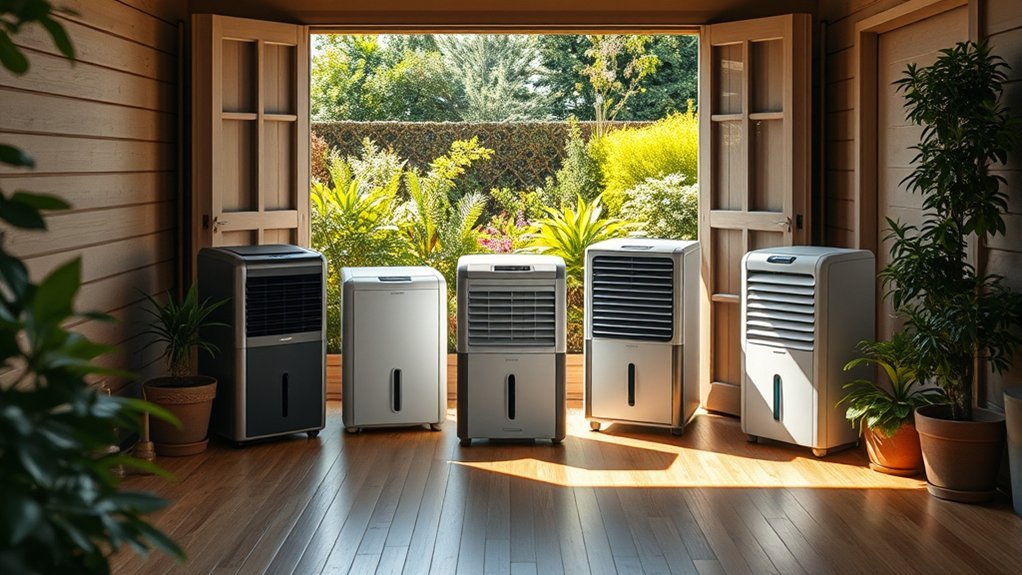
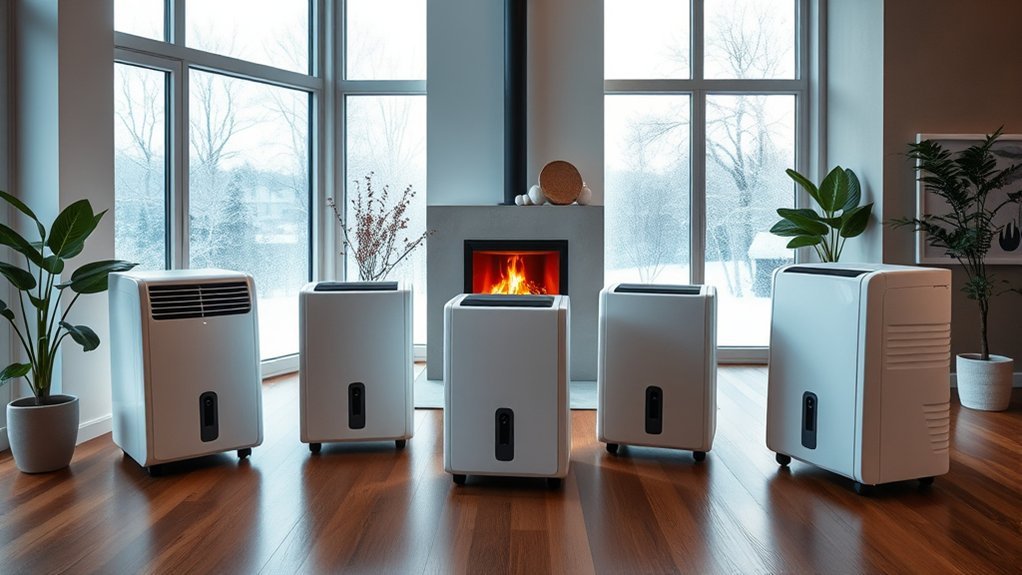
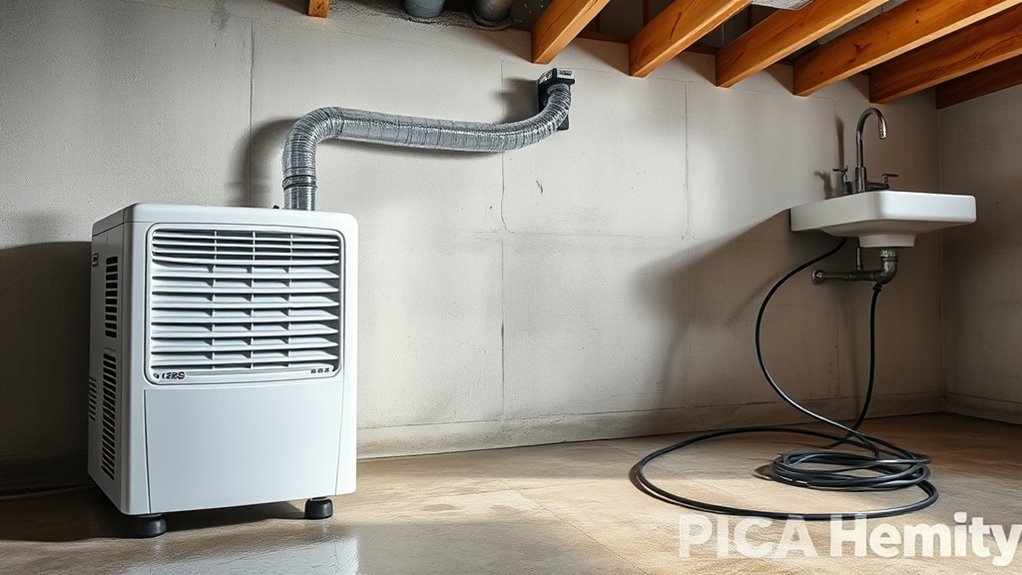
A direct drain dehumidifier can reduce bucket-emptying chores by sending collected water through a hose. However, the drainage route matters as much as the advertised pint capacity. Most portable models use gravity drainage, which means the hose must run continuously downhill to a floor drain, sump, sink, or other approved destination.
The strongest products in this roundup range from compressor dehumidifiers for damp basements and large rooms to small thermoelectric units for closets, cabinets, and RV storage. We compared listed moisture-removal capacity, drainage method, humidity controls, automatic defrost, tank size, noise claims, portability, and the type of space each unit is designed to serve.
Quick Verdict
Choose the AEOCKY 4500 Sq.Ft for a large, persistently damp basement, the Waykar 34 Pint for balanced household performance, the OLIXIS 30 Pint when lower advertised noise matters, or the Litever only for very small enclosed spaces.
Important drainage note: “Direct drain” or “continuous drain” usually means gravity drainage. Unless the exact listing clearly states that a pump is built in, the hose must remain below the drain outlet and slope downward without loops or kinks. Use a separate condensate pump when water must travel uphill.
How These Products Were Selected
Products were retained only when they clearly matched the direct-drain buyer intent and had an identifiable hose-drain function. Selection also considered capacity wording, room suitability, automatic humidity control, drainage flexibility, cold-room features, portability, and honest limitations. This is a listing-based comparison, not a claim of hands-on testing.
Quick Comparison
| Model | Listed Capacity | Listed Coverage | Drain Type | Best Use | Details |
|---|---|---|---|---|---|
| AEOCKY 4500 | Up to 80 pints under maximum conditions | Up to 4,500 sq. ft. | Gravity hose or tank | Large damp basements | Check Amazon |
| AEOCKY 3500 | Up to 50 pints under maximum conditions | Up to 3,500 sq. ft. | Gravity hose or tank | Medium to large rooms | Check Amazon |
| Waykar | Up to 34 pints at 95°F and 90% RH | Up to 2,000 sq. ft. | Gravity hose or tank | Balanced household use | Check Amazon |
| VEAGASO | Up to 34 pints | Up to 2,500 sq. ft. | Gravity hose or tank | Multiple operating modes | Check Amazon |
| PLUSCENT 32 | Up to 32 pints | Up to 2,500 sq. ft. | Gravity hose or tank | Simple family controls | Check Amazon |
| OLIXIS | Up to 30 pints | Up to 2,000 sq. ft. | Gravity hose or tank | Lower advertised noise | Check Amazon |
| SEAVON | Up to 21 pints | Up to 1,500 sq. ft. | Gravity hose or tank | Compact compressor option | Check Amazon |
| PLUSCENT 21 | Up to 21 pints | Up to 1,500 sq. ft. | Gravity hose or tank | Compact controls | Check Amazon |
| Levoair | Small thermoelectric unit | Small enclosed spaces | Gravity hose or tank | Closets and RV storage | Check Amazon |
| Litever | Small thermoelectric unit | Very small spaces | Gravity hose or tank | Cabinets and closets | Check Amazon |
Coverage and pint figures are manufacturer or seller listing claims. Numbers described as “maximum” may be measured in warmer, more humid conditions than standardized dehumidifier ratings. Compare the exact model number, current rated capacity, room dampness, and drain layout before ordering.
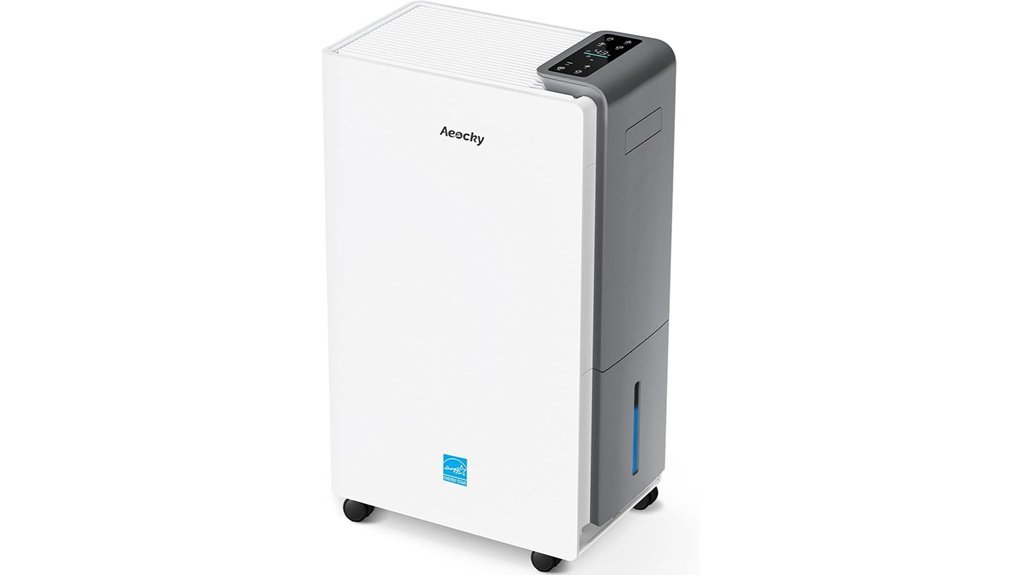
AEOCKY 4500 Sq.Ft Dehumidifier
Best Overall for Large Spaces
The AEOCKY 4500 Sq.Ft model is the strongest large-space choice in this roundup. Its listing advertises a maximum removal rate of 80 pints per day, a drain-hose connection, adjustable humidity control, automatic restart, and a large backup tank. These features make it suitable for a basement or open living area where a smaller unit may run almost continuously.
The 80-pint number is a maximum-condition claim rather than a directly comparable standardized basement rating. Buyers interested in its advertised ENERGY STAR Most Efficient designation should match the exact model number on the Amazon page with the current ENERGY STAR product database.
Best For: Large basements, garages, and open spaces with a safe gravity-drain route.
Pros:
- High maximum moisture-removal claim for demanding spaces.
- Humidistat control can cycle the compressor after the target humidity is reached.
- Drain connection, larger tank, timer, child lock, and restart function improve convenience.
Cons:
- The maximum 80-pint claim should not be compared directly with a standardized 80-pint rating.
- It requires more floor space than a compact household unit.
- The hose cannot move water uphill without a separate condensate pump.
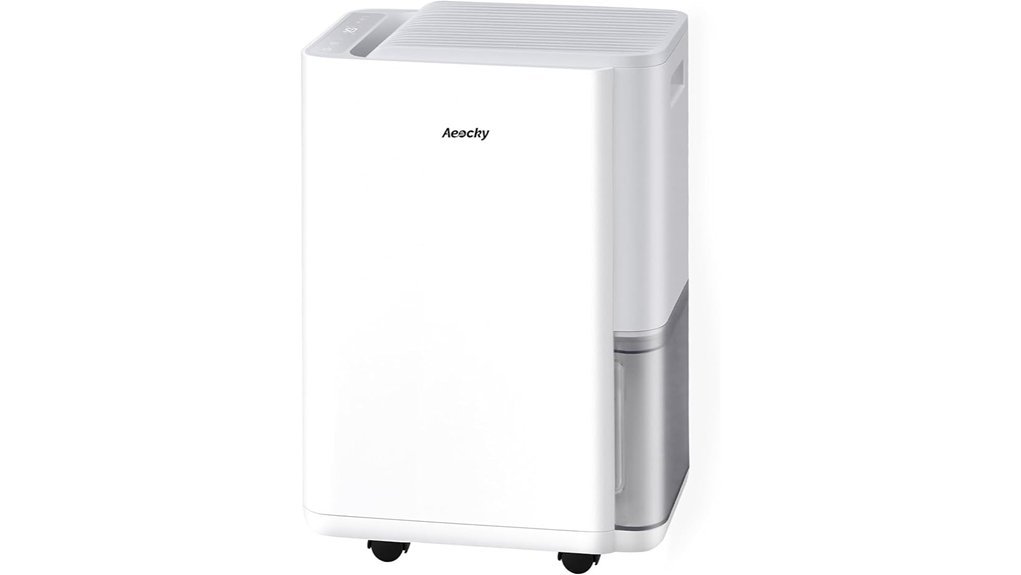
AEOCKY 3500 Sq.Ft Compressor Dehumidifier
Best Smaller AEOCKY Option
This AEOCKY model is currently identified as a 3,500 sq. ft. compressor dehumidifier with a maximum 50-pint-per-day claim. It includes a drain-hose connection and intelligent humidity control, providing a step down in size and capacity from the 4,500-sq.-ft. model without moving into the compact 21-pint class.
Best For: Medium to large basements, laundry rooms, and living areas where the largest AEOCKY model would be excessive.
Pros:
- Direct-drain connection reduces reliance on the collection tank.
- Maximum 50-pint claim provides useful headroom in humid conditions.
- Automatic humidity control reduces the need for constant manual adjustment.
Cons:
- The maximum-condition rating may be lower under cool basement conditions.
- The advertised square-foot number is not a guarantee for a severely wet room.
- Buyers should confirm the current tank size, hose length, and certification details on the listing.
Waykar 34 Pint Dehumidifier
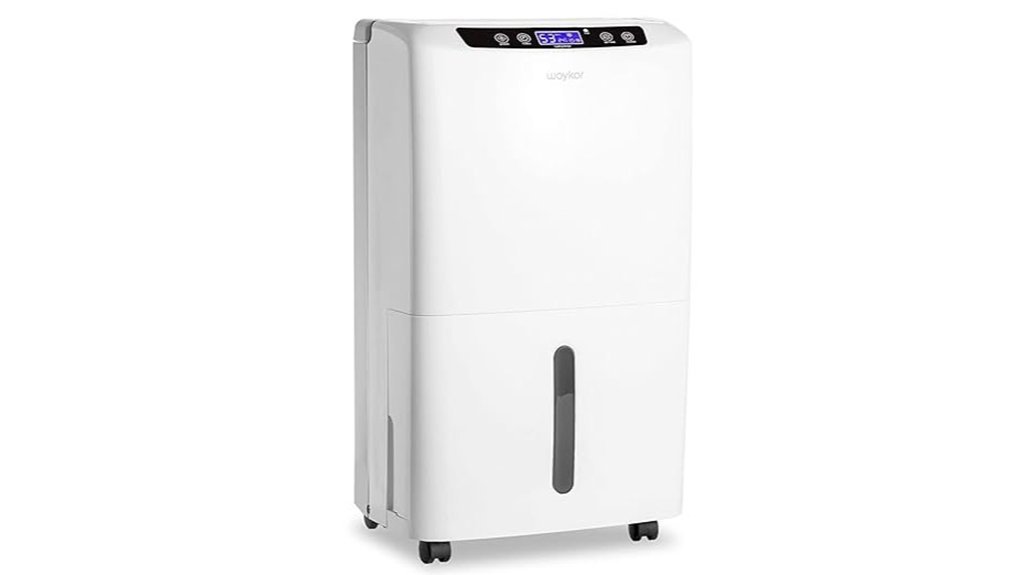
Best Balanced Household Pick
The Waykar is a practical middle-ground option for readers who do not need the size or maximum capacity of the largest units. The listing describes moisture removal of up to 34 pints per day at 95°F and 90% relative humidity, coverage up to 2,000 sq. ft., a 30% to 85% humidity setting range, automatic defrost, an included drain hose, and a 0.66-gallon tank.
Best For: Typical basements, laundry rooms, offices, and large living areas with moderate moisture.
Pros:
- Balanced size and listed capacity for common household applications.
- Included hose and removable tank provide two drainage choices.
- Automatic defrost, restart, adjustable fan speeds, handles, and wheels improve everyday use.
Cons:
- The 34-pint figure is a maximum-condition claim, not necessarily the standardized rated capacity.
- It may be undersized for active seepage or a very wet, open basement.
- The drain hose still requires an uninterrupted downward route.
VEAGASO 2500 Sq.Ft Dehumidifier with Drain Hose
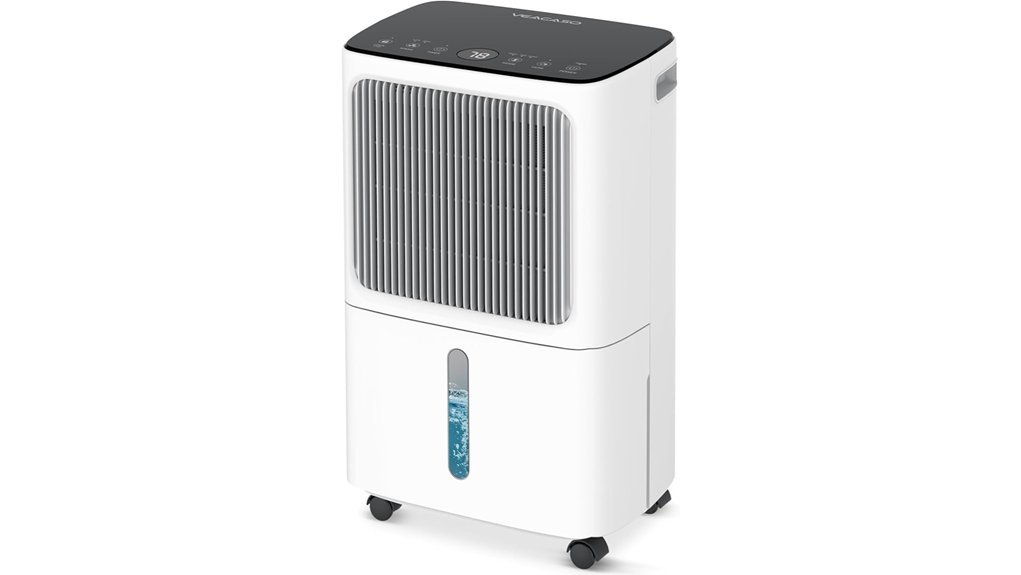
Best Mode Selection
The VEAGASO listing describes a 34-pint model for spaces up to 2,500 sq. ft. with a drain hose, intelligent humidity control, a 24-hour timer, and DEHU, DRY, and continuous operating modes. This makes it useful for routine humidity control, occasional laundry drying, and longer periods of continuous operation.
Best For: Buyers who want several operating modes in a portable mid-size dehumidifier.
Pros:
- Three operating modes support different household moisture problems.
- The listing advertises operation around 40 dB under applicable settings.
- Drain hose, washable filter, handle, and casters simplify routine use.
Cons:
- The 0.53-gallon tank can fill quickly in a damp room when the hose is not connected.
- Advertised sound levels can change with fan speed and placement.
- The gravity outlet must remain above the final drain destination.
PLUSCENT 32 Pint Dehumidifier for Home & Basement
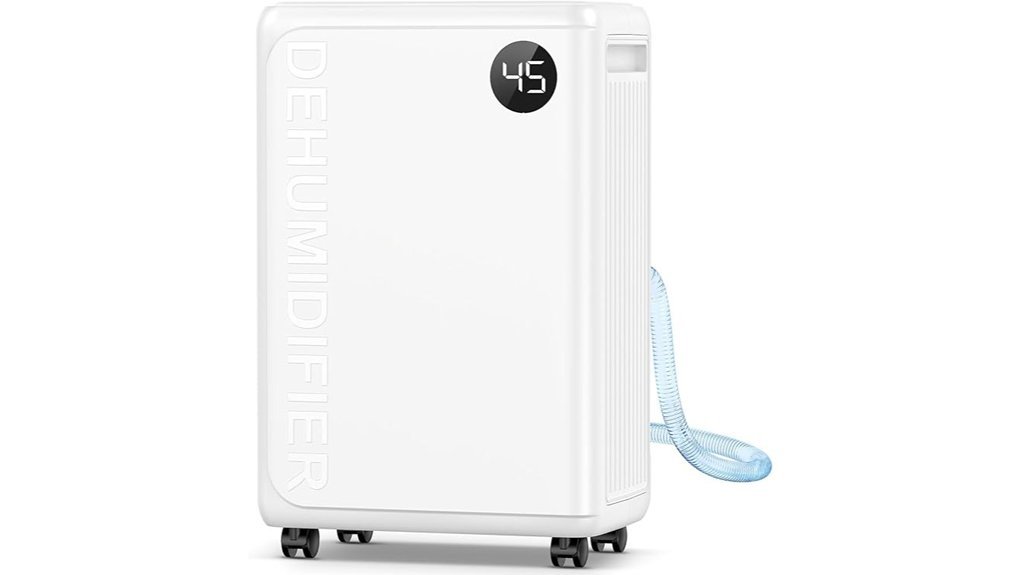
Best Family-Friendly Controls
The PLUSCENT 32 Pint model is listed for spaces up to 2,500 sq. ft. and includes a drain hose, three modes, a 24-hour timer, automatic defrost, adjustable humidity control, and a child lock. Its simple control layout makes it an approachable option for a family living space, laundry area, or moderately damp basement.
Best For: Households wanting straightforward controls, safety locks, and both tank and hose drainage.
Pros:
- Three modes and a timer support different daily routines.
- Child lock, automatic defrost, shutoff, and restart improve convenience.
- The removable 2-liter tank provides backup when continuous drainage is unavailable.
Cons:
- The tank can fill quickly during heavy moisture removal.
- The included hose is approximately 39.4 inches, which may restrict placement.
- It is not a substitute for repairing leaks, seepage, or standing-water problems.
OLIXIS 30-Pint Dehumidifier with Hose
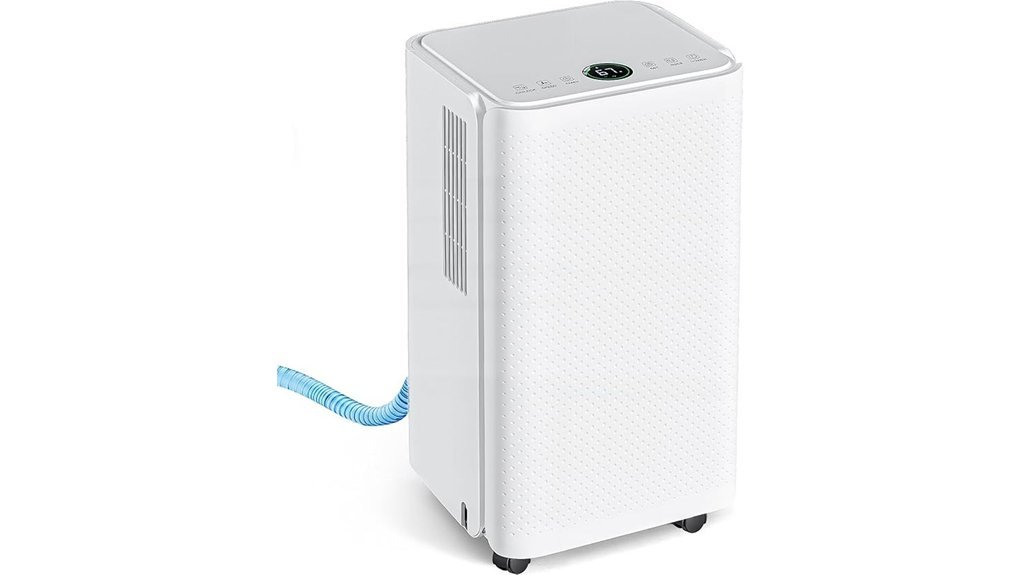
Best Lower-Noise Mid-Size Pick
OLIXIS lists this model with a 30-pint capacity, coverage up to 2,000 sq. ft., a 2-liter tank, a smart humidity display, and a drain hose. Its advertised 38 dB sound level makes it appealing for occupied areas where noise matters more than choosing the highest-capacity option.
The listing also uses ENERGY STAR Most Efficient wording. Buyers should verify the exact model number in the current ENERGY STAR database rather than relying on the Amazon title alone.
Best For: Bedrooms, offices, living areas, and moderately damp basements where lower advertised noise is a priority.
Pros:
- Mid-size capacity is easier to place than a large basement unit.
- The listing advertises comparatively quiet operation.
- Drain hose, automatic restart, tank shutoff, and defrost reduce manual attention.
Cons:
- The 2-liter tank is small when continuous drainage is unavailable.
- It is not ideal for severe seepage or a very wet large basement.
- Certification and capacity should be confirmed against the exact current model number.
SEAVON 21 Pint Dehumidifier with Drain Hose
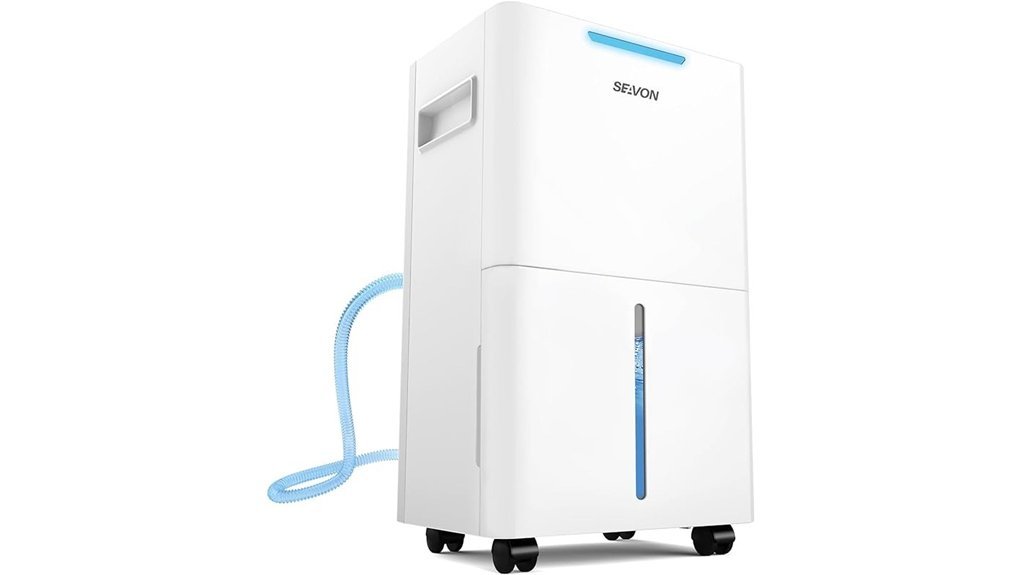
Best Compact Compressor Option
The SEAVON listing describes a 21-pint compressor dehumidifier for spaces up to 1,500 sq. ft. It includes a drain hose, adjustable humidity control, automatic defrost, a 24-hour timer, and three operating modes. It is easier to place than the larger compressor models while offering stronger extraction than a small thermoelectric unit.
Best For: Bedrooms, laundry rooms, RV living areas, and moderately damp rooms needing a compact compressor model.
Pros:
- Compact dimensions are easier to accommodate in occupied rooms.
- Smart controls and three modes simplify operation.
- Timer, wheels, hose drainage, automatic restart, and a washable filter add convenience.
Cons:
- Twenty-one pints may be insufficient for a large, very damp basement.
- The included hose may be too short for some room layouts.
- The filter, tank area, and drainage path still need routine cleaning.
PLUSCENT 21 Pint Dehumidifier with Smart Humidity Control
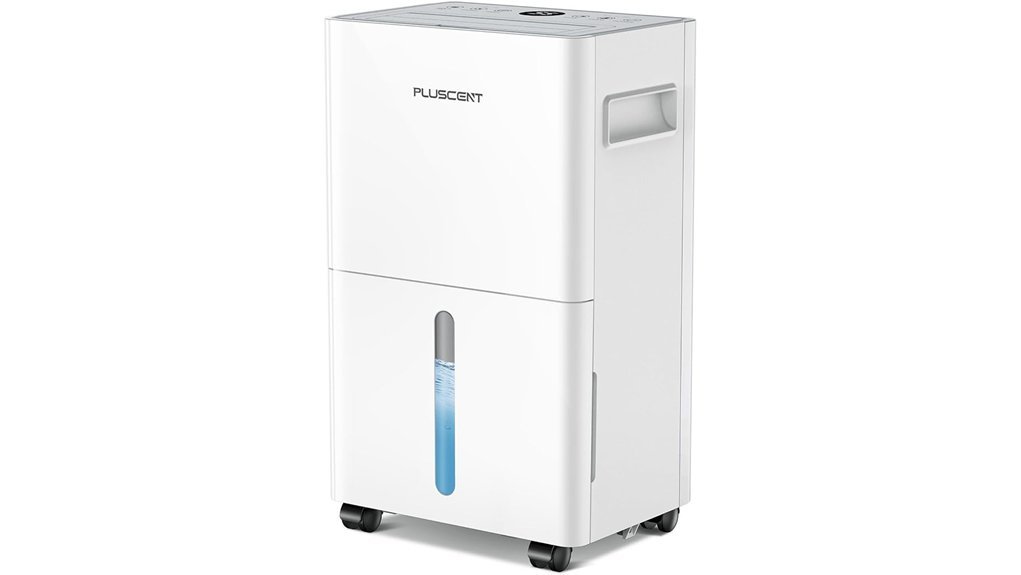
Best Compact Controls
The PLUSCENT 21 Pint model is listed for up to 1,500 sq. ft. and combines a removable 1.5-liter tank with an included gravity-drain hose. Smart humidity control, automatic defrost, a timer, and a child lock make it a close alternative to the SEAVON for smaller household spaces.
Best For: Bedrooms, RVs, laundry rooms, and medium spaces where compact size and simple controls matter.
Pros:
- Automatic humidity control and defrost reduce manual adjustment.
- Timer, child lock, washable filter, and drain hose cover the main convenience features.
- A smaller compressor unit can be easier to position than an oversized basement model.
Cons:
- The 1.5-liter tank can fill quickly without hose drainage.
- The approximately 39.4-inch gravity hose requires a nearby lower drain point.
- Current warranty and support terms should be confirmed before ordering.
Levoair 68oz Dehumidifier with Drain Hose
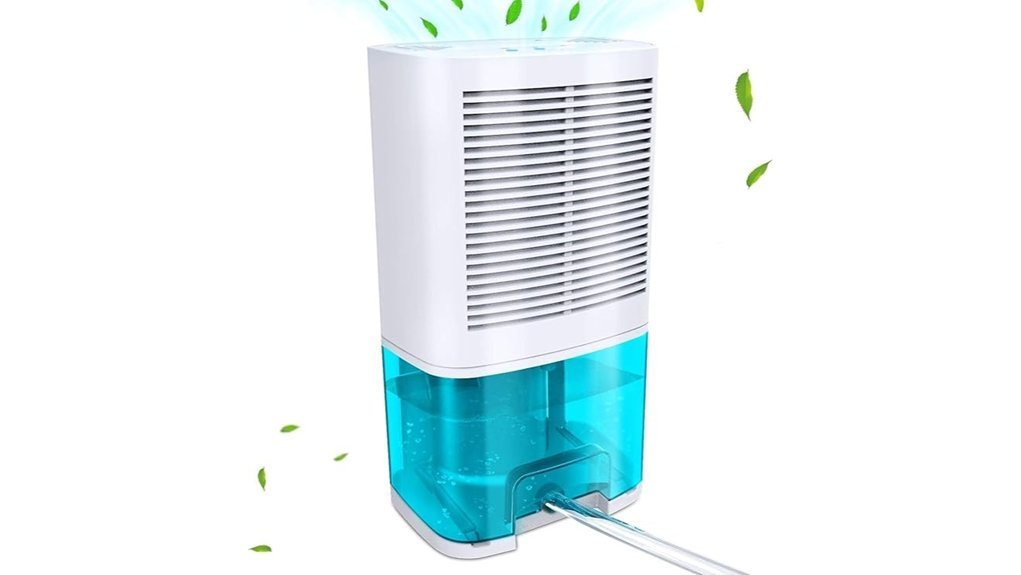
Best for Closets and RV Storage
The Levoair uses a 68 oz (2,000 ml) tank and includes a drain hose. It is a small thermoelectric-style product rather than a high-output compressor dehumidifier, so its best use is localized moisture control in a closet, wardrobe, RV storage area, or other small enclosed space.
Published versions of the listing contain different suggested coverage numbers. For that reason, it is safer to choose this model according to the small-space use case rather than relying on a large square-foot claim.
Best For: Small enclosed spaces where compact dimensions and lower operating noise matter more than fast extraction.
Pros:
- Compact body and a relatively large tank for its product class.
- Drain hose can reduce tank-emptying when routed continuously downhill.
- Thermoelectric operation is generally quieter than a compressor system.
Cons:
- It cannot match a compressor unit in a cold or very damp basement.
- Large advertised coverage figures should be treated cautiously.
- Water removal drops as temperature and humidity decrease.
Litever Small Portable Dehumidifier with Drain Hose
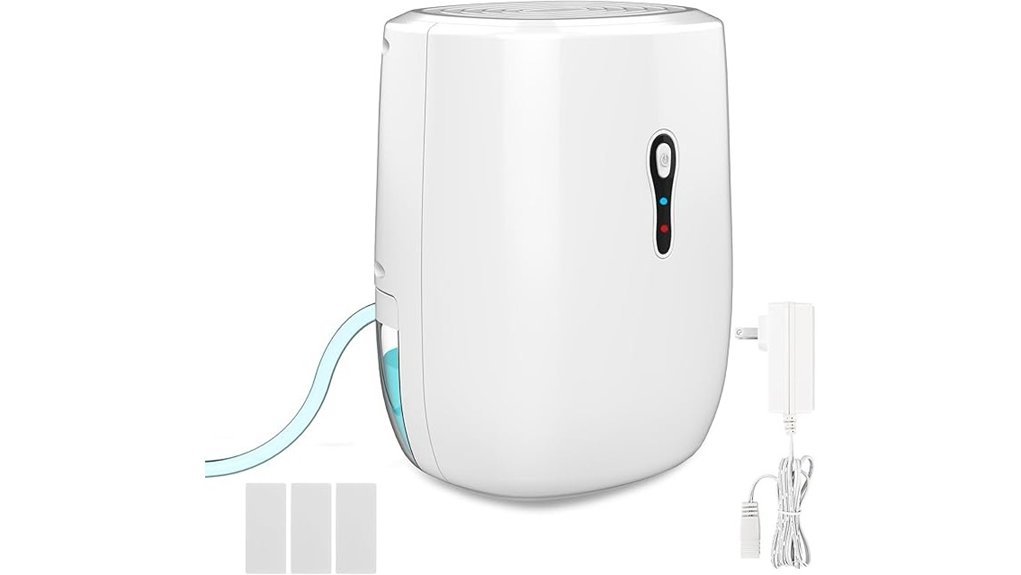
Best for Very Small Spaces
The Litever is the most specialized product in this roundup. Its listing positions it as a small portable dehumidifier with automatic shutoff, a collection tank, and a drain hose for continuous gravity drainage. It is intended for spaces such as a pantry, closet, wardrobe, cabinet, RV, or camper rather than an entire basement.
Best For: Very small enclosed spaces needing low-power, continuous moisture collection.
Pros:
- Small footprint fits shelves, cabinets, closets, and RV storage areas.
- The included hose reduces tank-emptying when a lower drain point is available.
- Simple automatic operation requires little adjustment.
Cons:
- It is not suitable as the primary dehumidifier for a basement or large room.
- Controls and extraction capacity are limited compared with compressor models.
- Thermoelectric performance is modest in cool or mildly humid conditions.
Factors to Consider When Choosing a Direct Drain Dehumidifier
A good direct-drain dehumidifier must match your moisture load, room layout, drain location, temperature, and tolerance for noise. Do not select a model from its advertised square-foot figure alone.
Gravity Drain vs. Pump Drain
Most models in this roundup use gravity drainage. Place the dehumidifier above the drain, keep the hose sloping downward from end to end, and avoid loops, pinches, loose connections, or a submerged hose end.
A built-in or separate condensate pump is needed when water must move uphill or across a route that cannot maintain a continuous slope. Never assume that “continuous drain” means a pump is included.
Compressor vs. Thermoelectric Dehumidifiers
Compressor dehumidifiers are the better choice for basements, laundry rooms, and larger areas with a meaningful moisture load. Thermoelectric units are smaller and quieter, but they collect much less water and work best in closets, cabinets, RV storage areas, and other compact spaces.
Do not compare a thermoelectric tank size or advertised coverage directly with the pint-per-day performance of a compressor model.
Coverage Area and Moisture Load
Match capacity to both room size and dampness. A slightly damp room can use a smaller unit than a wet basement of the same size. Persistent seepage, wet walls, laundry drying, open stairways, and frequent door opening increase the moisture load.
A dehumidifier can manage airborne humidity, but it cannot repair foundation seepage, plumbing leaks, roof leaks, poor grading, or blocked drainage systems.
Understanding Pint Ratings
Use the current standardized rated capacity when the listing or product label provides it. Claims labeled “maximum” may be measured in warmer and more humid conditions and should not be treated as directly equivalent to a standardized basement rating.
Slight oversizing is generally safer than undersizing for a damp room, but a much larger machine can cost more, occupy more space, create more noise, and cycle differently in a small area.
Drain Height, Hose Length, and Diameter
Measure the height of the dehumidifier’s drain outlet and the final drain point before ordering. Confirm the included hose length and inside diameter, especially when the product uses a proprietary fitting.
Keep gravity-drain runs short and straight when possible. Use secure, leak-resistant connections and test the setup while you are present before leaving the unit to drain unattended.
Temperature and Auto Defrost
Cool air holds less moisture, and compressor coils can frost in a cold basement. Choose a model with automatic defrost and check the manufacturer’s minimum operating temperature.
Direct drainage prevents bucket-full interruptions, but it does not increase water removal in cold conditions.
Noise and Placement
Advertised decibel figures are useful only as rough comparisons because fan speed, compressor cycling, floor vibration, wall reflections, and measurement distance affect what you hear.
For a bedroom or office, prioritize a low fan setting and place the unit on a stable, level surface with the airflow clearance required by the manual.
Maintenance and Filter Access
Choose a model with a washable filter, accessible tank, and a drain outlet you can inspect easily. Check the filter regularly, clean the tank area, and inspect the hose when flow slows or odors appear.
A direct drain reduces bucket emptying, but it does not eliminate filter, tank, coil, and hose maintenance.
Bathroom and Electrical Safety
Do not place a portable dehumidifier where it can be splashed, touched from a tub or shower, or exposed to standing water. Follow the product manual, local electrical requirements, and outlet instructions.
A properly sized bathroom exhaust fan is normally the first moisture-control measure during showers. A portable dehumidifier should only be used in a safe, dry position outside wet zones.
Before You Buy
- Measure the room and assess whether it is slightly damp, very damp, or wet.
- Identify the drain destination and compare its height with the hose outlet.
- Confirm whether the unit uses gravity drainage or includes a pump.
- Check the hose diameter, included length, and connector type.
- Compare the standardized capacity with any higher maximum-condition claim.
- Check the minimum operating temperature and automatic-defrost function.
- Verify the exact model number, certification, warranty, and included accessories.
Frequently Asked Questions
How Often Should I Clean a Direct Drain Dehumidifier?
Check the air filter about monthly during regular use, or at the interval stated in the manual. Inspect the tank area and drain hose for dust, slime, leaks, odors, or slow flow. Clean them whenever buildup appears rather than relying only on a fixed seasonal schedule.
Can a Drain Hose Be Extended Safely for Long Distances?
Yes, provided the extension uses the correct inside diameter, secure leak-resistant connections, and a continuous downward slope. Keep the run as short and straight as practical. Use a condensate pump when gravity cannot maintain reliable flow.
Do Direct Drain Models Work Better in Colder Basements?
No. Direct drainage allows operation without stopping for a full bucket, but it does not improve low-temperature moisture extraction. For a cold basement, choose a compressor model with automatic defrost and an operating-temperature range suited to the room.
Will a Direct Drain Dehumidifier Raise My Electric Bill Significantly?
Operating cost depends on wattage, runtime, humidity setting, room conditions, and local electricity rates. A correctly sized model with an accurate humidistat usually uses less electricity than a poorly controlled unit left in continuous mode.
ENERGY STAR certification can be a useful comparison signal, but verify the exact model number rather than relying only on wording in a marketplace title.
Can I Use One Without a Floor Drain Nearby?
Yes. A sink, laundry standpipe, sump, or condensate pump may be suitable when permitted by the manufacturer and local requirements. Gravity drainage needs a lower destination and an uninterrupted downward hose path. Use a pump when the destination is higher than the dehumidifier outlet.
What Humidity Setting Should I Use?
A setting around 45% to 50% relative humidity is a practical starting point for many homes. Adjust it according to condensation, comfort, room temperature, and basement conditions. Use a separate hygrometer when you need to confirm the unit’s displayed reading.
Can a Direct Drain Dehumidifier Fix a Water Leak?
No. A dehumidifier can remove moisture from the air and help dry a space after the water source is controlled. It cannot repair leaking pipes, foundation seepage, roof damage, poor exterior drainage, or standing water. Correct the source of water first.
Is a Small Thermoelectric Unit Enough for a Basement?
Usually not. Small thermoelectric products are intended for localized moisture in closets, cabinets, RV storage areas, and similar enclosed spaces. A damp basement normally requires a properly sized compressor dehumidifier.
Conclusion
The best direct drain dehumidifier is not automatically the model with the largest coverage claim. The drain route, standardized capacity, moisture severity, room temperature, tank size, and automatic controls all affect whether a unit will work well in your home.
For a large, persistently damp basement, the AEOCKY 4500 Sq.Ft offers the strongest overall feature balance. The Waykar 34 Pint is a more practical mid-size option for many homes, while the OLIXIS 30 Pint stands out when lower advertised noise is important. Choose the Levoair or Litever only for small, localized moisture problems.
Final Recommendation: Confirm the complete drain route before ordering, size the unit by moisture severity rather than square footage alone, distinguish standardized capacity from maximum-condition claims, and never assume that a continuous-drain model includes a pump.