Affiliate disclosure: This article contains Amazon affiliate links. If you buy through a link, the site may earn a commission at no extra cost to you.
Last updated: August 2026
A dehumidifier can be useful in an eczema-prone home only when indoor humidity is genuinely high. It does not treat eczema, and over-drying the air may leave sensitive skin feeling tighter, drier, or more irritated. Measure the room with a separate hygrometer first, use a moderate target, and stop lowering humidity if skin comfort worsens.
Quick Comparison
| Product | Best For | Key Control | Capacity Context / Limitation | Amazon |
|---|---|---|---|---|
| Waykar PD160B Best Overall |
General home, bedroom, laundry, and moderate basement humidity | 30%–80% target-humidity range | 34-pint claim uses 95°F/90% RH conditions; ENERGY STAR standardized capacity is 9.81 pints/day | Check Product Details |
| ZAFRO 21 Pints Best Compact Pick |
Medium rooms and lower-fan bedroom use | Adjustable humidity control and digital display | The 21-pint and 1,600 sq. ft. figures are listing claims; standardized capacity was not independently confirmed | Check Product Details |
| AEOCKY RHEA-001 Best for Large Damp Areas |
Larger basements, open areas, and persistent dampness | Intelligent humidistat and continuous drainage | 80-pint maximum uses 95°F/95% RH conditions; ENERGY STAR standardized capacity is 24.5 pints/day | Check Product Details |
ZAFRO 21 Pints Home Dehumidifier with Drain Hose
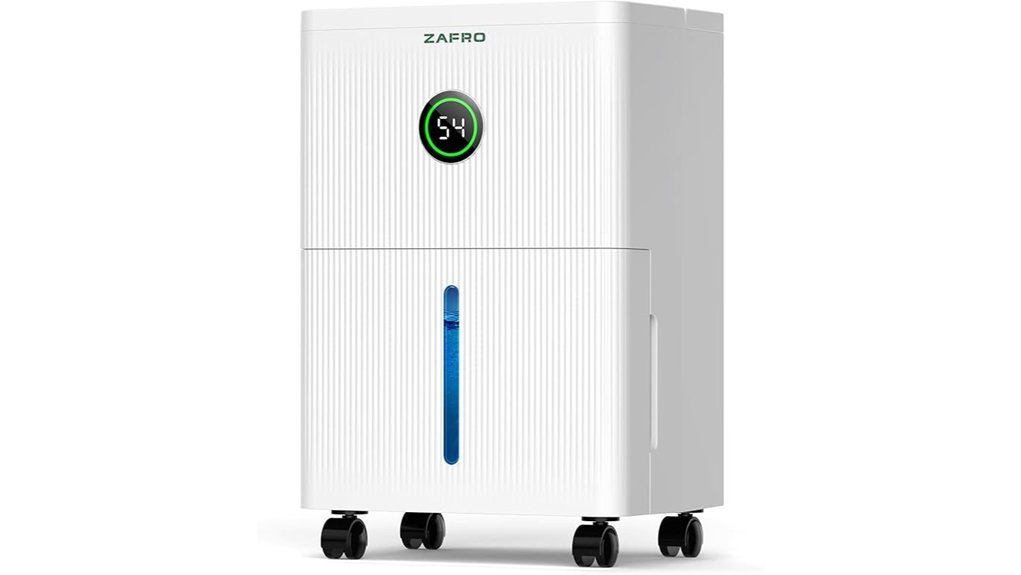
Best compact pick for medium rooms: The ZAFRO is the most compact of the three retained compressor models. Its current listing advertises maximum moisture removal of 21 pints per day, coverage up to 1,600 square feet, adjustable humidity control, a digital display, automatic defrost, sleep mode, a washable filter, and an included drain hose. Treat the capacity and coverage figures as seller claims because a standardized ENERGY STAR capacity for this exact ASIN could not be independently confirmed.
Why you may like it: The digital controls make it easier to select and monitor a target than with basic mini dehumidifiers. A tri-colour indicator offers an at-a-glance humidity status, while wheels, tank-full shut-off, and continuous drainage make everyday operation easier.
Problem it solves: It gives a user with a measured humidity problem more control than a small thermoelectric unit without taking up as much floor space as the AEOCKY.
Who should buy this: Someone managing excess humidity in a bedroom, bathroom area, laundry space, or medium-size room who wants an adjustable humidistat and both tank and hose drainage.
Who should avoid this: Anyone trying to treat eczema directly, anyone whose room is already dry, or anyone dealing with water intrusion, standing water, or a consistently wet basement that needs more extraction capacity and source repair.
Pros:
- Adjustable humidity control and digital display support more deliberate operation.
- The listing describes 41 dB low-noise operation and a sleep mode for quieter spaces.
- Offers both a removable tank and continuous gravity drainage.
- Automatic defrost, child lock, and tank-full shut-off improve everyday usability.
Cons:
- The small tank may need frequent emptying in damp conditions.
- The advertised 21-pint capacity was not found in an independent standardized product listing.
- Advertised square-foot coverage should not replace sizing based on room temperature, starting humidity, and moisture load.
AEOCKY 4500 Sq.Ft Smart Dehumidifier
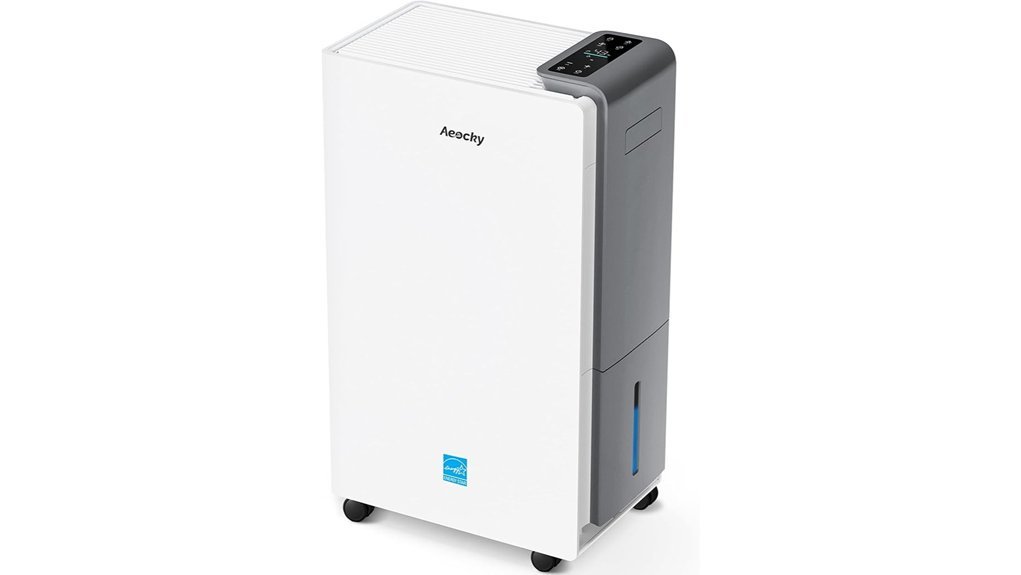
Best for larger or persistently damp areas: The AEOCKY RHEA-001 is a higher-capacity compressor model with an intelligent humidistat, adjustable humidity control, a drain hose, timer, fan controls, automatic defrost, and child lock. The manufacturer advertises up to 80 pints per day at 95°F and 95% RH. Its current ENERGY STAR listing identifies the RHEA-001 family at a standardized 24.5 pints per day and confirms ENERGY STAR Most Efficient status.
Why you may like it: This model offers the highest independently listed standardized capacity of the three picks, making it the strongest match for larger spaces or a moisture load that smaller units cannot control. Continuous drainage can reduce tank-emptying work, and the humidistat allows the compressor to cycle around a selected target instead of running without a stopping point.
Problem it solves: It is designed for users who need faster removal and longer runtime in a large basement, open-plan zone, or persistently damp area.
Who should buy this: Someone with measured high humidity in a larger space where a lower-capacity dehumidifier runs continuously or fails to reach the target.
Who should avoid this: People with a small bedroom, mild seasonal humidity, limited floor space, or no confirmed dampness. It is more capacity and machine size than many modest rooms require.
Pros:
- ENERGY STAR standardized capacity of 24.5 pints per day for the RHEA-001 product family.
- ENERGY STAR Most Efficient certification is independently listed for the current model family.
- Intelligent humidistat and continuous drainage support extended, controlled operation.
- The manufacturer lists low-speed operation at 44 dB.
Cons:
- Its larger footprint and roughly 31-pound listed weight make it less convenient for frequent room-to-room movement.
- The 80-pint headline figure is a maximum measured under unusually hot and humid conditions, not the standardized capacity.
- The 4,500-square-foot claim is a broad marketing estimate and does not account for water intrusion, airflow, temperature, or room separation.
Waykar 34 Pints Energy Star Dehumidifier
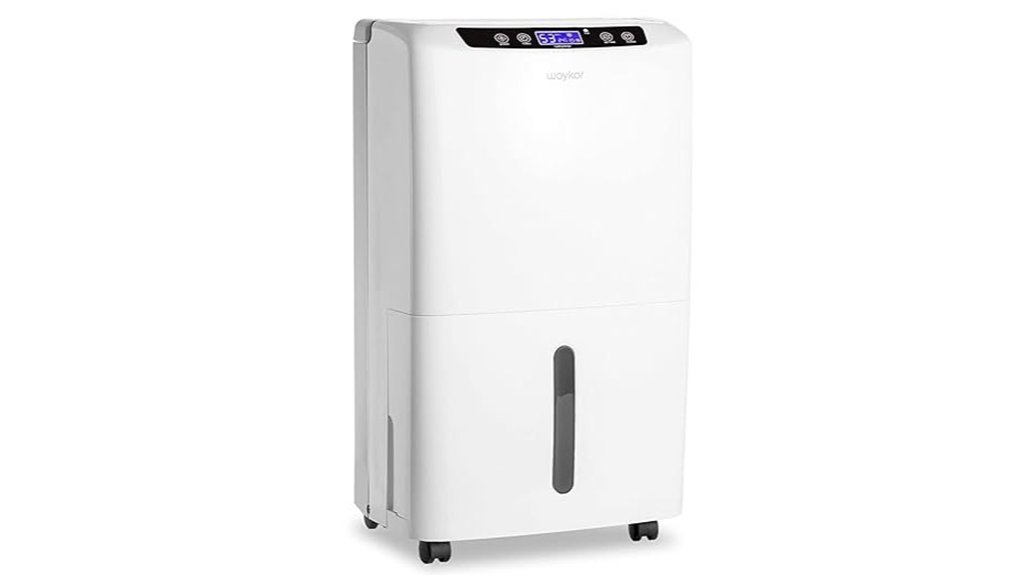
Best overall for controlled home use: The Waykar PD160B combines a broad 30%–80% target-humidity range with two fan speeds, automatic defrost, a 24-hour timer, a removable tank of about 0.6 gallon, and an included hose for continuous drainage. It is marketed as a 34-pint model at 95°F and 90% RH, while its current ENERGY STAR listing reports a standardized capacity of 9.81 pints per day. For an eczema-prone home, the lowest humidity settings should not be used as a routine comfort target.
Why you may like it: Its humidistat, timer, tank-full shut-off, automatic restart, and drainage options make it easier to maintain a moderate target rather than running continuously. It offers a practical middle ground between the smaller ZAFRO and the larger AEOCKY.
Problem it solves: It gives a typical household a flexible, general-purpose way to control measured dampness without jumping immediately to a larger high-capacity model.
Who should buy this: Someone who wants a general-purpose compressor dehumidifier for a damp bedroom, laundry area, living space, or moderate basement and plans to monitor the room with a separate hygrometer.
Who should avoid this: Anyone whose skin symptoms worsen in dry air, anyone without a confirmed humidity problem, or anyone outside the product’s supported voltage and warranty region.
Pros:
- Adjustable 30%–80% humidity control.
- ENERGY STAR certification is independently listed for model PD160B.
- Automatic or continuous gravity-drainage options.
- Automatic defrost, timer, restart, washable filter, and two fan speeds.
Cons:
- The 34-pint headline figure uses 95°F and 90% RH conditions; the ENERGY STAR standardized capacity is 9.81 pints per day.
- The lowest humidity settings are inappropriate for routine eczema-sensitive comfort.
- The linked listing specifies 120-volt operation, so regional electrical compatibility must be checked.
Factors to Consider When Choosing a Dehumidifier for an Eczema-Prone Home
The goal is not to make the room as dry as possible. It is to correct measured excess humidity while avoiding conditions that may dry or irritate sensitive skin. The following factors matter more than decorative lighting or oversized coverage claims.
Measure Humidity Before Buying
Use a separate digital hygrometer for several days in the room where the problem occurs. A dehumidifier may make sense when relative humidity remains high, condensation appears, or the space feels persistently damp. If the air is already normal or dry, a dehumidifier may make skin discomfort worse.
Choose an Adjustable Humidistat
A humidistat lets you select a target relative humidity and allows the compressor to cycle on and off around that level. For an eczema-prone household, a moderate setting is safer than continuous maximum drying. A practical starting point for a genuinely damp room is often around 45%–50%, followed by small adjustments based on the independent hygrometer, condensation control, skin comfort, and professional medical advice.
Compare Capacity on the Same Basis
Do not assume two pint-per-day figures are directly comparable. Check the stated temperature and relative-humidity test conditions. When available, use the current ENERGY STAR standardized capacity to compare products more fairly, then consider the room’s actual dampness and temperature.
Size for Dampness, Not Marketing Alone
Square-foot coverage is only a rough guide. Room temperature, starting humidity, water intrusion, laundry drying, airflow, ceiling height, and door position all affect performance. A damp bedroom may need less capacity than a wet basement of the same size. Moisture-removal capacity is generally more useful than tank size when comparing models.
Consider Noise and Bedroom Use
For bedrooms, compare the listed decibel level, low-fan mode, display-light controls, and compressor cycling noise. Manufacturer noise claims may use different test methods, so treat small differences cautiously. Place the unit on a level surface with the clearances required by the manual, and do not aim warm exhaust air directly at the bed or skin.
Drainage and Tank Size
A small tank can be manageable for occasional use, but continuous drainage is more convenient in persistently damp areas. Gravity drainage requires a secure hose connection and a continuously downward route to a suitable drain. Automatic shut-off should stop the unit when the tank is full.
Low-Temperature Operation
Compressor dehumidifiers can collect frost in cooler rooms. Automatic defrost helps, but extraction performance still falls as temperature drops. Check the manufacturer’s operating-temperature range before using a unit in an unheated basement, garage, or utility area.
Energy Efficiency
Look for current, independently listed ENERGY STAR certification where applicable, but do not assume a larger unit is automatically cheaper to run. Correct sizing, target-humidity control, clean filters, closed windows, ventilation at moisture sources, and repairing leaks can reduce unnecessary runtime.
Maintenance and Cleaning
Empty and rinse the tank regularly, clean the filter on the schedule in the manual, keep the air intake and outlet clear, and inspect the drain hose for blockage or leaks. A poorly maintained dehumidifier can lose performance and develop odours.
Avoid Added Fragrance and Irritants
For sensitive skin, a plain humidity-control appliance is generally a better fit than a combined aromatherapy or fragrance device. Added scents do not improve moisture-removal performance and may irritate some people.
Check Voltage and Regional Compatibility
Confirm the voltage, frequency, plug type, electrical certification, warranty region, and seller location before buying. Do not connect a 120-volt appliance directly to a 230-volt supply, and do not assume a travel plug adapter makes an appliance electrically compatible.
Before You Buy: Quick Checklist
- Measure relative humidity in the problem room for several days.
- Confirm that excess moisture, not dry air, is the actual problem.
- Compare capacity figures using the same test standard where possible.
- Choose an adjustable humidistat and avoid continuous maximum drying.
- Check tank size, hose length, drain route, noise controls, and operating temperature.
- Verify the exact ASIN, model number, voltage, plug, seller, warranty, and return terms.
- Plan to repair leaks, improve ventilation, and remove mould sources instead of relying on the appliance alone.
How to Use a Dehumidifier Safely Around Eczema
- Measure the room with a separate hygrometer before switching the unit on.
- Use a moderate target rather than continuous maximum drying.
- Recheck both humidity and skin comfort after several hours and over the next few days.
- Stop lowering humidity if the room feels dry or eczema symptoms worsen.
- Continue prescribed skin care and medical treatment; do not replace them with appliance use.
- Fix leaks, condensation, or mould sources instead of relying on the dehumidifier alone.
- Follow the product manual for clearance, drainage, cleaning, electrical safety, and child access.
Frequently Asked Questions
Can a Dehumidifier Help Eczema?
It may help indirectly when a home is excessively humid or damp and humidity is one of the person’s triggers. It does not treat eczema itself. Because dry air can also aggravate eczema, use a hygrometer and avoid unnecessary drying.
What Humidity Level Should I Use?
There is no single perfect setting for every person or home. The EPA’s general indoor-air guidance is 30%–50% relative humidity, but an eczema-prone household should avoid chasing the lowest number. In a genuinely damp room, starting around 45%–50% and adjusting gradually is more sensible than setting the unit to 30% or running it continuously.
What Size Dehumidifier Do I Need?
Choose capacity according to room size, temperature, and how damp the space is. Slightly damp rooms need less extraction than spaces with wet walls, seepage, or frequent laundry drying. Compare standardized capacity where available, and treat manufacturer square-foot claims as estimates rather than guarantees.
Why Do Pint Ratings Look Inconsistent?
Brands may report maximum moisture removal under hotter and more humid conditions than the standardized ENERGY STAR test. That can produce a much larger headline number. Always check the test conditions before comparing one model’s pint rating with another.
Can I Run a Dehumidifier in a Bedroom?
Yes, provided the model is suitable for the room and used according to its manual. Use a moderate humidistat setting, keep the required airflow clearance, control display lights if needed, and avoid directing exhaust air toward the bed.
How Often Should I Empty the Tank?
Empty it whenever the full-tank indicator appears. In high humidity this may be daily or more often. Continuous drainage can reduce this task when a secure gravity-drain route is available.
Does a Dehumidifier Clean the Air?
Its main job is moisture removal. Lowering excess humidity can make conditions less favourable for mould and dust mites, but a standard dehumidifier is not a substitute for ventilation, source control, cleaning, mould remediation, or a dedicated air purifier.
Should I Use an Aromatherapy Dehumidifier?
It is safer to choose straightforward humidity control if fragrance or essential oils irritate your skin or breathing. Aromatherapy does not improve moisture-removal performance.
Conclusion
The best dehumidifier for an eczema-prone home is not the unit that makes the air driest. It is the model that lets you measure, set, and maintain a moderate humidity level when excess moisture is present. The Waykar PD160B offers the strongest all-around control for typical home use, the ZAFRO is the more compact option, and the AEOCKY RHEA-001 provides the highest verified standardized capacity for larger damp spaces.