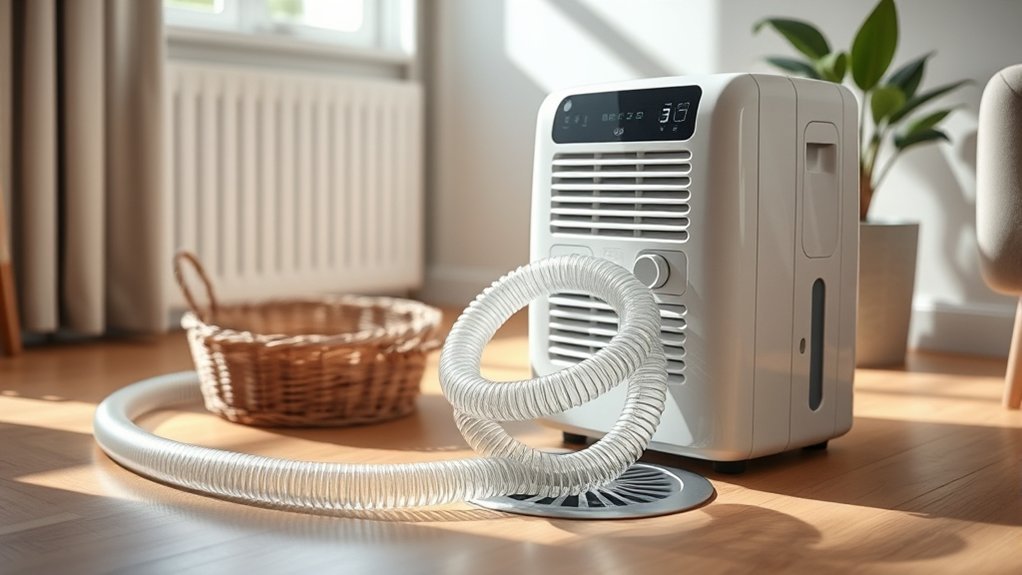
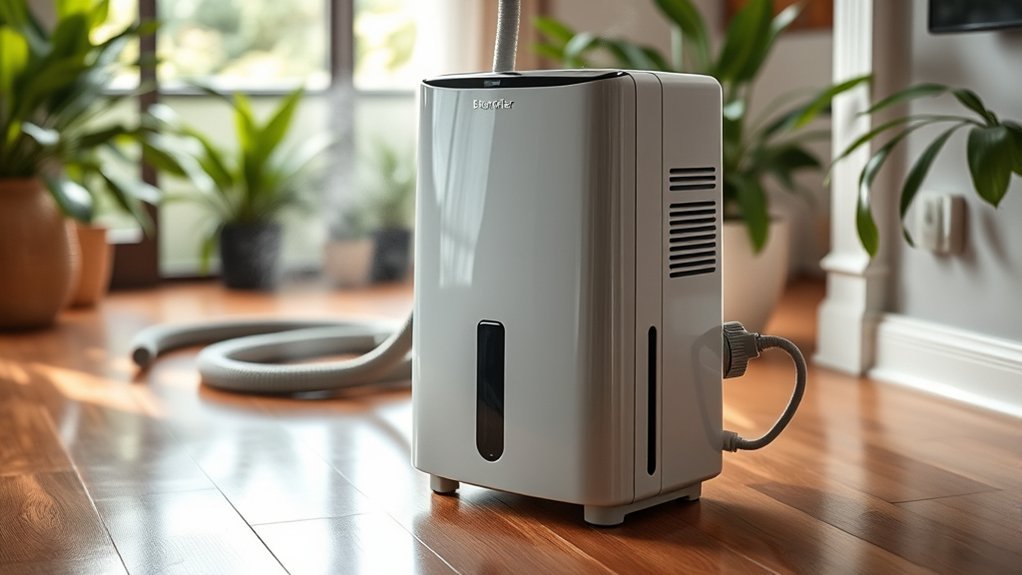
Most dehumidifiers should be plugged directly into a properly grounded wall outlet, and many manufacturers specifically prohibit extension cords, surge protectors, and multi-outlet adapters. Before buying any cord, read the electrical-safety section of your dehumidifier manual. If the manufacturer expressly allows a temporary extension cord, use the shortest grounded appliance cord that meets or exceeds the unit’s voltage, amperage, and wattage requirements.
Affiliate disclosure: This article contains Amazon affiliate links. We may earn a commission from qualifying purchases at no extra cost to you.
Updated: August 2026. Product specifications and availability can change, so confirm the current listing and the markings printed on the cord before ordering.
Important safety warning: A direct wall connection is the preferred setup. GE Appliances states that dehumidifiers should be connected directly to a grounded three-prong outlet and not used with an extension cord, surge protector, or multi-outlet adapter. Other brands publish similar warnings, so your own appliance manual takes priority over any general buying guide.
See the GE Appliances extension-cord guidance and the Electrical Safety Foundation International cord-safety tips.
Quick Verdict
Best overall: The Go Green Power 6ft Appliance Cord combines a short 6-foot run, 14/3 construction, a right-angle grounded plug, a single outlet, and cETL listing.
Best flat-plug option: The FIRMERST 6ft 15A cord is a UL-listed, 14 AWG indoor cord with a low-profile plug for tight wall clearances.
Best simple gray appliance cord: The POWTECH 6ft cord provides 14-gauge, 15-amp, 1,875-watt construction with a grounded angled plug and UL listing.
Quick Comparison
| Product | Best For | Length / Gauge | Published Rating | Listing | Amazon |
|---|---|---|---|---|---|
| Go Green Power Appliance Cord | Best overall short appliance cord | 6 ft / 14/3 | 15A, 125V, 1,875W | cETL listed | Check on Amazon |
| FIRMERST Flat Plug Cord | Tight spaces behind furniture | 6 ft / 14 AWG | 15A, 125V, 1,875W | UL listed | Check on Amazon |
| POWTECH Appliance Cord | A straightforward heavy-duty indoor cord | 6 ft / 14 gauge | 15A, 125V, 1,875W | UL listed | Check on Amazon |
How these options were selected: The retained cords are short, grounded, single-outlet appliance cords with 14-gauge conductors, a published 15-amp/1,875-watt rating, and a stated UL or ETL safety listing. Those attributes make them more appropriate than the removed 16-gauge, 13-amp, long-run, or multi-outlet options.
They are not universal approvals: A cord’s rating does not override a dehumidifier manual that says “do not use an extension cord.”
Go Green Power 6ft Heavy Duty Appliance Cord — Best Overall
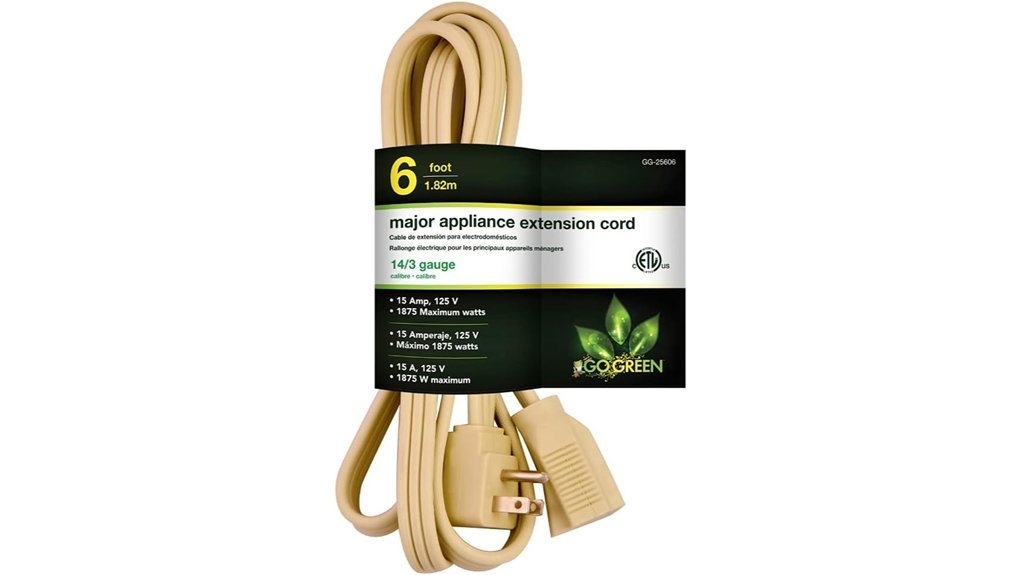
The Go Green Power 6-foot appliance cord is the strongest all-around choice in this shortened list because it combines the main features buyers should prioritize: a short 6-foot run, 14/3 construction, a grounded three-prong connection, a single outlet, and a right-angle plug. Its published electrical limit is 15 amps, 125 volts, and 1,875 watts, and the manufacturer identifies the appliance cord as cETL approved.
The right-angle plug is useful when the wall outlet sits behind a dehumidifier or nearby furniture. The flexible vinyl jacket is designed for indoor appliance use and helps protect the conductors from everyday abrasion. Even so, the cord should stay dry, visible, fully extended, and free from rugs, doorways, or pinch points.
Who should buy this: Someone whose dehumidifier manual permits an extension cord and who needs only a short, grounded indoor connection.
Who should avoid this: Anyone whose manual requires direct wall connection, or anyone who needs a permanent wiring solution, outdoor use, or a cord routed through a doorway.
Pros:
- 14/3 appliance-cord construction with a published 15A, 125V, 1,875W limit.
- Grounded right-angle plug helps reduce wall-clearance problems.
- Single-outlet design discourages sharing the cord with another appliance.
- cETL listing is stated by the manufacturer.
Cons:
- Indoor use only.
- Six feet may still be longer than necessary for some rooms.
- Should not be used when the dehumidifier manufacturer prohibits extension cords.
FIRMERST Flat Plug Extension Cord 6ft 15A — Best Flat Plug
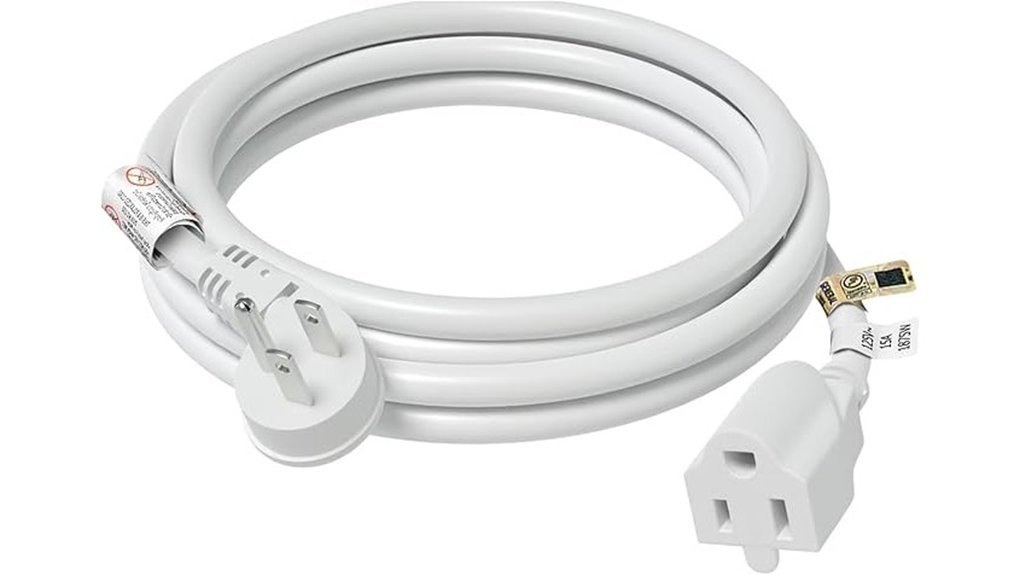
The FIRMERST 6-foot cord is a practical option when wall clearance is the main problem. Its low-profile NEMA 5-15 plug lets the cord exit close to the wall, which can help when an outlet sits behind furniture or beside the dehumidifier. The current product details identify 14 AWG, three-conductor wiring, a 15-amp, 125-volt, 1,875-watt rating, one outlet, indoor use, and UL listing.
This is not a water-resistant cord, so it should not be treated as suitable for a wet floor, standing water, an outdoor area, or a location where condensation can reach the plug connection. Place the dehumidifier on a stable surface, keep both plug ends dry, and inspect the cord before every use.
Who should buy this: A buyer who has manufacturer permission to use a cord and needs a UL-listed flat plug for a tight indoor space.
Who should avoid this: Anyone needing outdoor or wet-location use, or anyone whose appliance plug can already reach a grounded wall outlet.
Pros:
- 14 AWG wiring supports a higher published load than the removed 16 AWG options.
- Low-profile plug works well where a standard straight plug protrudes too far.
- UL listed, grounded, and limited to one outlet.
- Six-foot length is easier to manage than a 15- or 25-foot run.
Cons:
- Not water resistant and intended for indoor use.
- White cord may show dirt in a basement, utility room, or garage.
- A flat plug does not make extension-cord use acceptable when the dehumidifier manual forbids it.
Heavy Duty 6 Ft Appliance Extension Cord — Best Simple Appliance Cord
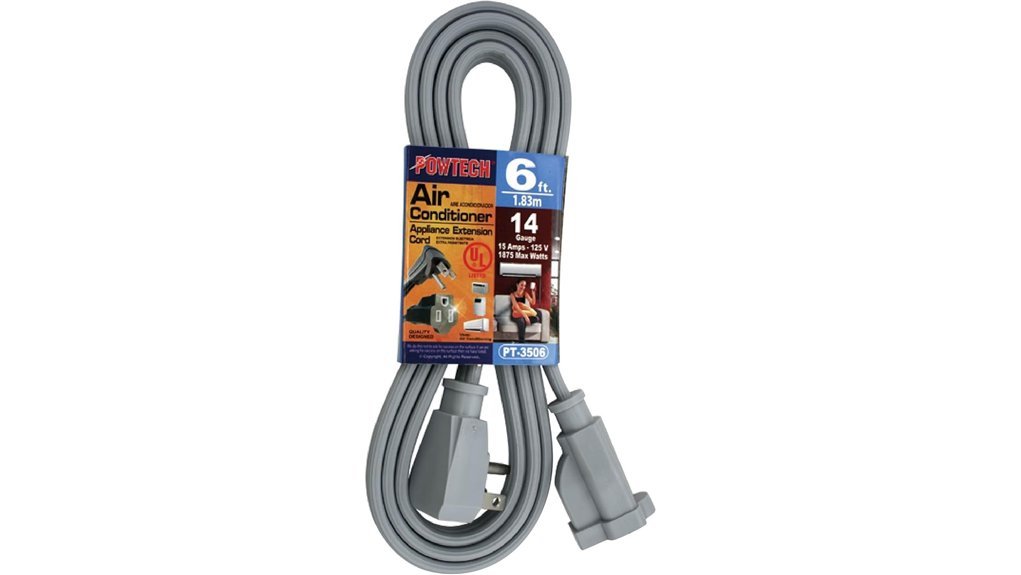
The POWTECH PT-3506 is another short appliance-style cord for buyers who prefer a gray cable and angled plug. Current product information lists a 14-gauge, three-conductor design, one grounded outlet, 125 volts, 15 amps, up to 1,875 watts, and UL listing. The source article incorrectly described this model as having three additional outlets; the current product data identifies a single outlet.
The single-outlet layout is the right format for this use because a dehumidifier should not share an extension cord with lights, tools, fans, or another appliance. Its six-foot length also keeps the run more manageable than the longer options removed from the article.
Who should buy this: Someone looking for a basic, UL-listed, 14-gauge appliance cord after confirming that the dehumidifier manufacturer allows one.
Who should avoid this: Anyone planning to connect multiple devices, use the cord as permanent wiring, or place the connection where it could become wet.
Pros:
- 14-gauge, 15A, 125V, 1,875W published electrical rating.
- Grounded three-prong design with one outlet.
- Angled plug helps in tight wall locations.
- UL listed for added product-identification confidence.
Cons:
- Indoor appliance cord, not a solution for wet or outdoor placement.
- Should remain fully visible and cannot be run under rugs or through walls.
- Not appropriate when the appliance manual requires a direct outlet.
Factors to Consider When Choosing an Extension Cord for Dehumidifier
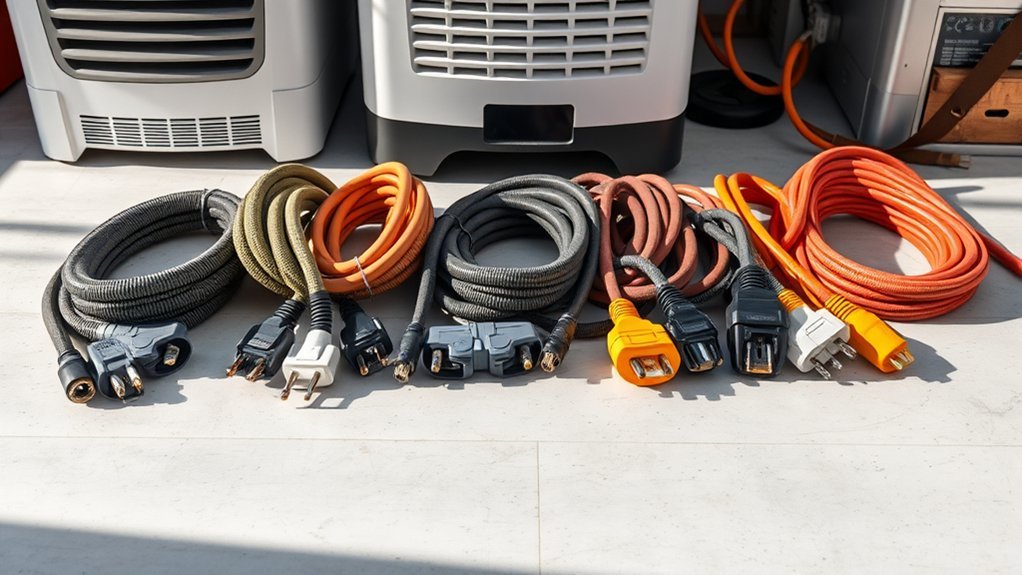
The first decision is not which cord to buy. It is whether your dehumidifier may be used with a cord at all. Check the owner’s manual, rating label, and warranty terms. When the manual prohibits extension cords, move the appliance closer to a suitable outlet or ask a qualified electrician to install a properly grounded receptacle in the needed location.
Follow the Dehumidifier Manual First
Many compressor dehumidifiers are designed to plug directly into an individual grounded wall outlet. A generic statement on an extension-cord product page does not override the appliance manufacturer’s instructions. If the manual says not to use an extension cord, surge protector, adapter, or multi-outlet device, follow that warning.
Match Volts, Amps, and Watts
If the manual permits a cord, read the dehumidifier’s rating label and choose a cord whose marked electrical capacity equals or exceeds the appliance’s requirements. Do not rely on a general estimate of how many watts “most” dehumidifiers use. Models vary, and compressor startup can create a higher momentary demand than steady operation.
Choose 14 AWG or Heavier
For the products reviewed here, 14 AWG is the minimum retained wire size. A lower AWG number means a thicker conductor. The removed 16 AWG, 13-amp cords offered less capacity and did not match the article’s safer appliance-cord standard. Never assume that a thick-looking jacket means the internal conductors are heavy enough; read the printed gauge and rating.
Use the Shortest Practical Length
Longer cords add resistance and make routing, tripping, pinching, and heat-management problems more likely. The three retained options are six feet long. Do not buy a 15- or 25-foot cord when a properly placed outlet or a much shorter connection would solve the problem. Never connect two extension cords together.
Use One Grounded Outlet
Choose a three-conductor cord with a grounded three-prong plug and one receptacle. Do not remove the ground pin, use a two-prong adapter, or connect the dehumidifier through a power strip. A multi-outlet cord encourages additional loads and increases the risk of exceeding the cord or branch-circuit capacity.
Confirm a Recognized Safety Listing
Look for a UL, ETL, or CSA mark on the actual cord and packaging, not only in seller copy. The mark should be clear and consistent with the product model. Avoid a safety-critical cord when the listing cannot be confirmed.
Keep the Connection Dry
A dehumidifier may operate in a humid room, but that does not mean the plug connection can sit on a wet floor or near active leaks. Keep the wall outlet, cord connection, and appliance plug dry and elevated away from standing water. Stop using the setup if the cord, plug, or outlet becomes warm, discolored, loose, cracked, or damaged.
Treat It as Temporary Power
Extension cords are not a substitute for permanent wiring. Keep the cord fully extended and visible. Do not place it under rugs, mats, furniture legs, doors, windows, or wall coverings. If the dehumidifier needs to run regularly in the same location, a qualified electrician can evaluate the circuit and install an outlet where it is actually needed.
Before You Buy Checklist
- The dehumidifier manual expressly permits an extension cord.
- The cord’s voltage, amperage, and wattage equal or exceed the appliance rating.
- The cord is 14 AWG or heavier, grounded, and has one outlet.
- A recognized UL, ETL, or CSA mark is visible on the actual product.
- The cord is only as long as needed and will remain fully extended.
- The entire connection can stay dry, uncovered, undamaged, and out of walkways.
Frequently Asked Questions
Can I Use an Extension Cord With a Dehumidifier?
Only when the dehumidifier manufacturer allows it. Many manuals explicitly require a direct connection to a grounded wall outlet and prohibit extension cords. The appliance manual is the controlling instruction.
Can I Use a Power Strip Instead of an Extension Cord for a Dehumidifier?
No. Do not connect a dehumidifier to a power strip, surge protector, multi-outlet adapter, or daisy-chained cord. Use the grounded wall outlet specified by the manufacturer.
What Gauge Extension Cord Is Best for a Dehumidifier?
When the manual permits a cord, use the wire size and electrical rating required by the appliance manufacturer. The options retained in this guide use 14 AWG conductors and are rated for 15 amps, 125 volts, and 1,875 watts. A heavier 12 AWG cord may be appropriate for some loads, but the appliance manual and rating label still control.
Is a 16-Gauge Cord Safe for a Dehumidifier?
This article does not recommend the removed 16 AWG, 13-amp cords for a compressor dehumidifier. They offer less current capacity than the retained 14-gauge appliance cords. Never use any cord whose marked rating is below the dehumidifier’s requirements.
How Long Can the Cord Be?
Use the shortest length that reaches without tension. A six-foot cord is preferable to a 15- or 25-foot run when all other ratings are equal. If the unit cannot reach safely, installing a nearby outlet is a better long-term solution.
Should the Extension Cord Feel Warm?
No. Stop using the dehumidifier and unplug the setup if the cord, plug, receptacle, or wall outlet becomes warm, smells hot, buzzes, sparks, loosens, or shows discoloration. Have the appliance and electrical connection checked before using them again.
Can I Run the Cord Under a Rug or Through a Doorway?
No. Covering or pinching a cord can damage the insulation and trap heat. Keep the full cord visible, uncovered, and away from doors, windows, walkways, furniture legs, and standing water.
Conclusion
Final recommendation: Plug the dehumidifier directly into a properly grounded wall outlet whenever the manual requires or recommends it. If the manufacturer expressly permits a temporary extension cord, choose a short, grounded, single-outlet appliance cord that meets or exceeds the unit’s electrical rating.
Among the remaining products, the Go Green Power 6ft Appliance Cord is the best overall balance of short length, 14/3 construction, right-angle plug, single outlet, and cETL listing. The FIRMERST and POWTECH cords are credible 14-gauge, UL-listed alternatives. None should be used as permanent wiring or as a way to bypass the dehumidifier manufacturer’s safety instructions.