This article contains Amazon affiliate links. As an Amazon Associate, we may earn from qualifying purchases at no extra cost to you.
Looking for a reliable extension cord for 2026? Our top outdoor picks are the Southwire Polar/Solar Extension Cord, built for extreme weather, and the IRON FORGE CABLE Lighted Outdoor Extension Cord, prized for its lighted, job-site-ready design. We’ve also included the UltraPro 50 Ft Indoor Extension Cord as a top pick for anyone who mainly needs indoor power — it’s not built for outdoor exposure, so we’ve labeled it clearly below. When choosing any extension cord, length, gauge, and (for outdoor use) weather resistance are the factors that matter most.
Quick Comparison
| Product | Best For | Length | Gauge | Indoor/Outdoor |
|---|---|---|---|---|
| Southwire Polar/Solar | Best for Extreme Weather | 50 ft | 12 AWG | Indoor & Outdoor |
| IRON FORGE CABLE Lighted | Best for Job-Site Visibility | 25 ft | 12/3 SJTW | Outdoor |
| UltraPro 50 Ft | Best Indoor Pick | 50 ft | 16 AWG | Indoor Only |
Southwire Polar/Solar Extension Cord, 50 Feet — Best for Extreme Weather
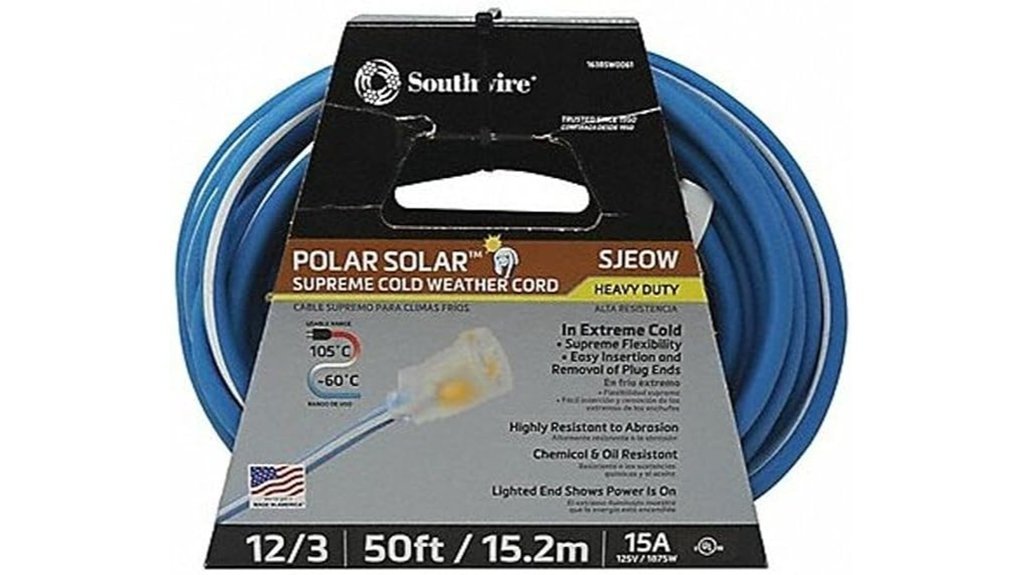
Built for extreme weather conditions, the Southwire Polar/Solar Extension Cord is designed to stay flexible in sub-zero temperatures rather than stiffening or cracking. With a 12-gauge construction, it’s rated for both indoor and outdoor applications, making it a versatile choice whether you’re running a job site in winter or setting up holiday lighting. As with any extension cord, confirm the exact amperage rating and included features on the current Amazon listing before purchase, since manufacturer specs can be updated.
Best For: Anyone who needs a flexible, reliable cord in cold-weather conditions, indoors or out.
Who should buy this: Homeowners, contractors, or anyone in a cold climate who needs a cord that won’t go stiff or brittle in winter.
Who should skip this: Buyers on a tight budget who only need a cord for mild, indoor-only conditions — a lighter cord may suffice.
Pros:
- Designed to stay flexible in sub-zero temperatures, reducing winter cracking risk.
- Heavy-duty 12-gauge construction suited to both indoor and outdoor use.
- Versatile enough for job sites, holiday lighting, and general home use.
Cons:
- 50 ft may still be short for larger job sites or wide outdoor layouts.
- Typically priced higher than standard, non-cold-rated cords.
- Extra flexibility engineering can add bulk versus a basic indoor cord.
IRON FORGE CABLE 25 ft Lighted Outdoor Extension Cord — Best for Job-Site Visibility
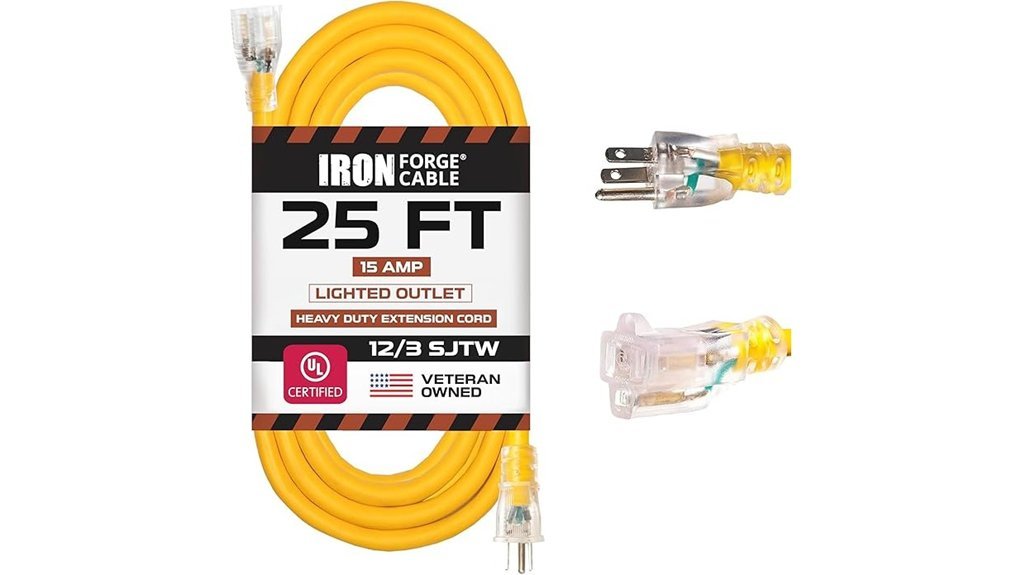
The IRON FORGE CABLE 25 ft Lighted Outdoor Extension Cord uses a 12/3 SJTW construction rated for outdoor use, with a lighted plug end that makes it easy to confirm power is flowing — useful on dim job sites or in the evening. It’s built to stay flexible across a wide temperature range without cracking, and reinforced blades are meant to reduce prong damage over time. Iron Forge Cable is a veteran-owned business. As always, confirm exact amperage and temperature-rating specifics on the current listing.
Best For: Landscaping, power tools, and job sites where visibility and outdoor durability matter.
Who should buy this: Contractors and DIYers who want a rugged, easy-to-see-if-it’s-on outdoor cord.
Who should skip this: Anyone needing more than 25 ft of reach without daisy-chaining cords.
Pros:
- Lighted end makes it easy to see when power is active.
- Outdoor-rated construction designed for a wide temperature range.
- Reinforced blades aimed at reducing prong wear over time.
Cons:
- 25 ft length may not reach larger outdoor areas without an extra cord.
- Heavier-duty build adds some bulk versus lighter cords.
- Typically costs more than a basic non-outdoor-rated cord.
UltraPro 50 Ft Indoor Extension Cord with 3 Outlets — Best Indoor Pick
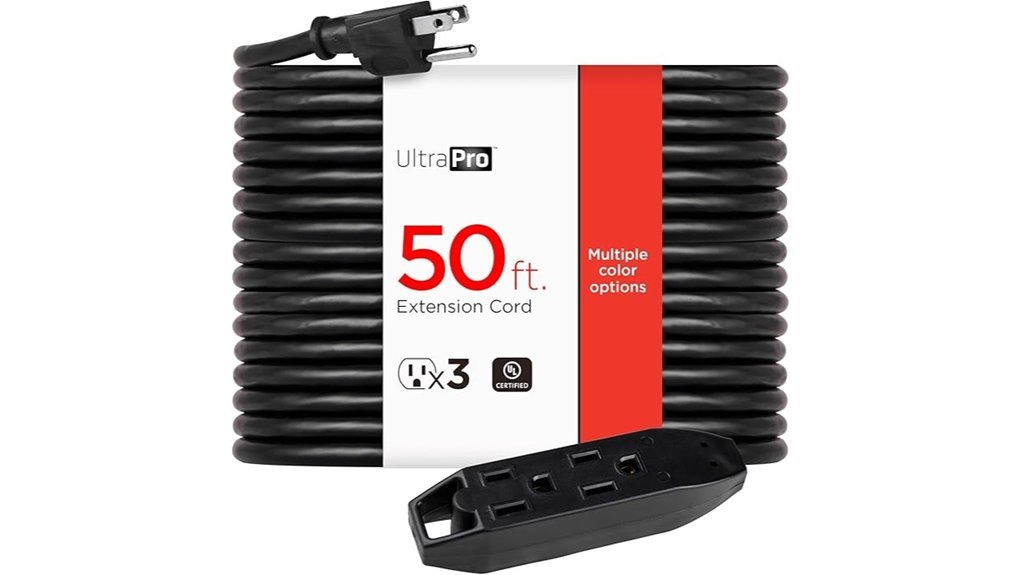
Note: this cord is rated for indoor use only — do not use it outdoors or in damp conditions. For homeowners who mainly need to power devices inside, the UltraPro 50 Ft cord converts a single grounded outlet into three, which is handy for workstations, seasonal indoor decorations, or small appliances. It uses a 16 AWG gauge construction with a molded plug and double-insulated jacket. As with the other picks, confirm current wattage/amperage specs on the listing before buying if you’re powering higher-draw devices.
Best For: Homeowners and DIY enthusiasts who need convenient indoor access to multiple outlets.
Who should buy this: Anyone needing to split one indoor outlet into three for light-to-moderate loads.
Who should skip this: Anyone needing an outdoor-rated or heavy-load (power tool) cord — see the two outdoor picks above instead.
Pros:
- Splits one outlet into three for added indoor flexibility.
- Double-insulated design with a molded plug for added protection.
- ETL-listed, with a limited-lifetime replacement pledge per the manufacturer.
Cons:
- Indoor use only — not suitable for outdoor or wet conditions.
- 50 ft may be excessive for smaller rooms, increasing tangling risk.
- Three-outlet spacing may not fit larger plugs or bulky adapters well.
Before You Buy: Quick Checklist
- Indoor or outdoor use? Only use outdoor-rated cords outside, even briefly.
- What’s the total wattage of the devices you’ll plug in? Match that to the cord’s amp/gauge rating.
- How far is the outlet from where you need power? Longer runs need a thicker (lower AWG number) gauge to avoid voltage drop.
- Will it be exposed to moisture, snow, or extreme cold? Look for cords rated for that temperature range.
- Do you need multiple outlets at the end, or just one heavy-duty connection?
Factors to Consider When Choosing an Extension Cord
When selecting an extension cord — especially for outdoor use — several key factors come into play. Considerations such as cord length, gauge and amperage ratings, and weather resistance features are essential for safety and functionality. Additionally, flexibility in usage and adherence to safety certifications contribute to an informed purchasing decision.
Cord Length Considerations
Selecting the right length for an extension cord is essential for ensuring efficient power delivery and safety. Common options range from 25 to 50 feet, catering to various needs. A 50-foot cord is suitable for powering tools or appliances located farther from outlets; however, it may lead to voltage drop if the gauge is inadequate for the load. Choosing the appropriate length prevents overheating and potential damage to connected devices. Additionally, length affects flexibility and maneuverability, especially in areas with obstacles. Opting for a cord length that minimizes the need for additional extensions reduces tripping hazards and the risk of electrical overload, making it a vital consideration.
Gauge and Amperage Rating
Gauge and amperage rating play an essential role in choosing the right extension cord. The gauge indicates the cord’s thickness, with lower numbers, such as 12 AWG, allowing for higher amperage and longer distances without experiencing voltage drop. Amperage ratings, like 15A or 13A, signify the maximum current the cord can safely carry, affecting its suitability for various devices. For heavy-duty applications, a 12-gauge cord is often recommended, as it can typically handle higher amperage, making it ideal for power tools and outdoor equipment. In contrast, a 16-gauge cord, typically rated for around 13 amps, suffices for lighter indoor use with small appliances. It is vital to match the cord’s gauge and amperage to the needs of the devices for safety and performance.
Weather Resistance Features
Weather resistance is a critical factor in choosing outdoor extension cords, as these cords must endure various environmental challenges. Cords with flexibility in extreme temperatures prevent stiffness or cracking in cold conditions, ensuring reliability across climates. Heavy-duty construction and materials designed to withstand moisture, dirt, and UV exposure enhance durability and longevity. Additionally, cords featuring a lighted end indicator improve safety by visually confirming that power is flowing, especially in dimly lit areas. It’s essential to select cords rated for the amperage and voltage you actually need, and a tangle-free design further enhances usability, keeping the cord manageable even in adverse weather like snow or rain.
Safety Certifications and Safe Use
Safety certifications play an essential role in confirming that extension cords meet baseline performance and safety standards. When selecting a cord, look for certifications such as UL (Underwriters Laboratories) or ETL (Intertek), which indicate compliance with recognized testing standards. It’s critical to verify a cord is rated for outdoor use before using it outside — an indoor-only cord should never be run outdoors or in wet conditions. As a general safety practice, plug outdoor cords into a GFCI-protected outlet, avoid exceeding the cord’s rated amperage, and inspect for cracks or fraying before each use.
Flexibility in Usage
Selecting the right extension cord involves more than safety certifications alone. Flexibility in usage is essential, beginning with the cord’s gauge; lower gauge numbers, such as 12 AWG, signify thicker wires capable of handling higher currents, ideal for power tools. Cords designed to maintain flexibility in extreme weather conditions prevent stiffness or cracking during sub-zero temperatures. Lighted ends enhance visibility, indicating when power is on, which is especially useful in low-light scenarios. Weatherproof and tangle-free designs further enhance usability in snowy or wet environments. Finally, opting for longer cords, around 50 feet, increases versatility for reaching distant power sources.
Number of Outlets
The number of outlets available can greatly enhance functionality for various tasks. Cords with multiple outlets allow users to power several devices simultaneously from a single source. By converting one grounded AC outlet into several, these cords increase usability, especially during projects requiring multiple tools. It’s essential to ensure the outlets are adequately spaced to accommodate larger plugs, particularly for heavy-duty equipment. Safety features, such as molded plugs and weather-resistant outlets on cords designed for it, further support reliable performance.
Durability and Construction
Durability and construction are vital factors in the effectiveness of any extension cord. When selecting one, it’s worth choosing models made from heavy-duty materials like double-insulated vinyl jackets, which resist wear and tear. Cords rated for at least 15 amps are advisable for demanding uses, as they can manage power needs without overheating. Flexibility in extreme temperatures matters too, allowing the cord to function effectively in both hot and cold conditions without cracking. Features such as reinforced prongs can help prevent bending or breaking over time. For outdoor use specifically, look for cords designed to resist moisture, dirt, and UV exposure.
Brand Reputation
The reliability of an extension cord is considerably influenced by the reputation of the brand that manufactures it. A strong brand reputation often reflects adherence to quality, reliability, and safety standards. Established brands tend to offer warranties and customer support, providing peace of mind if issues arise. Brands recognized for rigorous testing and certifications, such as ETL or UL listings, offer added assurance for outdoor use in particular.
Frequently Asked Questions
Can Outdoor Extension Cords Be Used Indoors Safely?
Yes, an outdoor-rated extension cord can generally be used indoors as well. It’s essential to make sure it’s in good condition and not overloaded when used indoors.
What Is the Difference Between Indoor and Outdoor Extension Cords?
Indoor extension cords typically use lighter insulation meant for dry, controlled environments, while outdoor cords use more robust jackets designed to resist moisture and temperature swings. Never use an indoor-only cord outside.
How Do I Properly Maintain My Extension Cord?
Regularly inspect for wear or cracking, keep it clean and dry, store it coiled to prevent tangling, avoid overloading it, and unplug it when not in use to extend its lifespan.
Are There Waterproof Extension Cords Available?
Yes — extension cords built specifically for outdoor use are designed to resist moisture and harsh weather. Look for an outdoor rating and a sealed or molded plug end when shopping for this feature.
What Is the Maximum Wattage for Outdoor Extension Cords?
Maximum safe wattage typically ranges from roughly 1,500 to 2,500 watts depending on the cord’s gauge and length. Always check the specific cord’s rating and match it to your device’s power draw before use.
Conclusion
Choosing the right extension cord comes down to matching the cord to the job: the Southwire Polar/Solar and IRON FORGE CABLE Lighted cords are strong picks for outdoor and cold-weather use, while the UltraPro 50 Ft is a solid choice if you mainly need extra outlets indoors. Whichever you choose, matching gauge, length, and weather rating to your actual needs is the key to safe, reliable power.