Updated August 2026.
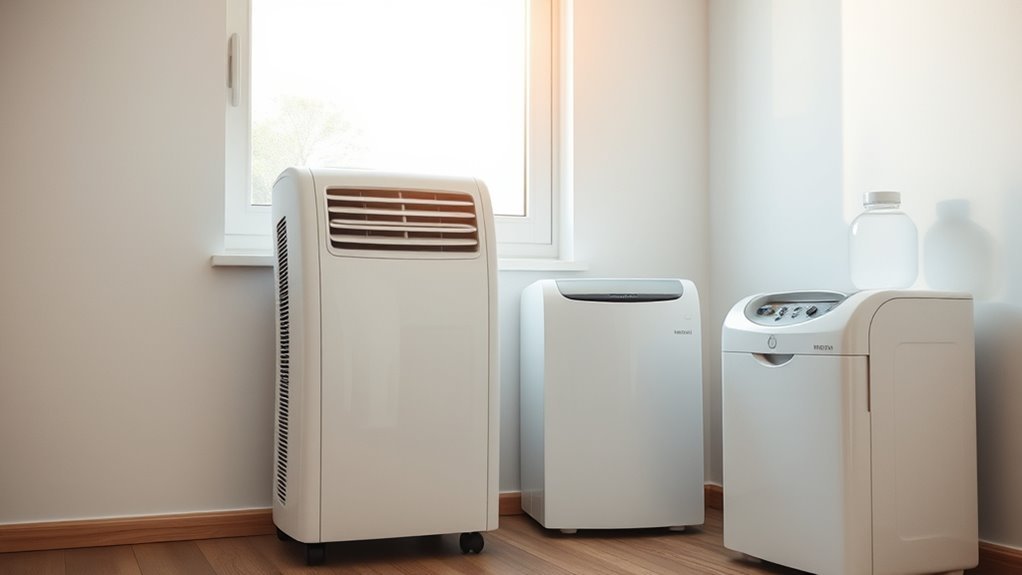
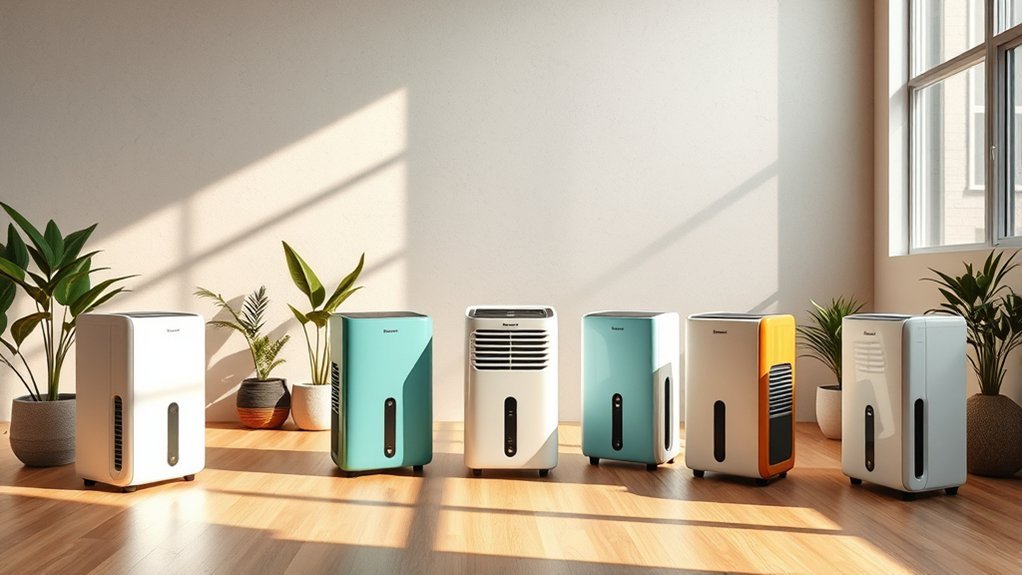
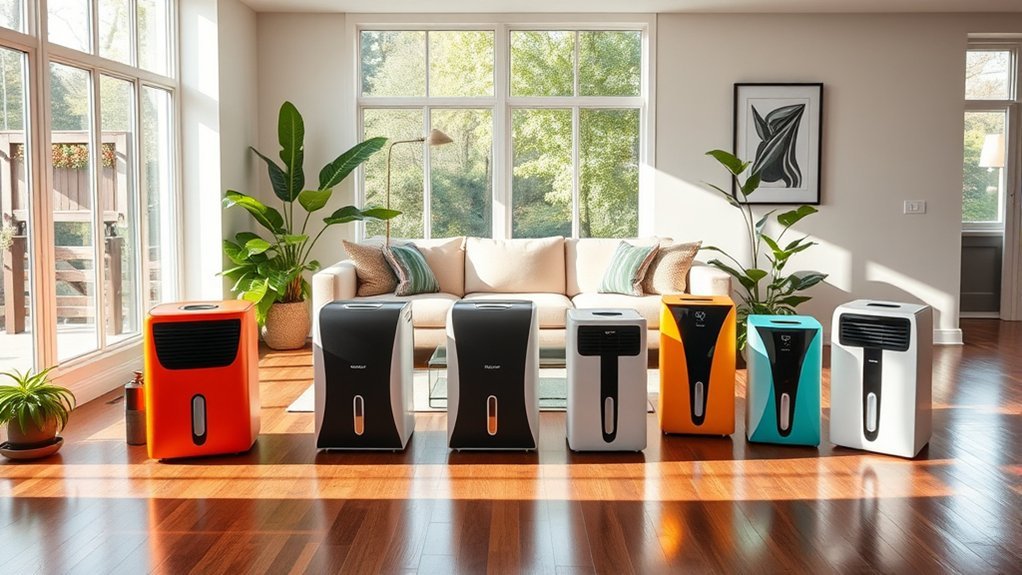
If you need a dehumidifier that can manage frost forming on its cold surface or evaporator coils, an auto-defrost model is a practical choice. The Amazon Basics 35-Pint Dehumidifier is the most balanced option here for everyday household moisture control, while the hOmeLabs 50-Pint Wi-Fi Dehumidifier offers higher standard-condition capacity and app control for larger or wetter spaces. The HOPSEN HD12 is a quieter option with an included gravity-drain hose, and the NeedDuck B-2 is a compact thermoelectric model for mild humidity in small enclosed areas.
Quick Verdict
- Best Overall: Amazon Basics 35-Pint Dehumidifier
- Best High-Capacity Wi-Fi Option: hOmeLabs 50-Pint Wi-Fi Dehumidifier
- Best Quiet Option With Included Drain Hose: HOPSEN HD12
- Best Compact Thermoelectric Option: NeedDuck B-2
Quick Comparison
| Product | Best For | Listed Capacity / Coverage | Drainage | Key Advantage | Check Details |
|---|---|---|---|---|---|
| Amazon Basics 35-Pint | Everyday home, laundry-room, and basement moisture | About 35.5 pints/day under the applicable ENERGY STAR test; seller-listed up to 2,500 sq. ft. | Tank or continuous gravity-drain connection | Verified capacity, ENERGY STAR certification, and auto defrost | Check Amazon |
| hOmeLabs 50-Pint Wi-Fi | Larger or persistently damp rooms where app control is useful | 50 pints/day at 80°F and 60% RH; 120-pint maximum at 95°F and 90% RH; seller-listed up to 7,000 sq. ft. | 1.6-gallon tank or gravity-drain outlet; confirm whether a hose is included | Higher standard-condition capacity with Wi-Fi control | Check Amazon |
| HOPSEN HD12 | Bedrooms, laundry rooms, and moderate household humidity | 15 pints/day at 80°F and 60% RH; 34-pint maximum at 95°F and 90% RH; seller-listed up to 2,500 sq. ft. | 0.6-gallon tank or included 3.28-foot gravity-drain hose | Approximately 38 dB on low speed, plus humidity indicator and sleep mode | Check Amazon |
| NeedDuck B-2 | Closets, compact bedrooms, small bathrooms, and RVs with mild humidity | No comparable pints-per-day rating provided; seller-listed for up to 215 sq. ft. | 44-ounce removable tank | Compact 28-watt thermoelectric design with three modes | Check Amazon |
Capacity note: Compare moisture-removal ratings only when the test temperature and relative humidity are the same. A maximum figure measured at 95°F and 90% RH can be much higher than the unit’s rating at 80°F and 60% RH. Advertised square-foot coverage is also a rough marketing guide, not a guarantee for every room.
Amazon Basics 35-Pint Large Dehumidifier for Home
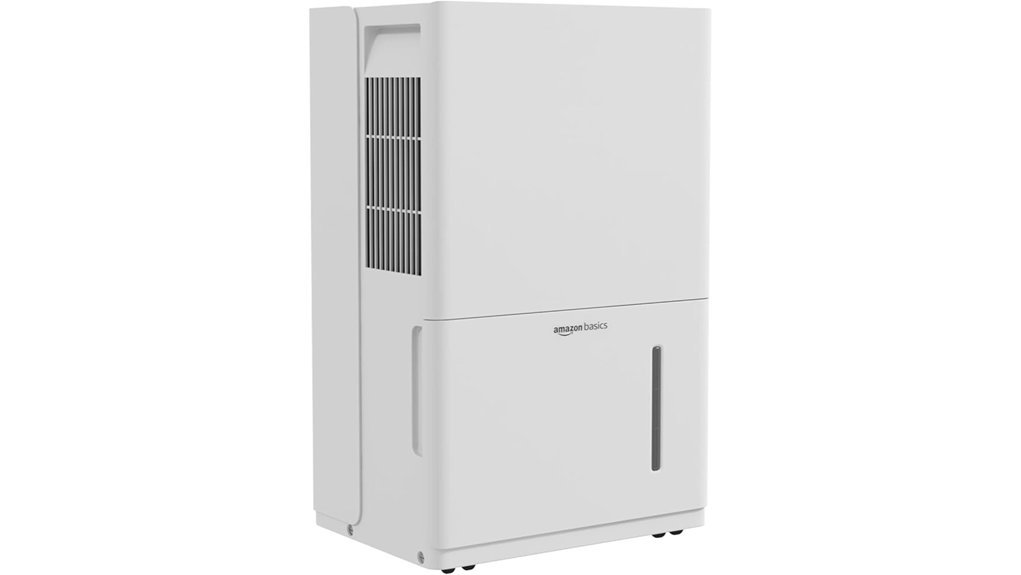
The Amazon Basics 35-Pint Large Dehumidifier is the most balanced choice in this list for medium-size rooms, basements, laundry areas, and other spaces that need regular humidity control. Its certified capacity is about 35.5 pints per day, and the product includes auto defrost, a timer, overflow protection, automatic restart, and a reusable filter.
Why You’ll Like It: It combines meaningful full-size moisture removal with simple controls and an ENERGY STAR efficiency credential. It is a practical choice when you want dependable tank or gravity-drain operation without paying for app features.
Best For: Homeowners who need a straightforward full-size dehumidifier for recurring household dampness.
Who Should Avoid It: Buyers who need a lightweight mini unit, a built-in condensate pump, or Wi-Fi control.
Pros:
- ENERGY STAR certified with a verified capacity of about 35.5 pints per day.
- Auto defrost helps clear frost that can reduce compressor performance in cooler conditions.
- Auto restart, timer, overflow protection, and reusable filter improve daily convenience.
Cons:
- At about 39.2 pounds, it is not the easiest option to carry between floors.
- No Wi-Fi, voice-assistant, or app control.
- It does not include a built-in pump, so continuous drainage requires a lower drain point.
hOmeLabs 50-Pint Wi-Fi Dehumidifier
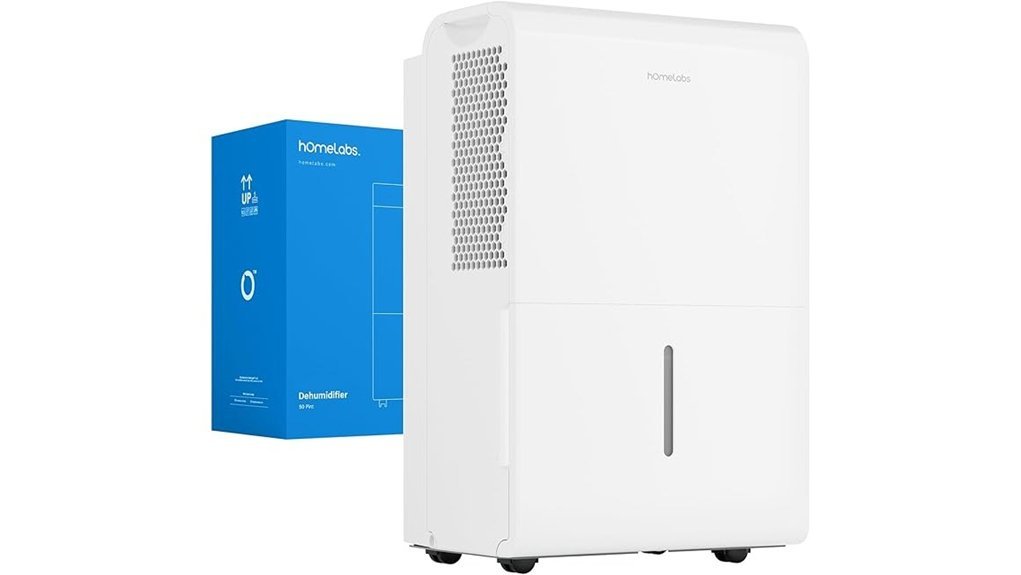
The hOmeLabs model linked here is the 50-pint Wi-Fi dehumidifier, not the smaller 8-pint version. It is listed to remove 50 pints per day at 80°F and 60% relative humidity, with a 120-pint maximum at 95°F and 90% relative humidity. The seller advertises coverage up to 7,000 square feet, although real-world suitability depends on moisture load, room layout, temperature, and airflow.
Why You’ll Like It: This model combines higher standard-condition capacity with Wi-Fi control, adjustable humidity settings, auto defrost, automatic shutoff, a washable filter, casters, and Turbo mode. It is the strongest option in this group when capacity and remote control matter more than compact size.
Best For: Larger basements, open living areas, laundry spaces, and buyers who want to check or change settings remotely.
Who Should Avoid It: Buyers who need a small bedroom unit, an integrated pump, or a drain hose guaranteed in the box.
Pros:
- 50-pint standard-condition rating is the highest verified capacity in this comparison.
- Wi-Fi control supports remote humidity adjustments, schedules, and mode changes.
- Auto defrost, full-tank shutoff, washable filter, casters, and Turbo mode support everyday use.
Cons:
- At more than 40 pounds, it is heavier and bulkier than the HOPSEN and NeedDuck models.
- The seller-listed 7,000-square-foot figure should not replace capacity-based sizing.
- The standard non-pump version uses gravity drainage, and current retailer information indicates that a drain hose may need to be purchased separately.
HOPSEN HD12 Dehumidifier
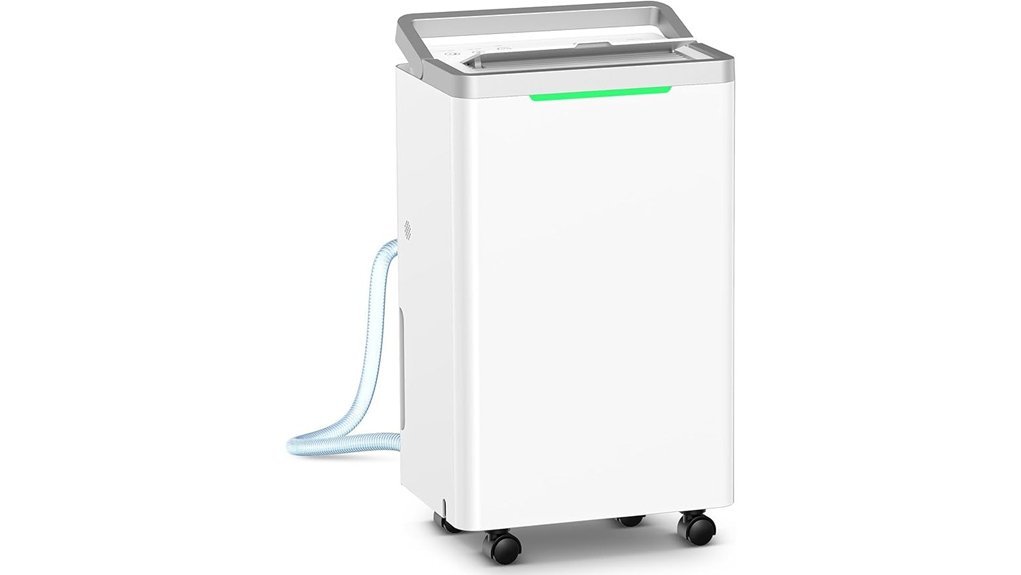
The HOPSEN HD12 is designed for buyers who want moderate compressor-based moisture control with quieter low-speed operation. The listing gives several test-condition ratings: approximately 15 pints per day at 80°F and 60% relative humidity and a 34-pint maximum at 95°F and 90% relative humidity. It is advertised for spaces up to 2,500 square feet, but the standard-condition capacity is the more useful number when comparing it with other machines.
Why You’ll Like It: The included gravity-drain hose, auto defrost, adjustable humidistat, sleep mode, child lock, timer, memory function, swing louvers, and three-color humidity indicator make it convenient for bedrooms, laundry rooms, and moderately damp living spaces.
Best For: Buyers who value low-speed noise around 38 dB, an included drain hose, and easy-to-read humidity feedback.
Who Should Avoid It: Anyone who needs a built-in pump, verified ENERGY STAR certification, or 30-plus pints per day under standard conditions.
Pros:
- Auto defrost and automatic restart support routine unattended operation.
- Included 3.28-foot drain hose can reduce manual tank emptying when a lower drain is available.
- Sleep mode, dimmed indicators, and approximately 38 dB low-speed operation suit noise-sensitive rooms.
Cons:
- The 0.6-gallon tank can fill quickly in damp conditions if the hose is not used.
- The headline 34-pint figure is measured in much hotter and wetter conditions than the 15-pint standard-condition figure.
- Gravity drainage requires a continuously downward hose route without kinks.
NeedDuck B-2 Dehumidifier With 44-Ounce Water Tank
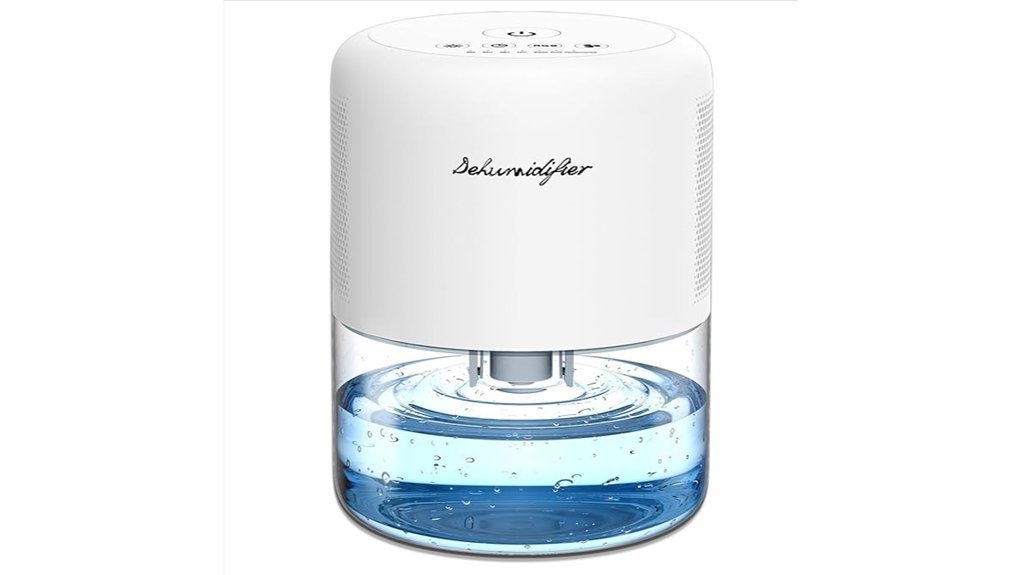
The NeedDuck B-2 is a small thermoelectric dehumidifier for targeted moisture control in closets, compact bedrooms, bathrooms, and RVs. It has a 44-ounce tank, a seller-listed coverage area of up to 215 square feet, a 28-watt power rating, three operating modes, four timer settings, automatic shutoff, and a listed auto-defrost function.
Why You’ll Like It: At about 2.6 pounds and under nine inches tall, it is easy to place where a full-size compressor model would be inconvenient. The selectable light and sleep mode also make it more suitable for small sleeping areas.
Best For: Small enclosed spaces with mild, occasional, or localized humidity.
Who Should Avoid It: Buyers dealing with a wet basement, water intrusion, large rooms, or heavy daily moisture loads.
Pros:
- Compact dimensions and lightweight construction make it easy to move.
- Sleep, Auto, and Performance modes provide simple control.
- Automatic shutoff helps prevent tank overflow, while the listed defrost function helps manage frost on the cold surface.
Cons:
- No comparable pints-per-day moisture-removal rating is provided.
- The 44-ounce tank may need frequent emptying in damp conditions.
- No continuous-drain connection is listed, and thermoelectric performance drops in cooler or less humid rooms.
How We Compared These Dehumidifiers
These picks were evaluated from current manufacturer information, manuals, certification records, and retailer listing data rather than claimed hands-on testing. The main comparison points were whether auto defrost was clearly listed, moisture-removal capacity under stated test conditions, drainage method, tank size, controls, portability, noise information, energy-efficiency credentials, and suitability for the intended room.
Fast Decision Guide: Choose the Amazon Basics for balanced everyday use, the hOmeLabs when you need more capacity and Wi-Fi, the HOPSEN when quiet low-speed operation and an included hose matter, and the NeedDuck only for mild humidity in a compact enclosed space.
Factors to Consider When Choosing a Dehumidifier With Auto Defrost
Auto defrost is useful, but it is only one part of choosing the right machine. Match the unit to the amount of moisture, room temperature, drainage access, available floor space, and noise tolerance in your home.
1. Confirm the Auto-Defrost Feature
Look for auto defrost or anti-frost protection in the current product listing and manual. On many compressor dehumidifiers, moisture removal pauses when frost is detected while the fan keeps moving air until the coils clear. A thermoelectric mini unit may use a different control method. Auto defrost helps protect performance, but it does not mean a machine is suitable for freezing or near-freezing rooms.
2. Compare Capacity Under the Same Conditions
Capacity is expressed as the amount of moisture removed in 24 hours, but the test conditions matter. Compare pints-per-day figures measured at the same temperature and relative humidity. A maximum measured at 95°F and 90% relative humidity should not be treated as equal to a rating measured at 80°F and 60% relative humidity.
3. Match the Unit to Real Room Conditions
Square-foot coverage is a starting point, not a performance guarantee. Ceiling height, open doors, water intrusion, laundry, climate, ventilation, and starting humidity all affect results. For a wet basement, prioritize standard-condition capacity and continuous drainage over the largest advertised coverage number.
4. Choose Full-Size or Compact
A full-size compressor dehumidifier is usually the better choice for basements, laundry rooms, and recurring high humidity. A thermoelectric mini unit such as the NeedDuck is easier to place and usually quieter, but it is intended for a much smaller moisture load. Do not expect a compact unit to solve flooding, leaks, or widespread dampness.
5. Review Drainage Options
A removable tank is simple but requires manual emptying. A gravity hose can provide continuous drainage when the outlet remains lower than the machine and the hose slopes downward without kinks. Choose a model with a built-in pump if water must travel upward to a sink or elevated drain; none of the four linked products here is presented as the pump-equipped version.
6. Consider Noise and Placement
For bedrooms or offices, compare low-speed noise information and look for sleep modes or dimmable controls. Leave the clearance recommended in the manual around the air inlet and outlet, and place the unit on a level surface so vibration does not add unnecessary noise.
7. Check Energy Efficiency
For full-size units, ENERGY STAR certification and integrated energy factor are more useful than vague “energy-saving” claims. A higher integrated energy factor means more water is removed per unit of electricity under the applicable test method. Compact low-watt units draw less power at one moment, but they also remove much less moisture.
8. Look for Useful Controls
An adjustable humidistat, full-tank shutoff, timer, auto restart, washable filter, child lock, and clear humidity display can make daily operation easier. Wi-Fi is helpful for remote monitoring, but it should not take priority over adequate capacity and practical drainage.
9. Verify Hose and Pump Details
Do not assume that a continuous-drain port means a hose is included, and do not confuse a compressor with a condensate pump. Check the box contents and model number on the current listing. The HOPSEN listing includes a short gravity-drain hose, while the standard hOmeLabs model linked in this article may require a separately purchased hose.
Before You Buy: Confirm the current model number, capacity test conditions, drain-hose inclusion, operating-temperature range, warranty, and whether the listing is the pump or non-pump version. Product variations can change while an ASIN remains the same.
Frequently Asked Questions
How Does Auto Defrost Work in Dehumidifiers?
On a typical compressor dehumidifier, the machine pauses moisture removal when frost is detected and keeps air moving until the evaporator coils clear. It then resumes normal operation. Thermoelectric mini units can use a different control method, so check the manual for the specific model.
Does Auto Defrost Mean a Dehumidifier Works in Any Cold Room?
No. Auto defrost helps manage frost, but every unit still has an operating-temperature range. A model may lose effectiveness or stop operating below its minimum temperature even when auto defrost is included.
Which Auto-Defrost Dehumidifier Is Best for a Basement?
The Amazon Basics model is a balanced choice for typical basement humidity, while the hOmeLabs 50-pint model offers more standard-condition capacity for a larger or wetter basement. Severe water intrusion still requires fixing the source rather than relying on a dehumidifier alone.
Are Dehumidifiers With Auto Defrost Energy-Efficient?
Auto defrost can help a machine avoid inefficient frost buildup, but the feature alone does not prove overall energy efficiency. Compare ENERGY STAR certification, integrated energy factor, capacity, and how long the machine must run in your room.
Can I Use a Dehumidifier in Winter?
Yes, when the room stays within the model’s specified operating range. Auto defrost is especially useful in cooler spaces, but it is not a replacement for checking the minimum operating temperature.
How Often Should I Clean My Dehumidifier?
Inspect the filter, tank, intake, and drain hose regularly and follow the manual’s cleaning schedule. Rooms with dust, pets, or continuous operation may require more frequent filter cleaning. Always unplug the unit before maintenance.
Can a Dehumidifier Remove Existing Mold?
No. A dehumidifier can reduce the moisture that supports future growth, but it does not remove existing mold or repair a leak. Address the moisture source and clean or remediate affected materials appropriately.
Should I Use a Tank or Continuous Drain Hose?
Use the tank when the unit runs occasionally and is easy to check. Use continuous gravity drainage for frequent operation when you have a suitable lower drain point. Make sure the hose slopes downward, does not kink, and cannot freeze.
Conclusion
Final Recommendation: Choose the Amazon Basics 35-Pint Dehumidifier for the best balance of verified capacity, auto defrost, efficiency certification, and straightforward controls. Choose the hOmeLabs 50-Pint Wi-Fi model when you need more standard-condition capacity and remote control. The HOPSEN HD12 is the better fit for quieter low-speed operation and an included gravity-drain hose, while the NeedDuck B-2 should be reserved for mild humidity in small enclosed areas.
Whichever model you choose, verify the current listing and match the moisture-removal capacity to your actual humidity problem rather than relying on square-foot coverage alone. Auto defrost improves cold-condition reliability, but correct sizing, drainage, maintenance, and repairing leaks matter just as much.