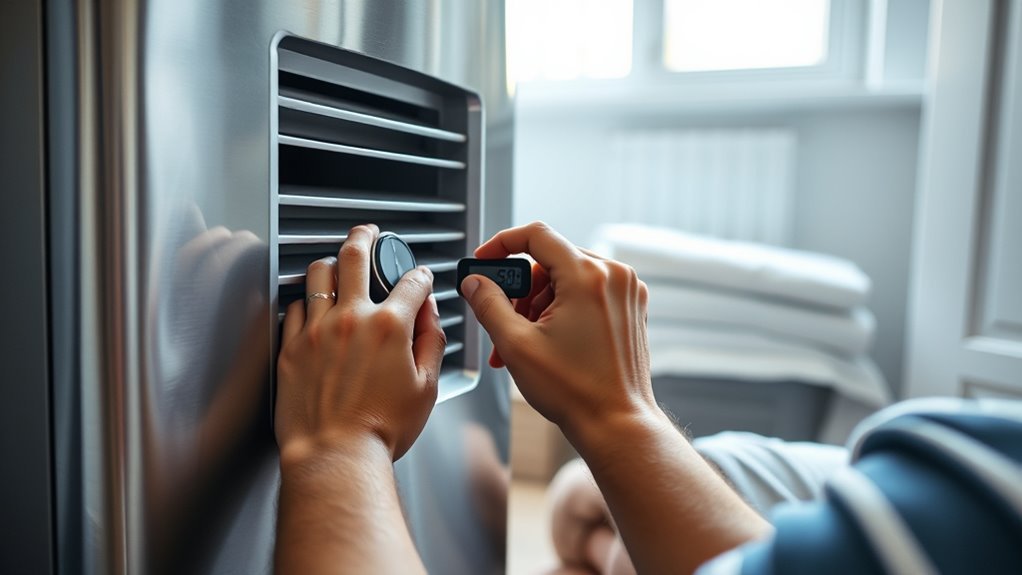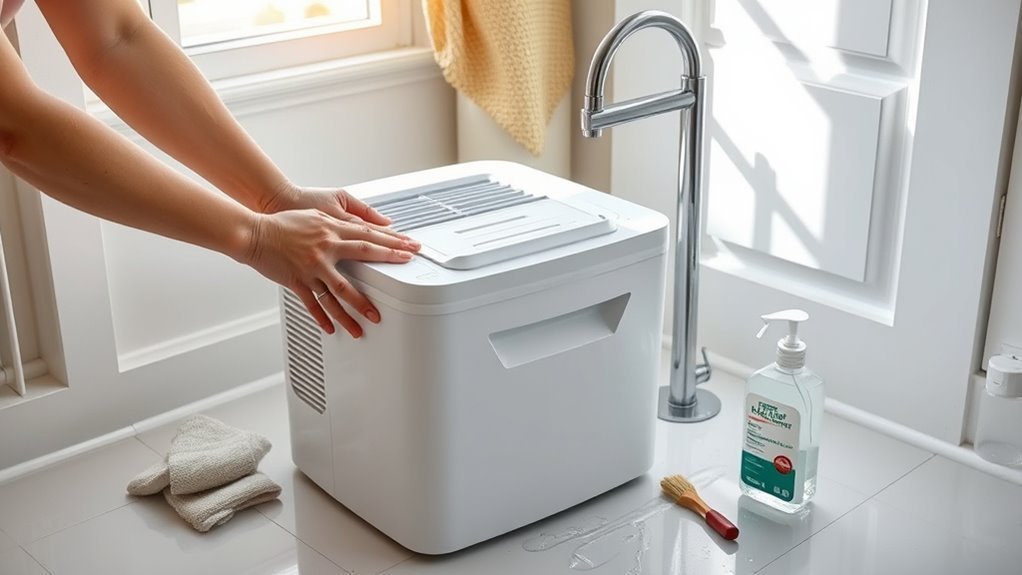
Cleaning a dehumidifier is mostly a matter of washing the water bucket, clearing the filter and grilles, checking the drain path, and letting removable parts dry before reassembly. The most important safety rule is to unplug the unit and read its owner’s manual before removing any cover. Never spray liquid into the controls, wiring, motor, or sealed internal parts.
Quick Answer
Unplug the dehumidifier, remove and wash the bucket, clean the washable filter, vacuum the exterior grilles, check the drain hose, and let all removable parts dry fully. Clean only accessible internal areas that the owner’s manual approves. Do not open sealed panels or spray cleaner near electrical parts.
Key Takeaways
- Always turn off and unplug the dehumidifier before cleaning it.
- Use mild soap and water for the bucket and a barely damp cloth for the cabinet.
- Confirm whether the filter is washable or replaceable before putting it under water.
- Clean only coils or fan areas that are accessible without opening a sealed cabinet and only when the manual allows it.
- Let the filter, bucket, hose, and other removable parts dry completely before reinstalling them.
At a Glance
| Time Required | About 30–45 minutes of active work, plus drying time |
| Difficulty | Easy for routine cleaning; professional service may be needed for sealed internal parts |
| Tools Needed | Soft cloths, mild dish soap, soft brush, vacuum with brush attachment, towels, and optional gloves and dust mask |
| Cost | Usually $0–$15 if you already have basic cleaning supplies; replacement filters cost extra |
Warning: Never clean a plugged-in dehumidifier. Do not pour or spray water, vinegar, disinfectant, or coil cleaner into the cabinet unless the manufacturer specifically instructs you to do so. Stop if you see damaged wiring, a damaged power cord, heavy internal mold, or water around electrical parts.
Why Clean Your Dehumidifier
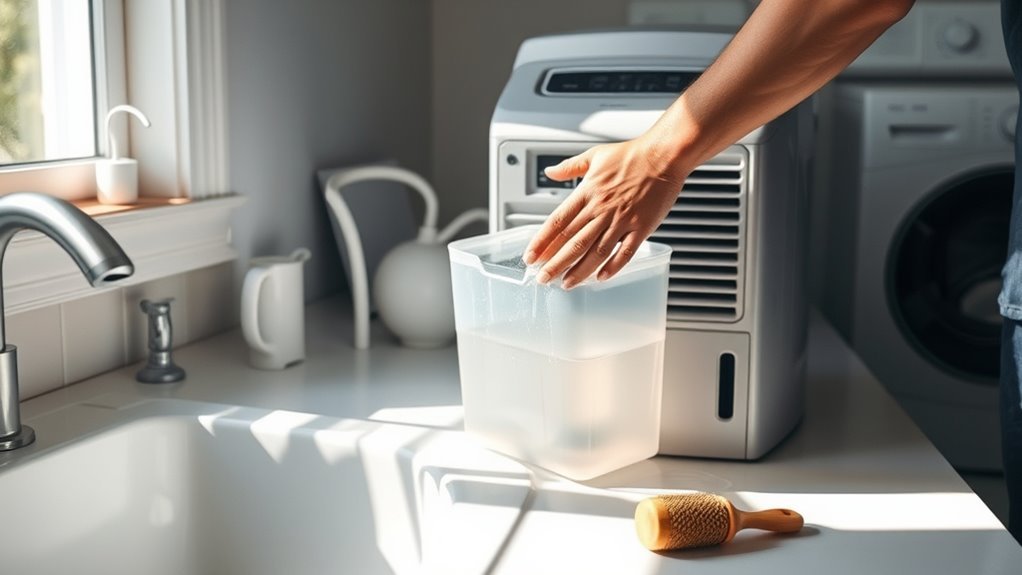
Regular cleaning helps keep air moving through the unit and reduces the chance of odors, algae, residue, and blockages in the water bucket or drain path. Manufacturers such as Frigidaire and GE Appliances recommend cleaning the cabinet, bucket, filter, and grilles as part of routine care.
Cleaning does not sterilize your home or treat a health condition. Its practical purpose is to keep the machine sanitary and working as designed. The U.S. Environmental Protection Agency says moisture control is the key to limiting indoor mold growth and recommends keeping indoor relative humidity below 60%, ideally around 30%–50% when possible.
A clean filter and an unobstructed drain path help the dehumidifier move air and water without preventable strain.
Tools and Supplies You’ll Need
Gather everything before you start so the unplugged unit does not sit open longer than necessary. Use gentle tools that will not scratch plastic, bend coil fins, or push moisture into electrical components.
Recommended Products
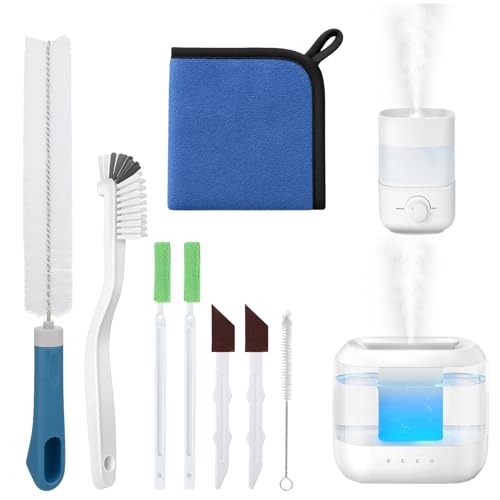
Humidifier Cleaning Solution:Still looking for a cleaning tool that can thoroughly clean your humidifier? Come and try our humidifier cleaning brush set!The nylon brush cleans the stains on the base, the sandpaper brush powerfully removes the severe scale at the bottom, and the long brush can easily reach the air outlet and the interior of the water storage tank, thoroughly cleaning every corner of the humidifier in all aspects, making your humidifier look brand new and more reassuring to use.

【All-in-One Dryer Duct Cleaning Kit】No more running to the hardware store for missing parts. This complete vent cleaning kit includes a heavy-duty dryer vent cleaning brush for 4-inch pipes, a set of flexible nylon rods, a dedicated lint brush, a dryer vent cleaner drill attachment, and protective gloves—everything you need in one box, ready to use right away.

All-in-One Dryer Duct Cleaning Kit — No more running to the hardware store for missing parts. This complete vent cleaning kit includes a heavy-duty dryer vent cleaning brush for 4-inch pipes, a set of flexible nylon rods, a dedicated lint brush, a dryer vent cleaner drill attachment, and protective gloves—everything you need in one box, ready to use right away.
Essential Cleaning Tools
- Soft, lint-free cloths or microfiber cloths
- Mild dish soap
- Warm water
- Soft sponge or nonabrasive brush
- Vacuum cleaner with a soft brush attachment
- Dry towels
- A shallow tray or sink for removable parts
- The owner’s manual for your exact model
Safety Gear and Supplies
Rubber gloves are useful if the bucket is slimy or dirty. A dust mask can reduce exposure to loose dust, while a well-fitted N95 respirator and eye protection are more appropriate when visible mold is present. Do not attempt a large or heavily contaminated internal cleanup yourself.
- Rubber gloves
- Dust mask or respirator when dust or mold is present
- Eye protection for visible mold or splash risk
- Soft cloths and brushes
Note: Mild soap and water are the safest default for routine cleaning. Use vinegar, bleach, disinfectant, pan tablets, or coil cleaner only when the owner’s manual or manufacturer approves that product for the exact part you are cleaning.
Unplug and Prep the Unit
Turn the dehumidifier off, unplug it, and move it to a dry work area with good lighting and ventilation. A large sink, utility area, garage, or protected outdoor surface can make bucket and hose cleaning easier, but keep the cabinet and power cord dry.
Safety First
- Turn the unit off and unplug it from the wall outlet.
- Empty the water bucket before moving the appliance.
- Remove only the bucket, filter, hose, grille, or cover that the manual identifies as user-removable.
- Keep the plug, cord, control panel, and electrical openings away from water.
- Check the owner’s manual for model-specific warnings and filter instructions.
Place the unit on a stable surface where you can reach the approved service areas. Do not tip it sharply or lay it on its side unless the manufacturer permits that position.
Gather Cleaning Supplies
Set out your cloths, dish soap, warm water, brush, vacuum, towels, and protective gear. Keep wet supplies on one side of the work area and the electrical cabinet on the other. This simple setup lowers the chance of splashing the controls or cord.
Pro Tip: Take a quick photo of the filter, splash guard, float, and hose connections before removal. It gives you a reference when you reassemble the unit.
Clean the Exterior and Control Panel
Use a soft cloth lightly dampened with warm water and mild dish soap. Wring it out well before wiping near the controls, seams, or vents. Work from the top down so loose dust does not fall onto areas you already cleaned.
- Wipe the top, sides, handle, and front panel with controlled strokes.
- Use a vacuum brush or dry soft brush on the intake and outlet grilles.
- Wipe around buttons and displays with an almost-dry cloth.
- Dry the cabinet with a clean towel.
Do not use abrasive pads or flood the grille. Frigidaire warns that excess water around controls can damage the unit, and its general cabinet guidance excludes bleach- or ammonia-based cleaners.
Wash the Water Bucket and Reservoir
The water bucket is the part most likely to collect slime, mineral residue, and odors. Empty it whenever it fills, and wash it whenever you see film, staining, or buildup.
Empty and Disassemble the Bucket
- Pull the bucket out using the method shown in the manual.
- Pour out all standing water.
- Remove the splash guard, handle, or float assembly only if the manual says those parts are detachable.
- Inspect corners, seams, the float, and the area around the drain opening.
Do not force clips or bend the float. A damaged or incorrectly installed float can prevent the dehumidifier from sensing the bucket correctly.
Wash With Mild Soap
Wash the inside and outside of the bucket with warm water, mild dish soap, and a soft sponge or brush. Pay attention to corners and seams, then rinse until no soap remains. If the manufacturer permits vinegar or another cleaner for stubborn deposits, use only the approved dilution and contact time. Never mix cleaning products.
Dry Before Reinstalling
Shake out excess water, wipe the bucket with a clean towel, and let it air dry until no moisture remains in seams or around the float. Reattach the splash guard and other approved parts securely before returning the bucket to the cabinet.
- Check for remaining slime, algae, or residue.
- Confirm the float moves freely.
- Make sure the bucket is fully dry.
- Seat it evenly so the bucket switch can engage.
Clean or Replace the Air Filter
Check the manual before washing the filter. Many portable dehumidifiers have a reusable mesh filter that can be vacuumed or washed, but some models use filters that must be replaced rather than rinsed.
- Slide or lift the filter out as directed by the manufacturer.
- Vacuum loose dust with a soft brush attachment.
- If the filter is washable, rinse it with warm water and mild soap.
- Rinse thoroughly and let it dry completely in a ventilated area.
- Replace a warped, torn, brittle, or nonwashable filter according to the manual.
- Reinstall the filter before operating the unit.
Cleaning intervals vary by model. GE Appliances advises checking some older filters every two to three weeks and uses a 250-hour reminder on newer models. Follow your unit’s indicator and manual instead of relying on a universal calendar.
Recommended Products
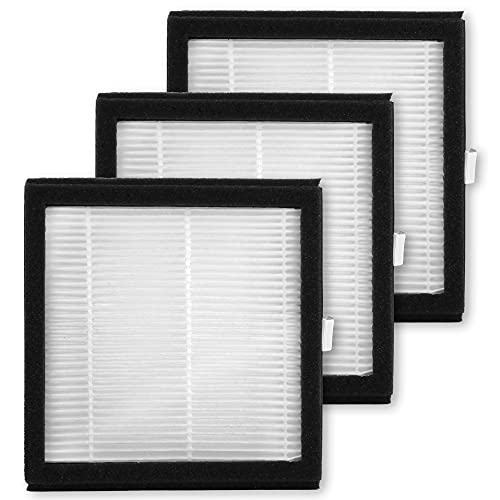
Includes 3 replacement filters

BUY WITH CONFIDENCE Genuine AprilAire MERV 8 Replacement Filter for your AprilAire Whole Home Dehumidifier Models E080 or E100 or Dehumidifying Ventilator 8192A (and all variations of these models)

【Compatibility】 Our MERV 13 Replacement Dehumidifier Filter Media is Compatible with Honeywell TrueDRY DH65 DR65, Part 50049537-002/U, 50049537-005.
Clean Accessible Grilles, Coils, and Fan Areas
Start with the grilles because they are designed for routine user cleaning. Vacuum them gently with a soft brush attachment. If a coil surface is visible directly behind a user-removable filter and the manual permits cleaning it, lift loose dust with a soft brush or low-suction vacuum without pressing on the fins.
- Vacuum the intake and exhaust grilles.
- Brush only accessible coil surfaces that the manual identifies as user-serviceable.
- Keep vacuum tools and fingers from bending aluminum fins.
- Do not wipe coils with a wet cloth or spray cleaner into the cabinet unless the manufacturer specifically instructs it.
- Leave enclosed fan blades, motors, pumps, and wiring to a qualified service technician.
If the coils are heavily clogged, moldy, bent, iced over repeatedly, or hidden behind a sealed panel, stop and arrange service. Opening the cabinet can expose sharp fins, moving parts, electrical components, and refrigerant-system parts.
Recommended Products

Rich Package: The chaseroad 3PCS Horse Hair Brush shop vac accessories set, which includes 2 durable and scratch-resistant brushes, 1 vacuum adapter (1 1/4″ to 1 3/8″). Our round brush attachment works on a variety of surfaces, making it easy to keep your home clean and as convenient as possible.

HORSEHAIR BRISTLE DUSTING BRUSH FOR DELICATE SURFACES: Crafted with genuine horsehair bristles, this dust cleaning brush glides gently across wood furniture, fragile decor, bookshelves, and electronics. Horsehair bristle lifts and captures fine dust rather than pushing it around, leaving every surface clean and polished without scratches or marks.

🧹Horse Hair Vacuum Dust Brush – 25mm round horsehair head features ultra-soft bristles that lift dust gently without scratching sensitive surfaces.
Check and Clean the Drain Hose and Pump Line
Disconnect the drain hose according to the manual and inspect it for kinks, slime, mineral buildup, and trapped debris. For routine cleaning, flush a removable hose with clean water. Use soap, vinegar, or another cleaning solution only when the manufacturer approves it for that hose.
- Remove the hose without pulling on the cabinet fitting.
- Flush it from one end with clean water.
- Use a soft, flexible bottle brush only if it fits without damaging the hose.
- Rinse until the water runs clear.
- Check a gravity-drain hose for a continuous downhill slope and no kinks.
- On pump models, clean the user-accessible pump filter only as directed by the manual.
Do not use high pressure, compressed air, wire, or harsh chemicals in a pump line. If water still backs up after the hose is clean and correctly routed, the blockage may be inside the unit and require service.
Let Every Part Dry Completely
There is no single drying time that fits every filter, bucket, hose, climate, and model. The correct standard is simple: every removable part must be fully dry before it goes back into service. Place parts separately in a well-ventilated area rather than stacking them.
- Wipe away standing water with a clean towel.
- Air dry the filter until no dampness remains.
- Drain trapped water from the hose.
- Check seams, the float, and splash guard for hidden moisture.
- Keep the cabinet unplugged until the exterior and controls are dry.
For seasonal storage, Frigidaire recommends disconnecting the power and hoses and allowing the unit and parts to dry for one to two days when possible. Routine cleaning may take less time, but never reinstall a damp filter.
Reassemble and Test the Dehumidifier
Reinstall the filter, bucket, splash guard, drain cap, hose, and any approved removable cover in the reverse order. Make sure each part is seated correctly before plugging the unit back in.
- Confirm the filter is dry and locked in place.
- Seat the bucket evenly and verify that the float moves freely.
- Reconnect the hose and tighten only as directed by the manual.
- Place the unit upright with the required airflow clearance.
- Plug it in and run it for 10–15 minutes.
- Check for leaks, error lights, unusual noise, odor, or poor drainage.
Troubleshooting After Cleaning
The Dehumidifier Will Not Start
Check that the bucket is fully seated, the float is not stuck, the filter or grille is installed correctly, and the plug is secure. Some models will not run when the bucket switch is not engaged.
Water Does Not Drain Through the Hose
Look for a kink, upward loop, loose fitting, blocked hose, missing drain cap part, or an incorrectly positioned bucket. Gravity drainage requires a steady downhill path. Pump models may also have a user-cleanable pump filter.
A Musty Odor Remains
Recheck the bucket seams, float, filter, hose, and accessible drain area. If the odor appears to come from sealed internal parts or visible mold remains behind the cabinet, stop using the unit and arrange professional cleaning or replacement.
The Unit Leaks or Makes a New Noise
Turn it off and unplug it. Confirm that the bucket, hose, splash guard, and drain fittings are correctly installed. Do not continue operating a leaking unit or one with grinding, arcing, burning smells, or electrical noise.
How Often to Clean a Dehumidifier
The owner’s manual and filter indicator should control your schedule. As a practical starting point, inspect the bucket whenever you empty it, check the filter every two to four weeks during frequent use, and perform a fuller bucket, grille, and drain-path cleaning every one to three months. Clean sooner in dusty rooms, basements, laundry areas, or spaces with visible residue.
Do not assume every permanent filter uses the same interval or that every disposable filter lasts six to twelve months. Filter design, operating hours, dust load, and manufacturer instructions vary.
Keep Your Dehumidifier Clean Longer
- Empty standing water promptly when you are not using continuous drainage.
- Keep doors and windows closed while the unit operates in humid weather.
- Leave the manufacturer’s recommended clearance around the intake and outlet.
- Use a hygrometer and avoid setting the room drier than necessary.
- Keep indoor humidity below 60% and, when practical, near the EPA’s ideal 30%–50% range.
- Inspect the hose for kinks, algae, and poor slope.
- Clean the filter when the reminder light appears or the manual says it is due.
- Before storage, drain the bucket and hose, clean the filter, dry the parts, and store the unit upright in a dry place.
When to Call a Professional
Routine bucket, filter, grille, and hose cleaning is usually a homeowner task. Stop and seek qualified service when:
- The power cord, plug, controls, or wiring are damaged or wet.
- Heavy mold is visible inside a sealed cabinet.
- The fan, compressor, or pump makes a new grinding or electrical sound.
- The unit repeatedly ices up despite a clean filter and correct room temperature.
- The hose and accessible drain parts are clear but water still backs up.
- The unit leaks refrigerant, has oily residue, smells burned, or trips the breaker.
- Performance remains poor after approved maintenance.
Health Note: A dehumidifier can reduce excessive indoor moisture, but it is not a treatment for COPD, cough, snoring, asthma, or sleep apnea. Too little humidity can also irritate the nose and throat. People with breathing conditions should discuss indoor humidity targets with a healthcare professional.
Frequently Asked Questions
What is a step-by-step plan for cleaning a dehumidifier?
Turn it off and unplug it, empty and wash the bucket, clean the approved filter, vacuum the exterior grilles, clean only manual-approved accessible coil areas, flush the removable hose with clean water, dry every part, reassemble it, and test for leaks or error lights.
Can I clean a dehumidifier with vinegar?
Only use vinegar on a part when the manufacturer approves it. Mild dish soap and water are the safest general choice for the bucket, while clean water is a conservative choice for a removable drain hose. Never pour vinegar into the cabinet or mix it with another cleaner.
Should you use a dehumidifier if you have COPD?
A dehumidifier may make an excessively humid room more comfortable, and high humidity can trigger symptoms for some people with COPD. It does not treat COPD, and overly dry air may also be uncomfortable. Ask your clinician what humidity range is appropriate for your symptoms and home.
Do dehumidifiers help with a cough?
They may help only when excess humidity, mold, or dust mites are contributing to irritation. A dehumidifier can worsen a dry-air cough if it lowers humidity too far. Persistent cough, wheezing, shortness of breath, fever, chest pain, or coughing blood needs medical attention.
Can a dehumidifier help with snoring?
A dehumidifier is not a proven snoring treatment. It may improve comfort in a very damp room, but snoring is commonly related to airflow obstruction, sleep position, nasal congestion, alcohol, weight, or sleep apnea. Loud snoring with gasping, breathing pauses, or daytime sleepiness should be evaluated.
How long should a dehumidifier dry after cleaning?
Drying time depends on the part and room conditions. Reinstall the filter, bucket, and hose only when they are fully dry. For seasonal storage, allowing the disconnected unit and drain parts to dry for one to two days is a cautious manufacturer-supported practice.
Conclusion
Keeping a dehumidifier clean does not require aggressive chemicals or full disassembly. Unplug it, wash the bucket, clean the correct type of filter, clear the grilles and drain path, and let every removable part dry. The owner’s manual should always override generic advice, especially for coils, pump lines, cleaners, and replacement filters. A careful routine helps prevent odors, blockages, leaks, and avoidable service problems.
Sources
- Frigidaire: Dehumidifier Clean and Care — cabinet, bucket, hose, and storage guidance
- GE Appliances: Dehumidifier Cleaning and Maintenance — filter, bucket, grille, and drying guidance
- U.S. EPA: A Brief Guide to Mold, Moisture and Your Home — moisture control, mold prevention, and indoor humidity
- Mayo Clinic: Humidifiers and Indoor Humidity — balanced humidity, dry-air irritation, and dehumidifier hygiene
- American Lung Association: Preventing COPD Flare-Ups — high humidity as a possible COPD trigger
- Cleveland Clinic: Snoring — causes, warning signs, and sleep-apnea considerations