Yes, central air dehumidifies while it cools. Warm, humid indoor air passes over the cold evaporator coil, water condenses on the coil, and that condensate drains away. A correctly sized and maintained system may keep indoor humidity comfortable during normal summer weather, but it cannot always control moisture when cooling demand is low or when leaks, airflow problems, duct leakage, drainage faults, or equipment sizing are working against it. For most homes, aim for about 30% to 50% relative humidity and use a dedicated dehumidifier when humidity stays above the target after the moisture source and HVAC system have been checked.
Quick Answer
Yes, central air dehumidifies as warm, humid air passes over the cold evaporator coil and water drains away. It may not remove enough moisture during mild, rainy weather, short cooling cycles, or HVAC problems. Aim for about 30% to 50% relative humidity and add dehumidification when readings remain high.
Key Takeaways
- Central AC removes some moisture only while the cooling coil is cold and the system is running a cooling cycle.
- Oversizing, poor airflow, duct leaks, a clogged condensate drain, or incorrect controls can leave the home damp.
- Use a hygrometer and look for a pattern, not one brief humidity spike after cooking or showering.
- Set the thermostat fan to Auto for better moisture control unless your HVAC design or ventilation system requires another setting.
- A portable or whole-house dehumidifier is useful when relative humidity stays above the target even after HVAC problems and moisture sources are addressed.
At a Glance
| Does central AC dehumidify? | Yes, during active cooling when moisture condenses on the evaporator coil and drains away |
| Indoor humidity target | About 30% to 50% relative humidity for most homes |
| Thermostat fan setting | Auto is usually the better default for humidity control in standard systems |
| When to add a dehumidifier | When humidity stays above the target after leaks, ventilation, drainage, filters, and HVAC operation have been checked, or when the home needs moisture control without much cooling |
Does Central Air Dehumidify Enough?
Central air can dehumidify a home, but whether it removes enough moisture depends on the weather, the building, and the HVAC system. A correctly sized air conditioner usually runs long enough to cool the air below its dew point, collect water on the evaporator coil, and send that water through the condensate drain.
An oversized system may cool the home quickly and shut off before it removes enough moisture. An undersized system may run for long periods but still fail to meet the home’s cooling and moisture loads. Poor airflow, leaky ducts, humid outdoor air entering the house, dirty coils, incorrect refrigerant charge, and drainage problems can also reduce performance.
For most homes, a practical target is about 30% to 50% relative humidity. The U.S. Environmental Protection Agency recommends keeping indoor humidity between 30% and 50%. In cold weather, some homes need a lower setting to prevent condensation on windows and other cold surfaces. Use a hygrometer instead of judging humidity only by how the room feels.
Central air can cool a room quickly without fully drying it. Humidity depends on cooling-cycle length, coil temperature, airflow, drainage, outdoor moisture, and the home’s air leakage.
How Central Air Removes Moisture
During a cooling cycle, the indoor blower pulls warm air through the return ducts and moves it across the cold evaporator coil. When the coil surface is colder than the air’s dew point, water vapor condenses into droplets. The droplets fall into a drain pan and leave through the condensate line. The system then sends cooler, drier air back through the supply ducts.
The compressor and cold coil must be operating for meaningful dehumidification. A thermostat’s fan-only mode moves air but does not actively condense moisture. Some variable-speed systems and thermostats offer a humidity or dehumidification setting that lowers blower speed or extends suitable cooling operation. Use that feature only when the equipment manufacturer supports it.
Longer, steady cooling cycles often improve moisture removal. This is different from running the indoor fan continuously after the compressor stops. Continuous fan operation can re-evaporate water left on the wet coil and return some of that moisture to the rooms.
Note: Water around the indoor unit is not normal dehumidification. It may indicate a blocked drain, cracked pan, frozen coil, or installation problem that needs prompt attention.
Signs Your AC Isn’t Dehumidifying Enough
Use several clues together. One damp morning or a fogged bathroom mirror after a shower does not prove the central AC has failed. A repeated whole-home pattern is more meaningful.
- Humidity stays above the target: Readings remain above about 50% for hours or days while the AC is operating normally.
- The home feels cool but clammy: The thermostat reaches its temperature setting, yet skin, bedding, or fabrics feel damp.
- Musty odors persist: Odors return after cleaning or appear in several rooms, especially near returns, closets, basements, or crawl-space connections.
- Condensation appears repeatedly: Water forms on windows, pipes, supply registers, or walls outside brief cooking and bathing periods.
- Mold or mildew is visible: This signals a moisture problem, but the source may be a leak, condensation, flooding, or poor ventilation rather than the AC alone.
- Cooling cycles are very short: The system starts and stops often while humidity remains high, which may point to oversizing, control problems, or another fault.
- The system runs almost nonstop: This can indicate undersizing, extreme weather, dirty components, duct leakage, low refrigerant, or a building-envelope problem.
What Your Humidity Pattern Can Tell You
| What You Notice | Check First | Best Next Step |
|---|---|---|
| The home cools very quickly but RH stays high | Short cooling cycles, fan setting, controls, and possible oversizing | Use Auto fan, confirm the pattern, then have sizing and controls evaluated if it continues |
| The AC runs for long periods and RH still stays high | Airflow, coil condition, refrigerant charge, duct leakage, and a heavy indoor moisture load | Check the filter and moisture sources, then schedule HVAC diagnostics if humidity remains high |
| Humidity rises during mild, rainy weather when the AC barely runs | Low cooling demand plus outdoor or indoor moisture | Control moisture sources and consider dedicated dehumidification |
| Only one room or zone stays damp | Local leak, poor exhaust, closed or blocked airflow path, or an isolated basement/crawl-space moisture source | Fix the local source before treating it as a whole-house AC problem |
Warning: Do not open refrigerant lines, bypass electrical controls, or pour drain chemicals into the HVAC system unless the manufacturer allows it. Refrigerant, electrical, and internal coil work should be handled by a qualified technician.
How to Measure Indoor Humidity Correctly
Place a digital hygrometer in a main living area, away from supply vents, exterior doors, direct sunlight, kitchens, bathrooms, and portable humidifiers or dehumidifiers. Set it about chest height and allow time for the reading to settle. For a whole-home picture, compare readings on more than one floor and in known problem areas.
Track humidity at the same times for several days, including before and after cooling cycles. Note outdoor weather, showers, cooking, laundry, and whether bathroom or kitchen exhaust fans were used. If two meters disagree widely, compare them side by side or replace the less reliable unit.
Relative humidity changes with temperature. A percentage can rise when air cools even if no new moisture enters the room. That is why trends, condensation, and moisture sources matter more than one isolated reading.
When a Dehumidifier Works Better
A dedicated dehumidifier is designed to control moisture even when the home does not need much cooling. It is often useful during mild but rainy weather, in basements and crawl spaces, or in tightly insulated homes with low cooling demand but a continuing moisture load.
Consider adding one when:
- Relative humidity remains above the target after leaks, ventilation, drainage, filters, and HVAC operation have been checked.
- The AC reaches the temperature setting quickly but the home stays damp.
- A basement, crawl space, laundry area, or other zone is not well served by central air.
- You need humidity control during shoulder seasons when the air conditioner rarely runs.
- An HVAC professional confirms that equipment sizing or latent-load conditions make supplemental dehumidification appropriate.
A dehumidifier consumes electricity and releases some heat into the space, so it does not automatically lower total energy use. It may improve comfort enough to avoid setting the thermostat unusually low. When buying a unit, compare capacity, drainage options, noise, low-temperature performance, and energy efficiency. ENERGY STAR says certified dehumidifiers are 20% more efficient than non-certified models under its current specification. If you want to judge real-world output after installation, see how much water a dehumidifier should collect per day.
Recommended Products

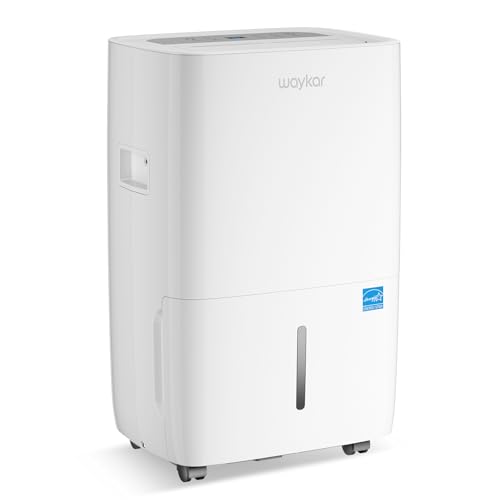
【Compact Size, Big Efficiency】 The upgraded 2025 Waykar dehumidifier features cutting-edge rotary compressor technology. It’s more compact but still powerful, capable of removing up to 34 pints of moisture per day (at 95℉, 90% RH), ideal for spaces up to 2,000 sq. ft. such as living rooms, basements, bedrooms, and offices. The adjustable humidity range from 30% to 80% helps you easily maintain the ideal indoor humidity
【80 Pint Capacity for Up to 5,000 Sq.Ft Spaces】Quickly removes excess moisture from basements, bathrooms, bedrooms, RVs, and other large living areas, delivering 80 pints per day (95°F, 90% RH).conditions. Designed as a powerful dehumidifier for basement, home, and large spaces, it helps eliminate damp air, condensation—and pet-related odors caused by excess humidity. Even during humid seasons, it works continuously to maintain a dry, comfortable, and healthier indoor environment.
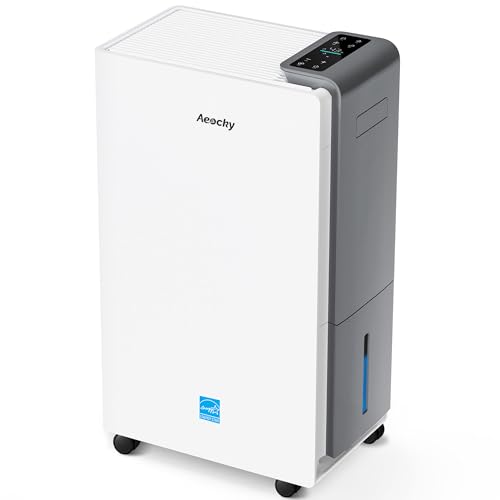
【ENERGY STAR 25 ≠ ENERGY STAR Most Efficient 2025】Don't fall for competitors' word games. With only 2.6% of ENERGY STAR models earning "Most Efficient 2025" title, these options are exceptionally rare on the market. RHEA-001 is one of the few to truly hold this top-tier certification. Many brands use misleading phrases like "Energy Star Efficient 25" or "Energy Star 25" to imply a standard they haven't met. Choosing them is a risk.With AEOCKY, you get verified performance and the peace of mind of authentic, top-tier efficiency.
Portable vs. Whole-House Dehumidifier
| Option | Best For | Main Considerations |
|---|---|---|
| Portable dehumidifier | One room, basement, or limited problem area | Needs open airflow, regular tank emptying or a safe drain, filter cleaning, and enough clearance |
| Whole-house dehumidifier | Several rooms, humid climates, or ongoing whole-home control | Requires correct sizing, duct design, drainage, controls, and professional installation |
Pro Tip: Before buying a larger dehumidifier, fix bulk-water leaks and confirm where the moisture enters. A dehumidifier can manage water vapor, but it cannot repair a roof leak, plumbing leak, wet foundation, or disconnected dryer vent.
How to Improve Central Air Dehumidification
Start with simple checks, then move to professional diagnostics. The goal is to restore correct airflow and drainage, reduce incoming moisture, and make sure the equipment runs suitable cooling cycles.
Recommended Products

MAKE YOUR HOME YOUR SANCTUARY: 2-pack of 3-month pleated Filtrete 16x20x1 MERV 11 MPR 1000 AC Furnace Air Filter helps capture unwanted particles from your household air to contribute to a cleaner, fresher home environment
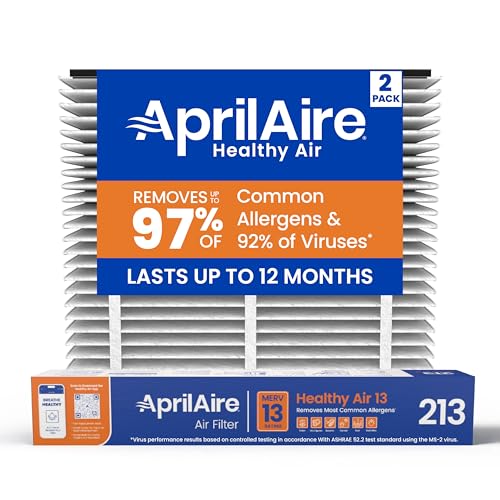
Genuine AprilAire 213 Filters are engineered to the exact specifications of your AprilAire Air Purifier, delivering superior filtration, a perfect airtight fit and seal, and the best overall system protection. To maintain peak performance, always choose certified AprilAire Replacement Filters.

Genuine AprilAire 213 Filters are engineered to the exact specifications of your AprilAire Air Purifier, delivering superior filtration, a perfect airtight fit and seal, and the best overall system protection. To maintain peak performance, always choose certified AprilAire Replacement Filters.
Clean Air Filters Regularly
Check the HVAC filter every month during heavy cooling use. Replace or clean it when it looks dirty and follow the equipment and filter manufacturer’s schedule. ENERGY STAR advises checking the filter monthly and changing it at least every three months, although pets, smoke, remodeling dust, and heavy use may require more frequent service.
A dirty filter restricts airflow, makes the system work harder, and can contribute to poor cooling or a frozen evaporator coil. It does not always cause short-cycling, so do not treat a filter change as the only diagnosis.
Use the filter type and efficiency rating your system can handle. Do not install a true HEPA filter in a standard central system unless the ductwork and blower were designed for its resistance. When upgrading filtration, use the highest suitable MERV rating allowed by the manufacturer or recommended by an HVAC professional.
Check the Condensate Drain and Pan
Look for water around the indoor unit, a full emergency pan, algae buildup, or a drain safety switch that repeatedly shuts the system off. Keep the drain line and pan unobstructed according to the manufacturer’s instructions. A blocked drain can cause water damage and affect indoor humidity.
If the drain is hidden, difficult to access, leaking, or repeatedly clogged, schedule service. A technician can inspect the trap, slope, pan, pump, and safety controls without damaging the system.
Seal Air Leaks
Seal accessible duct seams with approved duct mastic or metal-backed foil tape, not ordinary cloth duct tape. Pay special attention to ducts in attics, garages, crawl spaces, and unconditioned basements. Leaky return ducts can pull hot, humid, dusty air into the system, while supply leaks waste conditioned air.
Also seal building-envelope leaks around windows, doors, attic hatches, plumbing penetrations, and other openings. Use caulk on stationary gaps and weatherstripping on movable joints. Air sealing can reduce the amount of humid outdoor air entering the home, but savings depend on the house and the work performed. ENERGY STAR says leaky ducts can reduce heating and cooling efficiency by as much as 20%; that figure should not be presented as a guaranteed whole-home energy saving from air sealing alone.
Use Auto Fan Setting
| Check | Typical Result |
|---|---|
| Fan setting | Auto runs the blower with active heating or cooling calls |
| Moisture after cooling | Less chance of re-evaporating water from a wet coil |
| Humidity control | Often more stable in humid weather |
| Fan energy | Usually lower than continuous fan operation |
For most standard systems in humid weather, use Auto rather than On. The continuous setting can blow air across a wet coil after cooling stops and return moisture to the home. An exception may apply when a professionally designed ventilation, filtration, or air-mixing system requires scheduled fan operation. Follow the system design and manufacturer’s instructions.
Check Thermostat Settings and Cooling Cycles
Do not lower the thermostat far below a comfortable setting just to force moisture removal. This can make rooms too cold without solving the source of the humidity. Confirm that the thermostat is reading temperature correctly, the fan is set appropriately, and any humidity-control feature is configured for compatible equipment.
Watch the cycle pattern. Very short cycles, large room-to-room temperature differences, or a system that never reaches the set point deserve professional evaluation. Ask the contractor to check load calculations, equipment selection, blower airflow, duct design, refrigerant charge, coil condition, and thermostat controls.
Control Indoor Moisture Sources
- Run bathroom exhaust fans during showers and for a suitable period afterward.
- Use a kitchen exhaust hood that vents outdoors while cooking.
- Vent clothes dryers outdoors and inspect the duct for leaks or blockage.
- Repair plumbing, roof, window, and foundation leaks promptly.
- Cover bare soil in an appropriate crawl-space moisture-control system and correct drainage problems.
- Avoid drying large amounts of wet clothing indoors when humidity is already high.
- Keep AC drip pans clean and condensate drains flowing.
Best Humidity Levels for Home Comfort
The EPA generally recommends keeping indoor relative humidity between 30% and 50%. This range helps limit mold, dust mites, and condensation while avoiding excessively dry air. The best exact setting depends on outdoor temperature, climate, building materials, and occupant needs.
Ideal Indoor Humidity Range
During warm weather, many homes feel comfortable around 40% to 50% relative humidity. Keep readings below 60%, and investigate persistent readings above 50% when there are odors, condensation, or damp materials. In cold climates, winter humidity may need to stay closer to 30% to 40%, or lower during very cold weather, to prevent condensation on windows and inside wall assemblies.
Do not chase a single percentage by running equipment constantly. Use the lowest amount of dehumidification needed to control dampness and condensation while keeping the home comfortable.
Signs Humidity Is Too High
High humidity often shows up as a pattern of musty odors, recurring condensation, damp fabrics, swollen wood, peeling finishes, or visible mold. A hygrometer reading above 50% supports the diagnosis, but you should still look for the source.
- A musty odor suggests damp materials or microbial growth that needs inspection.
- Window condensation can signal high indoor humidity, cold glass, or both.
- Mold or mildew confirms a moisture problem, not necessarily an AC problem.
- Persistent readings above the target call for leak checks, better exhaust, HVAC service, or dedicated dehumidification.
Using Central Air and a Dehumidifier Together
Central air and a dehumidifier can work together when cooling demand and moisture load do not match. The air conditioner handles sensible heat and removes some moisture during cooling. The dehumidifier responds directly to humidity and can run during mild, wet weather when the AC is mostly off.
| System | Role |
|---|---|
| Central air | Cools the home and removes moisture during active cooling cycles |
| Dehumidifier | Controls moisture when humidity is high, including times with little cooling demand |
| Both together | Can stabilize comfort when properly sized, drained, and controlled |
| Expected result | Lower moisture risk without forcing the thermostat to an unnecessarily cold setting |
Set the dehumidifier to a reasonable target, usually within the 30% to 50% range, and confirm the result with a separate hygrometer. Do not make the AC and dehumidifier compete by choosing extreme settings. A whole-house unit should be integrated with correct ductwork, controls, and drainage by a qualified installer.
Recommended Products

【The Undisputed Champion — Industry-Leading Dehumidifier Brand】When you choose AEOCKY, you get double market validation. According to data independently verified by Stackline, a leading third-party data analytics company, AEOCKY was an industry‑leading dehumidifier brand on Amazon U.S. in 2025. This means you’re not just choosing a flagship product from a market leader, but a top-performing brand backed by independent market data and trusted by millions of real users, delivering the ultimate combination of performance, quality and trust.

2500 Sq. Ft Dehumidifier - SEMKAP dehumidifier for basement features a quiet, high-performance compressor that removes up to 32 pints of moisture per day (at 95°F, 90% RH). Ideal for basements, offices, bathrooms, bedrooms, kitchens, stockrooms, living rooms, laundry rooms, garages, crawlspaces, or RVs. It helps maintain optimal humidity between 40%–60%RH for healthier, more comfortable living

POWERFUL 2,500 SQ. FT. COVERAGE - Stop letting sticky, heavy air dictate your comfort. The BANABIE dehumidifier utilizes a high-efficiency rotary compressor to deliver heavy-duty moisture removal, extracting 32 pints daily (at 95°F, 90%RH). Engineered with a smart integrated airflow system, this unit effectively covers up to 2,500 Sq. Ft., ensuring that your basement, crawl space, or large open floor plans stay bone-dry
When to Call an HVAC Professional
Schedule professional service when basic checks do not bring humidity under control or when you notice water, ice, electrical problems, or abnormal cycling. Ask for more than a quick refrigerant top-off. A complete humidity diagnosis may include:
- Temperature and humidity measurements at the return and supply air
- Evaporator coil and condensate-drain inspection
- Blower speed and airflow testing
- Refrigerant charge verification using manufacturer procedures
- Duct leakage and pressure checks
- Thermostat and humidity-control review
- An ACCA Manual J residential load calculation and equipment-selection review when sizing is questionable
- Inspection for outdoor-air, crawl-space, attic, or building-envelope moisture sources
If a second meter confirms indoor humidity around 80%, or if water is entering the building, mold is spreading, the coil freezes, breakers trip, or the system leaks water, address the source promptly and arrange qualified service when the cause is not immediately clear. Moisture damage can worsen while a cooling-only repair is delayed.
Frequently Asked Questions
Does Central Air Remove Humidity or Just Cool the House?
Central air does both during a normal cooling cycle. The evaporator coil cools indoor air below its dew point, moisture condenses on the coil, and the condensate drains away. Humidity removal is therefore tied to coil temperature, airflow, drainage, and how long the cooling cycle runs.
Why Is My House Still Humid With the AC Running?
Common causes include short cooling cycles, an oversized or incorrectly configured system, restricted airflow, duct leakage, a dirty coil, incorrect refrigerant charge, a condensate-drain problem, humid outdoor air entering the house, or a moisture source such as a leak or wet crawl space. Confirm the pattern with a hygrometer before assuming the AC itself is the only cause.
Should I Run a Dehumidifier With Central Air?
Yes, when indoor humidity stays above your target even after leaks, exhaust ventilation, drainage, filters, and HVAC operation have been checked. A dehumidifier is especially useful during mild, rainy weather or in basements and crawl spaces where moisture remains high while the central AC has little reason to run.
What Humidity Level Should I Aim for in Summer?
For most homes, aim for about 30% to 50% relative humidity. Many people find the upper part of that range comfortable in warm weather. If readings stay above 50% for long periods and you also notice musty odors, condensation, or damp materials, look for a moisture source and check the HVAC system.
Should the AC Fan Be Set to Auto or On for Humidity Control?
For most standard systems in humid weather, Auto is the better default. Continuous fan operation after the compressor stops can blow air across a wet evaporator coil and return some of that moisture to the home. Follow the manufacturer or system designer if your ventilation or filtration setup requires scheduled fan operation.
Can Central AC Dehumidify Without Cooling?
A conventional central air conditioner removes meaningful moisture when the evaporator coil is cold during a cooling cycle. Some compatible variable-speed systems and controls can prioritize dehumidification by changing blower speed or extending supported operation, but the feature depends on the equipment. A dedicated dehumidifier is the more direct solution when moisture must be removed with little cooling demand.
Conclusion
Central air does dehumidify, but a conventional system removes moisture mainly while it is actively cooling. A properly sized system with correct airflow, clean components, an open condensate drain, sealed ducts, and sensible controls may keep a home near the recommended 30% to 50% range. If humidity stays high, confirm the reading with a hygrometer, control moisture sources, use the thermostat fan’s Auto setting, and have the HVAC system evaluated when the pattern persists. Add a portable or whole-house dehumidifier when the home still needs moisture removal after those checks or when humidity is high during periods with little cooling demand.
Sources
- U.S. Environmental Protection Agency: Care for Your Air — recommended indoor humidity range and indoor moisture-control guidance
- ENERGY STAR: HVAC Quality Installation — equipment sizing, airflow, refrigerant charge, and duct evaluation
- ENERGY STAR: Heat & Cool Efficiently — filter checks, maintenance, and HVAC efficiency guidance
- ENERGY STAR: Benefits of Duct Sealing — duct leakage, efficiency, comfort, and dehumidification
- ENERGY STAR: Dehumidifiers — current efficiency criteria, sizing guidance, and humidity-control information
- Building Science Corporation: Temperature, Humidity, and HVAC Systems — continuous fan operation and coil-moisture re-evaporation
- Air Conditioning Contractors of America: Manual J Residential Load Calculation — residential heating and cooling load calculations