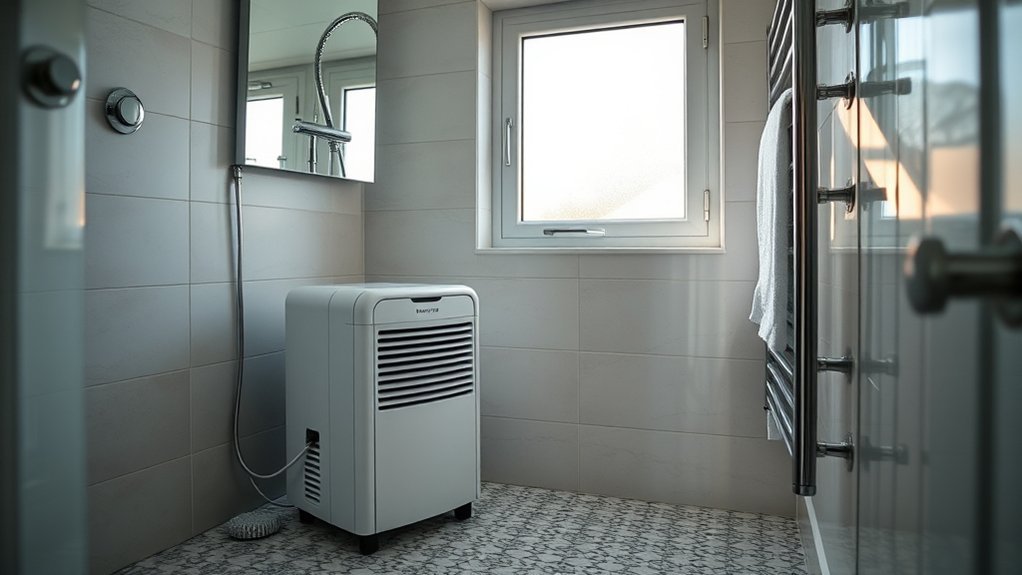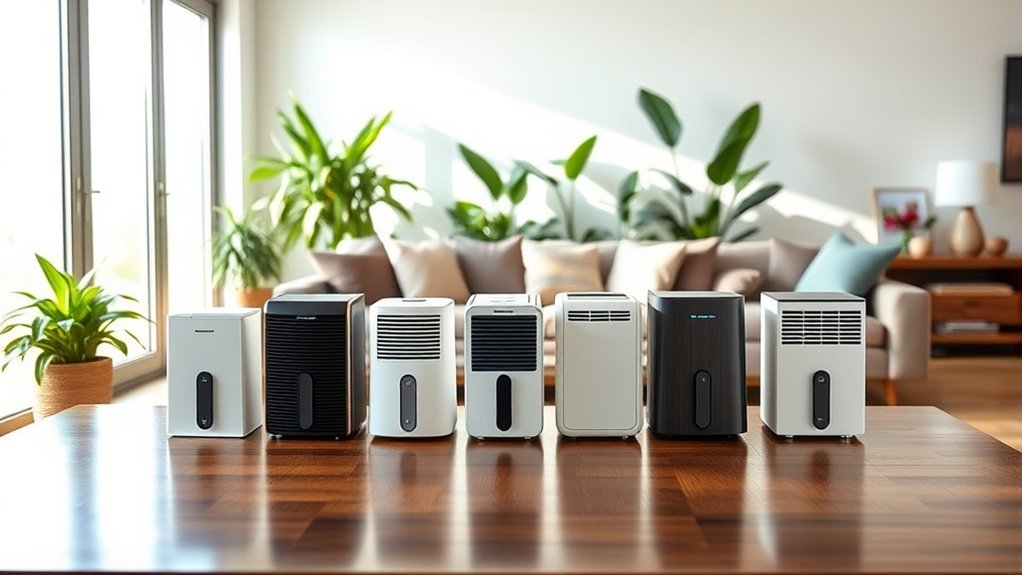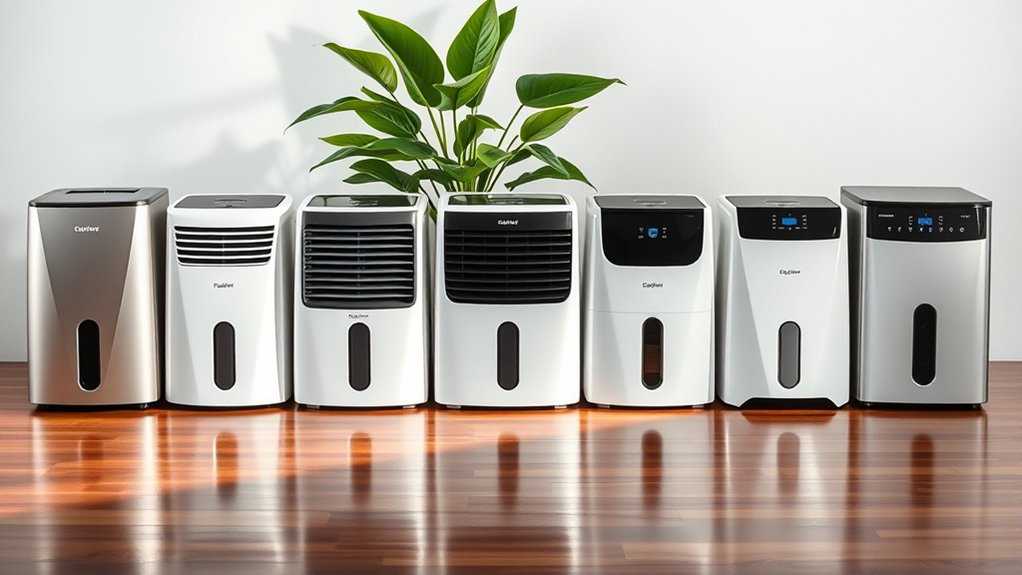
Running a dehumidifier all day can add a noticeable amount to your electric bill, but the total depends on two different things: the unit’s rated power and how often its compressor actually runs. At the latest available U.S. average residential electricity rate, a 590-watt unit would cost about $76.93 per 30-day month if it drew full power continuously. Normal humidistat cycling can reduce the real cost substantially.
Quick Answer
A dehumidifier that averages 300 to 700 watts continuously would cost about $39 to $91 per month at the May 2026 U.S. residential average of 18.11 cents per kWh. A 590-watt example costs about $76.93 at full load, but less when the humidistat cycles the compressor off.
Key Takeaways
- Use the formula: watts ÷ 1,000 × hours used × electricity rate.
- Being switched on 24/7 does not always mean the compressor draws full power 24/7.
- Your utility rate, humidity setting, room conditions, and maintenance can change the real cost.
- A plug-in electricity meter gives a better estimate than capacity or wattage alone.
How Much Does a Dehumidifier Cost to Run 24/7?
The clearest way to estimate the cost is to calculate the maximum full-load cost first. The table below uses the U.S. Energy Information Administration’s May 2026 year-to-date residential average of 18.11 cents per kWh, released July 23, 2026.
| Average draw | Energy in 30 days | Full-load monthly cost |
|---|---|---|
| 300 W | 216 kWh | $39.12 |
| 460 W | 331.2 kWh | $59.98 |
| 590 W | 424.8 kWh | $76.93 |
| 700 W | 504 kWh | $91.27 |
| 1,200 W | 864 kWh | $156.47 |
These are maximum-style estimates that assume the listed power draw continues for all 720 hours in a 30-day month. Most humidistat-controlled units cycle the compressor on and off after the room approaches the selected humidity level. The fan may also use power while the compressor is off, depending on the model and setting.
For a 590-watt unit, full-load operation costs about $76.93 per month at 18.11 cents per kWh. If its average duty cycle is 50%, the estimated cost falls to about $38.47.
Note: Capacity in pints per day does not tell you the exact wattage. Two units with the same capacity can have different power use and efficiency.
Dehumidifier Wattage by Size and Type
Dehumidifier power use varies by design, test rating, fan behavior, room temperature, and efficiency. The Department of Energy testing framework described by ENERGY STAR rates capacity in pints removed per 24 hours and efficiency in liters of water removed per kWh. It does not assign one fixed wattage to every 30-, 50-, or 70-pint unit.
Recommended Products

【Compact Size, Big Efficiency】 The upgraded 2025 Waykar dehumidifier features cutting-edge rotary compressor technology. It’s more compact but still powerful, capable of removing up to 34 pints of moisture per day (at 95℉, 90% RH), ideal for spaces up to 2,000 sq. ft. such as living rooms, basements, bedrooms, and offices. The adjustable humidity range from 30% to 80% helps you easily maintain the ideal indoor humidity

Semiconductor dehumidifiers use thermoelectric cooling to remove moisture from the air. They create a drier, more comfortable environment by reducing humidity and improving air quality.

1600 Sq.Ft High Capacity Dehumidifier- The GoGuess basement dehumidifier is equipped with a quiet yet powerful compressor that efficiently extracts up to 21 pints of moisture per day (tested at 95°F and 90% RH). Perfect for use in basements, offices, bathrooms, bedrooms, kitchens, storage areas, living rooms, laundry spaces, garages, crawl spaces, and RVs. It helps maintain a healthy humidity level between 30% and 70%, promoting a more comfortable and healthier indoor environment
Wattage by Capacity
Larger-capacity equipment often has a higher rated input, but a more efficient larger unit may finish the job faster than a smaller unit that runs almost continuously. Compare the current DOE-rated capacity, the integrated energy factor, and the input power shown on the product label or manual. Older pint ratings and manufacturer marketing claims may use different test conditions, so do not compare capacity numbers without checking how they were measured.
Type-Based Power Use
Type affects how the unit uses electricity and where it performs best. Refrigerant models are common in warm, humid rooms. Desiccant units can remain effective in cooler conditions but may use electric heat. Whole-home models are ducted and should be sized as part of the home’s moisture-control system.
| Type or label | How to estimate power | Best use |
|---|---|---|
| 30-pint portable | Use the nameplate watts or measured kWh | Smaller damp areas, depending on moisture load |
| 50-pint portable | Use the nameplate watts or measured kWh | Larger or wetter spaces |
| 70-pint claim | Confirm the DOE test standard behind the claim | Heavy moisture loads when properly rated |
| Whole-house | Use manufacturer and installer specifications | Ducted whole-home humidity control |
Smart controls do not guarantee a fixed percentage of savings. Their value is that they can prevent unnecessary runtime by using a humidistat, schedule, or remote control. The savings depend on the previous settings and the actual moisture load.
Check Unit Specifications
Look for “rated input,” “input power,” or watts on the nameplate or in the manual. If the label does not provide a useful estimate, connect a compatible plug-in electricity meter and record kWh for at least 24 to 72 hours during typical weather. Multiply the measured daily kWh by your utility rate and by 30 for a practical monthly estimate.
Pro Tip: Measure energy use after the room has reached its normal humidity level. A first-day reading may be unusually high because the unit is drying the air, furnishings, walls, and other materials.
How to Calculate Monthly Dehumidifier Cost
Your monthly cost comes down to wattage, runtime, duty cycle, and electricity rate.
At a Glance
| Time Required | About 5 minutes for an estimate; 24–72 hours for a measured result |
| Difficulty | Easy |
| Tools Needed | Calculator, electricity rate, and optionally a plug-in kWh meter |
| Cost | Free using label data; a kWh meter costs extra |
Basic formula: monthly cost = (watts ÷ 1,000) × hours per day × 30 × electricity rate.
- 590 watts ÷ 1,000 = 0.59 kW
- 0.59 kW × 8 hours = 4.72 kWh per day
- 4.72 kWh × 30 days = 141.6 kWh per month
- 141.6 kWh × $0.1811 = about $25.64 per month
For a unit left on all day but cycling, add the estimated duty cycle: rated kW × 24 × 30 × duty cycle × electricity rate. For example, a 590-watt unit at a 50% average duty cycle costs about $38.47 per month at 18.11 cents per kWh.
How to Measure Actual Electricity Use
- Reset a compatible plug-in kWh meter.
- Run the dehumidifier with your normal humidity setting, fan mode, and drainage setup.
- Record the total kWh after 24 to 72 hours.
- Divide by the number of days to find average daily kWh.
- Multiply daily kWh by 30 and by your electricity rate.
This method captures compressor cycling, fan-only operation, defrost cycles, and standby power, so it is usually more accurate than a label-only estimate.
How Electricity Rates Affect Dehumidifier Cost
The same dehumidifier can cost far more in one state than another. The following examples use a constant 590-watt load for 720 hours and the EIA’s latest available year-to-date residential rates through May 2026. Your utility’s rate plan, taxes, fixed charges, tiers, and time-of-use pricing may differ.
| Location | Residential rate | 590 W full-load monthly cost |
|---|---|---|
| U.S. average | 18.11¢/kWh | $76.93 |
| Louisiana | 13.52¢/kWh | $57.43 |
| California | 32.83¢/kWh | $139.46 |
| Hawaii | 44.61¢/kWh | $189.50 |
Check the energy section of your utility bill for the rate that applies to each kWh. If your plan uses peak and off-peak rates, a built-in timer may reduce cost when the room can safely remain within the target humidity range.
How to Lower Dehumidifier Energy Use
You can reduce energy use without giving up moisture control by matching the unit and settings to the space. Current ENERGY STAR guidance says certified dehumidifiers use about 20% less energy than comparable conventional models and recommends selecting capacity according to room size and dampness.
- Set a practical humidity target: The EPA recommends keeping indoor relative humidity around 30% to 50%. A setting near 45% to 50% is often a reasonable starting point unless your building or health professional requires something different.
- Use the humidistat: Auto mode lets the compressor cycle instead of running continuously after the target is reached.
- Fix moisture sources: Repair leaks, vent bathrooms and dryers outdoors, and keep windows and exterior doors closed when outdoor air is humid.
- Keep airflow clear: Follow the required wall clearance and clean the filter as directed in the manual.
- Use the right temperature range: Refrigerant models may frost or lose performance in cool rooms. Choose a unit rated for the room temperature.
- Measure before replacing: A kWh meter can show whether high cost comes from the unit, the settings, or a severe moisture load.
Lowering the humidity setting generally increases runtime because the unit must remove more moisture. There is no universal rule that every 5% reduction raises energy use by a fixed percentage.
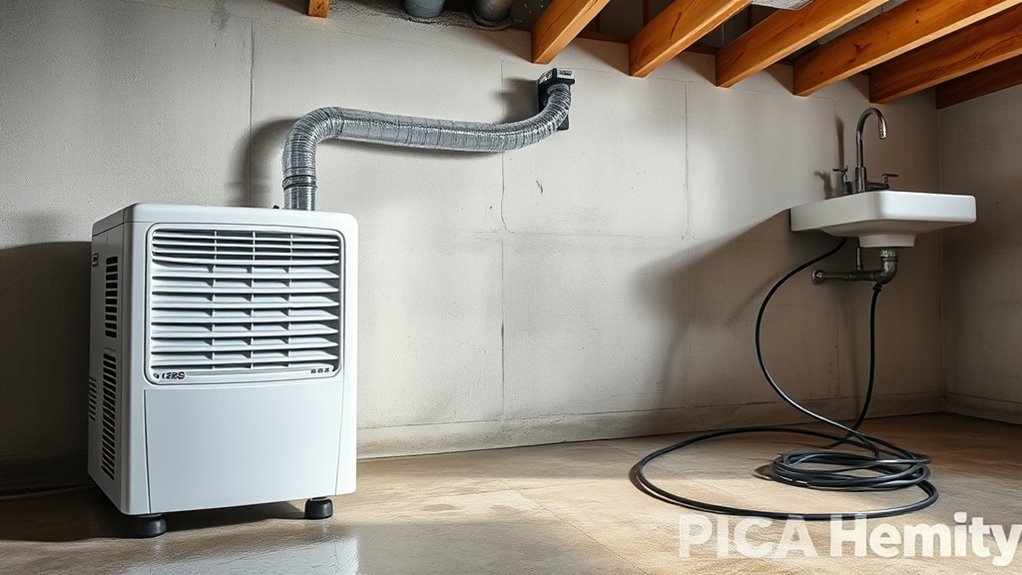
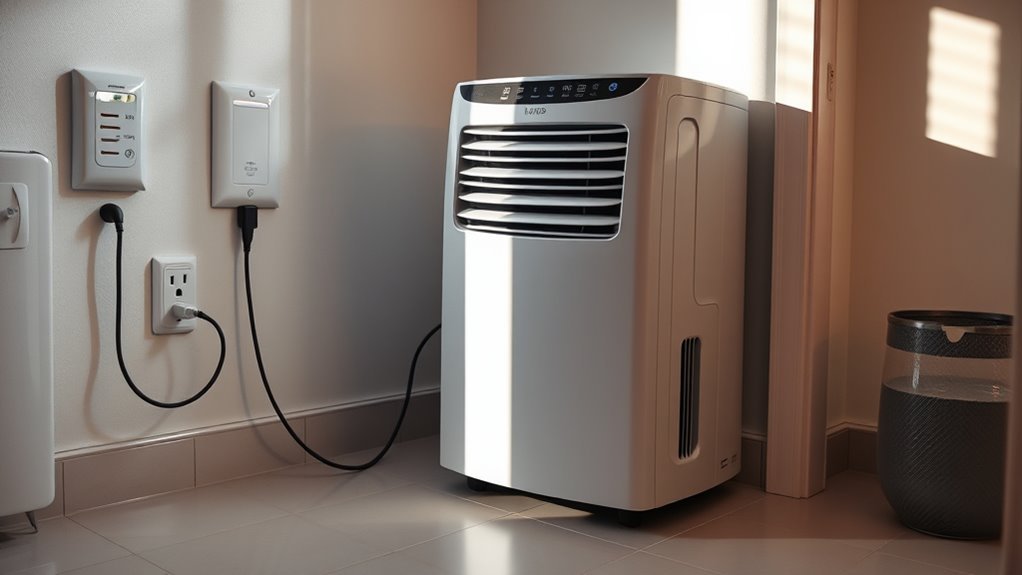
Warning: Follow the manufacturer’s electrical and drainage instructions. Use a properly grounded outlet, keep the unit and cord away from standing water, secure continuous-drain hoses, and do not use an extension cord unless the manual specifically permits it.
Recommended Products
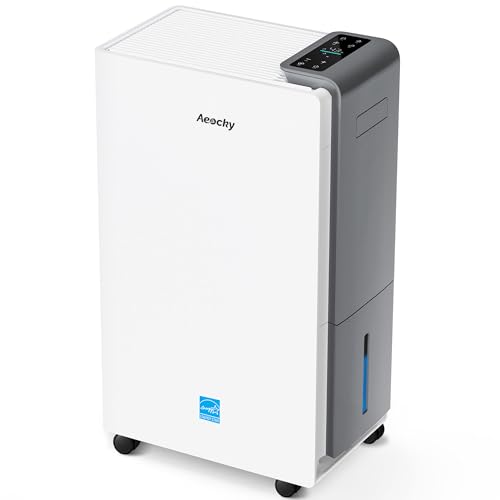
【ENERGY STAR 25 ≠ ENERGY STAR Most Efficient 2025】Don't fall for competitors' word games. With only 2.6% of ENERGY STAR models earning "Most Efficient 2025" title, these options are exceptionally rare on the market. RHEA-001 is one of the few to truly hold this top-tier certification. Many brands use misleading phrases like "Energy Star Efficient 25" or "Energy Star 25" to imply a standard they haven't met. Choosing them is a risk.With AEOCKY, you get verified performance and the peace of mind of authentic, top-tier efficiency.

Efficient ENERGY STAR Certified Dehumidifier - The Glowells dehumidifier isn't just powerful—it's "Energy Srar" certified. Effectively absorb moisture and energy saving up to 45% than non-cetificated dehumidifier. Max Dehumidification of 52 Pint/D (95℉, 95% RH) Perfect for large spaces 4500 sq.ft like basements, garages, and living rooms. (Note: 52 Pints ≠ Tank Capacity)

【The Undisputed Champion — Industry‑Leading Dehumidifier Brand】When you choose AEOCKY, you get double market validation. In 2025, AEOCKY was an industry‑leading dehumidifier brand on Amazon US. This means you’re not just choosing a flagship from a market leader, but the top choice proven by millions of real users—representing the ultimate combination of performance, quality, and trust.
Can Community Solar Lower Dehumidifier Costs?
Community solar does not make a dehumidifier use fewer kWh. It may lower the household’s net electricity bill through subscription credits. The U.S. Department of Energy’s community solar guidance explains that program availability, bill-credit rules, fees, cancellation terms, and consumer protections vary by location and contract.
Compare the subscription payment with the expected bill credit and read the disclosure documents before enrolling. A program with clear savings and no unexpected fees can offset part of the total electric bill, but the credit is not tied specifically to the dehumidifier and savings are not guaranteed in every program.
Recommended Products

No Subscription Needed, Total Privacy: The aosuBase features built-in 32GB local storage, holding up to 4 months of loop recordings for 2 cameras. Your footage stays fully encrypted and under your control — private, secure, and always accessible.

No Subscription Needed, Total Privacy: The aosuBase features built-in 32GB local storage, holding up to 2 months of loop recordings for 4 cameras. Your footage stays fully encrypted and under your control — private, secure, and always accessible.

【Lifetime Free AI + Smart Camera for Birds】 Spot a Cardinal in your yard? The built-in smart camera auto-captures it, and our AI instantly IDs it 99% species, lifetime free. No subscriptions, just easy learning about the wild birds visiting your space, anytime. You’ll get watching and learning.
Related Guides
Frequently Asked Questions
Medical note: Humidity control may reduce certain environmental triggers, but a dehumidifier does not diagnose or treat COPD, allergies, snoring, or sleep apnea. Discuss persistent breathing or sleep symptoms with a qualified health professional.
Would a dehumidifier help with COPD?
It may help if the home is excessively humid and that moisture is contributing to mold, dust mites, or discomfort. However, humidity extremes can bother people with chronic respiratory disease, and a dehumidifier is not a COPD treatment. Aim for a moderate indoor range and follow your clinician’s advice, especially if symptoms worsen.
How much does it cost to run a dehumidifier 24 hours a day for a month?
At 18.11 cents per kWh, a unit averaging 300 watts costs about $39.12 per 30-day month, while one averaging 700 watts costs about $91.27. A 590-watt unit costs about $76.93 at continuous full load or about $38.47 at a 50% average duty cycle.
Can a dehumidifier help with dust mites?
Keeping humidity controlled can make conditions less favorable for dust mites, but one portable unit may not eliminate mites or allergens throughout a home. Combine humidity control with washing bedding, using allergen-resistant covers, cleaning regularly, and fixing moisture problems.
Does a dehumidifier help with snoring?
A dehumidifier is not a proven snoring treatment. It might help indirectly when excessive humidity is supporting mold or allergens that contribute to nasal congestion. It can also make dry-air irritation worse if humidity falls too low. Frequent loud snoring, gasping, or breathing pauses can be signs of sleep apnea and should be medically evaluated. See the NHLBI sleep apnea symptom guidance.
Should a dehumidifier run continuously?
Continuous operation may be useful during initial drying, after a leak has been fixed, or in a persistently damp area. For normal maintenance, use the humidistat so the compressor cycles after reaching the target. If it never reaches the setpoint, check for open windows, leaks, blocked airflow, low room temperature, or an undersized unit.
How can I find my dehumidifier’s exact monthly cost?
Measure its kWh use for several typical days with a compatible electricity meter. Divide the total by the number of days, multiply by 30, and then multiply by the per-kWh rate on your utility bill. This captures cycling and standby use that a wattage-only estimate misses.
Conclusion
The cost of running a dehumidifier 24/7 depends on its real average power draw and your electricity rate. At the May 2026 U.S. average rate, a 590-watt unit would cost about $76.93 per month at continuous full load, but normal cycling can reduce that figure. Use a practical 30% to 50% humidity target, correct moisture sources, maintain airflow, and measure actual kWh when you need a dependable estimate. Community solar may offset part of the total bill, but it does not reduce the appliance’s energy use.
Sources
- U.S. Energy Information Administration, Electric Power Monthly — May 2026 year-to-date residential electricity rates.
- ENERGY STAR: Dehumidifiers — current efficiency, sizing, humidistat, and humidity guidance.
- ENERGY STAR: Dehumidifier Testing and Capacity — DOE capacity and efficiency measurement framework.
- U.S. EPA: Care for Your Air — recommended indoor relative humidity range.
- U.S. Department of Energy: Community Solar Basics — bill credits, availability, contracts, and consumer protections.
- NHLBI: Sleep Apnea Symptoms — warning signs associated with frequent loud snoring and breathing pauses.