
A dehumidifier can use a modest or substantial amount of electricity depending on its wattage, how long the compressor runs, the room’s moisture level, and your humidity setting. The most reliable estimate comes from multiplying the unit’s watts by its active runtime. For the true cost, measure its kWh and multiply that number by the electricity rate on your utility bill.
Quick Answer
A dehumidifier’s electricity use equals its input wattage multiplied by its actual running time. A 300-watt unit uses 0.3 kWh during one full active hour, while a 700-watt unit uses 0.7 kWh. At 18.44 cents per kWh, five hours at 700 watts costs about $0.65.
Key Takeaways
- Divide wattage by 1,000, then multiply by operating hours to calculate kWh.
- A unit’s rated wattage shows active power draw, not necessarily its total daily use, because the compressor may cycle on and off.
- At the May 2026 U.S. residential average of $0.1844 per kWh, a 500-watt unit running eight active hours daily costs about $22.13 in a 30-day month.
- ENERGY STAR-certified dehumidifiers use about 13% less energy than similarly sized conventional models.
- A humidity setting near 50%, proper capacity, closed doors and windows, and a clean filter can reduce unnecessary runtime.
At a Glance
| Time Required | 2–5 minutes to estimate; 24–72 hours to measure representative use |
| Difficulty | Easy |
| Tools Needed | Dehumidifier wattage label, utility bill, calculator, and an optional plug-in electricity monitor |
| Cost | Free to estimate; optional electricity monitor cost varies |
How Much Electricity Does a Dehumidifier Use?
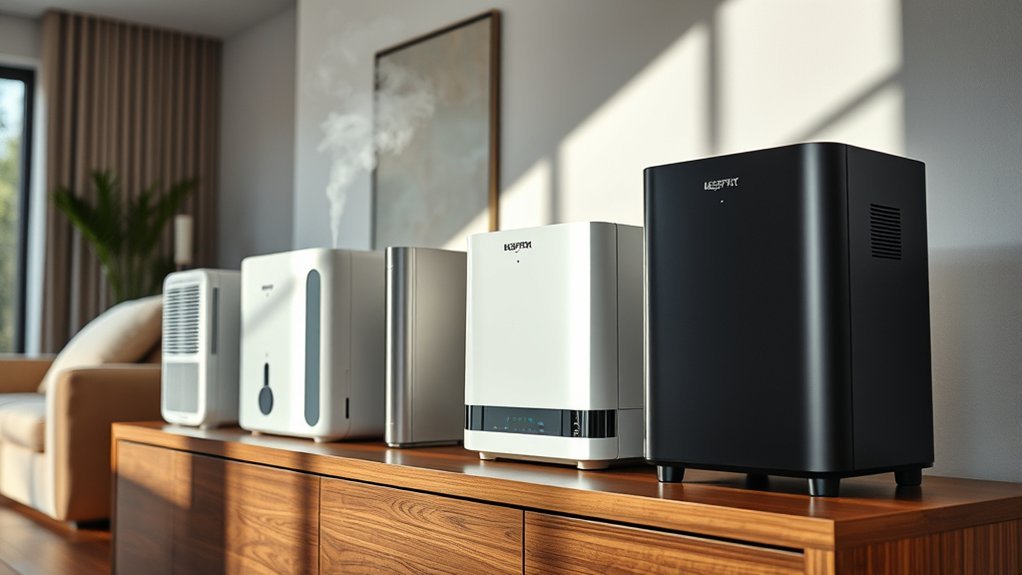
A household dehumidifier normally draws a few hundred watts while its fan and compressor are actively running. The exact figure is printed on the appliance nameplate, specification sheet, manual, or energy label. Do not assume that every unit in the same pint-capacity class uses the same amount of power.
Watts and kilowatt-hours measure different things:
- Watts or kilowatts measure the appliance’s power draw at a given moment.
- Kilowatt-hours measure how much electrical energy the appliance uses over time.
- One kilowatt-hour equals using 1,000 watts for one hour.
| Active Power Draw | Energy Used in One Full Hour |
|---|---|
| 300 watts | 0.3 kWh |
| 500 watts | 0.5 kWh |
| 700 watts | 0.7 kWh |
These figures assume the appliance remains at the stated power draw for the full hour. A humidistat-controlled unit may cycle its compressor off after reaching the target humidity, so its measured daily energy use can be lower.
ENERGY STAR reports that a certified dehumidifier removes the same amount of moisture as a similarly sized conventional model while using about 13% less energy.
What Affects Dehumidifier Power Use?
The wattage printed on the label is only one part of the calculation. Total energy use depends on how hard the appliance works and how long it remains active.
- Humidity level: A wet basement or laundry area normally requires more compressor runtime than a mildly damp bedroom.
- Room size and moisture load: Water seepage, wet building materials, shower steam, drying clothes, and outdoor air leakage can keep adding moisture.
- Capacity: A unit that is too small may run for long periods without reaching the set point. Choose a capacity that meets or modestly exceeds the recommendation for the room size and dampness level.
- Temperature: Refrigerant models can remove less water in cooler air and may pause for automatic defrost.
- Humidity setting: A lower target normally requires more moisture removal and more runtime.
- Doors and windows: Openings allow humid air to enter and can make the appliance run continuously.
- Airflow and maintenance: A dirty filter, blocked grille, or dusty coil reduces airflow and can lengthen runtime.
- Drainage setup: A full bucket stops many portable units. Continuous drainage allows longer unattended operation, which can increase total daily kWh if the moisture source remains.
Note: Dehumidifier capacity labels changed around 2020 after the U.S. Department of Energy adopted cooler, more realistic test conditions. According to ENERGY STAR’s capacity guide, an older 50-pint portable model may be roughly comparable to a newer 30-pint model. Compare current DOE-rated capacity rather than relying only on an old product’s pint number.
How Do You Calculate Dehumidifier kWh?
Use this formula to estimate energy consumption:
Daily kWh = watts ÷ 1,000 × active operating hours
- Find the dehumidifier’s input wattage on its label or manual.
- Divide the wattage by 1,000 to convert watts to kilowatts.
- Multiply the kilowatts by the number of hours the appliance actively runs.
- Multiply daily kWh by the number of days used.
- Multiply total kWh by the electricity rate on your utility bill.
For example, a 300-watt dehumidifier running for six active hours uses:
300 ÷ 1,000 × 6 = 1.8 kWh per day
Over 30 days, that equals 54 kWh. At $0.1844 per kWh, the estimated monthly cost is about $9.96.
| Example | Daily Use | 30-Day Use | Cost at $0.1844/kWh |
|---|---|---|---|
| 300 W for 6 hours | 1.8 kWh | 54 kWh | $9.96 |
| 500 W for 8 hours | 4.0 kWh | 120 kWh | $22.13 |
| 700 W for 5 hours | 3.5 kWh | 105 kWh | $19.36 |
The cost column uses the latest available U.S. residential average when this article was updated: 18.44 cents per kWh for May 2026, reported by the U.S. Energy Information Administration. Your local rate may be higher or lower.
How Much Does It Cost to Run a Dehumidifier?
The operating cost depends on wattage, compressor runtime, electricity price, and the number of days used. Because electricity rates vary by state, utility, and billing plan, the rate on your bill gives a better estimate than any national average.
Use this cost formula:
Operating cost = total kWh × electricity rate per kWh
Cost to Run a Dehumidifier 24 Hours a Day
The table below shows the theoretical cost if the appliance remains at its full stated wattage for 24 hours daily. A humidistat-controlled compressor may cycle off, so actual use may be lower.
| Power Draw | Daily Use | 30-Day Use | 30-Day Cost at $0.1844/kWh |
|---|---|---|---|
| 300 watts | 7.2 kWh | 216 kWh | $39.83 |
| 500 watts | 12.0 kWh | 360 kWh | $66.38 |
| 700 watts | 16.8 kWh | 504 kWh | $92.94 |
Continuous full-power operation usually signals a heavy moisture load, an undersized unit, open doors or windows, low-temperature defrost cycling, or an unresolved water problem. Do not treat a dehumidifier as a substitute for repairing leaks or stopping water intrusion.
How to Measure Actual Dehumidifier Energy Use
A plug-in electricity monitor provides a more reliable answer than estimating runtime. It records both active operation and periods when the compressor is off.
- Confirm that the electricity monitor is rated for the dehumidifier’s voltage and current.
- Plug the monitor directly into a properly grounded wall outlet.
- Plug the dehumidifier into the monitor.
- Reset the monitor’s kWh reading.
- Operate the dehumidifier normally for at least 24 hours. A 48- to 72-hour test is better when humidity changes from day to day.
- Divide the measured kWh by the number of test days to find average daily use.
- Multiply the result by 30 for an estimated monthly total.
Pro Tip: Record the starting humidity, final humidity, room temperature, set point, and weather during the test. Those details explain why the same dehumidifier may use more electricity during a wet week than during a dry one.
Warning: Follow the appliance manual and all electrical ratings. Use a properly grounded outlet, keep cords and connections away from collected water, route drain hoses away from electrical devices, and do not create a trip hazard. Do not use an undersized extension cord or an electricity monitor that is not rated for the appliance.
Recommended Products
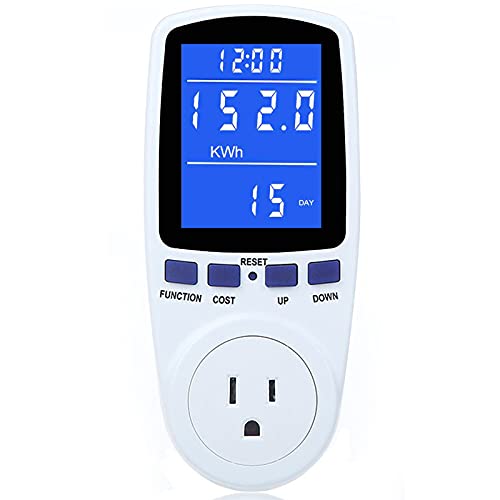
Various Monitoring Parameters: The power meter plug can monitor the power (W), energy (kWh), volts, amps, hertz, power factor, cost, minimum and maximum power (W), cumulative days and time of your appliances. By switching 7 display modes, you can easily know the various parameters while the appliance is working. The home energy monitor can also calculate and display how much power your appliance uses and how much electricity bill it cost in cumulative time

【Matter-Certified】Matter-certified devices, regardless of brand, can work together and are compatible with most major smart home platforms like Amazon Alexa, Apple HomeKit, Google Home, and Samsung SmartThings. Enjoy more flexible and unified control.

Multi-function power monitor: Our electric usage monitor can monitor the power (W), electricity(kWh), voltage(V), frequency(Hz), current(A), power factor(PF), unit price($/kWh), total cost($) of your appliances. By switching 8 display modes, you can easily know the various parameters while the appliance is working. The “electricity” mode can calculate and display how much power your appliance uses. And the “total cost” mode will show how much electricity bill it cost in cumulative time
Which Dehumidifier Uses the Least Energy?
No single dehumidifier type always uses the least electricity. The best choice is a model that can handle the required moisture load efficiently under the room’s actual temperature and humidity conditions.
For comparable models, check the Integrated Energy Factor, or IEF. This official efficiency measurement is expressed in liters of water removed per kilowatt-hour. A higher IEF means the unit removes more water for each kWh used. Compare IEF values within the capacity range that fits your space.
Other useful factors include:
- ENERGY STAR certification: Certified models use about 13% less energy than similarly sized conventional units.
- Correct capacity: A unit that is too small may run continuously. ENERGY STAR recommends choosing at least the capacity required for the room’s size and dampness.
- Automatic humidistat: This turns the compressor off after the selected humidity is reached.
- Low-temperature performance: Refrigerant models may lose capacity or enter defrost in cold rooms.
- Drainage: Continuous drainage prevents bucket-full shutdowns but can also permit longer operation.
Recommended Products

【Compact Size, Big Efficiency】 The upgraded 2025 Waykar dehumidifier features cutting-edge rotary compressor technology. It’s more compact but still powerful, capable of removing up to 34 pints of moisture per day (at 95℉, 90% RH), ideal for spaces up to 2,000 sq. ft. such as living rooms, basements, bedrooms, and offices. The adjustable humidity range from 30% to 80% helps you easily maintain the ideal indoor humidity

Semiconductor dehumidifiers use thermoelectric cooling to remove moisture from the air. They create a drier, more comfortable environment by reducing humidity and improving air quality.

1600 Sq.Ft High Capacity Dehumidifier- The GoGuess basement dehumidifier is equipped with a quiet yet powerful compressor that efficiently extracts up to 21 pints of moisture per day (tested at 95°F and 90% RH). Perfect for use in basements, offices, bathrooms, bedrooms, kitchens, storage areas, living rooms, laundry spaces, garages, crawl spaces, and RVs. It helps maintain a healthy humidity level between 30% and 70%, promoting a more comfortable and healthier indoor environment
Desiccant Versus Refrigerant Dehumidifiers
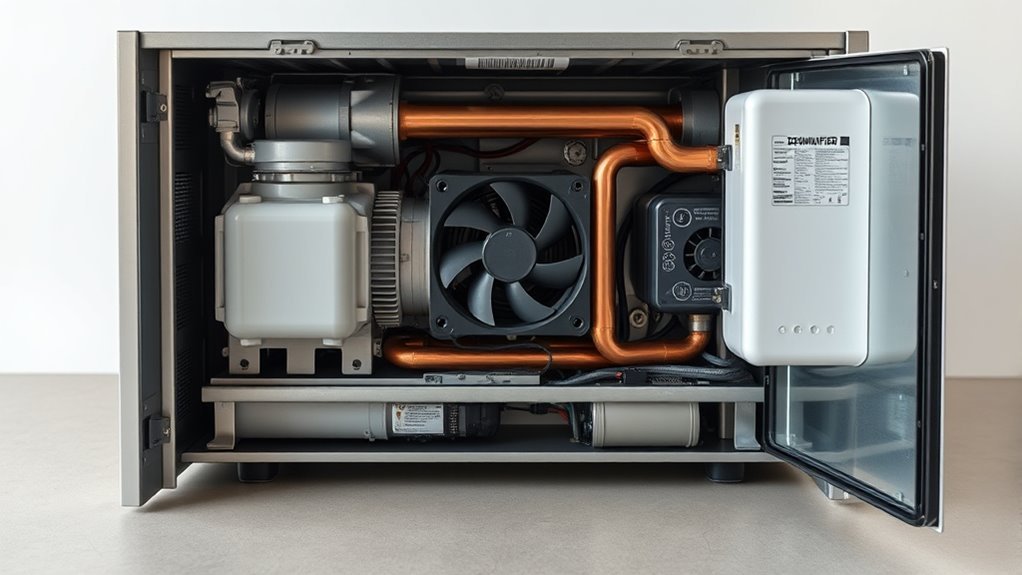
Refrigerant dehumidifiers cool air below its dew point so water condenses on a coil. They are common in homes and often perform well in warm, humid rooms. Desiccant models pass air across a moisture-absorbing material and use heat to regenerate that material.
Desiccant units can remain effective in cooler spaces, but the regeneration heater means they are not automatically the lowest-energy choice. Compare the rated input, water-removal capacity, temperature range, and measured energy use of the exact models you are considering. A clear explanation of both systems is available in Carrier’s dehumidifier technology guide.
How Can You Lower Dehumidifier Electricity Costs?
You can reduce electricity use without allowing indoor humidity to become excessive. Start with a moderate set point and remove the causes of moisture before asking the appliance to work harder.
- Start near 50% relative humidity. The U.S. Environmental Protection Agency generally recommends 30–50% indoor relative humidity and advises keeping it below 60% where possible.
- Close exterior doors and windows. This prevents humid outdoor air from continuously replacing the moisture being removed.
- Repair leaks and drainage problems. Fix plumbing leaks, foundation seepage, roof leaks, and blocked gutters.
- Use bathroom and kitchen exhaust fans. Vent moisture outdoors when showering or cooking.
- Choose sufficient capacity. A modestly oversized unit is generally preferable to one that cannot reach the set point.
- Clean the filter. Follow the manufacturer’s schedule and keep intake and discharge grilles clear.
- Use the humidistat or timer. Do not run the unit continuously after the space has reached the desired humidity.
- Measure actual kWh. Confirm whether a schedule or setting change truly reduces energy use.
- Consider an ENERGY STAR model. Compare certified products by capacity and IEF rather than choosing only by purchase price.
Why Does a Dehumidifier Run Constantly?
A dehumidifier that rarely shuts off may be responding to a real moisture load rather than an appliance fault. Check these causes before replacing it:
- The humidity setting is lower than the unit can maintain.
- The appliance is undersized for the room or moisture condition.
- Doors, windows, crawl-space vents, or other openings admit humid air.
- A plumbing leak, foundation seepage, or wet material continues adding water.
- The filter or air grille is blocked.
- The room is cool enough to cause frost or frequent defrost cycles.
- The humidity sensor is obstructed, dirty, or inaccurate.
- The space has high ceilings or connects openly to other rooms.
Use a separate hygrometer to compare the room’s actual relative humidity with the dehumidifier display. If the appliance runs constantly after moisture sources, airflow, sizing, temperature, and settings have been checked, follow the manual’s troubleshooting steps or request qualified service.
How Does a Dehumidifier Compare to AC?
A dehumidifier and an air conditioner should not be compared only by wattage because they perform different jobs. A dehumidifier targets moisture. An air conditioner lowers temperature and also removes some moisture while its cooling coil is operating.
Recommended Products

High Efficient Dehumidifiers for Home: This compact 44oz dehumidifier efficiently removes excess moisture in rooms with 86°F and 80% RH, collecting up to 11.8oz (349ml) of water in 24 hours. It maintains an ideal humidity level of 45%-55% while operating at ultra-low energy consumption (24W/hour, 576W/day). Perfect for bedrooms, bathrooms, and small spaces.

Upgrade High Efficient Dehumidification: Dehumidifier utilize semi conductor condensation technology, ensuring quiet operation while effectively extracting moisture from the air. This advanced feature helps keep humidity levels below 45%
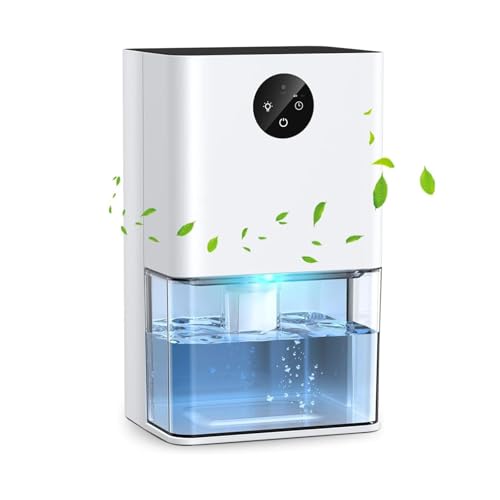
High Efficient Dehumidification for Home: The DY501 dehumidifier removes excess moisture effectively in closed small rooms with humid environments of 86F and 80% RH, collecting a maximum of 400ml of water in 24 hours with very low energy consumption (no more than 1-kilowatt hour a day)
Energy Use Comparison
| Device | Main Job | Effect on Room | Best Use |
|---|---|---|---|
| Portable dehumidifier | Removes moisture | Releases slightly warmer, drier air | A damp room that is already at a comfortable temperature |
| Room or central air conditioner | Cools and removes some moisture | Lowers temperature while operating | A room or home that is both hot and humid |
| Whole-home dehumidifier | Controls moisture across ducted areas | Adds controlled drying without replacing cooling | Persistent whole-home humidity that the HVAC system does not control well |
A central air conditioner will often use more total electricity than a portable dehumidifier because it serves a larger area and provides cooling. However, there is no universal percentage difference. Compare actual kWh over similar weather and occupancy conditions.
Cooling Versus Drying
Use air conditioning when the space is too hot and humid. Use a dehumidifier when the temperature is acceptable but the air remains damp, musty, or above the desired humidity level.
A portable dehumidifier does not cool a room. It releases the compressor’s heat and the heat recovered during condensation, so the air near the unit may feel warmer. Lower humidity can improve comfort, but the room’s measured temperature may rise slightly.
Cost Savings Potential
A dehumidifier may reduce the need to overcool a home simply to control humidity. It may also help occupants remain comfortable at a higher thermostat setting. However, savings are not guaranteed. Net energy use depends on:
- Outdoor temperature and humidity
- AC size and efficiency
- Dehumidifier efficiency and placement
- Thermostat and humidity settings
- Building air leakage
- How much heat the dehumidifier adds to the conditioned area
For a fair comparison, record the AC and dehumidifier’s combined kWh under similar weather conditions before and after changing the control strategy.
Frequently Asked Questions
How many kWh does a dehumidifier use per hour?
Divide its wattage by 1,000. A 300-watt dehumidifier uses 0.3 kWh during one full active hour, a 500-watt model uses 0.5 kWh, and a 700-watt model uses 0.7 kWh. Actual hourly averages can be lower when the compressor cycles off.
How much does it cost to run a dehumidifier 24/7 for a month?
At $0.1844 per kWh, continuous full-power operation for 30 days costs about $39.83 for a 300-watt unit, $66.38 for a 500-watt unit, or $92.94 for a 700-watt unit. Actual costs may be lower if the compressor cycles off after reaching the humidity setting.
Do dehumidifiers raise the electric bill?
Yes. Every operating hour adds electricity use. The increase depends on wattage, compressor runtime, local rates, and season. You can limit the cost by repairing moisture sources, using a moderate humidity setting, keeping the filter clean, closing windows and doors, and choosing an efficient unit with enough capacity.
What humidity setting saves electricity?
Start near 50% relative humidity and adjust only as needed for comfort, condensation, and moisture control. The EPA generally recommends 30–50% indoor relative humidity and keeping it below 60% where possible. A very low setting can make the appliance run longer without providing a useful benefit.
Should you use a dehumidifier if you have COPD?
A dehumidifier may help when high humidity, dampness, mold, or dust mites are personal triggers, but it is not a COPD treatment. High humidity can worsen symptoms for some people, while overly dry air may be uncomfortable for others. Measure the room humidity, keep the unit clean, and ask your healthcare professional what range is appropriate for you. The American Lung Association recommends identifying personal triggers and discussing them with your care team.
Conclusion
To estimate how much electricity a dehumidifier uses, divide its wattage by 1,000 and multiply by its active runtime. Then multiply the resulting kWh by your electricity rate. For the most accurate answer, monitor the appliance for several days instead of assuming that it runs at full power whenever it is plugged in.
You can control costs by fixing leaks, closing doors and windows, starting near a 50% humidity setting, cleaning the filter, selecting enough capacity, and comparing ENERGY STAR models by IEF. Use a dehumidifier for targeted moisture control and air conditioning when the space also needs cooling.
Sources
- ENERGY STAR: Dehumidifiers — efficiency savings, sizing, placement, drainage, and electrical safety guidance.
- ENERGY STAR: Dehumidifier Testing and Capacity — IEF, DOE testing, and the change in capacity ratings.
- U.S. Energy Information Administration: Electric Power Monthly — May 2026 U.S. residential electricity-price benchmark.
- U.S. Environmental Protection Agency: Care for Your Air — recommended indoor relative-humidity range.
- American Lung Association: Prevent a COPD Flare-Up — humidity and weather as possible COPD triggers.
- Carrier: How Dehumidifiers Work — refrigerant and desiccant operating methods and the warming effect.



[…] deeper explanations of the two measurements, see how many kWh a dehumidifier uses and how many watts a dehumidifier […]