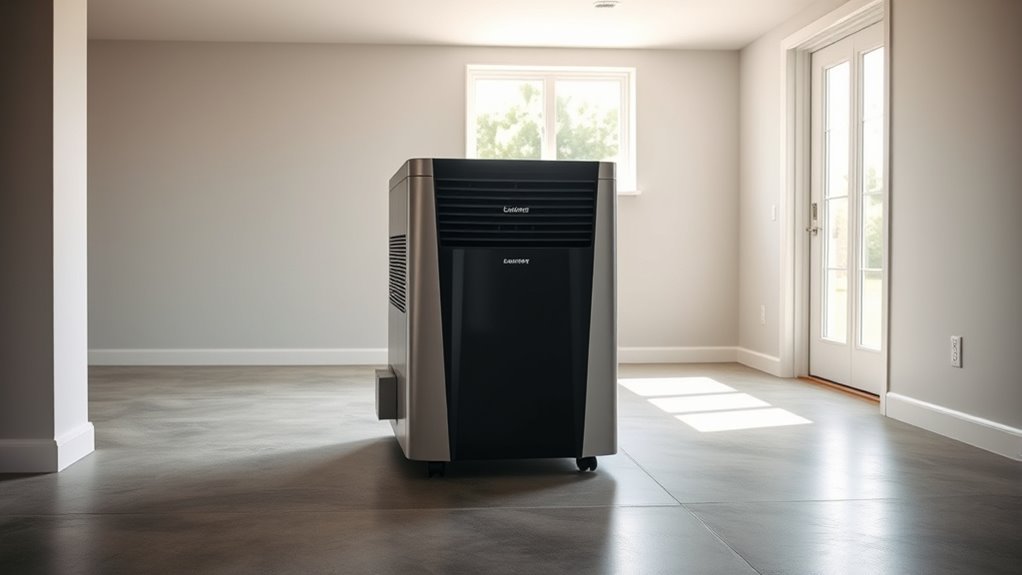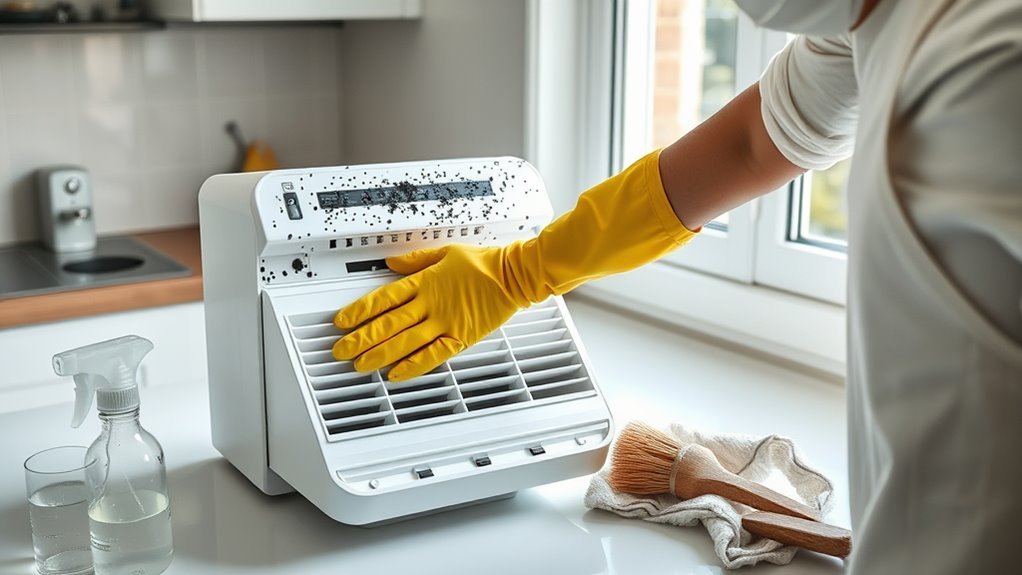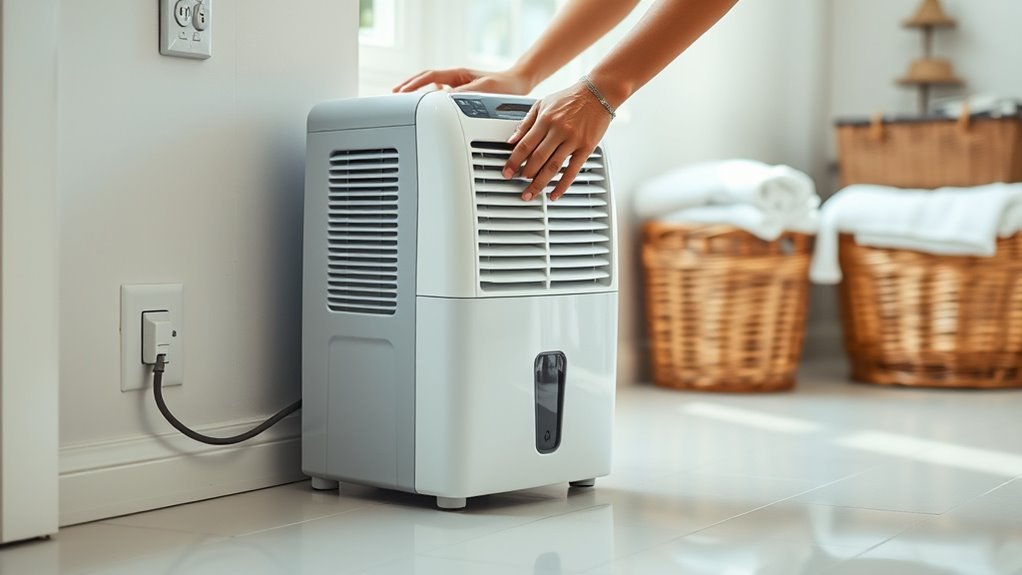
A dehumidifier works best when you treat it like a moisture-control tool, not just a plug-in appliance. Put it in the dampest area, give it open airflow, set a sensible humidity target, and keep the tank, filter, and drain path clean. The goal is simple: lower excess moisture without making the room uncomfortably dry.
Quick Answer
To use a dehumidifier properly, place it in the dampest room on a level surface with clear airflow, close outside doors and windows, set the target humidity around 45–50%, and empty the tank or connect a drain hose. Clean the filter every few weeks and check readings with a separate hygrometer.
Key Takeaways
- A 45–50% target is a practical setting for many damp rooms, but the EPA recommends keeping indoor humidity below 60% and ideally between 30% and 50%.
- Keep the intake and exhaust vents clear, and follow your model’s manual for minimum clearance from walls and furniture.
- Use a drain hose only if it can slope safely to a floor drain or sump; use a pump model if water must move upward.
- Clean the filter every 2–4 weeks during regular use, or more often in dusty rooms.
- A dehumidifier reduces moisture problems, but it does not repair leaks or remove existing mold.
At a Glance
| Time Required | 10–20 minutes for setup, plus a few minutes each week for tank and filter checks |
| Difficulty | Easy |
| Tools Needed | Dehumidifier, hygrometer, clean cloth, vacuum brush, mild soap, drain hose if supported |
| Cost | Usually $0 if you already own the unit; about $10–$50 for a basic hygrometer if needed |
Choose the Best Dehumidifier Spot
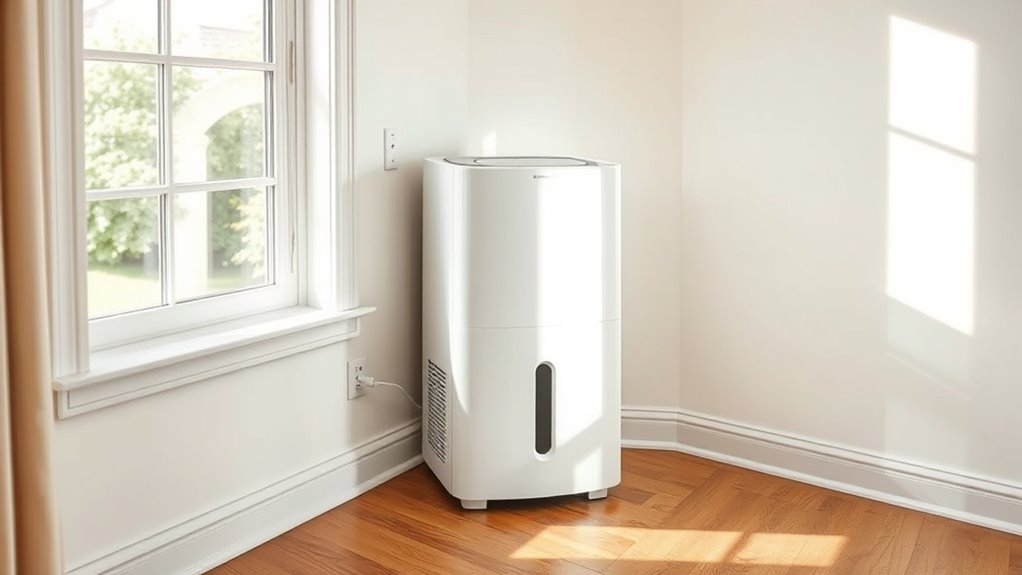
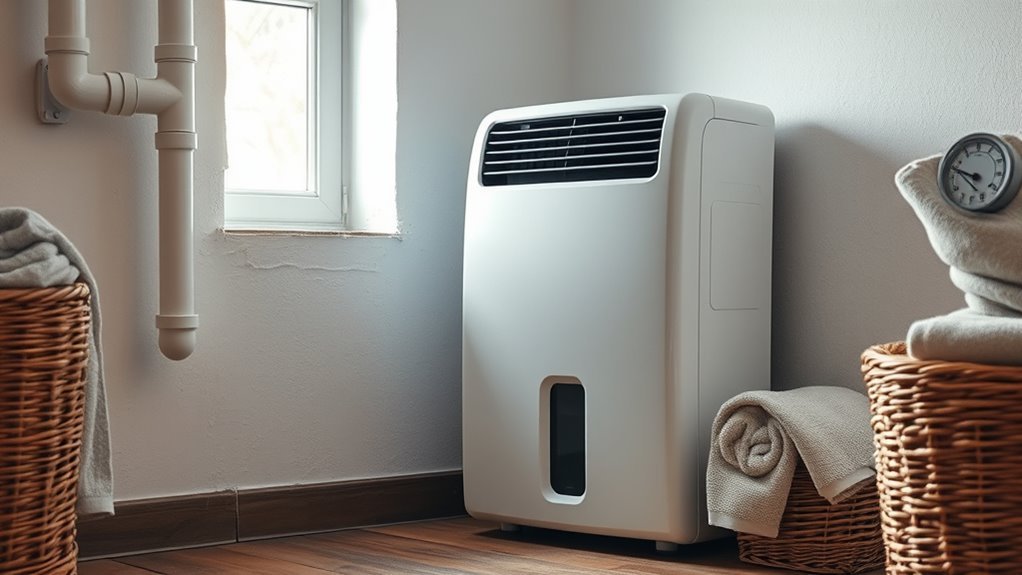
Place the dehumidifier in the room with the highest moisture load. Good choices include basements, laundry rooms, bathrooms after showering, storage rooms, or any space with musty odors, condensation, or damp walls.
Set the unit on a level, sturdy surface and keep the intake and exhaust vents open. Do not push it tight against a wall, trap it behind furniture, or place it in an enclosed alcove. Restricted airflow makes the unit work harder and slows moisture removal.
For one damp room, close exterior doors and windows so new humid air does not keep entering. If you want to dry a larger connected area, leave interior doors open only between the spaces you want the dehumidifier to treat.
Pro Tip: Use a separate hygrometer on the opposite side of the room. Built-in humidistats can read the air close to the machine, which may be drier than the rest of the space.
Recommended Products

POWERFUL 2,500 SQ. FT. COVERAGE - Stop letting sticky, heavy air dictate your comfort. The BANABIE dehumidifier utilizes a high-efficiency rotary compressor to deliver heavy-duty moisture removal, extracting 32 pints daily (at 95°F, 90%RH). Engineered with a smart integrated airflow system, this unit effectively covers up to 2,500 Sq. Ft., ensuring that your basement, crawl space, or large open floor plans stay bone-dry
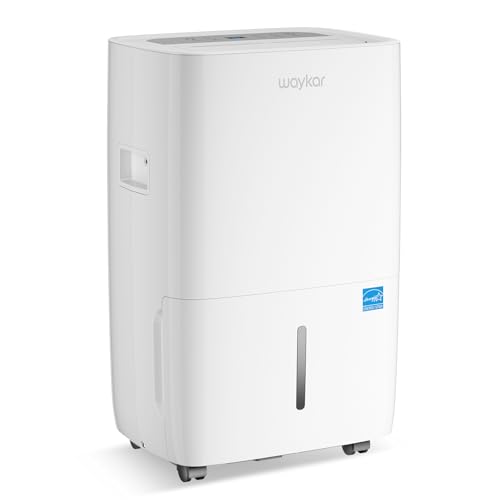
【80 Pint Capacity for Up to 5,000 Sq.Ft Spaces】Quickly removes excess moisture from basements, bathrooms, bedrooms, RVs, and other large living areas, delivering 80 pints per day (95°F, 90% RH).conditions. Designed as a powerful dehumidifier for basement, home, and large spaces, it helps eliminate damp air, condensation—and pet-related odors caused by excess humidity. Even during humid seasons, it works continuously to maintain a dry, comfortable, and healthier indoor environment.
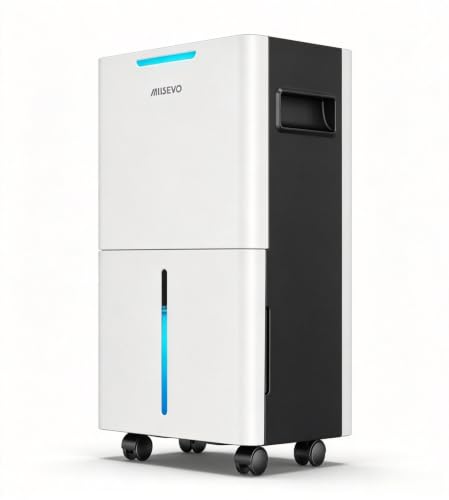
High Efficient Dehumidifier — Equipped with a high-performance compressor, Whether it’s your basement, bedroom, bathroom, living room, bathroom, crawlspace, or even an RV, this dehumidifier effectively keeps your environment dry, comfortable, and healthy.
Set the Ideal Humidity Level
Set your dehumidifier to hold the room around 45–50% relative humidity for everyday moisture control. This target is low enough to help discourage mold and dust mites, but high enough to avoid an overly dry room for most people.
For context, the U.S. Environmental Protection Agency says indoor relative humidity should be kept below 60% and ideally between 30% and 50%, if possible. The American Lung Association also recommends keeping home humidity below 50% to help reduce dust mites.
- Start at 50%: This is a comfortable first setting for many living areas.
- Lower to 45%: Use this if the room still smells musty, has condensation, or feels damp.
- Avoid over-drying: If the room drops near or below 30%, raise the setting or turn the unit off.
- Check the room, not just the display: Use a hygrometer and adjust as weather, ventilation, and occupancy change.
If your dehumidifier has an internal humidistat, use it. The humidistat lets the unit cycle on and off based on the target humidity instead of running nonstop.
Indoor humidity control works best when you pair the machine with the source fix: repair leaks, improve ventilation, and remove wet materials instead of relying on the dehumidifier alone.
Use Your Dehumidifier Controls
Start with the control panel. Most dehumidifiers include a humidity setting, fan speed, timer, bucket-full indicator, and sometimes a continuous mode or pump setting. Controls vary by model, so check your manual before using special modes.
- Humidity setting: Choose your target RH, usually 45–50% for damp rooms.
- Fan speed: Use high speed for fast drying and lower speed for quieter maintenance.
- Timer: Use a timer when you only need short operation, such as after laundry or showering.
- Continuous mode: Use this for very damp areas, but monitor RH so you do not over-dry the room.
- Auto-defrost: Let this feature work in cooler basements if your model includes it.
- Auto-restart: Useful in areas with brief power outages because the unit can resume its previous setting.
Do not assume the display is perfectly calibrated. If the room still feels damp or the hygrometer disagrees with the unit, adjust the target slowly and give the room time to stabilize.
Recommended Products

Powerful Dual Semiconductor Dehumidification: This compact dehumidifier removes up to 23 oz (700ml) of moisture per day under 86°F and 85% RH test conditions. Featuring advanced dual semiconductor technology for improved moisture collection, helping create a more comfortable environment in bedrooms, bathrooms, closets, basements, cabinets, RVs, and other enclosed spaces up to 500 sq.ft. (Note: Warm air from the outlet is normal during operation)

【Upgrade High Efficient Home Dehumidifier】PSOS dehumidifier utilize dual semiconductor condensation technology, ensuring quiet operation while effectively extracting moisture from the air. They create a drier, more comfortable environment by reducing humidity and improving air quality

EFFECTIVE DEHUMIDIFICATION: The CLEVAST dehumidifier bags feature spherical calcium chloride particles that can attract and absorb excess moisture quickly and efficiently. Moisture absorbers are designed with a premium one-way moisture-permeable paper that will securely lock the moisture inside.(WHEN the temperature drops sharply or the humidity is low, crystals may appear inside the bag, and no water droplets at the bottom. This is normal, please be patient for the product to work)
Drain and Clean Your Dehumidifier
Once you’ve set the humidity level, keep the unit running efficiently by checking the water reservoir regularly. Empty the tank before it overflows, and make sure it clicks back into place. Many units shut off automatically when the bucket is full or seated incorrectly.
If your model supports continuous drainage, connect a hose to the drain outlet and route it to a safe floor drain, utility sink, or sump. ENERGY STAR warns that drain hoses should be close enough to the drain to avoid long, unwieldy hoses and tripping hazards. A gravity drain hose must usually slope downward; if water needs to move upward, use a model with a built-in pump or an approved condensate pump.
Note: Water collected by a dehumidifier is not drinking water. Empty it into a drain, sink, toilet, or outdoor-safe disposal area.
- Empty the tank whenever the bucket-full light turns on or before long run periods.
- Check the hose for kinks, clogs, poor slope, or leaks if using continuous drainage.
- Unplug before cleaning so you are not working around electricity and water.
- Clean the filter every 2–4 weeks during regular use, or more often in dusty rooms.
- Wash and dry the bucket with mild soap as needed to prevent slime, odor, and buildup.
Wipe the exterior with a damp cloth and avoid abrasive cleaners. Do not spray water into the unit or wet electrical parts. If you see mold inside areas you cannot safely access, stop using the appliance and follow the manufacturer’s service instructions.
Keep Indoor Humidity Comfortable
Keep the room dry enough to prevent moisture problems but not so dry that the air feels irritating. For most damp indoor spaces, the sweet spot is around 45–50% RH. In colder weather, you may need to stay closer to the lower end if windows are sweating. In very dry weather, you may need to turn the dehumidifier off.
Watch for signs that your setting needs adjustment:
- Humidity too high: musty odor, condensation, sticky air, damp fabrics, or visible mildew.
- Humidity too low: dry throat, static, cracking wood, or irritated skin.
- Machine running too often: open windows, a hidden leak, undersized unit, or continuous mode left on.
A dehumidifier helps control symptoms of excess moisture, but it does not solve the cause. If humidity quickly returns after the unit shuts off, look for leaks, poor ventilation, damp crawl spaces, unvented dryers, or water intrusion.
Use Your Dehumidifier Safely
A dehumidifier combines electricity, moving air, refrigerant, and collected water, so safe setup matters. Before long-term use, check the model and serial number against the U.S. Consumer Product Safety Commission dehumidifier recall page, especially if the unit is older or secondhand.
Warning: Do not use a dehumidifier with a damaged cord, wet plug, recalled model, or in standing water. Plug it into the type of outlet required by the manual, keep it away from flammable materials, and stop using it if it overheats, smells burnt, sparks, or repeatedly trips a breaker.
For safe daily use, keep the unit upright, do not block the vents, do not place objects on top of it, and keep children from inserting fingers or objects into the grille. If water enters the unit itself, turn it off, unplug it, and contact qualified service support.
Troubleshoot Common Dehumidifier Problems
| Problem | Likely Cause | What to Do |
| Not collecting much water | Room is already near target, air is cool, filter is dirty, or unit is undersized | Check RH with a hygrometer, clean the filter, raise fan speed, and confirm the unit’s capacity fits the space. |
| Keeps shutting off | Tank is full, bucket is not seated, target RH is reached, or timer is active | Empty and reseat the bucket, check the target setting, and turn off timer mode if you want longer operation. |
| Drain hose is not draining | Hose is kinked, clogged, too long, or not sloped downward | Shorten the hose, clear clogs, create a steady downward slope, or use a pump model for upward drainage. |
| Warm air comes out | Normal operation | This is expected. A dehumidifier removes moisture and may slightly warm the air around it. |
| Musty smell from the unit | Dirty tank, wet filter, clogged drain, or stored moisture | Unplug it, clean and dry the tank and filter, check the hose, and let parts dry before reassembly. |
When choosing or comparing units, remember that capacity is not the same as bucket size. ENERGY STAR explains that dehumidifier capacity is the amount of water removed in 24 hours under test conditions. A 50-pint unit does not necessarily have a 50-pint bucket.
Recommended Products

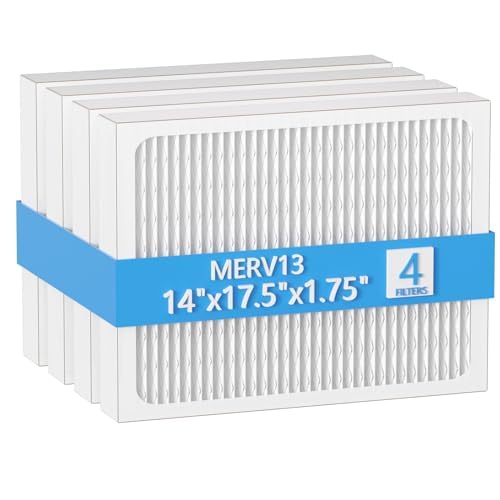
【Compatibility】 Our 14 x 17.5 x1.75 MERV 13 Replacement Dehumidifier Filter Media is Compatible with Honeywell DR90 & DR120 dehumidifier models.
【EFFECTIVE PRE-FILTER】- Capture dust and other unwanted air effectively, improve air quality and life quality, enjoy the fresh air
Frequently Asked Questions
How do you use a dehumidifier properly for the first time?
Place it in the damp room, keep vents clear, close exterior doors and windows, set the target around 45–50% RH, and turn on the humidistat if your model has one. Check the tank after the first few hours so you know how quickly it fills.
Should you use a dehumidifier if you have COPD?
Ask your doctor first, especially if symptoms change or you use oxygen equipment. A dehumidifier may help when indoor air is too humid because dampness can support mold and dust mites, but it is not a COPD treatment. Keep humidity in a comfortable range and avoid making the air too dry.
Will a dehumidifier help dry out plaster?
Yes, a dehumidifier can help remove moisture from the air while plaster dries, but it should not be used to rush the material beyond the plaster manufacturer’s curing guidance. Keep airflow gentle, monitor humidity, and avoid overheating the room.
How do you properly set up a dehumidifier?
Set it on a level surface in the dampest area, leave clearance around the vents, plug it into the proper outlet, set the humidistat around 45–50%, and choose tank collection or continuous drainage. Check the first cycle to make sure water collects or drains correctly.
Should doors and windows be open when using a dehumidifier?
Keep exterior doors and windows closed when dehumidifying. Open interior doors only if you want the unit to treat connected rooms. If outdoor humid air keeps entering, the dehumidifier will run longer and remove moisture less efficiently.
Can you run a dehumidifier all day?
You can run it for long periods if the room is very damp, but use the humidistat instead of continuous mode once the room is near target. If RH stays high all day, look for a moisture source such as a leak, wet foundation, poor ventilation, or unvented dryer.
Why is my dehumidifier blowing warm air?
Warm air is usually normal. A dehumidifier pulls moisture from air and releases drier air back into the room, and that air may feel slightly warmer near the unit. Stop using it if you smell burning, see smoke, or the plug or cord feels hot.
Conclusion
Using a dehumidifier well comes down to steady habits: place it where moisture builds up, keep airflow clear, set a realistic target humidity, drain it safely, and clean it on schedule. Aim for a room that feels dry and comfortable, not stripped of moisture. Check the hygrometer, adjust as the weather changes, and fix leaks or ventilation problems so the dehumidifier is not doing all the work alone.
Sources
- U.S. EPA — A Brief Guide to Mold, Moisture and Your Home — backs up indoor humidity guidance, mold prevention, and hygrometer use.
- U.S. EPA — Mold Course Chapter 2 — backs up the below-60% and ideal 30–50% RH guidance.
- ENERGY STAR — Dehumidifiers — backs up drainage placement and hose safety guidance.
- ENERGY STAR — Dehumidifier Testing and Capacity — backs up pints-per-day capacity explanation.
- U.S. Consumer Product Safety Commission — Dehumidifier Recalls — backs up recall and fire-risk safety checks.
- American Lung Association — Dust Mites — backs up keeping home humidity below 50% to help reduce dust mites.