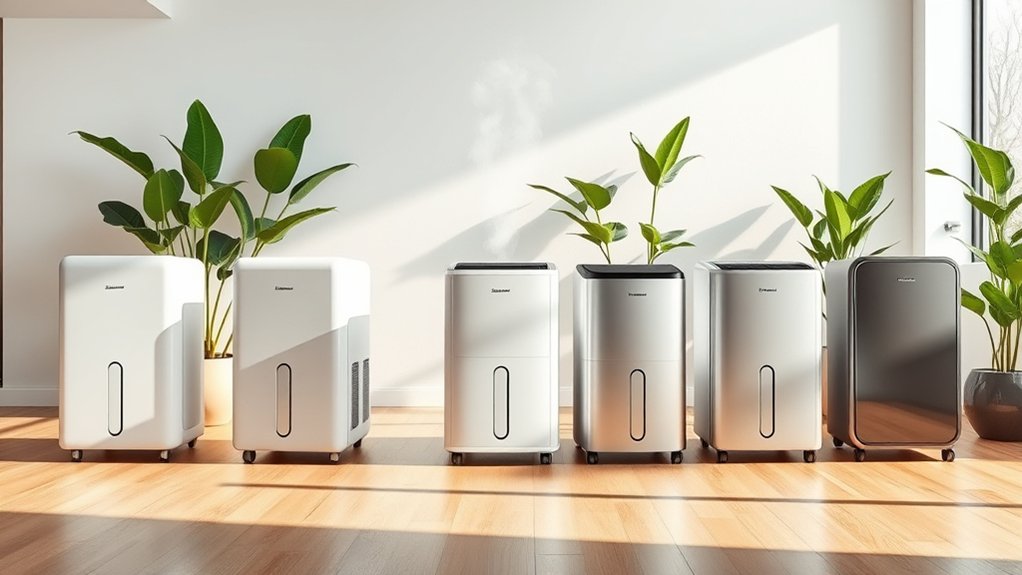
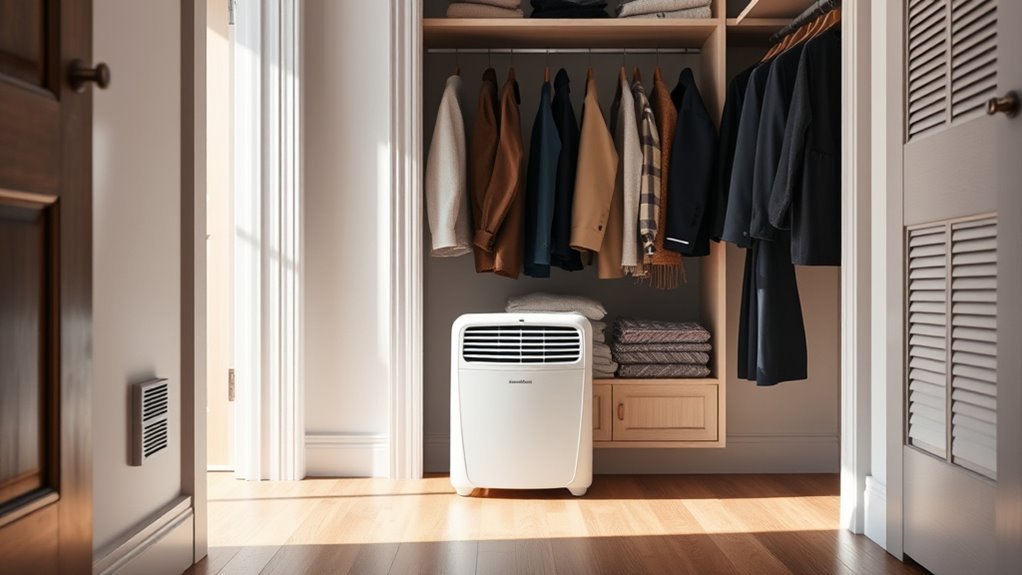
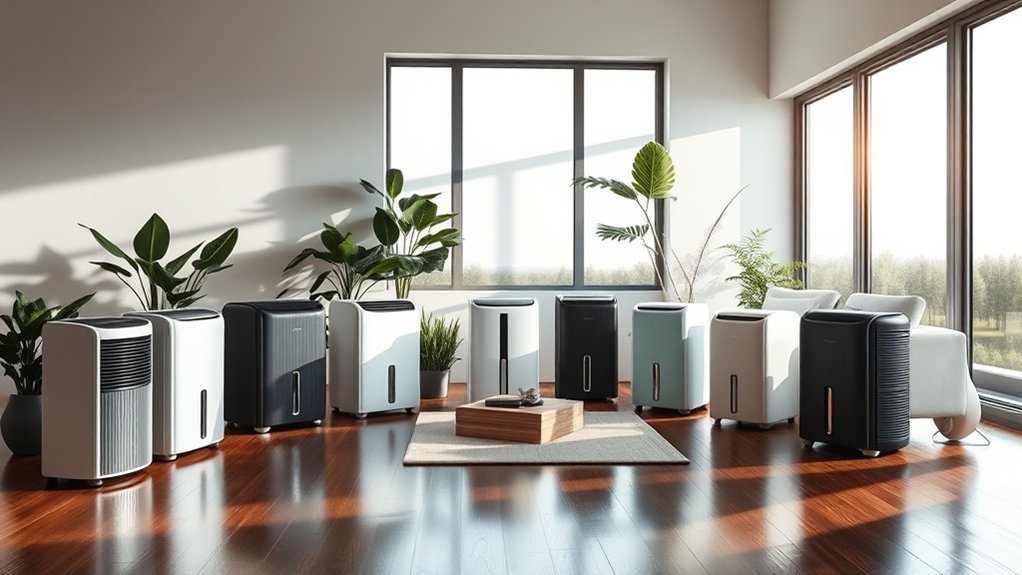
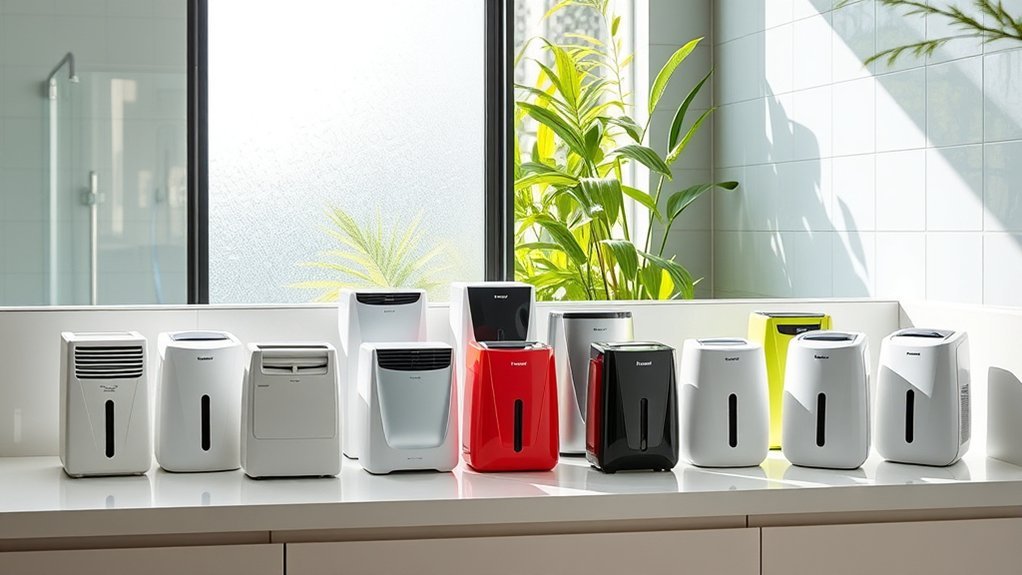
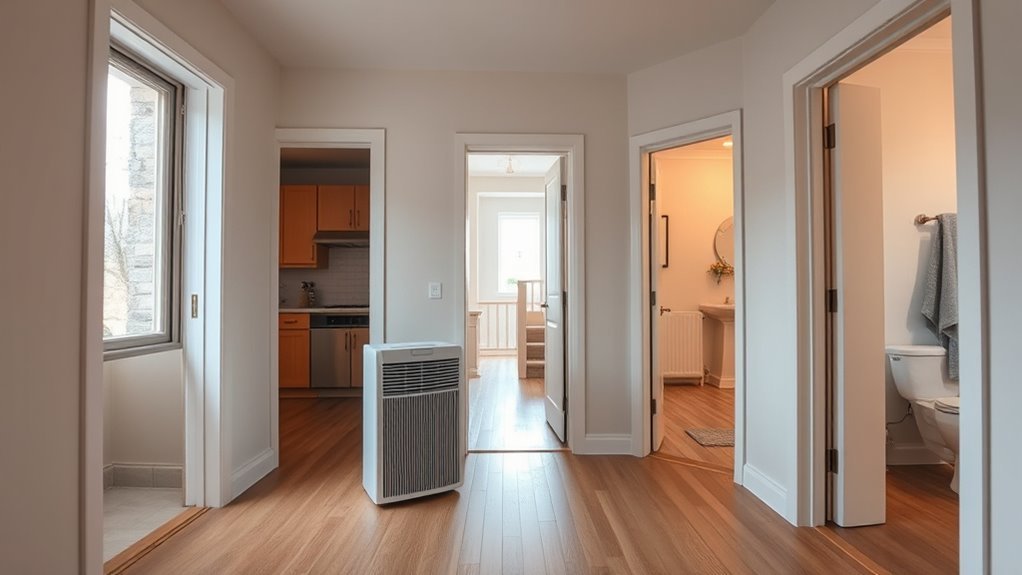
Choosing between a humidifier and a dehumidifier starts with one question: do you need to add moisture or remove it? This 2026 guide compares compact dehumidifiers, a higher-capacity 21-pint model, specialty humidity-control units, humidifier-dehumidifier combos, and a quiet DREO cool-mist humidifier. Compare the device type, manufacturer-stated coverage, moisture output or removal rate, tank size, noise level, drainage, and controls before choosing. Room-size claims are a starting point—not a guarantee—because temperature, starting humidity, airflow, and room layout can change real-world performance.
Quick Verdict
- Best for a damp basement or medium-size room: The 1500 Sq. Ft Dehumidifier with Drain Hose has the strongest stated removal capacity in this list at up to 21 pints per day.
- Best compact pick for a small bedroom or bathroom: The TABYIK 35OZ model combines a transparent tank, quiet operation, and auto shutoff.
- Best humidifier-only option: The DREO 3L cool-mist humidifier is designed to add moisture quietly in bedrooms and nurseries.
- Best for changing seasonal needs: The 3-in-1 and 2-in-1 combo units can add or remove moisture, but they are better for mild humidity correction than heavy-duty water removal.
Quick Comparison
| Product | Type | Best For | Key Listed Specs | Main Limitation | Amazon |
|---|---|---|---|---|---|
| CS08 with Aromatherapy | Thermoelectric dehumidifier | Mild dampness and ambiance | Seller-rated up to 1,000 sq. ft.; sleep mode; hose; LED light | Not a substitute for a compressor unit in a wet basement | Check Price |
| 1500 Sq. Ft Dehumidifier | Higher-capacity dehumidifier | Basements, laundry areas, and damp rooms | Up to 21 pints/day; 2L tank; drain hose; humidistat controls | Heavier and louder than mini thermoelectric models | Check Price |
| LAVTAIOA HSCS-380 | Specialty enclosure controller/dehumidifier | Grow tents, cabinets, and small enclosures | LED controller; manual/auto modes; external heating/cooling interface | Not intended for whole-room dehumidification | Check Price |
| 3-in-1 Humidity Combo | Humidifier/dehumidifier/diffuser | Small rooms with seasonal humidity changes | 1L tank; listed 580ml/day dehumidification; 27dB; auto mode | Not a true HEPA air purifier; modes do not run together | Check Price |
| DREO 3L Cool Mist | Ultrasonic humidifier | Bedrooms, nurseries, offices, and plants | 3L top-fill tank; up to 30 hours; 26dB; adjustable mist | Adds moisture only; requires regular cleaning | Check Price |
| TABYIK 35OZ | Mini thermoelectric dehumidifier | Closets, bathrooms, RVs, and small bedrooms | 35 oz tank; listed up to 450ml/day; 28dB; auto shutoff | Too small for serious leaks or persistently wet basements | Check Price |
| ToLife 95 OZ | Thermoelectric dehumidifier | Mild moisture control with fewer tank-emptying trips | 95 oz tank; seller-rated up to 1,000 sq. ft.; sleep mode | About 1L/day is modest for a large damp space | Check Price |
| 2-in-1 102 OZ Combo | Humidifier/dehumidifier | Small spaces with dry winters and humid summers | 102 oz tank; sleep mode; hose support; LED light | Coverage information varies by listing; verify before buying | Check Price |
| NeedDuck B-2 | Mini thermoelectric dehumidifier | Small cool rooms needing auto defrost | 44 oz tank; 215 sq. ft. listed coverage; timers; auto defrost | Small-area performance only | Check Price |
| Auto Humidity Control Model | Thermoelectric dehumidifier | Bedrooms and small rooms needing target settings | 40%, 50%, or 60% targets; listed 34 oz/day; 30dB | Stated output applies to warm, very humid test conditions | Check Price |
Selection note: The products below serve different jobs. Compressor-style dehumidifiers generally remove much more water than compact thermoelectric models. Humidifiers add moisture, while combo units trade maximum performance for flexibility. Compare removal or output capacity—not room-size marketing alone.
Home Dehumidifier with Aromatherapy Diffuser and LED Light
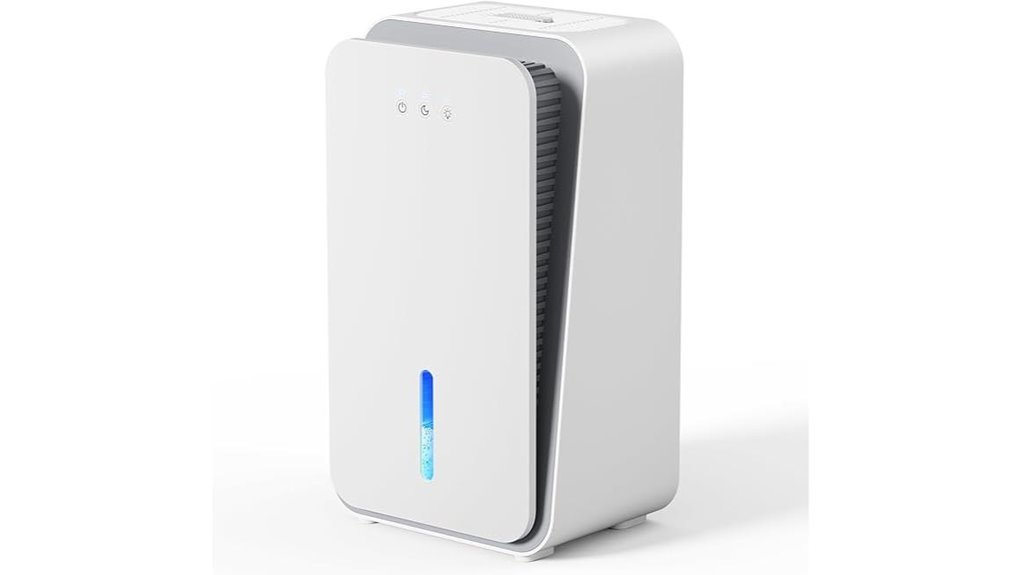
The CS08 combines compact thermoelectric dehumidification with sleep and high-speed modes, a built-in aromatherapy area, and seven-color lighting. The seller rates it for spaces up to 1,000 sq. ft., but its compact semiconductor design is better treated as a mild-moisture solution for a bedroom, bathroom, closet, RV, or similar enclosed area—not as a replacement for a high-capacity basement dehumidifier.
Sleep mode is listed below 45 dB, while auto shutoff helps prevent overflow when the tank is full or incorrectly installed. The included drain-hose option can reduce emptying, provided the hose runs continuously downhill to a suitable drain.
Why You’ll Like It: It offers moisture control, mood lighting, and fragrance support in one portable unit.
Who Should Buy This: Buyers dealing with light condensation or musty air in a smaller lived-in space.
Who Should Avoid This: Anyone trying to dry a flooded area, a persistently wet basement, or a large open floor plan.
Pros:
- Portable design with handles
- High-speed and quieter sleep modes
- Auto shutoff, drain-hose support, diffuser area, and seven-color light
Cons:
- Seller-stated coverage may overstate performance in a damp open room
- Thermoelectric removal is slower than a compressor dehumidifier
- Extra lighting and aroma features may not matter to basic-use buyers
1500 Sq. Ft Dehumidifier with Drain Hose
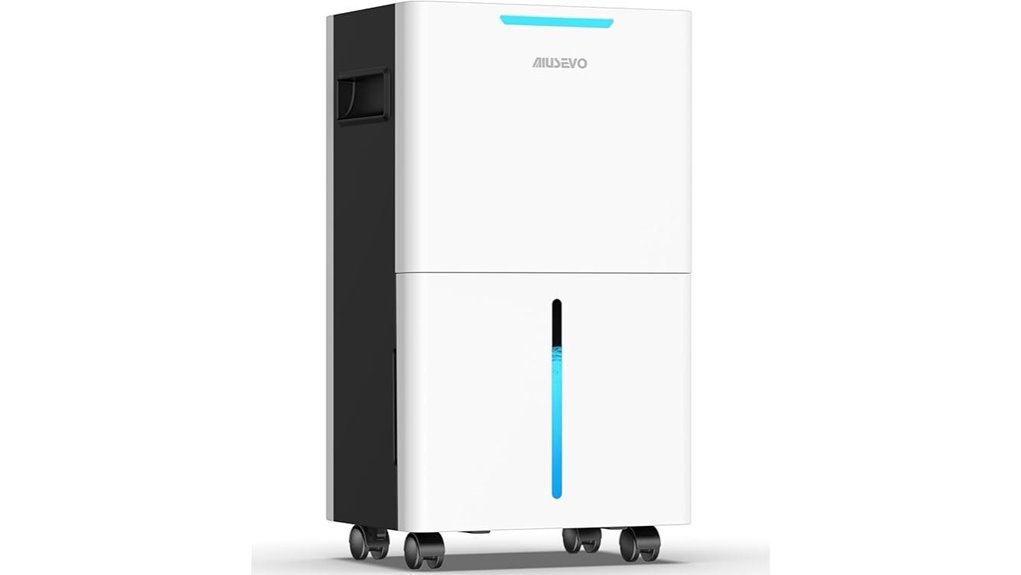
This is the most suitable option in the list for a damp basement, laundry area, crawlspace, bedroom, bathroom, or RV because it is listed to remove up to 21 pints of moisture per day. It offers DEHU mode with an adjustable 30% to 80% target, DRY mode for laundry, and CONTINUOUS mode for ongoing dampness control.
The 2L tank includes auto shutoff, and the supplied 3.28-foot hose supports gravity drainage. Controls include fan speed, a timer, and child lock. Remember that a 21-pint daily rating is a maximum measured under specified test conditions; actual collection usually drops in cooler or less-humid rooms.
Why You’ll Like It: It combines substantially higher moisture-removal capacity with adjustable humidity controls and continuous drainage.
Who Should Buy This: Buyers with measurable dampness, frequent condensation, or laundry-drying needs in a medium-size room.
Who Should Avoid This: Buyers who need an ultra-light, near-silent tabletop device for occasional closet use.
Pros:
- Listed removal capacity of up to 21 pints per day
- Adjustable humidistat plus DEHU, DRY, and CONTINUOUS modes
- Tank shutoff and included gravity drain hose
Cons:
- The 2L bucket can fill quickly without hose drainage
- At about 15.3 pounds, it is less portable than mini models
- Room coverage still depends on starting humidity, temperature, and airflow
Grow Tent Dehumidifier with Smart Temp Controller
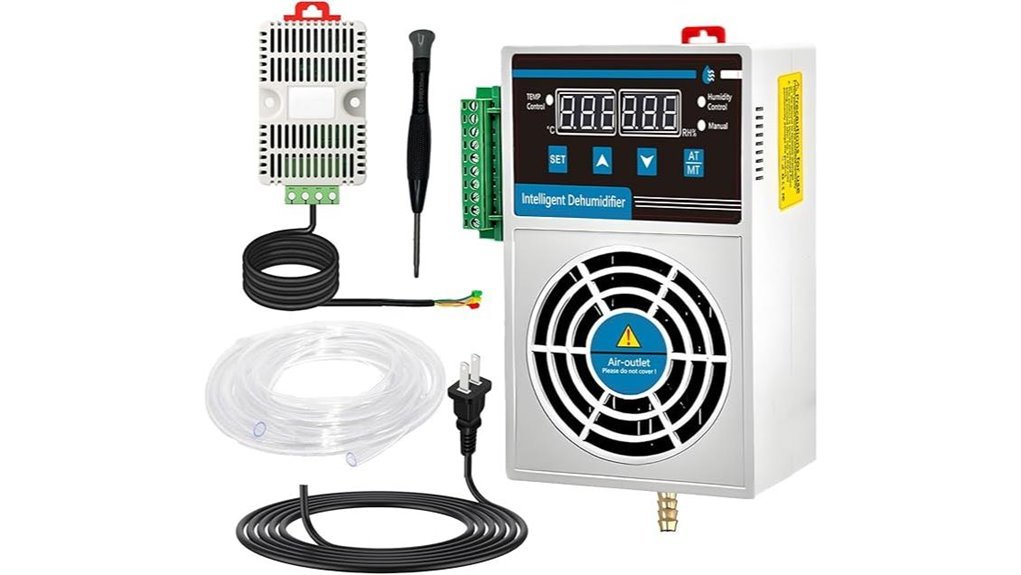
The LAVTAIOA HSCS-380 is a specialty option for grow tents, incubation chambers, closets, and electrical cabinets rather than a general whole-room appliance. Its controller offers manual and automatic temperature and humidity modes on an LED display, along with an interface for compatible external heating or cooling equipment.
Because specialty-controller specifications and installation requirements can vary, confirm the wiring, drainage method, sensor range, enclosure volume, and compatibility with any external heater or cooler before buying. Do not assume its performance is comparable to a 21-pint room dehumidifier.
Why You’ll Like It: It combines enclosure humidity management with temperature-control connections in a compact format.
Who Should Buy This: Growers and hobbyists who need controlled conditions inside a small enclosed setup.
Who Should Avoid This: Homeowners seeking a plug-and-play dehumidifier for an entire basement or living area.
Pros:
- Manual and automatic control modes
- LED display for enclosure monitoring
- External heating or cooling interface for compatible equipment
Cons:
- Specialized use and setup requirements
- Not designed for large-room moisture removal
- Key compatibility and capacity details should be confirmed on the current listing
3-in-1 Dehumidifier, Humidifier & Aroma Diffuser Combo
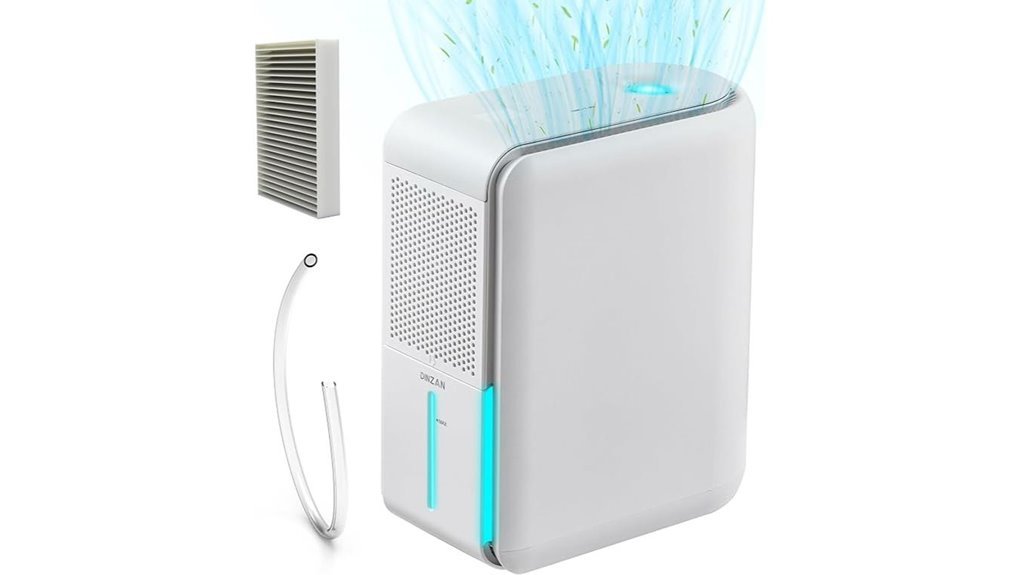
This compact combo can humidify dry air, dehumidify mild excess moisture, and diffuse fragrance in small rooms. The listing describes a 1L tank, dehumidification up to 580ml per day under favorable conditions, a digital touch panel, auto humidity mode, and quiet operation around 27 dB.
Some listings also describe a basic filtration or ionizing function, but it should not be treated as a true HEPA air purifier. The humidifier and dehumidifier functions cannot operate at the same time, and the aroma function is tied to humidifier mode.
Why You’ll Like It: One small device can respond to dry and humid seasons without taking up space for two separate appliances.
Who Should Buy This: Buyers in a bedroom, bathroom, or office who need mild seasonal humidity correction.
Who Should Avoid This: Allergy sufferers expecting HEPA-level particle removal or homeowners with heavy basement dampness.
Pros:
- Humidifying, dehumidifying, and aroma functions in one unit
- Auto humidity mode and digital controls
- Quiet listed operation and safety shutoff
Cons:
- Humidifying and dehumidifying do not run simultaneously
- Aroma diffusion works only in humidifier mode
- Basic filtration claims should not be confused with true HEPA filtration
DREO 3L Quiet Cool Mist Humidifier
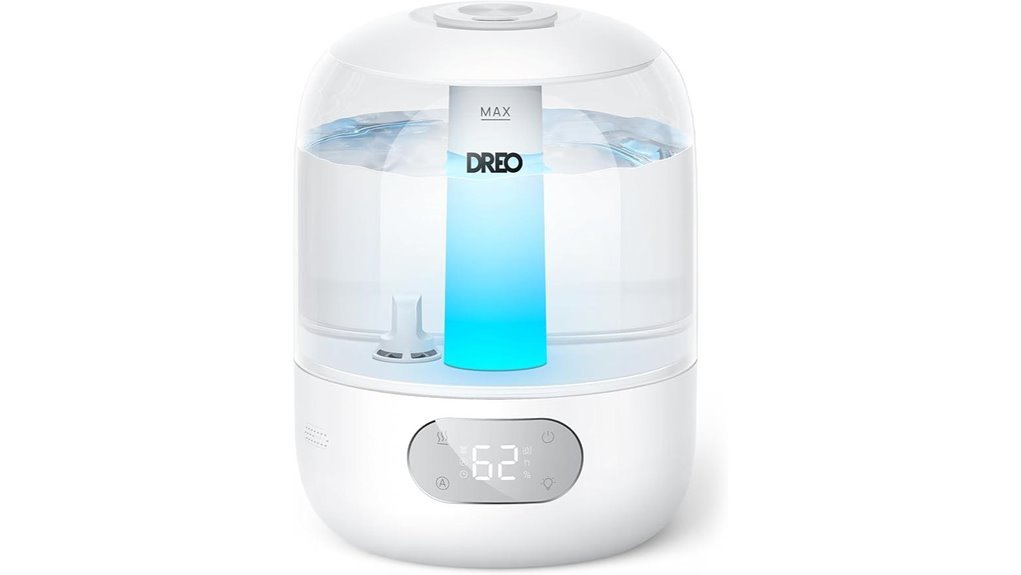
The DREO 3L cool-mist humidifier is the right category when your indoor air is too dry. Its top-fill tank is designed for easier refilling and cleaning, with up to 30 hours of runtime in sleep mode and listed operation around 26 dB. Adjustable mist and a rotating nozzle help direct moisture through a bedroom, nursery, office, or plant area.
This unit adds moisture; it does not remove it. Use a separate hygrometer if you want an independent humidity reading, and avoid over-humidifying the room. Do not put essential oils directly into the water tank unless the current manual explicitly says the model is designed for them.
Why You’ll Like It: It offers long, quiet runtime and convenient top filling for overnight use.
Who Should Buy This: Buyers dealing with dry heated air, dry bedrooms, or moisture-loving houseplants.
Who Should Avoid This: Anyone with condensation, musty odors, or already-high relative humidity.
Pros:
- 3L top-fill tank with up to 30 hours of listed runtime
- Quiet 26 dB sleep-mode operation
- Adjustable cool mist, rotating nozzle, and ambient light
Cons:
- Requires regular tank and base cleaning
- Does not solve excess humidity
- Mineral-rich tap water may leave white dust in ultrasonic models
Small Dehumidifier for Bedroom, Bathroom, RV, Closet
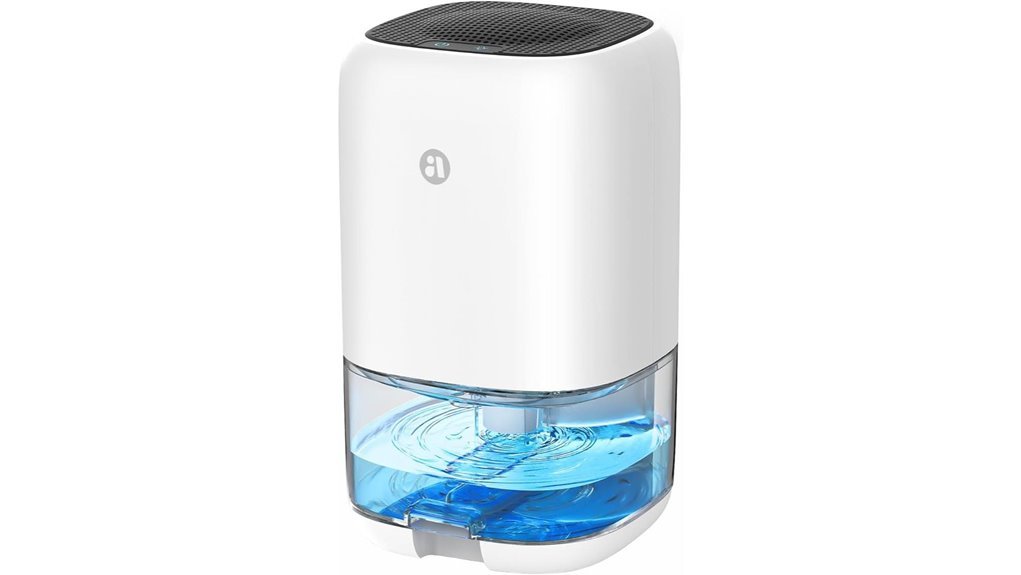
The TABYIK 35OZ dehumidifier is designed for mild dampness in spaces such as a closet, bathroom, RV, or small bedroom. Its transparent 35-ounce tank makes the water level easy to see, and the listing states moisture collection up to 450ml—or about 16 ounces—per day under warm, humid conditions.
At a listed 28 dB, it is quieter than most compressor dehumidifiers. Auto shutoff stops operation when the tank is full, while the rear handle and compact body make it easy to move. Treat the 280 sq. ft. coverage figure as an upper marketing estimate; the unit is most convincing in a smaller enclosed area.
Why You’ll Like It: It is simple, quiet, portable, and easy to monitor without an app or complicated setup.
Who Should Buy This: Renters, RV owners, and small-room users dealing with light condensation or musty air.
Who Should Avoid This: Buyers with water intrusion, mold remediation needs, or a large damp basement.
Pros:
- Quiet listed operation around 28 dB
- Transparent 35-ounce tank and auto shutoff
- Compact handle-equipped design with seven-color light
Cons:
- Modest collection rate compared with compressor models
- Tank may need frequent emptying in very humid conditions
- Performance falls in cooler or less-humid rooms
ToLife Dehumidifier for Home, 1000 sq.ft, 95 OZ Tank
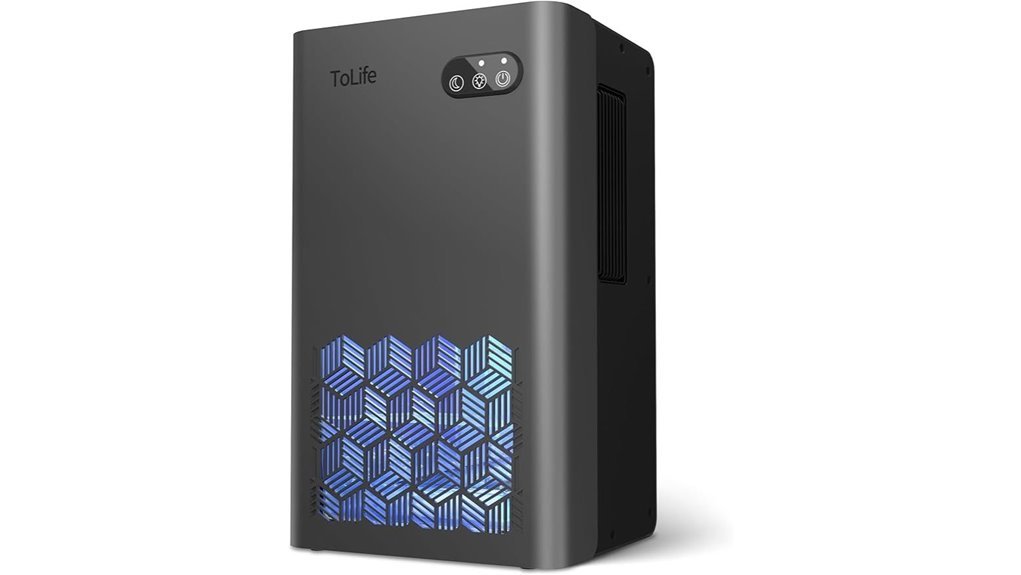
The ToLife model pairs a 95-ounce tank with thermoelectric condensation and two operating modes. The seller rates it for up to 1,000 sq. ft. and about 1 liter of water removal per day, but those two numbers should be read together: a 1L/day device is better for mild humidity control than for rapidly drying a large wet room.
Powerful mode prioritizes collection, while sleep mode is listed below 30 dB. Auto shutoff stops the unit if the tank is full or incorrectly installed, and the seven-color light can be used as a night light.
Why You’ll Like It: The larger tank can reduce emptying compared with many mini dehumidifiers.
Who Should Buy This: Buyers who want quiet, low-maintenance moisture control in a bedroom, bathroom, closet, or similar area.
Who Should Avoid This: Buyers expecting a 1,000 sq. ft. thermoelectric model to perform like a 20- to 50-pint compressor dehumidifier.
Pros:
- Large 95-ounce tank for its compact category
- Quiet sleep mode and stronger performance mode
- Auto shutoff and portable design
Cons:
- About 1L/day is modest for a very damp large space
- Coverage claim should not be used without considering extraction capacity
- Ambient lighting may be unnecessary for utility-only use
2-in-1 Humidifier Dehumidifier Combo with 102 OZ Tank
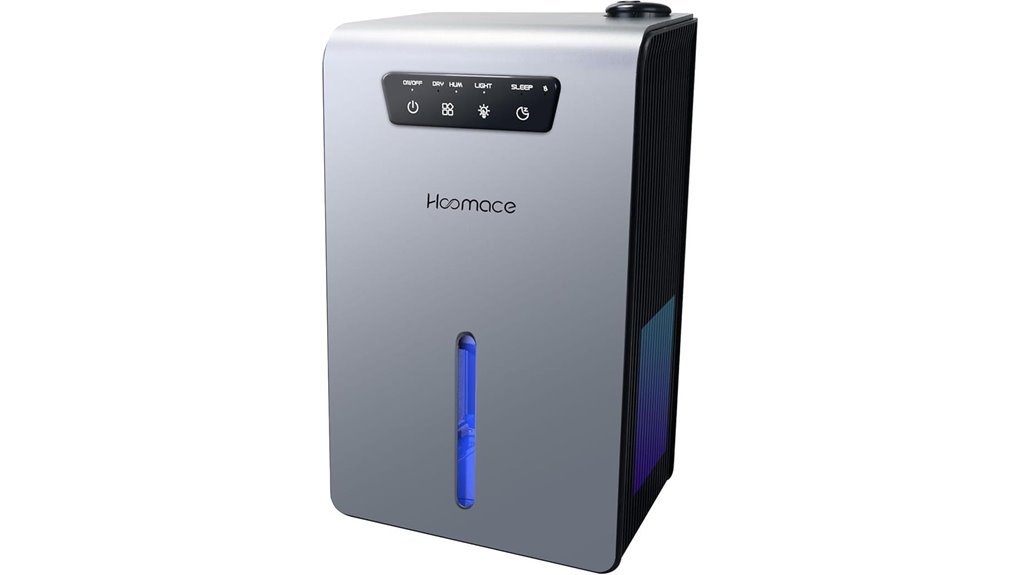
This 2-in-1 unit is designed to humidify dry air or dehumidify mild excess moisture with one 102-ounce tank. The listing describes semiconductor condensation, auto shutoff, sleep mode below 40 dB, seven-color lighting, and drain-hose support for dehumidifier use.
Published coverage information for this ASIN varies across third-party listings, so do not rely on a room-size number without checking the current Amazon specifications and manual. Its format is most appropriate for a small bedroom, office, bathroom, or RV with changing seasonal needs.
Why You’ll Like It: A large shared tank and two functions can reduce appliance clutter.
Who Should Buy This: Buyers who need gentle humidification in winter and light dehumidification in summer.
Who Should Avoid This: Anyone needing verified whole-room coverage, precise independent humidity sensing, or heavy-duty extraction.
Pros:
- Humidifier and dehumidifier functions in one unit
- 102-ounce tank, auto shutoff, and drain-hose support
- Quiet sleep mode with display lights off
Cons:
- Coverage details are inconsistent across listings
- One combo appliance may be less powerful than two purpose-built devices
- Verify whether both modes have separate controls and target settings
Quiet Portable Home Dehumidifier with Auto Shutoff
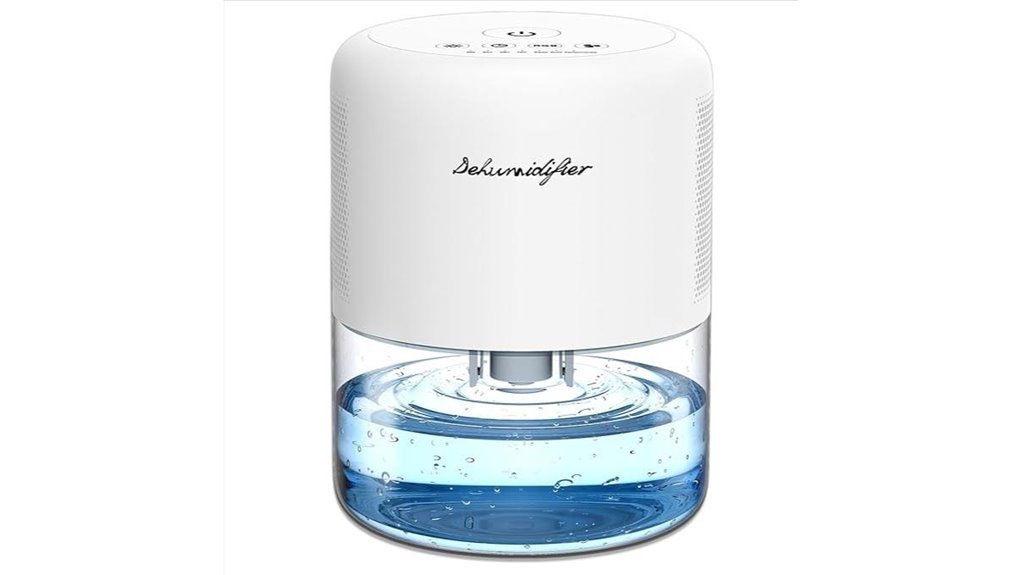
The NeedDuck B-2 is a 44-ounce compact dehumidifier listed for areas up to 215 square feet. It offers Sleep, Auto, and Performance modes, four timer choices, auto defrost, and shutoff protection when the tank is full, detached, tilted, or the unit falls.
Auto defrost is useful for a compact dehumidifier used in a cooler space, although thermoelectric models still collect less water as room temperatures drop. Ten light colors and three brightness levels add ambiance, but the practical value is the combination of timer, shutoff, and defrost functions.
Why You’ll Like It: It provides more operating controls than many basic mini dehumidifiers.
Who Should Buy This: Small-room users who value timers, auto defrost, and multiple operating modes.
Who Should Avoid This: Buyers who need high-capacity extraction or confirmed performance beyond a small enclosed area.
Pros:
- 44-ounce tank in a lightweight body
- Auto defrost and multiple shutoff protections
- Three modes, four timers, and adjustable lighting
Cons:
- Limited to small-room moisture control
- Tank still requires regular emptying
- Detailed warranty terms should be checked before purchase
Home Dehumidifier with Auto Humidity Control and LED Light
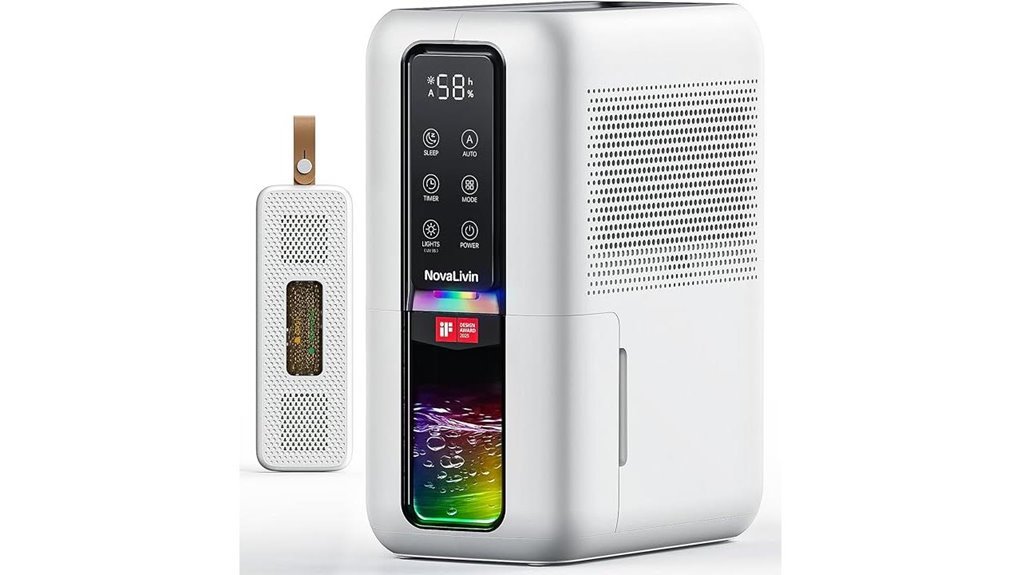
This compact model stands out for selectable 40%, 50%, and 60% humidity targets, plus L1 and L2 drying levels. Its dual-semiconductor system is listed to remove up to 34 ounces per day at 86°F and 80% relative humidity, which is a warm and very humid test environment. Expect lower collection under cooler or drier household conditions.
The listing also describes operation around 30 dB, auto shutoff, a removable tank, a timer, dry mode, seven-color lighting, and a closet box accessory. Although it is marketed for spaces up to 1,000 sq. ft., use the stated daily extraction rate and your actual humidity reading to judge fit.
Why You’ll Like It: Preset humidity targets make it easier to avoid running continuously when the room is already comfortable.
Who Should Buy This: Buyers in a bedroom, nursery, RV, bathroom, or closet who want simple target-based control.
Who Should Avoid This: Buyers with water damage, severe basement dampness, or expectations of compressor-level performance.
Pros:
- Selectable humidity targets and two drying levels
- Listed output up to 34 ounces per day in favorable conditions
- Quiet operation, timer, removable tank, and auto shutoff
Cons:
- Maximum output is based on hot, highly humid conditions
- Large-room marketing may not reflect real-world drying speed
- Tank size and warranty should be confirmed on the current listing
Factors to Consider When Choosing Humidifiers and Dehumidifiers
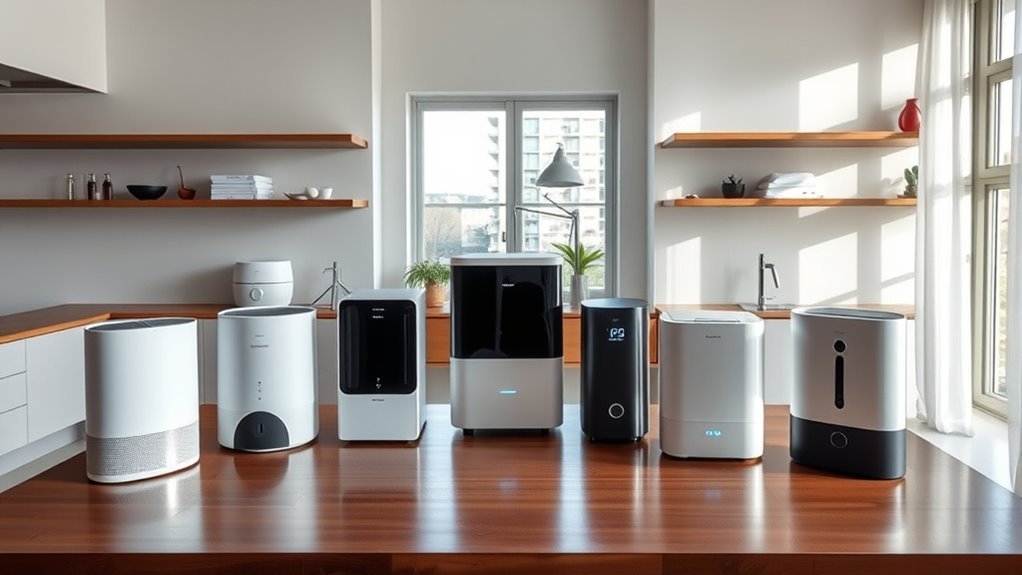
Choose the device type before comparing extra features. A humidifier adds moisture, a dehumidifier removes it, and a combo unit switches between the two. Use a hygrometer to check the room instead of guessing from comfort alone, then compare extraction or mist output, tank size, noise, drainage, controls, cleaning, and warranty.
Confirm Whether You Need to Add or Remove Moisture
Condensation on windows, musty odors, damp fabrics, and a high hygrometer reading point toward a dehumidifier. Static electricity, dry-feeling air, and a low reading may point toward a humidifier. A combo unit can help where seasons change, but a purpose-built appliance is usually the stronger choice when the problem is severe.
Room Size Coverage
Room-size claims are useful only when paired with capacity. A compact thermoelectric model may be advertised for a large floor area while removing less than two pints per day. That can be acceptable for mild dampness, but it is not equivalent to a compressor dehumidifier rated for 20, 30, or 50 pints per day. Consider room volume, doors, airflow, starting humidity, and whether moisture is continuously entering the space.
Moisture Removal or Output Capacity
For dehumidifiers, compare pints, ounces, or milliliters removed per day under the stated test conditions. For humidifiers, compare tank capacity, mist output, and runtime. Do not confuse bucket size with daily extraction: a 2L tank does not mean the machine removes 2L every day, and a high extraction rating can fill a small bucket several times in one day.
Thermoelectric vs. Compressor Dehumidifiers
Thermoelectric or Peltier dehumidifiers are compact, quiet, and simple, making them useful in closets, bathrooms, RVs, and small bedrooms. Compressor dehumidifiers are larger and usually louder, but they remove much more water and are the better choice for damp basements, laundry areas, and larger rooms.
Noise Level
Listed noise ratings in this guide range from about 26 dB for the DREO humidifier to below 45 dB for some compact dehumidifiers. Treat those figures as manufacturer or seller claims measured under specific conditions. A sleep mode may reduce fan speed and sound, but it can also reduce moisture output.
Tank Capacity and Drainage
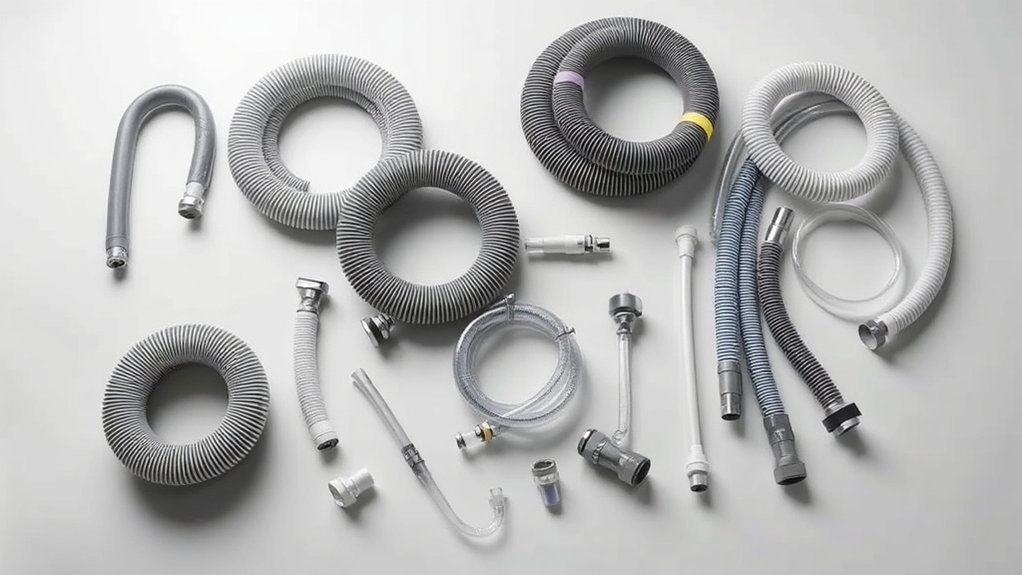
A larger tank means fewer refills for a humidifier and fewer emptying trips for a dehumidifier. For ongoing dehumidification, a gravity drain hose can be more convenient than a bucket. The hose must slope downward without kinks, and the drain should be lower than the outlet unless the unit includes a pump.
Humidity Controls and Sensors
A built-in humidistat can cycle the appliance around a target, but inexpensive sensors may not match a separate calibrated hygrometer. Place the independent meter several feet away from the mist outlet or dehumidifier exhaust for a more useful room reading.
Auto Shutoff and Defrost
For dehumidifiers, full-tank shutoff reduces overflow risk. For humidifiers, waterless shutoff helps prevent dry operation. Auto defrost can help a dehumidifier manage frost in cooler rooms, but every model has a minimum operating-temperature range that should be checked in the manual.
Cleaning and Maintenance
Humidifier tanks and bases need frequent cleaning because standing water can develop mineral scale or microbial growth. Dehumidifier tanks should be emptied and cleaned, while washable intake filters need periodic dust removal. Follow the product manual for cleaning agents, filter intervals, and whether any fragrance oil is permitted.
Energy Efficiency
Compare watts and expected daily runtime rather than relying only on phrases such as “low energy.” A small thermoelectric unit may draw less power but require much longer to remove the same amount of water as a compressor model. A humidistat, timer, clean filter, and properly sized appliance can reduce unnecessary runtime.
Before You Buy Checklist
- Measure the room and check its current relative humidity with a hygrometer.
- Decide whether you need to add moisture, remove it, or switch seasonally.
- Compare daily capacity with room-size claims.
- Check tank size, drain-hose requirements, operating-temperature range, and noise.
- Confirm warranty terms and the current manual on the product listing.
- Never use essential oils in a water tank unless the manual specifically allows it.
Frequently Asked Questions
How Often Should I Clean a Humidifier or Dehumidifier?
Empty and refresh humidifier water daily when possible, then clean the tank and base as directed by the manufacturer—often every few days to weekly. Clean a dehumidifier bucket regularly and inspect its intake filter every two to four weeks. Some models have no replaceable filter, so follow the exact manual rather than using one schedule for every device.
Can I Use Tap Water in a Cool Mist Humidifier?
Many models can run on tap water, but mineral-rich water may create scale and white dust in an ultrasonic humidifier. Distilled or demineralized water can reduce that buildup. Check the manual, clean the unit regularly, and never add oils or other substances unless the model is designed for them.
What Room Size Needs a 1500 Sq. Ft Dehumidifier?
A model marketed for 1,500 square feet may suit a similarly sized basement or floor under moderate conditions, but square footage alone is not enough. Compare its pints-per-day rating with the room’s temperature, starting humidity, ceiling height, airflow, and ongoing moisture source.
Do Combo Units Remove Allergens Effectively?
Not by humidity control alone. Lowering excessive humidity may make a room less favorable for some moisture-related problems, but a humidifier or dehumidifier does not replace a true air purifier. For airborne particles, look for a unit with verified HEPA filtration or use a separate HEPA air cleaner.
How Loud Are These Devices During Overnight Use?
The compact devices in this guide list noise levels from about 26 to 45 dB, depending on the model and mode. Compressor dehumidifiers are generally more noticeable. Use sleep mode when available, but remember that a slower fan can also reduce output.
Can a Small Dehumidifier Handle a Basement?
A mini thermoelectric model may help a small enclosed basement room with mild humidity, but it is usually not the right tool for a large or persistently damp basement. Choose a compressor dehumidifier with an appropriate pint-per-day rating and address leaks, drainage, or ventilation problems that keep adding moisture.
What Indoor Humidity Level Should I Target?
A practical comfort target for many homes is roughly 30% to 50% relative humidity, adjusted for climate, season, and condensation risk. Use a hygrometer and avoid pushing humidity so high that windows or cold surfaces begin to collect moisture.
Conclusion
The best choice depends on the direction and severity of your humidity problem. Choose the 1500 Sq. Ft Dehumidifier with Drain Hose when you need the strongest stated water-removal capacity in this group. Choose the TABYIK, ToLife, NeedDuck, CS08, or auto-control model for lighter moisture problems in smaller enclosed spaces. Choose the DREO 3L when the air is too dry, and consider a combo model only when flexibility matters more than maximum humidifying or dehumidifying performance.
Before ordering, check the current Amazon listing and manual for capacity, room-size guidance, operating-temperature limits, warranty, included drain hose, and oil-use instructions. A separate hygrometer is one of the simplest ways to confirm whether the appliance is actually moving your room toward a comfortable target.