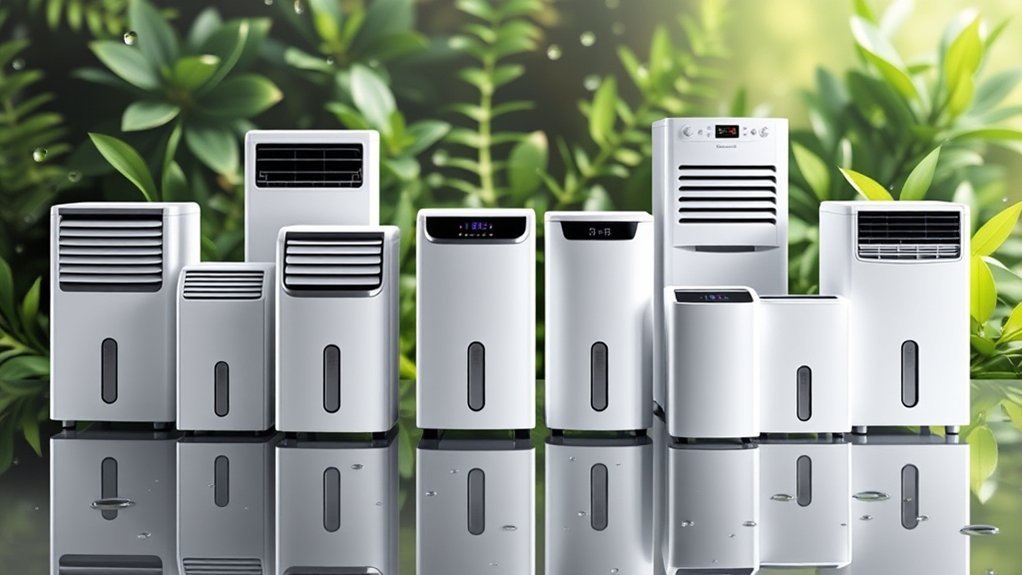
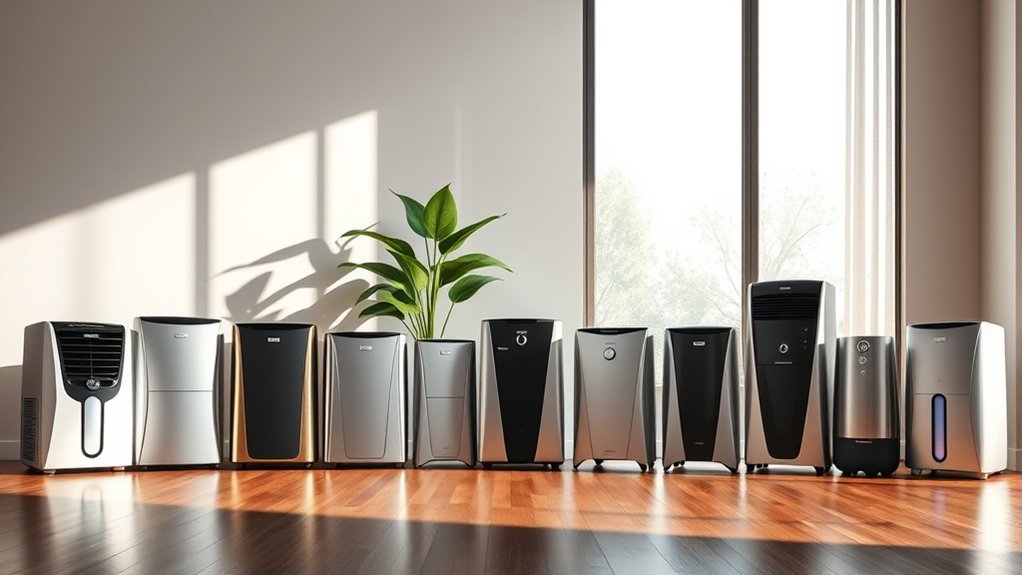
Choosing a dehumidifier is not only about finding the largest pint number. Capacity test conditions, drainage design, room temperature, tank size, noise, controls, and warranty support can all affect how well a unit works in your home. This updated guide compares eight dehumidifiers for basements, bedrooms, garages, crawlspaces, and other damp areas.
Affiliate disclosure: This article contains Amazon affiliate links. We may earn a commission from qualifying purchases at no extra cost to you.
Quick Verdict
- Best overall for smart large-room control: DREO 110-Pint Smart Dehumidifier
- Best with an integrated pump: AEOCKY LEO-001
- Best for medium rooms: GE 25-Pint Portable Dehumidifier
- Best straightforward 50-pint option: Frigidaire 50-Pint Portable Dehumidifier
- Best compact option for up to 1,500 sq. ft.: Midea 22-Pint Dehumidifier
- Best value-focused option with an included hose: KNKA 34-Pint Dehumidifier
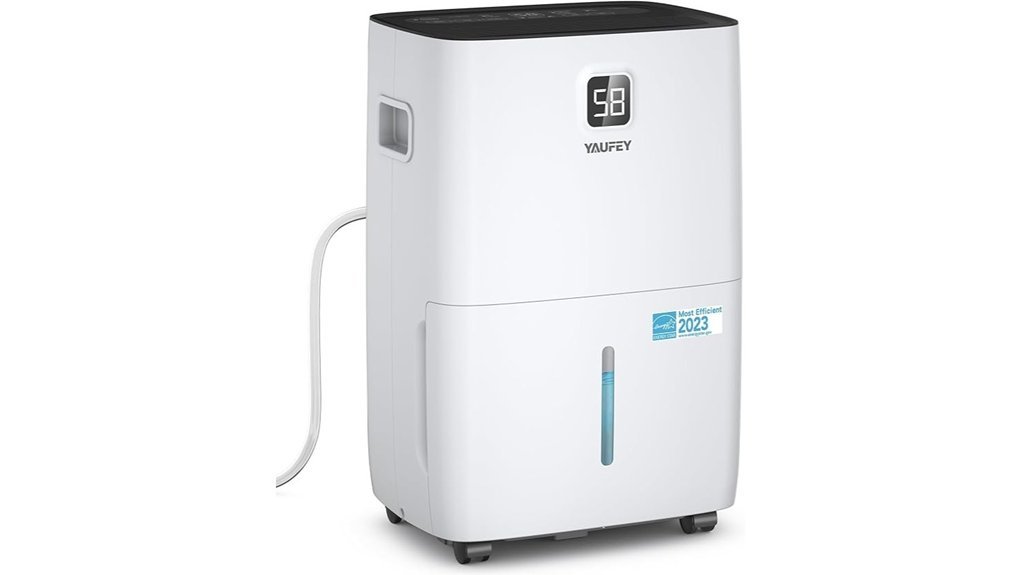
- Best high-capacity home option: Yaufey 80-Pint Dehumidifier
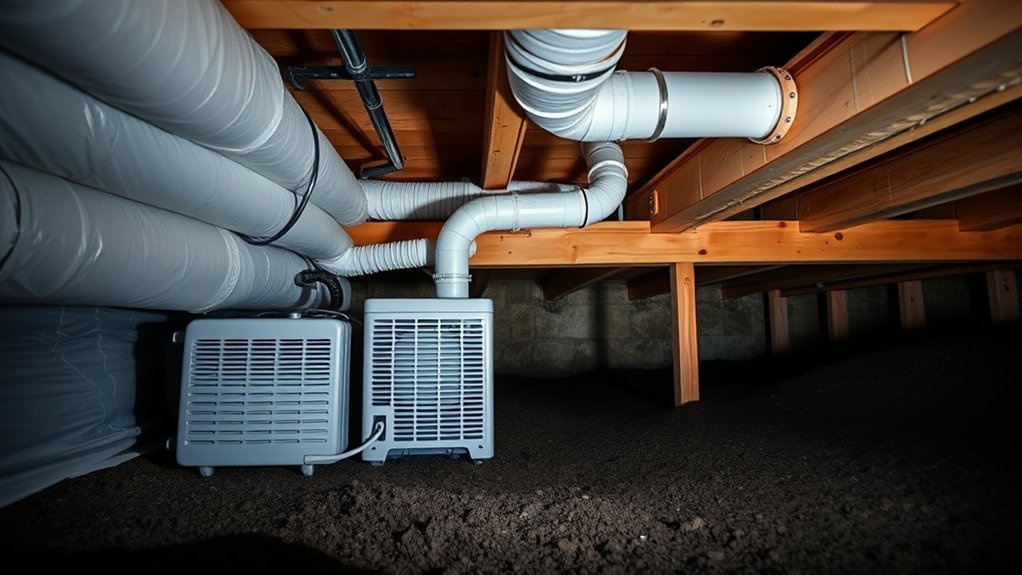
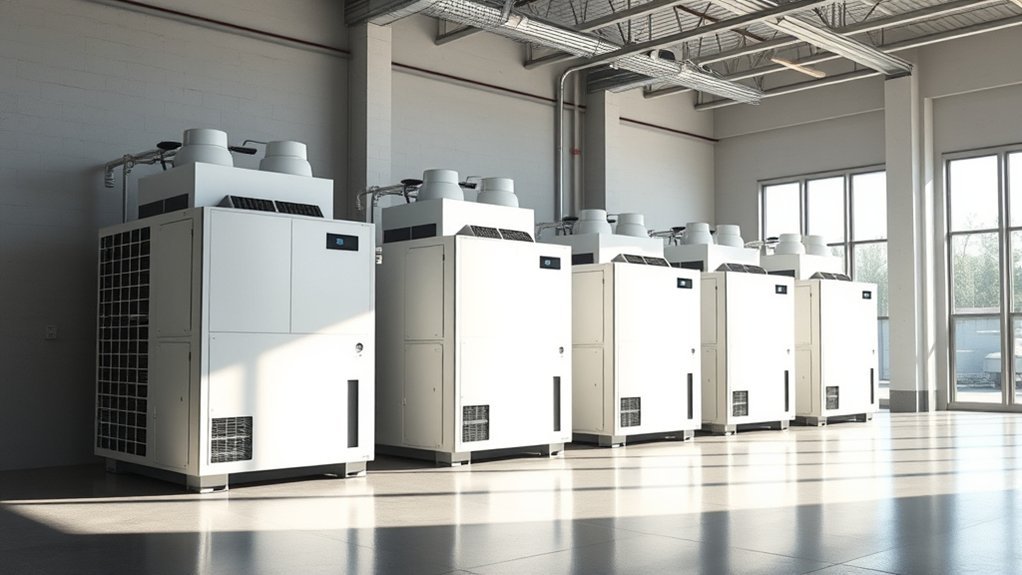
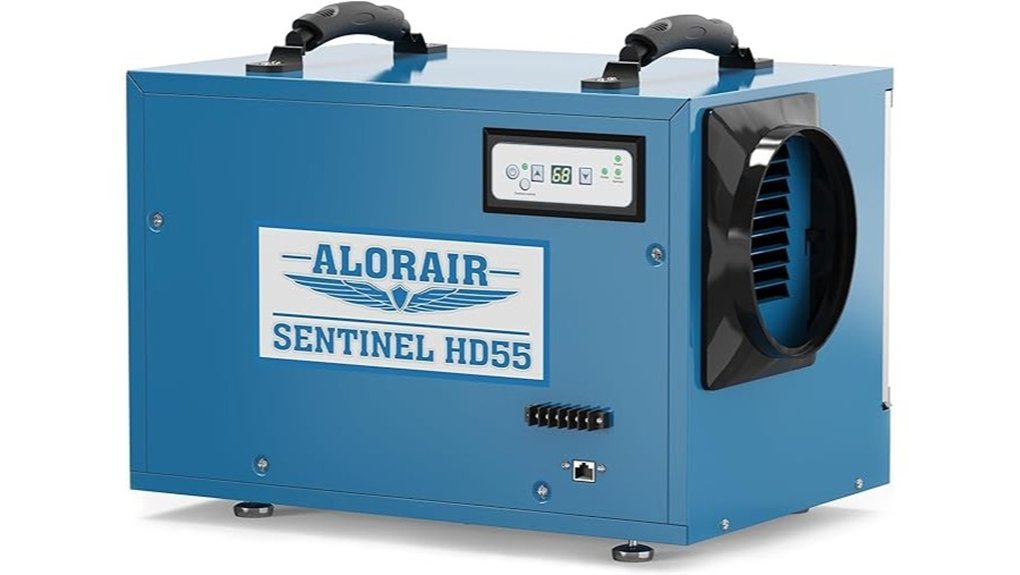
- Best for crawlspaces and commercial use: ALORAIR Sentinel HD55S
Important capacity note: Headline pint ratings are not always measured under the same temperature and humidity conditions. A model advertised as removing 80 or 110 pints in very warm, wet air may have a substantially lower standardized rating. Compare test conditions as well as the headline number. You can learn more from the ENERGY STAR explanation of dehumidifier capacity testing.
Quick Comparison of the Best Dehumidifiers
| Product | Best For | Capacity Context | Drainage | Main Limitation | Amazon |
|---|---|---|---|---|---|
| DREO 711S | Smart control in large rooms | Up to 110 pints/day in warm, highly humid test conditions | Large tank or included gravity-drain hose | Large and relatively heavy | Check Amazon |
| AEOCKY LEO-001 | Basements needing upward drainage | About 44.94 pints/day under ENERGY STAR conditions; higher maximum marketed rating | Tank, gravity hose, or integrated pump | Higher purchase cost | Check Amazon |
| GE 25-Pint | Bedrooms, garages, and medium rooms | 25 pints/day; marketed for spaces up to 1,500 sq. ft. | Bucket or gravity drain | Bucket may fill quickly in very damp rooms | Check Amazon |
| Frigidaire 50-Pint | Large rooms needing simple controls | 50 pints/day | Bucket or gravity drain | Heavy for carrying on stairs | Check Amazon |
| Midea 22-Pint | Moderately damp rooms up to 1,500 sq. ft. | 22 pints/day | Bucket or gravity drain | No built-in pump or smart control | Check Amazon |
| KNKA 34-Pint | Value-focused buyers wanting an included hose | Up to 34 pints/day at 95°F and 90% RH | Three-liter tank or included hose | Small tank for high-moisture loads | Check Amazon |
| Yaufey 80-Pint | Large, warm, humid areas | Up to 80 pints/day at 95°F and 90% RH | Tank or included gravity-drain hose | Headline capacity is not a standardized rating | Check Amazon |
| ALORAIR HD55S | Crawlspaces, basements, and commercial use | About 55 pints/day at 80°F and 60% RH | Gravity drain only | No collection bucket | Check Amazon |
How We Selected These Dehumidifiers
These recommendations are based on published product specifications, capacity transparency, drainage choices, controls, portability, efficiency information, current listing consistency, and suitability for common buyer needs. They are not presented as the result of independent long-term laboratory testing. Actual performance will depend on room temperature, starting humidity, air leakage, room layout, and how much moisture enters the space.
DREO 110-Pint Smart Dehumidifier for Large Rooms
Best Overall Smart Pick
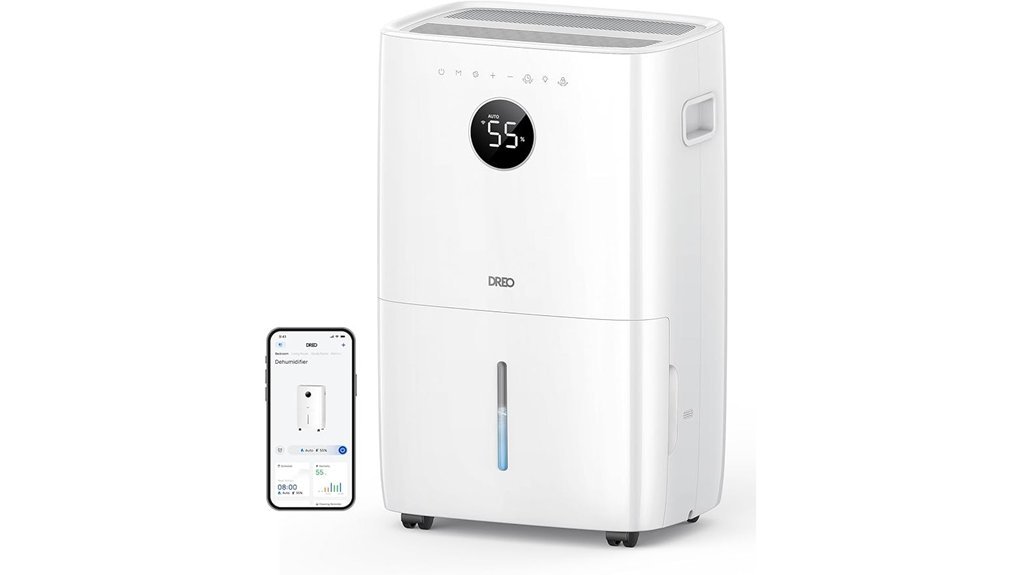
The DREO 711S is a strong choice for buyers who want high moisture-removal potential, a large tank, and remote controls. Its headline rating is up to 110 pints per day under warm, highly humid conditions, so it should not be compared directly with standardized pint ratings without checking the test conditions. It includes a two-gallon tank, a gravity-drain hose, adjustable fan speeds, and Comfort, Auto, and Continuous modes.
Why You’ll Like It: The DREO app can help you monitor humidity, adjust settings, and receive status alerts without walking to the machine. Voice-assistant compatibility also makes it convenient in connected homes.
Best For: Large basements, laundry rooms, open living areas, and buyers who value app control.
Consider Another Model If: You need a compact unit, an integrated drain pump, or a lightweight machine for carrying between floors.
Pros:
- Large two-gallon collection tank reduces emptying frequency.
- App, voice, and manual controls provide flexible operation.
- Three operating modes and adjustable fan speeds.
- Includes a hose for continuous gravity drainage.
Cons:
- The 110-pint figure reflects warm, highly humid test conditions.
- Its large body needs more floor space than a compact dehumidifier.
- It does not include an integrated pump for upward drainage.
AEOCKY LEO-001 Dehumidifier with Pump
Best Integrated-Pump Pick
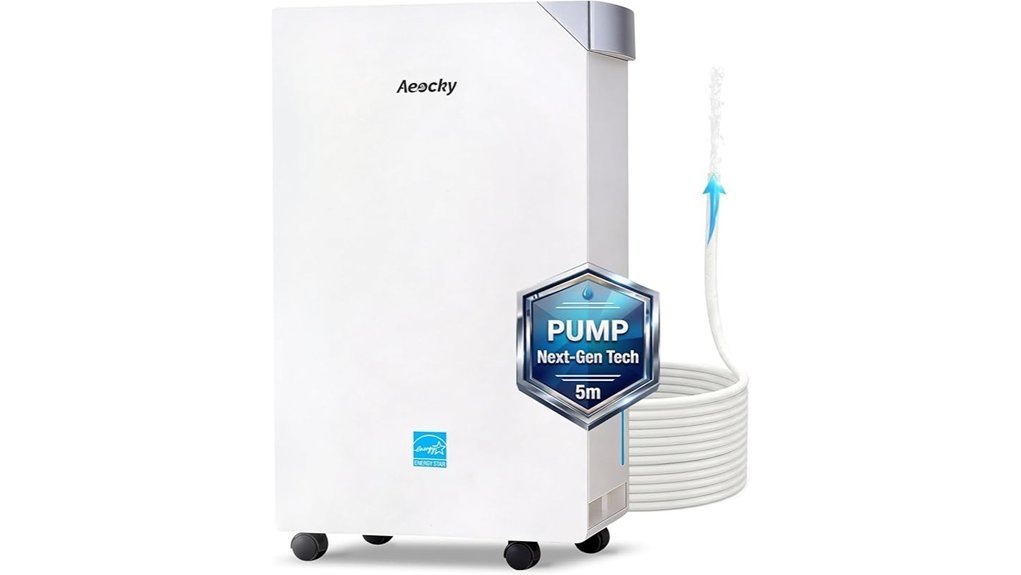
The AEOCKY LEO-001 stands out because its integrated pump can move collected water upward when a suitable floor drain is not available. The model is marketed with an 80-pint maximum rating under warm, wet conditions, while its ENERGY STAR platform is rated at approximately 44.94 pints per day under standardized conditions. Showing both figures gives buyers a more useful comparison.
Why You’ll Like It: The pump can send water to a utility sink, window-level outlet, or another elevated drain point. That can be much more convenient than relying on gravity drainage.
Best For: Basements, garages, and laundry rooms where the closest drain is higher than the dehumidifier.
Consider Another Model If: You already have a floor drain and do not want to pay extra for a pump.
Pros:
- Integrated pump supports upward drainage.
- ENERGY STAR efficiency information is available for the model platform.
- Automatic humidity control and continuous operation options.
- Suitable for large residential moisture-control jobs.
Cons:
- Costs more than basic gravity-drain models.
- The 80-pint headline rating is not the standardized capacity.
- Pump systems require occasional inspection and cleaning.
GE 25-Pint Portable Dehumidifier for Medium Rooms
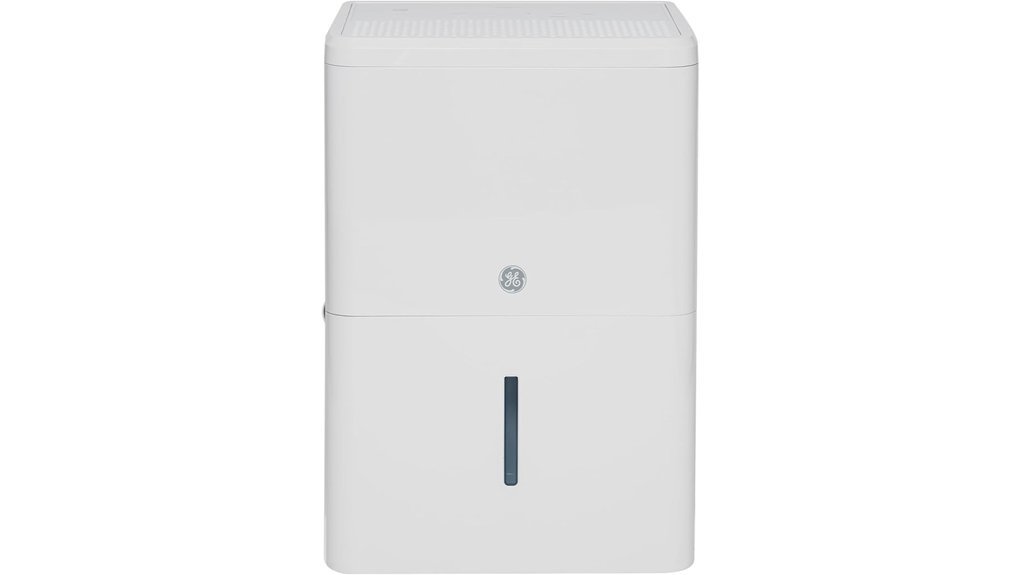
Best Medium-Room Pick
The GE 25-Pint Portable Dehumidifier is designed for moderately sized damp areas and is marketed for spaces up to 1,500 square feet. Smart Dry technology adjusts the fan speed in response to room humidity, while the digital controls let you select a target level manually.
Why You’ll Like It: Pocket handles, caster wheels, a washable filter, an empty-bucket alarm, auto-restart, and a continuous-drain connection make it straightforward to operate.
Best For: Bedrooms, offices, garages, finished basements, and medium-size living areas.
Consider Another Model If: The room has active seepage, frequent laundry drying, or another heavy moisture source that may overwhelm a 25-pint unit.
Pros:
- Smart Dry automatically adjusts fan speed.
- Easy-roll wheels and built-in handles improve portability.
- Supports bucket collection or continuous gravity drainage.
- Filter reminder and auto-restart simplify maintenance.
Cons:
- The bucket may require frequent emptying in very humid conditions.
- It is less suitable for severe moisture loads than a 50-pint model.
- No integrated pump for upward drainage.
Frigidaire 50-Pint Portable Dehumidifier
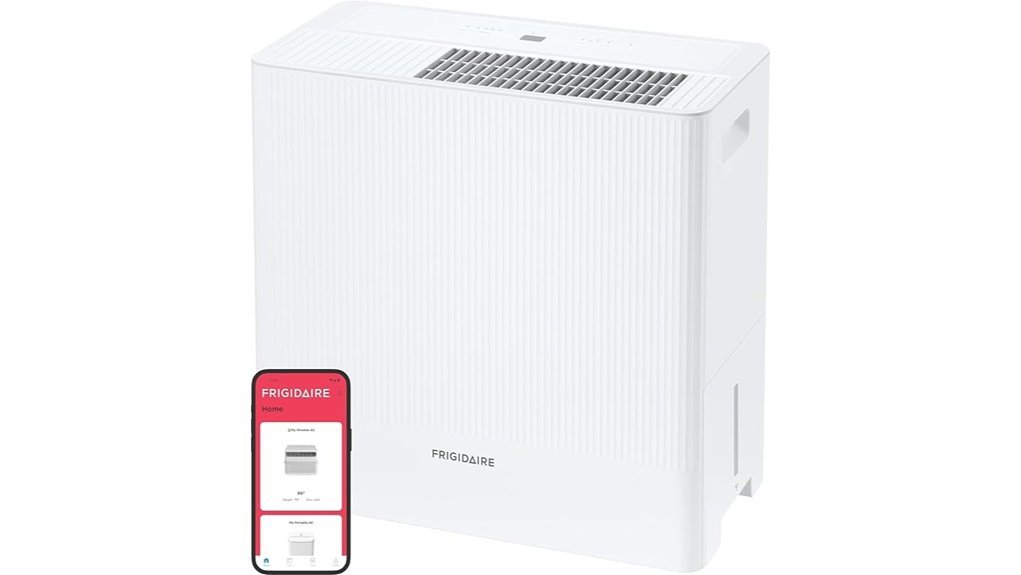
Best Straightforward 50-Pint Pick
The Frigidaire FHDD5033W1 is a 50-pint portable dehumidifier designed for larger residential spaces. It offers adjustable humidity control, automatic moisture removal, programmable operation, a removable bucket, and a connection for continuous gravity drainage.
Why You’ll Like It: This model focuses on the core functions many buyers need without making app control central to the experience. Caster wheels help with room-to-room movement once the unit is on the same floor.
Best For: Large finished basements, family rooms, garages, and buyers who prefer direct controls.
Consider Another Model If: You need a built-in pump or a lightweight unit that will regularly be carried on stairs.
Pros:
- 50-pint daily capacity suits substantial residential moisture loads.
- Supports bucket collection and continuous gravity drainage.
- Programmable controls help maintain a selected humidity level.
- Wheels improve mobility on level floors.
Cons:
- At approximately 41 pounds, it can be difficult to carry upstairs.
- No integrated pump is listed for the exact model.
- Connected features can vary between Frigidaire models, so verify the current Amazon listing if app control is important.
Midea 22-Pint Dehumidifier for Spaces up to 1,500 Sq. Ft.
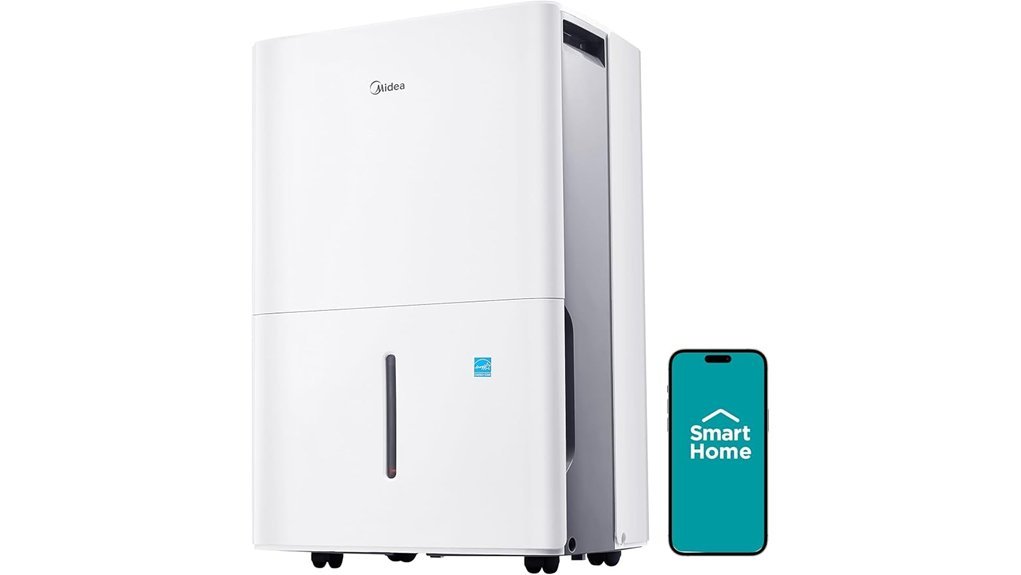
Best Compact Mainstream Pick
The Midea MAD22C1AWS removes up to 22 pints of moisture per day and is marketed for spaces up to 1,500 square feet. It includes caster wheels, a built-in timer, adjustable humidity controls, and a removable collection bucket.
Why You’ll Like It: Its smaller capacity and manageable footprint make it a practical choice for moderate dampness without buying a much larger machine than the room requires.
Best For: Bathrooms, bedrooms, home offices, kitchens, and moderately damp finished basements.
Consider Another Model If: You require Wi-Fi, voice control, a built-in pump, or faster removal in a severely wet basement.
Pros:
- Appropriate capacity for medium-size rooms.
- Four wheels make relocation easier.
- Timer and adjustable humidity settings support scheduled use.
- Backed by a published one-year limited warranty.
Cons:
- The exact MAD22C1AWS model does not include smart control.
- No built-in pump.
- Lower capacity than 34- or 50-pint alternatives.
KNKA 34-Pint Dehumidifier with Drain Hose
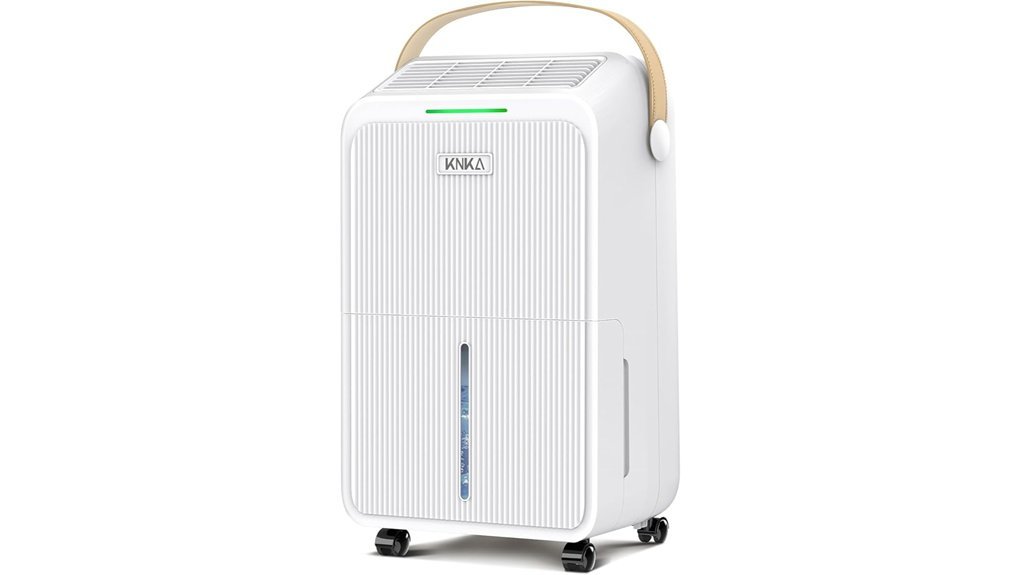
Best Value-Focused Pick
The KNKA PD22SC-12 is marketed for spaces up to 2,500 square feet and removes up to 34 pints per day at 95°F and 90% relative humidity. It includes a three-liter tank, a continuous-drain hose, a washable filter, a child lock, and Dehumidify, Dry, and Continuous modes.
Why You’ll Like It: The included drain hose means you can set up gravity drainage without immediately purchasing another accessory. Sleep mode turns off distracting display lights for nighttime use.
Best For: Bedrooms, bathrooms, laundry rooms, and moderately damp basements where value and flexible controls matter.
Consider Another Model If: You need a large collection tank, upward pumping, or a standardized capacity close to 50 pints per day.
Pros:
- Drain hose is included.
- Three operating modes and two fan speeds.
- Child lock, auto-defrost, auto-shutoff, and washable filter.
- Wheels and a carrying handle improve portability.
Cons:
- The three-liter tank can fill quickly during heavy use.
- The 34-pint rating is measured in very warm, humid conditions.
- The manufacturer’s quiet-operation figure may differ in real rooms and at higher fan speeds.
Yaufey 80-Pint Dehumidifier for Large Spaces
Best High-Capacity Home Pick
The Yaufey JD025Q-80 is marketed to remove up to 80 pints per day at 95°F and 90% relative humidity and cover spaces up to 5,000 square feet. Its controls offer Sleeping, Living, Basement, and Continuous modes, with an adjustable target-humidity range of 30%–80%.
Why You’ll Like It: A drain hose, caster wheels, automatic shutoff, auto-defrost, and multiple preset modes make it adaptable to different rooms.
Best For: Large warm basements, garages, open-plan living areas, and other high-humidity spaces with access to a lower drain.
Consider Another Model If: You need an integrated pump or want a capacity figure measured under standardized ENERGY STAR conditions.
Pros:
- High maximum moisture-removal rating.
- Four use-based operating modes.
- Includes a hose for continuous gravity drainage.
- Wheels and handles make repositioning easier.
Cons:
- The 80-pint figure reflects hot, highly humid conditions.
- The 1.06-gallon tank may fill frequently without hose drainage.
- No built-in pump for moving water upward.
ALORAIR Sentinel HD55S Commercial Dehumidifier
Best Commercial and Crawlspace Pick
The ALORAIR Sentinel HD55S is a compact commercial-style dehumidifier intended for crawlspaces, basements, cellars, restoration work, and other areas with a permanent drain. Its published capacity is approximately 55 pints per day at 80°F and 60% RH. Higher numbers sometimes shown in product titles reflect hotter or fully saturated test conditions and should not be treated as directly comparable.
Why You’ll Like It: Its metal housing, 130 CFM airflow, automatic defrost, compact horizontal body, and gravity-drain design suit installations where a normal upright home unit may be inconvenient.
Best For: Crawlspaces, storage areas, restoration jobs, workshops, and commercial moisture control.
Consider Another Model If: You need a collection bucket, caster wheels, app control, or a unit that can be used far from a drain.
Pros:
- Commercial-style metal housing.
- Compact design for crawlspaces and low-clearance locations.
- Automatic defrost supports operation in cooler spaces within its rated range.
- MERV-1 filter helps protect internal components from larger debris.
Cons:
- Requires gravity drainage and does not include a normal collection bucket.
- At approximately 41.7 pounds, it is not a lightweight portable model.
- The MERV-1 filter should not be treated as a high-efficiency air-purification filter.
Factors to Consider When Choosing a Dehumidifier
The best dehumidifier for your home depends on more than the largest advertised coverage number. Start with the severity of the moisture problem, then compare standardized capacity, drainage, operating temperature, tank size, controls, noise, and support.
Key Features to Evaluate
Look for an adjustable humidistat, automatic shutoff, auto-restart, a washable filter, automatic defrost, and a clear full-bucket indicator. A timer can reduce unnecessary operation, while app control is useful when the unit is located in a basement or another room you do not visit often.
Capacity, Test Conditions, and Coverage
Capacity is the amount of water a dehumidifier can remove in 24 hours under stated test conditions. Always check whether a headline rating was measured under standardized conditions or in very warm, highly humid air. Coverage claims such as 2,500 or 5,000 square feet are manufacturer estimates, not guaranteed results.
A moderately damp bedroom may be handled by a 22- or 25-pint model. A very damp basement, laundry room, or large open area will usually benefit from a higher-capacity unit. Active water intrusion, leaking foundations, and plumbing problems must be repaired rather than managed only with a dehumidifier.
Energy Efficiency Ratings
For a fair comparison, look for an ENERGY STAR listing tied to the exact model number. The integrated energy factor is expressed in liters of water removed per kilowatt-hour. Avoid relying on broad promises about annual dollar savings because the result depends on climate, electricity rates, operating hours, set humidity, and the amount of moisture entering the room.
Noise Level Considerations
A lower fan speed is usually more suitable for bedrooms and home offices, while a higher speed may be acceptable in a basement or garage. Manufacturer decibel figures are useful for comparison, but real-world sound can change with fan speed, floor vibration, nearby walls, and room acoustics. Place the unit on a solid, level surface and leave the required airflow clearance around it.
Drainage Options
A removable bucket works when you can empty the unit regularly. Gravity drainage is more convenient, but the hose must run continuously downhill without kinks. Choose a model with an integrated pump when the water must travel upward to a sink, window, or raised drain.
Temperature and Defrost
Compressor dehumidifiers remove less moisture as room temperature falls. Automatic defrost helps prevent ice buildup, but it does not make every model suitable for an unheated freezing area. Check the exact operating-temperature range before using a unit in a cold basement, crawlspace, or garage.
Tank Size and Maintenance
A small tank may be acceptable when continuous drainage is available. Without a hose, a larger tank reduces how often you must empty the unit. Clean the filter and bucket regularly, inspect drain hoses for algae or blockage, and keep the air inlet and outlet clear.
Warranty and Support
Check the warranty period, who provides service, whether replacement parts are available, and whether the Amazon seller is authorized. Save the receipt, model number, and serial number. A longer advertised warranty is useful only when the seller and manufacturer provide a clear claim process.
Before You Buy
- Measure the room and identify how damp it becomes.
- Compare capacity using the same test standard whenever possible.
- Confirm whether a drain hose is included.
- Choose an integrated pump if the drain is above the machine.
- Check the minimum operating temperature.
- Measure the available floor space and required airflow clearance.
- Verify the exact model number, warranty, and current Amazon features.
- Plan how often you will clean the filter, tank, and drain hose.
Frequently Asked Questions
How Do I Maintain My Dehumidifier for Optimal Performance?
Unplug the unit before cleaning. Wash or vacuum the filter according to the manual, empty and clean the bucket, inspect the drain hose for kinks or buildup, and keep the inlet and outlet clear. Do not reinstall a washable filter until it is fully dry.
How Long Does a Dehumidifier Last?
There is no guaranteed lifespan. Longevity depends on operating hours, room temperature, filter maintenance, compressor quality, drainage care, and how heavily the unit is loaded. Regular cleaning and correct sizing can reduce unnecessary strain.
Can I Use a Dehumidifier in Winter?
Yes, provided the room remains within the model’s approved operating-temperature range. A compressor unit may collect less water in cold air and can enter defrost mode more often. For very cold spaces, check whether a low-temperature or desiccant dehumidifier is more appropriate.
How Do I Know the Right Capacity for My Space?
Consider both square footage and moisture severity. A room with occasional mustiness needs less capacity than a basement with wet walls, laundry drying, or seepage. Compare standardized pint ratings and choose extra capacity when doors open frequently or outside moisture continually enters the space.
Are Dehumidifiers Noisy During Operation?
All compressor dehumidifiers create some fan and compressor noise. Lower fan settings are usually better for sleeping areas, while larger units may be more noticeable. A level floor and vibration-absorbing pad can reduce rattling.
What Humidity Level Should I Use?
Many homes are comfortable around 40%–50% relative humidity. Avoid setting the target much lower than necessary because that can increase energy use and may make the room feel overly dry. Adjust the setting for the season, room temperature, and signs of condensation.
Will a Dehumidifier Remove Existing Mold?
No. A dehumidifier can help make conditions less favorable for future mold growth, but it does not remove existing contamination or repair the moisture source. Address leaks and water intrusion, then clean or remediate affected materials safely.
Conclusion
The DREO 711S is the strongest all-around choice for buyers who want smart controls, a large tank, and high moisture-removal potential. Choose the AEOCKY LEO-001 when upward pump drainage is essential, or the GE 25-Pint and Midea 22-Pint for moderately damp rooms that do not require a large machine.
The Frigidaire 50-Pint, KNKA 34-Pint, and Yaufey 80-Pint cover different levels of residential moisture, while the ALORAIR Sentinel HD55S is better suited to crawlspaces, restoration work, and permanent gravity-drain installations.
Final Recommendation
Do not choose by headline pint capacity alone. Match the machine to your actual moisture load, confirm how the capacity was tested, and decide where the collected water will go. A correctly sized model with dependable drainage will usually be more convenient than an oversized unit that requires constant bucket emptying.