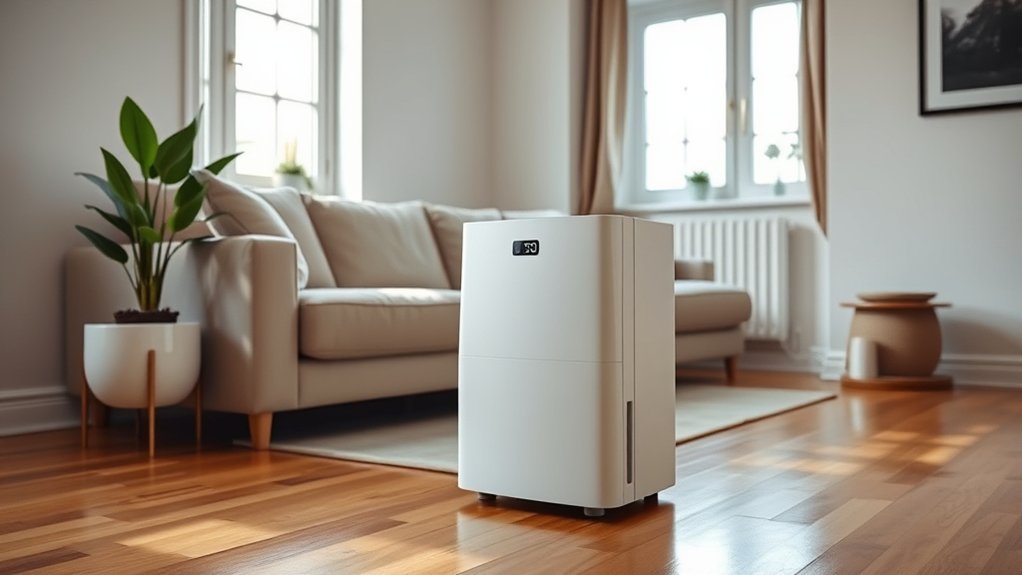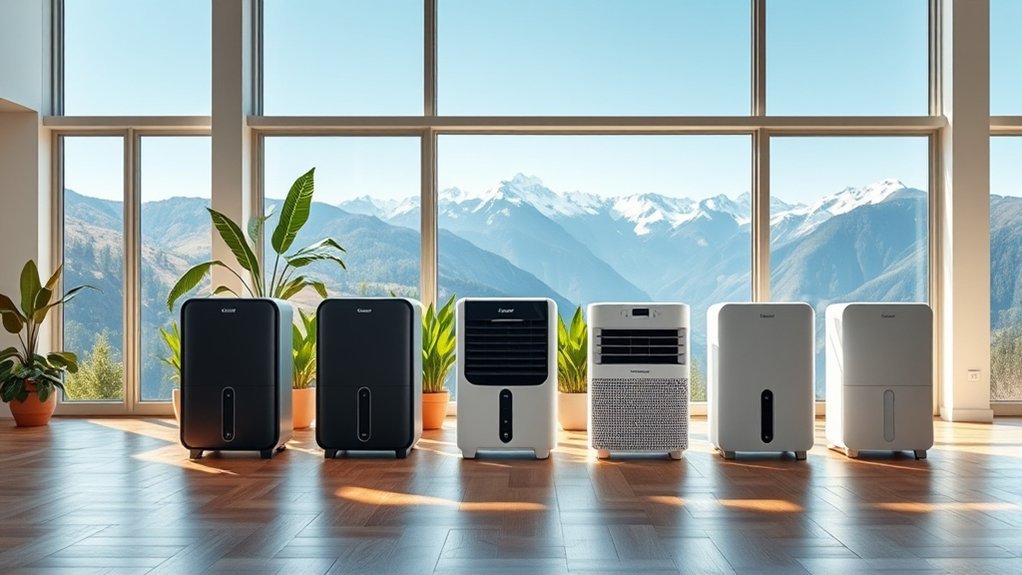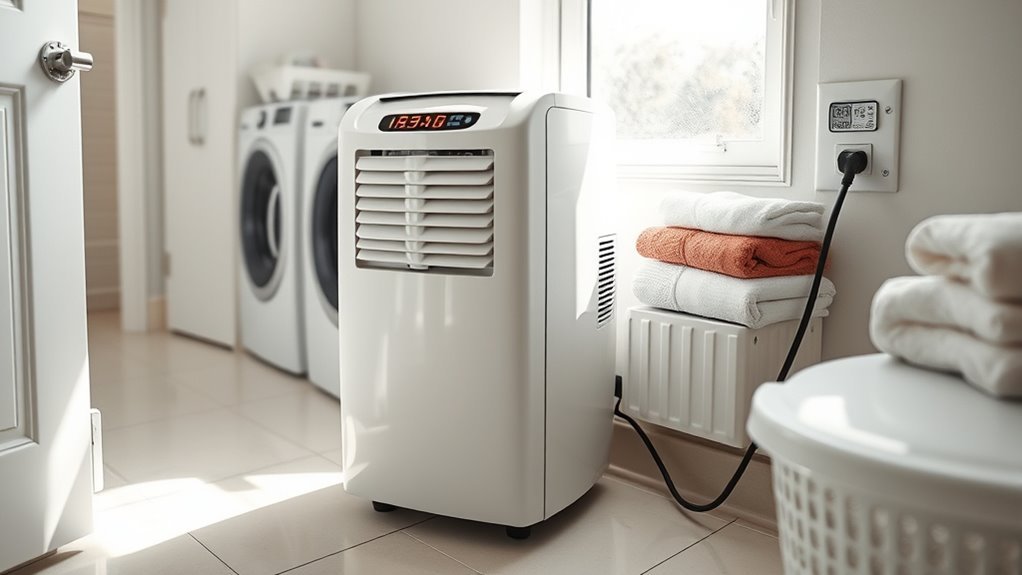
A refrigerant dehumidifier removes moisture by pulling humid air across a cold evaporator coil, condensing water vapor into liquid, and draining or collecting that water. It is usually a strong choice for warm, enclosed rooms, basements, warehouses, production areas, and other spaces where you need steady humidity control at normal room temperatures. If the space stays cold or you need unusually low relative humidity or dew point, a desiccant dehumidifier may be the better fit.
Quick Answer
A refrigerant dehumidifier uses a compressor, refrigerant, cold evaporator coil, warm condenser coil, fan, and drain system to remove moisture from air. It is most efficient in warm conditions. If the room regularly falls below about 65°F (18°C), check the manufacturer’s rated operating range and consider a low-temperature or auto-defrost model because frost can reduce moisture-removal performance.
Key Takeaways
- Choose a refrigerant dehumidifier for heated or warm areas where condensation, damp odors, corrosion, or mold risk are caused by excess humidity.
- Aim for about 30%–50% relative humidity in most occupied spaces; avoid letting indoor humidity stay above 50% when mold is a concern.
- Do not size by square footage alone. Match capacity to room size, dampness level, temperature, airflow, drainage, and the manufacturer’s pints-per-day rating.
- If the space regularly drops below 65°F (18°C), check the model’s rated operating range and frost-control features rather than assuming every compressor unit will perform the same way.
- Use a desiccant system when cold conditions, unusually low RH, or a low dew-point target makes condensation-based drying unsuitable.
At a Glance
| Best Use | Warm, enclosed spaces with excess humidity, condensation, damp smells, wet materials, or moisture-sensitive stock. |
| Temperature Consideration | Performance generally improves as room temperature rises. If the space regularly falls below about 65°F (18°C), choose a model specifically rated for those conditions and check its frost-control or auto-defrost features. |
| Target Humidity | Usually 30%–50% RH for occupied spaces and moisture control. Use a hygrometer and any application-specific requirements to set the actual target. |
| Sizing Basis | Room size, current RH, visible dampness, moisture sources, temperature, air leakage, and rated pints per 24 hours. |
| Drainage | Bucket for intermittent use; gravity drain or condensate pump for continuous operation. |
What Is a Refrigerant Dehumidifier?
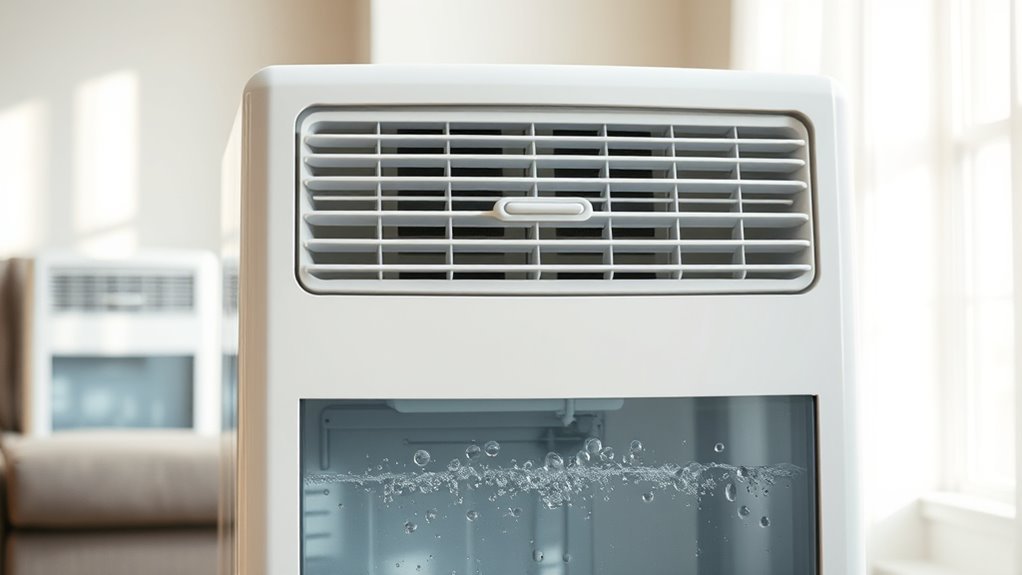
A refrigerant dehumidifier, also called a compressor dehumidifier, is a moisture-control machine that uses a refrigeration cycle to cool air below its dew point. When humid air hits the cold evaporator coil, water vapor condenses into droplets. The unit collects that water in a bucket or sends it through a drain hose, then passes the drier air over a warmer condenser coil before returning it to the room.
This type of dehumidifier is common in homes, basements, offices, warehouses, garages, workshops, construction drying, restoration work, and production spaces. It can remove substantial moisture at normal indoor temperatures using familiar vapor-compression technology.
For most occupied buildings, the practical goal is not bone-dry air. It is stable humidity. The U.S. Environmental Protection Agency recommends keeping indoor humidity below 60% and ideally between 30% and 50% relative humidity. The CDC recommends keeping home humidity no higher than 50% all day when preventing mold growth.
Note: A dehumidifier helps control the moisture conditions that allow mold to grow, but it does not remove existing mold. If you can see or smell mold, clean it safely and fix the moisture source before relying on a dehumidifier to reduce the chance of regrowth.
How Refrigerant Dehumidifiers Work
A refrigerant dehumidifier cools humid air below its dew point so water condenses on an evaporator coil, then passes the drier air across a condenser coil before returning it to the room. The main parts are the fan, evaporator coil, compressor, condenser coil, expansion device, humidistat, and water collection or drain system.
- The fan pulls humid air into the unit. Air commonly passes through a filter first so dust does not quickly clog the coil.
- The evaporator coil cools the air. Refrigerant inside the coil absorbs heat, making the coil cold enough for water vapor to condense when conditions are suitable.
- Condensate drains away. Water drips into a bucket, floor drain, sump, or condensate-pump system.
- The compressor raises refrigerant pressure. This prepares the refrigerant to release the heat it absorbed.
- The condenser coil reheats the air. The unit sends drier, warmer air back into the space.
- The expansion device drops refrigerant pressure. The refrigerant cools again and repeats the cycle.
Because the refrigeration process transfers heat and the compressor and fan consume electricity, the air leaving a refrigerant dehumidifier is normally somewhat warmer than the air entering it. A dehumidifier should therefore be treated as a moisture-control appliance, not as an air conditioner.
Types of Refrigerant Dehumidifiers
Refrigerant dehumidifiers come in several formats. The right one depends on how much water you need to remove, how long the unit must run, where the water will drain, the operating temperature, and whether the space is occupied.
Recommended Products

Dual-Sided Absorption - Twice the Surface, Twice the Speed - While most mini dehumidifiers only drawmoisture from one side, ours pulls damp air from both the front and back simultaneously. This dual-intakedesign means slica gel beads absorb moisture twice as efficiently - keeping any enclosed 35 sq.ft spaceconsistently dry. Protect expensive tools from rust, freshen bathroom air, or keep closet clothes smellingclean. Less waiting, more protecting.

【Efficient Dehumidification】With 360° dual cooling semiconductor technology, the dehumidification area reaches up to 650sq ft. The Levoair safe dehumidifier with 2000ml(68oz)water tank could absorb up to 35oz (1000ml) of moisture per day in a humid environment (Temperature: 86°F, Humidity: 80%RH) and keep moisture below 45%. Say goodbye to humidity!

High Efficient Dehumidifiers for Home: This compact 44oz dehumidifier efficiently removes excess moisture in rooms with 86°F and 80% RH, collecting up to 11.8oz (349ml) of water in 24 hours. It maintains an ideal humidity level of 45%-55% while operating at ultra-low energy consumption (24W/hour, 576W/day). Perfect for bedrooms, bathrooms, and small spaces.
Portable Refrigerant Dehumidifiers
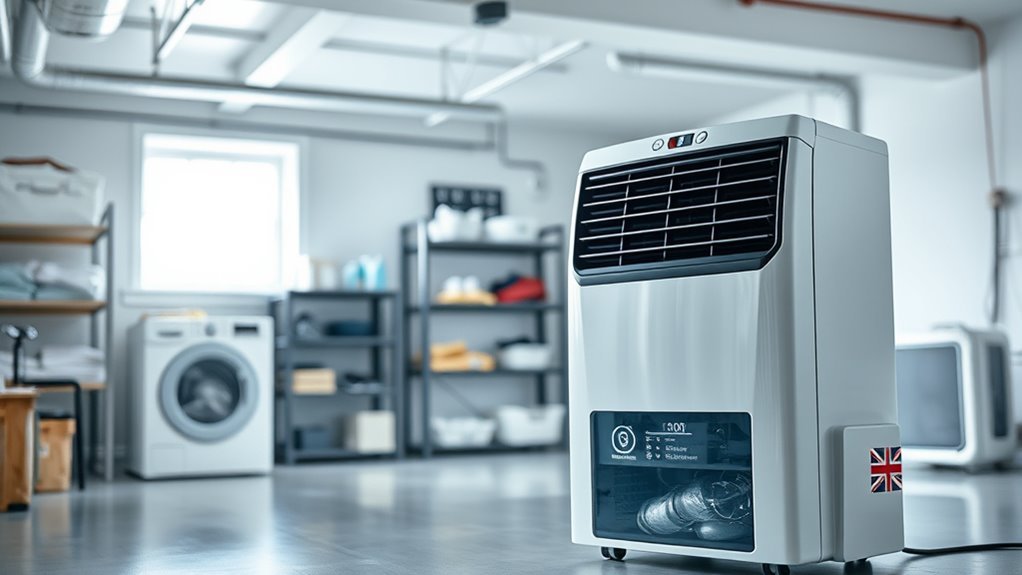
Portable units are the most common choice for basements, bedrooms, storage rooms, small offices, and temporary drying jobs. They usually have wheels, a removable bucket, a filter, and a humidistat. Many also include a hose connection for continuous drainage.
Whole-House Refrigerant Dehumidifiers
Whole-house dehumidifiers connect to central ductwork or a dedicated duct system. They are better for homes or small commercial buildings where humidity is high across multiple rooms. They should be sized and installed correctly because airflow, duct resistance, condensate drainage, and controls all affect performance. ENERGY STAR recommends working with an HVAC professional when selecting and installing a whole-home system.
Commercial and Industrial Refrigerant Dehumidifiers
Commercial and industrial units are built for heavier duty cycles, higher airflow, stronger cabinets, larger condensate systems, and long run times. They are used on construction sites, in warehouses, manufacturing areas, water-damage restoration, vehicle storage, and other high-moisture applications.
Low-Grain Refrigerant Dehumidifiers
Low-grain refrigerant (LGR) dehumidifiers are refrigerant-based machines commonly used in water-damage and structural-drying work. Their refrigeration and airflow systems are designed to keep removing moisture effectively as drying progresses. Do not choose an LGR label alone: compare the manufacturer’s rated water-removal capacity, airflow, operating-temperature range, power requirements, and performance data for the conditions in which the machine will actually run.
Low-Temperature Refrigerant Dehumidifiers
Low-temperature models use frost-control or defrost strategies and are specifically rated to operate in cooler environments. ENERGY STAR advises buyers to consider a product specified for lower temperatures when the space typically falls below 65°F (18°C), because frost can form on coils and reduce performance. If a space stays very cold or the process requires a low dew point, a desiccant dehumidifier may still be the better choice.
Where Refrigerant Dehumidifiers Work Best
Refrigerant dehumidifiers work best in warm, enclosed spaces where moisture keeps entering the air but conditions remain suitable for condensation on the evaporator coil. They are especially useful when doors and windows can stay closed during operation.
Good applications include:
- Basements and storage rooms with musty odors, condensation, or high RH readings.
- Warehouses and production areas where moisture can damage stock, packaging, raw materials, machinery, or electronics.
- Museums, galleries, and archives where the selected system can maintain the collection’s specified environmental range. For strict low-RH or dew-point requirements, follow the facility’s conservation or engineering specification rather than choosing by room temperature alone.
- Garages, vehicle storage, and aircraft hangars where condensation can contribute to corrosion.
- Construction and restoration sites where wet plaster, concrete, timber, or finishes need controlled drying.
- Leisure facilities and changing areas where condensation, damp odor, and moisture stress need control.
Pro Tip: Close windows and outside doors while the unit runs unless ventilation is part of a designed drying or HVAC strategy. If humid outdoor air keeps entering uncontrolled, the dehumidifier may run much longer without reaching the target RH.
When to Choose Refrigerant Over Desiccant
The choice between a refrigerant and desiccant dehumidifier usually comes down to temperature, target RH or dew point, moisture load, energy use, and the application.
| Choose a Refrigerant Dehumidifier When… | Choose a Desiccant Dehumidifier When… |
|---|---|
| The room is heated or normally warm enough for efficient condensation. | The room is cold or unheated and a standard compressor model would spend excessive time defrosting or lose too much capacity. |
| You need strong water removal at ordinary indoor humidity levels. | You need specialist drying, unusually low RH, or a low dew point. |
| Energy efficiency in warm, normal-RH conditions is a priority. | Low-temperature or low-dew-point performance matters more than conventional warm-room efficiency. |
| You want common portable, whole-home, commercial, or restoration options with condensate drainage. | You are drying a cold storage area, unheated building, boat, or process space with demanding humidity specifications. |
4-Question Decision Check
- What temperature will the space actually reach? Check the coldest normal operating condition against the manufacturer’s rated range.
- What RH or dew point do you need? Ordinary building humidity control and specialist low-dew-point drying are different jobs.
- How large is the moisture load? Consider room size, existing RH, wet materials, laundry, leaks, infiltration, and door opening.
- Where will the water go? Choose bucket collection only when manual emptying is practical; otherwise plan a gravity drain or correctly sized condensate pump.
In simple terms, refrigerant technology is usually the first choice for warm, damp air at ordinary indoor humidity levels. Desiccant technology becomes more attractive as conditions get colder or the required RH or dew point gets lower. Always compare the manufacturer’s rated operating range and performance data for the actual application.
Recommended Products

Semiconductor dehumidifiers use thermoelectric cooling to remove moisture from the air. They create a drier, more comfortable environment by reducing humidity and improving air quality.

【The Undisputed Champion — Industry-Leading Dehumidifier Brand】When you choose AEOCKY, you get double market validation. According to data independently verified by Stackline, a leading third-party data analytics company, AEOCKY was an industry‑leading dehumidifier brand on Amazon U.S. in 2025. This means you’re not just choosing a flagship product from a market leader, but a top-performing brand backed by independent market data and trusted by millions of real users, delivering the ultimate combination of performance, quality and trust.
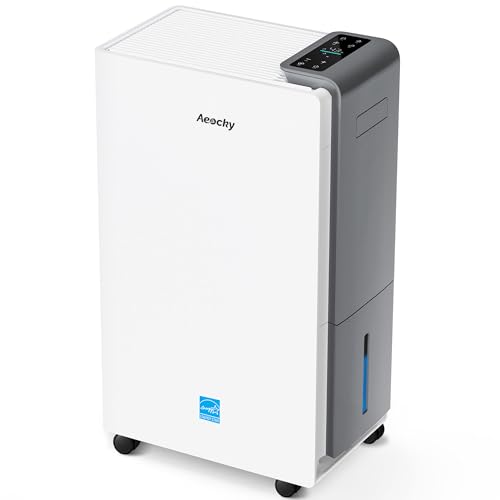
【ENERGY STAR 25 ≠ ENERGY STAR Most Efficient 2025】Don't fall for competitors' word games. With only 2.6% of ENERGY STAR models earning "Most Efficient 2025" title, these options are exceptionally rare on the market. RHEA-001 is one of the few to truly hold this top-tier certification. Many brands use misleading phrases like "Energy Star Efficient 25" or "Energy Star 25" to imply a standard they haven't met. Choosing them is a risk.With AEOCKY, you get verified performance and the peace of mind of authentic, top-tier efficiency.
Refrigerant Dehumidifier Benefits for Commercial Spaces
Commercial spaces often have larger air volumes, more moisture sources, and higher financial risk from dampness. A properly selected refrigerant dehumidifier can reduce condensation, stabilize storage conditions, and lower humidity-related maintenance problems when the building conditions suit refrigerant drying.
Energy-Efficient Moisture Removal
In suitable conditions, refrigerant dehumidifiers can remove moisture efficiently because they use a vapor-compression refrigeration cycle. ENERGY STAR states that certified dehumidifiers use more efficient refrigeration coils, compressors, and fans and use 20% less energy than similarly sized conventional units while removing the same amount of moisture.
For commercial use, compare the humidistat or external-control options, continuous drainage, restart behavior after power loss, filters, service access, duty cycle, and published operating-temperature range.
Protecting Inventory and Assets
Stable humidity helps protect materials that absorb water and surfaces that are vulnerable to condensation. In warehouses and production areas, moisture control can help reduce:
- Condensation on metal, tools, equipment, and cold surfaces.
- Conditions that accelerate corrosion on machinery, spare parts, vehicles, and racking.
- Warping, swelling, or softening of cardboard, wood, paper, textiles, and packaging.
- Moisture and condensation around sensitive electrical or electronic components.
- Musty odors and conditions that encourage mold growth.
For most occupied buildings, humidity control works best as prevention: reduce excess moisture, stop condensation where possible, repair water sources, and keep indoor RH within an appropriate range for the space and its contents.
Reliable Commercial Operation
Refrigerant units can run for long periods when they are correctly sized, installed, maintained, and drained. Noise varies by fan speed, compressor design, cabinet construction, and placement, so check the published sound rating if the unit will run near staff, guests, or other occupied areas.
For larger sites, do not choose by pints per day alone. Also compare airflow, ducting options, drain height, pump capacity, filter access, service clearance, operating temperature, power supply, controls, and whether the unit is designed for the required duty cycle.
How to Size a Refrigerant Dehumidifier
Sizing starts with the moisture load, not just floor area. The ENERGY STAR dehumidifier buying guidance explains that capacity is measured in pints per 24 hours and depends on both the size of the space and the dampness conditions before dehumidification.
| Condition Without Dehumidification | Small-Medium Room <2,000 sq ft | Large Room >2,000 sq ft |
|---|---|---|
| Slightly to moderately damp; musty odor may come and go; about 50%–75% RH | 20–30 pints/day | 30+ pints/day |
| Very damp; damp smell is consistent; damp spots appear; about 75%–90% RH | 25–40 pints/day | 40+ pints/day |
| Wet; sweating walls/floors, seepage, or high-load laundry drying; about 90%–100% RH | 30–50 pints/day | 50+ pints/day |
Use that range as a starting point, then adjust for real conditions:
- Add capacity for laundry drying, wet construction materials, indoor pools, frequent door opening, or active moisture sources.
- Choose continuous drainage if the bucket would need frequent emptying.
- Check the rated operating-temperature range if the space becomes cool.
- Use multiple units or a ducted system for divided spaces, long corridors, or buildings with poor air movement when one unit cannot circulate air effectively.
- Measure RH with a hygrometer instead of guessing by smell or touch.
Remember that the rated capacity is a standardized performance figure. Actual water collection in your room changes with temperature, RH, moisture load, airflow, and how often outside air enters the space. Use the rating to compare models, then confirm performance with the room’s measured RH after installation.
Recommended Products

Most Efficient Energy Star 2025 Dehumidifier:This high-performance compressor dehumidifier can remove 45 pints of moisture in a day (95℉, 90% RH) with 30%-80% target humidity setting range, which efficiently maintains your home's ideal humidity level. Perfect for large spaces up to 4500 sq.ft, it ensures a comfortable environment whether in your basement, bedroom,bathroom or office, garage,RV.ASAHWo Energy Star certified Dehumidifier cut down your hassle on energy.

Powerful 45-Pint Moisture Removal For 4,000 Sq. Ft - Engineered for powerful performance, the dehumidifier removes 45 pints of moisture daily (at 95°F/90% RH), ideal for large basements, garages, and open living rooms. It rapidly tackles excess humidity to protect your furniture and home structure from moisture damage. Whether for damp crawl spaces or apartments, the smart sensor automatically regulates humidity between an optimal 35%-55% range. This ensures a comfortable environment while daily use, giving you complete peace of mind

This dehumidifier delivers powerful performance — removing up to 80 pints of moisture per day and covering up to 5000 sq.ft, perfect for whole homes, basements, large living rooms, and garages. It effectively eliminates dampness and musty odors, keeping your entire large space dry and comfortable all day long, even in highly humid environments (90-100% relative humidity).
Placement, Drainage, and Setup Tips
Good placement can make the difference between effective drying and wasted runtime.
- Put the unit where air can circulate. Keep intake and discharge areas clear unless the manufacturer specifically allows wall or close-clearance placement.
- Control outside-air entry. Close unnecessary doors and windows during normal recirculating operation so humid outdoor air does not continuously replace the moisture being removed.
- Keep it away from heavy dust sources. Sawdust, lint, and construction dust can clog filters, coils, and grilles.
- Use a safe drain path. A gravity hose must slope continuously to an appropriate drain. If the discharge point is higher than the unit, use a condensate pump rated for the required lift.
- Set a realistic humidistat target. Around 45%–50% RH is practical for many occupied spaces, while the correct target for specialist storage or industrial processes may differ.
Warning: Keep drainage arranged so leaks cannot reach electrical cords, outlets, panels, or connections. Plug the unit into the type of properly grounded outlet specified by the manufacturer and follow all model-specific electrical instructions.
Common Refrigerant Dehumidifier Problems and Maintenance
Even a properly sized refrigerant dehumidifier can lose performance if airflow, drainage, frost control, or the refrigeration system is not working correctly. Common problems include clogged filters, dirty coils, iced coils, blocked drain lines, full buckets, sensor problems, fan problems, and refrigerant-system faults.
Coils Icing Over
Ice forms when the evaporator gets cold enough for moisture to freeze instead of draining normally. Low room temperature and poor airflow can contribute to the problem. ENERGY STAR notes that frost can form below 65°F (18°C) and may cause some units to cycle without removing moisture effectively. Check the filter, grilles, room temperature, and the manufacturer’s rated operating range. If the space regularly runs cold, use a model designed for those conditions or consider desiccant drying where appropriate.
Weak Water Removal
If the bucket is barely filling but the room still measures humid, check the RH reading, filter, coil cleanliness, fan operation, room temperature, open windows or doors, drainage, and humidistat setting. Also confirm that the unit’s capacity is appropriate for the actual moisture load.
Water Leaks
Leaks can come from a misaligned or damaged bucket, clogged drain fitting, kinked hose, frozen coil, loose connection, or poor gravity-hose slope. Clean the drain path and confirm that water flows correctly before relying on unattended continuous drainage.
Maintenance Checklist
- Clean or replace filters as recommended by the manufacturer.
- Keep coils, grilles, and intake areas free of lint and dust.
- Wash removable buckets periodically to control slime and odor.
- Flush drain hoses as appropriate and inspect them for kinks, leaks, or blockage.
- Check the RH sensor against a separate hygrometer if readings appear inaccurate.
- Arrange qualified service for whole-house, commercial, electrical, compressor, or sealed-refrigerant-system problems.
Warning: Do not open a sealed refrigerant circuit or intentionally release refrigerant. U.S. EPA refrigerant-management rules restrict refrigerant releases during appliance servicing, repair, and disposal. Sealed-system faults should be handled by an appropriately qualified service professional.
Commercial Uses for Refrigerant Dehumidifiers
Commercial refrigerant dehumidifiers are used where uncontrolled humidity can damage goods, slow drying, cause condensation, or interfere with a process. Instead of choosing from application name alone, match the machine to the environmental requirement.
- Warehouses and logistics: evaluate condensation, packaging sensitivity, door opening, air volume, and the RH needed for stored goods.
- Manufacturing and production: identify the moisture tolerance of raw materials, electronics, coatings, powders, machinery, and finished products.
- Museums, galleries, and archives: use the collection’s specified RH or dew-point range and appropriate monitoring rather than a generic comfort-humidity target.
- Construction and restoration drying: account for wet-material load, air movement, room temperature, drainage, and whether standard or LGR refrigerant equipment is appropriate.
- Vehicle garages and hangars: focus on condensation risk, outdoor-air infiltration, temperature swings, and continuous drainage.
- Leisure facilities and changing rooms: consider occupant load, showers or wet surfaces, ventilation, condensation, and the amount of outdoor air introduced.
Before buying a commercial unit, confirm the required pints per day or liters per day, airflow, target RH or dew point, operating temperature, power supply, drainage method, noise level, duty cycle, filter access, control method, service clearance, and maintenance requirements.
What a Refrigerant Dehumidifier Will Not Fix
A dehumidifier is a moisture-control tool, not a cure for every dampness problem. It will not repair:
- Roof leaks, plumbing leaks, groundwater seepage, or failed gutters.
- Mold that is already growing on surfaces.
- Inadequate bathroom, kitchen, or laundry exhaust.
- Open windows, open loading doors, or uncontrolled humid-air infiltration.
- Cold surfaces that require insulation or other condensation control.
- Incorrect HVAC design or poor air distribution across a building.
Use the dehumidifier alongside source control. Repair leaks, improve drainage, vent clothes dryers outside, use appropriate exhaust ventilation, insulate problem cold surfaces, and clean existing mold safely. EPA states that moisture control is the key to mold control and recommends fixing the underlying water or moisture source.
Frequently Asked Questions
How does a refrigerant dehumidifier work?
It pulls humid air across a cold evaporator coil. Moisture condenses on the coil and drains into a bucket or hose. The drier air then passes across the warmer condenser coil before returning to the room.
Does a refrigerant dehumidifier heat the room?
It normally adds some heat to the room while operating. The unit transfers heat through its refrigeration cycle, and the compressor and fan also use electrical energy. The outgoing air therefore tends to be warmer than the incoming air, so a dehumidifier should not be treated as an air conditioner.
Can a refrigerant dehumidifier work below 65°F?
Some can. ENERGY STAR advises choosing a product specifically rated for lower temperatures when a space typically falls below 65°F (18°C), because frost can form on coils and reduce performance. Check the exact manufacturer’s operating range and frost-control features instead of treating 65°F as a universal shutoff point.
Which is better, a desiccant or refrigerant dehumidifier?
A refrigerant dehumidifier is usually a better fit for warm, damp spaces at ordinary indoor humidity levels. A desiccant dehumidifier is often better for colder conditions, very low RH targets, or low-dew-point drying. Compare the actual operating conditions and manufacturer performance data before choosing.
What is a potential disadvantage of using a refrigerant dehumidifier?
Its water-removal performance generally falls as conditions become colder, and frost can interfere with operation. Compressor noise, condensate drainage, filter maintenance, and sealed-system repair are other practical considerations.
What humidity should I set my dehumidifier to?
For many occupied homes, about 45%–50% RH is a practical starting target. EPA recommends keeping indoor humidity below 60% and ideally between 30% and 50%, while CDC recommends keeping home humidity no higher than 50% all day for mold prevention. Specialist storage or industrial spaces may require different setpoints.
Can a refrigerant dehumidifier remove mold?
No. It can lower humidity and help reduce conditions that support future mold growth, but it will not remove mold already growing on walls, carpets, furniture, or HVAC surfaces. Clean existing mold safely and correct the water or moisture source.
Conclusion
A refrigerant dehumidifier is a strong choice for warm, enclosed spaces where excess humidity causes condensation, damp odor, mold risk, corrosion, or material damage. It removes water by cooling humid air below its dew point, draining the condensate, and returning drier air to the room.
For the best result, choose by more than square footage. Check the room’s actual temperature, starting RH, moisture load, target RH or dew point, drainage, airflow, and the manufacturer’s rated performance. Use refrigerant technology for suitable warm-space moisture control, consider desiccant equipment for colder or low-dew-point work, and correct leaks or existing mold instead of expecting the dehumidifier to solve the moisture source by itself.
Sources
- U.S. Environmental Protection Agency – A Brief Guide to Mold, Moisture and Your Home – supports indoor humidity targets, moisture-source control, condensation prevention, and mold-cleanup cautions.
- Centers for Disease Control and Prevention – Mold – supports the home humidity recommendation, mold prevention, and the need to correct moisture sources.
- ENERGY STAR – Dehumidifiers – supports capacity guidance, pints-per-day sizing ranges, ENERGY STAR efficiency, drainage options, whole-home installation guidance, and the below-65°F operating-temperature caution.
- U.S. EPA – Definitions of Section 608 Terms – supports the refrigerant-service and appliance-opening context used in the maintenance warning.