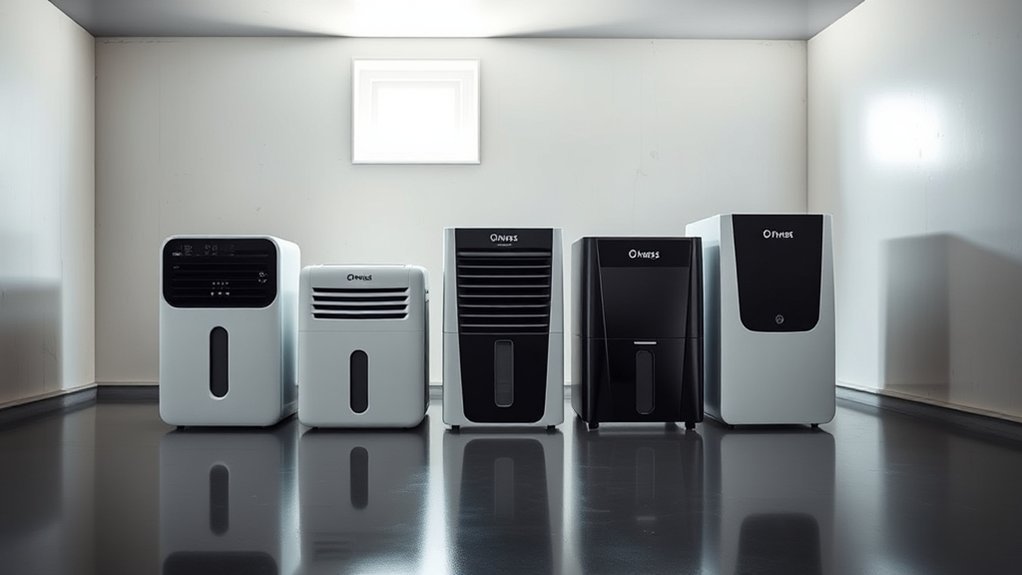
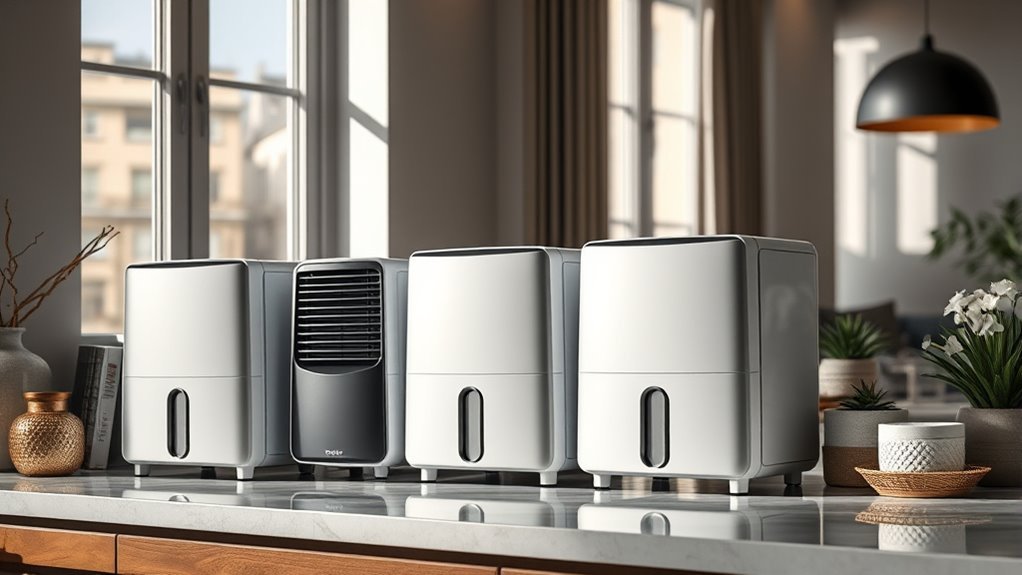
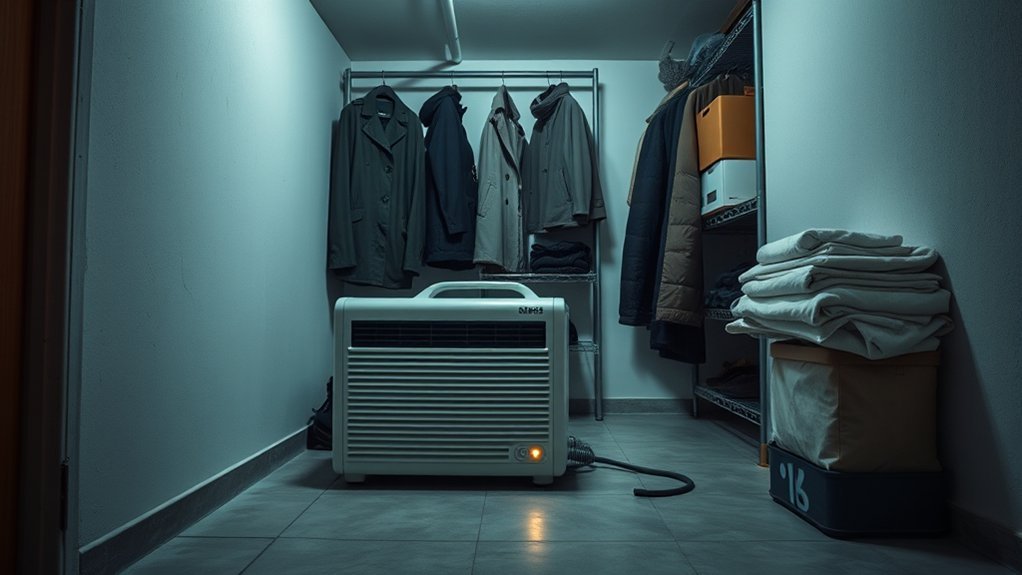
Humidity can rise quickly in a closet grow because watering, plant transpiration, and limited airflow all add moisture to a small enclosed space. The best dehumidifier is not simply the model with the largest advertised coverage number. It is the unit that can remove enough water for your actual moisture load, fit without blocking airflow, and hold your target relative humidity without adding more heat or noise than the space can manage.
How these picks were evaluated:
- Relevance to closet grows, micro grow cabinets, or plant-focused humidity control.
- Moisture-removal capability, automatic control, tank or drain options, heat, noise, and installation needs.
- Honest limitations under real grow conditions rather than relying on advertised square-foot coverage alone.
Quick verdict: The AC Infinity HYDRONE 7 is the best overall choice for growers who need purpose-built humidity and VPD control, ducting, and drainage. The TENKER 77oz is the stronger compact thermoelectric option for a small, warm closet with a moderate moisture load. The TABYIK 35 OZ is a budget pick for a micro grow with only mild humidity, while the Stropum DH-1 is a specialized DIY option for a tiny sealed cabinet that can accommodate its wiring and drainage requirements.
Important: Mini thermoelectric units can help with light moisture loads, but they may not keep up with dense plants, frequent irrigation, high ambient humidity, or late-stage transpiration. Confirm performance with a separate hygrometer and upgrade capacity if the unit runs continuously without reaching the setpoint.
Quick Comparison
| Product | Best Use | Control | Water Handling | Main Limitation | Amazon |
|---|---|---|---|---|---|
| AC Infinity HYDRONE 7 | Closet grows with several plants or a ducted installation | Humidity and VPD sensor, 10 drying levels | 2 L reservoir and optional gravity drain | Large footprint and 235–610 W power range | Check Amazon Details |
| TENKER 77oz | Small warm grow closets with moderate moisture | High and sleep modes; no adjustable humidistat | 77 oz removable tank | Up to 35 oz/day is a best-case claim at 86°F and 80% RH | Check Amazon Details |
| TABYIK 35 OZ | Micro grows and mild humidity control | Continuous single-speed operation | 35 oz tank with full-tank shutoff | Up to 16 oz/day is only under warm, very humid test conditions | Check Amazon Details |
| Stropum DH-1 | Tiny sealed grow cabinets and equipment enclosures | Automatic target mode and continuous mode | 800 mL tank and included tubing | Requires wiring; seller testing is limited to a 9-cu.-ft. sealed cabinet | Check Amazon Details |
AC Infinity HYDRONE 7 Smart Plant Dehumidifier
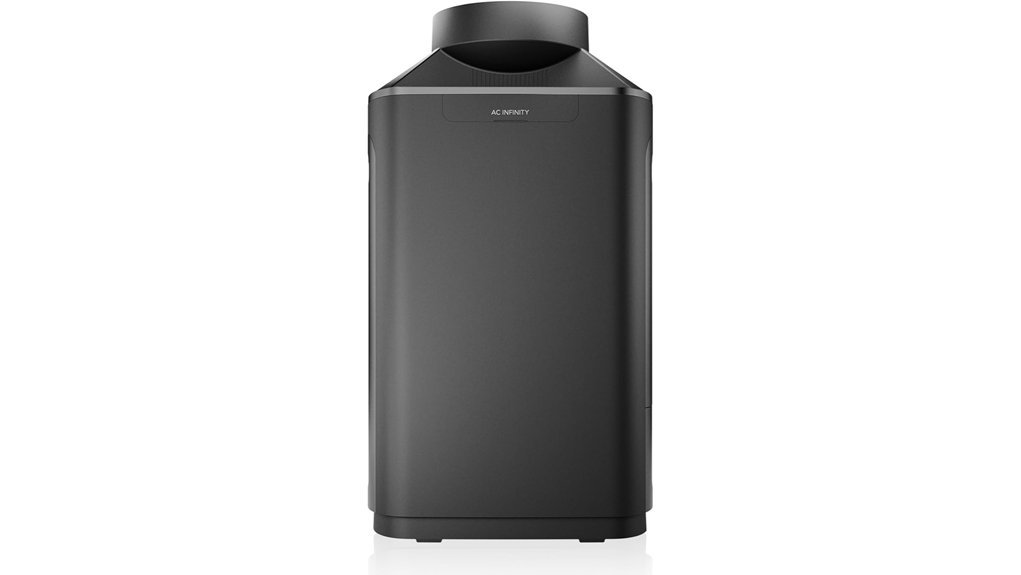
Best Overall
Best for Grow-Specific Humidity and VPD Control
The AC Infinity HYDRONE 7 is the most relevant option in this roundup because it is built specifically for plant environments rather than bedrooms or bathrooms. Its onboard controller uses a corded sensor to manage humidity or vapor pressure deficit, and 10 drying levels let the unit change output more gradually than a basic on-off mini dehumidifier. AC Infinity positions this version for grow spaces holding roughly four to six plants, but actual suitability still depends on irrigation, plant density, ventilation, and room humidity.
The dual 6-inch duct ports are useful when you do not want the unit occupying valuable floor space inside the closet. You can route dry air into the grow area, or build a closed-loop arrangement with the optional intake connection. A 2-liter internal reservoir and gravity-drain support also reduce the chance that humidity climbs because a small tank filled while you were away.
Why You’ll Like It: It solves the biggest weakness of generic mini units: they cannot automatically fine-tune output around a plant-specific target. This model provides sensor-based control, ducting flexibility, and substantially more control authority than a basic always-on mini unit. The manufacturer’s “real-world draw rate” should not be compared directly with standard compressor pint ratings.
Who Should Buy This: Growers with several plants, changing humidity needs across growth stages, or a setup that benefits from ducted dry air and continuous drainage.
Who Should Avoid This: Buyers with a very small cabinet, limited electrical capacity, or a light moisture problem that does not justify a larger purpose-built unit.
Pros:
- Purpose-built humidity and VPD control for plant environments.
- Ten drying levels provide more precise output adjustment.
- Dual duct ports, corded sensor, internal reservoir, and optional gravity drainage support flexible installation.
Cons:
- Its 11.45 x 14.05 x 24.44-inch body may be too large to place inside a narrow closet.
- Power draw varies from 235 to 610 watts, so heat load and circuit capacity need consideration.
- Wi-Fi app features require connection to a compatible AC Infinity smart controller.
TENKER Dehumidifier for Home, 77oz Water Tank
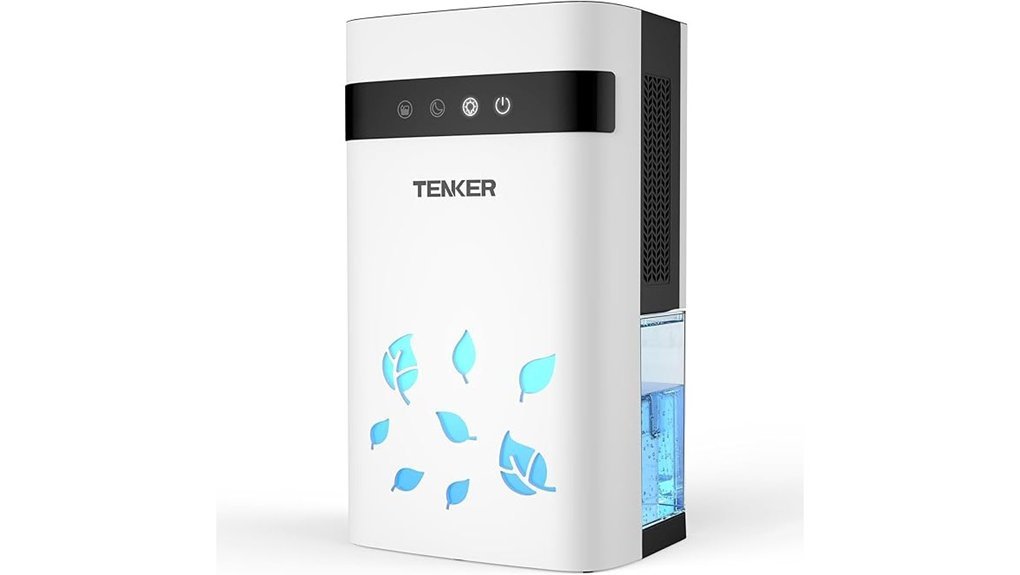
Best Value
Best Compact Option for a Small Warm Closet
The TENKER uses dual semiconductor condensers and dual fans in a compact 7.87 x 5.5 x 13.78-inch body. The manufacturer claims up to 35 ounces of moisture removal per day at 86°F and 80% relative humidity. That test condition is much warmer and wetter than many real grow closets, so use the figure as a best-case rating rather than a guaranteed daily result.
The 77-ounce tank is a practical advantage over smaller countertop units because it reduces how often you need to empty collected water. High mode prioritizes extraction, while sleep mode is intended to reduce fan noise. It does not provide an adjustable humidistat, so pair it with a separate hygrometer or humidity controller and check whether it can actually hold your target.
Why You’ll Like It: It offers more claimed extraction and a larger tank than many small thermoelectric models without taking up the space of a full compressor dehumidifier.
Who Should Buy This: Growers with a small, warm enclosure and a moderate moisture load who can monitor humidity independently.
Who Should Avoid This: Anyone dealing with dense flowering plants, frequent irrigation, cool temperatures, or persistent high humidity that calls for compressor or purpose-built capacity.
Pros:
- Dual-condenser design with a claimed maximum removal rate of 35 ounces per day under warm, humid conditions.
- Large 77-ounce removable tank with full-tank shutoff.
- Compact footprint, carrying handle, and a lower-noise sleep mode for less disruptive operation.
Cons:
- The advertised 1,000-square-foot coverage is not a useful sizing measure for an active grow; moisture load matters more.
- No user-set humidity target or built-in grow-specific sensor control.
- Thermoelectric output falls as temperature and relative humidity drop.
TABYIK 35 OZ Small Dehumidifier
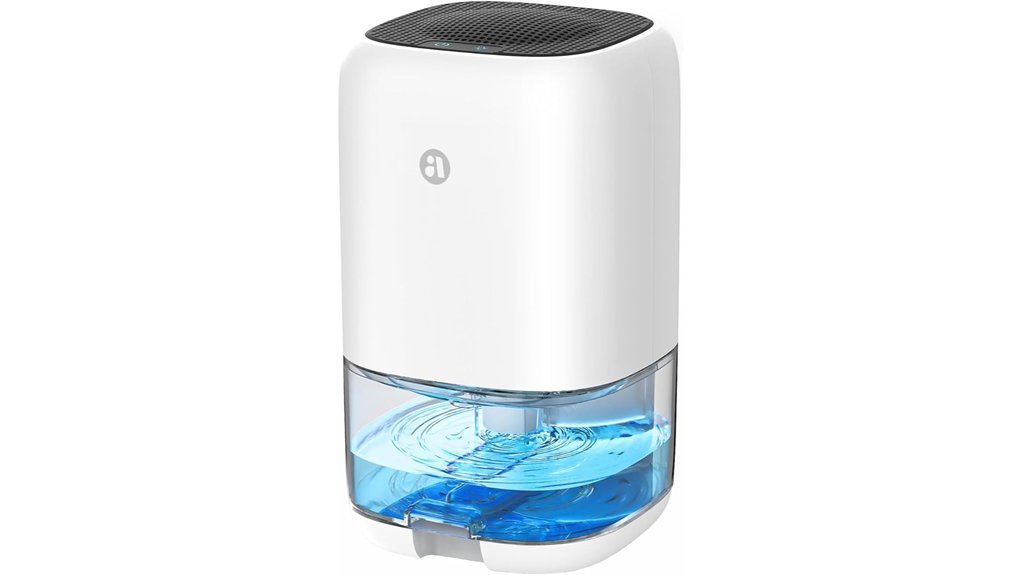
Budget Pick
Best Budget Option for a Mild-Humidity Micro Grow
The TABYIK 35 OZ Dehumidifier fits where a larger unit cannot. It measures about 5.9 x 5.9 x 10.1 inches, weighs roughly 2.2 pounds, and uses a 35-ounce transparent tank. Under the manufacturer’s warm, high-humidity test conditions, it can collect up to 16 ounces of water in 24 hours. In a real closet, extraction may be lower.
This is a simple continuous-operation model rather than a true automatic humidity-control system. The manufacturer-rated 28 dB operation, 40-watt power draw, carrying handle, and full-tank shutoff make it convenient, but its small extraction rate limits it to mild humidity problems, seedlings, or very small plant counts. It should not be expected to control a heavily watered grow on its own.
Why You’ll Like It: It is easy to place, quiet, inexpensive to run, and simple to empty.
Who Should Buy This: Buyers with a micro grow, low plant transpiration, and enough time to monitor the tank and hygrometer daily.
Who Should Avoid This: Growers who need an adjustable humidity setpoint, continuous drainage, or dependable control during high-moisture growth stages.
Pros:
- Compact 5.9-inch footprint fits shelves and tight corners.
- Manufacturer-rated 28 dB operation with a 40-watt power draw.
- Transparent 35-ounce tank with automatic full-tank shutoff.
Cons:
- Maximum claimed extraction is only 16 ounces per day under ideal test conditions.
- No adjustable humidistat, timer, or drain hose.
- Requires clear space around the intake and outlet, which can be difficult in a packed closet.
Stropum DH-1 Small Dehumidifier
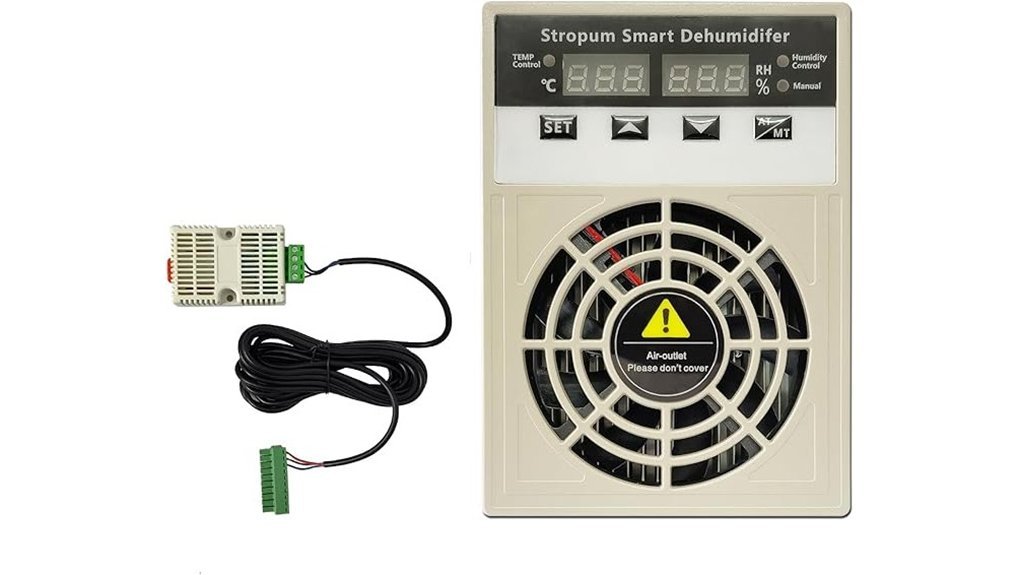
Specialized Pick
Best for a DIY Tiny Sealed Grow Cabinet
The Stropum DH-1 is a specialized 45-watt device for very small sealed enclosures, not a substitute for a room or full closet dehumidifier. Its humidity sensor supports automatic target mode and continuous drying mode, while the temperature-control switch can operate compatible external heating or cooling equipment. The compact body, digital display, 800 mL tank, and included tubing suit equipment cabinets or micro grow boxes where space is measured in cubic feet.
The key tradeoff is installation. The unit supports 110V to 240V input but requires wiring, careful sensor placement, and a safe drainage plan. The seller’s performance example is based on a sealed 9-cubic-foot cabinet, so do not apply that result to a full closet, an open tent, or a cabinet with frequent air exchange.
Why You’ll Like It: It provides adjustable automatic control in an enclosure too small for a conventional dehumidifier.
Who Should Buy This: Experienced users building a tiny sealed grow cabinet who are comfortable with wiring and mounting.
Who Should Avoid This: Beginners, renters who cannot modify the setup, and anyone trying to control a normal bedroom closet or larger tent.
Pros:
- Automatic humidity target mode plus continuous operation.
- Very compact body with digital display, sensor, tank, and tubing.
- Dual-voltage support and flexible hook or rail mounting.
Cons:
- Designed for tiny sealed enclosures rather than ordinary room-size spaces.
- Requires electrical wiring and careful drainage setup.
- Seller performance claims are based on a small controlled cabinet, not an active full-size grow.
Factors to Consider When Choosing a Dehumidifier for Closet Grow

Choose by moisture load and control needs, not by advertised square footage alone. A closet with several mature plants can produce more moisture than a much larger empty room, and a small thermoelectric unit may reach its limit even when the space looks tiny.
Humidity Control Accuracy
Use a separate calibrated hygrometer at canopy height to confirm the reading. A built-in sensor is useful, but placement near the dehumidifier’s dry-air outlet can make the displayed humidity look lower than the rest of the grow. Select a target that matches the plant species and growth stage, then watch whether the unit cycles normally or runs constantly without reaching that target.
Moisture Removal Capacity
Daily extraction is more useful than a square-foot rating. Compare the dehumidifier’s removal capacity with water added through irrigation, humid outside air entering the closet, and plant transpiration. Manufacturer ratings are normally measured under warm, very humid conditions, so expect less water collection when the air is cooler or drier. Leave extra capacity for weather changes and later growth stages.
When a Mini Dehumidifier Is Not Enough
A mini thermoelectric unit is undersized when it runs continuously, the tank collects little water, and humidity still stays above the target. The same is true when humidity spikes sharply after watering or during lights-off periods. In those cases, improve exhaust and circulation, reduce open water sources, or move to a higher-capacity purpose-built or compressor dehumidifier sized for the actual moisture load.
Heat and Airflow
Every dehumidifier releases heat into the room. In a tight closet, that heat can raise leaf and air temperature, increase cooling demand, and change vapor pressure deficit. Keep the intake and outlet clear, maintain circulation around the canopy, and consider placing a ductable unit outside the grow area when floor space or heat is a concern.
Drainage and Tank Capacity
A full tank can stop the unit at the worst time. Continuous gravity drainage is the lowest-maintenance option when the hose can slope safely to a drain or container. For tank-only models, choose a reservoir large enough to cover your longest unattended period and check it daily until you understand the real collection rate.
Quiet Operation Level
Noise claims are usually measured under controlled conditions and may differ after placement inside a reflective closet. Sleep modes reduce fan noise but often reduce moisture removal too. Prioritize sufficient capacity first, then use vibration pads, secure ducting, and proper clearance to limit rattles without blocking airflow.
Temperature Range Suitability
Thermoelectric dehumidifiers work best in warm, humid air and lose performance as temperature drops. A purpose-built grow unit rated for a wider operating range can be more consistent when temperatures vary, while a compressor model may be the better choice for larger, warmer rooms with heavy moisture loads. Check the manufacturer’s operating range before buying.
Power and Electrical Safety
Confirm that the circuit can handle the dehumidifier together with lights, fans, pumps, heaters, and air conditioning. Keep plugs, adapters, and extension connections away from runoff and reservoirs. Follow the manufacturer’s wiring and clearance instructions, and do not install a unit where collected water could spill onto electrical equipment.
Before You Buy:
- Measure the available footprint and required ventilation clearance.
- Estimate the daily moisture load instead of relying on square-foot coverage.
- Decide whether you need an adjustable humidistat, VPD control, or only light continuous drying.
- Plan where the collected water will go during unattended operation.
- Check heat output, wattage, circuit capacity, and operating temperature range.
Frequently Asked Questions
How Do I Calculate the Right Dehumidifier Size for My Closet Grow?
Start with the amount of water added each day, then account for plant transpiration, wet growing media, open reservoirs, and humid replacement air. Choose a unit with daily extraction comfortably above that estimated load under your actual temperature conditions. After installation, verify the result with a hygrometer. If humidity stays above target while the unit runs continuously, you need more capacity or better moisture removal from the room.
Can Dehumidifiers Prevent Mold on Plants and Grow Tent Walls?
A dehumidifier can reduce mold risk by limiting prolonged high humidity, but it cannot replace airflow, sanitation, leak control, and proper plant spacing. Remove standing water, avoid leaving foliage wet, circulate air through the canopy, and clean affected surfaces promptly.
Should I Use a Dehumidifier Continuously During Vegetative Growth?
Run it as needed to hold the target for your crop and growth stage. A unit with automatic humidity control should cycle on and off. A basic continuous mini dehumidifier may need an external controller, timer, or manual monitoring to avoid unnecessary heat and power use.
Do Hanging Moisture Absorbers Work for Active Closet Grow Spaces?
They can reduce minor dampness in an empty storage closet, but they are not a dependable replacement for a powered dehumidifier in an active grow. Plants and wet media release moisture continuously, while disposable calcium-chloride products remove water slowly and provide no humidity setpoint. Collected brine can also damage equipment or plants if a bag leaks.
Where Should I Place a Dehumidifier in a Closet Grow?
Place the unit where its intake can sample the humid air and its outlet can move dry air without blowing directly at one small part of the canopy. Keep the manufacturer’s required clearance around vents, protect the unit from irrigation runoff, and avoid placing it directly below shelves or equipment that can drip. For a ductable model, locating the main unit outside the closet can reduce heat and save floor space.
Can I Size a Closet Grow Dehumidifier by Square Feet?
Not reliably. Square-foot coverage assumes a general room condition and does not account for plant transpiration, watering frequency, open reservoirs, exhaust rate, or ambient humidity. Use the daily moisture load and the unit’s extraction performance at your actual temperature and humidity instead.
How Often Should I Empty the Water Tank?
Check it at least daily during the first week and after major watering, weather, or plant-stage changes. The correct schedule depends on the real collection rate and tank size. Use continuous drainage when possible, and test the hose route for leaks or backflow before leaving the grow unattended.
Is a Mini Dehumidifier Enough for Flowering Plants?
Sometimes, but only for a very small grow with a light moisture load. Flowering plants can release substantial moisture, and a mini thermoelectric model may run continuously without reaching the target. Track humidity during lights-off periods, when relative humidity often rises, and upgrade to a higher-capacity or purpose-built unit when needed.
Conclusion
Final recommendation: Choose the AC Infinity HYDRONE 7 for the strongest grow-specific control, especially when ducting and continuous drainage matter. Choose the TENKER 77oz for a small, warm closet with a moderate moisture load, or the TABYIK 35 OZ only for mild humidity in a micro setup. Use the Stropum DH-1 only in a tiny sealed DIY cabinet where its wiring, sensor placement, and drainage requirements make sense.
Whichever model you choose, judge it by the hygrometer, not the marketing coverage number. Stable humidity, good airflow, safe drainage, and enough extraction capacity are what protect plants and equipment.