Updated: August 2026
The best dehumidifier for a safe depends on two practical questions: does the safe have approved power access, and do you prefer continuous warming or cordless moisture adsorption? A plug-in dehumidifier rod gently warms the enclosure to lower relative humidity and reduce condensation risk. A rechargeable silica-gel unit physically adsorbs water vapor but must be removed or heated when its indicator shows saturation.
For a straightforward cordless option, the Eva-Dry E-500 is the strongest all-around choice for enclosed storage. The Hornady 95903 is a dependable continuous-use rod for a safe with a suitable outlet or cord pass-through. The Afloia TOPZ 4+1 is better when you want several rechargeable sticks for divided compartments or multiple small safes.
Measure the safe’s usable interior volume, confirm clearance around stored items, and add a digital hygrometer before relying on any coverage claim. For many firearm-storage setups, approximately 30% to 50% relative humidity is a practical reference range, but documents, photographs, leather, wood, optics, and other valuables may have different storage requirements.
Quick Verdict
- Best cordless all-rounder: Eva-Dry E-500
- Best brand-backed plug-in rod: Hornady 95903
- Best multi-safe rechargeable kit: Afloia TOPZ 4+1
- Best heating-rod alternative: MAXSafes 12-Inch Rod
- Best compact canister set: TOAAOT 200g Silica Gel Canisters
- Best flexible desiccant pack: DryTote 100g
How These Safe Dehumidifiers Were Compared
The products were compared by the factors that matter most inside an enclosed safe:
- Suitability for gun safes, document safes, cabinets, and enclosed storage.
- Need for continuous power versus cordless operation.
- Interior space required for safe placement and airflow.
- Recharge or regeneration method and expected maintenance.
- Availability of a saturation indicator or clear operating guidance.
- Important limitations, including heat, cord routing, and passive adsorption speed.
Quick Comparison of Safe Dehumidifiers
| Product | Type | Best For | At a Glance | Main Trade-Off | Check Details |
|---|---|---|---|---|---|
| Eva-Dry E-500 | Renewable silica-gel unit | Cordless moisture control in larger enclosed storage spaces | Up to 500 cubic feet; plug-in regeneration | Must be removed and plugged in to recharge | Check on Amazon |
| Hornady 95903 | 7-watt plug-in warming rod | Gun safes and cabinets with power access | Approximately 100 cubic feet; continuous use | Warm surface requires clearance from stored items | Check on Amazon |
| Afloia TOPZ 4+1 | Four rechargeable sticks with heating base | Several small safes, cabinets, or compartments | Four independent sticks; about two-hour regeneration | Each stick needs periodic regeneration | Check on Amazon |
| MAXSafes 12-Inch Rod | Plug-in warming rod | Continuous operation in a powered safe | 7 watts; horizontal or vertical mounting | Needs power and does not collect water | Check on Amazon |
| TOAAOT 200g Canisters | Oven-reactivated silica-gel canisters | Compact safes, ammo storage, and toolboxes | 200 grams per canister; no power during use | Requires oven reactivation and indicator checks | Check on Amazon |
| DryTote 100g Pack | Rechargeable silica-gel pack | Small safes, document boxes, cases, and totes | Flexible pack with color-change indicator | Larger safes may need multiple packs | Check on Amazon |
| ECCEPOPU 200g Canisters | Rechargeable aluminum desiccant canisters | Buyers wanting several canisters in one set | Three-canister format with indicator windows | Exact coverage and heating directions must be verified | Check on Amazon |
Eva-Dry E-500 Renewable Dehumidifier for Safes
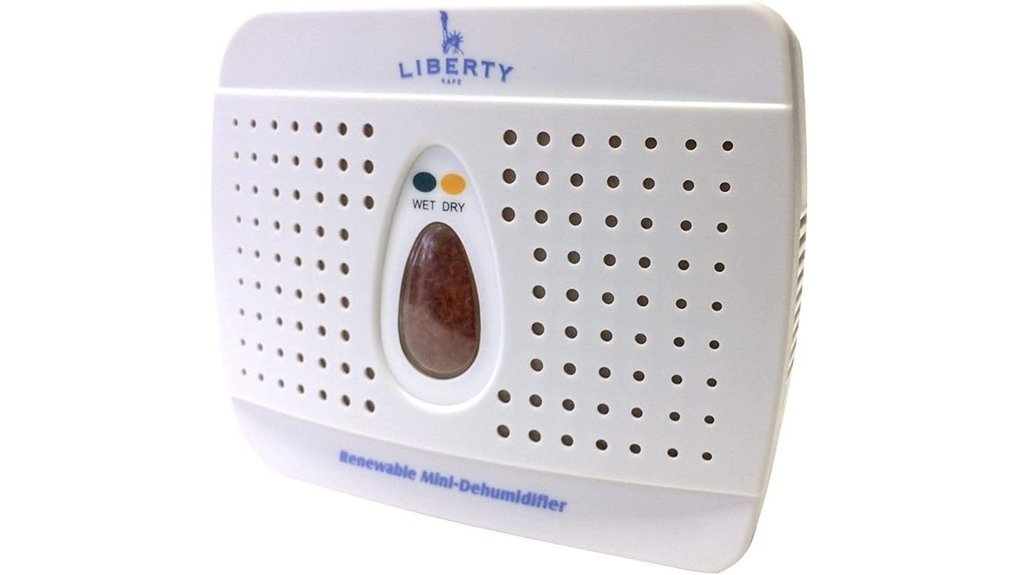
The Eva-Dry E-500 is a renewable silica-gel dehumidifier designed for enclosed areas such as safes, cabinets, closets, boats, and RV storage. It operates silently and without a cord while it is inside the safe. When the indicator shows that the desiccant is saturated, remove the unit and plug it in to regenerate the beads for reuse.
- Manufacturer-listed coverage: Up to 500 cubic feet, not 500 square feet
- Recharge method: Built-in plug for regeneration outside the safe
- Typical recharge time: Approximately 10 to 12 hours
- Best use: Enclosed storage where a continuous power cord is inconvenient
Important specification note: Published Eva-Dry pages have shown inconsistent moisture-capacity figures for the E-500. Use the current packaging and instructions for the exact unit rather than relying on one advertised ounce figure.
Why you’ll like it: It provides cordless, spill-free moisture adsorption with no fan noise, water tank, or disposable refill tray.
Who should buy this: Safe owners who want a reusable cordless unit and are comfortable removing it periodically for regeneration.
Who should avoid it: Buyers who need rapid drying after a leak or who do not want to monitor and recharge a passive desiccant.
Pros:
- Cordless and silent during normal use.
- Reusable silica-gel design avoids disposable moisture tubs.
- Color indicator helps show when regeneration is due.
- Suitable for safes and other enclosed storage areas.
Cons:
- Does not display the safe’s actual relative humidity.
- Needs several hours outside the safe for regeneration.
- Passive adsorption may be too slow for severe or ongoing water intrusion.
Hornady 95903 Electronic Gun Safe Dehumidifier Rod (12 Inch)
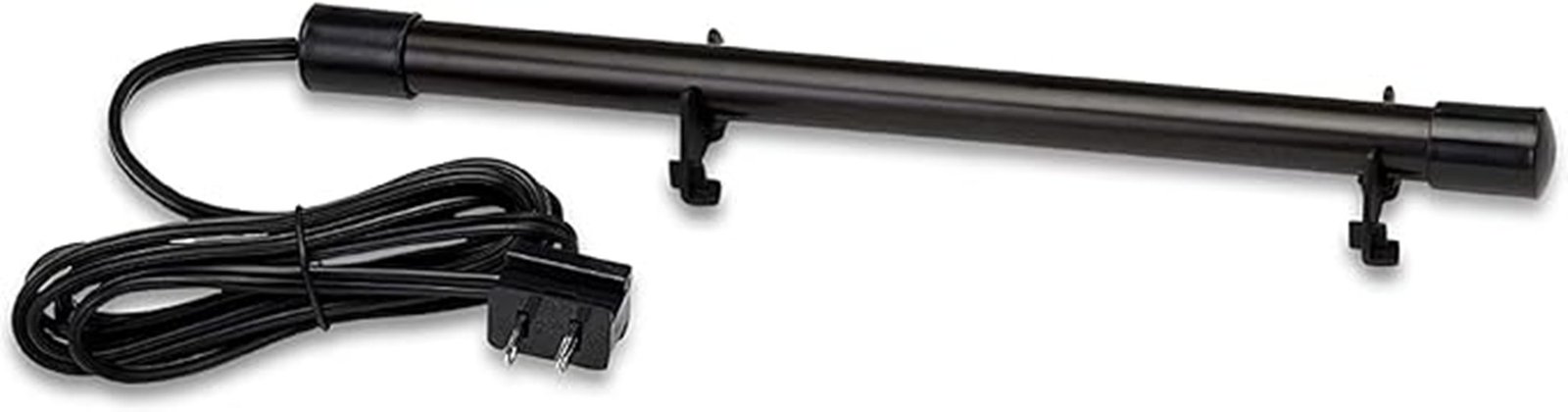
The Hornady 95903 is a 12-inch, 7-watt heating rod made for gun safes, cabinets, and other small enclosures. Rather than collecting water, it gently raises the internal temperature to lower relative humidity and reduce the chance of condensation forming on stored surfaces.
- Power: 7 watts
- Manufacturer-listed coverage: Approximately 100 cubic feet
- Recommended placement: Horizontally near the floor when the safe layout allows
- Installation: Horizontal or vertical mounting with a removable plug for narrow cord openings
- Important caution: Indoor use only; do not touch the rod after it is plugged in
Why you’ll like it: It is a straightforward continuous-use option from an established safe-accessory brand, with clear installation and safety guidance.
Who should buy this: Owners of powered gun safes or cabinets who want low-maintenance, continuous humidity management.
Who should avoid it: Buyers without approved power access, owners of very crowded safes with insufficient clearance, or anyone specifically wanting a product that captures water vapor.
Pros:
- Officially specified for safes, cabinets, and small enclosures.
- Low 7-watt power draw.
- Removable plug can simplify cord installation through small openings.
- Can be mounted horizontally or vertically.
Cons:
- Requires continuous power and suitable cable routing.
- Warm surface needs clearance from stored items and hands.
- No built-in hygrometer or adjustable humidity setting.
- Does not adsorb or collect water.
Afloia Cordless Mini Dehumidifier with Heating Base
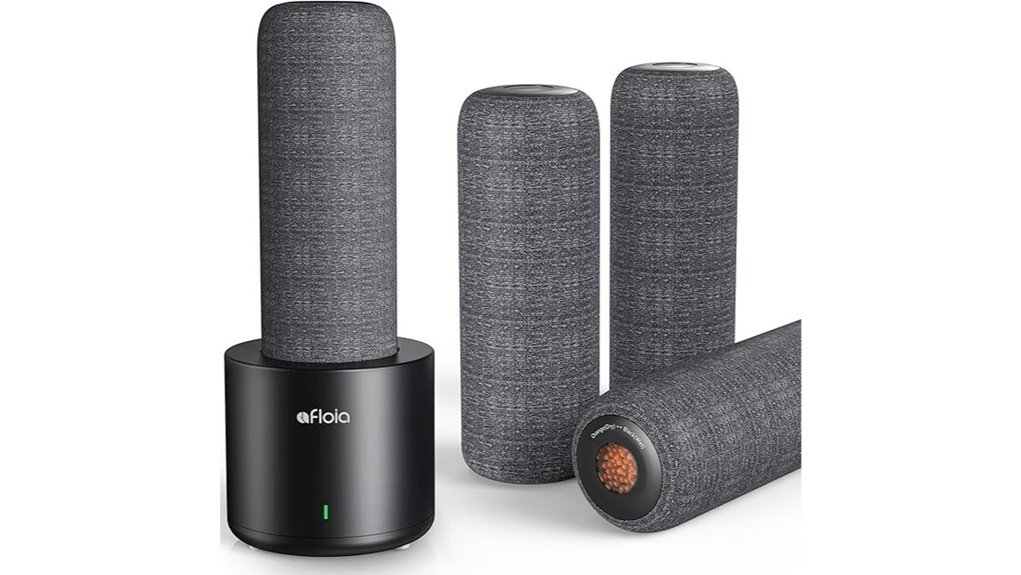
The Afloia TOPZ 4+1 package includes four cordless silica-gel sticks and one PTC heating base. Each stick adsorbs moisture without power while it is inside a safe, cabinet, closet, vehicle, or other small enclosed area. When the beads change from orange to dark green, the stick goes onto the heating base for regeneration.
- Package: Four dehumidifier sticks and one heating base
- Listed capacity: Up to 4 ounces per stick at 86°F and 80% relative humidity
- Regeneration time: Approximately two hours
- Safety feature: Automatic shutoff on the heating base
- Placement: Sticks may be positioned horizontally or vertically
Why you’ll like it: Four independent sticks let you cover several small enclosures or place more than one unit in a divided safe.
Who should buy this: Buyers managing several small safes, cabinets, cases, or separate shelves without permanent power.
Who should avoid it: Buyers wanting one large-capacity unit or a permanently installed solution that never needs regeneration.
Pros:
- Four cordless moisture absorbers in one package.
- Dedicated heating base provides a straightforward renewal process.
- Visible bead color helps identify when a stick is saturated.
- Automatic shutoff reduces the need to monitor the entire heating cycle.
Cons:
- The listed three-pound weight applies to the total package, not one stick.
- Advertised capacity reflects specific high-humidity test conditions.
- Performance and renewal frequency vary with safe size, seal quality, and ambient humidity.
- The heating base must be kept dry and used on a stable, heat-resistant surface.
MAXSafes Gun Safe Dehumidifier Rod (12 Inch)
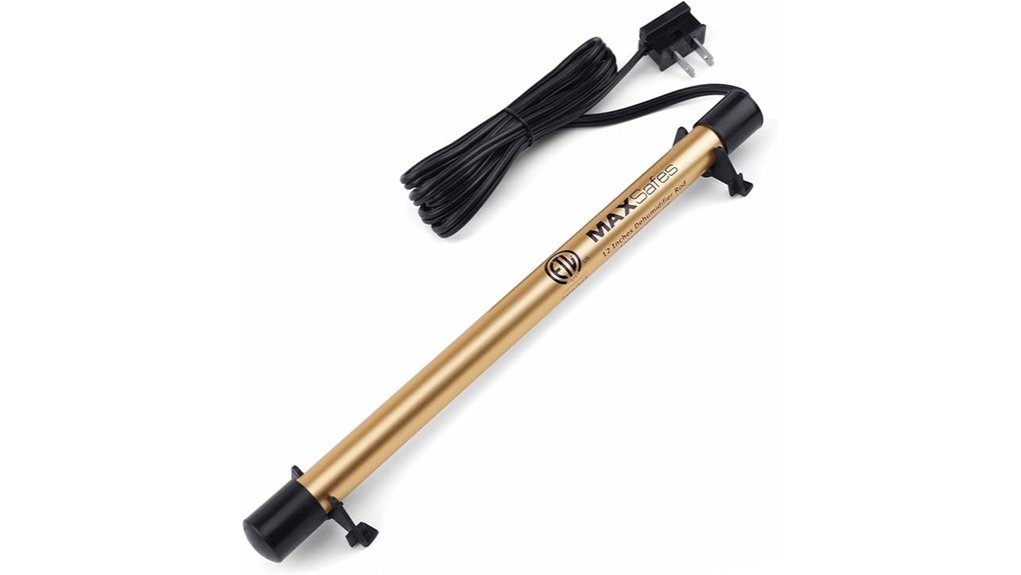
The 12-inch MAXSafes rod is a 7-watt heating device for gun safes and cabinets. It does not adsorb water or collect liquid in a tank. Instead, it slightly raises the temperature inside the enclosure, helping lower relative humidity and reduce condensation risk.
- Power: 7 watts
- Installation: Horizontal or vertical mounting with supplied brackets
- Preferred position: Horizontally along a low or rear area when the safe layout permits
- Best use: Safes with a built-in electrical outlet or an approved cord-routing opening
Why you’ll like it: Once properly mounted and plugged in, it can operate continuously without emptying a tank or regenerating silica gel.
Who should buy this: Safe owners who want a simple alternative to the Hornady rod and have enough space for safe airflow around the unit.
Who should avoid it: Buyers whose safe has no approved way to route power, or anyone who needs a product that physically adsorbs moisture.
Pros:
- Continuous, low-wattage operation.
- Compact 12-inch format for many standard safes.
- Can be mounted horizontally or vertically.
- Removable plug can help with cord routing.
Cons:
- Requires continuous electrical power.
- Becomes warm during operation and needs unobstructed airflow.
- Does not include an onboard humidity display or automatic humidistat.
- The cord must be protected from sharp metal edges.
TOAAOT 200g Silica Gel Canister for Gun Safe
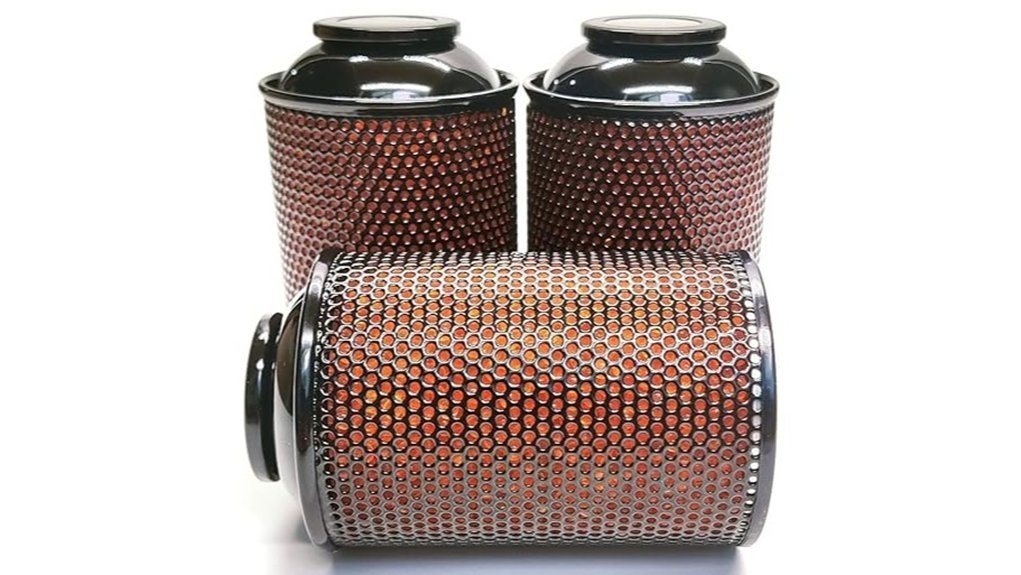
The TOAAOT option uses reusable indicating silica gel inside compact canisters. The linked version is presented as a multi-canister set, making it useful for separate shelves, ammo storage, toolboxes, or more than one small enclosure. The indicator beads change from orange to dark green when oven reactivation is needed.
- Desiccant amount: 200 grams per canister
- Seller-listed coverage: Approximately 15 cubic feet per canister
- Reactivation: Current product information commonly specifies about 300°F for approximately three to four hours
- Power while in use: None
Important instruction note: Reactivation times shown by sellers are not fully consistent. Follow the temperature and timing supplied with the exact canister set you receive.
Why you’ll like it: The compact, passive design can be placed where a cord or larger renewable unit will not fit.
Who should buy this: Owners of compact safes, ammo boxes, cases, or tool storage who can safely regenerate the canisters in an oven.
Who should avoid it: Buyers who cannot follow the oven instructions or who prefer a plug-in, set-and-forget system.
Pros:
- Compact shape fits shelves and corners inside many safes.
- Reusable design reduces the need for disposable moisture packets.
- Multiple canisters can be distributed around a divided enclosure.
- No cord or electricity is required during use.
Cons:
- Must be checked periodically and reactivated when saturated.
- Coverage is a seller claim and real performance depends on humidity and air leakage.
- Hot canisters must cool completely before they are returned to storage.
- Oven regeneration is less convenient than plug-in regeneration.
DryTote Rechargeable Desiccant Pack, 100g
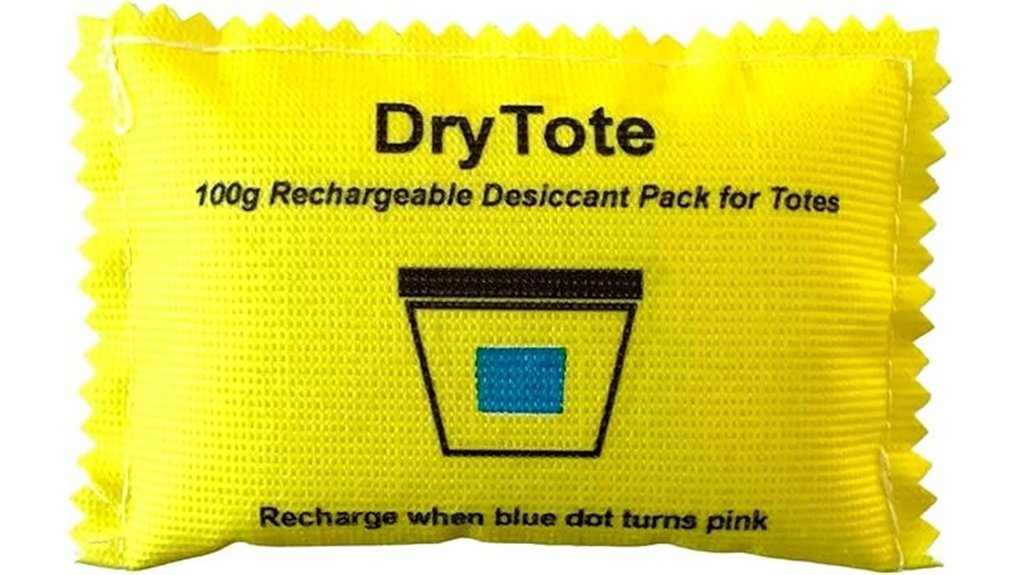
The DryTote is a 100-gram rechargeable silica-gel pack for enclosed storage. Its soft, compact format works well in document safes, camera cases, storage totes, gun cabinets, and other spaces where a rigid canister may be awkward. A color-changing dot indicates when the pack needs to be regenerated.
- Desiccant amount: 100 grams
- Manufacturer-listed coverage: Up to approximately 200 gallons of enclosed storage per pack
- Indicator: Blue when ready; pink when saturated
- Recharge method: Microwave or low-oven method according to the product directions
Why you’ll like it: It fits easily around stored items and can be moved between small safes, cases, and bins.
Who should buy this: Buyers who need a lightweight pack that fits where a metal canister or large renewable unit would be inconvenient.
Who should avoid it: Owners of large, frequently opened safes who do not want to use multiple packs or monitor indicator dots.
Pros:
- Flexible, lightweight shape fits spaces that rigid canisters may not.
- Reusable silica gel and visible saturation indicator.
- No electricity is required while it is inside the safe.
- Microwave regeneration can be faster than oven-reactivated canisters.
Cons:
- A single pack may not be enough for every gun safe.
- The 200-gallon figure is manufacturer guidance rather than a guaranteed result.
- The indicator can be difficult to see in a dark, crowded safe.
- Regeneration must follow the pack’s specific heating instructions.
ECCEPOPU Gun Safe Silica Gel Desiccant Canisters
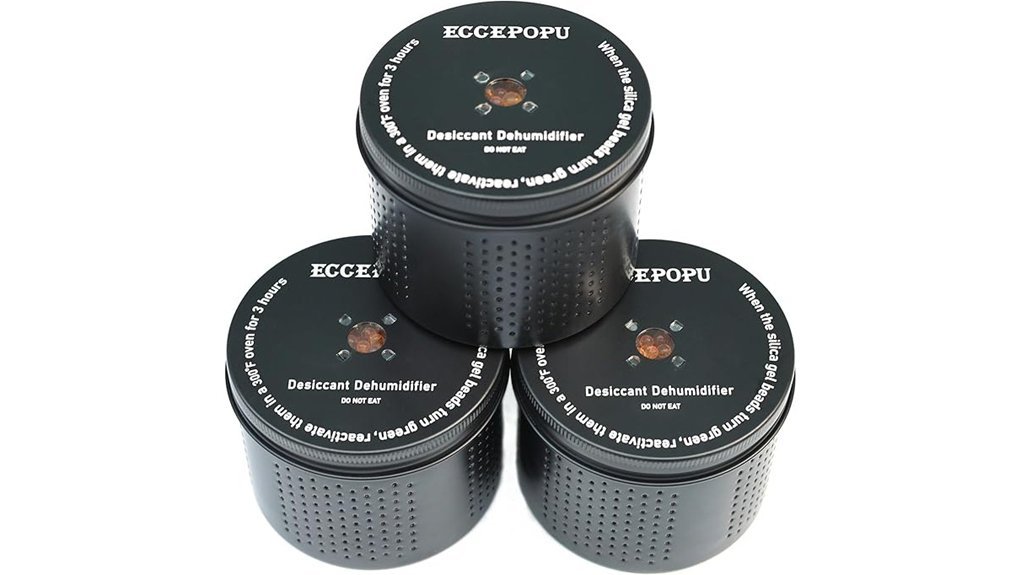
This ECCEPOPU set uses 200-gram silica-gel canisters with circular air openings and viewing windows. The linked product information identifies a three-canister package intended for gun safes, cabinets, closets, storage bins, ammo containers, and toolboxes. Each canister works without electricity while placed in the enclosure.
- Package: Three 200-gram canisters
- Power while in use: None
- Construction: Metal canisters with visible saturation indicators
- Reactivation: Oven regeneration according to the instructions for the exact linked model
Important specification note: ECCEPOPU sells several similar canister capacities and package configurations. Verify the linked model’s dimensions, coverage claim, indicator colors, and exact heating instructions before ordering or regenerating the canisters.
Why you’ll like it: The three-canister format makes it easy to spread passive moisture adsorption across shelves or separate storage areas.
Who should buy this: Buyers who want several movable canisters and are comfortable checking current seller documentation before use.
Who should avoid it: Buyers wanting a manufacturer-documented powered system, an automatic humidity controller, or a product requiring no periodic heating.
Pros:
- No outlet, cord, fan, or water tank is required during use.
- Viewing windows make routine saturation checks easier.
- Canisters can be moved between safes, cabinets, cases, and toolboxes.
- Three units can be distributed across divided storage areas.
Cons:
- Detailed specifications are primarily seller supplied.
- Similar ECCEPOPU variants can have different capacities and heating directions.
- Oven reactivation requires time, supervision, and safe cooling.
- More than one canister may be needed in a large or frequently opened safe.
Factors to Consider When Choosing a Dehumidifier for a Safe
A safe dehumidifier should be selected by interior volume, power access, stored materials, maintenance preference, and actual humidity readings. Room-size square-foot ratings are often misleading for enclosed storage because safes are better measured in cubic feet.
Measure the Safe’s Interior Volume
Measure the usable interior length, width, and height, then multiply those figures to estimate cubic feet. Account for shelves, drawers, door organizers, firearm racks, document boxes, and other objects that may restrict placement or airflow. A product’s coverage figure is only a starting point because the safe’s seal, opening frequency, room humidity, temperature, and placement all affect performance.
Choose a Heating Rod or a Desiccant
Heating rods gently warm the air and nearby surfaces, helping lower relative humidity and reduce condensation risk. They are convenient in safes with approved electrical access, but they do not collect water. Silica-gel products physically adsorb water vapor and need no power during use, but they must be regenerated after becoming saturated.
A large safe in a humid room may benefit from a heating rod plus monitored desiccant, provided both products have adequate clearance and are used according to their instructions. Verify the result with a hygrometer rather than assuming that combining products automatically provides better control.
Consider What the Safe Contains
A gun safe, document safe, camera cabinet, jewelry safe, and media safe may not have identical storage requirements. Heat-sensitive items need adequate distance from a warming rod. Paper, photographs, leather, wood stocks, optics, electronics, and adhesives can respond differently to overly damp or overly dry conditions. Follow the storage guidance for the most sensitive valuables in the enclosure.
Check Power and Cord Routing
Before buying a rod, confirm that the safe has an internal outlet or an approved cable pass-through. Do not pinch a cord in the door or modify a fire-rated safe without consulting the safe manufacturer. Protect the cord from sharp metal edges and position the rod where air can circulate without contacting fabric, foam, documents, ammunition packaging, or other stored items.
Compare Reactivation Methods
Rechargeable products use different methods. Some plug directly into a wall, some sit on a heating base, some go in an oven, and others may allow a microwave method. Never assume that the temperature, appliance, or timing is interchangeable between products. Follow the instructions for the exact model and allow it to cool before returning it to the safe.
Use a Separate Hygrometer
Most products in this roundup do not show the actual relative humidity inside the safe. A digital hygrometer lets you track whether the setup is working. For many firearm safes, approximately 30% to 50% relative humidity is a useful reference range, but the correct target depends on the stored materials and manufacturer guidance.
Record readings over several days rather than reacting to one measurement. Check again after long door openings, major weather changes, heating or cooling season changes, and any move to a basement, garage, or exterior wall.
Plan Placement and Airflow
Place desiccant where air can circulate around its vents or fabric surface. Avoid burying it under papers, clothing, foam, or cases. Heating rods are commonly installed low because warmed air rises, but the exact orientation and clearance should follow the manufacturer’s instructions. Keep indicator windows or dots visible so maintenance is not forgotten.
Address Moisture Outside the Safe
A small safe accessory cannot repair a plumbing leak, stop groundwater, correct a damp wall, or protect against flooding. If a hygrometer remains high despite correctly sized equipment, inspect the room, improve ventilation or room dehumidification, move the safe away from a damp surface, and investigate possible water entry. A safe on a concrete slab may also experience cooler surfaces and condensation during temperature changes.
Maintenance and Safety
Inspect cords, plugs, brackets, canisters, fabric packs, and indicator windows regularly. Wipe exterior dust with a dry cloth and never immerse electrical parts. Replace any product with a damaged cord, cracked case, loose bead containment, or deformed heating component. Desiccants and rods help manage airborne moisture, but they do not replace normal firearm cleaning, corrosion protection, secure storage, or building moisture repairs.
Warranty and Support Options
Check the current listing and manufacturer documentation for warranty duration, included components, replacement procedures, and support contact details. Private-label listings can change, so confirm that the product name, package count, wattage, dimensions, indicator colors, and regeneration instructions still match before ordering.
Before You Buy Checklist
- Measure the safe’s usable interior volume and available mounting space.
- Identify the most humidity-sensitive material stored inside.
- Decide whether the safe can safely support continuous power.
- Check the product’s exact recharge method, appliance, temperature, and timing.
- Confirm the package count, dimensions, model number, and indicator colors.
- Make sure a heating rod will have unobstructed clearance and airflow.
- Add a hygrometer so you can verify performance instead of guessing.
- Investigate the room if humidity stays high despite proper in-safe equipment.
Frequently Asked Questions
Is a Heating Rod or Silica Gel Better for a Gun Safe?
A heating rod is convenient for a safe with approved power because it can operate continuously with little routine maintenance. Silica gel is better when you need a cordless option that physically adsorbs moisture. The better choice depends on safe size, ambient humidity, stored materials, access to electricity, available clearance, and how often you are willing to regenerate a desiccant.
Does a Gun Safe Dehumidifier Rod Remove Water?
No. A rod does not collect water in a tank or adsorb it into a material. It slightly raises the internal temperature, lowering relative humidity at that temperature and reducing condensation risk. A silica-gel canister, pack, or renewable unit adsorbs water vapor and must be regenerated after it becomes saturated.
What Humidity Level Should a Gun Safe Have?
Approximately 30% to 50% relative humidity is a commonly used reference range for firearm storage. The ideal reading can vary when the safe also contains wood, leather, documents, photographs, electronics, optics, or other sensitive materials. Use a calibrated hygrometer and follow the storage guidance for the contents of your safe.
How Many Silica-Gel Canisters or Packs Do I Need?
Start with the product’s stated enclosed-volume guidance, then verify the result with a hygrometer. Large safes, frequently opened safes, divided interiors, and safes in humid basements or garages may require more than one unit. Do not rely on package marketing alone.
How Often Should I Recharge a Desiccant Dehumidifier?
Regenerate it when the product’s indicator shows saturation. The interval varies with the amount of silica gel, safe volume, door-opening frequency, seal quality, surrounding humidity, and temperature. Check indicators more often during humid seasons or after the safe has remained open for an extended period.
Where Should a Dehumidifier Rod Be Installed?
Many manufacturers recommend a low horizontal position so warmed air can rise through the enclosure. Keep the rod unobstructed and away from stored materials. Use the supplied mounting hardware, maintain the required clearance, and use only an approved cord-routing method.
Should I Use a Hygrometer Inside the Safe?
Yes. A hygrometer shows whether the product is actually controlling relative humidity. Record readings over several days and during changing weather. If readings remain high, investigate the room, safe location, door seal, floor or wall moisture, and product capacity.
Can I Use a Heating Rod and Silica Gel Together?
They can be used together when both products fit safely and their instructions permit the planned placement. A rod manages relative humidity through gentle warming, while silica gel adsorbs water vapor. Use a hygrometer to determine whether the combination is necessary and avoid overcrowding the safe or blocking airflow.
How Do I Maintain a Safe Dehumidifier?
For a rod, unplug it before inspection, check the cord, plug, brackets, and clearance, and clean only as directed. For a desiccant, monitor the color indicator and use the exact regeneration method in the manual. Never return a hot regenerated unit to a safe beside ammunition, documents, electronics, foam, fabric, or other heat-sensitive items.
Final Recommendation
Choose the Eva-Dry E-500 when you want a simple cordless unit with substantial manufacturer-listed enclosed-space coverage. Choose the Hornady 95903 when your safe has approved power access and you prefer continuous, low-maintenance operation. Choose the Afloia TOPZ 4+1 when you need several rechargeable sticks for multiple compartments, cases, or smaller safes.
Choose the MAXSafes rod as an alternative continuous-use heating option. The TOAAOT and ECCEPOPU canisters are better for buyers who prefer compact oven-reactivated units, while the DryTote suits spaces where a flexible pack is easier to position.
Whichever option you select, pair it with a hygrometer, follow all heat and installation instructions, and treat persistent dampness as a room or building moisture problem rather than expecting a small safe accessory to solve an active leak or flooding risk.