Disclosure: As an Amazon Associate, we earn from qualifying purchases. If you click a link on this page and make a purchase, we may receive a small commission at no extra cost to you.
If you want the best dehumidifier for a wine cellar, focus on steady humidity control, the right pint capacity, quiet operation, and easy drainage. Wine cellars need more stable moisture control than a typical basement storage room because excess humidity can encourage mold on labels, shelves, corks, and walls. Air that stays too dry can also affect natural corks over time.
For many wine cellars, a relative humidity range of about 50% to 70% is the practical target, with many collectors aiming near the middle of that range. The right model depends on your cellar size, how damp the room gets, whether you have a floor drain, and whether you want smart controls. This guide compares 10 dehumidifiers for wine cellars, from compact smart units to high-capacity models for larger damp spaces.
Quick Verdict:
For large damp cellars, choose a higher-capacity unit with continuous drainage or a pump. For smaller wine rooms, a 20 to 34 pint model can be enough if humidity only rises mildly. If you want less guesswork, choose adjustable humidity settings and use a separate hygrometer near your wine racks.
Quick Picks: Best Dehumidifiers for Wine Cellars
- Best for large humid spaces: Waykar 150 Pints Energy Star Dehumidifier with Pump
- Best smart option: Frigidaire 50 Pint Dehumidifier w/Wifi
- Best compact smart model: Midea Cube 20 Pint Dehumidifier with Smart Control
- Best rugged cellar pick: ALORAIR 113 Pint Commercial Dehumidifier
- Best quiet large-room pick: 4500 Sq. Ft Dehumidifier with Smart Humidity Control
Before you buy: Match the dehumidifier to your cellar size, drainage access, and actual humidity level. Bigger is not always better for wine storage because an oversized unit set too low can make the room drier than ideal.
How We Chose These Picks
- Humidity control: We favored models with adjustable humidity settings so you can avoid over-drying the cellar.
- Drainage convenience: Continuous drainage, drain hoses, and pump options matter when a cellar stays humid for long periods.
- Use-case fit: Small cellars, finished basement wine rooms, and rugged utility spaces need different designs.
- Noise and placement: Quieter models make more sense near tasting areas, living rooms, or finished basements.
Comparison Table
| Dehumidifier | Best For | Listed Capacity | Notable Feature | Check Price |
|---|---|---|---|---|
| Ludatido 2025 Upgraded Dehumidifier | Large home cellars and basements | Up to 80 pints per day, depending on conditions | Auto-drain function and quiet listed operation | Check Price on Amazon |
| Frigidaire 50 Pint Dehumidifier w/Wifi | Smart humidity control | 50 pints per day | Wi-Fi control and washable filter | Check Price on Amazon |
| ALORAIR 113 Pint Commercial Dehumidifier | Cooler or tougher cellar spaces | 113 pints at saturation; lower under standard conditions | Automatic drainage and low-temperature operation | Check Price on Amazon |
| 4500 Sq. Ft Dehumidifier with Smart Humidity Control | Quiet operation in larger rooms | Up to 80 pints per day, depending on conditions | Quiet listed operation and drain hose | Check Price on Amazon |
| hOmeLabs Wi-Fi Dehumidifier | Remote control in large spaces | 50 pints per day at standard conditions; higher at extreme humidity | Built-in Wi-Fi and continuous drainage | Check Price on Amazon |
| Waykar 150 Pints Energy Star Dehumidifier with Pump | Large cellars that need pump drainage | Up to 150 pints per day under high-humidity conditions | Built-in pump and Energy Star design | Check Price on Amazon |
| Waykar 34 Pints Energy Star Dehumidifier | Smaller cellars and storage rooms | Up to 34 pints per day under high-humidity conditions | 30% to 80% humidity settings | Check Price on Amazon |
| Waykar 6000 Sq.Ft Energy Star Dehumidifier | Large basements and wine storage areas | Up to 120 pints per day under high-humidity conditions | Quiet listed operation and smart humidity control | Check Price on Amazon |
| Midea Cube 20 Pint Dehumidifier with Smart Control | Compact cellars and app control | 20 pints per day | Lift-and-twist design with Wi-Fi control | Check Price on Amazon |
| Yaufey 2500 Sq. Ft Dehumidifier with Timer | Mid-size rooms and simple controls | Up to 31 pints per day, depending on conditions | Timer, wheels, and drainage options | Check Price on Amazon |
Capacity Ratings Note
Dehumidifier pint ratings depend on test temperature and humidity. A unit may remove less water in a cooler wine cellar than it does in hot, very humid test conditions. Use the listed capacity as a comparison point, then confirm performance with a hygrometer in your actual cellar.
How to Choose a Wine Cellar Dehumidifier
Start with the room size, then look at how wet the space gets. A small enclosed cellar may only need a 20 to 34 pint unit. A damp basement cellar or large storage room may need 50, 80, 120, or 150 pint capacity. If you do not want to empty a tank often, choose a unit with continuous drainage, a drain hose, or a built-in pump.
Noise also matters. A dehumidifier placed near a tasting area, finished basement, or living space should run quietly. For wine cellars, aim for steady moisture control rather than short bursts of aggressive drying. A model with adjustable humidity settings helps you avoid making the room too dry.
Simple sizing guide:
- Small wine room or closet cellar: 20 to 34 pints can work when moisture is mild.
- Medium basement cellar: 50 pints gives more room for seasonal humidity swings.
- Large or damp cellar: 80 to 150 pints may be better, especially with a drain hose or pump.
- Cool utility-style cellar: Look for low-temperature operation and automatic drainage.
Ludatido 2025 Upgraded Dehumidifier for Whole Home
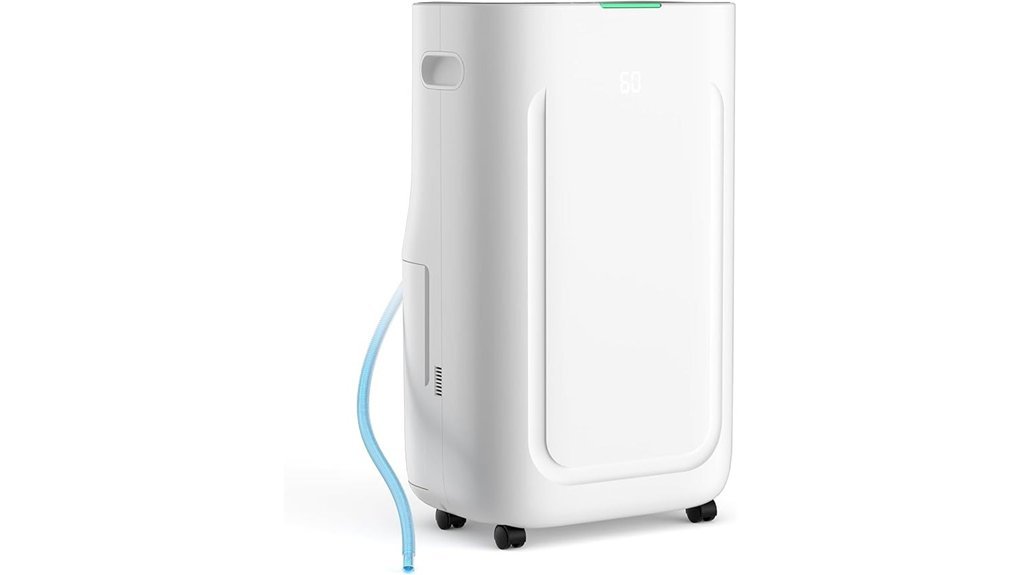
Best For: Large home cellars, basement wine rooms, and mixed-use storage spaces that need stronger daily moisture removal.
The Ludatido 2025 Upgraded Dehumidifier is a practical option if your wine cellar is part of a larger basement, storage area, or whole-home humidity problem. It is listed to remove up to 80 pints of moisture per day under favorable conditions and is promoted for spaces up to 5,000 sq. ft. That makes it better suited to bigger damp rooms than tiny closet-style wine storage.
For wine storage, its best feature is convenience. The 1.72-gallon tank works for manual use, while the auto-drain function helps reduce the need to empty water by hand. Its listed quiet operation also makes it easier to place in many finished spaces. If your cellar is shared with a family basement or utility room, the simple control layout can make daily use less frustrating.
Why you’ll like it: It is built for people who want a set-it-and-monitor-it style unit instead of a small tank-only dehumidifier that needs constant attention.
Why it works for a wine cellar: The high listed moisture removal, quieter home-appliance design, and hands-free drainage option make it a practical pick for damp cellars where humidity can rise quickly.
Who should buy this: Choose it if your wine cellar shares air with a large basement or your humidity readings often climb above the ideal storage range.
Who should skip it: Skip it if your wine cellar is very small, already stable, or does not have enough floor space for a larger home dehumidifier.
Pros:
- High listed capacity: Suitable for larger damp areas when the room conditions match the unit’s operating range.
- Convenient water management: The tank and auto-drain function give you manual and hands-free drainage options.
- Quiet-focused design: A better fit for finished basement areas than many louder utility units.
Cons:
- May be too much for small cellars: Compact wine rooms may not need this much capacity.
- Needs drainage planning: Continuous drainage works best when the hose route is easy and secure.
- Maintenance still matters: You still need to clean the tank, filter, and drain path regularly.
Frigidaire 50 Pint Dehumidifier w/Wifi
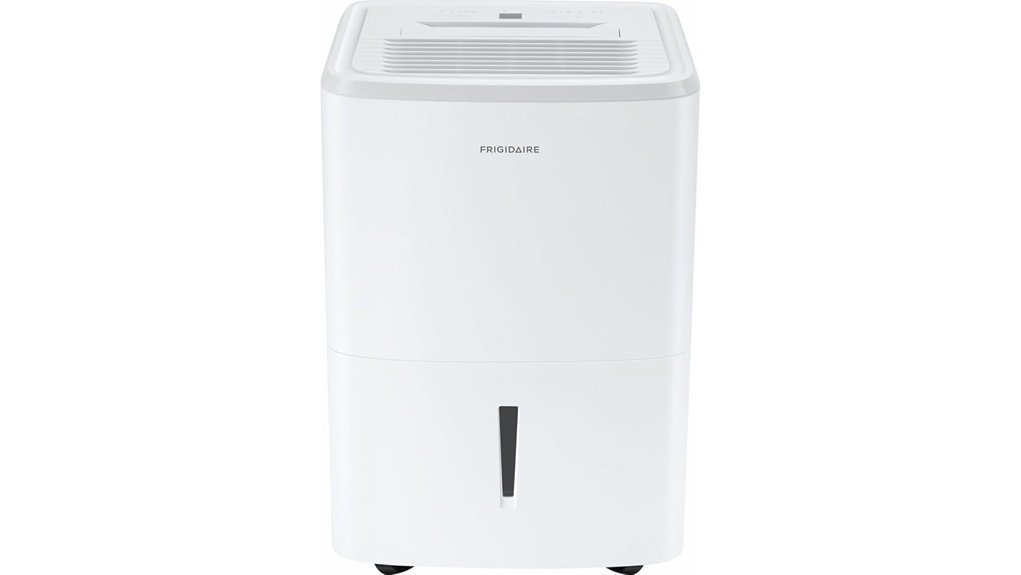
Best For: Wine collectors who want app-based control and easier humidity adjustments without visiting the cellar every time.
The Frigidaire 50 Pint Dehumidifier w/Wifi is a good fit if you want to monitor and adjust humidity without walking down to the cellar every time. It has a listed dehumidification capacity of 50 pints per day, which makes it useful for many medium to large wine cellars and basement storage areas.
The Wi-Fi control is the main reason to choose this model. You can adjust settings remotely, which is helpful if your cellar changes with the season. The washable filter helps with basic air quality maintenance, and the front-loading bucket with a carrying handle makes manual emptying easier. If you have a drain nearby, continuous drainage can reduce daily upkeep.
Why you’ll like it: It solves one of the biggest cellar problems: not wanting to keep checking the unit by hand when humidity changes during rainy or humid weather.
Why it works for a wine cellar: Wi-Fi control helps you react faster when humidity rises, while continuous drainage can keep the unit running with less attention.
Who should buy this: Choose it if you want smart control, a recognizable home-appliance design, and enough capacity for many basement wine rooms.
Who should skip it: Skip it if you do not need smart features or if your cellar is so small that a 50 pint unit would be more capacity than you need.
Pros:
- Wi-Fi control helps you adjust settings without visiting the cellar.
- Washable filter supports easier routine maintenance.
- Continuous draining can reduce tank-emptying chores when a drain is nearby.
Cons:
- May sound louder on higher fan settings than compact low-capacity units.
- Smart setup can take extra time if your cellar Wi-Fi signal is weak.
- May be more dehumidifier than a small closet cellar needs.
ALORAIR 113 Pint Commercial Dehumidifier (Sentinel HD55)
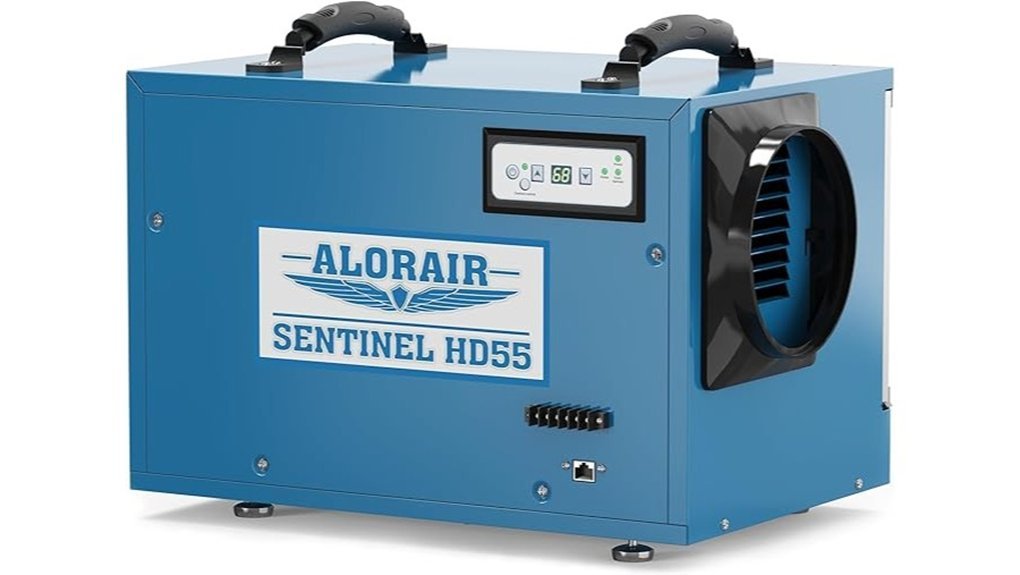
Best For: Damp, cooler, utility-style cellars where automatic drainage and rugged construction matter more than a decorative appliance look.
The ALORAIR Sentinel HD55 is a more rugged option for wine cellars that need stronger moisture control than a basic home unit. It is listed for up to 1,200 sq. ft. and has a capacity of 113 pints per day at saturation, with lower removal under standard conditions. That makes it especially useful for damp, enclosed, or utility-style cellar spaces where humidity can be stubborn.
This model uses automatic drainage, so it does not depend on a removable water tank. That is a major advantage if the unit will run often. Low-temperature operation also matters in wine cellars because some storage rooms stay cooler than normal living spaces. The compact rugged design helps if you need to use it in a cellar, crawl space, or storage area.
Why you’ll like it: It is built for tougher moisture problems, so it fits buyers who care more about reliable drainage and cellar performance than smart-app features.
Why it works for a wine cellar: Automatic drainage, low-temperature performance, and adjustable settings make it useful for serious humidity control in cooler spaces.
Who should buy this: Choose it if your cellar is damp, enclosed, cooler than the rest of the home, or located in a utility area where a commercial-style unit makes sense.
Who should skip it: Skip it if you want a simple home appliance with a removable bucket or if your cellar is small and only mildly humid.
Pros:
- Automatic drainage eliminates regular bucket emptying.
- Low-temperature operation helps in cooler cellar-style spaces.
- Rugged casing fits utility rooms, crawl spaces, and unfinished basements.
Cons:
- Less decorative than a standard home appliance.
- Coverage may not be enough for very large open basements.
- Requires a proper drainage route for best long-term use.
4500 Sq. Ft Dehumidifier with Smart Humidity Control
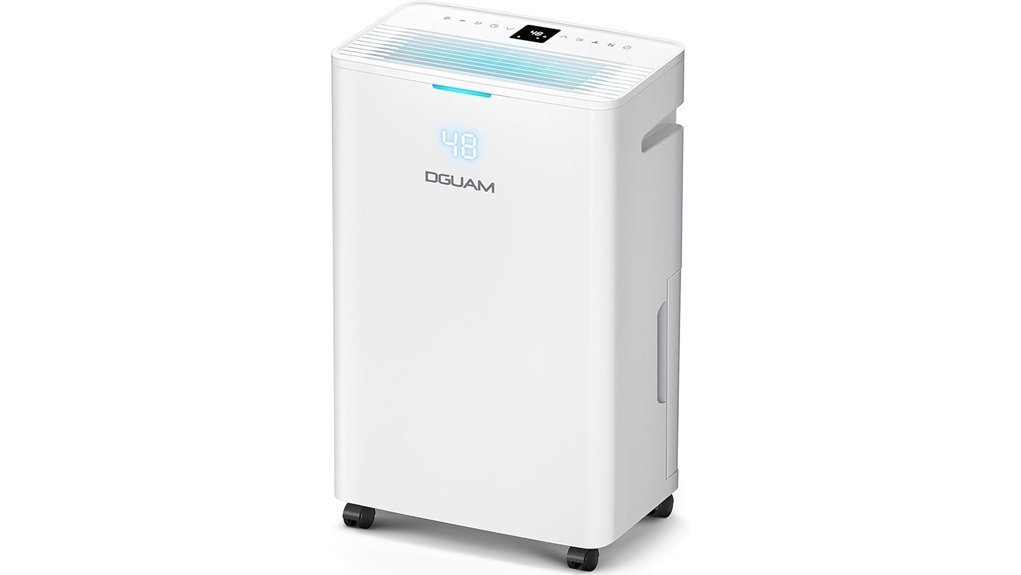
Best For: Finished basements, tasting areas, and larger wine storage rooms where quiet operation is a major buying factor.
The 4500 Sq. Ft Dehumidifier with Smart Humidity Control is designed for larger rooms that need steady moisture removal without a loud motor sound. It removes up to 80 pints per day under favorable conditions and lets you set humidity between 30% and 80%. For a wine cellar, you can use those controls to stay near the preferred 50% to 70% range instead of over-drying the space.
This unit is promoted as a quiet model, so it can be a good match for finished basements, tasting rooms, or cellars near living areas. The included drain hose supports continuous drainage, while the removable tank with auto shutoff gives you a backup option. Safety features like a child lock can add value if the cellar is in a shared part of the home.
Why you’ll like it: It gives you strong moisture removal without making quiet finished spaces feel like a utility room.
Why it works for a wine cellar: It combines strong moisture removal, adjustable humidity control, quiet-focused operation, and a drain hose for easier long-term use.
Who should buy this: Choose it if your cellar is near a living room, bedroom, office, or tasting space and you want a quieter large-room option.
Who should skip it: Skip it if your wine storage area is small and you do not need coverage for a larger room.
Pros:
- Strong listed moisture removal for damp basements and larger rooms.
- Quiet-focused design suits finished spaces better than louder utility units.
- Drain hose and removable tank give you flexible drainage options.
Cons:
- May be bulkier than compact cellar options.
- Drain hose setup still needs a safe slope and secure placement.
- May be more capacity than a small wine closet requires.
hOmeLabs Wi-Fi Dehumidifier for Home and Office
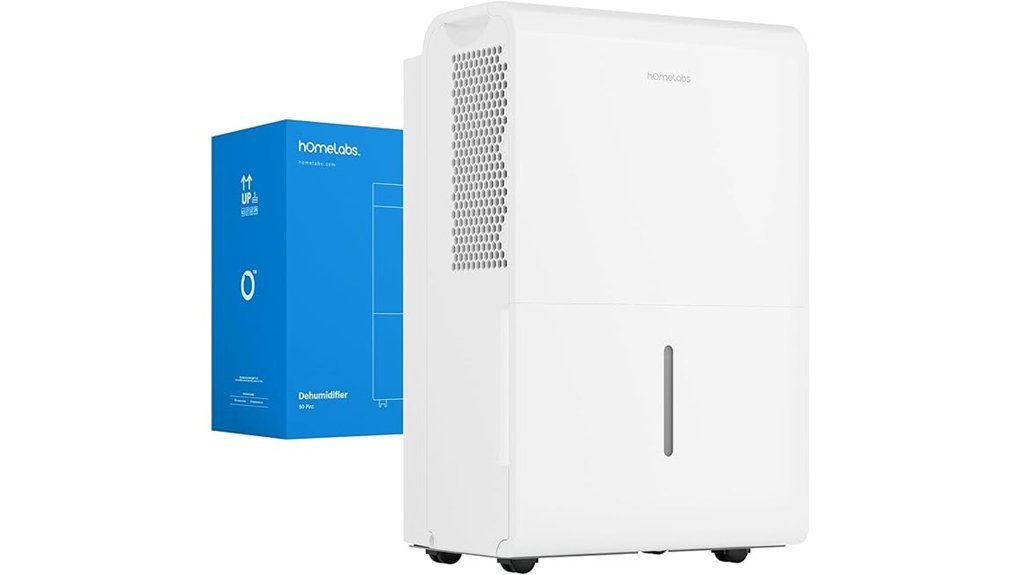
Best For: Larger wine storage spaces, basements, and multi-use rooms where remote control and portability are helpful.
The hOmeLabs Wi-Fi Dehumidifier is a smart-control option for homeowners who want a modern unit that can be moved between rooms. It is listed for spaces up to 7,000 sq. ft. and removes 50 pints of moisture daily under standard conditions, with a higher maximum rating in hotter, wetter conditions. That makes it a practical choice for larger wine storage spaces, basements, and home office areas that struggle with damp air.
The built-in Wi-Fi lets you adjust settings remotely, which is useful when humidity changes during rainy or humid seasons. The automatic shutoff feature helps prevent overflow when using the tank, and the continuous drainage option is better for long run times. It includes wheels, so you can reposition it when needed.
Why you’ll like it: It is a flexible choice if you want one smart dehumidifier that can support a wine cellar now and move to another damp room later.
Why it works for a wine cellar: Wi-Fi control, continuous drainage, and a portable design make it useful for cellars where you want remote adjustments and flexible placement.
Who should buy this: Choose it if your cellar has a reliable Wi-Fi signal and you want remote access without giving up wheels and handles.
Who should skip it: Skip it if your cellar has no reliable Wi-Fi signal or if you prefer simple manual controls.
Pros:
- Wi-Fi capability allows remote control and easier adjustments.
- Large-space design helps manage humidity in bigger rooms, basements, and wine storage areas.
- Portable design with wheels makes it easier to move between rooms as needed.
Cons:
- The tank may require frequent emptying in very humid conditions.
- It may feel heavy if you need to carry it up or down stairs.
- Smart setup may be less useful if the cellar has a weak wireless signal.
Waykar 150 Pints Energy Star Dehumidifier with Pump
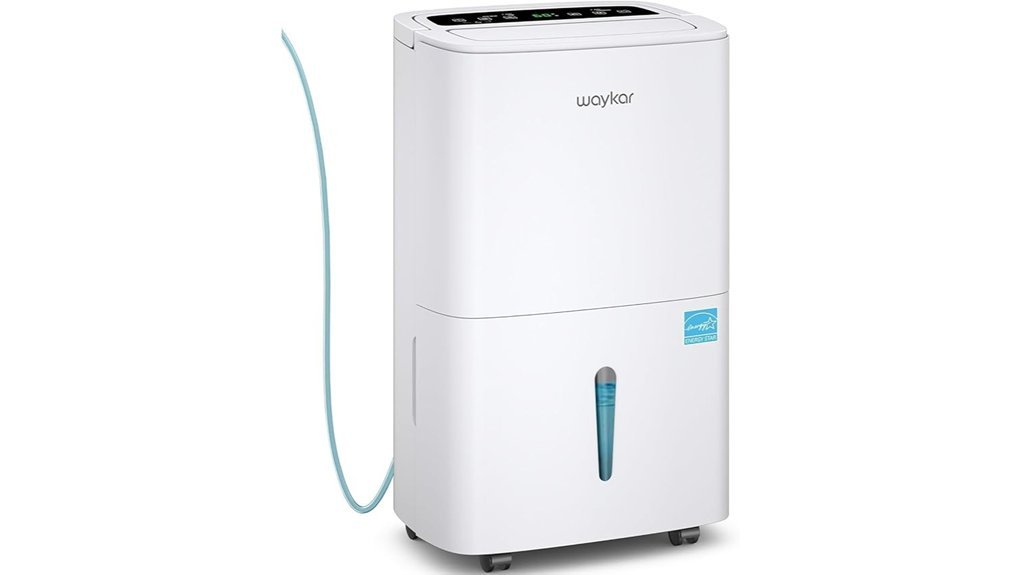
Best For: Large, very damp wine cellars where pump drainage can save the most effort.
The Waykar 150 Pints Energy Star Dehumidifier with Pump is one of the strongest choices here for a large or very damp wine cellar. It removes up to 150 pints of moisture daily under hot, very humid conditions and covers spaces up to 7,000 sq. ft. If your cellar is part of a basement that takes on moisture after storms or humid weather, this type of higher-capacity unit can help bring the room back under control.
The built-in pump is the standout feature. It allows water to move upward or into a drain point, which is helpful if gravity drainage is not easy in your cellar. The Energy Star design, auto defrost, self-drying function, and intelligent touch controls make it better suited for regular use than a small bucket-only model.
Why you’ll like it: It reduces the biggest hassle of high-capacity dehumidifiers: dealing with water removal when the drain is not conveniently below the unit.
Why it works for a wine cellar: High capacity and pump drainage make it easier to manage damp basements, large cellars, or wine rooms without constant tank emptying.
Who should buy this: Choose it if your cellar is large, damp, or difficult to drain by gravity, especially if you want the pump feature.
Who should skip it: Skip it if your wine cellar is small, lightly humid, or does not need pump drainage.
Pros:
- Strong pump drainage: Helpful when water must move upward or across the room.
- High listed capacity: Built for large damp areas and challenging humidity swings.
- Adjustable humidity: Lets you target a wine-friendly range instead of running the room too dry.
Cons:
- May be oversized: Small cellars may not need this much capacity.
- More setup work: Pump drainage still needs a secure hose path.
- Tank use is less ideal: In very humid conditions, pump or hose drainage is easier than manual emptying.
Waykar 34 Pints Energy Star Dehumidifier for Home
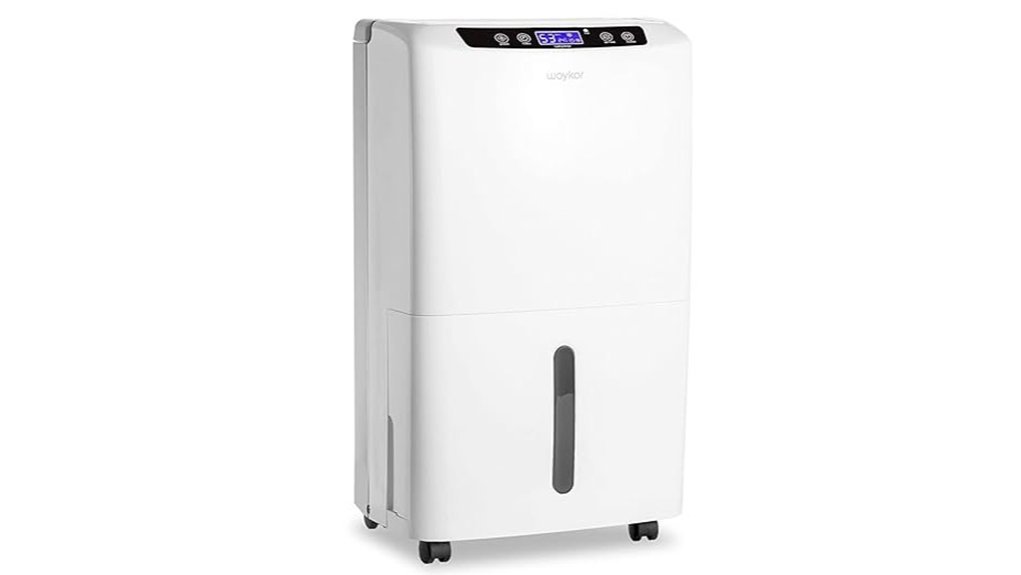
Best For: Smaller wine cellars and storage rooms that need adjustable humidity control without a large commercial unit.
The Waykar 34 Pints Energy Star Dehumidifier is a better match for smaller wine cellars, storage rooms, and basement corners that do not need a heavy commercial-style unit. It removes up to 34 pints of moisture daily under high-humidity conditions and is listed for areas up to 2,000 sq. ft. The adjustable humidity range of 30% to 80% lets you fine-tune the room instead of running the air too dry.
This model makes sense if you want energy efficiency and basic control without buying a large unit. The quiet operation is useful for finished spaces, while adjustable airflow helps direct moisture removal where you need it. It offers two drainage options and a timer, so you can set a routine that fits your cellar and your schedule.
Why you’ll like it: It gives smaller cellar owners enough control for everyday moisture problems without jumping to a heavy 80 or 150 pint model.
Why it works for a wine cellar: The smaller capacity, adjustable humidity settings, and Energy Star design make it a sensible pick for compact or moderate-humidity cellars.
Who should buy this: Choose it if you have a small or moderate cellar and want a balanced unit with humidity settings, drainage options, and lower bulk.
Who should skip it: Skip it if your cellar is very wet, very large, or needs a built-in pump for drainage.
Pros:
- Good small-cellar fit: Easier to justify than a large-capacity model in compact rooms.
- Quiet-focused operation: Useful for finished basement spaces.
- Flexible humidity control: Adjustable settings between 30% and 80% support careful moisture management.
Cons:
- Limited tank capacity: The tank may require frequent emptying in very humid conditions.
- No built-in pump: Gravity drainage is easier if the hose can slope downward.
- Not for severe dampness: Large or wet basements may need more capacity.
Waykar 6000 Sq.Ft Energy Star Dehumidifier
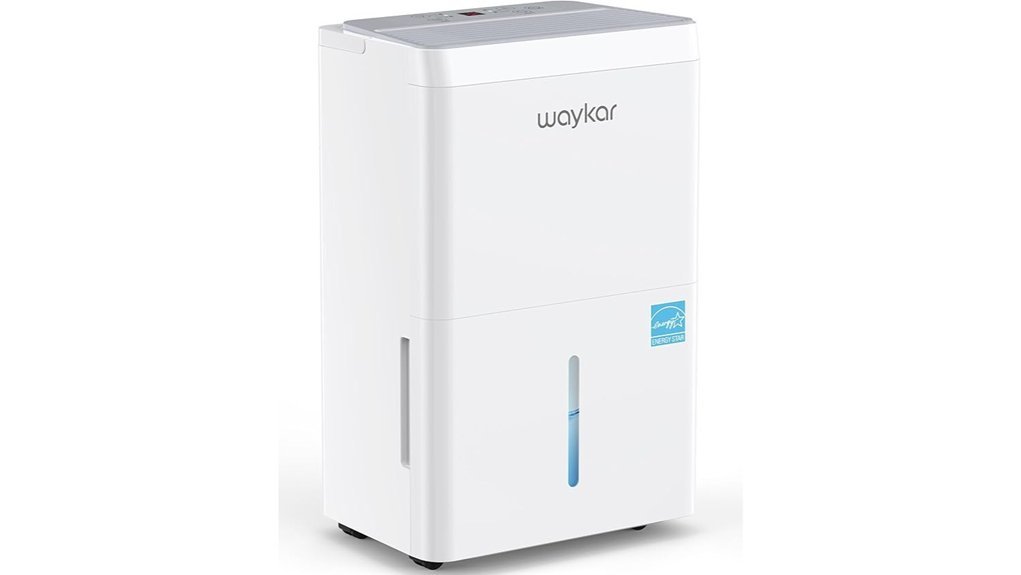
Best For: Large basements, walk-in wine rooms, and storage zones that need high capacity with quiet-focused operation.
The Waykar 6000 Sq.Ft Energy Star Dehumidifier is built for larger humid spaces that need steady moisture control. It has a listed capacity of 120 pints per day under hot, very humid conditions and covers up to 6,000 sq. ft. For a wine cellar, that means it is best for basement-level storage rooms, large walk-in cellars, or homes where one unit may need to support more than one damp zone.
The adjustable humidity control range of 30% to 80% helps you target the cellar range without making the room too dry. It is listed as Energy Star certified, which is helpful if your cellar needs regular operation. The quiet-focused design is also useful if your wine cellar is near a living area. Smart humidity control and drainage options make it easier to run over long periods.
Why you’ll like it: It is a high-capacity option for homeowners who want strong moisture control but still care about sound level and energy use.
Why it works for a wine cellar: It offers a strong balance of capacity, quiet operation, adjustable settings, and drainage flexibility for larger wine storage spaces.
Who should buy this: Choose it if your cellar is larger than a small wine closet and you want a strong unit that still has a quieter listed operation.
Who should skip it: Skip it if you only need to control a small cabinet, closet cellar, or compact wine room.
Pros:
- High listed capacity for large basements and walk-in storage areas.
- Adjustable humidity control helps you avoid over-drying your wine room.
- Drainage options make long-term use easier than tank-only operation.
Cons:
- May be overkill for smaller spaces.
- Initial cost may be higher than basic low-capacity dehumidifiers.
- Still requires regular filter, tank, and hose maintenance.
Midea Cube 20 Pint Dehumidifier with Smart Control
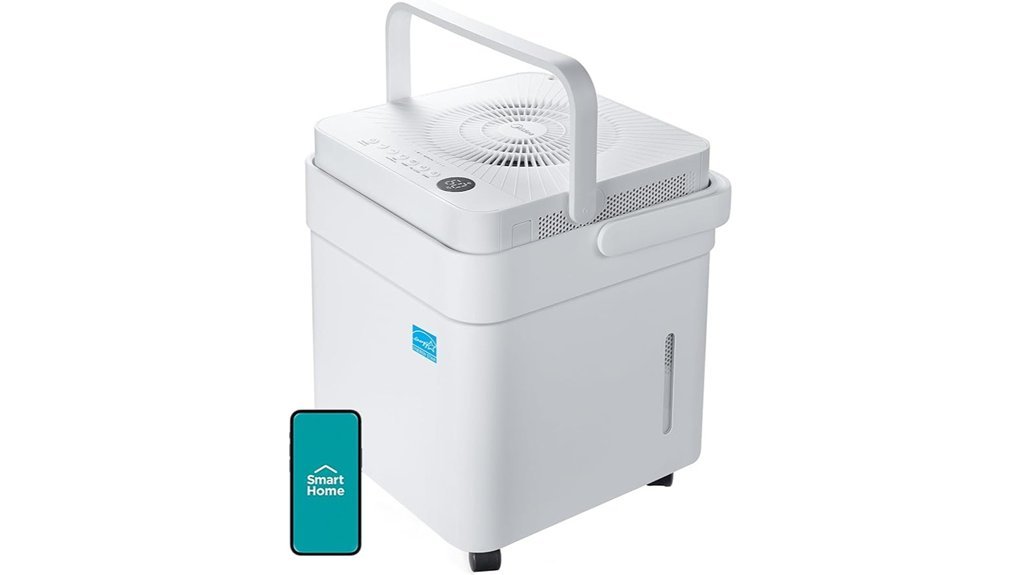
Best For: Compact wine cellars, smaller storage rooms, and buyers who want smart control in a space-saving design.
The Midea Cube 20 Pint Dehumidifier with Smart Control is a smart choice for a smaller wine cellar or storage room where space is limited. It covers up to 1,500 sq. ft. and collects 20 pints of moisture daily. The adjustable humidity range of 35% to 85% gives you control over how dry the space gets.
The lift-and-twist design makes it easier to store than many full-size dehumidifiers. Wi-Fi control is another advantage, especially if you want to adjust the unit through the SmartHome app or use voice commands with Alexa or Google Assistant. The washable filter helps reduce maintenance costs. The main thing to watch is that this model may not give you the same built-in room-humidity feedback as some larger smart units, so a separate humidity monitor is still smart for wine storage.
Why you’ll like it: It gives smaller cellar owners smart control without taking up as much space as a full-size high-capacity dehumidifier.
Why it works for a wine cellar: It is compact, smart-enabled, and suitable for smaller cellars where a large-capacity unit would take up too much room.
Who should buy this: Choose it if your cellar is compact, your moisture issue is moderate, and you want Wi-Fi control in a smaller unit.
Who should skip it: Skip it if your cellar is large, very damp, or needs stronger moisture removal than a 20 pint unit can provide.
Pros:
- Wi-Fi enabled for convenient remote control via app or voice assistant.
- Unique lift-and-twist design allows compact storage and flexible operation.
- Washable filter helps reduce routine maintenance costs.
Cons:
- Limited coverage for larger or very damp cellar areas.
- Smart setup may take time for first-time app users.
- A separate hygrometer is still recommended near the wine racks.
Yaufey 2500 Sq. Ft Dehumidifier with Timer
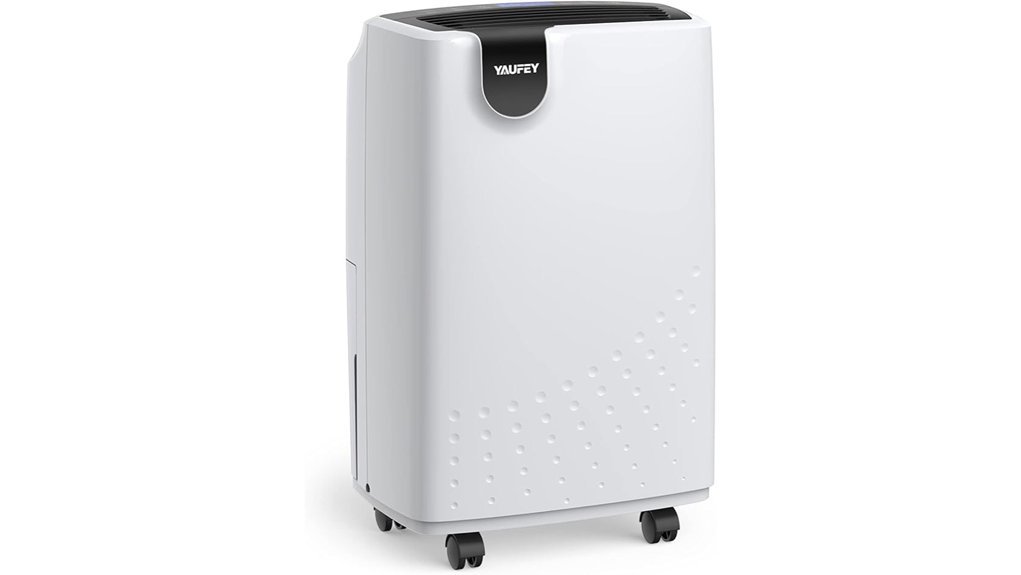
Best For: Medium-size wine cellars and basement storage rooms where simple controls matter more than smart features.
The Yaufey 2500 Sq. Ft Dehumidifier is a straightforward pick for medium-size wine cellars, basements, and storage rooms. It removes up to 31 pints of moisture daily under favorable conditions and includes a compact tank. You can use manual drainage or set up automatic drainage depending on your space.
The light-touch control panel and timer make it easy to set a routine. The low-noise design helps if the cellar is near a living area, and the built-in wheels make it easier to move between rooms. This is not the biggest unit in the roundup, but it is useful if you want simple controls and do not need a pump or commercial capacity.
Why you’ll like it: It keeps the buying decision simple for readers who want basic moisture control, drainage flexibility, and a timer without a complex smart setup.
Why it works for a wine cellar: It gives you timer control, drainage flexibility, and enough capacity for many moderate-size spaces without the bulk of a high-capacity model.
Who should buy this: Choose it if your cellar is medium-size, only moderately humid, and you want an easy control panel with timer support.
Who should skip it: Skip it if your cellar is very wet, larger than the intended coverage area, or needs a larger tank for long unattended operation.
Pros:
- Simple moisture control: A good fit for moderate dampness and everyday basement use.
- User-friendly features: Light-touch control panel and timer support easier operation.
- Portable design: Built-in wheels and handles make it easier to move between rooms.
Cons:
- Small tank: May require frequent emptying in very humid conditions.
- No smart control: Not ideal if you want app-based monitoring.
- Limited for severe dampness: Large or wet cellars may need more capacity.
Factors to Consider When Choosing a Dehumidifier for a Wine Cellar
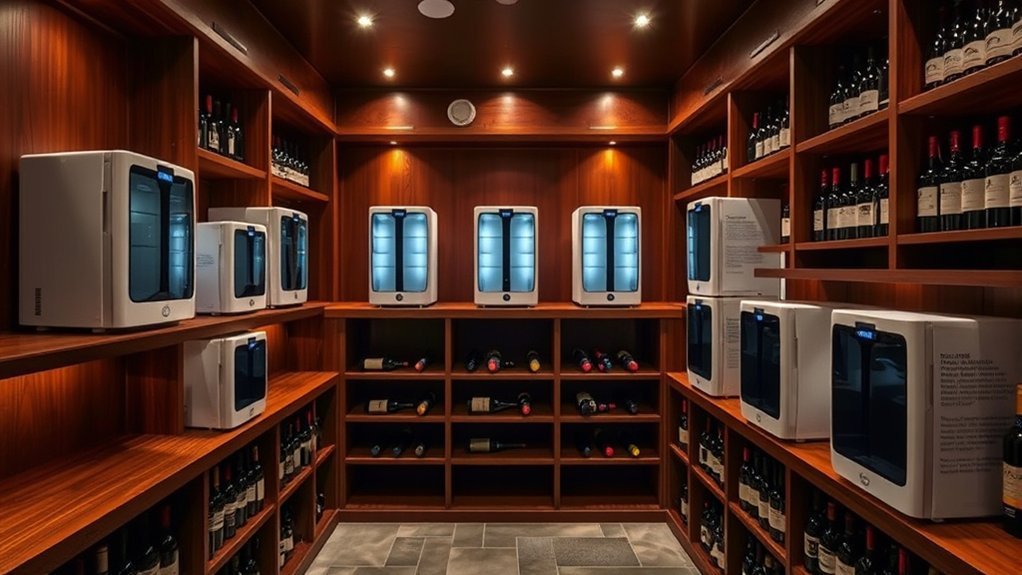
Choosing a dehumidifier for a wine cellar is not just about buying the biggest unit. You want a model that can hold a steady humidity range, fit your room size, drain easily, and run quietly enough for your space. Before you choose, compare the cellar size, current humidity level, drainage access, energy use, and noise rating.
Ideal Humidity Levels
Choosing the right humidity level for your wine cellar is vital if you want to preserve the quality of your wine. In many home cellars, the practical target is 50% to 70% relative humidity. This range helps protect proper aging and reduces the risk of corks drying out, which can let air seep in and spoil your wine. If humidity dips below 50%, corks may shrink and compromise your bottles. Levels above 70% can lead to mold growth on corks, labels, boxes, and nearby surfaces. It is smart to consistently monitor both temperature and humidity because major swings can hurt flavor, aroma, and storage quality.
Coverage Area Requirements
Selecting the right coverage area is one of the most important steps. Match the unit to your actual cellar, not just the largest number on the product page. Small wine closets may work with compact models, while large basement cellars may need a dehumidifier that manages 1,500 to 7,000 square feet. If the room is very humid, look for stronger moisture removal, such as 50, 80, 120, or 150 pints per day. An automatic drainage option or a large water tank can reduce maintenance and help prevent overflow. Also consider sound. A low decibel rating, around 40 dB to 45 dB, is better for finished basements and tasting areas.
Energy Efficiency Ratings
Energy efficiency matters because wine cellar humidity control may run for long periods. When choosing a dehumidifier, look for Energy Star certification when available. A more efficient unit can remove moisture while using less electricity, which matters in a damp basement or cellar that needs regular operation. Also compare the dehumidifier’s capacity to your cellar size. An undersized unit may run nonstop and still struggle. An oversized unit may remove moisture too fast or cost more than needed. The best fit is a model that can hold your target humidity range without constant cycling.
Noise Level Considerations
A wine cellar should feel calm, especially if it sits near a living space or tasting area. To keep a peaceful atmosphere, look for a quieter dehumidifier when possible. Many quiet-focused models run near 40 dB to 45 dB on lower settings, which is close to a soft background hum. Some units include sleep mode or fan speed settings, so you can balance moisture removal with sound. If the unit will sit in an unfinished basement, noise may matter less. If it will sit beside a finished wine room, choose a quieter model.
Drainage Options Available
Drainage is a key part of moisture control. A continuous drainage feature lets you connect a hose to a floor drain so you do not have to empty the tank as often. Tank sizes vary, so check how often you are willing to empty it. An auto-shutoff feature helps prevent overflow when the tank is full. Gravity drainage works if the hose can slope downward. A built-in pump is better when water must move upward or across the room to reach a sink, drain, or utility area.
Cellar Size and Pint Capacity
For a small wine room, a 20 to 34 pint model may be enough. For a medium basement room, a 50 pint model often gives more breathing room. For a damp, large, or multi-zone basement cellar, 80, 120, or 150 pint models may be a better fit. Always consider actual moisture load. A room with stone walls, poor insulation, or seasonal seepage may need more capacity than a dry finished room of the same size.
Smart Controls and Humidity Monitoring
Smart controls are helpful if you want to check the cellar while you are away or adjust settings without visiting the unit. Wi-Fi models like the Frigidaire, hOmeLabs, and Midea Cube options can be useful for this. Even with smart controls, a separate hygrometer can help you confirm the real humidity level near your wine racks. Place the sensor away from direct airflow for a more accurate room reading.
Pro Tips for Better Wine Cellar Humidity Control
- Place a separate hygrometer near the wine racks, not directly beside the dehumidifier outlet.
- Use continuous drainage if your cellar stays humid for long periods.
- Aim for steady humidity rather than aggressive drying cycles.
- Clean the filter and inspect the drain hose regularly so the unit keeps working efficiently.
- Check humidity after weather changes, heavy rain, or seasonal temperature swings.
Safety and Wine Storage Note
A dehumidifier can help reduce excess moisture, but it should not replace proper cellar ventilation, leak repair, insulation, or temperature control. If your cellar has visible mold, water seepage, or strong musty odors, fix the moisture source first instead of relying only on a dehumidifier.
Frequently Asked Questions
What Humidity Level Is Ideal for Wine Cellars?
The ideal humidity level for many wine cellars is about 50% to 70%. Keeping it within this range helps preserve cork integrity, reduce label damage, and create a more stable storage environment.
How Often Should I Empty My Dehumidifier?
You should empty your dehumidifier regularly, ideally every few days if you use the tank. In humid seasons, check it more often. If you use continuous drainage or a built-in pump, you may not need to empty a bucket, but you should still inspect the hose and tank area.
Can I Use a Dehumidifier Year-Round?
Yes, you can use a dehumidifier year-round if your cellar needs it. It helps maintain ideal humidity levels, especially in damp areas. Monitor performance and adjust settings as seasons change so the room does not get too dry.
What Size Dehumidifier Do I Need for My Wine Cellar?
You need a dehumidifier sized for your wine cellar’s square footage and humidity level. A unit that removes 30 to 50 pints per day can work for many standard cellars, while large or very damp spaces may need 80 pints or more.
Are Dehumidifiers Noisy During Operation?
Most dehumidifiers make some sound during operation. Many quiet-focused models run around 40 dB to 45 dB on lower settings, while stronger units may get louder on high fan settings. Check the noise rating if your cellar is near a bedroom, office, or tasting area.
Do I Need a Drain Hose for a Wine Cellar Dehumidifier?
A drain hose is not required, but it is very helpful if your cellar stays humid. Continuous drainage lets the unit run longer without you emptying a tank. If the drain is above the unit or far away, choose a model with a pump.
Can a Dehumidifier Make a Wine Cellar Too Dry?
Yes. If the humidity setting is too low, a dehumidifier can dry the room more than you want. Use adjustable humidity control and aim for the 50% to 70% range. A separate hygrometer can help you confirm the actual room level.
Where Should I Place a Dehumidifier in a Wine Cellar?
Place the dehumidifier where air can move freely around the intake and outlet. Avoid pressing it against wine racks, walls, curtains, or boxes. For the most accurate humidity readings, keep your separate hygrometer away from direct airflow.
Is a Pump Worth It for a Wine Cellar Dehumidifier?
A pump is worth it if the water needs to move upward, across the room, into a sink, or to a drain that is not below the unit. If you already have a nearby floor drain and the hose can slope downward, gravity drainage may be enough.
Can a Dehumidifier Replace a Wine Cellar Cooling System?
No. A dehumidifier only controls excess moisture. Wine storage also needs stable temperature, low light, limited vibration, and good ventilation. If your cellar gets too warm, use a proper wine-cellar cooling solution instead of relying on a dehumidifier alone.
Conclusion
The best dehumidifier for your wine cellar depends on cellar size, moisture level, drainage access, and noise tolerance. If you need strong pump drainage for a large damp space, the Waykar 150 Pints Energy Star Dehumidifier with Pump is a strong pick. If you want smart controls, the Frigidaire 50 Pint Dehumidifier w/Wifi and Midea Cube 20 Pint Dehumidifier are easier to monitor. For tougher cellar conditions, the ALORAIR Sentinel HD55 brings a commercial-style design with automatic drainage. Choose the model that can keep your cellar near 50% to 70% humidity without constant attention, and your wine collection will have a safer, more stable place to age.
Final Recommendation:
For most large damp cellar setups, start by comparing the Waykar 150 Pint model, the Waykar 6000 Sq.Ft model, and the Ludatido 80 Pint option. For smart control, compare Frigidaire, hOmeLabs, and Midea Cube. For smaller spaces, the Waykar 34 Pint and Yaufey models may be easier to place and manage.