Best Tent Dehumidifier for Camping Battery Power in 2026
If damp sleeping bags, clammy tent walls, or musty camping gear keep ruining your trip, a compact tent dehumidifier can help control moisture in small enclosed spaces. For camping in 2026, the best options are usually rechargeable desiccant moisture absorbers, USB-C units, wireless silica gel packs, and fast-renewing designs that work without a cord while absorbing moisture.
Top picks include the 2 Pack Small Rechargeable Mini Dehumidifiers, Afloia Mini Dehumidifier, USB-C Rechargeable Gun Safe Dehumidifier, Eva-Dry Wireless E-333, and the 2 Pack Rechargeable Desiccant Dehumidifier. These are best for small tents, RV cabinets, closets, vehicles, storage bins, camera bags, electronics cases, and gear totes where trapped humidity can cause odors, dampness, and mildew risk.
A camping tent dehumidifier is not the same as a full-size home dehumidifier. Most portable camping picks are desiccant moisture absorbers, so they work best in compact areas rather than large open tents. They can help reduce dampness, but they work best when you also vent the tent, store wet gear outside the sleeping area, and avoid cooking inside the tent.
Use this guide if you want a small, low-maintenance way to control condensation on short trips, protect gear between outings, or keep a compact sleeping space from feeling clammy overnight.
Quick Verdict
Best overall simple camping pick: Eva-Dry Wireless Mini Dehumidifier, White (E-333), because it is cord-free during use, spill-free, and easy to move between a tent, gear bin, closet, or camper cabinet.
Best USB-C camping option: USB-C Rechargeable Gun Safe Dehumidifier Desiccant Packets, because the cable-based recharge style fits power banks, car adapters, solar setups, and portable power stations.
Best value for multiple small spaces: 2 Pack Rechargeable Desiccant Dehumidifier with USB-C Cable, because you can place one unit with sleeping gear and another inside a camera bag, dry box, or storage tote.
Affiliate disclosure: This article contains Amazon affiliate links. If you click and buy through these links, we may earn a commission at no extra cost to you.
Quick Picks for Camping Moisture Control
- Best compact 2-pack: 2 Pack Small Rechargeable Mini Dehumidifiers
- Best fast-renewing base design: Afloia Mini Dehumidifier for Room Bathroom Closet Car
- Best USB-C option: USB-C Rechargeable Gun Safe Dehumidifier Desiccant Packets
- Best cord-free classic pick: Eva-Dry Wireless Mini Dehumidifier, White (E-333)
- Best USB-C 2-pack for gear storage: 2 Pack Rechargeable Desiccant Dehumidifier with USB-C Cable
Tent Dehumidifier Comparison Table
| Product | Best Use | Power or Recharge Style | Notable Detail | CTA |
|---|---|---|---|---|
| 2 Pack Small Rechargeable Mini Dehumidifiers | Tiny tents, closets, vehicles, and gun safes | Rechargeable desiccant design | Blue-to-pink moisture indicator | Check Price on Amazon |
| Afloia Mini Dehumidifier for Room Bathroom Closet Car | Small rooms, RVs, boats, bathrooms, closets, and cars | Renewable silica gel with heating base | 360° air inlet and compact 3.74-inch footprint | Check Current Amazon Availability |
| USB-C Rechargeable Gun Safe Dehumidifier Desiccant Packets | Tents, RVs, cabinets, closets, and gear cases | USB-C recharge with built-in heater | Orange-to-green indicator beads and overheat protection | Check Product Details on Amazon |
| Eva-Dry Wireless Mini Dehumidifier, White (E-333) | Cord-free tent bins, gear bags, and small enclosed spaces | Plug-in renewal after saturation | Absorbs up to 6 ounces and covers up to 333 cubic feet | View Latest Deal on Amazon |
| 2 Pack Rechargeable Desiccant Dehumidifier with USB-C Cable | Tent gear storage, camera bags, electronics cases, and gun safes | USB-C rechargeable 2-pack | 70-gram units for spaces up to 90 cubic feet | See Today’s Price on Amazon |
What a Camping Dehumidifier Can and Cannot Do
A compact tent dehumidifier can help with light condensation, damp gear storage, musty smells, and moisture buildup in small enclosed spaces. It is most useful when you camp in humid weather, store gear in bins, sleep in a small tent, or keep electronics and camera gear inside a case.
It cannot replace airflow. If your tent is sealed tight, your breath, wet clothes, and temperature swings can still create condensation on the walls. For the best results, crack vents when safe, keep wet shoes outside the sleeping area, dry rainfly fabric before packing, and use a moisture absorber as a backup layer of protection.
Before You Buy Checklist
- Match the space: Small desiccant units work best in compact tents, cabinets, dry boxes, bins, and gear cases.
- Check the renewal method: Some need USB-C, some use a plug-in base, and some need a longer drying cycle.
- Look for an indicator: Color-changing beads help you know when the unit is saturated.
- Plan for power: For longer camping trips, bring a power bank, car adapter, portable power station, or spare unit.
- Do not skip ventilation: A dehumidifier helps, but airflow is still the main way to fight tent condensation.
2 Pack Small Rechargeable Mini Dehumidifiers
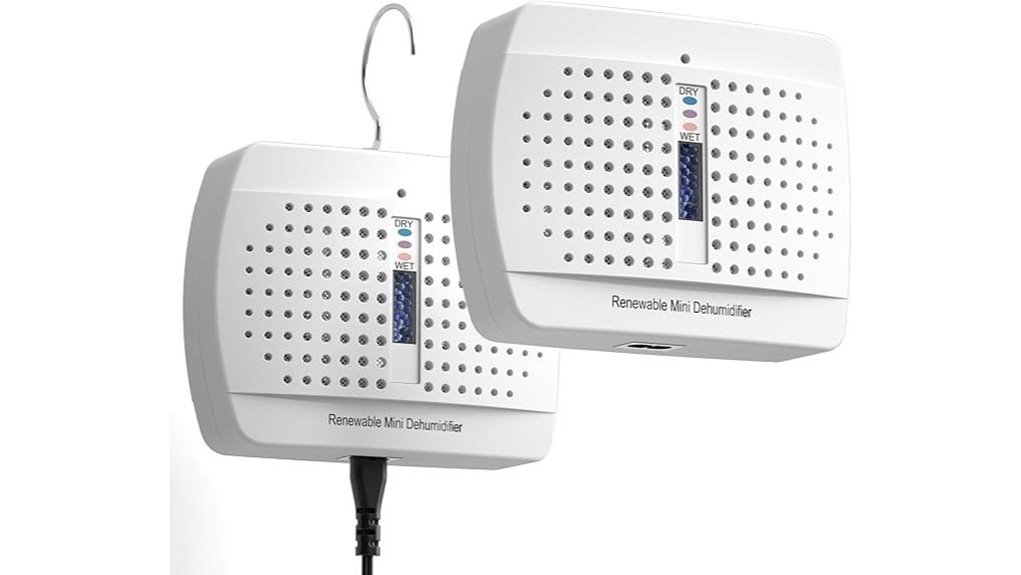
Best for: campers who want two simple moisture absorbers for a small tent, gear bin, closet, vehicle, or safe.
If you want a compact moisture absorber that’s easy to pack for camping or stash in tight spaces, this 2-pack rechargeable mini dehumidifier is a practical pick. You can use it in a tent, bathroom, closet, vehicle, cabinet, bookcase, or gun safe when space is limited. Each unit fits small areas under 25 sq ft and absorbs about 4 oz of water per charge. The indicator changes from blue to pink when it’s ready to recharge. It runs 3 to 5 days, needs 28 hours to dry, and works best standing upright.
Why you’ll like it: The biggest advantage is flexibility. You can place one unit near your sleeping area and another in a gear tote, vehicle console, storage crate, or closet. That makes it easier to manage moisture in more than one small space without buying a larger plug-in appliance.
Best For: People who need a compact, rechargeable moisture absorber for small spaces like closets, bathrooms, vehicles, tents, or gun safes.
Pros:
- Works well in tight areas under 25 sq ft
- Rechargeable and reusable, with a simple blue-to-pink recharge indicator
- Lightweight, compact, and easy to place upright in small spaces
Cons:
- Requires 28 hours to fully dry before reuse
- Only absorbs about 4 oz per charge, so it’s best for small spaces
- Must be kept upright and away from water while charging
Why it works for camping: This pick makes sense when you need more than one small moisture absorber. You can keep one inside the tent and the other inside a gear bin, vehicle console, or storage tote. The 2-pack format also helps on longer trips because you can rotate units as one dries.
Who should buy this: Buy it if you take weekend camping trips, store gear in bins, or want a low-maintenance option for several tight spaces.
Who should skip it: Skip this one if you need fast turnaround after saturation. The 28-hour drying time is slower than USB-C or heating-base designs, so it is better for weekend trips and low-to-moderate dampness than heavy condensation.
Afloia Mini Dehumidifier for Room Bathroom Closet Car
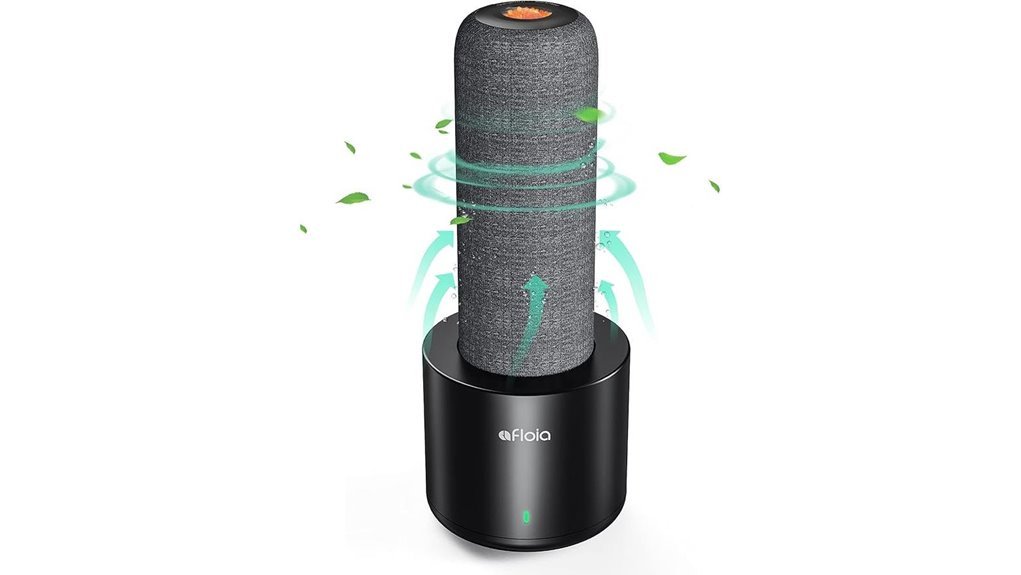
Best for: campers, RV users, and car campers who want a fast-renewing moisture absorber and have access to a power outlet for renewal.
The Afloia Mini Dehumidifier suits you best when you need a compact, renewable moisture absorber for tight spaces. You get a cylinder-shaped TOPZ 1+1 DG unit with a 360° air inlet that helps pull moisture from rooms up to 54 sq. ft. It uses non-toxic silica gel beads, so you don’t need batteries or electricity for dehumidifying. When the beads turn dark green, you can renew them on the PTC heating base in about 2 hours, and automatic shutoff helps prevent overcharging. Its 3.74-inch footprint fits bathrooms, closets, cars, RVs, and boats.
Why you’ll like it: This is a good fit if you camp with RV power, stay at powered campsites, or recharge gear at home between trips. The moisture-absorbing cylinder can sit cord-free in a tent corner or storage area, while the base stays ready for renewal later.
Best For: People who need a compact, renewable dehumidifier for small spaces like bathrooms, closets, cars, RVs, or boats.
Pros:
- Uses non-toxic silica gel beads and requires no batteries or electricity for dehumidifying.
- Renewable design with color-changing beads and a PTC heating base for easy reuse.
- Compact 3.74-inch size fits well in tight spaces and has a 360° air inlet for efficient moisture absorption.
Cons:
- Only suitable for small areas up to 54 sq. ft., so it won’t work well for larger rooms.
- Must be renewed on a heating base after saturation, which takes about 2 hours.
- Moisture capacity is limited to about 4 oz. (100 ml), so it may need frequent regeneration in humid conditions.
Why it works for camping: The heating base is useful when you have access to campsite power, a cabin outlet, RV power, or a home outlet between trips. Because the dehumidifying part works without a cord, you can place the cylinder in a tent corner, closet, car, or boat storage area without running cables through your sleeping space.
Who should buy this: Buy it if you want faster renewal than slow-drying desiccant packs and you usually camp near a reliable power source.
Who should skip it: Skip it if you will be away from power for several days and cannot recharge or renew the unit. It is also not the best fit for a large family tent with heavy condensation unless you use more than one moisture absorber.
USB-C Rechargeable Gun Safe Dehumidifier Desiccant Packets
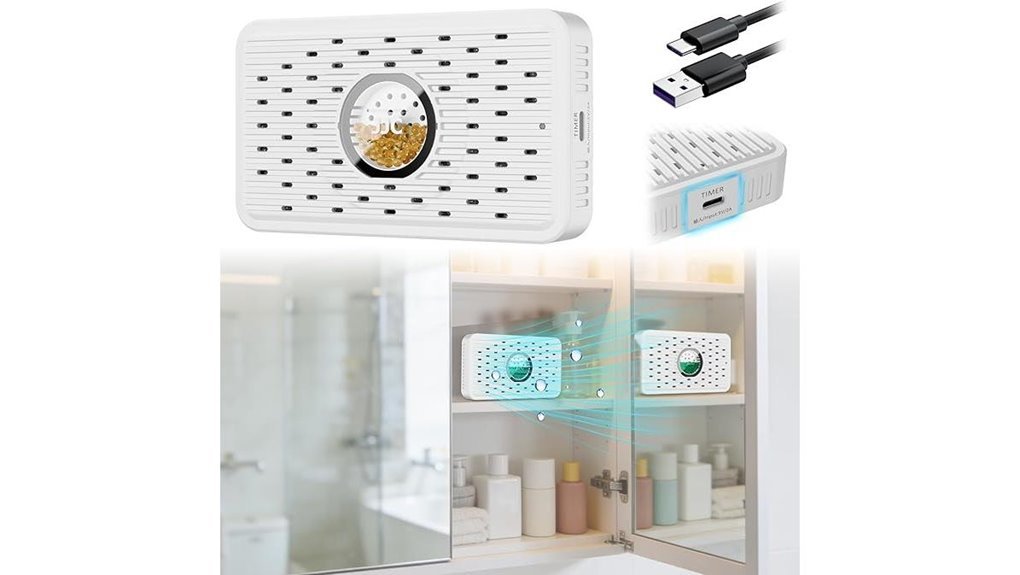
Best for: campers who already use USB-C charging gear and need a compact moisture absorber for small enclosed areas.
Want a compact dehumidifier that’s easy to recharge and reuse on camping trips? The USB-C Rechargeable Gun Safe Dehumidifier is a small silica gel moisture absorber you can tuck into tents, RVs, closets, or cabinets. You recharge it in 2-6 hours with the included Type-C cable, and the built-in heater helps dry it out for reuse. Its indicator beads shift from orange to green as it absorbs moisture, while overheat protection turns the light blue to red. The durable ABS unit weighs just 6.7 ounces and covers up to 90 cubic feet.
Why you’ll like it: USB-C charging makes this one especially convenient for modern camping setups. If you already carry a power bank, car adapter, portable power station, or solar charger, you do not need a separate renewal base.
Best For: People who need a compact, reusable moisture absorber for small spaces like gun safes, closets, RVs, tents, or cabinets.
Pros:
- Rechargeable and reusable with a USB-C Type-C cable
- Compact, lightweight, and easy to place in small areas
- Includes moisture indicator beads and overheat protection
Cons:
- Only covers up to 90 cubic feet, so it’s best for small spaces
- Requires several hours to recharge and dry out
- Must be unplugged and replugged after the 10-hour auto shutoff
Why it works for camping: USB-C charging is helpful if your camping setup already uses a power bank, car adapter, portable power station, or solar charging setup. Its small size also makes it easy to keep near electronics, camera gear, cabinets, or a tent vestibule where damp air can collect.
Who should buy this: Buy it if you prefer cable charging over a separate heating base and want a moisture absorber for dry boxes, gear cases, cabinets, or compact tent areas.
Who should skip it: Skip it if you want one device to dry a large sleeping area. This is a compact desiccant packet style unit, so it is better for small enclosed spaces than open, high-humidity tents.
Eva-Dry Wireless Mini Dehumidifier, White (E-333)
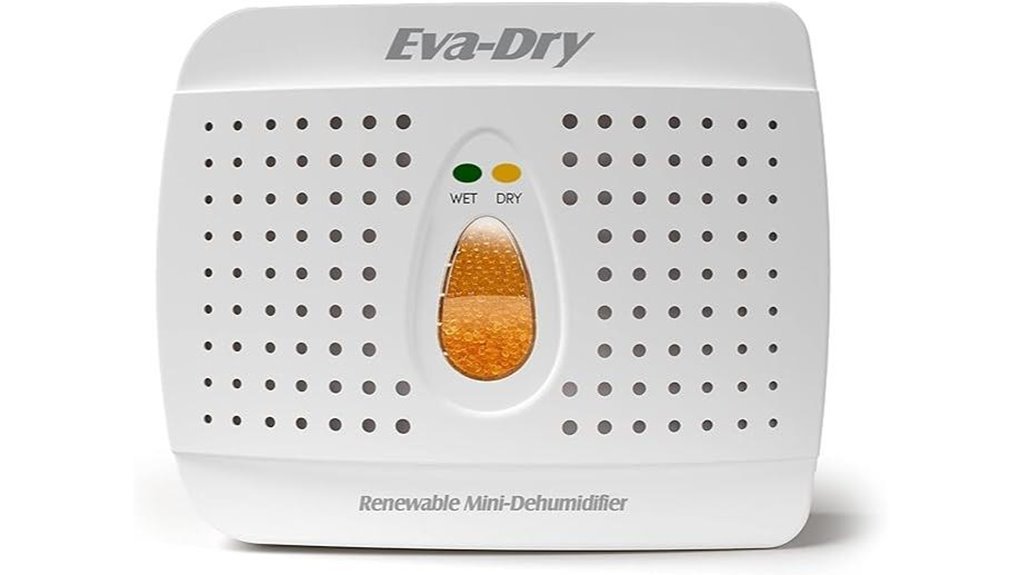
Best for: campers who want a simple, cord-free, battery-free moisture absorber for tent storage, closets, camper cabinets, or gear bags.
Eva-Dry’s E-333 suits campers who need a tiny, cord-free moisture absorber for compact spaces. You can tuck it into a tent storage bin, hanging organizer, or gear bag without adding clutter. It works in continuous mode, so you won’t need cords or batteries. The non-toxic silica gel absorbs up to 6 ounces of moisture and covers spaces up to 333 cubic feet. When the beads turn from orange to green, you just recharge it. It’s spill-free, renewable, and built to last, with a 5-year warranty and a claimed 10-year lifespan for dependable camping moisture control.
Why you’ll like it: This is the cleanest option if you want moisture control without cords during use. It is also easy to move from a tent to a closet, RV cabinet, storage bin, or gear bag after your trip.
Best For: Campers and travelers who need a compact, cord-free dehumidifier for small enclosed spaces like tents, gear bags, and storage bins.
Pros:
- Cord-free, battery-free design makes it easy to use anywhere without clutter.
- Non-toxic silica gel absorbs up to 6 ounces of moisture and covers up to 333 cubic feet.
- Renewable and durable, with a 5-year warranty and claimed 10-year lifespan.
Cons:
- Only suitable for small spaces, so it may not be enough for larger areas.
- Needs periodic recharging when the indicator beads change from orange to green.
- Moisture capacity is limited compared with plug-in dehumidifiers.
Why it works for camping: This is the simplest pick if you want a wireless moisture absorber with no charging cable during use. It is easy to move between a tent, storage crate, closet, camper cabinet, or gear bag. The higher stated coverage also makes it a flexible choice for larger enclosed storage areas.
Who should buy this: Buy it if you want a proven cord-free style that can handle camping storage, gear protection, and small enclosed areas without daily setup.
Who should skip it: Skip it if you need USB-C charging or a very fast renewal cycle. It is also not a substitute for opening vents or drying wet gear before packing.
2 Pack Rechargeable Desiccant Dehumidifier with USB-C Cable
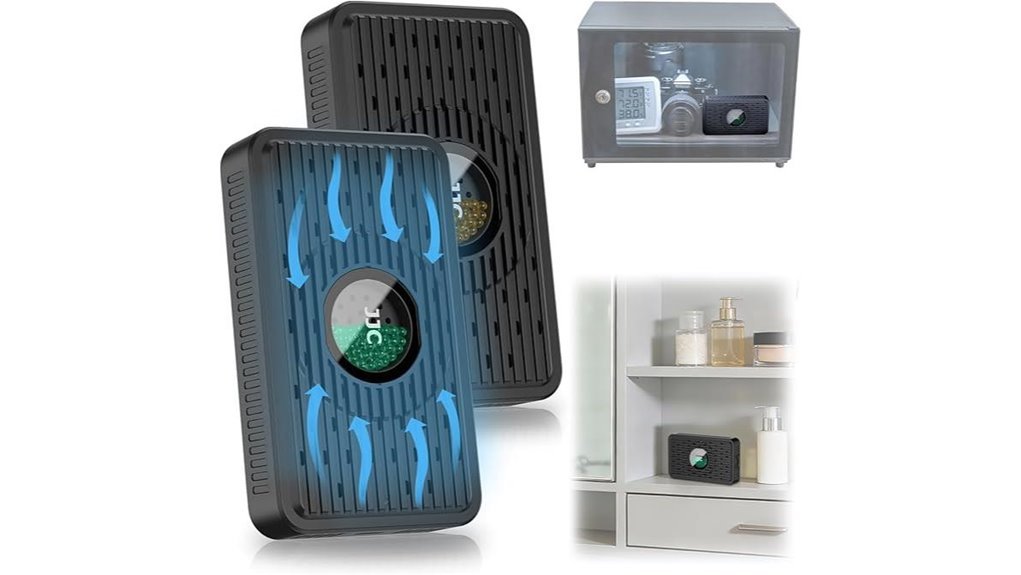
Best for: campers who want two USB-C rechargeable moisture absorbers for gear storage, electronics, camera bags, and small tent zones.
Need a compact, rechargeable moisture absorber for your tent gear? This 2-pack desiccant dehumidifier uses ABS construction and fits easily in tight storage spots. Each unit holds 70 grams and helps dry spaces up to 90 cubic feet, making it useful for tents, camera bags, and electronics cases. The silica gel beads change from orange to green so you can check moisture at a glance. Recharge each one with the included USB-C cable in 2 to 6 hours. Don’t charge while in use, and watch the blue and red indicator lights for status and safety.
Why you’ll like it: The 2-pack setup gives you better placement control than a single unit. You can protect a camera bag, dry box, or electronics case while also keeping another absorber near sleeping gear or a damp tent corner.
Best For: People who need a compact, rechargeable moisture absorber for small enclosed spaces like tent gear storage, camera bags, electronics cases, or gun safes.
Pros:
- Rechargeable with the included USB-C cable, so it can be reused instead of replaced.
- Color-changing silica gel beads make it easy to see moisture status at a glance.
- Compact ABS design fits well in tight storage areas and is useful for spaces up to 90 cubic feet.
Cons:
- Must not be charged while in use, which can be inconvenient.
- Requires 2 to 6 hours to recharge, so it is not instantly ready.
- Best suited for small to medium enclosed spaces, not larger humid areas.
Why it works for camping: This 2-pack is useful when you want to split moisture control across several small spaces. You can keep one unit with your sleeping gear and another in a dry box, electronics case, vehicle, or camera bag. The USB-C cable also makes it easier to recharge with common camping power gear.
Who should buy this: Buy it if you want a flexible USB-C 2-pack for gear organization, dry storage, electronics protection, and small enclosed camping spaces.
Who should skip it: Skip it if you need a moisture solution you can charge while it is actively sitting in the tent. Since it should not be charged while in use, plan the recharge cycle before bed or between trips.
How to Choose the Right Tent Dehumidifier
The best option depends on how you camp. A solo backpacker needs something tiny and light. A car camper can handle a larger rechargeable unit. An RV camper may prefer a model that renews quickly from an outlet. Before you buy, check your tent size, how long you camp between recharges, and whether you need moisture control inside the tent or mainly inside gear storage.
- For small tents: Choose a compact desiccant unit with a clear moisture indicator.
- For family tents: Use multiple units or pair a moisture absorber with better ventilation.
- For electronics: Pick a compact unit that fits inside camera bags, dry boxes, or storage cases.
- For RVs and vehicles: Choose a higher-coverage unit or a fast-renewing design.
- For long trips: Prioritize faster recharge times, USB-C support, or a spare 2-pack.
How These Picks Were Positioned
These products are positioned around real camping moisture-control needs: small-space use, recharge method, placement flexibility, visible saturation indicators, portability, and suitability for tents, RVs, cars, closets, dry boxes, and gear storage.
Because compact desiccant dehumidifiers have limited capacity, the strongest recommendations are based on matching each unit to the right use case instead of promising full-tent drying performance.
Factors to Consider When Choosing Tent Dehumidifier Camping Battery Power
When you choose a tent dehumidifier, look at your power source options first so you know whether it runs on batteries, USB, a heating base, or another setup. You’ll also want enough moisture capacity for your tent size, plus a recharge time that fits your camping routine. Keep portability and weight in mind so the unit won’t add bulk to your gear.
Power Source Options
Power source matters because the best tent dehumidifier for camping has to work reliably away from outlets. Some compact desiccant units do not use power while they absorb moisture, but they still need power later for renewal. USB charging adds flexibility, since you can top it up with a solar panel, power bank, portable power station, or car adapter. A plug-in base can also work well if you camp with RV power or recharge at home between trips. Check the advertised runtime and renewal method before buying. Built-in moisture indicators help you recharge before performance drops, so you won’t get caught off guard during a damp trip.
Moisture Capacity
After you’ve narrowed down the power source, the next thing to check is how much moisture the unit can actually handle. You want a unit whose absorption matches your tent’s humidity load, not one that’s too weak or unnecessarily large. Small camping dehumidifiers often collect about 4 to 6 ounces per charge, which works well for lighter dampness. If your tent holds more air, choose a model rated for roughly 90 cubic feet or more. Also check how long it runs before recharge; many portable units last 3 to 5 days. Visual moisture indicators, like color-changing beads, help you see when it’s full. That way, you can keep your tent drier without constant guesswork.
Tent Size Coverage
Tent size should guide your choice just as much as battery power. You need a dehumidifier that matches your tent’s cubic footage, because models vary widely in coverage. Small units that absorb about 4 oz of moisture work well for compact tents and spaces under 54 sq. ft. If your tent is larger, choose a model rated for higher moisture loads and broader coverage, up to about 333 cubic ft. This helps you keep humidity in check without overworking the unit. In bigger tents, airflow matters too. Designs with multiple air inlets can pull moisture more efficiently across the space. Always check the product specs before you buy so you know the unit can handle your tent’s dimensions and keep camping conditions comfortable.
Recharge Time
Recharge time matters because it affects how often you can keep your tent dry on longer trips. You should check how long a unit takes to recharge, since it can range from 2 to 28 hours depending on the device and capacity. If your dehumidifier runs 3 to 5 days per charge, a shorter recharge window helps you stay ready for the next damp night. Silica gel bead models often renew in about 2 hours, which gives you a fast turnaround. USB-C charging usually adds more campsite flexibility than older charging methods, so it’s worth considering. Also, look for automatic shutoff features, since they can prevent overcharging and improve charging efficiency overall.
Portability And Weight
When you’re choosing a camping dehumidifier, portability and weight should be high on your list, since most models weigh just 0.94 to 2.4 pounds and fit easily into a pack or tote. You’ll also want compact sizing, usually about 3 to 6 inches tall and wide, so it won’t crowd your gear. A rechargeable unit gives you more freedom because you don’t need to stay near an outlet while it absorbs moisture. That matters when you’re moving camp or sleeping in a remote spot. Many lightweight models use ABS or silicone, which keeps handling simple without adding bulk. If your tent is small, a unit that covers up to 90 cubic feet can still do the job while staying easy to carry and set up.
Safety Features
Safety features matter just as much as size and power, especially in a tent where space is tight and airflow is limited. You should choose a dehumidifier with automatic shutoff for the recharge cycle, so it stops before overcharging or overheating becomes a problem. Built-in overheat protection is another smart pick, and visual alerts like color changes can warn you when temperatures climb too high. Go for rechargeable units made with non-toxic materials, since you’ll use them in close quarters. A moisture indicator helps you see when the unit is saturated, so you can renew it before dampness returns. Finally, look for breathable vents or holes in the design, because better airflow can reduce mold and mildew risk and keep your tent safer overnight.
Safety Note for Tent Use
Use desiccant units only as directed. Keep them upright, away from pooled water, sleeping bags, loose fabric, and children. Do not recharge heated units inside a crowded tent, inside a sleeping area, or near flammable material. Ventilation, dry gear habits, and safe heat practices still matter more than any small moisture absorber.
Tips to Reduce Tent Condensation Faster
A dehumidifier works better when you reduce the moisture load inside the tent. These simple habits can make a bigger difference than the device alone:
- Vent the tent when safe: Open roof vents, side vents, or the rainfly gap to move damp air out.
- Keep wet gear outside the sleeping area: Shoes, jackets, towels, and rain covers add moisture fast.
- Use a groundsheet correctly: Keep the groundsheet tucked under the tent so rain does not collect between layers.
- Avoid cooking inside the tent: Steam adds moisture, and fuel-based heat adds serious safety risks.
- Dry gear before packing: A moisture absorber helps storage, but it should not be your only mold-prevention step.
- Use more than one unit for bigger tents: Small desiccant units work best when placed near damp corners, gear bins, or enclosed spaces.
Pro Tips for Better Results
- Place it where moisture collects: Low-airflow corners, vestibules, storage pockets, and gear bins are better than the center of a large tent.
- Rotate units on long trips: If you have a 2-pack, use one while the other renews or dries.
- Protect electronics separately: Put a small unit directly inside a camera bag, dry box, or electronics case for more focused moisture control.
- Do not pack wet fabric: Dry tents, sleeping bags, and rainflies before storage whenever possible.
Frequently Asked Questions
How Often Should I Recharge a Tent Dehumidifier While Camping?
You’ll usually recharge it every 1 to 3 days, depending on humidity, tent size, airflow, and the unit’s moisture capacity. Check the indicator daily, and recharge sooner if condensation returns or the beads show saturation.
Can Tent Dehumidifiers Prevent Condensation in Winter Camping?
Yes, you can reduce winter condensation, but you won’t eliminate it completely. A small desiccant dehumidifier helps most in compact tents, gear bins, and enclosed storage areas. You still need ventilation, dry gear, and safe heat practices.
Are Tent Dehumidifiers Safe to Use Overnight Inside Small Tents?
Yes, you can use many small desiccant-style tent dehumidifiers overnight if they are low-heat during use, properly ventilated, and kept away from fabric and loose gear. Do not recharge heated units inside a crowded tent or near flammable material.
Do Dehumidifiers Help Reduce Mold in Camping Gear Storage?
Yes, dehumidifiers can help reduce mold risk by lowering moisture in gear bins, closets, RV cabinets, and storage bags. Dry your tent, sleeping bags, and clothing fully before storage, then use a moisture absorber to control lingering humidity.
What Size Tent Dehumidifier Works Best for Family Camping?
For family camping, one small rechargeable moisture absorber may not be enough for the whole tent. Use multiple compact units, choose a higher coverage rating, and place them near damp gear or low-airflow corners.
Where Should I Put a Dehumidifier Inside a Tent?
Place it upright on a stable surface where air can move around it. Good spots include a corner away from sleeping bags, a hanging organizer pocket, a gear vestibule, or a dry storage bin. Keep it away from pooled water and fabric.
Do I Still Need Tent Ventilation With a Dehumidifier?
Yes. A tent dehumidifier helps absorb moisture, but ventilation is still the main way to reduce condensation from breathing, wet clothing, cooking steam, and cold tent walls.
Final Recommendation
Choose the Eva-Dry Wireless Mini Dehumidifier, White (E-333) if you want the easiest cord-free option for general camping storage and small enclosed spaces.
Choose the USB-C Rechargeable Gun Safe Dehumidifier Desiccant Packets if you want a compact unit that fits modern camping power setups.
Choose the 2 Pack Rechargeable Desiccant Dehumidifier with USB-C Cable if you want to protect more than one space at the same time, such as a tent corner and a camera bag.
Conclusion
So, when you choose the right tent dehumidifier, you keep your camping space drier, fresher, and far more comfortable. Whether you want a rechargeable pack, USB-C convenience, or a compact wireless option, the best pick depends on your trip and power needs. Choose the 2 Pack Small Rechargeable Mini Dehumidifiers if you want simple coverage for tight spaces, the Afloia Mini Dehumidifier if you want a fast-renewing base, the USB-C Rechargeable Gun Safe Dehumidifier if you prefer cable charging, the Eva-Dry E-333 if you want a proven cord-free moisture absorber, or the 2 Pack Rechargeable Desiccant Dehumidifier if you need two USB-C units for gear storage. Pair your pick with smart ventilation, dry gear habits, and safe placement, and you’ll wake up to a cozier camp every time.