Affiliate disclosure: This article contains Amazon affiliate links. If you buy through these links, we may earn a commission at no extra cost to you.
Updated August 2026.
The best free-standing dehumidifier depends on the size, temperature, and dampness of your space—not simply the largest square-foot or pint number on the box. All three picks below are portable compressor dehumidifiers, but their capacity figures are not measured under identical conditions. The Gasbye DryPrime is the strongest choice here for a large, persistently damp area. The Midea 22 Pint EasyDry offers the clearest independently verified capacity for a medium room, while the PLUSCENT 32 Pint provides several convenient operating modes but uses a hot, high-humidity maximum rating that should not be compared directly with Midea’s standardized rating.
Quick Verdict
- Best for large, persistently damp spaces: Gasbye DryPrime
- Best verified mid-size pick: Midea 22 Pint EasyDry
- Best for extra operating modes: PLUSCENT 32 Pint
How These Picks Were Compared
Recommendations are based on moisture-removal capacity, disclosed test conditions, drainage options, humidistat controls, portability, operating features, warranty information, and how clearly the specifications could be verified. Advertised square-foot coverage was treated as a secondary guide rather than a performance guarantee.
Quick Comparison
| Model | Best For | Capacity Basis | Advertised Coverage | Drainage | Amazon |
|---|---|---|---|---|---|
| Gasbye DryPrime | Large basements, garages, and persistently damp rooms | 115 pints/day at 86°F/80% RH; 73 pints at 80°F/60% RH; 50 pints at 65°F/60% RH | Up to 4,500 sq. ft. | Tank, included drain hose, or garden-hose adapter; no built-in pump | Check Details |
| PLUSCENT 32 Pint | Rooms where multiple modes, a timer, and a child lock are priorities | Seller-stated maximum of 32 pints/day at 95°F/90% RH; standardized capacity was not located | Up to 2,500 sq. ft. | 2L tank or included 39.4-inch gravity-drain hose | Check Details |
| Midea 22 Pint EasyDry | Bedrooms, offices, finished basements, and medium rooms | 22.31 pints/day in the current ENERGY STAR product record | Up to 1,500 sq. ft. | Bucket or gravity-drain connection; no built-in pump | Check Details |
Coverage figures are manufacturer or seller claims. Actual performance depends on temperature, starting humidity, ceiling height, airflow, doors and windows, and how much new moisture enters the space. Compare pint ratings under the same test conditions whenever possible.
Gasbye 4500 Sq.Ft. Dehumidifier with Drain Hose
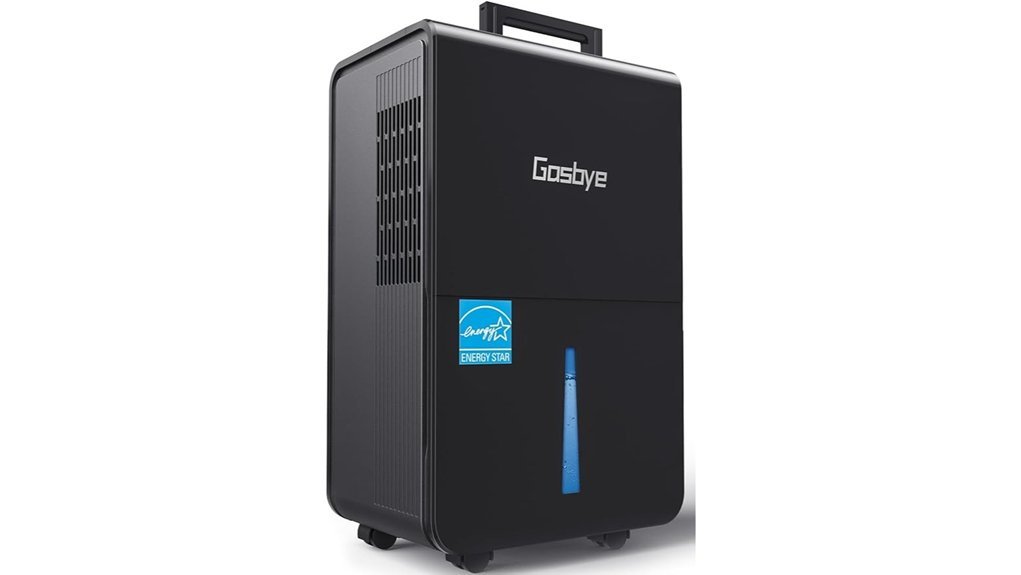
The Gasbye DryPrime-50-B is the strongest fit in this group when you need a large-room or basement dehumidifier. The manufacturer reports moisture removal of up to 115 pints per day at 86°F and 80% relative humidity, 73 pints at 80°F and 60% RH, and 50 pints at 65°F and 60% RH. Showing all three figures makes it easier to understand how temperature and humidity affect real-world output.
It has a manufacturer-listed 1.72-gallon tank, an included 5-foot drain hose, a garden-hose adapter, adjustable humidity control, automatic shutoff, auto restart, caster wheels, and a washable filter. It measures approximately 11 inches deep by 15 inches wide by 24 inches high and weighs about 42 pounds. The unit does not include a built-in condensate pump, so continuous drainage requires a downward-sloping hose or a separate compatible pump.
Why You’ll Like It: It combines the highest verified moisture-removal potential in this group with a large tank and flexible gravity-drain options, reducing how often you need to empty the bucket in a damp basement.
Best For: Large basements, garages, open living areas, laundry rooms, or other spaces with persistent airborne moisture.
Who Should Avoid It: Buyers drying a small bedroom or lightly damp room, anyone who needs to pump water upward, or anyone who plans to carry the unit between floors frequently.
Warranty Note: The manufacturer lists a one-year standard warranty plus an additional year after qualifying registration. Confirm the current registration requirements before purchase.
Pros:
- Highest moisture-removal capacity in this three-product comparison.
- Performance is disclosed under three temperature and humidity conditions.
- Large 1.72-gallon tank and multiple gravity-drain connection options.
- Adjustable humidistat, auto shutoff, auto restart, wheels, and washable filter.
Cons:
- The 115-pint maximum is measured in hot, very humid air and is not its output under typical cooler basement conditions.
- No built-in pump for moving water uphill.
- Its approximately 42-pound weight makes frequent stair-to-stair movement inconvenient.
- Its size and capacity may be unnecessary for a small or only slightly damp room.
PLUSCENT 32 Pint Dehumidifier for Home and Basement
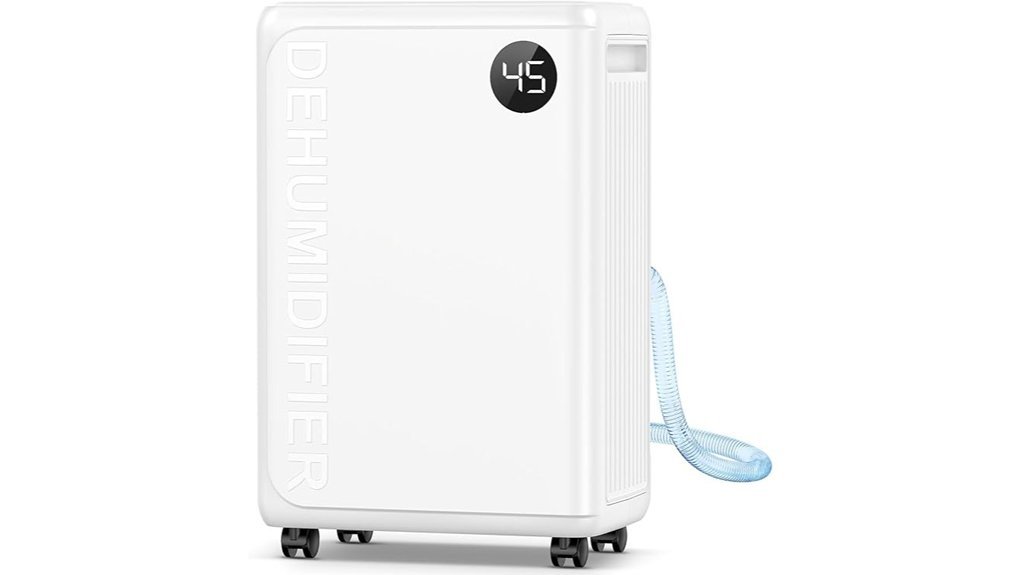
The PLUSCENT 32 Pint Dehumidifier is a convenience-focused option for bedrooms, laundry areas, finished basements, and open living spaces. Its seller states that it removes up to 32 pints per day at 95°F and 90% relative humidity and covers up to 2,500 square feet. Because those are unusually hot and humid test conditions, the 32-pint label should not be treated as directly equivalent to a standardized 32-pint DOE rating.
Its seller-listed DEHU, CONT, and DRY modes cover normal humidity control, continuous operation, and laundry drying. Other listed features include a 24-hour timer, adjustable humidistat, auto defrost, child lock, auto restart, caster wheels, a 2L tank, and an included 39.4-inch gravity-drain hose.
Why You’ll Like It: It offers several operating modes and day-to-day convenience features in a relatively compact format, including a timer, child lock, laundry mode, and continuous drainage.
Best For: Buyers who prioritize operating modes and controls and are willing to confirm the exact current specifications before ordering.
Who Should Avoid It: Buyers who require an independently documented standardized capacity, a built-in pump, clearly published primary-source warranty terms, or enough verified capacity for severe basement seepage.
Verification Note: The main specifications above are seller-listed. Confirm the exact model number, standardized pint rating, dimensions, minimum operating temperature, warranty, and included accessories on the current Amazon listing and product manual.
Pros:
- Three seller-listed operating modes for humidity control, continuous use, and laundry drying.
- Includes a timer, auto defrost, auto restart, child lock, and adjustable humidistat.
- Includes a gravity-drain hose for continuous downward drainage.
- Casters can make room-to-room repositioning easier.
Cons:
- The 32-pint claim is measured at 95°F and 90% RH rather than clearly identified standardized room conditions.
- Independent primary-source specifications and certification records were not located during verification.
- The 2L tank may fill quickly when the drain hose is not used.
- The 2,500-square-foot claim cannot account for every room layout, temperature, or moisture load.
Midea 22 Pint Energy Star Dehumidifier with Reusable Filter
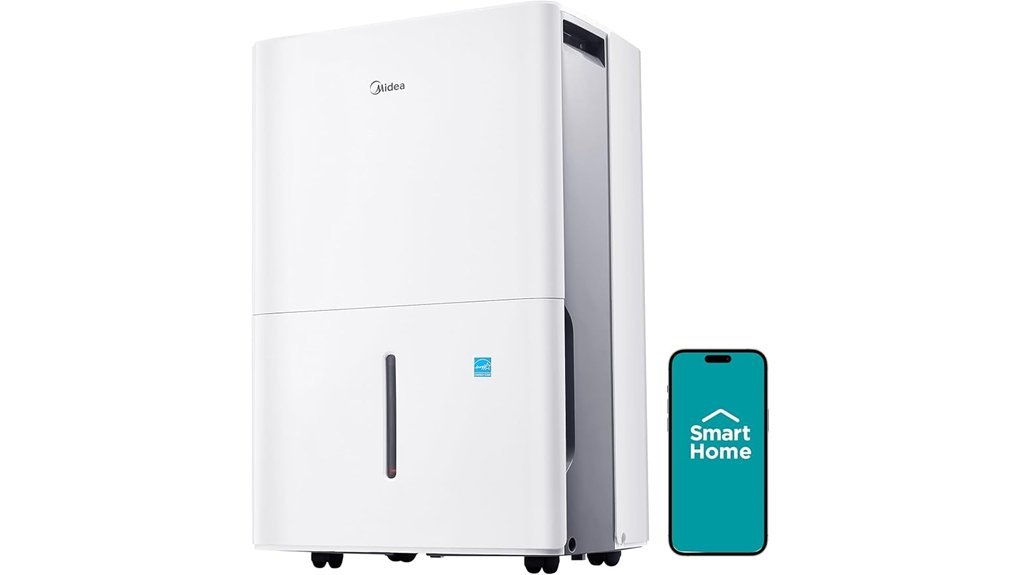
The Midea MAD22C1AWS EasyDry is a 22-pint portable dehumidifier designed for spaces up to the manufacturer’s 1,500-square-foot rating. The current ENERGY STAR product record lists a water-removal capacity of 22.31 pints per day, making this the clearest independently documented mid-size choice in the comparison.
This exact model does not include a built-in pump or connected smart control. Its practical features include a built-in timer, adjustable humidity control, a reusable filter, four caster wheels, a removable bucket, and a gravity-drain connection. Midea lists dimensions of 10.24 inches deep by 15.2 inches wide by 19.69 inches high, a weight of 32.41 pounds, and a one-year warranty.
Why You’ll Like It: It provides a standardized, independently listed capacity and straightforward physical controls without requiring an app or voice assistant.
Best For: Bedrooms, home offices, finished basement rooms, and other medium spaces where a verified 22-pint capacity is appropriate for the moisture load.
Who Should Avoid It: Buyers who need app control, voice control, a built-in pump, or the higher capacity required for a large basement with persistent seepage or a heavy moisture load.
Pros:
- Current ENERGY STAR record lists a 22.31-pint daily water-removal capacity.
- Midea advertises coverage up to 1,500 square feet.
- Built-in timer, reusable filter, adjustable controls, and four-wheel mobility.
- Supports bucket collection or gravity-based continuous drainage.
- Published one-year manufacturer warranty.
Cons:
- No Wi-Fi, app, Alexa, or Google Assistant control on this exact model.
- No built-in condensate pump.
- Its capacity may be too low for a very wet or large open basement.
- Advertised coverage should still be matched to the room’s actual dampness and temperature.
Factors to Consider When Choosing a Free-Standing Dehumidifier
Choose a portable room dehumidifier by matching a comparable moisture-removal capacity to the room’s size and dampness. Then compare drainage, operating temperature, noise, controls, portability, warranty, and energy efficiency. The ENERGY STAR dehumidifier buying guide recommends considering both the size of the space and its condition before selecting a capacity.
Moisture-Removal Capacity
Capacity is measured in pints per 24 hours, but not every advertised number is produced under the same temperature and humidity. A maximum measured in hot, nearly saturated air can look much larger than a DOE rating measured under standardized conditions. Check the stated test conditions and give more weight to standardized ratings when comparing two models.
Some extra capacity can be useful because a correctly functioning humidistat should cycle the compressor off after the target humidity is reached. An undersized unit may run for long periods without reaching the set point, especially when new moisture continually enters the room.
Room Coverage Area and Dampness
Square-foot coverage is a starting point rather than a complete sizing method. A dry 1,500-square-foot upstairs area and a 1,500-square-foot basement with seepage create very different moisture loads. Consider ceiling height, open doors, outdoor humidity, laundry drying, groundwater, leaks, and whether the area feels slightly damp, very damp, or wet.
For persistent water intrusion, repair or manage the source first. A portable dehumidifier can remove airborne moisture, but it cannot repair plumbing leaks, failed gutters, foundation seepage, or active flooding.
Drainage Options
For occasional use, a removable bucket may be enough. For daily basement operation, continuous gravity drainage is usually more convenient. The drain must sit below the unit’s outlet, and the hose must slope downward without kinks, loops, or raised sections that trap water.
If water must travel upward to a sink or across a route without continuous downward slope, choose a model with a built-in pump or use a compatible external condensate pump. A standard gravity-drain connection cannot push water uphill.
Noise Levels
Compare published decibel ratings only when the manufacturer identifies the fan speed and test method. A low-speed figure may not represent sound in turbo, continuous, or laundry mode. Bedrooms and offices benefit from a low fan setting, adequate clearance, and a solid, level floor that reduces vibration.
Energy Efficiency
Look for the exact model in the current ENERGY STAR Product Finder rather than relying only on a logo or product title. ENERGY STAR-certified dehumidifiers are designed to remove moisture more efficiently than comparable conventional models. Correct sizing, a working humidistat, a clean filter, unobstructed airflow, and closed windows also help prevent unnecessary runtime.
Operating Temperature and Auto Defrost
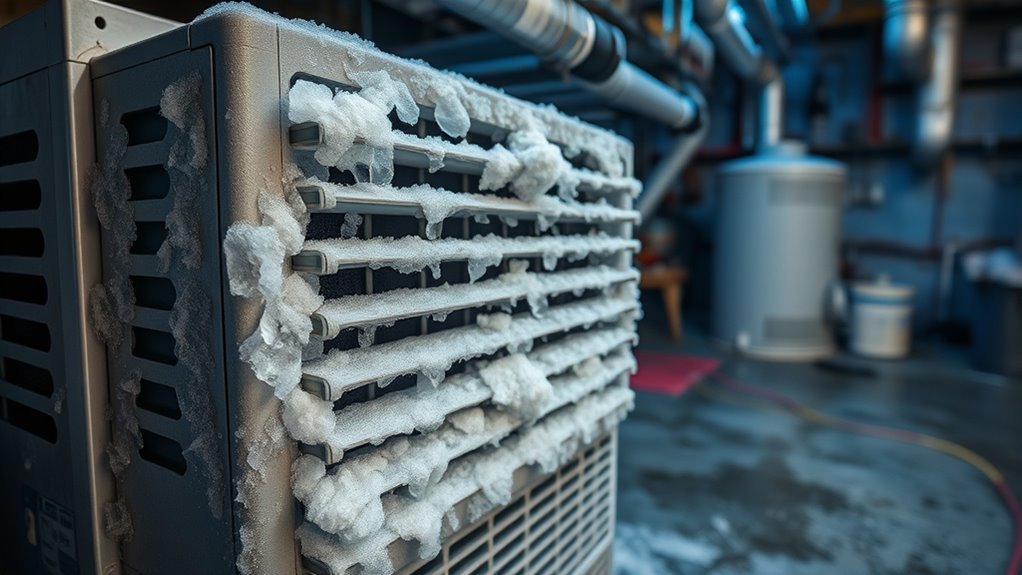
Compressor dehumidifiers lose moisture-removal performance as room temperature falls. If you are buying for a cool basement, confirm the manufacturer’s minimum operating temperature and look for auto defrost. Frost protection helps the unit recover when ice develops on the coil, but it does not make every portable compressor model suitable for near-freezing conditions.
Controls and Convenience
Useful controls include an adjustable humidistat, timer, auto restart, full-bucket shutoff, washable filter, clear humidity display, child lock, and caster wheels. Wi-Fi and voice control can be convenient, but verify the exact model number because smart and non-smart versions can have similar names and appearance.
Verification, Warranty, and Support
Before ordering, confirm the exact model number on the Amazon listing, manufacturer page, manual, warranty document, and any certification record. Check how long the standard warranty lasts, whether registration is required for additional coverage, who pays return shipping, and whether replacement filters or parts are available.
A recognizable brand name alone does not guarantee that every capacity, accessory, or warranty statement on a marketplace listing is current. Save a copy of the listing and warranty terms available at the time of purchase.
Safe Placement
Place the unit upright on a stable, level surface with the airflow clearance required by its manual. Keep the intake and exhaust unobstructed, protect the cord from children and pets, and avoid splash zones or locations where water could reach the electrical components. Plugging, drainage, storage, and restart procedures should follow the instructions for the exact model.
Before You Buy Checklist
- Measure the room and decide whether it is slightly damp, very damp, or wet.
- Compare pint capacities under the same test conditions whenever possible.
- Treat advertised square-foot coverage as a guide rather than a guarantee.
- Confirm whether the drain hose is included and whether gravity drainage will work in your chosen location.
- Choose a built-in or external pump if the water must travel uphill.
- Check the minimum operating temperature and auto-defrost function for basement use.
- Confirm tank size, weight, dimensions, filter access, noise information, and electrical requirements.
- Verify the exact model number before relying on Wi-Fi, pump, voice-control, certification, or warranty claims.
Frequently Asked Questions
What Size Free-Standing Dehumidifier Do I Need?
Match the dehumidifier to both the room area and its moisture condition. A slightly damp room needs less capacity than a wet basement of the same size. Compare standardized pint ratings, account for temperature and ongoing moisture sources, and choose additional capacity when the space has seepage, frequent laundry drying, or open connections to other humid rooms.
How Often Should I Clean a Dehumidifier’s Water Tank?
Inspect the bucket whenever you empty it and clean it regularly according to the product manual. Weekly cleaning is a practical starting point during frequent use, but clean it sooner if you notice slime, odor, discoloration, or visible buildup. Unplug the unit first, wash and dry the bucket as directed, and clean the air filter on the manufacturer’s schedule.
Can Free-Standing Dehumidifiers Run Continuously Overnight?
Many portable dehumidifiers can operate overnight when placed upright on a stable surface, connected as directed by the manual, given the required airflow clearance, and equipped with a functioning full-bucket shutoff or correctly installed drain hose. Do not operate a unit with a damaged cord, blocked vents, leaking hose, or improperly seated bucket.
Do Dehumidifiers Increase Energy Bills Significantly?
A dehumidifier adds to electricity use, but the cost depends on its wattage, runtime, local utility rate, room conditions, and humidity setting. Correct sizing, ENERGY STAR certification, clean filters, closed windows, repaired leaks, and a reasonable set point can reduce unnecessary operation.
Are Dehumidifiers Safe to Use Around Pets and Children?
They can be used around pets and children when the unit is stable, air openings remain unobstructed, the cord and drain hose are secured, and the bucket and controls cannot be easily disturbed. A child lock can prevent accidental control changes, but it does not replace supervision or safe placement.
What Humidity Level Is Ideal for Most Homes?
A general target of 30% to 50% relative humidity works for many homes and aligns with EPA indoor-air guidance. Adjust within that range for comfort, climate, and condensation risk. If humidity remains high despite long operation, check for leaks, ventilation problems, low room temperature, or an undersized unit.
Can a Dehumidifier Remove Existing Mold?
No. A dehumidifier can make conditions less favorable for additional mold growth by lowering humidity, but it does not remove established mold or eliminate the underlying water source. Existing mold should be cleaned or remediated appropriately, and leaks, seepage, condensation, or other moisture problems must also be corrected.
Conclusion
Final Recommendation
Choose the Gasbye DryPrime when the priority is the highest moisture-removal capacity for a large, persistently damp area and gravity drainage will work. Choose the Midea 22 Pint EasyDry when you want a medium-room unit with an independently listed standardized capacity, clear manufacturer specifications, and simple physical controls.
Consider the PLUSCENT 32 Pint when its timer, child lock, laundry mode, and other controls fit your needs, but verify its current standardized capacity, warranty, dimensions, and operating-temperature specifications before purchasing.
Whichever model you select, compare capacity under similar test conditions, plan the drain route before ordering, and aim for indoor relative humidity around 30% to 50%. A portable dehumidifier works best as part of a broader moisture-control plan that also addresses leaks, drainage, ventilation, condensation, and standing water.