Affiliate disclosure: As an Amazon Associate, we may earn from qualifying purchases. This does not affect the price you pay.
For a 1,200 sq. ft. space, choose a free-standing dehumidifier by matching capacity to the actual moisture load, not square footage alone. A slightly damp bedroom may need less extraction than a basement with wet walls, condensation, laundry drying, or seepage. The strongest matches in this guide are the Waykar 34-Pint, VEAGASO 34-Pint, PLUSCENT 32-Pint, BANABIE 32-Pint, and Aiusevo 21-Pint models. Prioritize a reliable humidistat, continuous drainage, auto defrost, suitable tank size, manageable noise, and easy portability.
Quick Verdict
Best overall: Waykar 34-Pint for its balanced controls, two drainage options, portability, and ENERGY STAR positioning on the current listing.
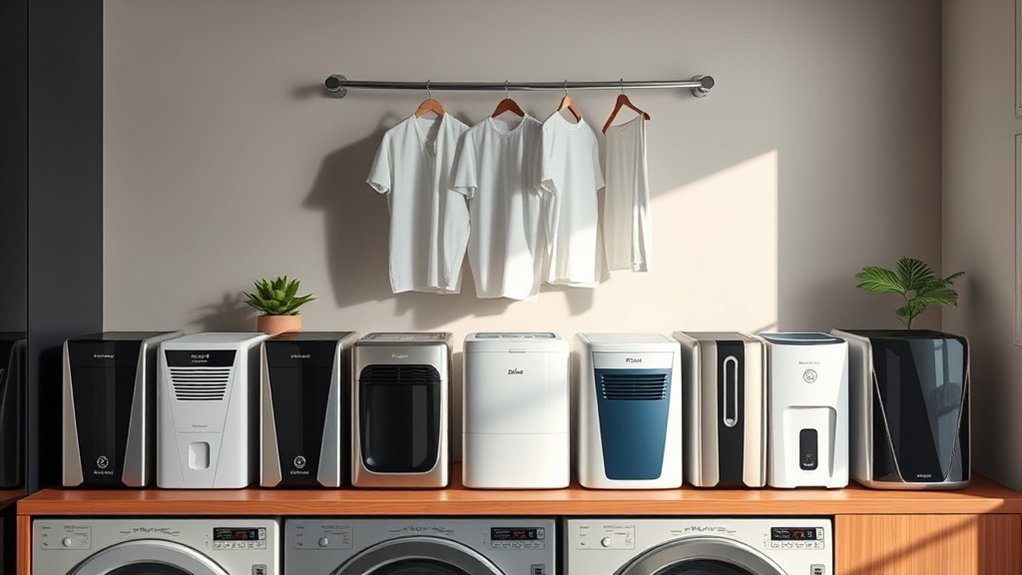
Best for laundry areas: VEAGASO 34-Pint because its DEHU, DRY, and CONT modes make it easy to switch between normal humidity control and clothes drying.
Best low-noise claim: BANABIE 32-Pint for bedrooms or offices, provided you treat the advertised 32 dB figure as a seller claim rather than a guaranteed in-room result.
Best for moderate humidity: Aiusevo 21-Pint when the room feels damp or musty but does not have seepage, standing water, or a consistently extreme moisture load.
Products were kept only when they clearly matched the 1,200 sq. ft. buyer intent and offered compressor-based moisture removal, adjustable humidity control, practical drainage, and enough capacity for at least moderate dampness. Seller-listed maximum pint figures are shown as marketing-condition ratings and are not treated as directly interchangeable with standardized DOE capacity.
Quick Comparison of 1200 Sq Ft Dehumidifiers
| Product | Seller-Listed Maximum | Tank and Drainage | Best For | Amazon |
|---|---|---|---|---|
| Waykar 34-Pint | Up to 34 pints/day at 95°F and 90% RH | 0.66-gallon tank or gravity hose | Balanced everyday use | Check Price |
| VEAGASO 34-Pint | Up to 34 pints/day under listing conditions | 2-liter tank or included gravity hose | Laundry and flexible modes | Check Price |
| PLUSCENT 32-Pint | Up to 32 pints/day at 95°F and 90% RH | 2-liter tank or 39.4-inch gravity hose | Bedrooms, offices, and storage | Check Price |
| BANABIE 32-Pint | Up to 32 pints/day at 95°F and 90% RH | 2.5-liter tank or 3.28-foot gravity hose | Low-noise-priority rooms | Check Price |
| Aiusevo AS280 21-Pint | Up to 21 pints/day at 95°F and 90% RH | 2-liter tank or 3.28-foot gravity hose | Moderate humidity and portability | Check Price |
Waykar 34-Pint ENERGY STAR Dehumidifier
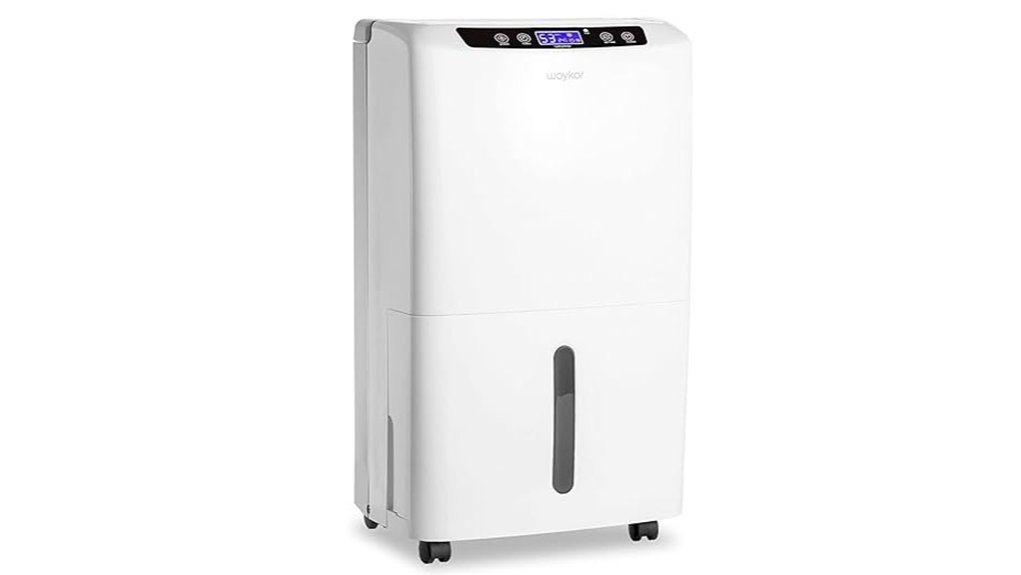
The Waykar is the most balanced choice for a 1,200 sq. ft. space because it combines adjustable humidity control, two fan speeds, a 24-hour timer, wheels, handles, a washable filter, and both tank and gravity-hose drainage. Its current listing advertises up to 34 pints per day at 95°F and 90% relative humidity and identifies the unit as ENERGY STAR certified. Treat the 34-pint figure as a high-heat, high-humidity maximum rather than a directly comparable DOE rating.
Why You’ll Like It: It covers the core buying needs without requiring Wi-Fi: set a target humidity, choose a fan speed, and connect the included hose when you want less frequent tank emptying.
Best For: Moderately to very damp living areas, bedrooms, garages, and basements with a nearby lower drain.
Who Should Avoid It: Buyers who need a built-in pump to move condensate upward or across a long distance.
Pros:
- ENERGY STAR positioning on the current product listing.
- Manual tank and continuous gravity-drain options.
- Adjustable humidistat, timer, two fan speeds, wheels, and handles.
- Included drain hose and washable filter.
Cons:
- The 0.66-gallon tank can fill quickly in very damp conditions.
- The 34-pint claim is measured under hotter and wetter conditions than normal household use.
- No built-in condensate pump is included.
VEAGASO 34-Pint Dehumidifier
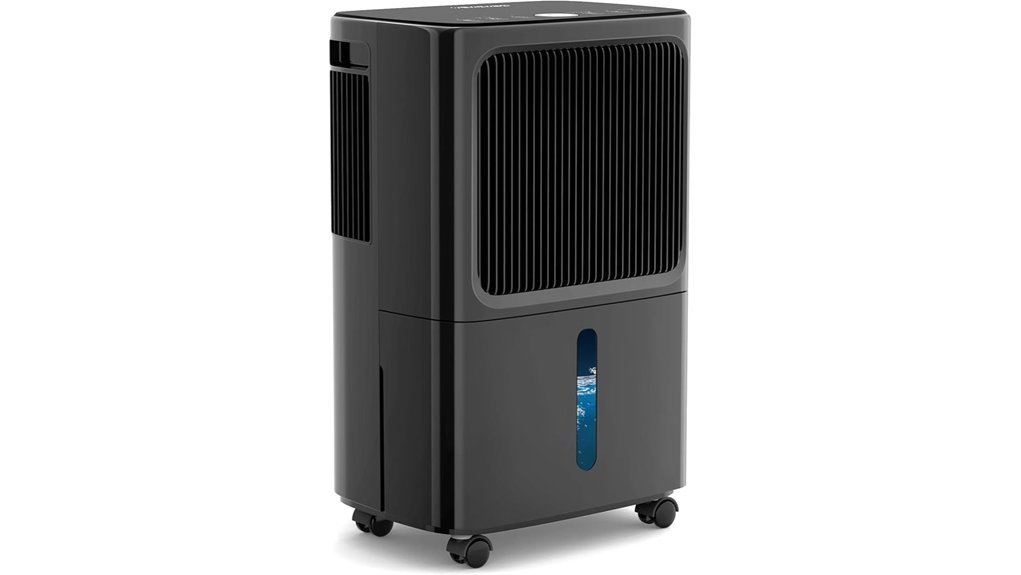
The VEAGASO is a practical fit when you want more than basic humidity control. Its DEHU mode maintains a selected humidity, DRY mode supports indoor clothes drying, and CONT mode runs continuously in persistently damp spaces. The listing advertises up to 34 pints per day, a 2-liter tank, two fan speeds, automatic defrost, a timer, power-failure memory, and both manual and gravity-hose drainage.
Why You’ll Like It: The three operating modes make it easy to switch between everyday comfort, wet-weather use, and laundry drying without adding app setup.
Best For: Laundry areas, basements, bathrooms, and open rooms where flexible operating modes matter.
Who Should Avoid It: Buyers without a nearby drain who expect long unattended operation from a small tank.
Pros:
- DEHU, DRY, and continuous operating modes.
- 2-liter tank and included gravity-drain hose.
- Touch controls, timer, two fan speeds, wheels, and carrying handle.
- Power-failure memory can restore settings after an outage.
Cons:
- The 2-liter tank may require frequent emptying in very damp rooms.
- Maximum output depends heavily on room temperature and relative humidity.
- No built-in pump or app control is listed.
PLUSCENT 32-Pint Dehumidifier
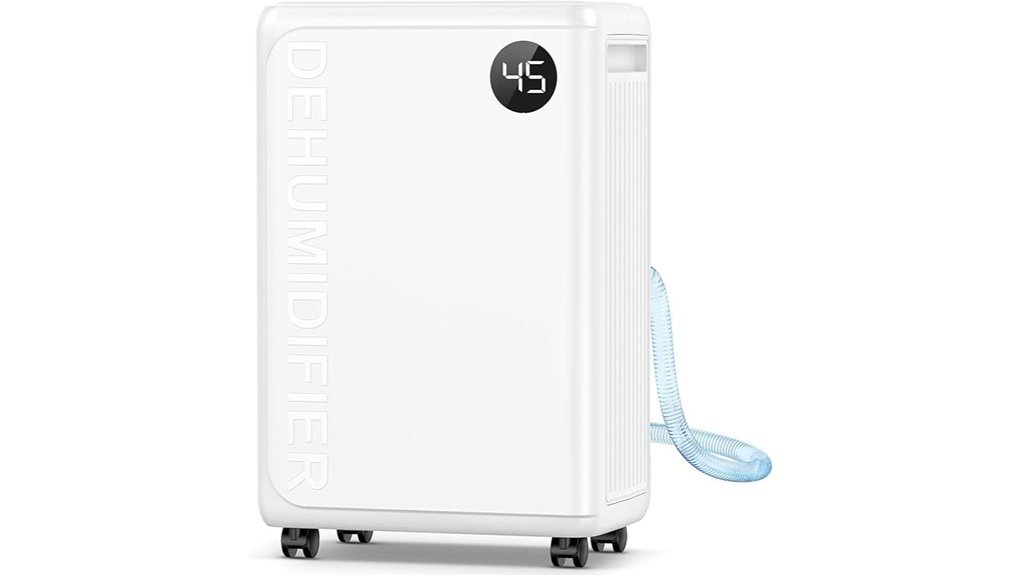
PLUSCENT’s listing describes a maximum removal rate of 32 pints per day at 95°F and 90% relative humidity, along with DEHU, CONT, and DRY modes, auto defrost, two fan speeds, a 24-hour timer, child lock, washable filter, and power-outage restart. Its 2-liter tank is best paired with the included 39.4-inch gravity hose when humidity is consistently high.
Why You’ll Like It: It offers useful everyday controls, a clear display, and three operating modes without requiring Wi-Fi or an account.
Best For: Bedrooms, home offices, storage areas, RVs, and moderately damp basements with access to a lower drain.
Who Should Avoid It: Buyers who need a verified built-in pump or want independently confirmed noise performance.
Pros:
- DEHU, CONT, and DRY modes for flexible operation.
- Auto defrost, timer, child lock, washable filter, and auto restart.
- 2-liter tank plus a 39.4-inch gravity-drain hose.
- Wheels and handles support room-to-room use.
Cons:
- The 2-liter tank is small for continuous use in a wet room.
- The advertised 39–42 dB range is a seller claim and can vary by fan setting and room acoustics.
- No Wi-Fi control or pump drainage is listed.
BANABIE 32-Pint Dehumidifier
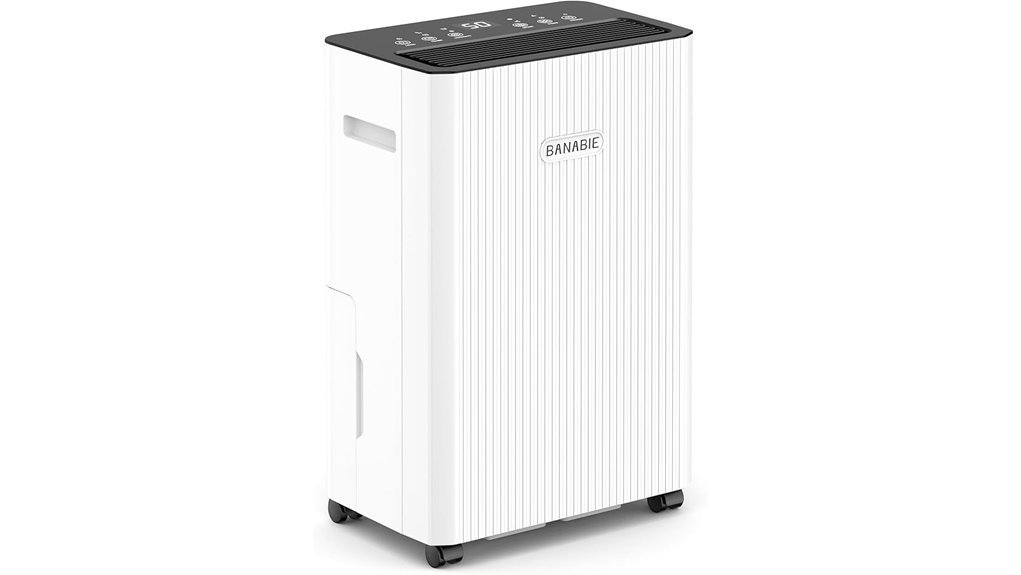
The BANABIE is positioned as a quiet, straightforward dehumidifier with Auto, Continuous, and Custom modes. Its listing advertises up to 32 pints per day at 95°F and 90% relative humidity, a 2.5-liter tank, a 3.28-foot gravity hose, a 24-hour timer, power-outage memory, auto defrost, child lock, wheels, and adjustable humidity control. The advertised 32 dB figure is attractive, but it should be treated as a seller claim rather than guaranteed room performance.
Why You’ll Like It: Power memory and simple mode selection can make routine operation easier in a bedroom, office, or basement.
Best For: Buyers who prioritize a low listed noise level and want both tank and gravity-drain operation.
Who Should Avoid It: Buyers who need a long hose, a built-in pump, or independently verified acoustic data.
Pros:
- Auto, Continuous, and Custom humidity modes.
- Power memory, child lock, timer, auto defrost, wheels, and handles.
- 2.5-liter tank and included gravity-drain hose.
- Humidity target range is listed from 30% to 90% RH.
Cons:
- The included 3.28-foot hose may not reach a distant drain.
- The advertised 32 dB result may differ during compressor cycling or at higher fan speed.
- Coverage and extraction figures are seller-stated maximums.
Aiusevo AS280 21-Pint Dehumidifier
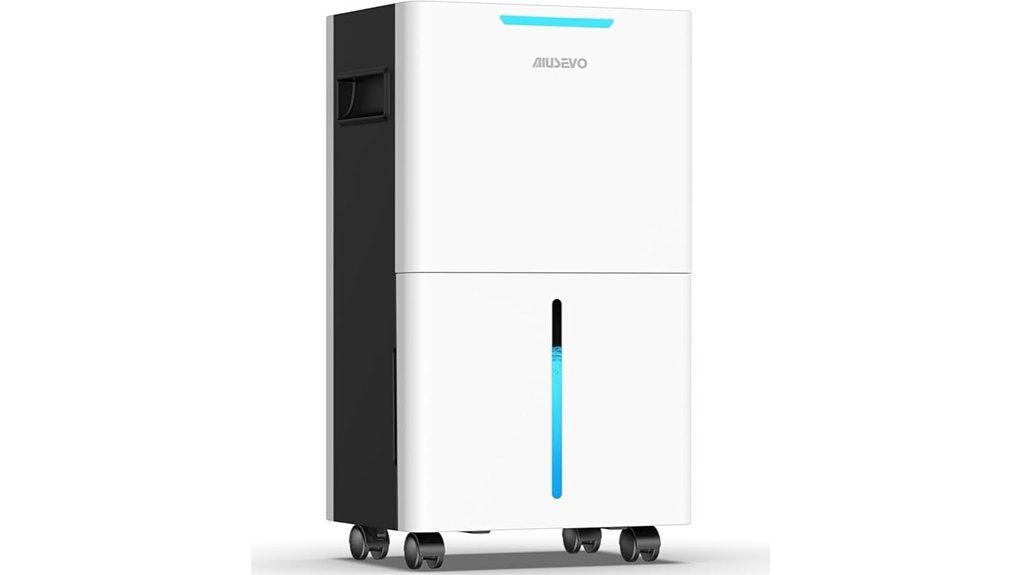
The Aiusevo AS280 closely matches the target room size because it is marketed for spaces up to 1,500 sq. ft. and advertises up to 21 pints per day at 95°F and 90% relative humidity. It includes DEHU, DRY, and CONT modes, two fan speeds, a timer, child lock, automatic defrost, wheels, handles, a 2-liter tank, and a 3.28-foot gravity-drain hose.
Why You’ll Like It: It is a more proportionate choice for routine dampness when you do not need the larger seller-listed extraction claims of the 32–34-pint models.
Best For: Bedrooms, bathrooms, living rooms, RVs, and slightly to moderately damp 1,200 sq. ft. spaces.
Who Should Avoid It: Buyers with seepage, wet walls, standing water, or a consistently severe moisture load.
Pros:
- Coverage claim closely matches a 1,200 sq. ft. target.
- DEHU, DRY, and continuous operating modes.
- Timer, child lock, auto defrost, two fan speeds, wheels, and handles.
- 2-liter tank and included 3.28-foot drain hose.
Cons:
- Lower maximum extraction than the 32–34-pint options.
- The 2-liter tank may need frequent emptying in damp weather.
- The included hose may be too short for some drain layouts.
Factors to Consider When Choosing a 1200 Sq Ft Free Standing Dehumidifier
For a 1,200 sq. ft. room, the best dehumidifier is not automatically the model with the largest coverage claim or headline pint number. Focus on standardized capacity when available, actual dampness, drainage access, room temperature, tank size, noise, and how often you are willing to empty the bucket.
Coverage Area and Moisture Load
Square footage is only the starting point. A mildly musty bedroom needs less capacity than a basement with damp walls, laundry drying, condensation, or seepage. Also consider ceiling height, open doorways, airflow between rooms, and whether the space is one open area or several separated rooms. A portable unit works best when air can circulate freely around it.
Understand Pint Capacity
Compare capacity only when the test conditions are similar. Several listings in this guide state their maximum extraction at 95°F and 90% relative humidity, which is much hotter and wetter than many homes. DOE-rated capacity is measured under standardized procedures, so a seller-listed maximum should not be treated as directly equivalent unless the test basis is clearly stated.
Drainage Options
A removable tank is simple but requires regular emptying. Continuous gravity drainage is more convenient when the unit can sit above a nearby floor drain, sink, or sump opening. The hose must slope downward without kinks. Choose a built-in pump only when water must travel upward or to a drain that is not below the outlet.
Noise Level
For bedroom or office use, check the listed decibel range, but remember that fan speed, compressor cycling, floor vibration, and room acoustics affect what you hear. A low-speed or sleep setting can reduce fan noise and dim the display, but it does not make a compressor silent. Place the unit on a stable, level surface to reduce rattling.
Energy Efficiency
Look for a current ENERGY STAR listing when efficiency is a priority. Do not rely only on broad marketing phrases such as “energy saving.” Compare standardized capacity and Integrated Energy Factor when those figures are available. Set a practical target humidity rather than running the unit continuously at the lowest possible setting.
Controls and Humidistat
A reliable humidistat is more useful than a long list of modes. Look for a clear humidity display, target setting, timer, automatic restart, full-tank shutoff, and defrost protection. App control can be convenient for remote rooms, but it is optional and may require Wi-Fi, a compatible phone, and account setup.
Tank Size and Hose Length
Small 2- to 2.5-liter tanks are manageable to carry but can fill quickly in a wet room. Check the included hose length before buying and measure the actual path to the drain. A gravity hose that is too short, kinked, or routed uphill will not drain correctly.
Portability Features
Wheels, side handles, manageable weight, and a compact footprint matter when you move the unit between rooms. Drain the tank before lifting it, keep the unit upright, and allow clearance around the air intake and exhaust. Do not pull the unit by the power cord or drain hose.
- Measure the actual open area and note whether doors stay open or closed.
- Classify the space as slightly damp, very damp, or wet.
- Confirm whether the pint rating is standardized or a high-humidity maximum.
- Measure the distance and height difference to the drain.
- Check tank size, hose length, operating temperature, noise claim, warranty terms, and return policy on the current listing.
- Use a grounded wall outlet and follow the manufacturer’s clearance and extension-cord instructions.
Frequently Asked Questions
What Size Dehumidifier Do I Need for 1200 Square Feet?
For a 1,200 sq. ft. space, ENERGY STAR guidance suggests about 20–30 pints per day for slightly to moderately damp conditions, 25–40 pints for very damp conditions, and 30–50 pints for wet conditions. Choose by moisture severity and standardized capacity when available, not square footage alone.
Is a 21-Pint Dehumidifier Enough for 1200 Square Feet?
It can be enough for a slightly or moderately damp open area with reasonable airflow. It is less suitable for wet walls, seepage, frequent laundry drying, or consistently high humidity. In those conditions, a higher standardized capacity or a larger seller-listed model may be more appropriate.
How Often Should I Empty a 1200 Sq Ft Dehumidifier Tank?
It depends on tank size, humidity, room temperature, and runtime. A 2-liter tank may need daily or more frequent emptying in a damp room. Continuous gravity drainage avoids most manual emptying when the hose is installed with a proper downward slope.
Do Free-Standing Dehumidifiers Work in Basements?
Yes, when the unit is sized for the moisture load and placed where air can circulate. A dehumidifier can control airborne humidity, but it will not repair foundation leaks, plumbing leaks, seepage, or flooding. Address the water source first whenever possible.
Can I Run a Dehumidifier Continuously Overnight?
Follow the manufacturer’s instructions and use a grounded wall outlet. Automatic shutoff, a properly seated tank, and correctly installed drainage are important. Keep the intake and exhaust clear, and do not use an extension cord unless the manufacturer specifically permits it.
What Noise Level Is Acceptable for Bedroom Use?
Many buyers look for a listed rating around 45 dB or lower, but published figures do not always reflect compressor cycling, higher fan speeds, or room vibration. A lower fan setting and stable placement can make nighttime use more comfortable.
How Do I Clean the Dehumidifier Filter Safely?
Unplug the unit, remove the filter according to the manual, and vacuum or rinse it only if the manufacturer permits washing. Let it dry completely before reinstalling it. Also clean the bucket regularly and inspect the drain hose for buildup, poor slope, or kinks.
What Humidity Setting Should I Use?
A target around 45%–50% relative humidity is a practical starting point for many homes. Adjust it for comfort and conditions without over-drying the room. If humidity remains high despite long operation, check for open windows, air leaks, blocked airflow, or an active moisture source.
Conclusion
For most 1,200 sq. ft. spaces, the Waykar 34-Pint is the strongest all-around option in this list. The VEAGASO 34-Pint is better when laundry drying and flexible modes matter, while the BANABIE 32-Pint is the most appealing low-noise claim. The Aiusevo 21-Pint makes more sense for routine moderate humidity. Choose by moisture severity, drainage setup, and standardized capacity rather than the largest advertised coverage number.