
The best dehumidifier for a small grow tent depends on the actual moisture load, lights-on and lights-off temperatures, exhaust airflow, and whether you can route a drain hose. The VIVOSUN AeroDrain D12 is the strongest choice here for persistent humidity because it uses a compressor, supports smart monitoring, and can drain continuously. The Windangel 44oz, CLEVAST 30oz, and Bangnics 68oz are compact semiconductor options for mild humidity correction in a tiny tent or nearby lung room, but they are not equal substitutes for a compressor model.
Quick verdict
- Best overall: VIVOSUN AeroDrain D12 for active grow-tent humidity control and drain-hose convenience.
- Best compact pick: Windangel 44oz for mild moisture and flexible timer settings.
- Quietest compact pick: CLEVAST 30oz for a tent or lung room near a bedroom or workspace.
- Best large-tank compact pick: Bangnics 68oz when tank size and timer flexibility matter more than fully documented test-condition data.
Important: Advertised room coverage is not a reliable way to size a grow-tent dehumidifier. Compare the daily water-removal rate at stated temperature and humidity conditions, then account for plant transpiration, irrigation, exhaust airflow, lights-off humidity spikes, and the humidity of the surrounding room.
How these picks were judged
- Documented moisture-removal capacity and the test conditions behind it.
- Suitability for a tiny tent, grow area, or surrounding lung room.
- Drainage, tank access, noise, heat output, controls, and maintenance.
- Clear limitations so compact units are not presented as compressor replacements.
Quick Comparison
| Product | Best For | System | Stated Removal | Tank | Details |
|---|---|---|---|---|---|
| VIVOSUN AeroDrain D12 | Higher moisture loads and automated control | Compressor | Up to 12 L/day at 86°F and 80% RH | About 2 L, plus drain option | Check Price on Amazon |
| Windangel 44oz | Mild humidity and compact placement | Semiconductor | Up to 11.8 oz/day at 86°F and 80% RH | 44 oz | Check Price on Amazon |
| CLEVAST 30oz | Quiet use near living areas | Semiconductor | Up to 10 oz/day at 86°F and 85% RH | 30 oz | Check Price on Amazon |
| Bangnics 68oz | A larger tank in a compact unit | Semiconductor | Amazon product data lists 1.05 L/day; test conditions are not stated | 68 oz | Check Price on Amazon |
VIVOSUN AeroDrain D12 Smart Dehumidifier for Grow Tents
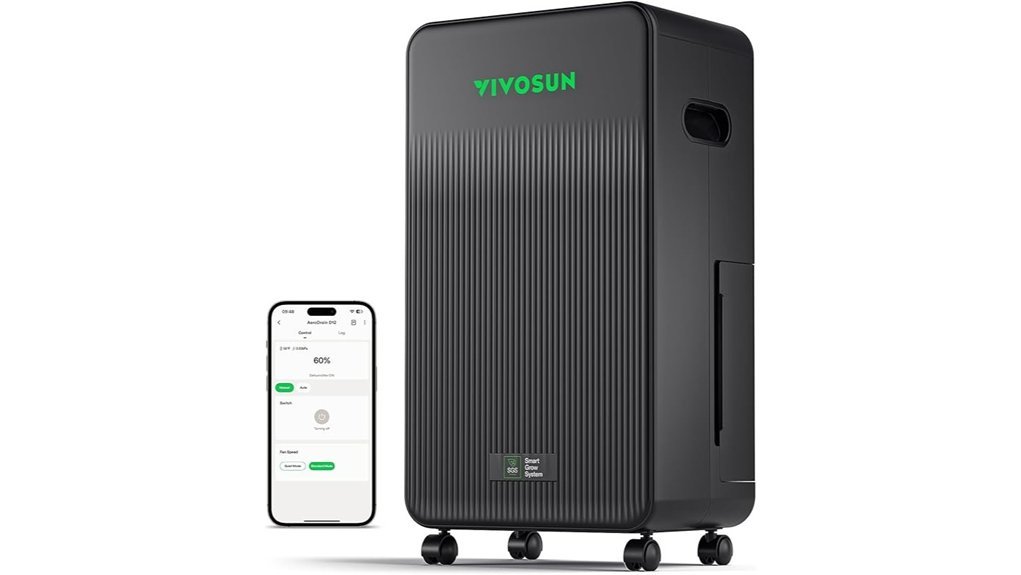
Best Overall: The VIVOSUN AeroDrain D12 is the most capable option here for growers dealing with meaningful humidity spikes. Its compressor system is rated to remove up to 12 liters per day at 86°F and 80% relative humidity, while published output falls at cooler or drier conditions. It supports tank collection and continuous drainage, which can reduce daily maintenance when humidity remains high.
The external temperature and humidity probe, app control, and smart-grow-system integration make it easier to monitor conditions without opening the tent repeatedly. The unit is larger, heavier, warmer-running, and higher-powered than compact semiconductor models, so confirm floor space, electrical capacity, heat management, airflow clearance, and a safe drainage route before buying.
Why you’ll like it: Stronger moisture removal, smart monitoring, and a continuous-drain option.
Who should buy it: Growers whose humidity rises quickly after watering, during lights-off periods, or as plant mass increases.
Who should avoid it: Anyone who only needs minor humidity correction or cannot accommodate the unit’s size, heat, and drainage needs.
Pros:
- Compressor capacity is far higher than the mini semiconductor models in this article.
- Remote monitoring and control through the VIVOSUN app.
- Tank and continuous-drain options support different setups.
- External probe can be positioned near the plant canopy for more relevant readings.
Cons:
- Larger and heavier than a tabletop dehumidifier.
- Adds heat and consumes more power than compact semiconductor units.
- Published tent-size and secondary specification guidance varies across the manufacturer’s current pages, so size it by measured moisture load and confirm the current manual.
Windangel 44oz Small Portable Dehumidifier with Auto-Off
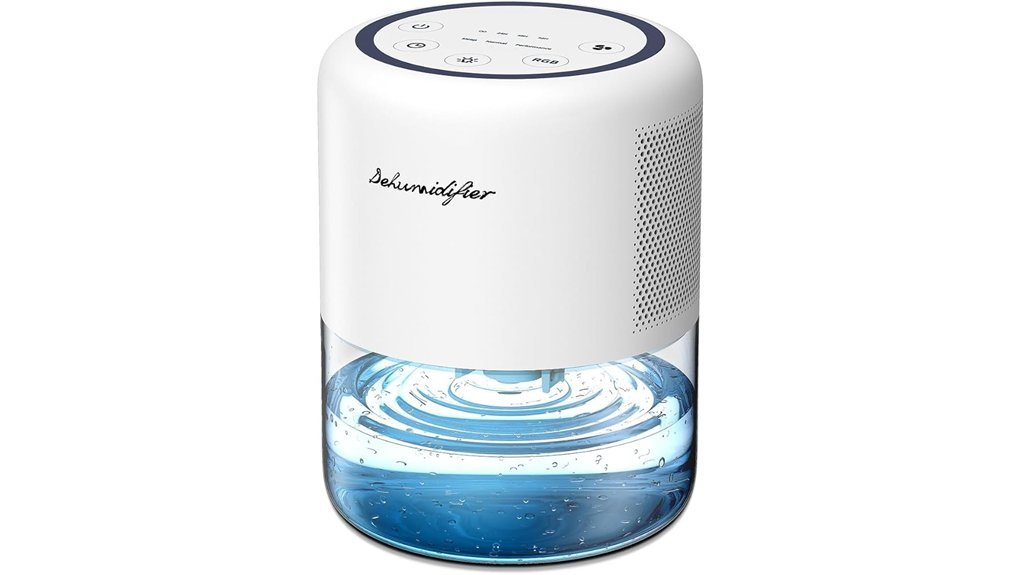
Best Compact Pick: The Windangel 44oz is a small semiconductor dehumidifier for mild moisture control. Its stated maximum removal rate is 11.8 ounces per day at 86°F and 80% relative humidity, so it is better suited to gradual correction than to a tent with a heavy transpiration load.
Three operating modes, 24/48/72-hour delay-off settings, auto shut-off, auto defrost, and a carry handle make it flexible for a tiny enclosure or surrounding lung room. The 44-ounce tank is larger than the CLEVAST tank, but this model does not provide compressor-level extraction or a drain-hose connection, and actual collection can be much lower in cooler or less humid air.
Why you’ll like it: Compact dimensions, several operating modes, and a relatively generous tank for a mini unit.
Who should buy it: Growers with a very small enclosure and only a mild humidity problem.
Who should avoid it: Growers who need fast recovery after watering or a reliable solution for persistent high humidity.
Pros:
- Small footprint and lightweight design.
- Auto shut-off helps prevent tank overflow.
- Sleep, normal, and performance modes offer useful flexibility.
- Timer and light controls can be adjusted or turned off to suit the grow area.
Cons:
- Low daily extraction compared with compressor models.
- Rated output depends on warm, humid test conditions.
- Manual tank emptying is required.
CLEVAST Small Portable Dehumidifier for Home
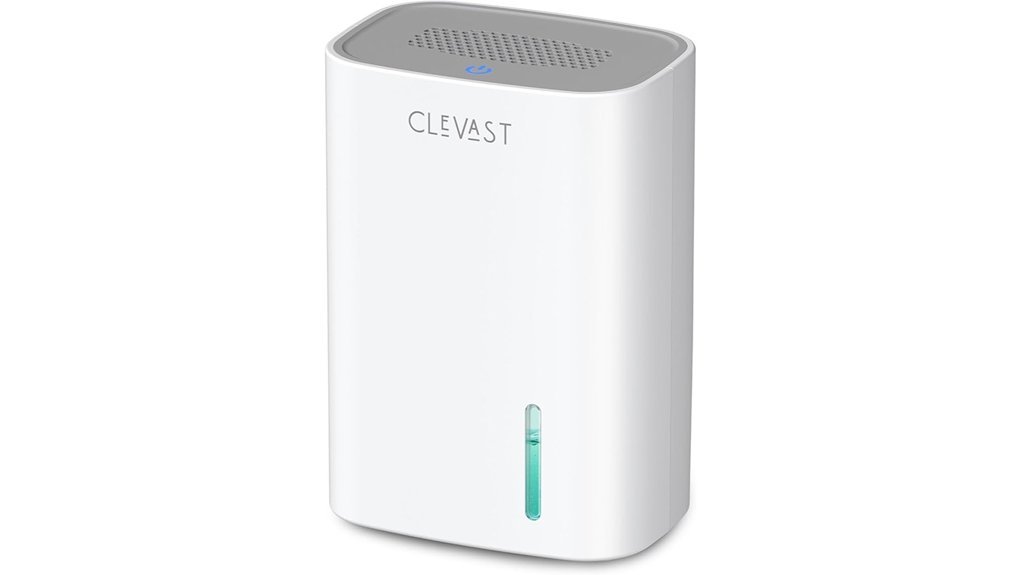
Quietest Compact Pick: The CLEVAST 30oz model is designed for small enclosed spaces and is rated to collect up to 10 ounces of water per day at 86°F and 85% relative humidity. Quiet mode is listed at 24 dB, making it the most appealing compact choice when the grow area is close to a bedroom, office, or other occupied room.
One-button control switches between efficient and quiet modes, while auto shut-off helps prevent overflow. Its compact dimensions and built-in handle make it easy to reposition, but the 30-ounce tank, lack of continuous drainage, and modest extraction rate mean it is not a substitute for a compressor dehumidifier when plants are producing a large amount of moisture.
Why you’ll like it: Very quiet operation, low energy use, and simple controls.
Who should buy it: Growers correcting mild humidity in a tiny tent or nearby lung room.
Who should avoid it: Anyone who needs continuous drainage, high extraction, or advanced humidity set-point control.
Pros:
- Quiet mode is rated at 24 dB.
- Compact body with a built-in carry handle.
- Auto shut-off helps reduce overflow risk.
- Efficient and quiet modes keep controls straightforward.
Cons:
- Only 10 ounces per day under the stated warm and humid test conditions.
- Small tank may need frequent attention in a damp environment.
- No drain-hose or app-control features listed.
Bangnics 58W Compact Quiet Dehumidifier
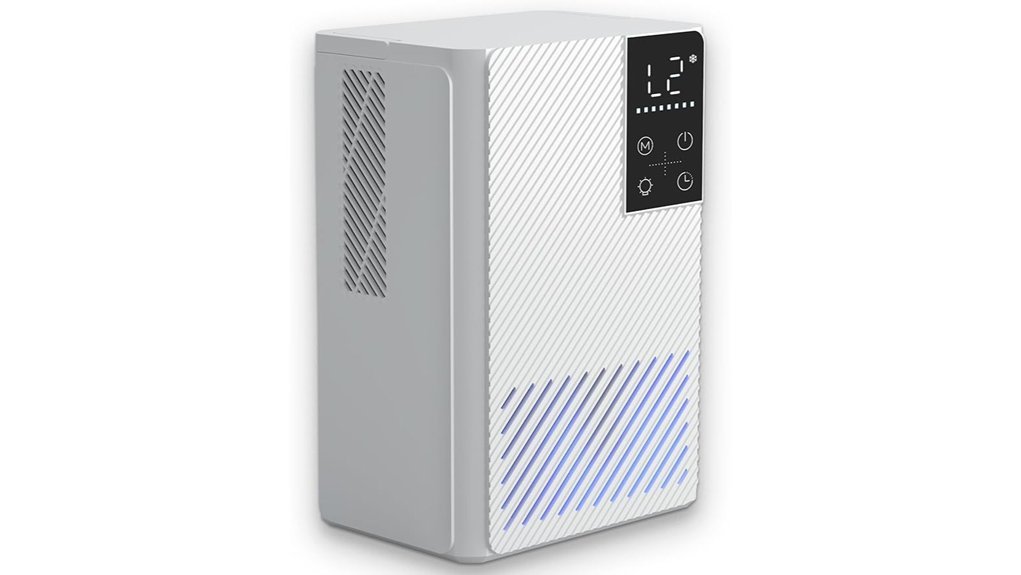
Best Large-Tank Compact Pick: The Bangnics 58W compact dehumidifier stands out for its 68-ounce removable tank, dual semiconductor design, sleep mode, delay-off timer, auto shut-off, and optional night light. The larger tank may reduce how often you need to empty it compared with smaller tabletop models.
Amazon’s product-information table lists a dehumidification capacity of 1.05 liters per day, but the main feature copy does not state the temperature and relative-humidity test conditions behind that figure. Because removal rates are highly condition-dependent, do not compare that number directly with the clearly conditioned ratings from VIVOSUN, Windangel, or CLEVAST. Treat this as a compact option for mild moisture control unless the seller provides complete test-condition data.
Why you’ll like it: A larger removable tank, sleep mode, and flexible 2/4/6/8/12/24-hour delay-off settings.
Who should buy it: Buyers who want a compact unit and prefer fewer tank-emptying trips.
Who should avoid it: Growers who need a removal rating with clearly stated test conditions, continuous drainage, or compressor-level performance.
Pros:
- Large 68-ounce tank for a compact semiconductor unit.
- Sleep mode is available for quieter operation.
- Six delay-off timer settings add scheduling flexibility.
- Auto shut-off helps prevent tank overflow.
Cons:
- The listed 1.05 L/day figure does not include temperature and humidity test conditions in the main feature copy.
- Not intended to match a compressor dehumidifier for persistent grow-tent humidity.
- No continuous-drain connection is listed, so manual tank emptying is required.
Factors to Consider When Choosing a Dehumidifier for a Small Grow Tent
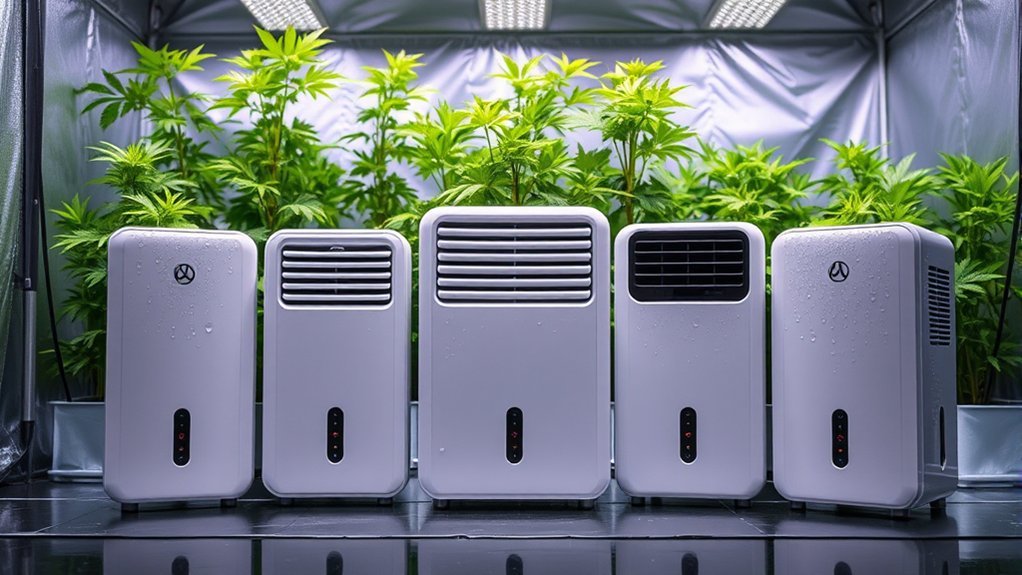
A grow tent is a small space, but it can produce a concentrated moisture load. Choose a dehumidifier by measured humidity behavior, extraction capacity, drainage, operating temperature, heat output, and placement rather than by advertised room square footage alone.
Match Capacity to the Actual Moisture Load
Track humidity before watering, after watering, during lights-off periods, and as plant mass increases. A mini semiconductor unit may be enough when humidity only drifts slightly above your target. If relative humidity rises quickly or remains high even with normal exhaust airflow, a compressor model with a drain hose is usually the more practical class of machine.
Daily extraction figures must be read with their test conditions. A unit rated at warm temperatures and very high humidity will remove less water in cooler or drier air.
Consider Tent Space and Lung-Room Placement
Placing a dehumidifier inside the tent gives it direct access to humid air, but it also occupies floor space and adds heat. In many setups, dehumidifying the surrounding lung room allows the tent’s intake air to start drier while keeping bulky equipment outside. Whichever location you choose, keep the intake and outlet clear and avoid directing strong airflow at leaves.
Compare Power Use With Useful Water Removal
Low wattage does not automatically mean better value. Compare how much water the unit removes for the electricity it uses and whether it can maintain the target humidity without running continuously. Semiconductor models generally use less power but also remove much less water. Compressor models use more power and add more heat, yet they can be more effective for demanding conditions.
Treat Noise as a Room-Comfort Issue
Noise matters when the grow setup is near a bedroom, office, or shared living space. It is not a reliable measure of plant performance. A quiet compact unit may be more comfortable to live with, while a compressor model may be worth the extra sound when stronger moisture removal is required.
Look for Useful Controls, Not Just Extra Features
The most useful controls are an adjustable humidity set point, accurate sensor placement, auto restart after a power interruption, full-tank shut-off, continuous drainage, and remote monitoring. Most mini semiconductor models in this guide do not offer a true adjustable humidistat, so they may run continuously until the tank fills or a timer ends. Decorative lighting and timers can be convenient, but they do not replace adequate extraction capacity.
Plan for Drainage, Cleaning, and Safe Placement
Choose a stable, level location where irrigation water cannot splash the unit or electrical connections. Confirm that you can remove the tank without moving plants, or route a drain hose with a continuous downward slope. Leave enough clearance for airflow and follow the manufacturer’s instructions for filter, grille, tank, and drain maintenance.
Before you buy
- Measure humidity through a full light and watering cycle.
- Check the removal rating and the temperature/RH conditions behind it.
- Decide whether the unit will sit inside the tent or in the lung room.
- Confirm tank access or a safe continuous-drain route.
- Allow for added heat, airflow clearance, and electrical safety.
- Verify the current product listing, dimensions, voltage, and warranty before ordering.
Frequently Asked Questions
What Size Dehumidifier Do I Need for a 2×2 Grow Tent?
There is no universal pint-per-day number for every 2×2 tent. A compact semiconductor model may handle a mild humidity rise, but it may fall behind when plants are large, watering is frequent, exhaust is limited, or the surrounding room is already humid. Measure how quickly RH rises and choose a unit with enough extraction to recover without running at its limit all day.
Should the Dehumidifier Go Inside or Outside the Grow Tent?
Inside placement can respond directly to tent humidity, but it uses space and adds heat. Outside placement in the lung room can supply drier intake air and simplify access to the tank or drain. The better choice depends on airflow, room humidity, available space, and the unit’s capacity.
Can I Use a Dehumidifier in Winter?
Yes, but performance depends on temperature. Compact semiconductor units often work best in warm conditions, while compressor models have a stated operating-temperature range and may use defrost cycles. Check the product manual and do not operate the unit below its specified minimum temperature.
Do Dehumidifiers Add Heat to a Grow Tent?
Yes. Dehumidifiers release heat while operating, and compressor models usually add more noticeable heat than mini semiconductor units. Include that heat in your ventilation and temperature plan, especially when the unit is placed inside a small enclosure.
Can a Mini Dehumidifier Control Grow-Tent Humidity?
It can help when the moisture load is mild and the air is warm enough for semiconductor condensation to work efficiently. It may not recover quickly after watering, during lights-off periods, or when mature plants are transpiring heavily. If the unit runs continuously and RH still stays above your target, move up to a properly sized compressor model or dehumidify the lung room.
Do I Need a Built-In Humidistat?
A built-in humidistat is useful because it lets the unit cycle around a target RH instead of running continuously. Among the products here, the VIVOSUN offers the most direct humidity-control features. Compact models without an adjustable set point require closer monitoring with a separate hygrometer.
How Often Should I Empty the Water Tank?
Empty it before it reaches full capacity or use a continuous drain when the model supports one. Frequency depends on the tank size and the amount of water collected. Check it daily during the first week so you can establish a safe routine.
How Do I Maintain My Dehumidifier for Optimal Performance?
Keep the air intake and outlet clear, clean the filter or grille as directed, empty and rinse the tank regularly, inspect the drain hose for blockage, and keep the unit level. Unplug it before cleaning and follow the manufacturer’s maintenance and safety instructions.
Final Recommendation
Choose the VIVOSUN AeroDrain D12 when humidity is a persistent grow-management problem and you need compressor capacity, smart monitoring, and continuous drainage. Choose the Windangel or CLEVAST for mild humidity in a very small tent or lung room, with the CLEVAST favored when low noise matters most. Choose the Bangnics when a larger compact tank and flexible timer matter most, but do not compare its catalog capacity directly with conditioned ratings until the seller provides complete temperature and RH test data.
The safest buying decision is based on measured humidity, extraction capacity under relevant conditions, drainage access, heat management, and control method—not the largest advertised coverage number.

[…] Best Dehumidifier for Small Grow Tent: 4 Picks 2026 […]