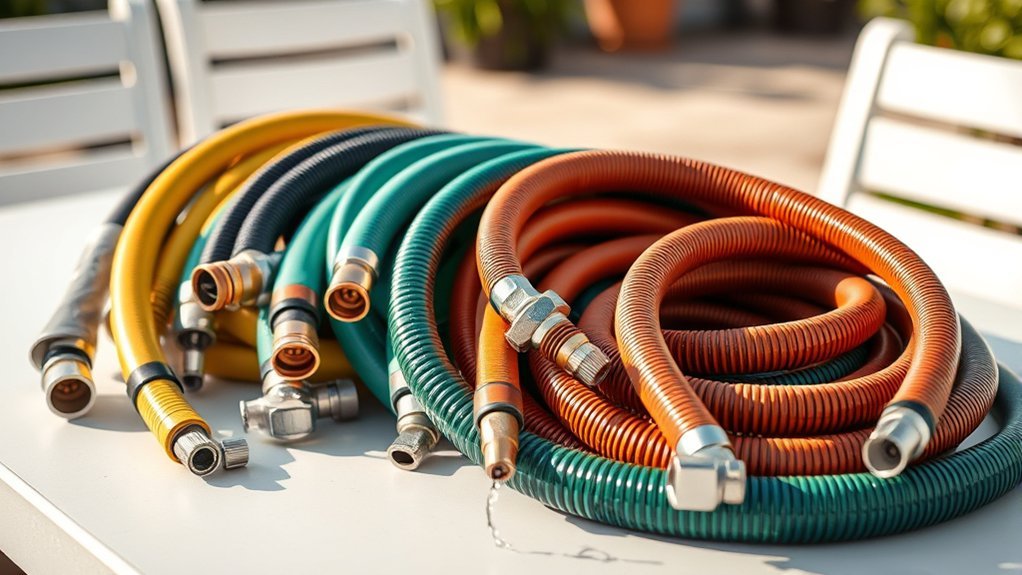
As an Amazon Associate I earn from qualifying purchases. This article contains affiliate links.
Choosing the best dehumidifier drain hose comes down to three things: connector fit, hose length, and a steady downhill route to the drain. The 5FT Dehumidifier Drain Hose is the simplest all-around choice for nearby floor drains, while the 20FT hose gives you more reach across a basement. UNIFAMILY offers a flexible mid-length option, the brass-connectored hose adds a sturdy fitting, and the Beaulife metal hose works well when you want a tougher short connector. Always confirm your dehumidifier’s drain-port size and connection type before ordering.
Quick Verdict: Choose the 5FT Dehumidifier Drain Hose for a straightforward nearby drain, the 20FT Dehumidifier Drain Hose for long basement runs, or the UNIFAMILY 12FT Hose for a flexible middle ground. Pick the brass-connectored model when fitting durability matters most, or consider the Beaulife metal hose for a short route where exterior protection is useful.
Compatibility Note: Most products below use or support a 3/4-inch garden-hose-style connection, but not every dehumidifier uses the same outlet. Check your owner’s manual and confirm that the drain can sit lower than the outlet unless your unit has a built-in pump.
How We Compared These Hoses: We focused on drain-port compatibility, useful hose length, fitting construction, kink resistance, route management, and whether each option makes sense for gravity drainage. Price, customer ratings, and unverified “universal fit” claims were not used as selection criteria.
Quick Comparison of the Best Dehumidifier Drain Hoses
| Product | Best For | Listed Length | Connection | Amazon |
|---|---|---|---|---|
| 5FT Dehumidifier Drain Hose | Best overall for nearby drains | 5 ft | 3/4-inch FHT | Check Price |
| Beaulife Metal Short Hose | Best durable short connector | 3 ft | Compatible with 3/4-inch water fixtures | Check Price |
| 20FT Dehumidifier Drain Hose | Best for long basement runs | 20 ft | 3/4-inch FHT | Check Price |
| UNIFAMILY Dehumidifier Drain Hose | Best flexible mid-length option | 12 ft | 3/4-inch FHT | Check Price |
| Dehumidifier Drain Hose with Brass Connectors | Best brass-fitting option | 5 ft option shown | 3/4-inch FHT | Check Price |
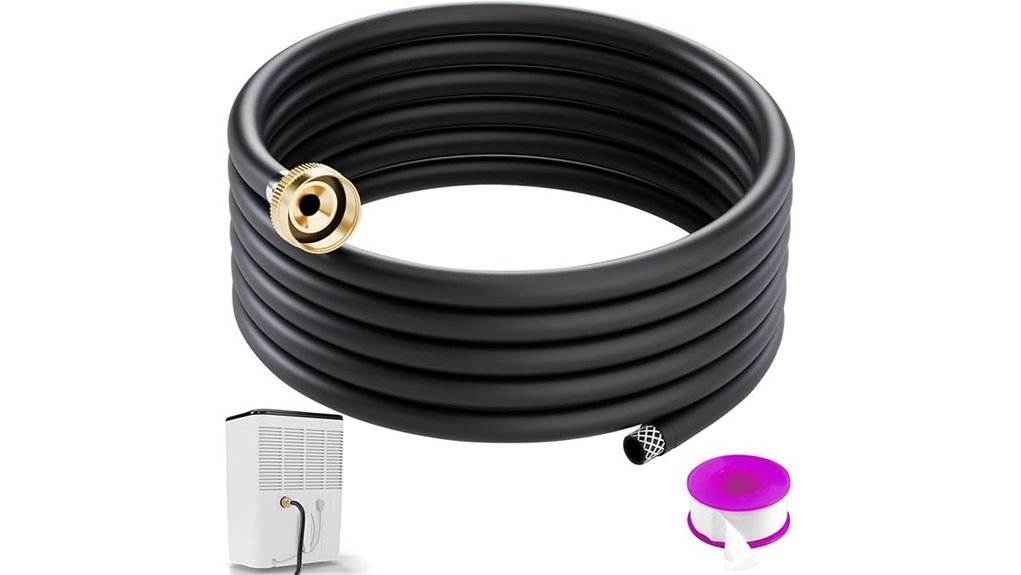
5FT Dehumidifier Drain Hose with Connector
Best Overall
If your dehumidifier sits close to a floor drain, this 5-foot PVC drain hose keeps the setup simple. Its female threaded connector is intended for compatible 3/4-inch hose-thread outlets, and its sealing components help form a secure joint when installed correctly. The short hose can be routed through a bathroom, laundry area, or small basement space without leaving a large coil of unused hose.
Why You’ll Like It: It solves the most common short-distance drainage problem without adding unnecessary hose length. It is also easier to position than a long hose when the drain is nearby.
Best For: Homeowners and renters who need a short, straightforward gravity-drain connection for a compatible dehumidifier.
Who Should Avoid It: Anyone whose drain is more than a few feet away or whose dehumidifier does not have a compatible garden-hose-style threaded outlet.
Pros:
- Short length is easy to manage near a floor drain.
- Threaded connector and sealing components help reduce drips when installed correctly.
- Flexible PVC can be trimmed when the product instructions permit it.
Cons:
- Five feet may not reach across a large basement or utility room.
- Compatibility must be checked before purchase.
- Gravity drainage requires the hose end to remain lower than the outlet.
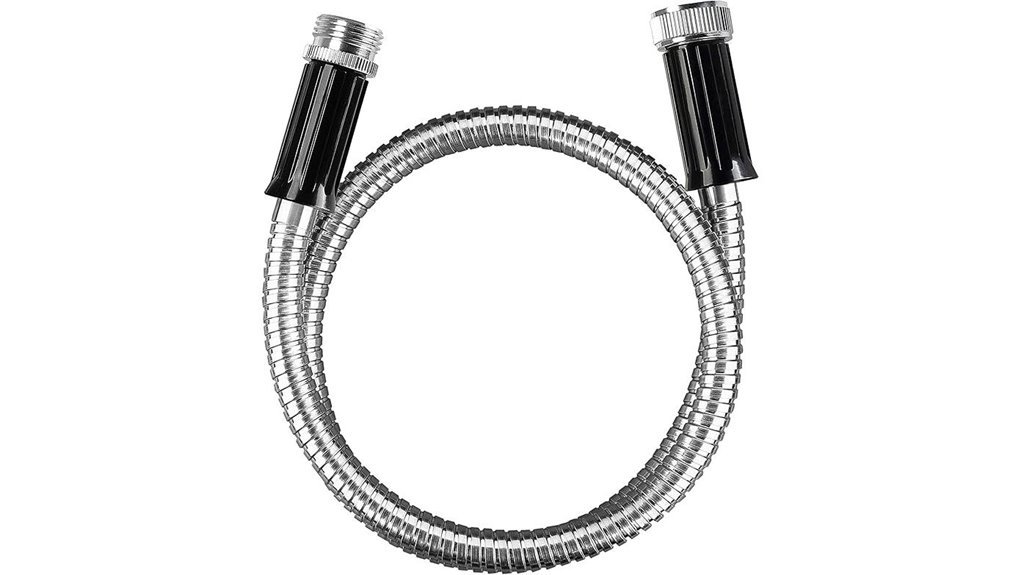
Beaulife Metal Short Garden Hose 3FT Connector
Best Durable Short Connector
The 3-foot Beaulife metal hose is a practical alternative when you want a more protected outer surface than ordinary vinyl or PVC. Its stainless-steel exterior surrounds a flexible inner hose and is designed to resist crushing, punctures, and tight kinks. The product supports 3/4-inch water-fixture connections and can be used for dehumidifier drainage when the appliance has a compatible threaded outlet.
Why You’ll Like It: The metal exterior is useful in utility areas where a soft hose might be stepped on, pinched behind equipment, or exposed to rough handling.
Best For: Short, exposed drainage runs in garages, utility rooms, RVs, or other areas where added exterior protection is useful and the dehumidifier connection is compatible.
Who Should Avoid It: Buyers who need a long, easily trimmed hose or who have a dehumidifier that requires narrow push-on tubing or a model-specific drain line.
Pros:
- 304 stainless-steel exterior provides added protection around the inner hose.
- Designed to resist tight kinks, punctures, and rough handling.
- Three-foot length works well when the drain is close to the dehumidifier.
Cons:
- Three feet is too short for many basement layouts.
- Metal construction is less convenient to cut or customize.
- Compatibility still needs to be confirmed with the dehumidifier’s drain connection.
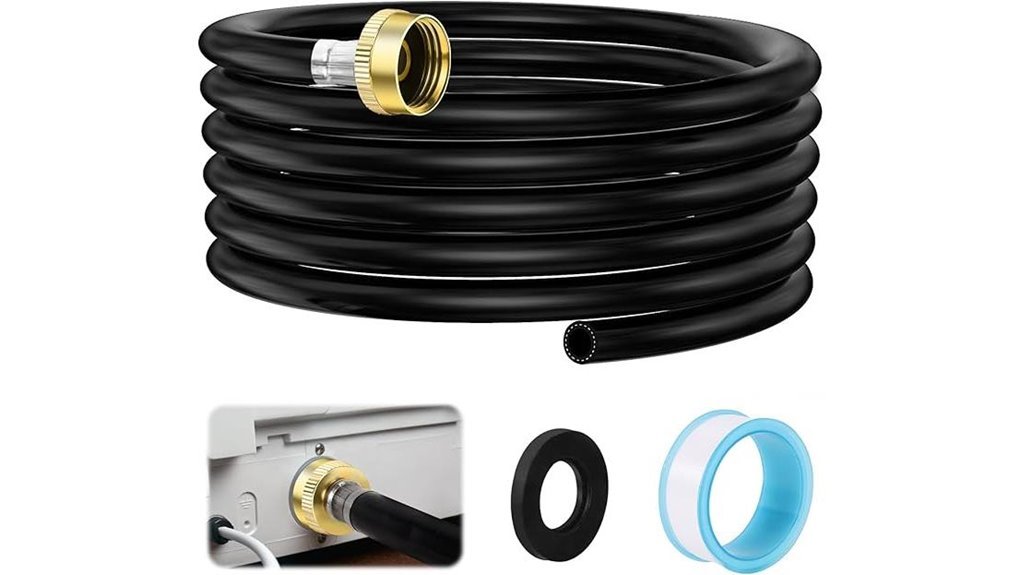
20FT Dehumidifier Drain Hose with 3/4-Inch Connector
Best for Long Runs
This 20-foot PVC dehumidifier drain hose is the better fit when your unit must sit far from a floor drain. It uses a 3/4-inch female hose-thread connector and includes rubber washers and PTFE sealing tape for the connection. The extra reach can make placement easier in basements, storage rooms, laundry areas, and other spaces where a short hose would limit your options.
Why You’ll Like It: The long run lets you place the dehumidifier where moisture control is needed instead of forcing the unit to sit immediately beside the drain.
Best For: Larger rooms and basement layouts with a distant floor drain or other suitable drainage point.
Who Should Avoid It: Small rooms where the drain is close, because excess hose can sag, loop, or trap water if it is not supported correctly.
Pros:
- Twenty feet of reach supports more flexible dehumidifier placement.
- 3/4-inch female threaded fitting works with compatible garden-hose-style drain ports.
- Included rubber washers and PTFE tape support a more secure connection when used as directed.
Cons:
- Long hose runs are easier to kink or route with low spots.
- Some dehumidifiers use a different connection and may require another hose type.
- A gravity-drain setup still needs a continuous downward path.
UNIFAMILY Dehumidifier Drain Hose with Galvanized Connectors
Best Flexible Mid-Length Option
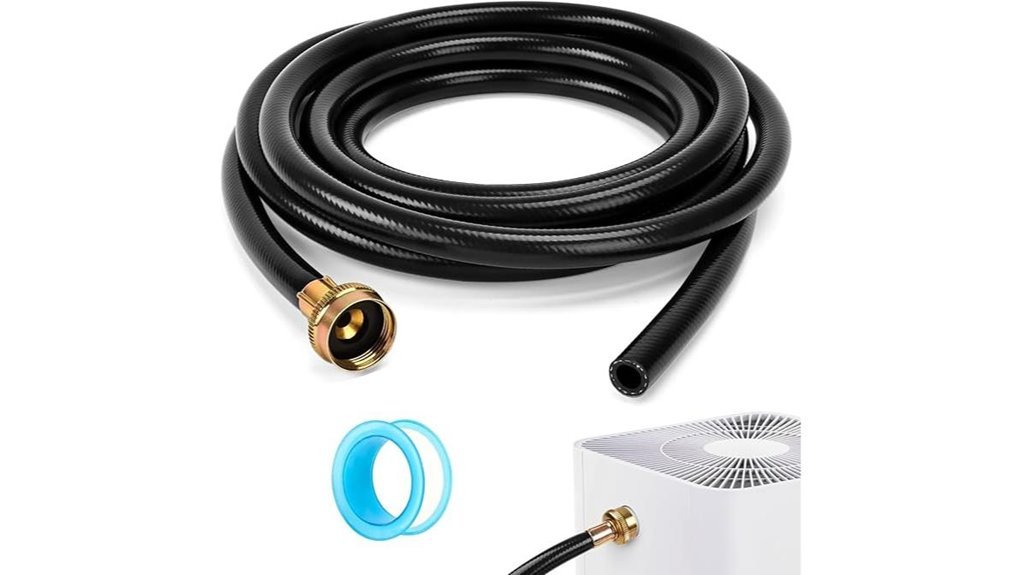
UNIFAMILY’s 12-foot dehumidifier drain hose gives you more reach than a basic five-foot line without the extra management of a 20-foot run. Its 3/4-inch female hose-thread connection is intended for compatible dehumidifier outlets, while the included rubber gasket and sealing tape help secure the joint. The flexible hose is also easier to store than a rigid drain line.
Why You’ll Like It: It provides a useful balance of flexibility, reach, and easy storage for typical home drainage layouts.
Best For: Laundry rooms, medium basements, storage spaces, and other layouts where a five-foot hose is too short but a 20-foot run would be excessive.
Who Should Avoid It: Buyers who need a rigid or crush-resistant line, or whose drain port is not compatible with a 3/4-inch female hose-thread fitting.
Pros:
- Mid-length design works in many home layouts.
- Flexible hose is easier to route around gentle corners than rigid tubing.
- Galvanized connectors, a rubber gasket, and sealing tape support a secure installation.
Cons:
- A flexible hose can kink if bent too sharply.
- Twelve feet may still leave excess hose in compact rooms.
- Nonstandard drain ports may need a different connection.
Dehumidifier Drain Hose with Brass Connectors
Best Brass-Fitting Option
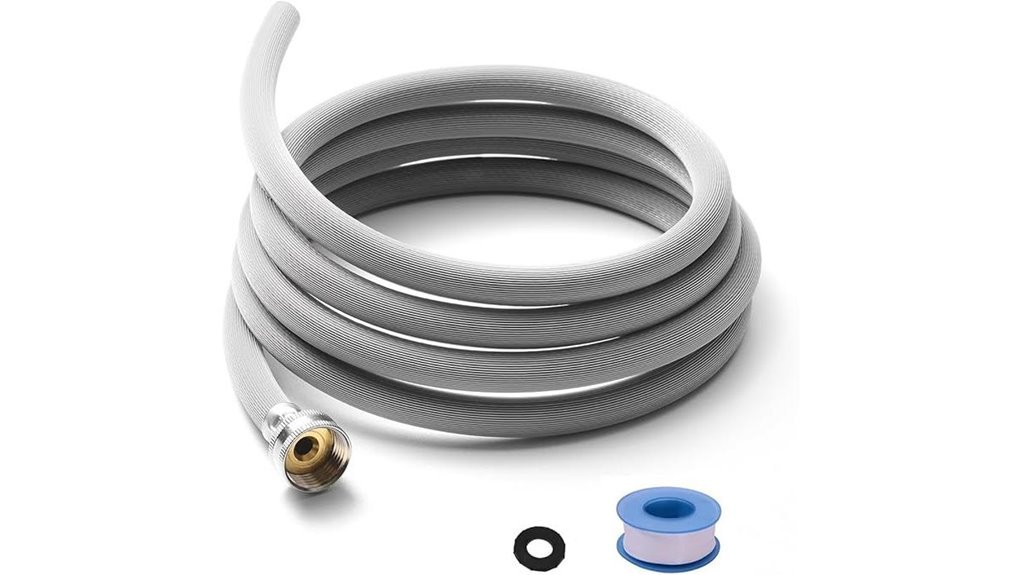
This PVC drainage hose uses nickel-plated brass fittings and a standard 3/4-inch female hose thread for compatible dehumidifier outlets. The five-foot option works best for a nearby drain, while the listing includes several other length choices for different room layouts. Place the washer correctly, hand-tighten the connector, and route the free end downhill without sharp bends.
Why You’ll Like It: The brass-based fitting is a good choice when you want a more substantial connector and several length options from one product family.
Best For: Buyers who prioritize fitting construction and want to choose a hose length that closely matches their drainage route.
Who Should Avoid It: Anyone who has not confirmed the outlet thread or who needs a model-specific pump hose rather than a gravity-drain line.
Pros:
- Nickel-plated brass fittings provide a substantial threaded connection.
- Flexible PVC stores more easily than a rigid drain line.
- Multiple listed length options make it easier to limit excess hose.
Cons:
- The five-foot option may be too short for a distant drain.
- The washer must be seated correctly to reduce leaks.
- Compatibility should always be checked against the dehumidifier manual.
Factors to Consider When Choosing a Hose for a Dehumidifier
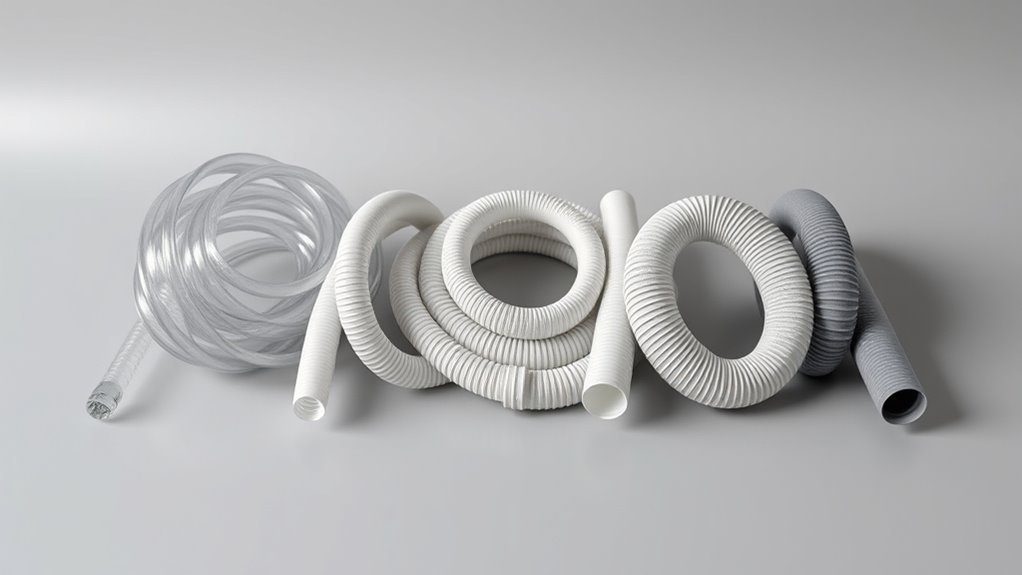
The best hose is not simply the longest or thickest option. It must match your dehumidifier, reach the drain without creating low spots, and stay open during continuous use. Use the checks below before buying.
Hose Diameter and Thread Compatibility
Start with your dehumidifier’s manual. Many full-size models provide a threaded drain outlet designed to accept a standard garden-hose-style female connector, often 3/4 inch, while compact units may use narrow push-on tubing or a model-specific hose. Do not rely on the words “universal fit” alone. Confirm the thread type, outlet shape, and whether a washer or adapter is required.
Connector and Seal Design
A threaded fitting should turn smoothly without cross-threading. Look for an intact rubber washer, clean threads, and a connector that can be tightened according to the manufacturer’s instructions. PTFE tape may be supplied with some hoses, but use it only when the appliance or hose instructions call for it. After setup, run the unit and inspect the connection before leaving it unattended.
Hose Length Options
Measure the actual drainage route rather than the straight-line distance. Add only enough extra length for gentle bends and secure placement. A hose that is too short can pull on the connector, while a hose that is much too long can form loops and low spots that slow gravity drainage.
Material and Kink Resistance
Flexible PVC is light, easy to store, and suitable for many protected indoor routes. A metal-sheathed hose offers more protection against crushing and punctures. Whichever material you choose, avoid tight bends, damaged fittings, flattened sections, and soft spots that could interrupt flow.
Gravity Drainage or Pump Drainage
Most hose-only setups depend on gravity, so the drain end must stay below the dehumidifier outlet with a continuous downward slope. A dehumidifier with a built-in condensate pump may be able to move water upward, but you must follow that model’s maximum lift height and hose instructions. Do not assume a standard gravity-drain hose can handle an uphill route.
Ease of Cleaning and Inspection
Choose a hose you can disconnect and inspect without moving heavy furniture. Long runs may need more frequent checks for sediment, algae, or trapped debris. Clean the hose according to the appliance and hose instructions, rinse it thoroughly when appropriate, and reinstall it securely.
Drainage Route and Flow
Hose diameter matters, but routing is just as important for gravity drainage. Keep the line free of kinks, avoid upward loops and low spots, and secure it with gentle clips that do not pinch the hose. Place the outlet where it cannot slip out of the drain or create a wet floor.
Before You Buy Checklist
- Confirm the dehumidifier supports continuous drainage.
- Check the exact outlet thread or tubing diameter.
- Measure the full route from the unit to the drain.
- Verify that a gravity-drain path can slope continuously downward.
- Choose a hose that will not be crushed by doors, furniture, or foot traffic.
- Check whether washers, tape, adapters, or clips are required or included.
- Confirm that the selected hose length matches the option you intend to order.
Setup Safety Note: Test the connection while you are present. Check for leaks, confirm that water reaches the drain, and secure the hose end so it cannot move. Follow the dehumidifier manufacturer’s instructions whenever they differ from general guidance.
Frequently Asked Questions
How Do I Prevent Kinks in a Dehumidifier Hose?
Use gentle curves instead of sharp bends, keep the run only as long as needed, and secure it with clips that do not pinch the line. Avoid routing soft hose behind doors, under heavy furniture, or across places where people may step on it.
Can a Dehumidifier Hose Be Extended Safely?
It can be extended when you use a compatible coupler and matching hose size, but every added joint creates another possible leak point. Keep the full run sloped downward for gravity drainage, test every connection, and use one correctly sized hose when possible.
Do All Dehumidifiers Use the Same Drain Hose Size?
No. Many full-size units accept a garden-hose-style connection, often using a 3/4-inch fitting, while some compact models use smaller tubing or a proprietary part. Check the manual or confirm the outlet specifications before buying.
How Often Should I Replace a Dehumidifier Hose?
There is no single replacement schedule for every hose. Inspect it regularly and replace it when you find cracks, stiffness, flattened areas, damaged fittings, persistent leaks, or buildup that cannot be cleaned safely.
Can I Route the Hose Uphill From the Dehumidifier?
Not with a normal gravity-drain setup. The hose should maintain a downward route from the outlet to the drain. An uphill route requires a dehumidifier with a built-in pump or a separate condensate pump that is approved for the application and installed according to its instructions.
Why Is the Bucket Filling When a Drain Hose Is Connected?
Check for a kink, an upward loop, a clogged outlet, a loose connection, or a hose end that sits higher than the drain port. Also confirm that the unit is configured correctly for continuous drainage, because setup procedures vary by model.
Conclusion
The best dehumidifier drain hose is the one that fits the outlet, reaches the drain without excess loops, and maintains a dependable downward route for gravity drainage. The 5FT hose is the easiest choice for a nearby drain, the 20FT hose works better across a large basement, and the UNIFAMILY model offers a useful middle length. Choose the Beaulife metal hose when a short run needs extra exterior protection or the brass-connectored hose when fitting construction is your main priority.
Final Recommendation: Measure first and buy the shortest compatible hose that reaches comfortably. This reduces excess loops, makes inspection easier, and helps gravity drainage work as intended.
Best All-Around Pick: The 5FT Dehumidifier Drain Hose is the most practical starting point for a compatible unit positioned near a floor drain.